


Ezekiel 16:27
- וְהִנֵּהve·hi·Nehand there!H2009Conj-w ¦ PrtParticle Interjectionוְandהִנֵּהthere!
- נָטִיתִיna·Ti·tiI stretched outH5186V-Qal-Perf-1csVerb Qal Perfect 1st Singular common gender
- יָדִיya·Dimy handH3027N-csc ¦ 1csNoun Singular common gender Constructיָדִhandיmy
- עָלַיִךְ'a·La·yikhon youH5921Prep ¦ 2fsPrepositionעָלַיִonךְyou
- וָאֶגְרַעva·'eg·Ra'and I diminishedH1639Conj-w ¦ V-Qal-ConsecImperf-1csVerb Qal Consecutive Imperfect 1st Singular common genderוָandאֶגְרַעI diminished
- חֻקֵּךְchu·Kekhyour allotmentH2706N-msc ¦ 2fsNoun Singular Masculine Constructחֻקֵּallotmentךְyour
- וָאֶתְּנֵךְva·'e·te·Nekhand I gave youH5414Conj-w ¦ V-Qal-ConsecImperf-1cs ¦ 2fsVerb Qal Consecutive Imperfect 1st Singular common genderוָandאֶתְּנֵI gaveךְyou
- בְּנֶפֶשׁbe·Ne·feshin [the] will ofH5315Prep-b ¦ N-fscNoun Singular Feminine Constructבְּinנֶפֶשׁ[the] will of
- שֹׂנְאוֹתַיִךְso·ne·'o·Ta·yikh[those who] hate youH8130V-Qal-Prtcpl-fp ¦ 2fsVerb Qal Participle Plural Feminine Constructשֹׂנְאוֹתַיִ[those who] hateךְyou
- בְּנוֹתbe·Not[the] daughters ofH1323N-fpcNoun Plural Feminine Construct
- פְּלִשְׁתִּיםpe·lish·Tim[the] PhilistinesH6430N-mpNoun Gentilic Plural Masculine Absolute
- הַנִּכְלָמוֹתha·nikh·la·Motwho were ashamedH3637Art ¦ V-Niphal-Prtcpl-fpVerb Niphal Participle Plural Feminine Absoluteהַwhoנִּכְלָמוֹתwere ashamed
- מִדַּרְכֵּךְmi·dar·Kekhfrom your conductH1870Prep-m ¦ N-csc ¦ 2fsNoun Singular common gender Constructמִfromדַּרְכֵּconductךְyour
- זִמָּהzi·MahlicentiousnessH2154N-fsNoun Singular Feminine Absolute
English is a literal word-by-word gloss of the Hebrew, not the KJV's wording. Why?
This is the original text the KJV's translators worked from — each Hebrew word with its own literal English meaning in this verse, prepared by scholars at Tyndale House, Cambridge. The KJV translates whole sentences, not word by word, so its wording differs: one Hebrew word can become several English words, and the KJV may choose “the LORD” where the gloss reads “Yahweh”. Both are faithful — they answer different questions. For the KJV's own rendering, switch to the KJV text.
Details
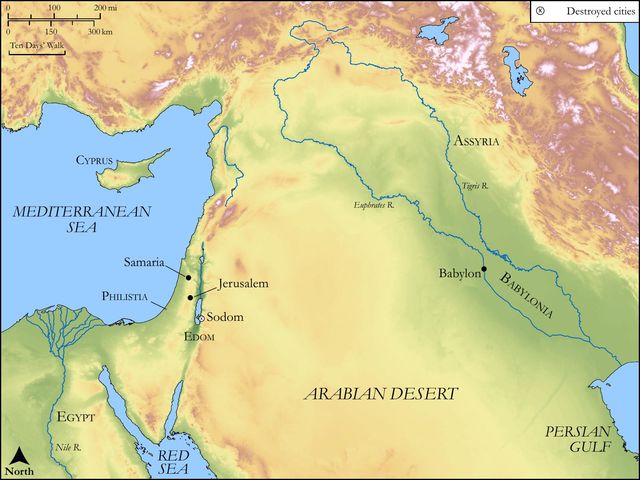
See on the biblical-era map
Study this verse
Public-domain commentary
Matthew Henry
From his Commentary on the Whole Bible. Henry comments on passages, not single verses — this entry covers Ezekiel 16:15–34. His three-level outline is real structure in the source text, so it is rendered as structure.
In these verses we have an account of the great wickedness of the people of Israel, especially in worshipping idols, notwithstanding the great favours that God had conferred upon them, by which, one would think, they should have been for ever engaged to him. This wickedness of theirs is here represented by the lewd and scandalous conversation of that beautiful maid which was rescued from ruin, brought up and well provided for by a kind friend and benefactor, that had been in all respects as a father and a husband to her. Their idolatry was the great provoking sin that they were guilty of; it began in the latter end of Solomon's time (for from Samuel's till then I do not remember that we read any thing of it), and thenceforward continued more or less the crying sin of that nation till the captivity; and, though it now and then met with some check from the reforming kings, yet it was never totally suppressed, and for the most part appeared to a high degree impudent and barefaced. They not only worshipped the true God by images, as the ten tribes by the calves at Dan and Bethel, but they worshipped false gods, Baal and Moloch, and all the senseless rabble of the pagan deities.
This is that which is here all along represented (as often elsewhere) under the similitude of whoredom and adultery, 1. Because it is the violation of a marriage-covenant with God, forsaking him and embracing the bosom of a stranger; it is giving that affection and that service to his rivals which are due to him alone. 2. Because it is the corrupting and defiling of the mind, and the enslaving of the spiritual part of the man, and subjecting it to the power and dominion of sense, as whoredom is. 3. Because it debauches the conscience, sears and hardens it; and those who by their idolatries dishonour the divine nature, and change the truth of God into a lie and his glory into shame, God justly punishes by giving them over to a reprobate mind, to dishonour the human nature with vile affections, Rom 1:23, etc. It is a besotting bewitching sin; and, when men are given up to it, they seldom recover themselves out of the snare. 4. Because it is a shameful scandalous sin for those that have joined themselves to the Lord to join themselves to an idol. Now observe here,
I.What were the causes of this sin.
How came the people of God to be drawn away to the service of idols? How came a virgin so well taught, so well educated, to be debauched? Who would have thought it? But, 1. They grew proud (Eze 16:15): "Thou trustedst to thy beauty, and didst expect that that should make thee an interest, and didst play the harlot because of thy renown." They thought, because they were so complimented and admired by their neighbours, that, further to ingratiate themselves with them and return their compliments, they must join with them in their worship and conform to their usages. Solomon admitted idolatry, to gratify his wives and their relations. Note, Abundance of young people are ruined by pride and particularly pride in their beauty. Rara est concordia formae atque pudicitiae - Beauty and chastity are seldom associated 2. They forgot their beginning (Eze 16:22) "Thou hast not remembered the days of thy youth, how poor, and mean, and despicable thou wast, and what great things God did for thee and what lasting obligations he laid upon thee thereby." Note, It should be an effectual check to our pride and sensuality to consider what we are and how much we are beholden to the free grace of God. 3. They were weak in understanding and in resolution (Eze 16:30): How weak is thy heart, seeing thou dost all these things. Note, The strength of men's lusts is an evidence of the weakness of their hearts; they have no acquaintance with themselves, nor government of themselves. She is weak, and yet an imperious whorish woman. Note, Those that are most foolish are commonly most imperious, and think themselves fit to manage others when they are far from being able to manage themselves.
II.What were the particulars of it.
1.They worshipped all the idols that came in their way, all that they were ever courted to the worship of; they were at the beck of all their neighbours (Eze 16:15): Thou pouredst out thy fornications on every one that passed by; his it was. They were ready to close with every temptation of this kind, though ever so absurd. No foreign idol could be imported, no new god invented, but they were ready to catch at it, as a common trumpet that prostitutes herself to all comers and multiplies her whoredoms, Eze 16:25. Thus some common drunkards will be company for every one that puts up the finger to them; how weak are the hearts of such!
2.They adorned their idol-temples, and groves, and high places, with the fine rich clothing that God had given them (Eze 16:16, Eze 16:18): Thou deckedst thy high places with divers colours, with the coats of divers colours, like Joseph's, which God had given them as particular marks of his favour, and hast played the harlot (that is, worshipped idols) thereupon. Of this he saith, "The like things shall not come, neither shall it be so; that is, this is a thing by no means to be suffered; I will never endure such practices as these without showing my resentments." 3. They made images for worship of the jewels which God had given them (Eze 16:17): The jewels of my gold and my silver which I had given thee. Note, It is God that gives us our gold and silver; the products of trade, of art and industry, are the gifts of God's providence to us, as well as the fruits of the earth. And what God gives us the use of he still retains a property in. "It is my silver and my gold, though I have given it to thee." It is his still, so that we ought to serve and honour him with it, and are accountable to him for the disposal of it. Every penny has God's image upon it as well as Caesar's. Should we make our silver and gold, our plate, money, and jewels, the matter of our pride and contention, our covetousness and prodigality, if we duly considered that they were God's silver and his gold? The Israelites began betimes to turn their jewels into idols, when Aaron made the golden calf of their earrings. 4. They served their idols with the good things which God gave them for their own use and to serve him with (Eze 16:18): "Thou hast set my oil and my incense before the, upon their altars, as perfumes to these dunghill-deities; my meat, and fine flour, and oil, and that honey which Canaan flowed with, and wherewith I fed thee, thou hast regaled them and their hungry priests with, hast made an offering of it to them for a sweet savour, to purify them, and procure acceptance with them: and thus it was, saith the Lord God; it is too plain to be denied, too bad to be excused. These things thou hast done. He that knows all things knows it." See how fond they were of their idols, that they would part with that which was given them for the necessary subsistence of themselves and their families to honour them with, which may shame our niggardliness and strait-handedness in the service of the true and living God. 5. They had sacrificed their children to their idols. This is insisted upon here, and often elsewhere, as one of the worst instances of their idolatry, as indeed there was none in which the devil triumphed so much over the children of men, both their natural reason and their natural affection, as in this (see Jer 7:31; Jer 19:5; Jer 32:35): Thou hast taken thy sons and thy daughters, and not only made them to pass through the fire, or between two fires, in token of their being dedicated to Moloch, but thou hast sacrificed them to be devoured, Eze 16:20. Never was there such an instance of the degenerating of the paternal authority into the most barbarous tyranny as this was. Yet that was not the worst of it: it was an irreparable wrong to God himself, who challenged a special property in their children more than in their gold and silver and their meat: They are my children (Eze 16:21), the sons and daughters which thou hast borne unto me, Eze 16:20. He is the Father of spirits, and rational souls are in a particular manner his; and therefore the taking away of life, human life, unjustly, is a high affront to the God of life. But the children of Israelites were his by a further right; they were the children of the covenant, born in God's house. He had said to Abraham, I will be a God to thee and to thy seed; they had the seal of the covenant in their flesh from eight days old; they were to bear God's name, and keep up his church; to murder them was in the highest degree inhuman, but to murder them in honour of an idol was in the highest degree impious. One cannot think of it without the utmost indignation: to see the pitiless hands of the parents shedding the guiltless blood of their own children, and by offering those pieces of themselves to the devil for buying sacrifices openly avowing the offering up of themselves to him for living sacrifices! How absurd was this, that the children which were born to God should be sacrificed to devils! Note, The children of parents that are members of the visible church are to be looked upon as born unto God, and his children,; as such, and under that character, we are to love them, and pray for them, bring them up for him, and, if he calls for them, cheerfully part with them to him; for may he not do what he will with his own? Upon this instance of their idolatry, which indeed ought not to pass without a particular brand, this remark is made (Eze 16:20), Is this of thy whoredoms a small matter? which intimates that there were those who made a small matter of it, and turned it into a jest. Note, There is no sin so heinous, so apparently heinous, which men of profligate consciences will not make a mock at. But is whoredom, is spiritual whoredom, a small matter? Is it a small matter for men to make their children brutes and the devil their god? It will be a great matter shortly. 6. They built temples in honour of their idols, that others might be invited to resort thither and join with them in the worship of their idols: "After all thy wickedness of this kind committed in private, for which, woe, woe, unto thee" (that comes in in a sad parenthesis, denoting those to be in a woeful condition who are going on in sin, and giving them warning in time, if they would but take it), "thou hast at length arrived at such a pitch of impudence as to proclaim it; thou hast long had a whore's heart, but now thou hast come to have a whore's forehead, and canst not blush," Eze 16:23-35. Thou hast built there an eminent place, a brothel-house (so the margin reads it), and such their idol temples were. Thou hast made for thyself a high place, for one idol or other, in every street, and at every head of the way; and again Eze 16:31. They did all they could to seduce and debauch others, and to spread the contagion, by making the temptations to idolatry as strong as possibly they could; and hereby the ringleaders in idolatry did but make themselves vile, and even those that had courted them to it, finding themselves outdone by them, began to be surfeited with the abundance and violence of their idolatries: Thou hast made thy beauty to be abhorred, even by those that had admired it. The Jewish nation, by leaving their own God, and doting on the gods of the nations round about them, had made themselves mean and despicable in the eyes even of their heathen neighbours; much more was their beauty abhorred by all that were wise and good, and had any concern for the honour of God and religion. Note, Those shame themselves that bring a reproach on their profession. And justly will that beauty, that excellency, at length be made the object of the loathing of others which men have made the matter of their own pride.
III.What were the aggravations of this sin.
1.They were fond of the idols of those nations which had been their oppressors and persecutors. As,
(1.)The Egyptians. They were a people notorious for idolatry, and for the most sottish senseless idolatries; they had of old abused Israel by their barbarous dealings, and of late by their treacherous dealings - were always either cruel or false to them; and yet so infatuated were they that they committed fornication with the Egyptians their neighbours, not only by joining with them in their idolatries, but by entering into leagues and alliances with them, and depending upon them for help in their straits, which was an adulterous departure from God.
(2.)The Assyrians. They had also been vexatious to Israel: "And yet thou hast played the whore with them (Eze 16:28); though they lived at a greater distance, yet thou hast entertained their idols and their superstitious usages, and so hast multiplied thy fornications unto Chaldea, hast borrowed images of gods, patterns of altars, rites of sacrificing, and one foolery or other of that kind, from that remote country, that enemy's country, and hast imported them into the land of Canaan, enfranchised and established them there." Thus Mr. George Herbert long since foretold, or feared at least,
That Seine shall swallow Tiber, and the Thames
By letting in them both pollute her streams.
2.They had been under the rebukes of Providence for their sins, and yet they persisted in them (Eze 16:27): I have stretched out my hand over thee, to threaten and frighten thee. So God did before he laid his hand upon them to ruin and destroy them; and that is his usual method, to try to bring men to repentance first by less judgments. He did so here. Before he brought such a famine upon them as broke the staff of bread he diminished their ordinary food, but them short before he cut them off. When the overplus is abused, it is just with God to diminish that which is for necessity. Before he delivered them to the Chaldeans to be destroyed he delivered them to the daughters of the Philistines to be ridiculed for their idolatries; for they hated them, and, though they were idolaters themselves, yet were ashamed of the lewd way of the Israelites, who had grown more profane in their idolatries than any of their neighbours, who changed their gods, whereas other nations did not change theirs, Jer 2:10, Jer 2:11. For this they were justly chastised by the Philistines. Or it may refer to the inroads which the Philistines made upon the south of Judah in the reign of Ahaz, by which it was weakened and impoverished, and which was the beginning of sorrows to them (Ch2 28:18); but they did not take warning by those judgments, and therefore were justly abandoned to ruin at last. Note, In the account which impenitent sinners shall be called to they will be told not only of the mercies for which they have been ungrateful, but of the afflictions under which they have been incorrigible, Amo 4:11.
3.They were insatiable in their spiritual whoredom: Thou couldst not be satisfied, Eze 16:28 and again Eze 16:29. When they had multiplied their idols and superstitious usages beyond measure, yet still they were enquiring after new gods and new fashions in worship. Those that in sincerity join themselves to the true God find enough in him for their satisfaction; and, though they still desire more of God, yet they never desire more than God. But those that forsake this living fountain for broken cisterns will find themselves soon surfeited, but never satisfied; they have soon enough of the gods they have, and are still enquiring after more.
4.They were at great expense with their idolatry, and laid out a great deal of wealth in purchasing patterns of images and altars, and hiring priests to attend upon them from other countries. Harlots generally had their hire; but this impudent adulteress, instead of being hired to serve idols, hired idols to protect her and accept her homage. This is much insisted on, Eze 16:31-34. "In this respect the contrary is in thee from other women in thy whoredoms: others are courted, but thou makest court to those that do not follow thee, art fond of making leagues and alliances with those heathen nations that despise thee; others have gifts given them, but thou givest thy gifts, the gifts which God had graciously given thee, to thy idols; herein thou art like a wife that commits adultery, not for gain, as harlots do, but entirely for the sin's sake." Note, Spiritual lusts, those of the mind, such as theirs after idols were, are often as strong and impetuous as any carnal lusts are. And it is a great aggravation of sin when men are their own tempters, and, instead of proposing to themselves any worldly advantage by their sin, are at great expense with it; such are transgressors without cause (Psa 25:3), wicked transgressors indeed.
And now is not Jerusalem in all this made to know her abominations? For what greater abominations could she be guilty of than these? Here we may see with wonder and horror what the corrupt nature of men is when God leaves them to themselves, yea, though they have the greatest advantages to be better and do better. And the way of sin is down-hill. Nitimur in vetitum - We incline to what is forbidden.
Historical interpretation
Historical reception
1 surviving comment on this verse from the historical church.
(Verse 27.) Behold, I will stretch forth my hand over you and will take away your righteousness, and I will give you over to the souls of those who hate you, the daughters of the Philistines, who are ashamed of your wicked way. LXX: But if I stretch out my hand against you and take away your lawful possession and give you over to the souls of those who hate you, the daughters of foreigners who led you astray from your path. And what follows, 'ἠσέβησας,' that is, 'you acted impiously,' is connected with the following chapter according to the Septuagint, but according to the other translations, it is the end of the previous chapter. However, the Lord stretched out his hand over Jerusalem to correct the wrongdoer and take away its rightful possessions, which, as long as he observed God's commandments, were called the rightful possessions of the Lord. But when he worshiped idols and changed his religion into impiety, they are by no means called his rightful possessions. Which not only in the law and ceremonies, but also in the Sabbaths and feast days and new moons, must be observed. For in the law, it is said: My Sabbaths and my feast days. But when they turned away from God, it is said to them: I will not receive your new moons, and Sabbaths, and great day: my soul hates your fasting and rest, and your solemnities (Exodus 31; Deuteronomy 5; Isaiah 1:14). This is also written about the people (Deuteronomy 7). For when the people, who were previously called the people of God, turned away from the Lord, it is said of them concerning Moses: 'Your people, whom you brought out of the land of Egypt, has sinned' (Exodus XXXII, 7). The stretching out of the hand is here called elsewhere as lifting up or visiting. For when God does not correct the sinner, He withdraws His hand. But if the sinner sins and begins to be sick in God's law, a visitation is sent to him; according to what is sung in the psalm: 'If his children forsake my law and do not walk in my judgements, I will visit their iniquities with the rod' (Psalm LXXXIX, 31, 32). And in this the prophet has written: If the earth sins against me to commit a crime, I will stretch out my hand against it and break its bread supply, and so on. In this we are questioning what the difference is between the stretching out of the hand and its emission. However, the devil speaks to the Lord: Stretch out your hand and touch all that he has, unless he blesses you to your face (Job 2:5). And it seems to me that the hand is sent, for the testing of those to whom it is sent; but it is stretched out, for the punishment of those who deserve torment. Not only extension and outreach, but also the stretching out of God's hands is called expansion, as Isaiah proclaims from the perspective of the Lord: 'All day long I have held out my hands to a disobedient and contrary people' (Isa. 65:2). It is also narrated that the holy hands are lifted up, as Scripture says: 'Let my prayer be counted as incense before you, and the lifting up of my hands as the evening sacrifice' (Ps. 141:2). But since the legitimate practices of God have been taken away from the people of the Jews, let us ask them what observance of the law they have. The victims, with the temple being destroyed and overturned, cannot be offered; nor can the stoning of adulterers and the execution of other crimes permitted by law be carried out, nor can the year of release of the land and other similar things. However, it is given to the souls of the haters of the daughters of Palestine, when they are delivered to the Palestinians, whom the Seventy indiscriminately call foreigners: which we can understand as the cities or towns of Palestine. Our Jerusalem too, if we neglect the ceremonies of God, and his hand is stretched out against us, and the observance of the entire law is taken away, will be delivered to the daughters of Palestine and not to the sons. For we are not first consigned to more severe punishments, but according to the quality of sins, to lesser ones, so that being corrected in the lesser, we may avoid the greater torments. The Philistines, that is, the Palestinians, with the first part of the word changed, interpret it as falling by drinking, or breaking ((perhaps breaking)). By which it is signified that we are to be handed over to adversarial powers, who have drunk from the cup of Babylon and have fallen, and whose works are perverse. And so great will be the correction and disgrace of wretched Jerusalem, that even the opposing powers themselves will be ashamed at the magnitude of our sins. This we have interpreted according to Symmachus, 'scelerata': Theodotion placed the Hebrew word itself 'Zemma ()'. But with the ceremonies of God removed from the people of the Jews, it has passed to us along with the priesthood and the legislation, with the Scripture saying, 'Establish, O Lord, a legislator over them' (Psalm 9:21). And in another place: Set a law for me, O Lord, in your way (Psalm 26:11).
Continue studying Ezekiel 16:27 across the web’s major study libraries — every link below opens this exact verse, chapter, or book on the destination site.
Read & Compare
 BibleGatewayThis verse in more than 200 translations and 70 languages.
 Bible.comThe YouVersion reader — hundreds of translations, reading plans, and highlights.
 ESV.orgCrossway's official English Standard Version reader.
 NET BibleThe NET translation with 60,000+ translators' notes on every rendering decision.
 STEP BibleTyndale House's free study tool — original text, vocabulary, and scholarly resources.
 BibliaLogos Bible Software's free web reader.
 USCCBThe New American Bible (Revised Edition) with the U.S. bishops' study notes.
Commentaries
 BibleHub CommentariesDozens of classic commentaries on this verse, gathered on one page.
 StudyLightMore than 100 commentary sets — the largest collection on the web.
 BibleRefPlain-English commentary on what this verse means, verse by verse.
 Enduring WordDavid Guzik's free commentary on this chapter, widely used by Bible teachers.
 Bible Study ToolsVerse commentary alongside Greek and Hebrew study aids.
Original Language & Research
- BibleHub InterlinearThe verse word by word — original language, transliteration, and English.
- BibleHub LexiconEvery word's original-language definition and Strong's entry.
 Blue Letter BibleDeep-study tools — Strong's numbers, concordance, and word studies.
 SefariaThe Hebrew text with Rashi and centuries of Jewish commentary.
Sermons, Hymns & Audio


TrulyRandomVerse is not affiliated with these sites and doesn’t control their content. They’re linked because they’re genuinely useful.
Summary
Ezekiel 16:27 presents a stark declaration of God's judgment upon Jerusalem, personified as an unfaithful bride who has engaged in egregious spiritual harlotry. This divine discipline manifests in a two-fold consequence: God's active withdrawal of sustenance, leading to scarcity and hardship, and a humiliating subjugation to her long-standing enemies, specifically the Philistines. The profound irony of the verse lies in the fact that even these pagan adversaries, despite their own idolatrous practices, are depicted as being utterly ashamed of Jerusalem's extreme moral and spiritual degradation, underscoring the unparalleled depth of her covenant unfaithfulness.
Context
ShowHideLiterary Context
Ezekiel 16 is an extended and powerful allegory, portraying Jerusalem as a foundling child rescued, nurtured, and adorned by Yahweh, only to grow into an unfaithful bride who betrays her covenant vows through rampant idolatry and illicit alliances. The preceding verses (Ezekiel 16:1-26) meticulously detail Jerusalem's escalating spiritual adultery, her adoption of pagan practices, and her alliances with foreign nations, all depicted as acts of prostitution. This narrative builds an irrefutable case for divine judgment, demonstrating that Jerusalem's sin was not merely a lapse but a profound and persistent betrayal of her exclusive relationship with God. Verse 27 marks a pivotal shift from the indictment of sin to the pronouncement of specific punitive measures, initiating the phase of divine retribution that would justly befall the city for her unparalleled depravity. The severity of this judgment is further emphasized by comparing Jerusalem's wickedness to that of Samaria and Sodom later in the chapter, as seen in Ezekiel 16:44-59.
Historical & Cultural Context
The prophecy of Ezekiel was delivered during the Babylonian exile (circa 593-571 BC), a period when Jerusalem had already endured initial stages of conquest and was rapidly approaching its final destruction. Historically, Judah, despite prophetic warnings, repeatedly sought political alliances with powerful foreign nations such as Egypt and Assyria, rather than placing her trust in Yahweh. These alliances frequently necessitated the adoption of the religious practices and idols of their partners, which God unequivocally condemned as spiritual infidelity. Culturally, the concept of a covenant marriage between God and Israel was a foundational theological pillar, making the metaphor of spiritual harlotry particularly potent and offensive. The specific mention of "the daughters of the Philistines" is highly significant. The Philistines were ancient, persistent enemies of Israel, consistently associated with idolatry and paganism, as evidenced by their worship of Dagon in 1 Samuel 5:1-5. The profound irony in this verse—that even these traditional adversaries, themselves steeped in paganism, would be "ashamed" of Jerusalem's "lewd way"—underscores the extreme depth of Jerusalem's moral and spiritual depravity. It implies that Jerusalem had descended to a level of wickedness that was shocking even to those who did not adhere to the Mosaic Law or worship Yahweh.
Key Themes
ShowHideThis verse powerfully contributes to several overarching themes present throughout Ezekiel and the broader prophetic corpus. Firstly, it highlights Divine Judgment and Discipline, emphasizing God's active and just intervention in human affairs to bring consequences for covenant unfaithfulness. God's "stretched out my hand" is a recurring motif signifying His sovereign power and often His punitive judgment, as seen in the plagues upon Egypt in Exodus 7:5 or the judgment upon Israel in Isaiah 9:12. Secondly, the verse underscores the severe Consequences of Spiritual Adultery and Idolatry. The "diminished thine ordinary [food]" points to famine and scarcity, a common covenant curse for disobedience (e.g., Deuteronomy 28:48), while being "delivered thee unto the will of them that hate thee" signifies foreign subjugation and oppression, a direct result of forsaking God's protection. Thirdly, the verse vividly illustrates Extreme Degradation and Shame. The fact that even the Philistines, a people not bound by Israel's covenant, found Jerusalem's behavior shameful accentuates the profound moral and spiritual corruption that had permeated the city. This theme of shame and humiliation is central to Ezekiel's portrayal of Jerusalem's fall, demonstrating the utter disgrace brought upon God's name by His people's actions.
Exposition and Analysis
ShowHideKey Word Analysis
ShowHideFrom the primitive root H1639, meaning "to scrape off; by implication, to shave, remove, lessen, withhold." In this context, it signifies God's active reduction or withdrawal of the customary provisions and blessings He had bestowed upon Jerusalem. It implies a deliberate act of divine judgment, leading to scarcity and hardship, contrasting sharply with the abundance God had previously provided.
Meaning "an enactment; hence, an appointment (of time, space, quantity, labor or usage); appointed, bound, commandment, convenient, custom, decree(-d), due, law, measure, portion, set time, statute, task." Here, "ordinary food" (with "food" supplied in KJV) refers to the customary, allotted portion or sustenance that was due to Jerusalem. The diminishing of this "chôq" indicates a disruption of the divinely established order and provision, leading to a state of deprivation. It highlights that God is withholding what was once a guaranteed, customary blessing.
Meaning "a plan, especially a bad one; heinous crime, lewd(-ly, -ness), mischief, purpose, thought, wicked (device, mind, -ness)." This powerful term describes Jerusalem's "way" or conduct as utterly depraved, scandalous, and morally abhorrent. While often associated with sexual immorality, in Ezekiel 16, it primarily refers to the spiritual harlotry of idolatry and the heinous acts committed in the pursuit of foreign alliances and gods. It emphasizes the extreme wickedness and calculated evil of Jerusalem's actions in God's sight.
Verse Breakdown
ShowHide"Behold, therefore I have stretched out my hand over thee"
This opening clause serves as a solemn and emphatic declaration of divine judgment. "Behold" (Hebrew hinneh) functions as an imperative, calling for immediate attention to a significant pronouncement. "Therefore" explicitly links the impending judgment to the preceding detailed narrative of Jerusalem's profound unfaithfulness. God's "stretched out my hand" (Hebrew H5186 nâṭâh and H3027 yâd) is an anthropomorphic expression signifying His active, powerful, and decisive intervention, often in judgment or deliverance. Here, it denotes an act of punitive discipline, asserting God's sovereign authority and unwavering intent to bring consequences upon His wayward people.
"and have diminished thine ordinary [food]"
This phrase describes the first tangible consequence of God's judgment: a reduction of sustenance and provision. The term "diminished" (Hebrew H1639 gâraʻ) implies a deliberate act of withholding or reducing what was once generously given. "Ordinary [food]" (Hebrew H2706 chôq) refers to the customary, allotted provisions and blessings that God had previously supplied as part of His covenant faithfulness. This signifies famine, scarcity, or a general lack of resources, directly impacting the physical well-being of the city and serving as a tangible sign of God's withdrawal of blessing due to their spiritual unfaithfulness.
"and delivered thee unto the will of them that hate thee, the daughters of the Philistines"
This clause details the second, equally humiliating consequence: subjugation to enemies. God "delivered" (Hebrew H5414 nâthan) Jerusalem, implying a surrender or abandonment, into the "will" (Hebrew H5315 nephesh, here signifying the desire, power, or very being) of those who "hate" (Hebrew H8130 sânêʼ) her. The specific mention of "the daughters of the Philistines" (Hebrew H1323 bath and H6430 Pᵉlishtîy) is profoundly ironic and deeply shaming. The Philistines were long-standing adversaries, and being subjected to their power would have been an immense national humiliation for Israel, a once-proud nation chosen by God.
"which are ashamed of thy lewd way"
This final clause intensifies the irony and shame to an almost unbearable degree. The Philistines, a pagan nation not bound by Israel's covenant with Yahweh, are depicted as "ashamed" (Hebrew H3637 kâlam) of Jerusalem's "lewd way" (Hebrew H2154 zimmâh and H1870 derek). This highlights the extreme depth of Jerusalem's moral and spiritual corruption. Her rampant idolatry and spiritual harlotry had become so egregious and scandalous that even those outside the covenant, who themselves engaged in pagan practices, found her behavior utterly depraved and shocking. This statement serves as the ultimate indictment, demonstrating that Jerusalem had fallen below the moral standards of even her pagan neighbors, bringing ultimate disgrace upon God's name.
Literary Devices
ShowHideEzekiel 16:27 employs several powerful literary devices to convey its message of judgment and profound shame. The entire chapter functions as an extended Allegory, where Jerusalem is vividly personified as an unfaithful wife, and her spiritual unfaithfulness is graphically depicted as literal prostitution. This allegorical framework allows Ezekiel to communicate complex theological truths about God's covenant relationship with Israel in a visceral and emotionally charged manner. The phrase "stretched out my hand" is a classic example of Anthropomorphism, attributing human physical actions to God, thereby emphasizing His direct, personal, and powerful involvement in the unfolding judgment. Most strikingly, the verse utilizes profound Irony in its depiction of the Philistines. For centuries, the Philistines were Israel's bitter enemies, consistently portrayed as morally inferior pagans. The fact that these "daughters of the Philistines" are "ashamed of thy lewd way" creates a scathing indictment. This ironic twist highlights the unprecedented depth of Jerusalem's moral degradation, suggesting that her spiritual harlotry had become so extreme that it surpassed even the perceived depravity of her pagan adversaries, intensifying the shame and humiliation of God's chosen people.
Theological and Thematic Connections
ShowHideEzekiel 16:27 profoundly illustrates the theological principle that God, in His holiness and justice, actively responds to covenant unfaithfulness. The "stretched out hand" signifies not only His power but also His unwavering commitment to uphold His covenant, which includes the consequences for disobedience. Jerusalem's "diminished food" and subjugation to enemies are direct outworkings of the curses stipulated in the Mosaic Covenant, demonstrating that God's warnings are not idle threats but guaranteed outcomes for persistent rebellion. This verse underscores the gravity of idolatry, portraying it as spiritual adultery that breaks the most sacred of relationships. The ultimate shame of being judged by even pagan nations highlights the defilement brought upon God's holy name by His people's actions, emphasizing His zealous jealousy for His glory and His expectation of exclusive devotion from His covenant people.
Reflection and Application
ShowHideEzekiel 16:27 serves as a stark warning and a profound call to introspection for believers today. Just as ancient Jerusalem faced severe consequences for forsaking her covenant with God and pursuing idolatry, so too can individuals and communities experience spiritual and relational barrenness when they prioritize worldly desires, material possessions, or fleeting achievements above their devotion to the Lord. The "diminished ordinary food" can be understood metaphorically as a spiritual famine – a lack of true nourishment, peace, and satisfaction that comes only from a vibrant relationship with God. When we chase after "other lovers" (idols of success, comfort, approval, or self-sufficiency), we inevitably find ourselves "delivered unto the will of them that hate" us – enslaved to anxieties, emptiness, and the very things we thought would bring fulfillment. The ultimate shame of the Philistines being appalled by Jerusalem's "lewd way" challenges us to consider if our own lives, in their pursuit of worldly values, are bringing shame to the name of Christ, even in the eyes of those who do not know Him. God's discipline, though painful, is ultimately an act of holy love, intended to expose our idolatry, lead us to repentance, and draw us back into a renewed and exclusive relationship with Him, where true sustenance, freedom, and honor are found.
Questions for Reflection
ShowHideFAQ
ShowHideWhy are the Philistines, a pagan nation, portrayed as being "ashamed" of Jerusalem's behavior?
ShowHideThe portrayal of the Philistines being "ashamed" of Jerusalem's "lewd way" is a powerful literary device emphasizing the extreme depth of Jerusalem's moral and spiritual degradation. It highlights the profound irony that even a traditional enemy, known for its own pagan practices and often viewed as morally corrupt by Israel, found Jerusalem's actions—specifically her rampant idolatry and spiritual harlotry—to be utterly scandalous and depraved. This suggests that Jerusalem had sunk to a level of wickedness that transcended even the perceived moral boundaries of the Gentile nations, bringing immense shame upon God's name and His chosen people. It underscores that Jerusalem's covenant unfaithfulness was not merely a private matter but a public disgrace, as seen in other prophetic condemnations of Israel's sin among the nations (e.g., Ezekiel 36:20-23).
What does "diminished thine ordinary [food]" signify beyond literal famine?
ShowHideWhile "diminished thine ordinary [food]" certainly points to literal famine and scarcity as a consequence of God's judgment (a common covenant curse, as in Deuteronomy 28:48), it also carries broader spiritual implications. The "ordinary food" (Hebrew chôq) refers to the customary, allotted provisions and blessings that God had faithfully provided to Israel as part of their covenant relationship. Spiritually, this can signify a withdrawal of God's favor, His spiritual nourishment, and the blessings that flow from a right relationship with Him. When a people or individual turns away from God, they may experience a "famine" of His presence, guidance, and peace, leading to spiritual emptiness and dissatisfaction, even if physical needs are met. It represents the natural consequence of forsaking the true source of life and sustenance, as depicted in Amos 8:11-12.
How does God's judgment in this verse reconcile with His love for His people?
ShowHideGod's judgment, as seen in Ezekiel 16:27, is not antithetical to His love but rather an expression of His holy love and justice. As a faithful covenant partner, God holds His people accountable for their unfaithfulness. His discipline, though painful, is intended to expose sin, lead to repentance, and ultimately restore the relationship. Just as a loving parent disciplines a wayward child for their own good, God's "stretched out hand" is a corrective measure designed to bring Jerusalem to a place of humility and recognition of her sin. The severity of the judgment reflects the depth of the betrayal, yet the very act of judgment implies that God has not abandoned His people entirely. The overarching narrative of Ezekiel, particularly in later chapters (e.g., Ezekiel 36), reveals God's ultimate purpose is not destruction but restoration, demonstrating that His love endures even through the necessary process of discipline.
Christ-Centered Fulfillment
ShowHideEzekiel 16:27, with its themes of profound unfaithfulness, divine judgment, diminished sustenance, and ultimate shame, finds its ultimate Christ-centered fulfillment in the person and work of Jesus Christ. Jerusalem's "lewd way" and spiritual harlotry, which brought upon her the curse of diminished food and subjection to enemies, represent humanity's universal sin and rebellion against God. We, too, have turned from God, pursuing our own "lewd ways" and creating idols that promise satisfaction but lead only to spiritual famine and enslavement to sin. The judgment that fell upon Jerusalem foreshadows the righteous wrath of God against all sin. However, in a profound act of divine love, Jesus Christ, the spotless Lamb of God, willingly bore the full weight of this judgment and shame on the cross. He became a curse for us, taking upon Himself the "diminished food" of God's presence and the ultimate spiritual desolation, so that we might receive the true "bread of life" and never hunger (as promised in John 6:35). The shame that Jerusalem experienced was absorbed by Christ, who endured the ultimate public humiliation, being "despised and rejected by men" (Isaiah 53:3) and dying naked on a cross. Through His sacrifice, He delivers us from the "will of them that hate" us—the dominion of sin and death—and brings us into a new covenant of grace (Hebrews 8:6). Thus, what Ezekiel 16:27 describes as a punitive act against a faithless people becomes, in Christ, the very means by which God's justice is satisfied and His boundless love is extended to all who believe, offering true spiritual sustenance and freedom from eternal shame.