


2 Chronicles 32:8
Bible text: King James Version (1769 Blayney text) · Public domain
Bible text: King James Version with Strong's numbers · Public domain
Bible text: Berean Standard Bible · Public domain
Bible text: American Standard Version (1901) · Public domain
Bible text: World English Bible, Messianic edition · Public domain
Bible text: Geneva Bible (1599) · Public domain
Bible text: Young's Literal Translation · Public domain
- עִמּוֹi·Mo[is] with himH5973Prep ¦ 3msPrepositionעִמּ[is] withוֹhim
- זְרוֹעַze·Ro·a'an arm ofH2220N-fscNoun Singular Feminine Construct
- בָּשָׂרba·SarfleshH1320N-msNoun Singular Masculine Absolute
- וְעִמָּנוּve·'i·Ma·nuand [is] with usH5973Conj-w ¦ Prep ¦ 1cpPrepositionוְandעִמָּ[is] withנוּus
- יְהוָהYah·wehYahwehH3068N-properNoun Proper Title
- אֱלֹהֵינוּ'e·lo·Hei·nuour GodH430N-mpc ¦ 1cpNoun Plural Masculine ConstructאֱלֹהֵיGodנוּour
- לְעָזְרֵנוּle·'a·ze·Re·nuto help usH5826Prep-l ¦ V-Qal-Inf ¦ 1cpVerb Qal Infinitive Constructלְtoעָזְרֵhelpנוּus
- וּלְהִלָּחֵםu·le·hi·la·Chemand to fightH3898Conj-w ¦ Prep-l ¦ V-Niphal-InfVerb Niphal Infinitive Constructוּandלְtoהִלָּחֵםfight
- מִלְחֲמֹתֵנוּmil·cha·mo·Te·nuour battlesH4421N-fpc ¦ 1cpNoun Plural Feminine Constructמִלְחֲמֹתֵbattlesנוּour
- וַיִּסָּמְכוּvai·yi·sa·me·Khuand they supported themselvesH5564Conj-w ¦ V-Niphal-ConsecImperf-3mpVerb Niphal Consecutive Imperfect 3rd Plural Masculineוַandיִּסָּמְכוּthey supported themselves
- הָעָםha·'Amthe peopleH5971Art ¦ N-msNoun Singular Masculine Absoluteהָtheעָםpeople
- עַל'alonH5921PrepPreposition
- דִּבְרֵיdiv·Rei[the] words ofH1697N-mpcNoun Plural Masculine Construct
- יְחִזְקִיָּהוּye·chiz·ki·Ya·huHezekiahH2396N-proper-mNoun Proper Masculine
- מֶלֶךְMe·lekh[the] king ofH4428N-mscNoun Singular Masculine Construct
- יְהוּדָהye·hu·DahJudahH3063N-properNoun Proper Location
English is a literal word-by-word gloss of the Hebrew, not the KJV's wording. Why?
This is the original text the KJV's translators worked from — each Hebrew word with its own literal English meaning in this verse, prepared by scholars at Tyndale House, Cambridge. The KJV translates whole sentences, not word by word, so its wording differs: one Hebrew word can become several English words, and the KJV may choose “the LORD” where the gloss reads “Yahweh”. Both are faithful — they answer different questions. For the KJV's own rendering, switch to the KJV text.
Details
See on the biblical-era maps
Study this verse
Public-domain commentary
Matthew Henry
From his Commentary on the Whole Bible. Henry comments on passages, not single verses — this entry covers 2 Chronicles 32:1–8. His two-level outline is real structure in the source text, so it is rendered as structure.
Here is, I. The formidable design of Sennacherib against Hezekiah's kingdom, and the vigorous attempt he made upon it. This Sennacherib was now, as Nebuchadnezzar was afterwards, the terror and scourge and great oppressor of that part of the world. He aimed to raise a boundless monarchy for himself upon the ruins of all his neighbours. His predecessor Shalmaneser had lately made himself master of the kingdom of Israel, and carried the ten tribes captives. Sennacherib thought, in like manner, to win Judah for himself. Pride and ambition put men upon grasping at universal dominion. It is observable that, just about this time, Rome, a city which afterwards came to reign more than any other had done over the kings of the earth, was built by Romulus. Sennacherib invaded Judah immediately after the reformation of it and the re-establishment of religion in it: After these things he entered into Judah, Ch2 32:1. 1. It was well ordered by the divine Providence that he did not give them this disturbance before the reformation was finished and established, as it might then have put a stop to it. 2. Perhaps he intended to chastise Hezekiah for destroying that idolatry to which he himself was devoted. He looked upon Hezekiah as profane in what he had done, and as having thrown himself out of the divine protection. He accordingly considered him as one who might easily be made a prey of. 3. God ordered it at this time that he might have an opportunity of showing himself strong on the behalf of this returning reforming people. He brought this trouble upon them that he might have the honour, and might put on them the honour, of their deliverance. After these things, and the establishment thereof, one would have expected to hear of nothing but perfect peace, and that none durst meddle with a people thus qualified for the divine favour; yet the next news we hear is that a threatening destroying army enters the country, and is ready to lay all waste. We may be in the way of our duty and yet meet with trouble and danger. God orders it so for the trial of our confidence in him and the manifestation of his care concerning us. The little opposition which Sennacherib met with in entering Judah induced him to imagine that all was his own. He thought to win all the fenced cities (Ch2 32:1), and purposed to fight against Jerusalem, Ch2 32:2. See Kg2 18:7, Kg2 18:13.
II.The preparation which Hezekiah prudently made against this storm that threatened him:
He took counsel with his princes what he should do, what measures he should take, Ch2 32:3. With their advice he provided,
1.That the country should give him a cold reception, for he took care that he should find no water in it (and then his army must perish for thirst), or at least that there should be a scarcity of water, by which his army would be weakened and unfitted for service. A powerful army, if it want water but a few days, will be but a heap of dry dust. All hands were set immediately to work to stop up the fountains, and the brook that ran through the midst of the land, turning that (it is probable) into the city by pipes under-ground. Such as this is the policy commonly practised now-a-days of destroying the forage before an invading army.
2.That the city should give him a warm reception. In order to this he repaired the wall, raised towers, and made darts (or, as it is in the margin, swords or weapons) and shields in abundance (Ch2 32:5), and appointed captains, Ch2 32:6. Note, Those that trust God with their safety must yet use proper means for their safety, otherwise they tempt him, and do not trust him. God will provide, but so must we also.
III.The encouragement which he gave to his people to depend upon God in this distress.
He gathered them together in a broad open street, and spoke comfortably to them, Ch2 32:6. He was himself undaunted, being confident the invasion would issue well. He was not like his father, who had much guilt to terrify him and no faith to encourage him, so that, in a time of public danger, his heart was moved, as the trees of the wood are moved with the wind, and then no marvel that the heart of his people was so too, Isa 7:2. With what he said he put life into his people, his captains especially, and spoke to their heart, as the word is.
1.He endeavoured to keep down their fears: "Be strong and courageous; do not think of surrendering the city or capitulating, but resolve to hold it out to the last man; do not think of losing the city, nor of falling into the enemy's hand; there is no danger. Let the soldiers be bold and brave, make good their posts, stand to their arms, and fight manfully, and let the citizens encourage them to do so: Be not afraid nor dismayed for the king of Assyria." The prophet had thus encouraged them from God (Isa 10:24): Be not afraid of the Assyrians; and here the king from him. Now it was that the sinners in Zion were afraid (Isa 33:14), but the righteous dwelt on high (Isa 33:15, Isa 33:16) and meditated on terror so as to conquer it. See Isa 33:18, which refers to what is recorded here.
2.He endeavoured to keep up their faith, in order to the silencing and suppressing of their fears. "Sennacherib has a multitude with him, and yet there are more with us than with him; for we have God with us, and how many do you reckon him for? With our enemy is an arm of flesh, which he trusts to; but with us is the Lord, whose power is irresistible, our God, whose promise is inviolable, a God in covenant with us, to help us, and to fight our battles, not only to help us to fight them, but to fight them for us if he please:" and so he did here. Note, A believing confidence in God will raise us above the prevailing fear of man. He that feareth the fury of the oppressor forgetteth the Lord his Maker, Isa 51:12, Isa 51:13. It is probable that Hezekiah said more to this purport, and that the people rested themselves upon what he said, not merely upon his word, but on the things he said concerning the presence of God with them and his power to relieve them, the belief of which made them easy. Let the good subjects and soldiers of Jesus Christ rest thus upon his word, and boldly say, Since God is for us, who can be against us?
Continue studying 2 Chronicles 32:8 across the web’s major study libraries — every link below opens this exact verse, chapter, or book on the destination site.
Read & Compare
 BibleGatewayThis verse in more than 200 translations and 70 languages.
 Bible.comThe YouVersion reader — hundreds of translations, reading plans, and highlights.
 ESV.orgCrossway's official English Standard Version reader.
 NET BibleThe NET translation with 60,000+ translators' notes on every rendering decision.
 STEP BibleTyndale House's free study tool — original text, vocabulary, and scholarly resources.
 BibliaLogos Bible Software's free web reader.
 USCCBThe New American Bible (Revised Edition) with the U.S. bishops' study notes.
Commentaries
 BibleHub CommentariesDozens of classic commentaries on this verse, gathered on one page.
 StudyLightMore than 100 commentary sets — the largest collection on the web.
 BibleRefPlain-English commentary on what this verse means, verse by verse.
 Enduring WordDavid Guzik's free commentary on this chapter, widely used by Bible teachers.
 Bible Study ToolsVerse commentary alongside Greek and Hebrew study aids.
Original Language & Research
- BibleHub InterlinearThe verse word by word — original language, transliteration, and English.
- BibleHub LexiconEvery word's original-language definition and Strong's entry.
 Blue Letter BibleDeep-study tools — Strong's numbers, concordance, and word studies.
 SefariaThe Hebrew text with Rashi and centuries of Jewish commentary.
Sermons, Hymns & Audio


TrulyRandomVerse is not affiliated with these sites and doesn’t control their content. They’re linked because they’re genuinely useful.
Summary
King Hezekiah's declaration in 2 Chronicles 32:8 serves as a profound theological anchor amidst the existential threat of the Assyrian siege, powerfully contrasting the finite, fallible might of human armies with the infinite, active power of "the LORD our God." This pivotal verse reassures the people of Judah that divine assistance and intervention are assured in their battles, culminating in their faithful response of finding deep peace and confidence by "resting themselves" upon Hezekiah's divinely inspired words, thereby shifting their reliance from human strength to God's sovereign protection.
Context
ShowHideLiterary Context
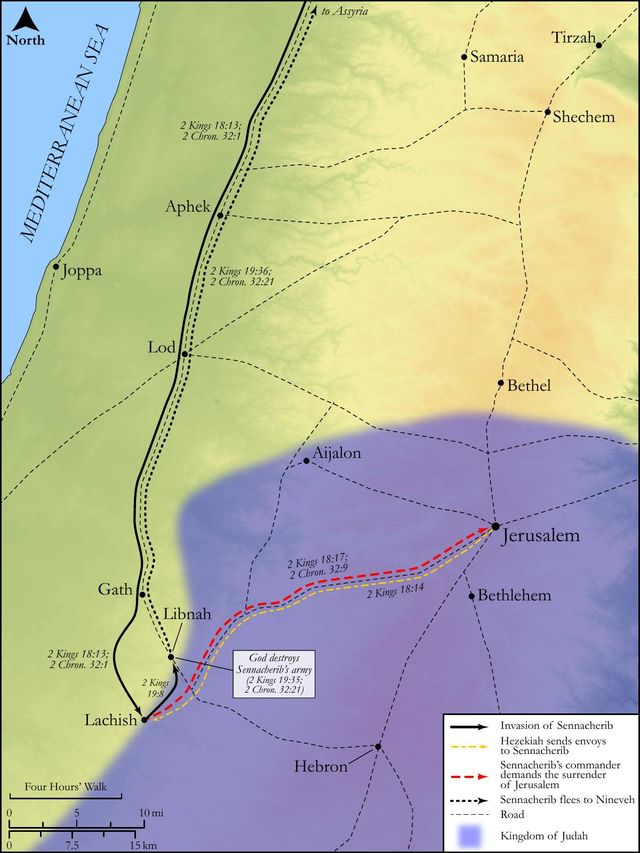
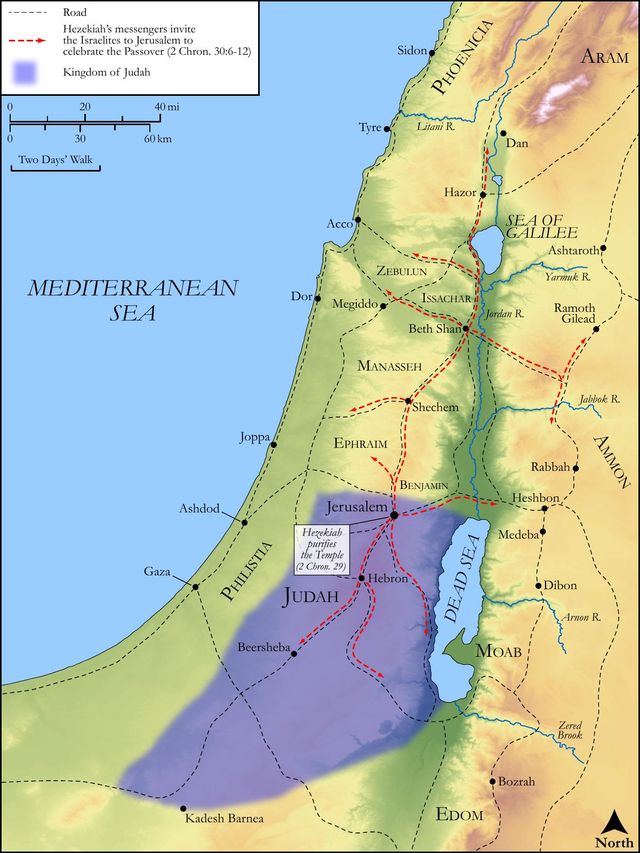
This verse is strategically placed within the narrative of Judah's confrontation with the formidable Neo-Assyrian Empire under King Sennacherib, specifically detailed in 2 Chronicles 32. Immediately preceding Hezekiah's address, the text meticulously describes his diligent and comprehensive human preparations for the impending siege: strengthening city defenses, repairing the wall, building towers, and securing Jerusalem's water supply (2 Chronicles 32:5-6). Having exhausted all human means of defense, Hezekiah then shifts focus from physical readiness to spiritual resolve. He gathers his military commanders and the people, not to rally them for a conventional fight, but to bolster their faith. His words in 2 Chronicles 32:7-8 are a powerful theological encouragement, directly countering the psychological warfare and blasphemous taunts that Sennacherib would soon unleash upon Jerusalem (2 Chronicles 32:9-19). The people's profound and positive response to Hezekiah's words sets the stage for the miraculous divine intervention that follows, where the angel of the LORD devastates the Assyrian army, demonstrating God's ultimate sovereignty (2 Chronicles 32:21).
Historical & Cultural Context
The events of 2 Chronicles 32 transpired around 701 BCE, during the reign of King Hezekiah of Judah, a period dominated by the formidable and brutal Neo-Assyrian Empire. Sennacherib, the Assyrian king, was renowned for his relentless military campaigns, systematic sieges, and psychological tactics designed to demoralize enemies into swift surrender. By this time, Assyria had already conquered the Northern Kingdom of Israel (722 BCE) and many fortified cities of Judah, leaving Jerusalem as the last significant stronghold. The Assyrians relied on overwhelming military might, advanced siege technology, and a firm belief in the supremacy of their national gods. In stark contrast, Judah, a smaller nation, faced an existential threat. Hezekiah's address was delivered within a cultural context where kings were expected to provide both military and spiritual leadership. His words aimed to counteract the pervasive fear and the enemy's propaganda by redirecting the people's trust from human strength to the covenant-keeping God of Israel, a concept deeply rooted in Israelite theology and their history of miraculous divine deliverance, such as the crossing of the Red Sea. This historical backdrop underscores the radical nature of Hezekiah's faith-filled message.
Key Themes
ShowHideThis verse powerfully encapsulates several key themes prevalent throughout 2 Chronicles and the broader Old Testament. Foremost is the contrast between divine and human strength, emphasizing that human power, symbolized by "an arm of flesh," is inherently limited, fallible, and unreliable when compared to the omnipotent "LORD our God." This highlights God's sovereignty and supremacy over all earthly powers, a recurring motif in the Chronicler's theology, particularly in the accounts of faithful kings. The verse also underscores God's character as a divine warrior and deliverer, actively intervening "to help us, and to fight our battles," echoing earlier accounts like Exodus 14:14. Furthermore, the people's act of "resting themselves upon the words of Hezekiah" illustrates the vital theme of faith and trust in God's promises, particularly as conveyed through faithful leadership. It demonstrates the power of godly encouragement to inspire confidence and peace in the midst of fear, reinforcing the idea that true security is found not in human might but in divine protection and the unwavering faithfulness of God, as seen throughout the narratives of Judah's kings who trusted in the Lord.
Exposition and Analysis
ShowHideKey Word Analysis
ShowHideThis word literally refers to the arm or foreleg, but figuratively denotes strength, power, or force. In the idiom "arm of flesh," it specifically highlights human military might or capability. When contrasted with the "arm of the LORD," it underscores the inherent limitation and weakness of human power compared to divine omnipotence, as seen in passages like Isaiah 53:1.
This term refers to flesh, body, or person. In biblical thought, especially when juxtaposed with the divine, "flesh" often carries connotations of weakness, mortality, and transience. Thus, "arm of flesh" (combining H2220 and H1320) powerfully signifies a limited, fallible, and ultimately unreliable source of power, incapable of standing against the true might of God. It emphasizes the ephemeral nature of human strength.
This verb means to prop, lean upon, rely on, or be upheld by something. In this context, it signifies a profound act of trust, confidence, and finding support. The people did not merely hear Hezekiah's words; they internalized them, found solace and security in them, and consequently released their fear and anxiety. This "resting" implies a deep-seated conviction that Hezekiah's message was true and that God would indeed act on their behalf, leading to a spiritual and emotional calm amidst the physical threat.
Verse Breakdown
ShowHide"With him [is] an arm of flesh;"
This initial clause refers to Sennacherib and the Assyrian army, acknowledging their formidable human military power, vast numbers, and reliance on their own might. However, by labeling it "an arm of flesh," Hezekiah immediately diminishes its ultimate significance, highlighting its inherent weakness, mortality, and inability to prevail against divine power. It sets the stage for the crucial, contrasting declaration that follows, establishing the human, finite nature of the enemy's strength.
"but with us [is] the LORD our God to help us, and to fight our battles."
This is the core declaration of faith and the theological counterpoint, introduced by the powerful adversative conjunction "but." Judah's true strength is not in human might but in the covenant-keeping God, Yahweh (the LORD). The phrase "our God" emphasizes His relational commitment and ownership of His people. He is presented not as a passive deity, but as actively present "to help us" (providing assistance, succor, and support) and "to fight our battles" (acting as a divine warrior on their behalf). This promises direct, powerful, and decisive divine intervention, shifting the focus entirely from human capability to divine omnipotence and active engagement.
"And the people rested themselves upon the words of Hezekiah king of Judah."
This final clause describes the immediate and profound impact of Hezekiah's address. Despite the overwhelming threat of the Assyrian army, the people chose to believe and find confidence in the king's God-inspired message. Their "resting" signifies a cessation of fear and anxiety, replaced by a deep trust and assurance in God's promised deliverance. It underscores the power of faithful leadership and the people's receptivity to divine truth, demonstrating that spiritual resolve and trust are as crucial as physical preparation in times of crisis.
Literary Devices
ShowHideThe verse effectively employs Antithesis as its primary literary device, creating a stark contrast between two opposing forces: the "arm of flesh" (representing human, finite power) and "the LORD our God" (representing divine, infinite power). This contrast is central to Hezekiah's rhetorical strategy, designed to reorient the people's perspective from the visible, terrifying might of Assyria to the invisible, omnipotent power of God. The phrase "arm of flesh" also functions as a Metonymy or Synecdoche, where "arm" represents military strength or human capability as a whole, and "flesh" represents humanity in its weakness and mortality. Furthermore, Hezekiah's speech is a powerful example of Exhortation, a form of discourse intended to encourage, advise, or warn, effectively rallying the people's faith and trust in God. The final statement, "And the people rested themselves upon the words of Hezekiah king of Judah," serves as a Narrative Affirmation, confirming the immediate and positive impact of Hezekiah's faith-filled words on the morale and trust of the populace, demonstrating the transformative power of a divinely inspired message.
Theological and Thematic Connections
ShowHide2 Chronicles 32:8 articulates a foundational biblical principle: the futility of human strength when pitted against divine power, and the absolute necessity of trusting in God alone for deliverance. This truth resonates throughout Scripture, affirming God's sovereignty over all nations and His unwavering commitment to His covenant people. It highlights that true security and victory are not found in military might, political alliances, or human ingenuity, but in the active presence and intervention of the Almighty. Hezekiah's declaration echoes the consistent biblical message that God is the ultimate warrior who fights for His own, providing help and salvation when all human efforts fail. The people's response of "resting" upon Hezekiah's words demonstrates the vital role of faith, which translates into peace and confidence even in the direst circumstances, serving as a powerful example for all generations.
Reflection and Application
ShowHideIn a world that often champions self-reliance, technological advancement, and human ingenuity as the ultimate solutions to complex problems, 2 Chronicles 32:8 serves as a timeless reminder of where our ultimate hope and strength truly lie. Like the people of Judah facing an overwhelming Assyrian army, we often encounter "battles" that seem insurmountable—personal crises, health struggles, financial pressures, societal unrest, spiritual attacks, or even global pandemics. In such moments, the natural temptation is to rely solely on our "arm of flesh"—our own resources, intellect, connections, or perceived control. Hezekiah's profound declaration calls us to look beyond our limited human capabilities and place our trust in the infinite power of "the LORD our God." This doesn't negate responsible preparation or wise action, as Hezekiah himself demonstrated, but it radically reorients our ultimate dependence. When we genuinely "rest" upon God's promises, as the people did upon Hezekiah's words, we find a profound peace that transcends understanding, knowing that the Almighty is actively engaged in our struggles, fighting on our behalf. This truth empowers us to face adversity not with fear, but with courageous faith, confident in the One who is greater than any earthly threat and who holds our lives in His sovereign hands.
Questions for Reflection
ShowHideFAQ
ShowHideWhat does "arm of flesh" signify in this verse?
ShowHideThe phrase "arm of flesh" is a powerful biblical idiom representing human strength, power, or military might. It highlights the inherent weakness, mortality, and unreliability of human capabilities when contrasted with the infinite power of God. In the context of 2 Chronicles 32:8, it specifically refers to the vast and formidable Assyrian army, whose strength, though terrifyingly real and impressive, was ultimately limited and fallible compared to the omnipotence of the LORD. It's a profound statement that human might, no matter how grand or intimidating, is ultimately insufficient against divine will and power.
Why was Hezekiah's speech so impactful on the people?
ShowHideHezekiah's speech was profoundly impactful because it directly addressed the people's deepest fears and anxieties with a profound theological truth. In a moment of extreme national crisis, facing an overwhelming enemy known for its brutality and psychological warfare, Hezekiah did not offer false hope or mere human strategy. Instead, he boldly contrasted the enemy's reliance on human strength with Judah's reliance on the living God, who actively helps and fights for His people. His words were perceived as a conduit of divine truth and reassurance, inspiring genuine trust and courage. The people "rested themselves upon" his words, indicating they found genuine solace, confidence, and peace, choosing to believe in God's promised intervention rather than succumbing to despair. This demonstrates the transformative power of faithful, God-centered leadership to unite and strengthen a community in times of adversity, as seen in 2 Chronicles 32:7.
Does trusting God to "fight our battles" mean we should do nothing?
ShowHideNo, trusting God to "fight our battles" does not mean passive inaction or neglecting our responsibilities. In fact, the narrative leading up to 2 Chronicles 32:8 clearly shows Hezekiah diligently preparing for the siege by strengthening defenses, organizing his army, and securing water supplies (2 Chronicles 32:5-6). This demonstrates that human responsibility and divine intervention are not mutually exclusive but work in tandem. Trusting God means that our efforts are rooted in and empowered by His divine strength, not solely our own. It means acknowledging that ultimate victory comes from Him, and that even our best human efforts are futile without His blessing and intervention. It's about aligning our actions with His will and relying on His power to accomplish what we cannot, recognizing that He is the ultimate source of our help and triumph.
Christ-Centered Fulfillment
ShowHideThe declaration in 2 Chronicles 32:8 finds its ultimate and most profound fulfillment in the person and work of Jesus Christ. He is the very embodiment of the "arm of the LORD" (Isaiah 53:1), the divine power made manifest in human form, utterly unlike the "arm of flesh" that Hezekiah contrasted. While human strength is limited, fallible, and prone to failure, Christ's power is infinite, securing eternal victory over the most formidable adversaries. He did not come with an "arm of flesh" to fight earthly battles in the way the Assyrians did, but with divine authority to conquer the ultimate enemies of humanity: sin, death, and the devil (Hebrews 2:14-15). Through His crucifixion and resurrection, Jesus decisively "disarmed the powers and authorities, he made a public spectacle of them, triumphing over them by the cross" (Colossians 2:15). For believers today, our reliance is not on our own strength, wisdom, or resources, but on the finished work of Christ. He is our helper and fights our spiritual battles, equipping us with His strength when we are weak (2 Corinthians 12:9-10). We are called to "rest" in His completed salvation, finding true peace and confidence in Him, knowing that through Him, "we are more than conquerors" (Romans 8:37). Just as the people rested on Hezekiah's words, so we rest on the infallible Word of God, revealed fully and perfectly in Christ, our ultimate Deliverer, Champion, and the one who has already secured our eternal victory.