


1 Thessalonians 3:11
Bible text: King James Version (1769 Blayney text) · Public domain
Bible text: Berean Standard Bible · Public domain
Bible text: American Standard Version (1901) · Public domain
Bible text: World English Bible, Messianic edition · Public domain
Bible text: Geneva Bible (1599) · Public domain
Bible text: Young's Literal Translation · Public domain
- ΑὐτὸςAutosHimselfG846P-NSMPersonal pronoun Nominative Singular Masculine
- δὲdenowG1161CONJConjunction
- ὁhotheG3588T-NSMDefinite article Nominative Singular Masculine
- θεὸςtheosGodG2316N-NSM-TNoun Nominative Singular Masculine Title
- καὶkaiandG2532CONJConjunction
- πατὴρpatērFatherG3962N-NSM-TNoun Nominative Singular Masculine Title
- ἡμῶνhēmōnof usG3165P-1GPPersonal pronoun Genitive 1st Plural
- καὶkaiandG2532CONJConjunction
- ὁhotheG3588T-NSMDefinite article Nominative Singular Masculine
- κύριοςkuriosLordG2962N-NSM-TNoun Nominative Singular Masculine Title
- ἡμῶνhēmōnof usG3165P-1GPPersonal pronoun Genitive 1st Plural
- ἸησοῦςIēsousJesusG2424N-NSM-PNoun Nominative Singular Masculine Individual
- ΧριστόςChristosChristG5547N-NSM-TNoun Nominative Singular Masculine Title
- κατευθύναιkateuthunaiwould directG2720V-AAO-3SVerb Aorist Active Optative 3rd Singular
- τὴνtēntheG3588T-ASFDefinite article Accusative Singular Feminine
- ὁδὸνhodonwayG3598N-ASFNoun Accusative Singular Feminine
- ἡμῶνhēmōnof usG3165P-1GPPersonal pronoun Genitive 1st Plural
- πρὸςprostoG4314PREPPreposition
- ὑμᾶς·humasyouG4771P-2APPersonal pronoun Accusative 2nd Plural
English is a literal word-by-word gloss of the Greek, not the KJV's wording. Why?
This is the original text the KJV's translators worked from — each Greek word with its own literal English meaning in this verse, prepared by scholars at Tyndale House, Cambridge. The KJV translates whole sentences, not word by word, so its wording differs: one Greek word can become several English words, and the KJV may choose “charity” where the gloss reads “love”. Both are faithful — they answer different questions. For the KJV's own rendering, switch to the KJV text.
Details
See on the biblical-era maps

Study this verse
Public-domain commentary
Matthew Henry
From his Commentary on the Whole Bible. Henry comments on passages, not single verses — this entry covers 1 Thessalonians 3:11–13. His two-level outline is real structure in the source text, so it is rendered as structure.
In these words we have the earnest prayer of the apostle. He desired to be instrumental in the further benefit of the Thessalonians; and the only way to be so while at a distance was by prayer for them, together with his writing or sending to them. He desired that their faith might be perfected, which he could not be the proper cause or author of; for he pretended not to dominion over their faith, nor to have the donation of it, and he therefore concludes with prayer for them. Observe,
I.Whom he prays to, namely, God and Christ.
Prayer is a part of religious worship, and all religious worship is due unto God only. Prayer is here made to God, even the Father and our Father; and also to Christ, even our Lord Jesus Christ. Therefore Jesus Christ our Lord is God, even as God our Father is God. Prayer is to be offered to God as our Father. So Christ taught his disciples to pray; and so the Spirit of adoption prompts them to pray, to cry, Abba Father. Prayer is not only to be offered in the name of Christ, but offered up to Christ himself, as our Lord and our Saviour.
II.What he prays for, with respect to himself and his fellow-labourers, and on behalf of the Thessalonians.
1.He prays that himself and fellow-labourers might have a prosperous journey to them by the will of God, that their way might be directed to them, Th1 3:11. The taking of a journey to this or that place, one would think, is a thing depending so much on a man's own will, and lies so much in his own power, that Paul needed not by prayer to go to God about it. But the apostle knew that in God we live, and move, and have our being, that we depend upon God in all our motions and actions, as well as for the continuance of life and being, that divine Providence orders all our affairs and that it is owing thereto if we prosper therein, that God our Father directs and orders his children whither they shall go and what they shall do, that our Lord Jesus Christ in a particular manner directs the motions of his faithful ministers, those stars which he holds in his right hand. Let us acknowledge God in all our ways, and he will direct our paths.
2.He prays for the prosperity of the Thessalonians. Whether he should have an opportunity of coming to them or not, yet he earnestly prayed for the prosperity of their souls. And there are two things he desired for them, which we should desire for ourselves and friends: - (1.) That they might increase and abound in love (Th1 3:12), in love to one another and in love to all men. Note, Mutual love is required of all Christians, and not only that they love one another, but that they also have a charitable disposition of mind and due concern for the welfare of all men. Love is of God, and is the fulfilling of the gospel as well as of the law. Timothy brought good tidings of their faith, yet something was lacking therein; and of their charity, yet the apostle prays that this might increase and abound. Note, We have reason to desire to grow in every grace, and have need of the Spirit's influence in order to growth in grace; and the way to obtain this is by prayer. We are beholden to God not only for the stock put into our hands at first, but for the improvement of it also. And to our prayer we must add endeavour. To excite this in the Thessalonians the apostle again mentions his love, his abounding love, towards them. The more we are beloved, the more affectionate we should be. (2.) That they might be established unblamable in holiness, Th1 3:13. This spiritual benefit is mentioned as an effect of increasing and abounding love: To the end that he (the Lord) may establish your hearts. Note, The more we grow and abound in grace, and particularly in the grace of love, the more we are established and confirmed in it. Note also, Holiness is required of all those who would go to heaven, and therein we must be unblamable; that is, we must act in every thing so that we may not in the least contradict the profession we make of holiness. Our desire should be to have our hearts established in holiness before God, and be preserved safe, to the coming of the Lord Jesus Christ; and that we may be unblamable before God, even the Father, now, and be presented blameless before the throne of his glory, when the Lord Jesus shall come with all his saints. Note, [1.] The Lord Jesus will certainly come, and come in his glory. [2.] When he comes, his saints will come with him: They shall appear with him in glory. [3.] Then the excellency as well as the necessity of holiness will appear, because without this no hearts shall be established at that day, nor shall any one be unblamable, or avoid everlasting condemnation.
Historical interpretation
Historical reception
3 surviving comments on this verse. Each one is dated, so this reads as a timeline rather than a list.
Select a marker to jump to its quote. Markers stagger vertically where authors wrote within a few decades of each other.
For one and the same grace is from the Father in the Son, as the light of the sun and the sun’s radiance is one, and as the sun’s illumination is effected through the radiance. So too when Paul prays for the Thessalonians, in saying, “Now God himself our Father, and the Lord Jesus Christ, may he direct our way to you,” he has guarded the unity of the Father and of the Son. For he has not said, “May they direct,” as if a double grace were given from two sources … but “May he direct,” to show that the Father gives grace through the Son—at which these irreligious ones will not blush, though they well might.
Again, this is said that you may know that the Father is, and the Son is, and that the work of the Father and the Son is one. Note the saying of the apostle, “Now may God himself, and our Father, and our Lord Jesus Christ direct our way to you.” Both Father and Son are named, but there is unity of direction, because there is unity of power. So also in another place we read, “Now may our Lord himself, Jesus Christ, and God and our Father, who has loved us, and given us eternal consolation, and good hope in grace, console and strengthen your hearts.” How perfect a unity it is that the apostle presents to us, insomuch that the fountain of consolation is one fountain, not many. Let doubt be silenced, then, or if it will not be overcome by reason, let the thought of our Lord’s gracious kindness incline it in the right direction.
"Now may our God and Father Himself, and our Lord Jesus Christ direct our way unto you: and the Lord make you to increase and abound in love one toward another, and toward all men, even as we also do toward you."
This is a proof of excessive love, that he not only prays for them by himself, but even in his Epistles inserts his prayer. This argues a fervent soul, and one truly not to be restrained. This is a proof of the prayers made there also, and at the same time also an excuse, as showing that it was not voluntarily, nor from indolence, that they did not go to them. As if he had said, May God Himself cut short the temptations that everywhere distract us, so that we may come directly to you. "And the Lord make you to increase and abound." Do you see the unrestrainable madness of love that is shown by his words? "Make you to increase and abound," instead of cause you to grow. As if one should say, that with a kind of superabundance he desires to be loved by them. "Even as we do also toward you," he says. Our part is already done, we pray that yours may be done. Do you see how he wishes love to be extended, not only toward one another, but everywhere? For this truly is the nature of godly love, that it embraces all. If you love indeed such an one, but do not love such an one, it is human love. But such is not ours. "Even as we do also toward you."
Continue studying 1 Thessalonians 3:11 across the web’s major study libraries — every link below opens this exact verse, chapter, or book on the destination site.
Read & Compare
 BibleGatewayThis verse in more than 200 translations and 70 languages.
 Bible.comThe YouVersion reader — hundreds of translations, reading plans, and highlights.
 ESV.orgCrossway's official English Standard Version reader.
 NET BibleThe NET translation with 60,000+ translators' notes on every rendering decision.
 STEP BibleTyndale House's free study tool — original text, vocabulary, and scholarly resources.
 BibliaLogos Bible Software's free web reader.
 USCCBThe New American Bible (Revised Edition) with the U.S. bishops' study notes.
Commentaries
 BibleHub CommentariesDozens of classic commentaries on this verse, gathered on one page.
 StudyLightMore than 100 commentary sets — the largest collection on the web.
 BibleRefPlain-English commentary on what this verse means, verse by verse.
 Enduring WordDavid Guzik's free commentary on this chapter, widely used by Bible teachers.
 Bible Study ToolsVerse commentary alongside Greek and Hebrew study aids.
Original Language & Research
- BibleHub InterlinearThe verse word by word — original language, transliteration, and English.
- BibleHub LexiconEvery word's original-language definition and Strong's entry.
 Blue Letter BibleDeep-study tools — Strong's numbers, concordance, and word studies.
 CNTR CollationThe earliest Greek manuscripts of this verse, collated letter by letter.
Sermons, Hymns & Audio


TrulyRandomVerse is not affiliated with these sites and doesn’t control their content. They’re linked because they’re genuinely useful.
Summary
In 1 Thessalonians 3:11, the Apostle Paul, along with Silas and Timothy, offers a heartfelt and direct prayer to God the Father and the Lord Jesus Christ, earnestly requesting divine intervention to clear and establish a path for their return visit to the believers in Thessalonica. This verse encapsulates a profound reliance on God's sovereign will and guidance for the furtherance of their apostolic ministry and the deepening of Christian fellowship, highlighting the deep pastoral care Paul held for the nascent church.
Context
ShowHideLiterary Context
This prayer marks a pivotal transition in Paul's letter to the Thessalonians. Chapters 1 and 2 recount Paul's past relationship with them, his gospel proclamation, and the persecution he endured. Chapter 3 then shifts to Paul's deep concern for the Thessalonians after his forced departure from their city. He had sent Timothy to strengthen and encourage them in their faith amidst trials, fearing that the tempter might have undermined their steadfastness (1 Thessalonians 3:2-5). Upon Timothy's return with a positive report of their faith and love, Paul was greatly comforted (1 Thessalonians 3:6-8). This comfort, however, did not diminish his desire for a personal reunion. Immediately preceding this verse, Paul expresses his intense longing to see them again "face to face" and to "perfect that which is lacking in your faith" (1 Thessalonians 3:10). Thus, 1 Thessalonians 3:11 is a direct, fervent prayer arising from this deep pastoral desire, seeking divine enablement for that reunion.
Historical & Cultural Context
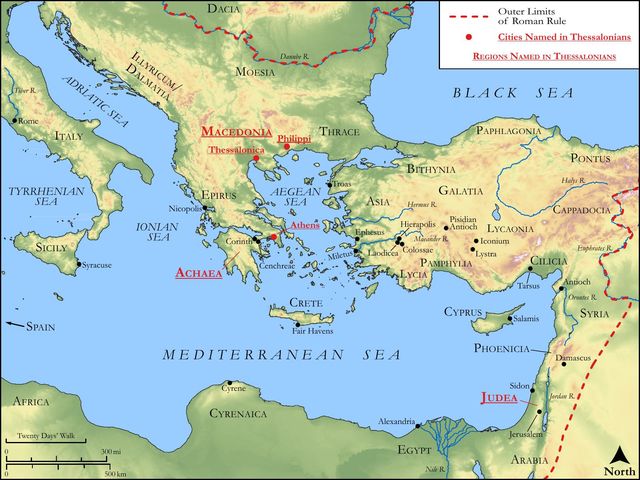
Paul's ministry in Thessalonica, as recounted in Acts 17:1-9, was powerful but brief, ending abruptly due to intense Jewish opposition that stirred up a mob. This forced Paul and his companions to flee to Berea, and then Paul alone to Athens, before eventually reaching Corinth. The Thessalonian church was young, likely composed of both Jewish converts and a significant number of "devout Greeks" (Acts 17:4), meaning Gentile God-fearers. They were facing considerable persecution themselves, mirroring the suffering of the churches in Judea (1 Thessalonians 2:14). In that day, travel was arduous and often dangerous, subject to weather, banditry, and political instability. Paul's reliance on divine direction for his journeys was not merely spiritual but also practical, acknowledging the many obstacles that could prevent a planned trip. His prayer seeks divine favor and guidance for a significant undertaking, particularly a journey, as Ezra sought a right way from God at the river Ahava.
Key Themes
ShowHideThe prayer in this verse contributes significantly to several overarching themes in 1 Thessalonians and Paul's broader theology. Firstly, it underscores the theme of Divine Sovereignty and Guidance. Paul, despite his apostolic authority and strategic planning, consistently submitted his movements and ministry to God's ultimate control, recognizing that true success came only through divine enablement. This is a recurring motif in his letters, as seen in his appeals for prayer regarding open doors for the gospel (Colossians 4:3) or his plans to visit Rome (Romans 1:10). Secondly, the verse highlights Pastoral Care and Apostolic Affection. Paul's deep longing to return to Thessalonica is a testament to his profound love and concern for the spiritual maturity and well-being of the believers, emphasizing the importance of personal fellowship and encouragement within the Christian community. Finally, it subtly reinforces the Unity of the Godhead, as Paul addresses "God himself and our Father, and our Lord Jesus Christ" as co-equal and co-active in directing their path, demonstrating a practical understanding of the Trinitarian nature of God in prayer and ministry.
Exposition and Analysis
ShowHideKey Word Analysis
ShowHideThis term refers to the supreme Divinity, the ultimate, sovereign Being. In this context, Paul invokes the very essence of divine power and authority, appealing to the one who alone possesses the ability to orchestrate circumstances and direct human paths. It emphasizes that the request is directed to the highest authority in the universe, capable of fulfilling what is humanly impossible.
Meaning "to straighten fully" or "to guide directly," this verb implies more than just a general leading. It suggests removing obstacles, making a path clear, and ensuring a precise and unimpeded journey to a desired destination. Paul is not merely asking for a general blessing on their travels, but for God and Christ to actively clear and prepare the specific route for their return to Thessalonica, ensuring its successful completion.
This word literally means "a road" or "a journey," but figuratively, it can refer to a "mode" or "means." In this context, it signifies the entire course of their travel, including the circumstances, opportunities, and actual physical path required for Paul and his companions to reach Thessalonica. It encompasses not just the physical route but the divine arrangement of events that would permit their reunion.
Verse Breakdown
ShowHide"Now God himself and our Father, and our Lord Jesus Christ,"
Paul initiates his prayer by addressing the Triune God, specifically mentioning God the Father and the Lord Jesus Christ together. This joint invocation underscores their co-equality and unified purpose in divine action. The inclusion of "himself" (G846, autós') emphasizes the direct, personal involvement of God, not merely a general providence, but an active, intentional intervention. This form of address highlights the intimate relationship believers have with God as "our Father" and the supreme authority of "our Lord Jesus Christ."
"direct our way"
This is the core petition of the prayer. Paul is asking for divine guidance and enablement for his journey. The verb "direct" (kateuthýnō') implies making a path straight, removing obstacles, and ensuring a clear and successful journey. It reflects a complete reliance on God's sovereignty to open the way for their return, acknowledging that human plans are insufficient without divine approval and assistance.
"unto you."
The specific destination and purpose of the desired direction are clearly stated: to the Thessalonian believers. This reveals Paul's deep pastoral heart and his earnest longing for personal fellowship and further ministry among them. It emphasizes the relational aspect of his apostolic work and his commitment to the spiritual well-being of the churches he founded.
Literary Devices
ShowHideThe verse primarily employs Apostolic Intercession, a form of prayer where an apostle or spiritual leader petitions God on behalf of himself and others, often for the furtherance of ministry or the well-being of a community. This specific prayer also functions as a Supplication, a humble and earnest request to a higher power. Furthermore, the joint address to "God himself and our Father, and our Lord Jesus Christ" exemplifies a subtle form of Trinitarian Implication, where the Father and the Son are presented as co-active in divine providence, reflecting the unified will of the Godhead. The phrase "direct our way" uses Metaphor or Figurative Language, where a physical journey ("way") represents the broader circumstances and divine orchestration necessary for their reunion, implying the removal of spiritual and practical obstacles.
Theological and Thematic Connections
ShowHideThis prayer beautifully articulates the profound dependence of apostolic ministry on divine sovereignty and guidance. Paul's appeal to "God himself and our Father, and our Lord Jesus Christ" for direction highlights a foundational theological truth: that all effective ministry flows from and is sustained by the unified will and power of the Godhead. It demonstrates that even the most zealous and Spirit-filled apostles did not presume upon their own abilities or plans but consistently sought God's explicit intervention to open doors for ministry, overcome obstacles, and facilitate fellowship. This reliance underscores the biblical principle that human efforts, no matter how well-intentioned, are ultimately futile without God's enabling grace and sovereign direction, reinforcing the idea that God is actively involved in orchestrating the paths of His servants for His purposes.
Reflection and Application
ShowHidePaul's earnest prayer in 1 Thessalonians 3:11 serves as a powerful model for believers today, reminding us of the critical importance of seeking divine direction in all aspects of our lives, especially in our service to God and our relationships within the body of Christ. In a world that often emphasizes self-reliance and meticulous human planning, Paul's example calls us to a posture of humble dependence on God's sovereign will. Whether we are making significant life decisions, planning ministry endeavors, or simply navigating daily challenges, we are invited to bring our desires and plans before the Lord, trusting that He is able to "direct our way" and make our paths straight. This prayer also highlights the value of Christian fellowship; Paul's longing to be physically present with the Thessalonians underscores that while digital connections are useful, there is an irreplaceable richness in face-to-face community and mutual encouragement among believers. We should prioritize gathering with and serving one another, always praying for God to open doors for deeper connection and spiritual growth within our local churches and beyond.
Questions for Reflection
ShowHideFAQ
ShowHideWhy does Paul address both "God himself and our Father" and "our Lord Jesus Christ" in this prayer?
ShowHidePaul's joint address to "God himself and our Father, and our Lord Jesus Christ" is significant because it highlights the unified nature and co-equality of the Father and the Son in the divine work of orchestrating human affairs and directing the paths of believers. It reflects a nascent Trinitarian understanding, where both persons of the Godhead are active participants in providence and responsive to prayer. Paul consistently attributes divine prerogatives and actions to both the Father and Jesus Christ throughout his letters, demonstrating their shared authority and purpose in salvation and sanctification. This specific phrasing emphasizes that the power and authority to "direct our way" reside fully in both the Father and the Son, reinforcing the comprehensive nature of divine sovereignty. It's a powerful statement of faith in the active involvement of the entire Godhead in the lives of His people and the progress of His kingdom.
Christ-Centered Fulfillment
ShowHideWhile 1 Thessalonians 3:11 is a specific prayer for Paul's physical journey, it finds its ultimate Christ-centered fulfillment in the broader reality of Jesus as the one who not only directs our way but is the Way. Jesus declared, "I am the way, the truth, and the life: no man cometh unto the Father, but by me". This profound statement means that Christ Himself is the ultimate path to God, and by extension, the one through whom all of life's journey, both spiritual and practical, is to be navigated. Paul's prayer for God and Christ to "direct our way" is answered supremely in the person of Jesus, who through His Spirit, guides believers into all truth and righteousness (John 16:13). He is the Good Shepherd who leads His sheep (John 10:3-4), ensuring they walk in paths of righteousness for His name's sake (Psalm 23:3). Therefore, every request for divine direction, like Paul's, is ultimately a plea for Christ's active presence and guidance in our lives, for He is the one who makes our paths straight and enables us to fulfill God's purposes, ultimately leading us home to the Father.