


1 Kings 8:1
- אָז'azthenH227AdvAdverb
- יַקְהֵלyak·Helhe called togetherH6950V-Hiphil-Imperf-3msVerb Hiphil Imperfect 3rd Singular Masculine
- שְׁלֹמֹהshe·lo·MohSolomonH8010N-proper-mNoun Proper Masculine
- אֶת'et<obj.>H853DirObjMParticle Object Indicator
- זִקְנֵיzik·Nei[the] elders ofH2205Adj-mpcAdjective Plural Masculine Construct
- יִשְׂרָאֵלYis·ra·'ElIsraelH3478N-properNoun Proper Location
- אֶת'et<obj.>H853DirObjMParticle Object Indicator
- כָּלkolallH3605N-mscNoun Singular Masculine Construct
- רָאשֵׁיra·Shei[the] chiefs ofH7218N-mpcNoun Plural Masculine Construct
- הַמַּטּוֹתha·ma·tOtthe tribesH4294Art ¦ N-fpNoun Plural Feminine Absoluteהַtheמַּטּוֹתtribes
- נְשִׂיאֵיne·si·'Ei[the] leaders ofH5387N-mpcNoun Plural Masculine Construct
- הָאָבוֹתha·'a·Votthe fathersH1Art ¦ N-fpNoun Plural Feminine Absoluteהָtheאָבוֹתfathers
- לִבְנֵיliv·Neiof [the] people ofH1121Prep-l ¦ N-mpcNoun Plural Masculine Constructלִofבְנֵי[the] people of
- יִשְׂרָאֵלYis·ra·'ElIsraelH3478N-properNoun Proper Location
- אֶל'eltoH413PrepPreposition
- הַמֶּלֶךְha·Me·lekhthe kingH4428Art ¦ N-msNoun Singular Masculine Absoluteהַtheמֶּלֶךְking
- שְׁלֹמֹהshe·lo·MohSolomonH8010N-proper-mNoun Proper Masculine
- יְרוּשָׁלִָםye·ru·sha·LimJerusalemH3389N-properNoun Proper Location
- לְהַעֲלוֹתle·ha·'a·Lotto bring upH5927Prep-l ¦ V-Hiphil-InfVerb Hiphil Infinitive Constructלְtoהַעֲלוֹתbring up
- אֶת'et<obj.>H853DirObjMParticle Object Indicator
- אֲרוֹן'a·Ron[the] ark ofH727N-mscNoun Singular Masculine Construct
- בְּרִיתbe·rit[the] covenant ofH1285N-fscNoun Singular Feminine Construct
- יְהוָהYah·wehYahwehH3068N-properNoun Proper Title
- מֵעִירme·'Irfrom [the] city ofH5892Prep-m ¦ N-fscNoun Singular Feminine Constructמֵfromעִיר[the] city of
- דָּוִדda·VidDavidH1732N-proper-mNoun Proper Masculine
- הִיאhi'thatH1931Pro-3fsPronoun Personal 3rd Singular Feminine
- צִיּוֹןtzi·Yon[is] ZionH6726N-properNoun Proper Location
English is a literal word-by-word gloss of the Hebrew, not the KJV's wording. Why?
This is the original text the KJV's translators worked from — each Hebrew word with its own literal English meaning in this verse, prepared by scholars at Tyndale House, Cambridge. The KJV translates whole sentences, not word by word, so its wording differs: one Hebrew word can become several English words, and the KJV may choose “the LORD” where the gloss reads “Yahweh”. Both are faithful — they answer different questions. For the KJV's own rendering, switch to the KJV text.
Details
See on the biblical-era maps
Study this verse
Public-domain commentary
Matthew Henry
From his Commentary on the Whole Bible. Henry comments on passages, not single verses — this entry covers 1 Kings 8:1–11. His three-level outline is real structure in the source text, so it is rendered as structure.
The temple, though richly beautified, yet while it was without the ark was like a body without a soul, or a candlestick without a candle, or (to speak more properly) a house without an inhabitant. All the cost and pains bestowed on this stately structure are lost if God do not accept them; and, unless he please to own it as the place where he will record his name, it is after all but a ruinous heap. When therefore all the work is ended (Kg1 7:51), the one thing needful is yet behind, and that is the bringing in of the ark. This therefore is the end which must crown the work, and which here we have an account of the doing of with great solemnity.
I.Solomon presides in this service, as David did in the bringing up of the ark to Jerusalem; and neither of them thought it below him to follow the ark nor to lead the people in their attendance on it. Solomon glories in the title of the preacher (Ecc 1:1), and the master of assemblies, Ecc 12:11. This great assembly he summons (Kg1 8:1), and he is the centre of it, for to him they all assembled (Kg1 8:2) at the feast in the seventh month, namely, the feast of tabernacles, which was appointed on the fifteenth day of that month, Lev 23:34. David, like a very good man, brings the ark to a convenient place, near him; Solomon, like a very great man, brings it to a magnificent place. As every man has received the gift, so let him minister; and let children proceed in God's service where their parents left off.
II.All Israel attend the service, their judges and the chief of their tribes and families, all their officers, civil and military, and (as they speak in the north) the heads of their clans. A convention of these might well be called an assembly of all Israel. These came together, on this occasion,
1.To do honour to Solomon, and to return him the thanks of the nation for all the good offices he had done in kindness to them.
2.To do honour to the ark, to pay respect to it, and testify their universal joy and satisfaction in its settlement. The advancement of the ark in external splendour, though it has often proved too strong a temptation to its hypocritical followers, yet, because it may prove an advantage to its true interests, is to be rejoiced in (with trembling) by all that wish well to it. Public mercies call for public acknowledgments. Those that appeared before the Lord did not appear empty, for they all sacrificed sheep and oxen innumerable, Kg1 8:5. The people in Solomon's time were very rich, very easy, and very cheerful, and therefore it was fit that, on this occasion, they should consecrate not only their cheerfulness, but a part of their wealth, to God and his honour.
III.The priests do their part of the service.
In the wilderness, the Levites were to carry the ark, because then there were not priests enough to do it; but here (it being the last time that the ark was to be carried) the priests themselves did it, as they were ordered to do when it surrounded Jericho. We are here told,
1.What was in the ark, nothing but the two tables of stone (Kg1 8:9), a treasure far exceeding all the dedicated things both of David and Solomon. The pot of manna and Aaron's rod were by the ark, but not in it.
2.What was brought up with the ark (Kg1 8:4): The tabernacle of the congregation. It is probable that both that which Moses set up in the wilderness, which was in Gibeon, and that which David pitched in Zion, were brought to the temple, to which they did, as it were, surrender all their holiness, merging it in that of the temple, which must henceforward be the place where God must be sought unto. Thus will all the church's holy things on earth, that are so much its joy and glory, be swallowed up in the perfection of holiness above.
3.Where it was fixed in its place, the place appointed for its rest after all its wanderings (Kg1 8:6): In the oracle of the house, whence they expected God to speak to them, even in the most holy place, which was made so by the presence of the ark, under the wings of the great cherubim which Solomon set up (Kg1 6:27), signifying the special protection of angels, under which God's ordinances and the assemblies of his people are taken. The staves of the ark were drawn out, so as to be seen from under the wings of the cherubim, to direct the high priest to the mercy-seat, over the ark, when he went in, once a year, to sprinkle the blood there; so that still they continued of some use, though there was no longer occasion for them to carry it by.
IV.God graciously owns what is done and testifies his acceptance of it, Kg1 8:10, Kg1 8:11.
The priests might come into the most holy place till God manifested his glory there; but, thenceforward, none might, at their peril, approach the ark, except the high priest, on the day of atonement. Therefore it was not till the priests had come out of the oracle that the Shechinah took possession of it, in a cloud, which filled not only the most holy place, but the temple, so that the priests who burnt incense at the golden altar could not bear it. By this visible emanation of the divine glory,
1.God put an honour upon the ark, and owned it as a token of his presence. The glory of it had been long diminished and eclipsed by its frequent removes, the meanness of its lodging, and its being exposed too much to common view; but God will now show that it is as dear to him as ever, and he will have it looked upon with as much veneration as it was when Moses first brought it into his tabernacle.
2.He testified his acceptance of the building and furnishing of the temple as good service done to his name and his kingdom among men.
3.He struck an awe upon this great assembly; and, by what they saw, confirmed their belief of what they read in the books of Moses concerning the glory of God's appearance to their fathers, that hereby they might be kept close to the service of the God of Israel and fortified against temptations to idolatry.
4.He showed himself ready to hear the prayer Solomon was now about to make; and not only so, but took up his residence in this house, that all his praying people might there be encouraged to make their applications to him. But the glory of God appeared in a cloud, a dark cloud, to signify,
(1.)The darkness of that dispensation in comparison with the light of the gospel, by which, with open face, we behold, as in a glass, the glory of the Lord.
(2.)The darkness of our present state in comparison with the vision of God, which will be the happiness of heaven, where the divine glory is unveiled. Now we can only say what he is not, but then we shall see him as he is.
Historical interpretation
Historical reception
1 surviving comment on this verse from the historical church.
The two weeks [of festivity] and the two solemn celebrations were accomplished by the people of the Lord with the greatest joy. The former prefigured the festivals of our church, which Christ began with the mystical dedication of his temple and the transferring of the flesh which he had assumed, to heaven; the latter foreshadowed the last day, the greatest of all solemn days, that will dawn for all saints after the resurrection of the flesh. And the distribution of the ministries and offices in the heavenly and everlasting temple will follow that day.
Continue studying 1 Kings 8:1 across the web’s major study libraries — every link below opens this exact verse, chapter, or book on the destination site.
Read & Compare
 BibleGatewayThis verse in more than 200 translations and 70 languages.
 Bible.comThe YouVersion reader — hundreds of translations, reading plans, and highlights.
 ESV.orgCrossway's official English Standard Version reader.
 NET BibleThe NET translation with 60,000+ translators' notes on every rendering decision.
 STEP BibleTyndale House's free study tool — original text, vocabulary, and scholarly resources.
 BibliaLogos Bible Software's free web reader.
 USCCBThe New American Bible (Revised Edition) with the U.S. bishops' study notes.
Commentaries
 BibleHub CommentariesDozens of classic commentaries on this verse, gathered on one page.
 StudyLightMore than 100 commentary sets — the largest collection on the web.
 BibleRefPlain-English commentary on what this verse means, verse by verse.
 Enduring WordDavid Guzik's free commentary on this chapter, widely used by Bible teachers.
 Bible Study ToolsVerse commentary alongside Greek and Hebrew study aids.
Original Language & Research
- BibleHub InterlinearThe verse word by word — original language, transliteration, and English.
- BibleHub LexiconEvery word's original-language definition and Strong's entry.
 Blue Letter BibleDeep-study tools — Strong's numbers, concordance, and word studies.
 SefariaThe Hebrew text with Rashi and centuries of Jewish commentary.
Sermons, Hymns & Audio


TrulyRandomVerse is not affiliated with these sites and doesn’t control their content. They’re linked because they’re genuinely useful.
Summary
1 Kings 8:1 marks the highly anticipated culmination of Solomon's Temple project, detailing the meticulous preparations for its dedication. This verse describes King Solomon's strategic convocation of all the prominent leaders of Israel—including the elders, tribal heads, and patriarchal chiefs—to Jerusalem. Their collective purpose was to ceremonially transport the Ark of the Covenant, the sacred emblem of God's presence and covenantal faithfulness, from its temporary location in the City of David (also known as Zion) to its permanent, consecrated resting place within the newly completed, magnificent Temple. This pivotal moment signifies the centralization of Israelite worship, the fulfillment of divine promises, and the establishment of Jerusalem as the spiritual heart of the unified kingdom.
Context
ShowHideLiterary Context
This verse serves as a crucial narrative transition, bridging the detailed architectural descriptions of the Temple's construction and furnishing in 1 Kings 6-7 with the grand dedication ceremony that unfolds throughout 1 Kings 8. Having completed the physical structure, the author now shifts focus to the spiritual climax: the solemn act of bringing the Ark of the Covenant into its designated sanctuary. The careful enumeration of the assembled leaders underscores the national significance and unity surrounding this sacred event, setting the stage for Solomon's profound dedication prayer, the descent of the Lord's glory, and the subsequent feasts, all of which emphasize the theological importance of God's dwelling among His people. This verse is the narrative gateway to the spiritual heart of the Temple's purpose.
Historical & Cultural Context
The construction of the Temple, spanning seven years, was the most ambitious national undertaking in Israel's history, a vision initially conceived by King David (2 Samuel 7:13). Its completion and dedication solidified Jerusalem's status as the undisputed religious and political capital of the Israelite monarchy. Culturally, the Ark of the Covenant was not merely an artifact; it was the most sacred object in Israel, representing God's throne, His active presence, and the very essence of the covenant relationship with His people (Exodus 25:22). Its relocation from the tent David had erected for it in the City of David (2 Samuel 6:17) to a permanent, glorious structure was an unparalleled event. The assembly of all national leaders for this specific purpose highlights the communal and covenantal nature of Israel's relationship with God, emphasizing that this was a unified, national act of worship and submission.
Key Themes
ShowHide1 Kings 8:1 introduces several pivotal themes that resonate throughout the book and the broader biblical narrative. Firstly, the theme of Divine Presence is paramount, with the Ark of the Covenant symbolizing Yahweh's tangible dwelling among His chosen people. The entire Temple project, culminating in the Ark's placement, is fundamentally about creating a sacred space for God to meet with Israel. Secondly, Unity and Centralization of Worship are powerfully evident in Solomon's assembly of all Israel's leaders; this act underscores the national consensus and the establishment of Jerusalem as the singular, divinely appointed center for Israelite worship, echoing aspects of Deuteronomic law (Deuteronomy 12). Thirdly, the Fulfillment of Promises is a prominent theme, as the Temple's completion and the Ark's installation represent the culmination of God's covenant promises to David regarding a lasting dynasty and a dwelling place for His name (1 Kings 6:1). Finally, Solomon's Leadership is highlighted, as he orchestrates this momentous event, demonstrating his role as the builder of God's house and the convener of the nation for sacred purposes.
Exposition and Analysis
ShowHideKey Word Analysis
ShowHideThis primitive root signifies a formal and intentional gathering or convocation, often with a profound religious or national purpose. It implies a deliberate act of bringing people together for a significant event, rather than a casual meeting. The root is closely related to the Hebrew noun for "assembly" or "congregation" (קָהָל, qahal), which in the Septuagint is frequently translated by ekklesia, the Greek word from which we derive "church." Thus, Solomon's act of "assembling" the leaders carries a deep theological weight, indicating a divinely sanctioned convocation of God's people for a sacred purpose.
This word refers to a box or chest, but in this context, it specifically denotes the sacred Ark of the Covenant. It was the most revered object in Israelite worship, a chest containing the tablets of the Ten Commandments, a pot of manna, and Aaron's rod. More than its contents, the Ark represented the very presence of Yahweh among His people, serving as His throne, the place of atonement (the mercy seat), and the visible sign of His covenant with Israel. Its movement was always accompanied by great solemnity and ritual, underscoring its immense spiritual significance as the focal point of God's interaction with humanity.
Derived from a root meaning "to cut" (referencing the ancient practice of cutting animals in two when making a covenant), this word refers to a compact, confederacy, or league. In the context of the "ark of the covenant," it denotes the foundational agreement between God and Israel, established at Mount Sinai. This covenant defined Israel's identity as God's chosen people and outlined their responsibilities to Him. The Ark served as the tangible representation and reminder of this sacred, binding relationship, embodying God's faithfulness to His promises and Israel's commitment to His laws.
Verse Breakdown
ShowHide"Then Solomon assembled the elders of Israel, and all the heads of the tribes, the chief of the fathers of the children of Israel, unto king Solomon in Jerusalem"
This opening clause meticulously details the comprehensive nature of the assembly. King Solomon, exercising his divinely appointed authority, gathers representatives from every stratum of Israelite society: the "elders" (wise and experienced leaders), "heads of the tribes" (representing the twelve tribal divisions), and "chief of the fathers" (patriarchal heads of families or clans). Their collective presence in Jerusalem signifies national unity and consensus for the momentous event, underscoring that this was not merely a royal decree but a communal act involving the entire nation's leadership in a sacred undertaking.
"that they might bring up the ark of the covenant of the LORD"
This phrase states the singular, explicit purpose of the grand assembly. The verb "bring up" (עָלָה, alah) often implies an ascent, both literally (Jerusalem is situated on a hill) and figuratively, signifying a solemn procession to a higher, more sacred place. The Ark, being the most sacred object in Israel, required the collective participation of the nation's leaders, emphasizing the profound reverence and awe due to God's presence as represented by the Ark. This was the spiritual climax for which the Temple was built.
"out of the city of David, which [is] Zion"
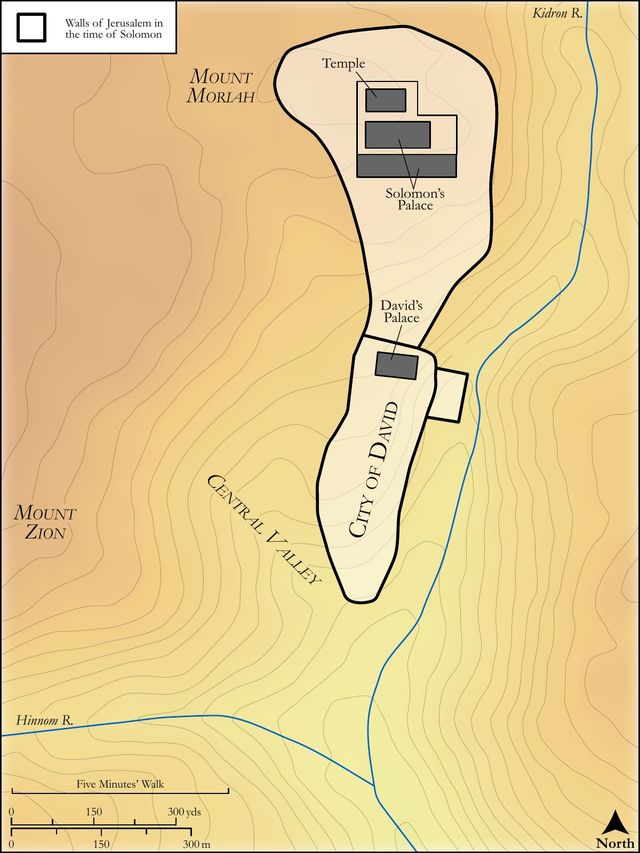
This final clause specifies the Ark's point of origin. It highlights the transition of the Ark from its temporary, tent-dwelling in the City of David (where David had brought it after its recovery and established a provisional sanctuary) to its permanent, glorious home in the newly built Temple. This geographical detail underscores the fulfillment of David's vision and Solomon's monumental achievement, marking a significant shift in the physical and spiritual landscape of Israelite worship, centralizing God's dwelling place within the unified kingdom.
Literary Devices
ShowHideThe verse employs several effective Literary Devices to convey its profound significance. It functions as a Preparatory Setting, meticulously laying the groundwork for the grand Temple dedication that immediately follows, building anticipation for the reader. The detailed enumeration of "the elders of Israel, and all the heads of the tribes, the chief of the fathers of the children of Israel" serves as a Catalogue or List, emphasizing the comprehensive and unified nature of the national assembly. This technique highlights the widespread participation and consensus surrounding this pivotal event, underscoring its national importance. Furthermore, the mention of the "ark of the covenant of the LORD" and its movement from "the city of David, which is Zion" to the implied Temple is rich with Symbolism. The Ark symbolizes God's tangible presence and covenant faithfulness, while Zion represents the spiritual heart and chosen dwelling place of God in Israel. The entire scene also carries an element of Foreshadowing, hinting at the immense spiritual power and divine glory that will be manifested during the dedication ceremony, creating a sense of awe and expectation.
Theological and Thematic Connections
ShowHide1 Kings 8:1 is deeply rooted in the overarching biblical theme of God's desire to dwell among His people. The elaborate preparations for bringing the Ark into the Temple underscore the profound importance of God's presence at the center of Israel's national and spiritual life. This act fulfills not only David's long-held desire to build a permanent dwelling for the Ark but also God's own promise to establish His name in a chosen place. The unity of the nation's leadership in this sacred task reflects the ideal of a people wholly devoted to honoring God and His dwelling place. While the physical Ark and Temple were central to Old Covenant worship, the underlying principle—that God seeks intimate communion with humanity and desires to manifest His presence—remains eternally relevant, pointing forward to a greater fulfillment.
Reflection and Application
ShowHideThe scene in 1 Kings 8:1 invites us to reflect on the profound significance of God's presence in our lives, both individually and corporately. Just as ancient Israel meticulously prepared for the Ark's relocation, we are called to prepare our hearts and lives to be dwelling places for God's Spirit. The unity of the leaders in this sacred task reminds us of the power and beauty of collective purpose in the body of Christ. When believers, in their diverse roles, come together with a singular focus on honoring God and advancing His kingdom, His presence is powerfully manifested. This verse challenges us to consider what we prioritize as central in our lives and communities. Is God's presence truly our focal point, inspiring reverence, unity, and dedicated service? The solemnity of the Ark's journey into the Temple should instill in us a renewed sense of awe and respect for the holiness of God, prompting us to approach Him with humility and adoration, recognizing that He desires to dwell not just in physical structures, but within His redeemed people, making us His living temples.
Questions for Reflection
ShowHideFAQ
ShowHideWhat was the significance of bringing the Ark of the Covenant into the Temple?
ShowHideBringing the Ark of the Covenant into the Temple was the climactic and most significant act of the Temple dedication, marking its spiritual completion. The Ark represented the very presence of God among His people, serving as His throne, the place of atonement (the mercy seat), and the visible sign of His covenant with Israel (Exodus 25:22). Its placement in the Holy of Holies of the newly completed Temple signified the establishment of a permanent, consecrated dwelling place for God's name and presence in Jerusalem, centralizing Israelite worship and fulfilling God's promises to David concerning a lasting dynasty and a house for His name (2 Samuel 7:13). It marked a new era of God's dwelling among His people, moving from a temporary tent to a glorious, permanent structure, solidifying Jerusalem as the spiritual heart of the nation.
Christ-Centered Fulfillment
ShowHide1 Kings 8:1, with its profound focus on bringing the Ark of the Covenant into the Temple as the dwelling place of God's presence, powerfully foreshadows the ultimate Christ-centered fulfillment of God's desire to dwell among humanity. While the Ark was a physical symbol and the Temple a magnificent structure, both pointed to the coming of Jesus Christ, who is the true embodiment of God's presence. John's Gospel declares that "the Word became flesh and dwelt among us" (John 1:14), using a Greek word (eskēnōsen) that evokes the tabernacle or tent where God dwelt with Israel. Jesus Himself claimed to be the true Temple, stating, "Destroy this temple, and in three days I will raise it up" (John 2:19), referring to His body. Through Christ's atoning sacrifice and resurrection, the barrier between God and humanity was removed, and the Holy Spirit was poured out, making believers collectively "the temple of God" and the Spirit of God dwelling in them (1 Corinthians 3:16). Thus, the solemn procession of the Ark into Solomon's Temple finds its ultimate reality in Christ, who not only brought God's presence fully to humanity but also made it possible for God to dwell within His people, a far more intimate and pervasive indwelling than any physical structure could ever contain. The assembly of Israel's leaders for the Ark's relocation prefigures the gathering of all believers, united in Christ, who is the Head of the Church, the new spiritual temple where God's glory truly resides (Ephesians 2:19-22).