


Revelation 12:1
- ΚαὶKaiAndG2532CONJConjunction
- σημεῖονsēmeiona signG4592N-NSNNoun Nominative Singular Neuter
- μέγαmegagreatG3173A-NSNAdjective Nominative Singular Neuter
- ὤφθηōphthēappearedG3700V-API-3SVerb Aorist Passive Indicative 3rd Singular
- ἐνeninG1722PREPPreposition
- τῷtō<the>G3588T-DSMDefinite article Dative Singular Masculine
- οὐρανῷouranōheavenG3772N-DSMNoun Dative Singular Masculine
- γυνὴgunēa womanG1135N-NSFNoun Nominative Singular Feminine
- περιβεβλημένηperibeblēmenēhaving been clothed withG4016V-REP-NSFVerb Perfect Middle Or Passive Participle Nominative Singular Feminine
- τὸνtontheG3588T-ASMDefinite article Accusative Singular Masculine
- ἥλιονhēlionsunG2246N-ASMNoun Accusative Singular Masculine
- καὶkaiandG2532CONJConjunction
- ἡhētheG3588T-NSFDefinite article Nominative Singular Feminine
- σελήνηselēnēmoonG4582N-NSFNoun Nominative Singular Feminine
- ὑποκάτωhupokatōunderG5270PREPPreposition
- τῶνtōntheG3588T-GPMDefinite article Genitive Plural Masculine
- ποδῶνpodōnfeetG4228N-GPMNoun Genitive Plural Masculine
- αὐτῆςautēsof herG846P-GSFPersonal pronoun Genitive Singular Feminine
- καὶkaiandG2532CONJConjunction
- ἐπὶepionG1909PREPPreposition
- τῆςtēstheG3588T-GSFDefinite article Genitive Singular Feminine
- κεφαλῆςkephalēsheadG2776N-GSFNoun Genitive Singular Feminine
- αὐτῆςautēsof herG846P-GSFPersonal pronoun Genitive Singular Feminine
- στέφανοςstephanosa crownG4735N-NSMNoun Nominative Singular Masculine
- ἀστέρωνasterōnof starsG792N-GPMNoun Genitive Plural Masculine
- δώδεκαdōdekatwelveG1427A-NUIAdjective
English is a literal word-by-word gloss of the Greek, not the KJV's wording. Why?
This is the original text the KJV's translators worked from — each Greek word with its own literal English meaning in this verse, prepared by scholars at Tyndale House, Cambridge. The KJV translates whole sentences, not word by word, so its wording differs: one Greek word can become several English words, and the KJV may choose “charity” where the gloss reads “love”. Both are faithful — they answer different questions. For the KJV's own rendering, switch to the KJV text.
Details
See on the biblical-era map
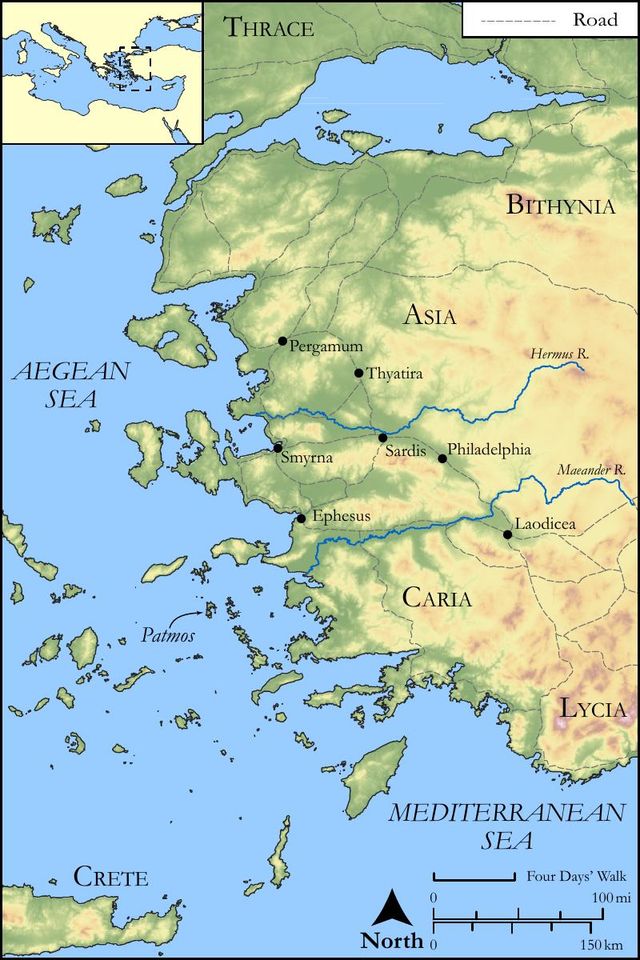

Study this verse
Public-domain commentary
Matthew Henry
From his Commentary on the Whole Bible. Henry comments on passages, not single verses — this entry covers Revelation 12:1–11. His four-level outline is real structure in the source text, so it is rendered as structure.
Here we see that early prophecy eminently fulfilled in which God said he would put enmity between the seed of the woman and the seed of the serpent, Gen 3:15. You will observe,
I.The attempts of Satan and his agents to prevent the increase of the church, by devouring her offspring as soon as it was born; of this we have a very lively description in the most proper images.
1.We see how the church is represented in this vision.
(1.)As a woman, the weaker part of the world, but the spouse of Christ, and the mother of the saints.
(2.)As clothed with the sun, the imputed righteousness of the Lord Jesus Christ. Having put on Christ, who is the Sun of righteousness, she, by her relation to Christ, is invested with honourable rights and privileges, and shines in his rays.
(3.)As having the moon under her feet (that is, the world); she stands upon it, but lives above it; her heart and hope are not set upon sublunary things, but on the things that are in heaven, where her head is.
(4.)As having on her head a crown of twelve stars, that is, the doctrine of the gospel preached by the twelve apostles, which is a crown of glory to all true believers.
(5.)As in travail, crying out, and pained to be delivered. She was pregnant, and now in pain to bring forth a holy progeny to Christ, desirous that what was begun in the conviction of sinners might end in their conversion, that when the children were brought to the birth there might be strength to bring forth, and that she might see of the travail of her soul.
2.How the grand enemy of the church is represented.
(1.)As a great red dragon - a dragon for strength and terror - a red dragon for fierceness and cruelty.
(2.)As having seven heads, that is, placed on seven hills, as Rome was; and therefore it is probable that pagan Rome is here meant.
(3.)As having ten horns, divided into ten provinces, as the Roman empire was by Augustus Caesar.
(4.)As having seven crowns upon his head, which is afterwards expounded to be seven kings, Rev 17:10.
(5.)As drawing with his tail a third part of the stars in heaven, and casting them down to the earth, turning the ministers and professors of the Christian religion out of their places and privileges and making them as weak and useless as he could.
(6.)As standing before the woman, to devour her child as soon as it should be born, very vigilant to crush the Christian religion in its birth and entirely to prevent the growth and continuance of it in the world.
II.The unsuccessfulness of these attempts against the church; for,
1.She was safely delivered of a man-child (Rev 12:5), by which some understand Christ, others Constantine, but others, with greater propriety, a race of true believers, strong and united, resembling Christ, and designed, under him, to rule the nations with a rod of iron; that is, to judge the world by their doctrine and lives now, and as assessors with Christ at the great day.
2.Care was taken of this child: it was caught up to God, and to his throne; that is, taken into his special, powerful, and immediate protection. The Christian religion has been from its infancy the special care of the great God and our Saviour Jesus Christ.
3.Care was taken of the mother as well as of the child, Rev 12:6. She fled into the wilderness, a place prepared both for her safety and her sustenance. The church was in an obscure state, dispersed; and this proved her security, through the care of divine Providence. This her obscure and private state was for a limited time, not to continue always.
III.The attempts of the dragon not only proved unsuccessful against the church, but fatal to his own interests; for, upon his endeavour to devour the man-child, he engaged all the powers of heaven against him (Rev 12:7): There was war in heaven. Heaven will espouse the quarrel of the church. Here observe,
1.The seat of this war - in heaven, in the church, which is the kingdom of heaven on earth, under the care of heaven and in the same interest.
2.The parties - Michael and his angels on one side, and the dragon and his angels on the other: Christ, the great Angel of the covenant, and his faithful followers; and Satan and all his instruments. This latter party would be much superior in number and outward strength to the other; but the strength of the church lies in having the Lord Jesus for the captain of their salvation.
3.The success of the battle: The dragon and his angels fought and prevailed not; there was a great struggle on both sides, but the victory fell to Christ and his church, and the dragon and his angels were not only conquered, but cast out; the pagan idolatry, which was a worshipping of devils, was extirpated out of the empire in the time of Constantine.
4.The triumphant song that was composed and used on this occasion, Rev 12:10, Rev 12:11. Here observe,
(1.)How the conqueror is adored: Now have come salvation, strength, and the kingdom of our God, and the power of his Christ. Now God has shown himself to be a mighty God; now Christ has shown himself to be a strong and mighty Saviour; his own arm has brought salvation, and now his kingdom will be greatly enlarged and established. The salvation and strength of the church are all to be ascribed to the king and head of the church.
(2.)How the conquered enemy is described.
[1.]By his malice; he was the accuser of the brethren, and accused them before their God night and day; he appeared before God as an adversary to the church, continually bringing in indictments and accusations against them, whether true or false; thus he accused Job, and thus he accused Joshua the high priest, Zac 3:1. Though he hates the presence of God, yet he is willing to appear there to accuse the people of God. Let us therefore take heed that we give him no cause of accusation against us; and that, when we have sinned, we presently go in before the Lord, and accuse and condemn ourselves, and commit our cause to Christ as our Advocate.
[2.]By his disappointment and defeat: he and all his accusations are cast out, the indictments quashed, and the accuser turned out of the court with just indignation.
(3.)How the victory was gained. The servants of God overcame Satan,
[1.]By the blood of the Lamb, as the meritorious cause. Christ by dying destroyed him that hath the power of death, that is, the devil.
[2.]By the word of their testimony, as the great instrument of war, the sword of the Spirit, which is the word of God, - by a resolute powerful preaching of the everlasting gospel, which is mighty, through God, to pull down strongholds, - and by their courage and patience in sufferings; they loved not their lives unto the death, when the love of life stood in competition with their loyalty to Christ; they loved not their lives so well but they could give them up to death, could lay them down in Christ's cause; their love to their own lives was overcome by stronger affections of another nature; and this their courage and zeal helped to confound their enemies, to convince many of the spectators, to confirm the souls of the faithful, and so contributed greatly to this victory.
Historical interpretation
Eight Centuries of Reception
13 surviving comments on this verse. Each one is dated, so this reads as a timeline rather than a list.
Select a marker to jump to its quote. Markers stagger vertically where authors wrote within a few decades of each other.
By the woman then clothed with the sun," he meant most manifestly the Church, endued with the Father's word, whose brightness is above the sun. And by the "moon under her feet" he referred to her being adorned, like the moon, with heavenly glory. And the words, "upon her head a crown of twelve stars," refer to the twelve apostles by whom the Church was founded. And those, "she, being with child, cries, travailing in birth, and pained to be delivered," mean that the Church will not cease to bear from her heart the Word that is persecuted by the unbelieving in the world. "And she brought forth," he says, "a man-child, who is to rule all the nations; "by which is meant that the Church, always bringing forth Christ, the perfect man-child of God, who is declared to be God and man, becomes the instructor of all the nations. And the words, "her child was caught up unto God and to His throne," signify that he who is always born of her is a heavenly king, and not an earthly; even as David also declared of old when he said, "The Lord said unto my Lord, Sit Thou at my right hand, until I make Thine enemies Thy footstool." "And the dragon," he says, "saw and persecuted the woman which brought forth the man-child. And to the woman were given two wings of the great eagle, that she might fly into the wilderness, where she is nourished for a time, and times, and half a time, from the face of the serpent." That refers to the one thousand two hundred and threescore days (the half of the week) during which the tyrant is to reign and persecute the Church, which flees from city to city, and seeks conceal-meat in the wilderness among the mountains, possessed of no other defence than the two wings of the great eagle, that is to say, the faith of Jesus Christ, who, in stretching forth His holy hands on the holy tree, unfolded two wings, the right and the left, and called to Him all who believed upon Him, and covered them as a hen her chickens. For by the mouth of Malachi also He speaks thus: "And unto you that fear my name shall the Sun of righteousness arise with healing in His wings."
Now, concerning the tribulation of the persecution which is to fall upon the Church from the adversary, John also speaks thus: "And I saw a great and wondrous sign in heaven; a woman clothed with the sun, and the moon under her feet, and upon her head a crown of twelve stars. And she, being with child, cries, travailing in birth, and pained to be delivered. And the dragon stood before the woman which was ready to be delivered, for to devour her child as soon as it was born. And she brought forth a man-child, who is to rule all the nations: and the child was caught up unto God and to His throne. And the woman fled into the wilderness, where she hath the place prepared of God, that they should feed her there a thousand two hundred and threescore days. And then when the dragon saw it, he persecuted the woman which brought forth the man-child. And to the woman were given two wings of the great eagle, that she might fly into the wilderness, where she is nourished for a time, and times, and half a time, from the face of the serpent. And the serpent cast (out of his mouth water as a flood after the woman, that he might cause her to be carried away of the flood. And the earth helped the woman, and opened her mouth, and swallowed up the flood which the dragon cast) out of his mouth. And the dragon was wroth with the woman, and went to make war with the saints of her seed, which keep the commandments of God, and have the testimony of Jesus."
"And there was seen a great sign in heaven. A woman clothed with the sun, and the moon under her feet, and on her head a crown of twelve stars. And being with child, she cried out travailing, and bearing torments that she might bring forth." The woman clothed with the sun, and having the moon under her feet, and wearing a crown of twelve stars upon her head, and travailing in her pains, is the ancient Church of fathers, and prophets, and saints, and apostles, which had the groans and torments of its longing until it saw that Christ, the fruit of its people according to the flesh long promised to it, had taken flesh out of the selfsame people. Moreover, being clothed with the sun intimates the hope of resurrection and the glory of the promise. And the moon intimates the fall of the bodies of the saints under the obligation of death, which never can fail. For even as life is diminished, so also it is increased. Nor is the hope of those that sleep extinguished absolutely, as some think, but they have in their darkness a light such as the moon. And the crown of twelve stars signifies the choir of fathers, according to the fleshly birth, of whom Christ was to take flesh.
-Exhortation to the Cultivation of Virginity; A Passage from the Apocalypse is Proposed to Be Examined.
John, in the course of the Apocalypse, says:
The woman who “appeared in heaven … clothed with the sun” and crowned with “twelve stars,” having the moon for her footstool, and being with child, and travailing in birth, is certainly, according to the accurate interpretation, our mother, … a power by herself distinct from her children, whom the prophets, according to the aspect of their subjects, have called sometimes Jerusalem, sometimes a Bride, sometimes Mount Zion, and sometimes the Temple and Tabernacle of God. For she is the power mentioned by the prophet which the Spirit urges to give light, crying to her: “Arise, shine; for your light is come, and the glory of the Lord is risen upon you. For, behold, darkness shall cover the earth, and gross darkness the people: but the Lord shall arise upon you, and his glory shall be seen upon you. And the Gentiles shall come to your light, and kings to the brightness of your rising. Lift up your eyes round about, and see; all your children gather themselves together, they come to you: your sons shall come from far, and your daughters shall be nursed at your side.” It is the church whose children shall come to her with all speed after the resurrection, running to her from all quarters. She rejoices receiving the light which never goes down, and clothed with the brightness of the Word as with a robe. For with what other more precious or honorable ornament was it becoming that the queen should be adorned, to be led as a Bride to the Lord, when she had received a garment of light, and therefore was called by the Father? Come, then, let us go forward in our discourse, and look on this marvelous woman as on virgins prepared for a marriage, pure and undefiled, perfect and radiating a permanent beauty, wanting nothing of the brightness of light. Instead of a dress, she is clothed with light itself. And instead of precious stones, her head is adorned with shining stars. For instead of the clothing which we have, she had light; and for gold and brilliant stones, she had stars. But not stars such as those which are set in the invisible heaven, but better and more resplendent, so that our own may rather be considered as their images and likenesses.Now the statement that she stands on the moon, I think, denotes the faith of those who are cleansed from corruption by baptism, because the light of the moon has more resemblance to tepid water, and all moist substance depends on the moon. The church, then, stands on our faith and adoption, under the figure of the moon, until the fullness of the Gentiles come in, laboring and bringing forth natural people as spiritual people; for which reason she is also a mother. For just as a woman receiving the unformed seed of her husband, within a certain time brings forth a perfect child, in the same way, one should say, the church conceives those who flee to the Word, and, shaping them according to the likeness and form of Christ, after a certain time produce them as citizens of that blessed state. Thus it is necessary that she should stand on the laver, bringing forth those who are washed in it. And in this way the power which she has in connection with the laver is called the moon, because the regenerate shine being renewed with a new ray, that is, a new light. Hence, also, they are by a descriptive term called “newly-enlightened,” the moon [church] always showing forth anew to them the spiritual full moon, namely, the period and the memorial of the passion, until the glory and the perfect light of the great day will appear.
“And a great sign was seen in heaven.” We now see that which has occurred in the church, God has taken form in man. “A woman,” it says, “clothed with the sun, and the moon under her feet.” We have already noted that a genus may divide into many species. For what [in one passage] is heaven, here signifies the temple placed in heaven. In the woman he indicates the church who in the purification of baptism puts on Christ, the “sun of righteousness,” as the apostle Paul testifies, “As many as were baptized into Christ have put on Christ.” However, in this passage the moon is described as placed under the feet of the woman and so indicates the church of the heretics that the “sun of righteousness,” that is, Christ, does not allow to be illumined by his presence. Yet, since everything which is found in the Scriptures concerning the church may be interpreted in a twofold way, we can also interpret the moon in a good sense and compare it with the church. As it is written in the psalms, “Once I have sworn by my holiness; I will not lie to David. His seed shall endure forever. His throne [will endure] as the sun before me and as a full moon forever. The witness in the skies is sure.” And again, “Bright as the sun and fair as the moon in her beauty.” “And on her head a crown of twelve stars.” He is indicating the twelve apostles whom Christ placed as a crown over the twelve tribes of Israel upon the head of his church and adorned her with spiritual gems.
[The moon under her feet] refers to the hypocrites and evil Christians which the church has under her feet.… The twelve stars are to be interpreted as the twelve apostles. That the woman is clothed in the sun signifies her hope in the resurrection. For this reason it is written, “then the righteous will shine like the sun in the kingdom of their Father.”
This is what now appears in the church, namely, that by the operation of the Holy Spirit the human nature is joined to the Wisdom of God and that from the two the selfsame Christ becomes the mediator of God and humanity and is so proclaimed and believed. As he himself said, “Destroy this temple, and in three days I will raise it up,” and the Evangelist said, “He was speaking of the temple of his body.” “A woman clothed with the sun, with the moon under her feet.” It is frequently said that a genus is divided into many species which are the same thing. For what was heaven itself is now a temple in heaven and now is the woman clothed with the sun and having the moon under her feet. Namely, this is the church who has put on Christ and on account of her love is trampling upon every mutable thing. For [the church] is not enraptured by these changeable things who, clinging to the immoveable good, says truthfully, “But for me it is good to be near to God.” From this fact comes those expressions which we read concerning the church, “fair as the moon, bright as the sun,” and again, “as the full moon forever, and the witness in the heaven is true.” He aptly says that the church is a sojourner, for after the human birth of Christ we see many false opinions expressed by heretics. For concerning this temple the heresiarchs, falsifying as they willed, taught variously, Valentinus saying one thing and Bardesanes another, Apollinaris yet another and Nestorius another, Eutyches another and Timothy Aelurus another. It was as though truth sprang from the earth and controversies followed. And from all of this the orthodox and faithful acquired their reward, while by evil ideas concerning the incarnation of Christ, the heretics incurred the punishment of eternal damnation.
And upon her head a crown of twelve stars. The Church is adorned with the number of the twelve apostles on its head, whether you understand Christ, or the very beginning of the nascent Church designated by the name of the head. You have set a crown of precious stones upon his head (Psalm XXI).
The woman clothed with the sun, and the moon under her feet. The Church of Christ, clothed in light, tramples upon temporal glory: In his days shall righteousness flourish, and abundance of peace until the moon be no more (Psalm LXXII). That is, the abundance of peace will grow until it consumes all the changeableness of mortality, when the last enemy, death, is destroyed (1 Corinthians XV). Or, because the same Church, partly in heaven, enjoys Christ the sun, partly on earth, journeys away from the Lord. This can be understood by the phrase: His left hand is under my head, and his right hand embraces me (Song of Songs VIII).
And a great sign appeared in heaven. What now also appears in the Church: God becoming man.
And a great sign appeared in heaven: a woman clothed with the sun, and the moon under her feet. The woman clothed with the sun is blessed Virgin Mary, covered with the power of the Most High. A genus, namely the Church, is also understood in her. The Church is not called a woman by reason of weakness, but because it gives birth every day to new people, with whom the general body of Christ is being formed. So the Church is clothed with the sun according to this: As many of you as have been baptized in Christ, have put on Christ. [Gal. 3:27] Indeed Christ is the Sun of justice, [Mal. 4:2] and the brightness of eternal light. [Wis. 7:26] The moon, which wanes as time passes, represents the mutability of time; and since the Church despises it, it is as if it pressed it down under its feet. Note also that there are some things in the following that do not correspond to the species, but to the genus. And on her head a crown of twelve stars. The twelve stars the crown is fitted with are the twelve apostles, through whom the Head of the Church, that is Christ, first won victory. They are called stars because the reason of truth illuminates the darkness of ignorance.
Regarding the Antichrist, the vision that is more complete wishes to be recorded for us, of which a brief mention has been made in the preceding texts. However, since the resurrection of this figure and his appointment by Satan as a pretext for the Incarnation of the Lord have occurred, having taken possession of and subjected the world, the Antichrist will be raised for this very reason. He will then attempt to lead the world away from Christ and persuade it to defect to Satan through apostasy. Furthermore, since the beginning of the Lord's Incarnation was marked by His conception and birth in the flesh, the vision, leading to a certain order and sequence regarding the matters it is about to recount, has made the inception of the narrative start from Christ's conception in the flesh and has depicted the Mother of God [θεοτόκον] for us.
For what does it say, and a sign appeared in heaven: a woman clothed with the sun, and the moon under her feet? It is said to refer to the mother of our Savior, as has been stated. It is reasonable that the vision is described as being in heaven and not on earth, as a pure soul and body, like an angel [ἰσάγγελον], as a citizen of heaven, as one who rests with God in heaven. For he says "heaven is my throne," (Isa. 66:1) having contained and incarnated it, and having nothing in common with the earth and the evils in it, but entirely lofty, entirely worthy of heaven, even if it belonged to our human nature and essence [οὐσίας]. For the Virgin is of the same essence [ὁμοούσιος] with us; for the impious doctrine of Eutyches, which also makes the Virgin of a different essence from us, along with his other doctrines, which are mere opinions, may be banished far from the sacred courts of the divine.
What does it mean to say that she is clothed with the sun, and the moon is under her feet? The divine prophet Habakkuk, prophesying about the Lord, says that "the sun rose and the moon stood still in its order to bring forth light," (Hab. 3:10-11) calling Christ our Savior "the Sun of Righteousness." (Mal. 4:2), or at least referring to the evangelical proclamation.
Where it is said that, having been exalted and increased, the moon, that is, the Law of Moses, stood still and no longer received any addition; for no longer, after the appearance of Christ, did it receive converts [προσηλύτους] from the Gentiles as before, but rather it endured removal and reduction. Therefore, do not think here to consider the holy Virgin as the sun of the intellect; for in this manner the prophet calls the Lord concerning Israel, saying, "Fire has fallen upon them, and they did not see the sun." (Ps. 58:8) But the moon, that is, the ritual according to the Law and the institution according to the Law, having been brought low and greatly diminished, is underfoot, defeated by the brightness of the Gospel. And rightly the one in the law called the moon, since it too is illuminated by the sun, that is, Christ, just as the visible moon is illuminated by the visible sun.
But regarding what is being indicated, it would have been more appropriate to say that the woman was not clothed with the sun, but that the woman clothed the Sun contained in her womb; yet, to show also in the vision that the Lord, who was being carried by the natural mother and is the Lord of all creation, was a protection, he said that He clothed the woman. The divine angel also said to the holy Virgin: "The Spirit of the Lord will come upon you, and the power of the Most High will overshadow you." (Luke 1:35) For to overshadow, to cover, and to envelop are the same in power.
And upon her head, it says, a crown of twelve stars. For the virgin is crowned by the twelve apostles preaching Christ together with her.
Continue studying Revelation 12:1 across the web’s major study libraries — every link below opens this exact verse, chapter, or book on the destination site.
Read & Compare
 BibleGatewayThis verse in more than 200 translations and 70 languages.
 Bible.comThe YouVersion reader — hundreds of translations, reading plans, and highlights.
 ESV.orgCrossway's official English Standard Version reader.
 NET BibleThe NET translation with 60,000+ translators' notes on every rendering decision.
 STEP BibleTyndale House's free study tool — original text, vocabulary, and scholarly resources.
 BibliaLogos Bible Software's free web reader.
 USCCBThe New American Bible (Revised Edition) with the U.S. bishops' study notes.
Commentaries
 BibleHub CommentariesDozens of classic commentaries on this verse, gathered on one page.
 StudyLightMore than 100 commentary sets — the largest collection on the web.
 BibleRefPlain-English commentary on what this verse means, verse by verse.
 Enduring WordDavid Guzik's free commentary on this chapter, widely used by Bible teachers.
 Bible Study ToolsVerse commentary alongside Greek and Hebrew study aids.
Original Language & Research
- BibleHub InterlinearThe verse word by word — original language, transliteration, and English.
- BibleHub LexiconEvery word's original-language definition and Strong's entry.
 Blue Letter BibleDeep-study tools — Strong's numbers, concordance, and word studies.
 CNTR CollationThe earliest Greek manuscripts of this verse, collated letter by letter.
Sermons, Hymns & Audio


TrulyRandomVerse is not affiliated with these sites and doesn’t control their content. They’re linked because they’re genuinely useful.
Summary
Revelation 12:1 introduces a profound symbolic vision of a "great wonder in heaven," depicting a woman of celestial grandeur. Clothed with the sun, with the moon beneath her feet, and crowned with twelve stars, this figure represents a pivotal entity in God's redemptive plan, setting the stage for the cosmic conflict between divine purposes and the forces of evil that unfolds throughout the rest of the chapter.
Context
ShowHideLiterary Context
Revelation chapter 12 marks a significant shift in the book's narrative, transitioning from the sequence of judgments and the sounding of trumpets (chapters 8-11) to an unveiling of the spiritual warfare that undergirds human history. This chapter serves as a theological interlude, providing a panoramic view of the cosmic conflict between God's people and Satan. Verses 1-6 introduce the primary symbolic figures—the radiant woman, her male child, and the menacing red dragon—whose interactions establish the central conflict. This vision is presented as a "sign" (Greek: sēmeîon), emphasizing its symbolic nature and its role in revealing deeper spiritual realities that transcend mere earthly events. It sets the stage for understanding the persecution of God's people throughout history and the ultimate triumph of Christ.
Historical & Cultural Context
The book of Revelation was written during a period of intense persecution for early Christians under the Roman Empire, likely during the reign of Emperor Domitian (c. AD 95). John, exiled on Patmos, received these visions to offer hope, encouragement, and a prophetic understanding of God's sovereignty amidst suffering. The imagery used, while unique, draws upon Old Testament prophetic traditions and apocalyptic literature, which often employed rich symbolism to convey divine messages to a people facing oppression. The celestial imagery of the sun, moon, and stars would have resonated with both Jewish messianic expectations and broader ancient Near Eastern cosmological understandings, though here reinterpreted through a distinctly Christian lens to signify divine authority and glory, rather than pagan deities.
Key Themes
ShowHideRevelation 12:1 introduces several foundational themes that permeate the chapter and the broader book. The primary theme is the cosmic conflict between God's redemptive purposes and Satan's destructive schemes, foreshadowing the dragon's direct opposition to the woman and her offspring. The identity of God's people is another crucial theme, with the woman symbolizing either the nation of Israel, from whom the Messiah came, or the Church, the collective body of believers, or a composite of both. This verse also highlights the theme of divine protection and glory, as the woman's celestial adornment signifies God's favor and exalted status for His chosen people, a theme echoed in the ultimate victory described in Revelation 12:10-12. Furthermore, the anticipation of the "male child" introduces the central theme of the Messiah's coming and ultimate triumph, which is the linchpin of God's plan of salvation, a truth woven throughout the New Testament, from the Gospels to the Epistles.
Exposition and Analysis
ShowHideKey Word Analysis
ShowHideThis word (G4592) denotes an "indication, especially ceremonially or supernaturally." In the context of Revelation, it signifies a "sign," "mark," or "portent." This choice of word is crucial, as it immediately signals to the reader that the vision is not to be interpreted literally but as a symbolic representation conveying profound spiritual truths. It's a divinely given visual aid, pointing to a deeper reality of cosmic significance.
The term (G1135) refers simply to a "woman" or "wife." However, in this apocalyptic context, the identity of this "woman" is highly symbolic and has been the subject of extensive theological discussion. Her elaborate celestial adornment immediately elevates her beyond a mere individual, suggesting a corporate or representative identity that is central to God's plan of salvation and the unfolding drama of redemption.
This word (G4735) describes a "chaplet," "wreath," or "crown," often signifying royalty, victory, honor, or a prize in public games. Unlike a diadema (a royal diadem), a stéphanos can also represent honor or achievement. Here, the crown of twelve stars emphasizes the woman's exalted status, authority, and connection to a foundational, divinely ordained group, whether the twelve tribes of Israel or the twelve apostles of Christ, signifying the continuity of God's covenant people.
Verse Breakdown
ShowHide"And there appeared a great wonder in heaven;"
This opening phrase immediately establishes the supernatural and symbolic nature of the vision. The Greek word for "wonder" (σημεῖον, sēmeîon) signifies a "sign" or "portent," indicating that what follows is not a literal event but a divinely revealed symbol. The setting "in heaven" underscores the cosmic, spiritual dimension of the unfolding drama, revealing a conflict far grander than earthly struggles.
"a woman clothed with the sun,"
The description of the woman begins with her being "clothed with the sun." This imagery conveys immense glory, divine radiance, and righteousness. The sun, as the primary source of light and life, symbolizes God's own glory and presence. Being "clothed" in it suggests an intimate connection to divine splendor and protection, perhaps representing God's chosen people being enveloped in His light and favor.
"and the moon under her feet,"
The moon positioned "under her feet" signifies dominion, authority, and triumph over lesser, temporal, or earthly powers. While the sun represents ultimate divine glory, the moon, which reflects the sun's light and governs the night, symbolizes the world's transient systems or earthly spheres. Her position over it indicates a spiritual authority that transcends worldly limitations and challenges.
"and upon her head a crown of twelve stars:"
The "crown of twelve stars" further emphasizes the woman's regal and authoritative status. The number twelve is highly symbolic in biblical numerology, representing completeness and divine order, particularly in relation to God's covenant people (e.g., the twelve tribes of Israel, the twelve apostles). This crown signifies her royal dignity, her divine appointment, and her foundational connection to the entirety of God's people throughout history.
Literary Devices
ShowHideRevelation 12:1 is rich with Symbolism and Imagery, which are central to apocalyptic literature. The entire verse functions as a complex Allegory, where each element—the woman, the sun, the moon, the stars, and the crown—represents deeper theological realities rather than literal objects. The woman herself is a Personification of a corporate entity, whether Israel or the Church, embodying their collective identity, history, and destiny. The vivid celestial descriptions create powerful Visual Imagery, designed to convey profound spiritual truths about divine glory, authority, and the nature of God's people. The use of "wonder" (sign) explicitly cues the reader to interpret the scene symbolically, highlighting that the vision's power lies in its metaphorical meaning rather than its literal depiction.
Theological and Thematic Connections
ShowHideRevelation 12:1 introduces a foundational theological concept: the identity and role of God's people in the unfolding drama of salvation history. The highly symbolic woman, adorned with celestial glory, represents the continuity of God's covenant relationship, whether understood as the faithful remnant of Israel from whom the Messiah emerged, or the Church, the spiritual offspring of Christ, or a synthesis of both. This vision underscores the divine origin and protection of God's chosen, emphasizing their exalted status and spiritual authority even amidst cosmic conflict. It sets the stage for understanding the spiritual warfare that has always existed against God's redemptive plan, a plan centered on the birth and triumph of the "male child" who is Christ. The woman's radiant appearance signifies the righteousness and glory imputed to God's people through their connection to Him, preparing the reader for the subsequent narrative of persecution and ultimate victory.
Reflection and Application
ShowHideRevelation 12:1, though deeply symbolic, offers profound truths for our spiritual journey. It reminds us that our identity as believers is not merely earthly but carries a cosmic significance, rooted in God's eternal plan. Just as the woman is "clothed with the sun," we are called to be clothed in Christ's righteousness and reflect His glory in a dark world. The "moon under her feet" speaks to the spiritual authority we have been given through Christ over the transient powers and systems of this world, reminding us not to be intimidated by earthly challenges or spiritual opposition. The "crown of twelve stars" points to our royal priesthood and our participation in God's covenant people, a heritage that spans from Abraham to the Church. This vision encourages us to see beyond immediate circumstances, recognizing that behind every earthly struggle lies a spiritual battle, and that God's people, though often persecuted, are ultimately protected and destined for glory. It calls us to live with a heavenly perspective, understanding our place in God's grand narrative of redemption and anticipating the final triumph of Christ.
Questions for Reflection
ShowHideFAQ
ShowHideWho is the "woman" in Revelation 12:1?
ShowHideThe "woman" in Revelation 12:1 is a highly symbolic figure, and her identity has been interpreted in several ways by biblical scholars, though most agree she represents a corporate entity rather than an individual. The most prominent interpretations are:
Regardless of the specific interpretation, the woman clearly symbolizes God's chosen people, divinely appointed and protected, from whom the Messiah was born and through whom God's purposes are advanced.
Christ-Centered Fulfillment
ShowHideRevelation 12:1 finds its ultimate Christ-centered fulfillment in the person and work of Jesus Christ, the "male child" introduced in the subsequent verses. The radiant woman, whether representing Israel or God's collective people, serves as the divine vehicle through whom the Messiah would come, fulfilling ancient prophecies of a deliverer. Her celestial adornment—clothed with the sun, the moon under her feet, and crowned with twelve stars—symbolically points to the divine glory and authority that would be fully embodied in Christ. He is the true "Sun of Righteousness" (Malachi 4:2), the source of all light and life, and the one who has been given "all authority in heaven and on earth" (Matthew 28:18). The "crown of twelve stars" foreshadows Christ's establishment of a new covenant people, built upon the foundation of the apostles, and His reign as King of Kings. The birth of the male child, who is destined to "rule all the nations with a rod of iron" (Revelation 12:5), directly refers to Christ's incarnation, His victory over sin and death through His crucifixion and resurrection (Colossians 2:15), and His ultimate ascension to God's throne (Acts 1:9-11). Thus, Revelation 12:1 sets the stage for the cosmic drama of salvation history, culminating in the triumph of Jesus Christ, who is the central figure of God's redemptive plan and the ultimate hope for all creation (Philippians 2:9-11).