


Matthew 23:17
Bible text: King James Version (1769 Blayney text) · Public domain
Bible text: Berean Standard Bible · Public domain
Bible text: American Standard Version (1901) · Public domain
Bible text: World English Bible, Messianic edition · Public domain
Bible text: Geneva Bible (1599) · Public domain
Bible text: Young's Literal Translation · Public domain
- μωροὶmōroiFoolishG3474A-VPMAdjective Vocative Plural Masculine
- καὶkaiandG2532CONJConjunction
- τυφλοίtuphloiblind!G5185A-VPMAdjective Vocative Plural Masculine
- τίςtisWhichG5101I-NSMInterrogative pronoun Nominative Singular Masculine
- γὰρgarforG1063CONJConjunction
- μείζωνmeizōngreaterG3173A-NSM-CAdjective Nominative Singular Masculine Comparative
- ἐστίνestinisG1510V-PAI-3SVerb Present Active Indicative 3rd Singular
- ὁhotheG3588T-NSMDefinite article Nominative Singular Masculine
- χρυσὸςchrusosgoldG5557N-NSMNoun Nominative Singular Masculine
- ἢēorG2228CONJConjunction
- ὁhotheG3588T-NSMDefinite article Nominative Singular Masculine
- ναὸςnaostempleG3485N-NSMNoun Nominative Singular Masculine
- ὁhowhichG3588T-NSMDefinite article Nominative Singular Masculine
- ἁγιάσαςhagiasasis sanctifyingG37V-AAP-NSMVerb Aorist Active Participle Nominative Singular Masculine
- τὸνtontheG3588T-ASMDefinite article Accusative Singular Masculine
- χρυσόν;chrusongold?G5557N-ASMNoun Accusative Singular Masculine
English is a literal word-by-word gloss of the Greek, not the KJV's wording. Why?
This is the original text the KJV's translators worked from — each Greek word with its own literal English meaning in this verse, prepared by scholars at Tyndale House, Cambridge. The KJV translates whole sentences, not word by word, so its wording differs: one Greek word can become several English words, and the KJV may choose “charity” where the gloss reads “love”. Both are faithful — they answer different questions. For the KJV's own rendering, switch to the KJV text.
Details
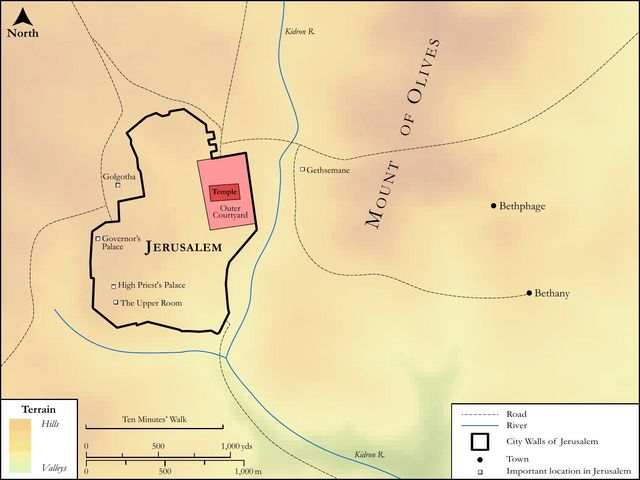
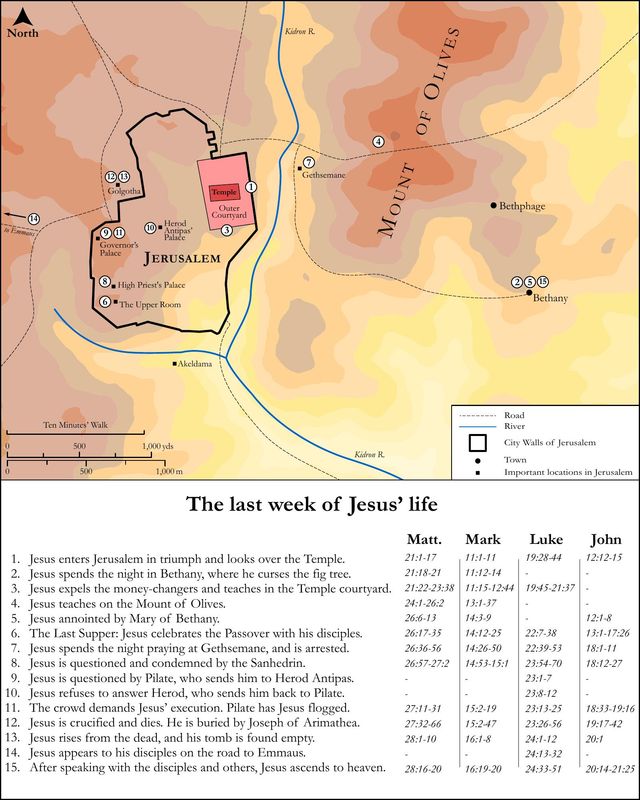
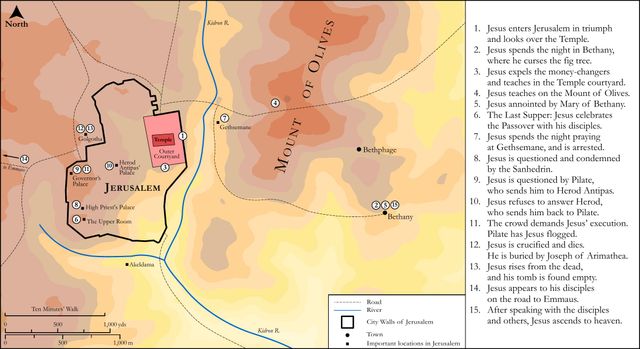
See on the biblical-era maps
Study this verse
Historical interpretation
Ten Centuries of Reception
8 surviving comments on this verse. Each one is dated, so this reads as a timeline rather than a list.
Select a marker to jump to its quote. Markers stagger vertically where authors wrote within a few decades of each other.
In like manner the custom which the Jews had of swearing by the Heaven He reprobates. For they did not, as they supposed, avoid the danger of taking an oath by God, because, Whose sweareth by heaven, sweareth by the throne of God, and by him that sitteth thereon.
Now an oath is in confirmation of somewhat that has been spoken. The oath here then may signify testimony of Scripture which we produce in confirmation of that word which we speak. So that Divine Scripture is the temple of God, the gold is the meaning which it contains. As the gold which is outside the Temple is not sanctified, so all thoughts which are without divine Scripture, however admirable they may seem, are not hallowed. We ought not therefore to bring any speculations of our own for the confirmation of doctrine, unless such as we can show are hallowed by being contained in divine Scripture. The altar is the human heart, which is the chief thing in man. The offerings and gifts that are hid upon the altar, are every thing which are done in the heart, as to pray, to sing, to do alms, to fast. Every offering of a man then is sanctified by his heart, by which the offering is made. There cannot therefore be a more honourable offering than the heart of man, out of which the offering proceeds. If then one's conscience does not smite him, he has confidence towards God, not by reason of his gifts, but so to speak because he has rightly ordered the altar of his heart. Thirdly, we may say that over the temple, that is over every Scripture, and over the altar, that is over every heart, there is a certain meaning which is called the Heaven, the throne of God Himself, in which we shall be able to see the things that are revealed face to face, when that which is perfect is come.
Jesus is saying that the gold in the temple, the gold objects dedicated in the temple to the glory of God, whether these be the gold cherubim or the gold jar containing the manna, were considered by the Jews to be worthy of much more honor than the temple. Therefore they were condemned by the Lord.… But the saying possesses a figurative meaning directed against them because they are not receiving the truth regarding Christ. Instead, they were judging Moses and the types given through him as more valuable than Christ.… They were rejecting the Christ who sanctifies Moses while simultaneously praising the law. Just as the law was praiseworthy, not because it possesses the types and the symbols but because it prefigures the true mystery of worship in Christ, in the same way the gold is precious because of the one who sanctifies the temple, and heaven is beautiful because of the God who sanctifies it and dwells within it.
For since Christ is come, reliance upon the Law is vain; for not Christ by the Law, but the Law by Christ, is sanctified, in whom it rests as on a seat or throne; so are they fools and blind, who, overlooking the sanctifier, pay honour to the things sanctified.
As by making broad phylacteries and fringes they sought after the reputation of sanctity, and made this again a means of gain, so now He charges them with being teachers of wickedness by their fraudulent pretence of tradition. For when in any dispute or quarrel, or ambiguous cause, one swore by the temple, and was afterwards convicted of falsehood, he was not held guilty. This is what is meant by that, Whosoever shall swear by the temple, it is nothing, that is, he owes nothing, But if he had sworn by the gold, or by the money which was offered to the Priests in the temple, he was immediately compelled to pay down that by which he had sworn.
Again, if one swore by the altar, none held him guilty of perjury; but if he swore by the gift or the victims or the other things which are offered to God upon the altar, this they exacted most rigorously. And all this they did not out of fear of God, but out of covetousness. Thus the Lord charges them with both folly and fraud, inasmuch as the altar is much greater than the victims which are sanctified by the altar.
(Verse 16 onwards) Woe to you, blind guides, who say, 'Whoever swears by the temple is nothing, but whoever swears by the gold of the temple is bound by his oath.' Fools and blind! For which is greater, the gold or the temple that sanctifies the gold? And, 'Whoever swears by the altar is nothing, but whoever swears by the gift that is on it is obligated.' Blind! For which is greater, the gift or the altar that sanctifies the gift? Therefore, whoever swears on the altar, swears on it and on all things that are above it. And whoever swears in the temple, swears in it and in him who dwells in it. And whoever swears in heaven, swears on the throne of God and on him who sits on it. Above, as it seemed to us, we have explained what the tradition of the Pharisees meant, saying: Whatever gift is from me will benefit you: now the double tradition of the Pharisees, enticing to one occasion of greed, is condemned, so that they may be proved to do everything for gain and not for the fear of God. For just as in the phylacteries and fringes, by enlarged expectations of holiness, it was trying to capture glory, and was seeking gains through the opportunity of glory, so another tradition found fault with the teachers of impiety. If anyone were to swear in the temple during a dispute, or in some argument, or in a doubtful case, and later be convicted of lying, they were not held accountable for the crime. But if they were to swear on gold and money, which was offered to the priests in the temple, they were immediately compelled to fulfill what they had sworn. Again: If anyone swore upon the altar, no one held him guilty of perjury; but if he swore falsely on a gift, or on offerings, that is, on victims and on fine flour and on the rest, which are offered to God upon the altar, these were most diligently sought after. Therefore, the Lord reproached them both for foolishness and deceit, because the temple is much greater than the gold that is sanctified by the temple, and the altar is greater than the offerings that are sanctified by the altar. But they did it not out of fear of God, but out of greed for riches.
(Quæst. Ev. i. 34.) The temple and altar we may also understand of Christ Himself; the gold and the gifts, of the praise and sacrifice of prayer which we offer in Him and through Him. For not He by them, but they by Him, are sanctified.
The temple pertains to God's glory, and to man's spiritual salvation, but the gold of the temple though it pertains to the glory of God, yet does it more so to the delight of man, and the profit of the Priests. The Jews then pronounced the gold which delighted them, and the gifts which fed them, to be more holy than the temple, that they might make men more disposed to offer gifts, than to pour out prayers in the temple. Whence the Lord suitably reproves them in these words. Yet have some Christians at present an equally foolish notion. See, they say, in any suit if one swear by God, it seems nought; but if one swear by the Gospel, he seems to have done some great thing. To whom we shall say in like manner, Ye fools and blind! the Scriptures were written because of God, God is not because of the Scriptures. Greater therefore is God, than what is hallowed by Him.
(non occ.) And lest their infatuation should go so far, that they should affirm that the gold was more holy than the temple, and the gift than the altar, He argues on another ground, that in the oath which is sworn by the temple and the altar is contained the oath by the gold or by the gift.
(ord.) For whoso swears by the creature that is subject, swears by the Divinity that rules over the creation.
Continue studying Matthew 23:17 across the web’s major study libraries — every link below opens this exact verse, chapter, or book on the destination site.
Read & Compare
 BibleGatewayThis verse in more than 200 translations and 70 languages.
 Bible.comThe YouVersion reader — hundreds of translations, reading plans, and highlights.
 ESV.orgCrossway's official English Standard Version reader.
 NET BibleThe NET translation with 60,000+ translators' notes on every rendering decision.
 STEP BibleTyndale House's free study tool — original text, vocabulary, and scholarly resources.
 BibliaLogos Bible Software's free web reader.
 USCCBThe New American Bible (Revised Edition) with the U.S. bishops' study notes.
Commentaries
 BibleHub CommentariesDozens of classic commentaries on this verse, gathered on one page.
 StudyLightMore than 100 commentary sets — the largest collection on the web.
 BibleRefPlain-English commentary on what this verse means, verse by verse.
 Enduring WordDavid Guzik's free commentary on this chapter, widely used by Bible teachers.
 Bible Study ToolsVerse commentary alongside Greek and Hebrew study aids.
Original Language & Research
- BibleHub InterlinearThe verse word by word — original language, transliteration, and English.
- BibleHub LexiconEvery word's original-language definition and Strong's entry.
 Blue Letter BibleDeep-study tools — Strong's numbers, concordance, and word studies.
 CNTR CollationThe earliest Greek manuscripts of this verse, collated letter by letter.
Sermons, Hymns & Audio


TrulyRandomVerse is not affiliated with these sites and doesn’t control their content. They’re linked because they’re genuinely useful.
Summary
In Matthew 23:17, Jesus sharply rebukes the scribes and Pharisees, labeling them "fools and blind" for their distorted understanding of religious oaths. He exposes their hypocrisy by highlighting their teaching that an oath sworn by the Temple's gold was binding, while an oath sworn by the Temple itself was not. Jesus powerfully asserts that it is the Temple, as God's consecrated dwelling, that sanctifies the gold within it, thereby revealing their inverted priorities and profound spiritual misjudgment.
Context
ShowHideLiterary Context
This verse is embedded within Jesus' final and most severe public denunciation of the scribes and Pharisees, recorded in Matthew chapter 23. Specifically, it forms part of the third "woe" (verses 16-22), where Jesus meticulously dismantles their casuistic approach to oaths. The preceding woes address their hypocrisy in teaching without practicing, their love of honor, and their proselytizing efforts that lead converts astray. Here, Jesus targets their legalistic distinctions regarding oaths, which prioritized material wealth over the sacredness of God's dwelling place, exposing a deep-seated spiritual blindness that permeated their religious system.
Historical & Cultural Context
In first-century Judaism, oath-taking was a common and serious practice, intended to invoke God's name to guarantee truthfulness. However, rabbinic traditions had developed complex hierarchies of oaths, sometimes creating loopholes or distinctions that allowed individuals to swear by lesser things without feeling truly bound. The Temple in Jerusalem was the epicenter of Jewish religious life, housing the Holy of Holies, where God's presence was believed to dwell. The Temple treasury contained immense wealth, including gold, often donated by worshippers. The Pharisees' teaching, as exposed by Jesus, suggested that the gold in the Temple had a greater binding power for an oath than the Temple itself, revealing a cultural inclination to value tangible assets over the intangible spiritual sanctity of God's presence.
Key Themes
ShowHideMatthew 23:17 contributes significantly to several overarching themes in Jesus' teachings and the Gospel of Matthew. The most prominent is Spiritual Blindness and Hypocrisy, as Jesus repeatedly condemns the religious leaders for their inability to discern true spiritual value, despite their outward piety. Their valuing of the gold over the Temple exemplifies their Misplaced Priorities, highlighting a system that elevated human traditions and material gain above God's divine order and holiness. This verse also underscores the theme of the True Source of Sanctification, asserting that holiness flows from God and His consecrated presence, not from the inherent value of an object, a principle seen throughout the Old Testament (e.g., Exodus 29:37). Jesus consistently challenged the externalism of their religion, calling for genuine righteousness that originates from the heart, as emphasized in the Sermon on the Mount (e.g., Matthew 5:20).
Exposition and Analysis
ShowHideKey Word Analysis
ShowHideDerived from a root suggesting dullness or stupidity, this term describes someone who is heedless, morally blockheaded, or absurd. Jesus uses it here not as a mere insult, but as a profound theological judgment, indicating a severe lack of spiritual discernment and an inability to grasp fundamental truths about God and holiness. It signifies a moral and intellectual obtuseness regarding divine realities.
This word literally means opaque or physically blind, but here it is used metaphorically to describe a spiritual inability to see or understand. The Pharisees, despite their religious learning, were spiritually sightless, unable to perceive the true nature of God's holiness and the proper order of spiritual values. Their blindness led them to pervert divine principles.
Meaning "to make holy," "to set apart," or "to consecrate," this verb is crucial. Jesus uses it to clarify the source of holiness. The Temple, as the place consecrated by God's presence, is the entity that imparts holiness to the gold within it, not the other way around. This directly refutes the Pharisees' inverted logic and re-establishes the divine order of sanctification.
Verse Breakdown
ShowHide"Ye fools and blind:"
This is Jesus' direct and scathing indictment of the scribes and Pharisees. He is not merely name-calling but pronouncing a judgment on their spiritual condition. Their "foolishness" (G3474, mōrós) indicates a lack of moral and spiritual understanding, while their "blindness" (G5185, typhlós) signifies an inability to perceive spiritual truth, despite their claims to be guides of the blind (Romans 2:19).
"for whether is greater, the gold,"
Jesus introduces the specific example of their flawed reasoning regarding oaths. He presents their own distinction: oaths sworn by the gold in the Temple. The rhetorical question immediately challenges their prioritization, implying the absurdity of valuing the material gold more highly than the sacred space. This clause highlights their focus on tangible assets and their legalistic attempts to quantify spiritual commitments.
"or the temple that sanctifieth the gold?"
This is Jesus' decisive counter-argument, exposing the logical and theological error of their position. He asserts that the Temple, as the consecrated dwelling place of God, is the source of holiness that "sanctifieth" (G37, hagiázō) or makes holy the gold within it. The gold's sacred value is derived from its association with the Temple, not from its intrinsic material worth. This statement re-establishes the correct hierarchy of value, emphasizing the spiritual over the material.
Literary Devices
ShowHideJesus employs several potent literary devices in Matthew 23:17 to underscore His condemnation. The most prominent is the Rhetorical Question, "whether is greater, the gold, or the temple that sanctifieth the gold?" Jesus does not ask this question for information, but to expose the absurdity and spiritual illogic of the Pharisees' teaching. The question is designed to elicit a self-evident answer from any spiritually discerning listener, thereby highlighting the Pharisees' profound error. Closely related is Irony, as Jesus labels these religious leaders, who prided themselves on their spiritual insight and guidance, as "fools and blind." This ironic reversal of expectations powerfully emphasizes their spiritual deficiency. Furthermore, there is a clear use of Contrast, pitting the material "gold" against the sacred "temple that sanctifieth the gold." This stark juxtaposition serves to highlight the Pharisees' inverted values and their failure to grasp the true source of holiness.
Theological and Thematic Connections
ShowHideMatthew 23:17 profoundly reveals a core theological error: the confusion of the created with the Creator, or the means with the source of holiness. The Pharisees' teaching fundamentally misunderstood the nature of sanctification, believing that the value of the gold could somehow supersede or exist independently of the Temple's inherent holiness, which was derived from God's presence within it. This verse serves as a timeless warning against any system or mindset that prioritizes external forms, material possessions, or human traditions over the true spiritual reality of God's presence and His divine order. It underscores that genuine holiness and spiritual value flow from God alone, and that true reverence involves discerning and honoring His presence above all else, rather than becoming entangled in legalistic distinctions that obscure divine truth.
Reflection and Application
ShowHideMatthew 23:17 offers a piercing challenge for contemporary believers to examine the priorities and values that shape their spiritual lives. Like the Pharisees, we can easily fall into the trap of prioritizing outward appearances, material possessions, or human-made systems and traditions over the genuine, transformative power of God's presence and His truth. This verse compels us to ask: Are we, perhaps inadvertently, valuing the "gold" (e.g., wealth, status, comfort, religious rituals without heart) more than the "Temple" (God's presence, His Word, His transformative power)? It calls us to cultivate spiritual discernment, to see beyond the superficial and recognize the true source of holiness and value. Genuine spiritual maturity involves understanding that all true worth and sanctification originate from God, and our lives should reflect a deep reverence for Him and His kingdom above all else. This means seeking first His righteousness and allowing His presence to sanctify every aspect of our being, rather than relying on external measures or inverted logic.
Questions for Reflection
ShowHideFAQ
ShowHideWhy did the Pharisees make such a distinction between an oath sworn by the Temple and one sworn by its gold?
ShowHideThe Pharisees, in their pursuit of meticulous legalism, developed a complex system of oaths with varying degrees of binding power. Their distinction between the Temple and its gold likely stemmed from a desire to create loopholes or to elevate certain aspects of the Temple (like its treasury, which might have been under their control or influence) for their own benefit or perceived authority. By declaring an oath sworn by the gold more binding, they inverted the logical and theological order, prioritizing the material asset over the sacred space that gave the gold its consecrated value. This casuistry allowed them to manipulate religious obligations for personal advantage or to avoid perceived inconveniences.
Does this verse imply that the Temple or gold had no value in God's eyes?
ShowHideNo, the verse does not imply that the Temple or gold had no value. On the contrary, the Temple was immensely valuable as the consecrated dwelling place of God's presence, and the gold within it was valuable both materially and as an offering to God. Jesus' point is not to devalue these things but to correct the Pharisees' inverted understanding of their source of value and holiness. The Temple's holiness was intrinsic because of God's presence, and it was this holiness that extended to and "sanctified" the gold within it. The gold's value in an oath derived from its association with the holy Temple, not from its intrinsic material worth or from any independent power it possessed. Jesus was clarifying the proper hierarchy of spiritual truth, emphasizing that the greater (the Temple, representing God's presence) sanctifies the lesser (the gold).
Christ-Centered Fulfillment
ShowHideMatthew 23:17, with its exposure of misplaced priorities and spiritual blindness, finds its ultimate fulfillment in Jesus Christ. The Old Testament Temple, which the Pharisees so gravely misunderstood, was itself a shadow and a type pointing to the coming Messiah. Jesus Himself declared that something "greater than the temple" was present in Him (Matthew 12:6). He is the true and ultimate Temple, the very dwelling place of God among humanity, as beautifully articulated in John 1:14. Just as the Temple sanctified the gold, Jesus is the one who truly sanctifies and makes holy. Our holiness does not come from external rituals, material possessions, or human-made distinctions, but from being "in Christ" (1 Corinthians 1:30). He exposes the superficiality of external religion and calls us to a genuine, internal transformation that He alone can provide through His perfect sacrifice (Hebrews 10:10-14). The Pharisees' blindness to the Temple's true significance foreshadows their greater blindness to Christ, the very embodiment of God's presence and the source of all true sanctification.