


Luke 3:22
Bible text: King James Version (1769 Blayney text) · Public domain
Bible text: King James Version with Strong's numbers · Public domain
Bible text: Berean Standard Bible · Public domain
Bible text: American Standard Version (1901) · Public domain
Bible text: World English Bible, Messianic edition · Public domain
Bible text: Geneva Bible (1599) · Public domain
Bible text: Young's Literal Translation · Public domain
- καὶkaiandG2532CONJConjunction
- καταβῆναιkatabēnaidescendingG2597V-2AANVerb 2nd Aorist Active Infinitive
- τὸtotheG3588T-ASNDefinite article Accusative Singular Neuter
- πνεῦμαpneumaSpiritG4151N-ASNNoun Accusative Singular Neuter
- τὸto<the>G3588T-ASNDefinite article Accusative Singular Neuter
- ἅγιονhagionHolyG40A-ASNAdjective Accusative Singular Neuter
- σωματικῷsōmatikōin a bodilyG4984A-DSNAdjective Dative Singular Neuter
- εἴδειeideiformG1491N-DSNNoun Dative Singular Neuter
- ὡςhōsasG5613PRTParticle or Disjunctive
- περιστερὰνperisterana doveG4058N-ASFNoun Accusative Singular Feminine
- ἐπ᾽ep᾽uponG1909PREPPreposition
- αὐτὸνautonHimG846P-ASMPersonal pronoun Accusative Singular Masculine
- καὶkaiandG2532CONJConjunction
- φωνὴνphōnēna voiceG5456N-ASFNoun Accusative Singular Feminine
- ἐξexout ofG1537PREPPreposition
- οὐρανοῦouranouheavenG3772N-GSMNoun Genitive Singular Masculine
- γενέσθαιgenesthaicomingG1096V-2ADNVerb 2nd Aorist Middle Deponent Infinitive
- λέγουσαν·legousansayingG3004V-PAP-ASFVerb Present Active Participle Accusative Singular Feminine
- σὺsuYou yourselfG4771P-2NSPersonal pronoun Nominative 2nd Singular
- εἶeiareG1510V-PAI-2SVerb Present Active Indicative 2nd Singular
- ὁhotheG3588T-NSMDefinite article Nominative Singular Masculine
- υἱόςhuiosSonG5207N-NSMNoun Nominative Singular Masculine
- μουmouof MineG3165P-1GSPersonal pronoun Genitive 1st Singular
- ὁhotheG3588T-NSMDefinite article Nominative Singular Masculine
- ἀγαπητόςagapētosbelovedG27A-NSMAdjective Nominative Singular Masculine
- ἐνeninG1722PREPPreposition
- σοὶsoiYouG4771P-2DSPersonal pronoun Dative 2nd Singular
- εὐδόκησαeudokēsaI am well pleasedG2106V-AAI-1SVerb Aorist Active Indicative 1st Singular
English is a literal word-by-word gloss of the Greek, not the KJV's wording. Why?
This is the original text the KJV's translators worked from — each Greek word with its own literal English meaning in this verse, prepared by scholars at Tyndale House, Cambridge. The KJV translates whole sentences, not word by word, so its wording differs: one Greek word can become several English words, and the KJV may choose “charity” where the gloss reads “love”. Both are faithful — they answer different questions. For the KJV's own rendering, switch to the KJV text.
Details
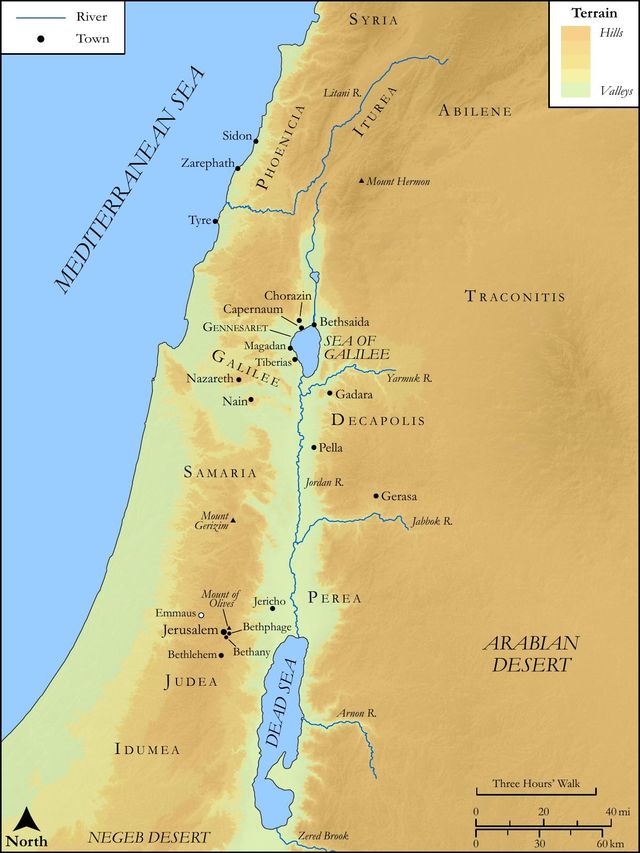
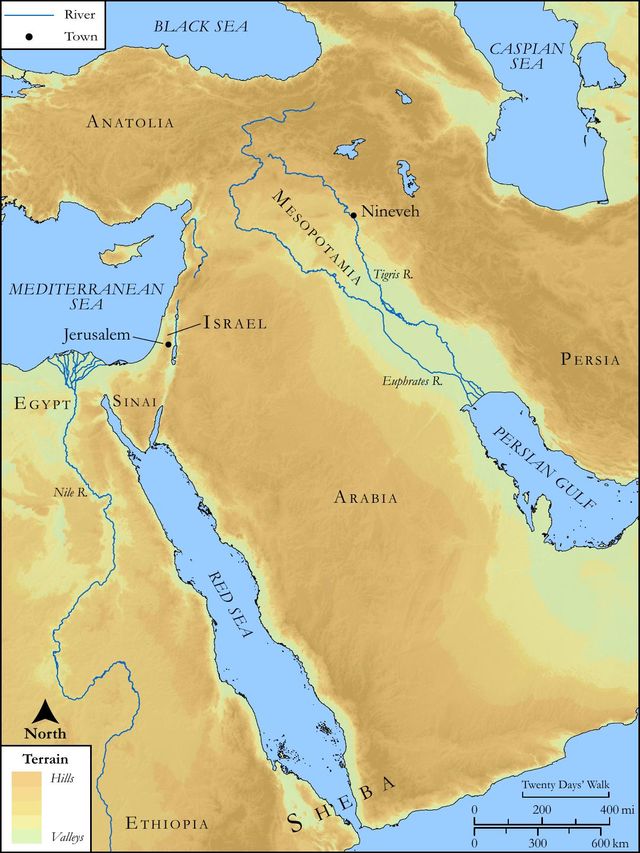
See on the biblical-era maps

Study this verse
Public-domain commentary
Matthew Henry
From his Commentary on the Whole Bible. Henry comments on passages, not single verses — this entry covers Luke 3:21–38. His two-level outline is real structure in the source text, so it is rendered as structure.
The evangelist mentioned John's imprisonment before Christ's being baptized, though it was nearly a year after it, because he would finish the story of John's ministry, and then introduce that of Christ. Now here we have,
I.A short account of Christ's baptism, which had been more fully related by St. Matthew. Jesus came, to be baptized of John, and he was so, Luk 3:21, Luk 3:22.
1.It is here said that, when all the people were baptized, then Jesus was baptized: all that were then present. Christ would be baptized last, among the common people, and in the rear of them; thus he humbled himself, and made himself of no reputation, as one of the least, nay, as less than the least. He saw what multitudes were hereby prepared to receive him, and then he appeared.
2.Notice is here taken of Christ's praying when he was baptized, which was not in Matthew: being baptized, and praying. He did not confess sin, as others did, for he had none to confess; but he prayed, as others did, for he would thus keep up communion with his Father. Note, The inward and spiritual grace of which sacraments are the outward and visible signs must be fetched in by prayer; and therefore prayer must always accompany them. We have reason to think that Christ now prayed for this manifestation of God's favour to him which immediately followed; he prayed for the discovery of his Father's favour to him, and the descent of the Spirit. What was promised to Christ, he must obtain by prayer: Ask of me and I will give thee, etc. Thus he would put an honour upon prayer, would tie us to it, and encourage us in it.
3.When he prayed, the heaven was opened. He that by his power parted the waters, to make a way through them to Canaan, now by his power parted the air, another fluid element, to open a correspondence with the heavenly Canaan. Thus was there opened to Christ, and by him to us, a new and living way into the holiest; sin had shut up heaven, but Christ's prayer opened it again. Prayer is an ordinance that opens heaven: Knock, and it shall be opened unto you.
4.The Holy Ghost descended in a bodily shape like a dove upon him; our Lord Jesus was now to receive greater measures of the Spirit than before, to qualify him for his prophetical office, Isa 61:1. When he begins to preach, the Spirit of the Lord is upon him. Now this is here expressed by a sensible evidence for his encouragement in his work, and for the satisfaction of John the Baptist; for he was told before that by this sign it should be notified to him which was the Christ. Dr. Lightfoot suggests that the Holy Ghost descended in a bodily shape, that he might be revealed to be a personal substance, and not merely an operation of the Godhead: and thus (saith he) was made a full, clear, and sensible demonstration of the Trinity, at the beginning of the gospel; and very fitly is this done at Christ's baptism, who was to make the ordinance of baptism a badge of the profession of that faith in the doctrine of the Trinity, Father, Son, and Holy Ghost.
5.There came a voice from heaven, from God the Father, from the excellent glory (so it is expressed, Pe2 1:17), Thou art my beloved Son. Here, and in Mark, it is expressed as spoken to Christ; in Matthew as spoken of him: This is my beloved Son. It comes all to one; it was intended to be a notification to John, and as such was properly expressed by, This is my beloved Son; and likewise an answer to his prayer, and so it is most fitly expressed by. Thou art. It was foretold concerning the Messiah, I will be his Father, and he shall be my Son, Sa2 7:14. I will make him my First-born, Psa 89:27. It was also foretold that he should be God's elect, in whom his soul delighted (Isa 42:1); and, accordingly, it is here declared, Thou art my beloved Son, in whom I am well pleased.
II.A long account of Christ's pedigree, which had been more briefly related by St. Matthew. Here is,
1.His age: He now began to be about thirty years of age. So old Joseph was when he stood before Pharaoh (Gen 41:46), David when he began to reign (Sa2 5:4), and at this age the priests were to enter upon the full execution of their office, Num 4:3. Dr. Lightfoot thinks that it is plain, by the manner of expression here, that he was just twenty-nine years old complete, and entering upon his thirtieth year, in the month Tisri; that, after this, he lived three years and a half, and died when he was thirty-two years and a half old. Three years and a half, the time of Christ's ministry, is a period of time very remarkable in scripture. Three years and six months the heavens were shut up in Elijah's time, Luk 4:25; Jam 5:17. This was the half week in which the Messiah was to confirm the covenant, Dan 9:27. This period is expressed in the prophetical writings by a time, times, and half a time (Dan 12:7; Rev 12:14); and by forty-two months, and a thousand two hundred and threescore days, Rev 11:2, Rev 11:3. It is the time fixed for the witnesses' prophesying in sackcloth, in conformity to Christ's preaching in his humiliation just so long.
2.His pedigree, Luk 3:23, etc. Matthew had given us somewhat of this. He goes no higher than Abraham, but Luke brings it as high as Adam. Matthew designed to show that Christ was the son of Abraham, in whom all the families of the earth are blessed, and that he was heir to the throne of David; and therefore he begins with Abraham, and brings the genealogy down to Jacob, who was the father of Joseph, and heir-male of the house of David: but Luke, designing to show that Christ was the seed of the woman, that should break the serpent's head, traces his pedigree upward as high as Adam, and begins it with Ei, or Heli, who was the father, not of Joseph, but of the virgin Mary. And some suggest that the supply which our translators all along insert here is not right, and that it should not be read which, that is, which Joseph was the son of Heli, but which Jesus; he was the son of Joseph, of Eli, of Matthat, etc., and he, that is, Jesus, was the son of Seth, of Adam, of God, Luk 3:38. The difference between the two evangelists in the genealogy of Christ has been a stumbling-block to infidels that cavil at the word, but such a one as has been removed by the labours of learned men, both in the early ages of the church and in latter times, to which we refer ourselves. Matthew draws the pedigree from Solomon, whose natural line ending in Jechonias, the legal right was transferred to Salathiel, who was of the house of Nathan, another son of David, which line Luke here pursues, and so leaves out all the kings of Judah. It is well for us that our salvation doth not depend upon our being able to solve all these difficulties, nor is the divine authority of the gospels at all weakened by them; for the evangelists are not supposed to write these genealogies either of their own knowledge or by divine inspiration, but to have copied them out of the authentic records of the genealogies among the Jews, the heralds' books, which therefore they were obliged to follow; and in them they found the pedigree of Jacob, the father of Joseph, to be as it is set down in Matthew; and the pedigree of Heli, the father of Mary, to be as it is set down here in Luke. And this is the meaning of hōs enomizeto (Luk 3:23), not, as it was supposed, referring only to Joseph, but uti sancitum est lege - as it is entered into the books, as we find it upon record; by which is appeared that Jesus was both by father and mother's side the Son of David, witness this extract out of their own records, which any one might at that time have liberty to compare with the original, and further the evangelists needed not to go; nay, had they varied from that, they had not gained their point. Its not being contradicted at that time is satisfaction enough to us now that it is a true copy, as it is further worthy of observation, that, when those records of the Jewish genealogies had continued thirty or forty years after these extracts out of them, long enough to justify the evangelists therein, they were all lost and destroyed with the Jewish state and nation; for now there was no more occasion for them.
One difficulty occurs between Abraham and Noah, which gives us some perplexity, Luk 3:35, Luk 3:36. Sala is said to be the son of Cainan, and he the son of Arphaxad, whereas Sala was the son of Arphaxad (Gen 10:24; Gen 11:12), and there is no such man as Cainan found there. But, as to that, it is sufficient to say that the Seventy Interpreters, who, before our Saviour's time, translated the Old Testament into Greek, for reasons best known to themselves inserted that Cainan; and St. Luke, writing among the Hellenist Jews, was obliged to make use of that translation, and therefore to take it as he found it.
The genealogy concludes with this, who was the son of Adam, the son of God. (1.) Some refer it to Adam; he was in a peculiar manner the son of God, being, more immediately than any of his offspring, the offspring of God by creation. (2.) Others refer it to Christ, and so make the last words of this genealogy to denote his divine and human nature. He was both the Son of Adam and the Son of God that he might be a proper Mediator between God and the sons of Adam, and might bring the sons of Adam to be, through him, the sons of God.
Historical interpretation
Eleven Centuries of Reception
22 surviving comments on this verse. Each one is dated, so this reads as a timeline rather than a list.
Select a marker to jump to its quote. Markers stagger vertically where authors wrote within a few decades of each other.
God here assumed the "likeness" not of a man, but "of a dove," because He wished, by a new apparition of the Spirit in the likeness of a dove, to declare His simplicity and majesty.
Over the waters of baptism, recognising as it were His primeval seat, He reposes: (He who) glided down on the Lord "in the shape of a dove," in order that the nature of the Holy Spirit might be declared by means of the creature (the emblem) of simplicity and innocence, because even in her bodily structure the dove is without literal gall.
The Lord was baptized. The heavens were opened, and the Holy Spirit came down upon him. A voice from the heavens thundered and said, “This is my beloved Son, in whom I am pleased.” We should say that heaven was opened at the baptism of Jesus and for the plan of forgiving sins. These are not the sins of him “who had committed no sin, nor was deceit found in his mouth.” The heavens were opened and the Holy Spirit came down for the forgiveness of the whole world’s sins. After the Lord “ascended on high, leading captivity captive,” he gave them the Spirit. The Spirit had come to him, and he gave the Spirit at the time of his resurrection, when he said, “Receive the Holy Spirit. If you forgive anyone’s sins, they will be forgiven him. If you retain them for anyone, they will be retained.” But “the Holy Spirit came down upon the Savior in the form of a dove.” The dove is a gentle bird, innocent and simple. Hence we too are commanded to imitate the innocence of doves. Such is the Holy Spirit: pure, swift, and rising up to the heights.
From the first moment of his descent from the glories of heaven to earthly things, he did not disdain to put on man’s flesh although he was the Son of God. Although he himself was not a sinner, he did not disdain to bear the sins of others. Having put aside his immortality for a time, he suffered himself to become mortal, in order that though innocent he might be slain for the salvation of the guilty. The Lord was baptized by his servant, and he, although destined to grant the remission of sins, did not disdain to have his body cleansed with the water of regeneration.
(De unit. Eccles.) the dove is a harmless and pleasant creature, with no bitterness of gall, no fierceness of bite, no violence of rending talons; they love the abodes of men, consort within one home, when they have young nurturing them together, when they fly abroad, hanging side by side upon the wing, leading their life in mutual intercourse, giving with their bills a sign of their peaceful harmony, and fulfilling a law of unanimity in every way.
(De Dec. Nic. Syn.) The holy Scriptures by the name of Son set forth two meanings; one similar to that spoken of in the Gospel, He gave to them power that they should become the sons of God; another according to which Isaac is the son of Abraham. Christ is not then simply called a Son of God, but the article is prefixed, that we should understand that He alone is really and by nature the Son; and hence He is said to be the Only begotten. For if according to the madness of Arius He is called Son, as they are called who obtain the name through grace, He will seem in no way to differ from us. It remains therefore that in another respect we must confess Christ to be the Son of God, even as Isaac is acknowledged to be the son of Abraham. For that which is naturally begotten of another, and takes not its origin from any thing besides nature, accounts a son. But it is said, Was then the birth of the Son with suffering as of a man? By no means. God since He cannot be divided is without suffering the Father of the Son. Hence He is called the Word of the Father, because neither is the word of man even produced with suffering, and since God is by nature one, He is the Father of one only Son, and therefore it is added, Beloved. For when a man has only one son, he loves him very much, but if he becomes father of many, his affection is divided by being distributed.
But as the prophet had before announced the promise of God, saying, I will send Christ my son, that promise being now as it were accomplished at Jordan, He rightly adds, In thee I am well pleased.
Christ is born; the Spirit is his forerunner. Christ is baptized; the Spirit bears him witness. Christ is tempted. The Spirit leads him up. Christ performs miracles. The Spirit accompanies him. Christ ascends. The Spirit fills his place.
(in Orat. 39.) Christ comes also to baptism perhaps to sanctify baptism, but doubtless to bury the old Adam in water.
In a matter which has been related by others, Luke has rightly given us only a summary, and has left more to be understood than expressed in the fact, that our Lord was baptized by John. As it is said, Now when all were baptized, it came to pass. Our Lord was baptized not that He might be cleansed by the waters but to cleanse them, that being purified by the flesh of Christ who knew no sin, they might possess the power of baptism.
But the cause of our Lord's baptism He Himself declares when He says, Thus it becomes us to fulfil all righteousness. But what is righteousness, except that what you would have another do to you, you should first begin yourself, and so by your example encourage others? Let none then avoid the laver of grace, since Christ avoided not the laver of repentance.
Now the Spirit rightly showed Himself in the form of a dove, for He is not seen in His divine substance. Let us consider the mystery why like a dove? Because the grace of baptism requires innocence, that we should be innocent as doves. The grace of baptism requires peace, which under the emblem of an olive branch the dove once brought to that ark which alone escaped the deluge.
We have seen the Spirit, but in a bodily shape, and the Father whom we cannot see we may hear. He is invisible because He is the Father, the Son also is invisible in His divinity, but He wished to manifest Himself in the body. And because the Father did not take the body, He wished therefore to prove to us that He was present in the Son, by saying, Thou art my Son.
Now let us consider the mystery of the Trinity. We say, “one God,” but we confess the Father, and we confess the Son. For although it is written, “You shall love the Lord thy God and serve him alone,” the Son denied that he is alone, saying, “I am not alone, for the Father is with me.” Nor is he alone now, for the Father bears witness that he is present. The Holy Spirit is present, because the Trinity can never be separated from Itself. Then “heaven was opened, the Holy Spirit descended in bodily shape like a dove.”
Why like a dove? For the grace of the washing requires simplicity, so that we may be innocent like doves. The grace of the washing requires peace, as in an earlier image the dove brought to the ark that which alone was inviolable by the flood. He of whom the dove was the image, who now deigned to descend in the form of a dove, taught me that in that branch, in that ark, was the image of peace and of the church. In the midst of the floods of the world the Holy Spirit brings its fruitful peace to its church. David too taught, he who perceived the sacrament of baptism and said with the Spirit of prophecy, “Who will give me wings like a dove?”
We saw the Spirit, but in bodily form, let us also see the Father. Because we cannot see, let us hear. Our merciful God is present. He will not forsake his temple. He wishes to build up every soul, he wishes to mold it for salvation, he wishes to convey living stones from earth to heaven. He loves his temple. Let us love him. If we love God, let us keep his commandments. If we love him, we shall know him. He who says that he knows him and keeps not his commandments is a liar. For how can he who does not love Truth love God, for God is Truth? Therefore let us hear the Father, for the Father is invisible. Yet the Son is invisible according to his divinity, for no one has seen God at any time. So, while the Son is God, he is not seen as the Son, insofar as he is God. Yet he wished to show himself in the body. Because the Father did not wear a body, therefore the Father wished to prove to us that he is present in the Son, saying, “You are my beloved Son. In you I am well pleased.” If you wish to learn that the Son is always present with the Father, read the voice of the Son saying, “If I go up into heaven, you are there. If I go down into the grave, you are present there.” If you seek evidence of the Father, you have heard it from John. Believe him by whom Christ believed he must be baptized, to whom the Father entrusted his Son, saying with a heavenly voice, “This is my beloved Son, in whom I am well pleased.”
Now there was a Jewish baptism which removed the pollutions of the flesh, not the guilt of the conscience; but our baptism parts us from sin, washes the soul, and gives us largely the outpouring of the Spirit. But John's baptism was more excellent than the Jewish; for it did not bring men to the observance of bodily purifications, but taught them to turn from sin to virtue. But it was inferior to our baptism, in that it conveyed not the Holy Spirit, nor showed forth the remission which is by grace, for there was a certain end as it were of each baptism. But neither by the Jewish nor our own baptism was Christ baptized, for He needed not the pardon of sins, nor was that flesh destitute of the Holy Spirit which from the very beginning was conceived by the Holy Spirit; He was baptized by the baptism of John, that from the very nature of the baptism, you might know that He was not baptized because He needed the gift of the Spirit. But he says, being baptized and praying, that you might consider how fitting to one who has received baptism is constant prayer.
But he says, The heavens opened, as if till then they had been shut. But now the higher and the lower sheep-fold being brought into one, and there being one Shepherd of the sheep, the heavens opened, and man was incorporated a fellow citizen with the Angels.
The Holy Spirit descended also upon Christ as upon the Founder of our race, that He might be in Christ first of all who received Him not for Himself, but rather for us. Hence it follows: And the Holy Spirit descended. Let not any one imagine that He received Him because He had Him not. For He as God sent Him from above, and as man received Him below. Therefore from Him the Spirit fled down to Him, i. e. from His deity to His humanity.
That baptism savoured partly of antiquity, partly of novelty. For that He should receive baptism from a Prophet showed antiquity, but the Spirit's descent denoted something new.
Or to show the meekness of the Lord, the Spirit now appears in the form of a dove, but at Pentecost like fire, to signify punishment. For when He was about to pardon offences, gentleness was necessary; but having obtained grace, there remaineth for us the time of trial and judgment.
Christ indeed had already manifested Himself at His birth by many oracles, but because men would not consult them, He who had in the mean time remained secret, again more clearly revealed Himself in a second birth. For formerly a star in the heavens, now the Father at the waves of Jordan declared Him, and as the Spirit descended upon Him, pouring forth that voice over the head of Him who was baptized, as it follows, And a voice came from heaven, Thou art my beloved Son.
But it is most strange that He should receive the Spirit when He was thirty years old. But as without sin He came to baptism, so not without the Holy Spirit. For if it was written of John, He shall be filled with the Spirit from his mother's womb, (Luke 1:15.) what must we believe of the man Christ, the very conception of whose flesh was not carnal but spiritual. Therefore He condescended now to prefigure His body, i. e. the Church, in which the baptized especially receive the Holy Spirit.
(de Con. Ev. lib. ii. c. 14.) But the words of Matthew, This is my beloved Son, and those of Luke, Thou art my beloved Son, convey the same meaning; for the heavenly voice spoke one of these. But Matthew wished to show that by the words, This is my beloved Son, it was meant rather to declare to the hearers, that He was the Son of God. For that was not revealed to Christ which He knew, but they heard it who were present, and for whom the voice came.
AGAIN come, that fixing our mind intently upon the Evangelic Scriptures, we may behold the beauty of the truth. Come let us direct the penetrating and accurate eyes of the mind unto the mystery of Christ; let us view with wonder the admirable skill of the divine economy: for so shall we see His glory. And thus to act is for our life: as He Himself assures us, when speaking unto God the Father in heaven, "Those things are life eternal: to know Thee Who alone art true; and Jesus Christ, Whom Thou hast sent." How therefore was He sent? and what was the manner of His coming unto us? For being by nature God That filleth all, how, as the blessed John the Evangelist said, "was He in the world," Himself being Lord? And how was He sent by the Father, when as God He is the Creator and Sustainer of all things? for all things were established by Him.
The wise John the Evangelist then teaches us, saying, "And the Word was made flesh." But perchance some one will say, 'What then? Having ceased to be the Word, did He change into being flesh? Did He fall from His Majesty, having undergone a transformation unto something which previously He was not?' Not so, we say. Far from it. For by nature He is unchangeable and immutable. In saying, therefore, that the Word became flesh, the Evangelist means a man like unto us. For we also are often called flesh ourselves. For it is written, "And all flesh shall see the salvation of God," meaning thereby that every man shall see it. While therefore He immutably retains that "which He was, yet as having under this condition assumed our likeness, He is said to have been made flesh.
Behold Him, therefore, as a man, enduring with us the things that belong to man's estate, and fulfilling all righteousness, for the plan of salvation's sake. And this thou learnest from what the Evangelist says: "And it came to pass that when all the people were baptized, Jesus also was baptized, and prayed." Was He too then in need of holy baptism? But what benefit could accrue to Him from it? The Only-begotten Word of God is Holy of the Holy: so the Seraphim name Him in their praises: so every where the law names Him: and the company of the holy prophets accords with the writings of Moses. What is it that we gain by holy baptism? Plainly the remission of our sins. But in Jesus there was nought of this; "for He did no sin: neither was guile found "in His mouth," as the Scripture saith. "He was holy, harmless, undefiled, separate from sins, and made higher than the heavens," according to the words of the divine Paul.
But yes! perchance some one will say, who has been ill instructed in the faith, 'Was it then God the Word that was baptized? Was He in need of being made partaker of the Holy Ghost? Not at all. Therefore it is that we affirm, that the man who was of the seed of David, and united unto Him by conjunction, was baptized and received the Spirit.' The Indivisible therefore is divided by you into two sous: and because He was baptized when, thirty years old, He was made holy, as you say, by being baptized. Was He therefore not holy until He arrived at His thirtieth year? Who will assent to you, when thus you corrupt the right and blameless faith? For "there is one Lord Jesus Christ," as it is written. But this we affirm: that He was not separate from Him, and by Himself when baptized and made partaker of the Holy Ghost: for we know, both that He is God, and without stain, and Holy of the Holy: for we confess that "of His fulness have all we received." For the Holy Spirit indeed proceedeth from God the Father, but belongeth also to the Son. It is even often called the Spirit of Christ, though proceeding from God the Father. And to this Paul will testify, saying, at one time, "They that are in the flesh cannot please God: but ye are not in the flesh, but in the spirit, if so be the Spirit of God dwelleth in you. But if any one have not the Spirit of Christ, he is none of His." And again, "But because ye are sons, God hath sent the Spirit of His Son into your hearts, crying, Father, our Father." The Holy Spirit therefore proceedeth indeed as I said from God the Father, but His Only-begotten Word, as being both by nature and verily Son, and resplendent with the Father's dignities, ministereth It to the creation, and bestoweth It on those that are worthy. Yea verily He said, "All things that the Father hath are mine."
But let us retort upon those who pervert the right belief this question; 'How can He Who received the Spirit, if He be, according to your phrase, a man, and the Son separately and by Himself, baptize with the Holy Ghost, and Himself give the Holy Spirit to them who are baptized?' For to be able to impart the Spirit to men suiteth not any one whatsoever of things created, but, together with God's other attributes, is the distinct property of Almighty God alone. But He Who gave It was man: for the wise John said, "After me cometh a Man, Who was before me . . . He shall baptize you with the Holy Ghost and with fire." As therefore it is unbefitting God the Word, |46 regarded as God the Word, to draw near unto holy baptism, and be made partaker of the Spirit, so in like manner it is altogether incredible, or rather impossible to believe that the ability to baptize men with the Holy Ghost, is the act of a mere man with nothing in Him superior to ourselves.
How then will the mystery be true? In that for our aid He assumed a kind of adaptation. The divine Word became man, even "He Who was in the form of God the Father, and thought it not robbery to be equal unto God," as most wise Paul says, "but took the form of a slave, being made in the likeness of men, and humbling Himself to poverty." Enquire therefore Who He was that was first in the likeness of God the Father, and could be regarded as on an equality with Him, but took the form of a slave, and became then a man, and besides this made Himself poor. Was it He of the seed of David, as they argue, Whom they specially regard separately and by Himself as the other Son, distinct from the Word of God the Father? If so, let them show that He ever was on an equality with the Father. Let them show how He assumed the form of a slave. Or what shall we say was that form of a slave? And how did He empty Himself? For what is poorer than human nature? He therefore Who is the exact image of God the Father, the likeness, and visible expression of His person, Who shines resplendent in equality unto Him, Who by right of nature is free, and the yoke of Whoso kingdom is put upon all creation,----He it is Who took the form of a slave, that is, became a man, and made Himself poor by consenting to endure these human things, sin only excepted.
But how then, they object, was He baptized, and received also the Spirit? To which we reply, that He had no need of holy baptism, being wholly pure and spotless, and holy of the holy. Nor had He need of the Holy Ghost: for the Spirit That proceedeth from God the Father is of Him, and equal to Him in substance. We must now therefore at length hear what is the explanation of the economy. God in his love to man provided for us a way of salvation and of life. For believing in the Father, Son, and Holy Ghost, and making this confession before many witnesses, we wash away all the filth of sin, and are enriched by the communication of the Holy Spirit, and made partakers of the divine nature, and gain the grace of adoption. It was necessary therefore that the Word of the Father, when He humbled Himself unto emptiness, and deigned to assume our likeness, should become for our sakes the pattern and way of every good work. For it follows, that He Who in every thing is first, must in this also set the example. In order therefore that we may learn both the power itself of holy baptism, and how much we gain by approaching so great a grace, He commences the work Himself; and, having been baptized, prays that you, my beloved, may learn that never-ceasing prayer is a thing most fitting for those who have once been counted worthy of holy baptism.
And the Evangelist says that the heavens were opened, as having long been closed. For Christ said, "Forthwith shall ye see the heavens opened, and the angels of God ascending and descending upon the Son of man." For both the flock above and that below being now made one, and one chief Shepherd appointed for all, the heavens were opened, and man upon earth brought near to the holy angels. And the Spirit also again came down as at a second commencement of our race: and upon Christ first, Who received it not so much for His own sake as for ours: for by Him and in Him are we enriched with all things. Most suitably therefore to the economy of grace does He endure with us the things of man's estate: for where otherwise shall we see Him emptied, Whose in His divine nature is the fulness? How became He poor as we are, if He were not conformed to our poverty? How did He empty Himself, if He refused to endure the measure of human littleness?
Having taken therefore Christ as our pattern, let us draw near to the grace of holy baptism, that so we may gain boldness to pray constantly, and lift up holy hands to God the Father, that He may open the heavens also unto us, and send down upon us too the Holy Ghost, to receive us as sons. For He spake unto Christ at the time of holy baptism, as though having by Him and in Him accepted man upon earth to the sonship, "This is My beloved Son, in Whom I am well pleased." For He Who is the Son by nature and in truth, and the Only-begotten, when He became like unto us, is specially declared to be the Son of God, not as receiving this for Himself:----for He was and is, as I said, very Son:----but that He might ratify the glory unto us. For He has been made our firstfruits, and firstborn, and second Adam: for which reason it is said, that "in Him all things have become new:" for having put off the oldness that was in Adam, we have gained the newness that is in Christ: by Whom and with Whom, to God the Father, be glory and dominion with the Holy Ghost, for ever and ever, Amen.
Today, then, is another kind of birth of the Savior. We see him born with the same sort of signs, the same sort of wonders, but with greater mystery. The Holy Spirit, who was present to him then in the womb, now pours out upon him in the torrent. He who then purified Mary for him now sanctifies the running waters for him. The Father who then overshadowed in power now cries out with his voice. He who then, as if choosing the more prudent course, manifested himself as a cloud at the nativity now bears witness to the truth. So God says, “This is my beloved Son, in whom I am well pleased. Hear him.” Clearly the second birth is more excellent than the first. The one brought forth Christ in silence and without a witness. The other baptized the Lord gloriously with a profession of divinity. From the one, Joseph, thought to be the father, absents himself. At the other, God the Father, not believed in, manifests himself. In the one the mother labors under suspicion because in her condition she lacked a father. In the other she is honored because God attests to his Son.
Today, then, he is baptized in the Jordan. What sort of baptism is this, when the one who is dipped is purer than the font, and where the water that soaks the one whom it has received is not dirtied but honored with blessings? What sort of baptism is this of the Savior, I ask, in which the streams are made pure more than they purify? For by a new kind of consecration the water does not so much wash Christ as submit to being washed. Since the Savior plunged into the waters, he sanctified the outpouring of every flood and the course of every stream by the mystery of his baptism. When someone wishes to be baptized in the name of the Lord, it is not so much the water of this world that covers him but the water of Christ that purifies him. Yet the Savior willed to be baptized for this reason—not that he might cleanse himself but that he might cleanse the waters for our sake.
(sup. Ezech. Hom. 8.) Or else, Every one who by repentance corrects any of his actions, by that very repentance shows that he has displeased himself, seeing he amends what he has done. And since the Omnipotent Father spoke of sinners after the manner of men, saying, It repents me that I have made man, (Gen. 6:7.) He (so to speak) displeased Himself in the sinners whom He had created. But in Christ alone He pleased Himself, for in Him alone He found no fault that He should blame Himself, as it were, by repentance.
Because though all sins are forgiven in baptism, not as yet is the weakness of this fleshly substance made strong. For we rejoice at the overwhelming of the Egyptians having now crossed the Red sea, but in the wilderness of worldly living there meet us other foes, who, the grace of Christ directing us, may by our exertions be subdued until we come to our own country.
For not then were the heavens opened to Him whose eyes scanned the innermost parts of the heaven, but therein is shown the virtue of baptism, that when a man comes forth from it the gates of the heavenly kingdom are opened to him, and while his flesh is bathed unharmed in the cold waters, which formerly dreaded their hurtful touch, the flaming sword is extinguished.
As if He said, In Thee have I appointed My good pleasure, i. e. to carry on by Thee what seems good to Me.
And the Holy Spirit descended in bodily form like a dove upon him. Truly in bodily form, because in the nature of divinity it could not be seen by mortals. Truly like a dove, because the spirit of discipline will flee deceit, nor will it dwell in a body subjected to sins. And because some, after the example of Simon, persist in the bitterness of gall and in the bond of iniquity, they can have no part or share in it. Hence, when the world's crimes were once purged by the flood in the figure of baptism, not by a raven, but by a dove bearing the olive branch in its mouth was peace announced as restored to the world. Mystically teaching that the anointing of the Holy Spirit will be present only to those who have been baptized in the simplicity of heart. For no one should think that the Lord after baptism was first anointed by the grace of the Holy Spirit, or that anyone has achieved progress in divine nature over time, but rather should know that from the very moment of human conception, the one who is true man, the same exists as true God. However, with the arrival of the dove, it was shown that in his body, that is, the Church, those especially who are baptized receive the Holy Spirit.
And a voice came from heaven: You are my beloved Son, in you I am well pleased. Rightly John is second to none among those born of women, to whom Christ showed himself to be baptized, the invisible Spirit appeared to be seen, and the Father commended his Son from heaven. For it was not revealed to the Son himself what he already knew well, but it was shown to John or to the others who were present, what they might know. From this it is to be noted that the same John, who until then proclaimed a man stronger than himself and Christ, henceforth being admonished by the descent of the Spirit or the Father's attestation, openly preached the Son of God: He is, he says, of whom I said, after me comes a man who is preferred before me, for he was before me, and I did not know him (John 1). And again about the dove: And I saw, and I testified that this is the Son of God (ibid.). Thus the mystery of the Trinity is shown in the baptism of the Savior, that we too may be taught to be baptized in his name. And what is said: In you I am well pleased, is as if he says: In you I have established my good pleasure, that is, to do through you what pleases me. But what is said according to Matthew: In whom I am well pleased (Matthew 3) is thus explained: That everyone who, by repenting, corrects what they have done, by that very fact indicates that they have displeased themselves by repenting, who amends what was done. And because the Almighty Father, as he could be understood by men, spoke in a human manner about sinners saying: It repents me that I have made man on the earth (Genesis 6), as if he displeased himself in the sinners whom he created. But he was well pleased in his only-begotten Son our Lord Jesus Christ alone. For it did not repent him to have made this man among men, in whom he found no sin at all, thus it is said of him through the Psalmist: The Lord has sworn and will not repent; you are a priest forever (Psalm 110).
(ordin.) For before that Luke relates any of the acts of Jesus, he says that John was taken by Herod, to show that he alone was in an especial manner going to describe those of our Lord's acts, which were performed since the year in which John was taken or put to death.
Continue studying Luke 3:22 across the web’s major study libraries — every link below opens this exact verse, chapter, or book on the destination site.
Read & Compare
 BibleGatewayThis verse in more than 200 translations and 70 languages.
 Bible.comThe YouVersion reader — hundreds of translations, reading plans, and highlights.
 ESV.orgCrossway's official English Standard Version reader.
 NET BibleThe NET translation with 60,000+ translators' notes on every rendering decision.
 STEP BibleTyndale House's free study tool — original text, vocabulary, and scholarly resources.
 BibliaLogos Bible Software's free web reader.
 USCCBThe New American Bible (Revised Edition) with the U.S. bishops' study notes.
Commentaries
 BibleHub CommentariesDozens of classic commentaries on this verse, gathered on one page.
 StudyLightMore than 100 commentary sets — the largest collection on the web.
 BibleRefPlain-English commentary on what this verse means, verse by verse.
 Enduring WordDavid Guzik's free commentary on this chapter, widely used by Bible teachers.
 Bible Study ToolsVerse commentary alongside Greek and Hebrew study aids.
Original Language & Research
- BibleHub InterlinearThe verse word by word — original language, transliteration, and English.
- BibleHub LexiconEvery word's original-language definition and Strong's entry.
 Blue Letter BibleDeep-study tools — Strong's numbers, concordance, and word studies.
 CNTR CollationThe earliest Greek manuscripts of this verse, collated letter by letter.
Sermons, Hymns & Audio


TrulyRandomVerse is not affiliated with these sites and doesn’t control their content. They’re linked because they’re genuinely useful.
Summary
Luke 3:22 captures the profound moment of Jesus' baptism, where the Holy Spirit visibly descended upon Him in the form of a dove, immediately followed by the audible declaration from God the Father, affirming Jesus as His beloved Son in whom He is supremely pleased. This pivotal event marks the inauguration of Jesus' public ministry and serves as a foundational revelation of the Triune God.
Context
ShowHideLiterary Context
This verse immediately follows Jesus' baptism by John in the Jordan River, a moment Luke uniquely presents as Jesus praying after the baptism (Luke 3:21). It is the climactic moment of this baptismal narrative, serving as the divine seal of approval upon Jesus' identity and mission. Following this profound affirmation, Luke transitions to Jesus' genealogy, tracing His lineage back to Adam and God (Luke 3:23-38), further establishing His unique human and divine identity before His public ministry officially commences with the temptation in the wilderness (Luke 4:1-13).
Historical & Cultural Context
In the 1st-century Jewish context, ritual washings (mikveh) were common for purification, but John's baptism was unique – a baptism of repentance for the forgiveness of sins, preparing the way for the Messiah (Luke 3:3). The expectation of a coming Messiah was fervent, often associated with a powerful, conquering king. The imagery of a dove might evoke purity, peace, or even the Spirit hovering over creation (Genesis 1:2). A direct voice from heaven (a 'bat qol' or 'daughter of a voice') was considered a rare but authoritative form of divine communication, especially after the cessation of prophetic voices in the intertestamental period, lending immense weight to the declaration.
Key Themes
ShowHideLuke 3:22 is a cornerstone for several key themes within Luke's Gospel and broader biblical theology. Foremost is the Divine Affirmation of Jesus' Sonship, where God the Father publicly declares His unique relationship with Jesus, echoing messianic prophecies and setting Jesus apart as the promised deliverer. This declaration, "Thou art my beloved Son; in thee I am well pleased," resonates with the Father's delight in His Son, a theme also seen at the Transfiguration. Secondly, it is a profound Manifestation of the Trinity, showcasing God the Son (Jesus) being baptized, God the Holy Spirit descending, and God the Father speaking, all acting in concert. This unified yet distinct presence of the Godhead underscores the complex nature of God. Finally, the descent of the Holy Spirit signifies Jesus' Empowerment for Ministry, an anointing that prepares and enables Him for His earthly work of preaching, healing, and ultimately, redemption, as seen throughout His ministry.
Exposition and Analysis
ShowHideKey Word Analysis
ShowHideThis term refers to the visible form or appearance, indicating that the Holy Spirit's descent was not merely an internal spiritual experience for Jesus, but an observable, corporeal manifestation, "like a dove." It emphasizes the tangible nature of this divine sign.
This verb signifies "to become," "to happen," or "to come into being." In this context, it describes the active event of the voice originating and being heard "from heaven," highlighting the divine source and the reality of the audible declaration.
This word conveys a deep sense of divine favor, delight, and complete approval. It signifies God the Father's absolute satisfaction and joy in His Son, Jesus, affirming His identity and His readiness to embark on His redemptive mission.
Verse Breakdown
ShowHide"And the Holy Ghost descended in a bodily shape like a dove upon him"
This clause describes the visible, tangible manifestation of the Holy Spirit, appearing as a dove. This imagery signifies purity, peace, and perhaps the gentle, yet powerful, anointing of Jesus for His messianic task. It marks the unique endowment of the Spirit upon Jesus, distinct from the Spirit's presence in prophets or kings of old, and serves as a public sign to John the Baptist and observers.
"and a voice came from heaven"
This indicates the divine origin and supreme authority of the declaration. The voice from heaven is God the Father Himself speaking, providing an undeniable, audible affirmation of Jesus' identity. This 'bat qol' (voice of God) was a recognized form of divine communication in Jewish tradition, lending ultimate weight to the words spoken.
"which said, Thou art my beloved Son; in thee I am well pleased"
This is the climactic declaration, comprising two profound statements. "Thou art my beloved Son" unequivocally asserts Jesus' unique divine Sonship, echoing Old Testament messianic and royal psalms (e.g., Psalm 2:7). It is a statement of identity. "In thee I am well pleased" conveys God the Father's complete delight, approval, and satisfaction with Jesus. This affirmation is not based on future accomplishments but on who Jesus is and His perfect obedience in identifying with humanity through baptism, setting the stage for His redemptive work.
Literary Devices
ShowHideLuke 3:22 employs several powerful literary devices to convey its profound theological message. The most prominent is Symbolism, particularly with the descent of the Holy Spirit "like a dove." The dove traditionally symbolizes peace, purity, and innocence, but also recalls the dove from Noah's ark (Genesis 8:8-12) bringing tidings of new creation, hinting at Jesus as the bringer of a new covenant. Furthermore, the entire event constitutes a Theophany, a visible manifestation of God, as all three persons of the Trinity are present and active: God the Son (Jesus), God the Holy Spirit (as a dove), and God the Father (speaking from heaven). This triune display is a rare and significant moment of divine revelation. Finally, the direct speech from heaven, "Thou art my beloved Son; in thee I am well pleased," is a powerful act of Divine Affirmation and Proclamation. This direct address from the Father validates Jesus' identity and mission, serving as an authoritative declaration for all who witness or hear of it, establishing His unique relationship with God and His messianic role.
Theological and Thematic Connections
ShowHideLuke 3:22 is a foundational text for understanding the Trinity, presenting the three distinct persons of the Godhead — Father, Son, and Holy Spirit — in simultaneous, active communion. This event not only inaugurates Jesus' public ministry but also unequivocally establishes His unique divine Sonship, a truth central to Christian theology. The Father's declaration, combined with the Spirit's anointing, signifies Jesus' full qualification and empowerment for His redemptive mission, echoing ancient prophecies of a chosen Servant upon whom God's Spirit would rest. It underscores the perfect harmony and unified purpose within the Godhead in accomplishing salvation.
Reflection and Application
ShowHideThe profound truths revealed in Luke 3:22 offer rich ground for personal reflection and application. Just as Jesus received divine affirmation before embarking on His ministry, believers, through faith in Christ, are also declared beloved children of God (Ephesians 1:5-6). This verse reminds us that our identity is rooted not in our performance, but in God's gracious adoption and delight in us through His Son. Furthermore, the descent of the Holy Spirit upon Jesus underscores the Spirit's vital role in empowering for service and guiding in truth. As followers of Christ, we are indwelt by the same Spirit, called to live in dependence on His power for transformation and effective witness. This scene invites us to consider how we, too, can live in a way that brings pleasure to God, seeking His will and walking in obedience, knowing that He delights in those who walk in His ways.
Questions for Reflection
ShowHideFAQ
ShowHideWhy did the Holy Spirit descend "like a dove" rather than another form?
ShowHideThe imagery of a dove is rich with symbolic meaning. It often represents peace, purity, and gentleness, contrasting with the more fiery or powerful manifestations of God's presence in the Old Testament. It may also allude to the dove from Noah's ark (Genesis 8:8-12), signaling a new creation and a new covenant. For John the Baptist, it served as a specific, recognizable sign that Jesus was indeed the one on whom the Spirit would descend, as prophesied (John 1:32-34).
If Jesus was sinless, why did He need to be baptized?
ShowHideJesus' baptism was not for the repentance of sins, as was John's baptism for others (Luke 3:3). Instead, Jesus' baptism served several crucial purposes: it was an act of identification with humanity in its fallen state, a fulfillment of all righteousness (Matthew 3:15), an example for His followers, and the public inauguration of His messianic ministry, marked by the anointing of the Holy Spirit.
What is the theological significance of the Father's declaration, "Thou art my beloved Son; in thee I am well pleased"?
ShowHideThis declaration is of paramount theological importance. It is a direct divine affirmation of Jesus' unique identity as the Son of God, echoing messianic prophecies like Psalm 2:7 and Isaiah 42:1. The phrase "in thee I am well pleased" signifies God the Father's complete delight and approval of Jesus, not based on future actions but on His inherent being and perfect obedience. This public declaration establishes Jesus' authority and sets the stage for His redemptive work, confirming His divine nature and His mission.
Christ-Centered Fulfillment
ShowHideLuke 3:22 stands as a profound Christ-centered fulfillment, inaugurating the earthly ministry of Jesus as the promised Messiah. The descent of the Holy Spirit upon Him fulfills Old Testament prophecies of the Spirit resting upon the Servant of the Lord (Isaiah 11:2 and Isaiah 42:1), signifying Jesus' anointing and empowerment for His redemptive mission. The Father's voice, declaring Him "my beloved Son; in thee I am well pleased," is a direct affirmation of His unique divine Sonship, establishing His authority and identity as the Christ. This Trinitarian revelation at the Jordan foreshadows the unified work of the Godhead in salvation: the Father sending the Son, the Son perfectly obeying, and the Spirit empowering and applying the work of redemption. Jesus, as the beloved Son, perfectly pleased the Father through His life, death, and resurrection, ultimately becoming the means by which all who believe can be adopted as beloved children (Romans 8:15 and Galatians 4:6) and receive the indwelling Spirit, thus fulfilling God's ultimate plan for humanity.