


Luke 22:36
- εἶπενeipenHe saidG2036V-2AAI-3SVerb 2nd Aorist Active Indicative 3rd Singular
- δὲdethenG1161CONJConjunction
- αὐτοῖς·autoisto themG846P-DPMPersonal pronoun Dative Plural Masculine
- ἀλλὰallaButG235CONJConjunction
- νῦνnunnowG3568ADVAdverb
- ὁhothe [one]G3588T-NSMDefinite article Nominative Singular Masculine
- ἔχωνechōnhavingG2192V-PAP-NSMVerb Present Active Participle Nominative Singular Masculine
- βαλλάντιονballantiona purseG905N-ASNNoun Accusative Singular Neuter
- ἀράτωaratōhe should take [it]G142V-AAM-3SVerb Aorist Active Imperative 3rd Singular
- ὁμοίωςhomoiōslikewiseG3668ADVAdverb
- καὶkaialsoG2532CONJConjunction
- πήραν·pērana bagG4082N-ASFNoun Accusative Singular Feminine
- καὶkaiandG2532CONJConjunction
- ὁhothe [one]G3588T-NSMDefinite article Nominative Singular Masculine
- μὴmēnotG3361PRT-NNegative Particle Negative
- ἔχωνechōnhavingG2192V-PAP-NSMVerb Present Active Participle Nominative Singular Masculine
- πωλησάτωpōlēsatōhe should sellG4453V-AAM-3SVerb Aorist Active Imperative 3rd Singular
- τὸtotheG3588T-ASNDefinite article Accusative Singular Neuter
- ἱμάτιονhimationcloakG2440N-ASNNoun Accusative Singular Neuter
- αὐτοῦautouof himG846P-GSMPersonal pronoun Genitive Singular Masculine
- καὶkaiandG2532CONJConjunction
- ἀγορασάτωagorasatōhe should buyG59V-AAM-3SVerb Aorist Active Imperative 3rd Singular
- μάχαιρανmachairana swordG3162N-ASFNoun Accusative Singular Feminine
English is a literal word-by-word gloss of the Greek, not the KJV's wording. Why?
This is the original text the KJV's translators worked from — each Greek word with its own literal English meaning in this verse, prepared by scholars at Tyndale House, Cambridge. The KJV translates whole sentences, not word by word, so its wording differs: one Greek word can become several English words, and the KJV may choose “charity” where the gloss reads “love”. Both are faithful — they answer different questions. For the KJV's own rendering, switch to the KJV text.
Details
See on the biblical-era map
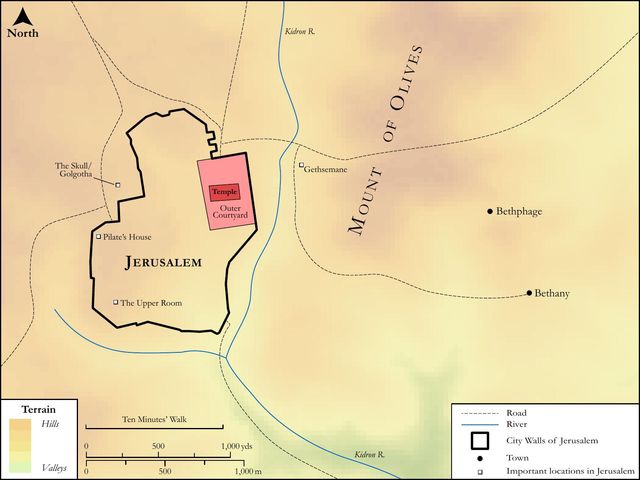
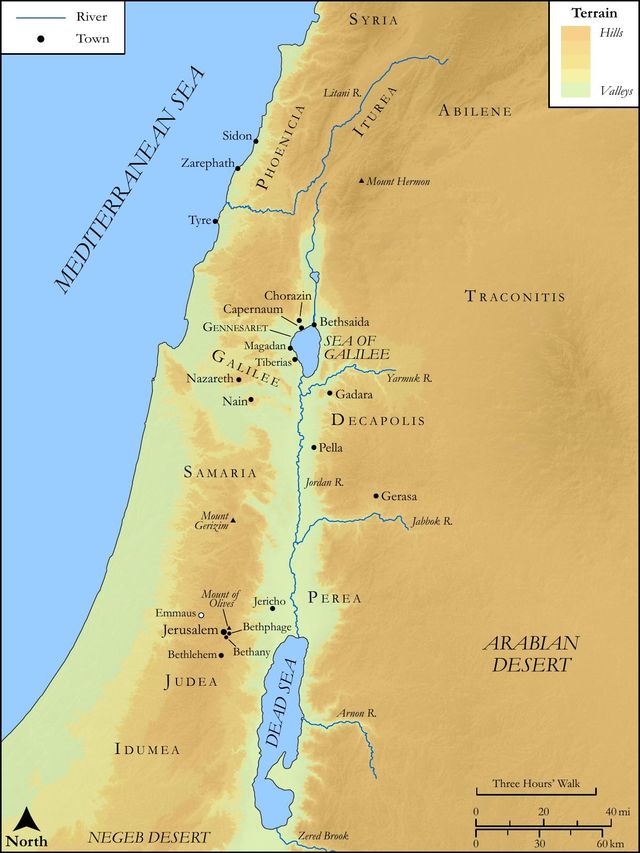
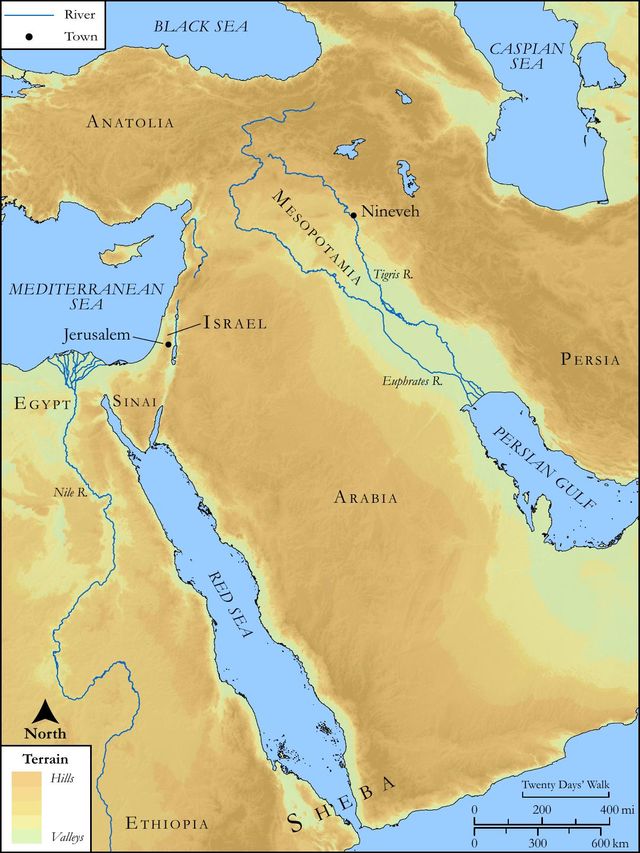
Study this verse
Public-domain commentary
Matthew Henry
From his Commentary on the Whole Bible. Henry comments on passages, not single verses — this entry covers Luke 22:21–38. His four-level outline is real structure in the source text, so it is rendered as structure.
We have here Christ's discourse with his disciples after supper, much of which is new here; and in St. John's gospel we shall find other additions. We should take example from him to entertain and edify our family and friends with such discourse at table as is good and to the use of edifying, which may minister grace to the hearers; but especially after we have been at the Lord's table, by Christian conference to keep one another in a suitable frame. The matters Christ here discoursed of were of weight, and to the present purpose.
I.He discoursed with them concerning him that should betray him, who was now present.
1.He signifies to them that the traitor was now among them, and one of them, Luk 22:21. By placing this after the institution of the Lord's supper, though in Matthew and Mark it is placed before it, it seems plain that Judas did receive the Lord's supper, did eat of that bread and drink of that cup; for, after the solemnity was over, Christ said, Behold, the hand of him that betrayeth me is with me on the table. There have been those that have eaten bread with Christ and yet have betrayed him.
2.He foretels that the treason would take effect (Luk 22:22): Truly the Son of man goes as it was determined, goes to the place where he will be betrayed; for he is delivered up by the counsel and foreknowledge of God, else Judas could not have delivered him up. Christ was not driven to his sufferings, but cheerfully went to them. He said, Lo, I come.
3.He threatens the traitor: Woe to that man by whom he is betrayed. Note, Neither the patience of the saints under their sufferings, nor the counsel of God concerning their sufferings, will be any excuse for those that have any hand in their sufferings, or that persecute them. Though God has determined that Christ shall be betrayed and he himself has cheerfully submitted to it, yet Judas's sin or punishment is not at all the less.
4.He frightens the rest of the disciples into a suspicion of themselves, by saying that it was one of them, and not naming which (Luk 22:23): They began to enquire among themselves, to interrogate themselves, to put the question to themselves, who it was that should do this thing, that could be so base to so good a Master. The enquiry was not, Is it you? or, Is it such a one? but, Is it I?
II.Concerning the strife that was among them for precedency or supremacy.
1.See what the dispute was: Which of them should be accounted the greatest. Such and so many contests among the disciples for dignity and dominion, before the Spirit was poured upon them, were a sad presage of the like strifes for, and affections of, supremacy in the churches, after the Spirit should be provoked to depart from them. How inconsistent is this with that in the verse before! There they were enquiring which would be the traitor, and here which should be the prince. Could such an instance of humility, and such an instance of pride and vanity, be found in the same men, so near together? This is like sweet waters and bitter proceeding at the same time out of the same fountain. What a self-contradiction is the deceitful heart of man!
2.See what Christ said to this dispute. He was not sharp upon them, as might have been expected (he having so often reproved them for this very thing), but mildly showed them the sin and folly of it.
(1.)This was to make themselves like the kings of the Gentiles, who affect worldly pomp, and worldly power, Luk 22:25. They exercise lordship over their subjects, and are ever and anon striving to exercise lordship too over the princes that are about them, though as good as themselves, if they think them not so strong as themselves. Note, The exercising of lordship better becomes the kings of the Gentiles than the ministers of Christ. But observe, They that exercise authority, and take upon themselves to bear sway, and give law, they are called Benefactors - Euergetas, they call themselves so, and so their flatterers call them, and those that set themselves to serve their interests. It is pretended that they have been benefactors, and upon that account they should be admitted to have rule; nay, that in exercising authority they are benefactors. However they may really serve themselves, they would be thought to serve their country. One of the Ptolemies was surnamed Euergetes - The Benefactor. Now our Saviour, by taking notice of this, intimates,
[1.]That to do good is much more honourable than to look great; for these princes that were the terror of the mighty would not be called so, but rather the benefactors of the needy; so that, by their own confession, a benefactor to his country is much more valued than a ruler of his country.
[2.]That to do good is the surest way to be great, else they that aimed to be rulers would not have been so solicitous to be called Benefactors. This therefore he would have his disciples believe, that their greatest honour would be to do all the good they could in the world. They would indeed be benefactors to the world, by bringing the gospel to it. Let them value themselves upon that title, which they would indeed be entitled to, and then they need not strive which should be the greatest, for they would all be greater - greater blessings to mankind than the kings of the earth, that exercise lordship over them. If they have that which is confessedly the greater honour, of being benefactors, let them despise the less, of being rulers.
(2.)It was to make themselves unlike the disciples of Christ, and unlike Christ himself: "You shall not be so," Luk 22:26, Luk 22:27. "It was never intended that you should rule any otherwise than by the power of truth and grace, but that you should serve." When church-rulers affect external pomp and power, and bear up themselves by secular interests and influences, they debase their office, and it is an instance of degeneracy like that of Israel when they would have a king like the nations that were round about them, whereas the Lord was their King. See here,
[1.]What is the rule Christ gave to his disciples: He that is greater among you, that is senior, to whom precedency is due upon the account of his age, let him be as the younger, both in point of lowness of place (let him condescend to sit with the younger, and be free and familiar with them) and in point of labour and work. We say, Juniores ad labores, seniores ad honores - Let the young work, and the aged receive their honours. But let the elder take pains as well as the younger; their age and honour, instead of warranting them to take their ease, bind them to double work. And he that is chief, ho hēgoumenos - the president of the college or assembly, let him be as he that serves, hōs ho diakonōn - as the deacon; let him stoop to the meanest and most toilsome services for the public good, if there be occasion.
[2.]What was the example which he himself gave to this rule: Whether is greater, he that sitteth at meat or he that serveth? he that attendeth or he that is attended on? Now Christ was among his disciples just like one that waited at table. He was so far from taking state, or taking his ease, by commanding their attendance upon him, that he was ready to do any office of kindness and service for them; witness his washing their feet. Shall those take upon them the form of princes who call themselves followers of him that took upon him the form of a servant?
(3.)They ought not to strive for worldly honour and grandeur, because he had better honours in reserve for them, of another nature, a kingdom, a feast, a throne, for each of them, wherein they should all share alike, and should have no occasion to strive for precedency, Luk 22:28-30. Where observe,
[1.]Christ's commendation of his disciples for their faithfulness to him; and this was honour enough for them, they needed not to strive for any greater. It is spoken with an air of encomium and applause: "You are they who have continued with me in my temptations, you are they who have stood by me and stuck to me when others have deserted me and turned their backs upon me." Christ had his temptations; he was despised and rejected of men, reproached and reviled, and endured the contradiction of sinners. But his disciples continued with him, and were afflicted in all his afflictions. It was but little help that they could give him, or service that they could do him; nevertheless, he took it kindly that they continued with him, and he here owns their kindness, though it was by the assistance of his own grace that they did continue. Christ's disciples had been very defective in their duty. We find them guilty of many mistakes and weaknesses: they were very dull and very forgetful, and often blundered, yet their Master passes all by and forgets it; he does not upbraid them with their infirmities, but gives them this memorable testimonial, You are they who have continued with me. Thus does he praise at parting, to show how willing he is to make the best of those whose hearts he knows to be upright with him.
[2.]The recompence he designed them for their fidelity: I appoint, diatithemai, I bequeath, unto you a kingdom. Or thus, I appoint to you, as my Father has appointed a kingdom to me, that you may eat and drink at my table. Understand it, First, Of what should be done for them in this world. God gave his Son a kingdom among men, the gospel church, of which he is the living, quickening, ruling, Head. This kingdom he appointed to his apostles and their successors in the ministry of the gospel, that they should enjoy the comforts and privileges of the gospel, help to communicate them to others by gospel ordinances, sit on thrones as officers of the church, not only declaratively, but exhortatively judging the tribes of Israel that persist in their infidelity, and denouncing the wrath of God against them, and ruling the gospel Israel, the spiritual Israel, by the instituted discipline of the church, administered with gentleness and love. This is the honour reserved for you. Or, Secondly, Of what should be done for them in the other world, which I take to be chiefly meant. Let them go on in their services in this world; their preferments shall be in the other world. God will give them the kingdom, in which they shall be sure to have, 1. The richest dainties; for they shall eat and drink at Christ's table in his kingdom, of which he had spoken, Luk 22:16, Luk 22:18. They shall partake of those joys and pleasures which were the recompence of his services and sufferings. They shall have a full satisfaction of soul in the vision and fruition of God; and herein they shall have the best society, as at a feast, in the perfection of love. 2. The highest dignities: "You shall not only be provided for at the royal table, as Mephibosheth at David's, but you shall be preferred to the royal throne; shall sit down with me on my throne, Rev 3:21. In the great day you shall sit on thrones, as assessors with Christ, to approve of and applaud his judgment of the twelve tribes of Israel." If the saints shall judge the world (Co1 6:2), much more the church.
III.Concerning Peter's denying him. And in this part of the discourse we may observe,
1.The general notice Christ gives to Peter of the devil's design upon him and the rest of the apostles (Luk 22:31): The Lord said, Simon, Simon, observe what I say; Satan hath desired to have you, to have you all in his hands, that he may sift you as wheat. Peter, who used to be the mouth of the rest in speaking to Christ, is here made the ear of the rest; and what is designed for warning to them all (all you shall be offended, because of me) is directed to Peter, because he was principally concerned, being in particular manner struck at by the tempter: Satan has desired to have you. Probably Satan had accused the disciples to God as mercenary in following Christ, and aiming at nothing else therein but enriching and advancing themselves in this world, as he accused Job. "No," saith God, "they are honest men, and men of integrity." "Give me leave to try them," saith Satan, "and Peter particularly." He desired to have them, that he might sift them, that he might show them to be chaff, and not wheat. The troubles that were now coming upon them were sifting, would try what there was in them: but this was not all; Satan desired to sift them by his temptations, and endeavoured by those troubles to draw them into sin, to put them into a loss and hurry, as corn when it is sifted to bring the chaff uppermost, or rather to shake out the wheat and leave nothing but the chaff. Observe, Satan could not sift them unless God gave him leave: He desired to have them, as he begged of God a permission to try and tempt Job. Exētēsato - "He has challenged you, has undertaken to prove you a company of hypocrites, and Peter especially, the forwardest of you." Some suggest that Satan demanded leave to sift them as their punishment for striving who should be greatest, in which contest Peter perhaps was very warm: "Leave them to me, to sift them for it."
2.The particular encouragement he gave to Peter, in reference to this trial: "I have prayed for thee, because, though he desires to have them all, he is permitted to make his strongest onset upon thee only: thou wilt be most violently assaulted, but I have prayed for thee, that thy faith fail not, that it may not totally and finally fail." Note,
(1.)If faith be kept up in an hour of temptation, though we may fall, yet we shall not be utterly cast down. Faith will quench Satan's fiery darts.
(2.)Though there may be many failings in the faith of true believers, yet there shall not be a total and final failure of their faith. It is their seed, their root, remaining in them.
(3.)It is owing to the mediation and intercession of Jesus Christ that the faith of his disciples, though sometimes sadly shaken, yet is not sunk. If they were left to themselves, they would fail; but they are kept by the power of God and the prayer of Christ. The intercession of Christ is not only general, for all that believe, but for particular believers (I have prayed for thee), which is an encouragement for us to pray for ourselves, and an engagement upon us to pray for others too.
3.The charge he gives to Peter to help others as he should himself be helped of God: "When thou art converted, strengthen thy brethren; when thou art recovered by the grace of God, and brought to repentance, do what thou canst to recover others; when thou hast found they faith kept from failing, labour to confirm the faith of others, and to establish them; when thou hast found mercy with God thyself, encourage others to hope that they also shall find mercy." Note,
(1.)Those that have fallen into sin must be converted from it; those that have turned aside must return; those that have left their first love must do their first works.
(2.)Those that through grace are converted from sin must do what they can to strengthen their brethren that stand, and to prevent their falling; see Psa 51:11-13; Ti1 1:13.
4.Peter's declared resolution to cleave to Christ, whatever it cost him (Luk 22:33): Lord, I am ready to go with thee, both into prison and to death. This was a great word, and yet I believe no more than he meant at this time, and thought he should make good too. Judas never protested thus against denying Christ, though often warned of it; for his heart was as fully set in him to the evil as Peter's was against it. Note, All the true disciples of Christ sincerely desire and design to follow him, whithersoever he goes, and whithersoever he leads them, though into a prison, though out of the world.
5.Christ's express prediction of his denying him thrice (Luk 22:34): "I tell thee, Peter (thou dost not know thine own heart, but must be left to thyself a little, that thou mayest know it, and mayest never trust to it again), the cock shall not crow this day before thou even deny that thou knowest me." Note, Christ knows us better than we know ourselves, and knows the evil that is in us, and will be done by us, which we ourselves do not suspect. It is well for us that Christ knows where we are weak better than we do, and therefore where to come in with grace sufficient; that he knows how far a temptation will prevail, and therefore when to say, Hitherto shall it come, and no further.
IV.Concerning the condition of all the disciples.
1.He appeals to them concerning what had been, Luk 22:35. He had owned that they had been faithful servants to him, Luk 22:28. Now he expects, at parting, that they should acknowledge that he had been a kind and careful Master to them ever since they left all to follow him: When I sent you without purse, lacked you any thing?
(1.)He owns that he had sent them out in a very poor and bare condition, barefoot, and with no money in their purses, because they were not to go far, nor be out long; and he would thus teach them to depend upon the providence of God, and, under that, upon the kindness of their friends. If God thus send us out into the world, let us remember that better than we have thus begun low.
(2.)Yet ye will have them own that, notwithstanding this, they had lacked nothing; they then lived as plentifully and comfortably as ever; and they readily acknowledged it: "Nothing, Lord; I have all, and abound." Note,
[1.]It is good for us often to review the providences of God that have been concerning us all our days, and to observe how we have got through the straits and difficulties we have met with.
[2.]Christ is a good Master, and his service a good service; for though his servants may sometimes be brought low, yet he will help them; and though he try them, yet will he not leave them. Jehovah-jireh.
[3.]We must reckon ourselves well done by, and must not complain, but be thankful, if we have had the necessary supports of life, though we have had neither dainties nor superfluities, though we have lived from hand to mouth, and lived upon the kindness of our friends. The disciples lived upon contribution, and yet did not complain that their maintenance was precarious, but owned, to their Master's honour, that it was sufficient; they had wanted nothing.
2.He gives them notice of a very great change of their circumstances now approaching. For,
(1.)He that was their Master was now entering upon his sufferings, which he had often foretold (Luk 22:37): "Now that which is written must be fulfilled in me, and this among the rest, He was numbered among the transgressors - he must suffer and die as a malefactor, and in company with some of the vilest of malefactors. This is that which is yet to be accomplished, after all the rest, and then the things concerning me, the things written concerning me, will have an end; then I shall say, It is finished." Note, It may be the comfort of suffering Christians, as it was of a suffering Christ, that their sufferings were foretold, and determined in the counsels of heaven, and will shortly determine in the joys of heaven. They were written concerning them, and they will have an end, and will end well, everlastingly well.
(2.)They must therefore expect troubles, and must not think now to have such an easy and comfortable life as they had had; no, the scene will alter. They must now in some degree suffer with their Master; and, when he is gone, they must expect to suffer like him. The servant is not better than his Lord.
[1.]They must not now expect that their friends would be so kind and generous to them as they had been; and therefore, He that has a purse, let him take it, for he may have occasion for it, and for all the good husbandry he can use.
[2.]They must now expect that their enemies would be more fierce upon them than they had been, and they would need magazines as well as stores: He that has no sword wherewith to defend himself against robbers and assassins (Co2 11:26) will find a great want of it, and will be ready to wish, some time or other, that he had sold his garment and bought one. This is intended only to show that the times would be very perilous, so that no man would think himself safe if he had not a sword by his side. But the sword of the Spirit is the sword which the disciples of Christ must furnish themselves with. Christ having suffered for us, we must arm ourselves with the same mind (Pe1 4:1), arm ourselves with an expectation of trouble, that it may not be a surprise to us, and with a holy resignation to the will of God in it, that there may be no opposition in us to it: and then we are better prepared than if we had sold a coat to buy a sword. The disciples hereupon enquire what strength they had, and find they had among them two swords (Luk 22:38), of which one was Peter's. The Galileans generally travelled with swords. Christ wore none himself, but he was not against his disciples' wearing them. But he intimates how little he would have them depend upon this when he saith, It is enough, which some think is spoken ironically: "Two swords among twelve men! you are bravely armed indeed when our enemies are now coming out against us in great multitudes, and every one with a sword!" Yet two swords are sufficient for those who need none, having God himself to be the shield of their help and the sword of their excellency, Deu 33:29.
Historical interpretation
Seven Centuries of Reception
11 surviving comments on this verse. Each one is dated, so this reads as a timeline rather than a list.
Select a marker to jump to its quote. Markers stagger vertically where authors wrote within a few decades of each other.
(Reg. Brev. int. 31.) Or the Lord does not bid them carry purse and scrip and buy a sword, but predicts that it should come to pass, that in truth the Apostles, forgetful of the time of the Passion, of the gifts and law of their Lord, would dare to take up the sword. For often does the Scripture make use of the imperative form of speech in the place of prophecy. Still in many books we do not find, Let him take, or buy, but, he will take, he will buy.
O Lord, why do you command me to buy a sword, which you forbid me to strike with? Why do you tell me to have what you forbid me to draw? Unless perhaps it is for the purpose of defense, not necessary vengeance; and I may seem able to be avenged, but unwilling. However, the law does not forbid retaliation, and therefore perhaps you offer two swords to Peter: 'It is enough,' you say, as if it were allowed until the Gospel; so that there may be instruction in the law of equity, and perfection in the Gospel of goodness.
Many consider this unfair: but the Lord is not unfair, who, when He could avenge Himself, preferred to be sacrificed. For it is a spiritual sword, to sell your property, to buy the word by which the naked innermost thoughts are clothed. There is also the sword of passion, to divest the body, and with the stripped-off garments of the slaughtered flesh, a sacred crown of martyrdom is bought for you: which you can gather from the blessings of the Lord, who preached the highest crown of all, if anyone suffers persecution for righteousness. Finally, to let you know that he was talking about his passion, so as not to disturb the minds of the disciples, he gave an example of himself, saying: Because this that is written must be fulfilled in me, that is, he was reckoned among the transgressors.
However, it still moves me that the disciples have brought two swords; lest perhaps one is new, the other of the old Testament, with which we arm ourselves against the snares of the devil? Finally, the Lord says: It is enough, as if nothing is lacking to him whom the teaching of both Testaments has fortified.
But He who forbids to strike, why does He order them to buy a sword? unless perchance that there may be a defence prepared, but no necessary retaliation; a seeming ability to be revenged, without the will. Hence it follows, And he who has not, (that is, a purse,) let him sell his garment, and buy a sword.
Or, because the law does not forbid to return a blow, perhaps He says to Peter, as he is offering the two swords, It is enough, as though it were lawful until the Gospel; in order that there may be in the law, the knowledge of justice; in the Gospel, perfection of goodness. There is also a spiritual sword, that you may sell your patrimony, and buy the word, by which the nakedness of the soul is clothed. There is also a sword of suffering, so that you may strip your body, and with the spoils of your sacrificed flesh purchase for yourself the sacred crown of martyrdom. Again it moves, seeing that the disciples put forward two swords, whether perhaps one is not of the Old Testament, the other of the New, whereby we are armed against the wiles of the devil. Therefore the Lord says, It is enough, because he wanted nothing who is fortified by the teaching of both Testaments.
(in illud ad Rom. 16. Salutate Priscillam.) Now as one who teaches to swim, at first indeed placing his hands under his pupils, carefully supports them, but afterward frequently withdrawing his hand, bids them help themselves, nay even lets them sink a little; so likewise did Christ deal with His disciples. At the beginning truly He was present to them, giving them most richly abundance of all things; as it follows, And they said unto them, Nothing. But when it was necessary for them to show their own strength, He withdrew from them for a little His grace, bidding them do something of themselves; as it follows, But now he that hath a purse, that is, wherein to carry money, let him take it, and likewise his scrip, that is, to carry provisions in. And truly when they had neither shoes, nor girdle, nor staff, nor money, they never suffered the want of any thing. But when He allowed them purse and scrip, they seem to suffer hunger, and thirst, and nakedness. As if He said to them, Hitherto all things have been most richly supplied to you, but now I would have you also experience poverty, therefore I hold you no longer to the former rule, but I command you to get purse and scrip. Now God might even to the end have kept them in plenty, but for many reasons He was unwilling to do so. First that they might impute nothing to themselves, but acknowledge that every thing flowed from God; secondly, that they might learn moderation; thirdly, that they might not think too highly of themselves. For this cause while He permitted them to fall into many unlooked for evils, He relaxed the rigour of the former law, lest it should become grievous and intolerable.
What is, this? He who said, If any one strike you on the right cheek, turn unto him the other also, (Matt. 5:39.) now arms His disciples, and with a sword only. For if it were fitting to be completely armed, not only must a man possess a sword, but shield and helmet. But even though a thousand had arms of this kind, how could the eleven be prepared for all the attacks and lying in wait of people, tyrants, allies, and nations, and how should they not quake at the mere sight of armed men, who had been brought up near lakes and rivers? We must not then suppose that He ordered them to possess swords, but by the swords He points at the secret attack of the Jews. And hence it follows, For I say unto you, that this that is written must be accomplished in me: And he was numbered with the transgressors. (Isa. 53:12.)
And in truth, if He wished them to use human aid, not a hundred swords would have sufficed; but if He willed not the assistance of man, even two are superfluous.
(cont. Faust. lib. xxii. c. 77.) By no inconsistency then of Him who commands, but by the reason of the dispensation, according to the diversity of times are commandments, counsels, or permissions changed.
Christ foretold the war about to burst on the Jews. With unendurable violence, it would spread like some river over all their land. He now says, “But now, let him who has a purse take it, and likewise a bag.” The saying in appearance had reference to the apostles but in reality applied to every Jew. Christ addressed them. He did not say that the holy apostles must get a purse and bag. He said that whosoever has a purse, let him take it. This means that whoever had property in the Jewish territories should collect all that he had and flee, so that if he could save himself, he might do so. Some did not have the means of equipping themselves for travel and from extreme poverty must continue in the land. “Let such a person,” Jesus says, “sell his cloak and buy a sword.” From now on, the question with all those who continue in the land will not be whether they possess anything or not, but whether they can exist and preserve their lives. War will come to them with such unendurable force that nothing shall be able to stand against it.
"But now, He says, he that has a purse, let him take it, and a bag in like manner." Tell me then, was this because on second thoughts a more serviceable plan was devised? What need had the holy apostles of purse and bag? What answer must we give to this? That the saying in appearance had reference to them, but in reality applied to the person of every Jew: for they it rather was whom Christ addressed. For He did not say that the holy apostles must get purse and bag, but that "whosoever has a purse, let him take it," meaning thereby, that whosoever had property in the Jewish territories, should collect all that he had together, and flee, so that if he could any how save himself, he might do so. But any one who had not the means of equipping himself for travel, and who from extreme poverty must continue in the land, let even such one, He says, sell his cloak, and buy a sword: for henceforth the question with all those who continue in the land will not be whether they possess anything or not, but whether they can exist and preserve their lives. For war shall befal them with such unendurable impetuosity, that nothing shall be able to stand against it.
And next He tells them the cause of the evil, and of a tribulation so severe and irremediable befalling them, saying, "that He is about according to the Scriptures to be numbered with the transgressors," plainly referring to His being hung upon the cross with the thieves who were crucified with Him, and so enduring a transgressor's punishment: "and the dispensation, having come to this, will now have an end."
And in foretelling these things, the Lord was speaking of what was about to happen to the country of the Jews. But the divine disciples did not understand the deep meaning of what was said, but supposed rather that He meant that swords were necessary, because of the attack about to be made upon Him by the disciple who betrayed Him, and by those who were assembled to seize Him. For this reason they say, "Lord, behold, here are two swords."
He tells them the cause of the evil and of a tribulation so severe and irremediable befalling them. He says that according to the Scriptures, he is about to be numbered with the transgressors. Christ plainly refers to his being hung on the cross with the thieves who were crucified with him, enduring a transgressor's punishment.… He will also sit on the throne of his glory, judging the world in righteousness, as it is written. The prophet says, "Then they will look on him whom they pierced." As these wretched beings ridiculed Christ as they saw him hang on the precious cross, they will behold him crowned with godlike glory and will fall into the pit of destruction in just retribution of their wickedness toward him. "What concerns me," he says, "has an end as far as it relates to my suffering death in the flesh." Then those things foretold by the holy prophets in olden times will happen to those who murdered him.
Our Lord had foretold to Peter that he should deny Him; namely, at the time of His being taken. But having once made mention of His being taken captive, He next announces the struggle that would ensue against the Jews. Hence it is said, And he said unto them, When I sent you without purse, &c.For the Saviour had sent the holy Apostles to preach in the cities and towns the kingdom of heaven, bidding them to take no thought of the things of the body, but to place their whole hope of salvation in Him.
Or else; When our Lord says, He who hath a purse, let him take it, likewise a scrip, His discourse He addressed to His disciples, but in reality He regards every individual Jew; as if He says, If any Jew is rich in resources, let him collect them together and fly. But if any one oppressed with extreme poverty applies himself to religion, let him also sell his cloak and buy a sword. For the terrible attack of battle shall overtake them, so that nothing shall suffice to resist it. He next lays open the cause of these evils, namely, that He suffered the penalty due to the wicked, being crucified with thieves. And when it shall have come at last to this, the word of dispensation will receive its end. But to the persecutors shall happen all that has been foretold by the Prophets. These things then God prophesied concerning what should befall the country of the Jews, but the disciples understood not the depth of His words, thinking they had need of swords against the coming attack of the traitor. Whence it follows; But they said, Lord, behold, here are two swords.
For He does not train His disciples in the same rule of life, in time of persecution, as in the time of peace. When He sent them to preach, He ordered them to take nothing in the way, ordaining in truth, that He who preaches the Gospel should live by the Gospel. But when the crisis of death was at hand, and the whole nation persecuted both the shepherd and the flock, He proposes a law adapted to the time, allowing them to take the necessaries of life, until the rage of the persecutors was abated, and the time of preaching the Gospel had returned. Herein He leaves us also an example, that at times when a just reason urges, we may intermit without blame somewhat of the strictness of our determination.
Or the two swords suffice for a testimony that Jesus suffered voluntarily. The one indeed was to teach the Apostles the presumption of their contending for their Lord, and His inherent virtue of healing; the other never taken out of its sheath, to show that they were not even permitted to do all that they could for His defence.
While they were contending among themselves above concerning priority, He saith, It is not a time of dignities, but rather of danger and slaughter. Behold I even your Master am led to a disgraceful death, to be reckoned with the transgressors. For these things which are prophesied of Me have an end, that is, a fulfilment. Wishing then to hint at a violent attack, He made mention of a sword, not altogether revealing it, lest they should be seized with dismay, nor did He entirely provide that they should not be shaken by these sudden attacks, but that afterwards recovering, they might marvel how He gave Himself up to the Passion, a ransom for the salvation of men.
Or He hereby foretels to them that they would incur hunger and thirst, which He implies by the scrip, and sundry kinds of misery, which he intends by the sword.
Our Lord then was unwilling to blame them as not understanding Him, but saying, It is enough, He dismissed them; as when we are addressing any one, and see that he does not understand what is said, we say, Well, let us leave him, lest we trouble him. But some say, that our Lord said, It is enough, ironically; as if He said, Since there are two swords, they will amply suffice against so large a multitude as is about to attack us.
Continue studying Luke 22:36 across the web’s major study libraries — every link below opens this exact verse, chapter, or book on the destination site.
Read & Compare
 BibleGatewayThis verse in more than 200 translations and 70 languages.
 Bible.comThe YouVersion reader — hundreds of translations, reading plans, and highlights.
 ESV.orgCrossway's official English Standard Version reader.
 NET BibleThe NET translation with 60,000+ translators' notes on every rendering decision.
 STEP BibleTyndale House's free study tool — original text, vocabulary, and scholarly resources.
 BibliaLogos Bible Software's free web reader.
 USCCBThe New American Bible (Revised Edition) with the U.S. bishops' study notes.
Commentaries
 BibleHub CommentariesDozens of classic commentaries on this verse, gathered on one page.
 StudyLightMore than 100 commentary sets — the largest collection on the web.
 BibleRefPlain-English commentary on what this verse means, verse by verse.
 Enduring WordDavid Guzik's free commentary on this chapter, widely used by Bible teachers.
 Bible Study ToolsVerse commentary alongside Greek and Hebrew study aids.
Original Language & Research
- BibleHub InterlinearThe verse word by word — original language, transliteration, and English.
- BibleHub LexiconEvery word's original-language definition and Strong's entry.
 Blue Letter BibleDeep-study tools — Strong's numbers, concordance, and word studies.
 CNTR CollationThe earliest Greek manuscripts of this verse, collated letter by letter.
Sermons, Hymns & Audio


TrulyRandomVerse is not affiliated with these sites and doesn’t control their content. They’re linked because they’re genuinely useful.
Summary
Luke 22:36 captures a pivotal and somber moment during Jesus' final Passover meal with His disciples, just hours before His arrest and crucifixion. In a stark departure from His previous instructions for their missions, Jesus now commands His followers to acquire practical provisions—a purse and a traveling bag—and, most strikingly, to procure a sword, even if it means selling their outer garment. This directive signals a dramatic and perilous shift in the nature of their mission, moving from a period of relative peace and divine provision to one of anticipated hostility, self-reliance, and spiritual conflict, preparing them for the profound challenges that lay ahead in a world hostile to the Gospel.
Context
ShowHideLiterary Context
This verse is situated within the intensely significant narrative of the Last Supper, immediately following Jesus' institution of the New Covenant through the bread and wine (Luke 22:14-20). It precedes the discourse on greatness among the disciples (Luke 22:24-30), Peter's denial prophecy (Luke 22:31-34), and the agonizing prayer in Gethsemane (Luke 22:39-46). The instructions in Luke 22:35-38 serve as a critical transition, highlighting the immediate and dramatic shift from the disciples' previous, more peaceful ministry experiences (e.g., Luke 9:3 and Luke 10:4) to the impending confrontation with the forces of darkness and human opposition, culminating in Jesus' arrest.
Historical & Cultural Context
Jesus' ministry had largely been characterized by a period of public favor, though opposition from religious authorities was growing. The disciples had been sent out with instructions to rely on God's provision and the hospitality of others, a common practice for itinerant teachers and prophets in that era. However, the political and religious climate in Jerusalem, especially during Passover, was highly charged. Roman occupation was a constant backdrop, and Jewish leaders were increasingly hostile towards Jesus. The cultural understanding of a "sword" (máchaira) in this context could range from a tool for defense against robbers on dangerous roads to a symbol of readiness for conflict. Garments, particularly the outer cloak, were often used as collateral for loans or even as bedding for the poor, making the command to sell one's garment a significant sacrifice, underscoring the urgency and necessity of the new directive.
Key Themes
ShowHideThis verse contributes significantly to several overarching themes in Luke's Gospel and biblical theology. Primarily, it underscores the radical shift in circumstances for Jesus' followers, moving from a time of relative ease and divine provision to one of intense opposition and self-reliance. It highlights the cost of discipleship, emphasizing that following Christ involves not only spiritual commitment but also practical preparation for hardship and confrontation. The command to acquire a "sword" introduces the theme of spiritual warfare and the nature of the kingdom of God; while literally understood by the disciples (as seen in Luke 22:49-50), Jesus' subsequent rebuke of Peter's use of a physical sword (Luke 22:51) and His declaration that His kingdom is "not of this world" (John 18:36) strongly suggest a deeper, symbolic meaning related to the spiritual battles they would face rather than physical combat. This prepares them for a new reality where reliance on Him and spiritual fortitude would be paramount.
Exposition and Analysis
ShowHideKey Word Analysis
ShowHideThis adverb of present time (G3568) is crucial. It signifies a dramatic and immediate shift from the past. Jesus is not merely giving new advice but declaring that the entire paradigm of their mission has changed. The "now" marks the transition from a period of relative peace and reliance on public hospitality to an era of hostility, self-sufficiency, and spiritual conflict. It emphasizes the urgency and the radical nature of the new instructions.
The verb "take" (G142) means to lift up, to take up or away. In this context, it is an imperative, a direct command for the disciples to actively acquire and carry a purse and scrip. This contrasts sharply with previous instructions to take nothing for their journey. The shift from "not taking" to "taking" signifies a necessary change in their approach to ministry and survival in a hostile environment, highlighting a new level of personal responsibility for their provisions.
This noun (G3162) refers to a knife or dirk, a short sword, often used for defense or as a tool. While the disciples immediately interpret this literally (as seen in Luke 22:49), Jesus' subsequent actions and teachings, particularly His rebuke of Peter's use of a physical sword in Gethsemane (Luke 22:51), strongly suggest a symbolic meaning. The "sword" here likely represents the intense spiritual conflict, opposition, and even persecution they would face, requiring a different kind of readiness and defense—the "sword of the Spirit, which is the word of God" (Ephesians 6:17).
Verse Breakdown
ShowHide"Then said he unto them"
This phrase serves as a narrative connector, indicating Jesus' direct address to His disciples. It sets the stage for a significant pronouncement, signaling that what follows is a new, imperative teaching from the Lord.
"But now, he that hath a purse, let him take [it]"
The emphatic "But now" (G235, G3568) marks a radical departure from Jesus' previous instructions in Luke 9:3 and Luke 10:4, where disciples were told to take no purse. This command signifies that the period of relying solely on hospitality and divine provision without personal preparation is over. Disciples must now actively manage their own financial resources for the challenging times ahead.
"and likewise [his] scrip"
Following the instruction about the purse, Jesus adds the "scrip" (G4082), a traveling bag for provisions. This reinforces the need for practical self-sufficiency. The disciples are no longer to expect immediate provision from others but must carry their own food and supplies, indicating a future of less welcoming environments and greater personal responsibility for their sustenance.
"and he that hath no sword, let him sell his garment, and buy one"
This is the most striking and controversial part of the instruction. The command to acquire a "sword" (G3162), even at the cost of selling one's outer garment (G2440)—a significant sacrifice, as it was often used for warmth or as collateral—underscores the extreme urgency and importance of this new directive. While literally interpreted by the disciples, the deeper meaning points to the severe spiritual conflict and opposition they would encounter, requiring a readiness that goes beyond physical defense.
Literary Devices
ShowHideLuke 22:36 employs several potent literary devices to convey its profound message. Contrast is paramount, highlighted by the phrase "But now" (KJV), which immediately sets up a stark opposition to Jesus' earlier instructions for mission (Luke 9:3 and Luke 10:4). This contrast emphasizes the dramatic shift in circumstances from a time of peace to one of impending hostility. Hyperbole is evident in the command to "sell his garment, and buy one" if one has no sword. The outer garment was a vital possession, and the instruction to part with it for a sword suggests an extreme, almost desperate, necessity, amplifying the gravity of the coming trials. Finally, Symbolism is deeply embedded in the "sword" itself. While the disciples initially interpret it literally, the broader narrative context, particularly Jesus' immediate rebuke of Peter's violent use of a sword (Luke 22:51), transforms it into a symbol not of physical warfare, but of the intense spiritual struggle and opposition the disciples would face in proclaiming the Gospel, requiring spiritual readiness rather than carnal weapons.
Theological and Thematic Connections
ShowHideLuke 22:36 serves as a stark prophetic warning, signifying a profound shift in the disciples' mission from one of relative ease and public favor to one of intense opposition and spiritual warfare. This verse underscores the reality that following Christ is not always a comfortable journey but often entails hardship, sacrifice, and the need for preparedness in a world hostile to the Kingdom of God. It challenges the notion of a perpetually smooth path for believers, emphasizing that genuine discipleship requires a readiness to face adversity, both practical and spiritual. The "sword" in this context points to the spiritual battles ahead, where the true weapons are not physical but spiritual, empowering believers to stand firm in faith and proclaim the truth amidst opposition.
Reflection and Application
ShowHideLuke 22:36 resonates deeply with believers today, reminding us that the Christian life is not a guarantee of ease but a call to courageous discipleship in a world that often opposes the values of the Kingdom of God. Just as Jesus prepared His disciples for a shift from a period of relative peace to one of intense spiritual conflict and practical hardship, so too must we be prepared. This doesn't mean arming ourselves physically, but rather cultivating spiritual resilience, wisdom, and discernment. We are called to be wise stewards of our resources ("purse" and "scrip"), ensuring we are practically prepared for life's uncertainties, and, more importantly, to be spiritually armed ("sword") with the Word of God and prayer, ready to contend for the faith and stand firm against spiritual opposition. This verse challenges us to move beyond a naive expectation of comfort and embrace the reality that following Christ may require sacrifice, courage, and unwavering commitment in the face of adversity, always trusting in God's ultimate sovereignty and provision.
Questions for Reflection
ShowHideFAQ
ShowHideDid Jesus literally tell His disciples to buy physical swords for self-defense?
ShowHideWhile the disciples initially interpreted Jesus' command to "buy a sword" literally, and indeed two swords were present among them (Luke 22:38), Jesus' immediate reaction to Peter's use of a physical sword in Gethsemane provides crucial interpretive context. When Peter struck the high priest's servant, Malchus, Jesus rebuked him, saying, "Put up again thy sword into his place: for all they that take the sword shall perish with the sword" (Matthew 26:52). Furthermore, Jesus healed Malchus's ear (Luke 22:51) and later declared to Pilate that His kingdom was "not of this world," otherwise His servants would fight (John 18:36). These subsequent actions and statements strongly suggest that Jesus' instruction was not a literal call to armed self-defense, but rather a symbolic warning about the intense spiritual conflict and opposition they would face, requiring a different kind of readiness. The "sword" likely represents preparedness for spiritual warfare, perhaps akin to the "sword of the Spirit, which is the word of God" (Ephesians 6:17).
Christ-Centered Fulfillment
ShowHideLuke 22:36, though seemingly a practical instruction for the disciples, finds its ultimate Christ-centered fulfillment not in a call to physical armament, but in foreshadowing the profound spiritual battle that Jesus Himself was about to wage and win on the cross. The "sword" the disciples were to acquire symbolically represents the spiritual conflict that would define the new era of the Kingdom, an era inaugurated by Christ's sacrificial death and resurrection. Jesus, as the true warrior, did not fight with carnal weapons but offered Himself as the ultimate sacrifice, disarming the powers of darkness through His triumph over sin and death (Colossians 2:15). His willingness to suffer, even to the point of death on a cross, became the true "weapon" that defeated the enemy, establishing a kingdom "not of this world" (John 18:36). Thus, the disciples' need for a "sword" becomes a metaphor for their participation in Christ's ongoing spiritual victory, equipping them not for earthly combat, but for proclaiming the Gospel, which is the power of God for salvation (Romans 1:16), and for enduring persecution as Christ endured it (1 Peter 2:21-23). Their preparedness, therefore, is ultimately a readiness to follow their Lord into suffering and spiritual triumph, armed with faith and the truth of His finished work, rather than with steel.