


Luke 15:6
- καὶkaiAndG2532CONJConjunction
- ἐλθὼνelthōnhaving comeG2064V-2AAP-NSMVerb 2nd Aorist Active Participle Nominative Singular Masculine
- εἰςeistoG1519PREPPreposition
- τὸνtontheG3588T-ASMDefinite article Accusative Singular Masculine
- οἶκονoikonhouseG3624N-ASMNoun Accusative Singular Masculine
- συγκαλεῖsugkaleihe calls togetherG4779V-PAI-3SVerb Present Active Indicative 3rd Singular
- τοὺςtoustheG3588T-APMDefinite article Accusative Plural Masculine
- φίλουςphilousfriendsG5384A-APMAdjective Accusative Plural Masculine
- καὶkaiandG2532CONJConjunction
- τοὺςtoustheG3588T-APMDefinite article Accusative Plural Masculine
- γείτοναςgeitonasneighboursG1069N-APMNoun Accusative Plural Masculine
- λέγωνlegōnsayingG3004V-PAP-NSMVerb Present Active Participle Nominative Singular Masculine
- αὐτοῖς·autoisto themG846P-DPMPersonal pronoun Dative Plural Masculine
- συγχάρητέsugcharētedo rejoice withG4796V-2AOM-2PVerb 2nd Aorist Passive Deponent Imperative 2nd Plural
- μοιmoimeG3165P-1DSPersonal pronoun Dative 1st Singular
- ὅτιhotiforG3754CONJConjunction
- εὗρονheuronI have foundG2147V-2AAI-1SVerb 2nd Aorist Active Indicative 1st Singular
- τὸtotheG3588T-ASNDefinite article Accusative Singular Neuter
- πρόβατόνprobatonsheepG4263N-ASNNoun Accusative Singular Neuter
- μουmouof mineG3165P-1GSPersonal pronoun Genitive 1st Singular
- τὸtothe [one]G3588T-ASNDefinite article Accusative Singular Neuter
- ἀπολωλόςapolōloshaving been lost!G622V-2RAP-ASNVerb 2nd Perfect Active Participle Accusative Singular Neuter
English is a literal word-by-word gloss of the Greek, not the KJV's wording. Why?
This is the original text the KJV's translators worked from — each Greek word with its own literal English meaning in this verse, prepared by scholars at Tyndale House, Cambridge. The KJV translates whole sentences, not word by word, so its wording differs: one Greek word can become several English words, and the KJV may choose “charity” where the gloss reads “love”. Both are faithful — they answer different questions. For the KJV's own rendering, switch to the KJV text.
Details
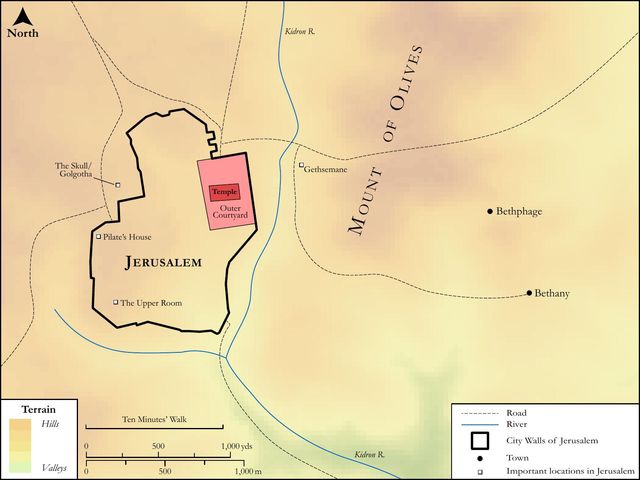
See on the biblical-era map


Study this verse
Public-domain commentary
Matthew Henry
From his Commentary on the Whole Bible. Henry comments on passages, not single verses — this entry covers Luke 15:1–10. His four-level outline is real structure in the source text, so it is rendered as structure.
Here is, I. The diligent attendance of the publicans and sinners upon Christ's ministry. Great multitudes of Jews went with him (Luk 14:25), with such an assurance of admission into the kingdom of God that he found it requisite to say that to them which would shake their vain hopes. Here multitudes of publicans and sinners drew near to him, with a humble modest fear of being rejected by him, and to them he found it requisite to give encouragement, especially because there were some haughty supercilious people that frowned upon them. The publicans, who collected the tribute paid to the Romans, were perhaps some of them bad men, but they were all industriously put into an ill name, because of the prejudices of the Jewish nation against their office. They are sometimes ranked with harlots (Mat 21:32); here and elsewhere with sinners, such as were openly vicious, that traded with harlots, known rakes. Some think that the sinners here meant were heathen, and that Christ was now on the other side Jordan, or in Galilee of the Gentiles. These drew near, when perhaps the multitude of the Jews that had followed him had (upon his discourse in the close of the foregoing chapter) dropped off; thus afterwards the Gentiles took their turn in hearing the apostles, when the Jews had rejected them. They drew near to him, being afraid of drawing nearer than just to come within hearing. They drew near to him, not, as some did, to solicit for cures, but to hear his excellent doctrine. Note, in all our approaches to Christ we must have this in our eye, to hear him; to hear the instructions he gives us, and his answers to our prayers.
II.The offence which the scribes and Pharisees took at this.
They murmured, and turned it to the reproach of our Lord Jesus: This man receiveth sinners, and eateth with them, Luk 15:2.
1.They were angry that publicans and heathens had the means of grace allowed them, were called to repent, and encouraged to hope for pardon upon repentance; for they looked upon their case as desperate, and thought that none but Jews had the privilege of repenting and being pardoned, though the prophets preached repentance to the nations, and Daniel particularly to Nebuchadnezzar.
2.They thought it a disparagement to Christ, and inconsistent with the dignity of his character, to make himself familiar with such sort of people, to admit them into his company and to eat with them. They could not, for shame, condemn him for preaching to them, though that was the thing they were most enraged at; and therefore they reproached him for eating with them, which was more expressly contrary to the tradition of the elders. Censure will fall, not only upon the most innocent and the most excellent persons, but upon the most innocent and most excellent actions, and we must not think it strange.
III.Christ's justifying himself in it, by showing that the worse these people were, to whom he preached, the more glory would redound to God, and the more joy there would be in heaven, if by his preaching they were brought to repentance. It would be a more pleasing sight in heaven to see Gentiles brought to the worship of the true God than to see Jews go on in it, and to see publicans and sinners live an orderly sort of life than to see scribes and Pharisees go on in living such a life. This he here illustrates by two parables, the explication of both of which is the same.
1.The parable of the lost sheep. Something like it we had in Mat 18:12. There it was designed to show the care God takes for the preservation of saints, as a reason why we should not offend them; here it is designed to show the pleasure God takes in the conversion of sinners, as a reason why we should rejoice in it. We have here,
(1.)The case of a sinner that goes on in sinful ways. He is like a lost sheep, a sheep gone astray; he is lost to God, who has not the honour and service he should have from him; lost to the flock, which has not communion with him; lost to himself: he knows not where he is, wanders endlessly, is continually exposed to the beasts of prey, subject to frights and terrors, from under the shepherd's care, and wanting the green pastures; and he cannot of himself find the way back to the fold.
(2.)The care the God of heaven takes of poor wandering sinners. He continues his care of the sheep that did not go astray; they are safe in the wilderness. But there is a particular care to be taken of this lost sheep; and though he has a hundred sheep, a considerable flock, yet he will not lose that one, but he goes after it, and shows abundance of care,
[1.]In finding it out. He follows it, enquiring after it, and looking about for it, until he finds it. God follows backsliding sinners with the calls of his word and the strivings of his Spirit, until at length they are wrought upon to think of returning.
[2.]In bringing it home. Though he finds it weary, and perhaps worried and worn away with its wanderings, and not able to bear being driven home, yet he does not leave it to perish, and say, It is not wroth carrying home; but lays it on his shoulders, and, with a great deal of tenderness and labour, brings it to the fold. This is very applicable to the great work of our redemption. Mankind were gone astray, Isa 53:6. The value of the whole race to God was not so much as that of one sheep to him that had a hundred; what loss would it have been to God if they had all been left to perish? There is a world of holy angels that are as the ninety-nine sheep, a noble flock; yet God sends his Son to seek and save that which was lost, Luk 19:10. Christ is said to gather the lambs in his arms, and carry them in his bosom, denoting his pity and tenderness towards poor sinners; here he is said to bear them upon his shoulders, denoting the power wherewith he supports and bears them up; those can never perish whom he carries upon his shoulders.
(3.)The pleasure that God takes in repenting returning sinners. He lays it on his shoulders rejoicing that he has not lost his labour in seeking; and the joy is the greater because he began to be out of hope of finding it; and he calls his friends and neighbours, the shepherds that keep their flocks about him, saying, Rejoice with me. Perhaps among the pastoral songs which the shepherds used to sing there was one for such an occasion as this, of which these words might be the burden, Rejoice with me, for I have found my sheep which was lost; whereas they never sung, Rejoice with me, for I have lost none. Observe, he calls it his sheep, though a stray, a wandering sheep. He has a right to it (all souls are mine), and he will claim his own, and recover his right; therefore he looks after it himself: I have found it; he did not send a servant, but his own Son, the great and good Shepherd, who will find what he seeks, and will be found of those that seek him not.
2.The parable of the lost piece of silver.
(1.)The loser is here supposed to be a woman, who will more passionately grieve for her loss, and rejoice in finding what she had lost, than perhaps a man would do, and therefore it the better serves the purpose of the parable. She has ten pieces of silver, and out of them loses only one. Let this keep up in us high thoughts of the divine goodness, notwithstanding the sinfulness and misery of the world of mankind, that there are nine to one, nay, in the foregoing parable there are ninety-nine to one, of God's creation, that retain their integrity, in whom God is praised, and never was dishonoured. O the numberless beings, for aught we know numberless worlds of beings, that never were lost, nor stepped aside from the laws and ends of their creation!
(2.)That which is lost is a piece of silver, drachmēn - the fourth part of a shekel. The soul is silver, of intrinsic worth and value; not base metal, as iron or lead, but silver, the mines of which are royal mines. The Hebrew word for silver is taken from the desirableness of it. It is silver coin, for so the drachma was; it is stamped with God's image and superscription, and therefore must be rendered to him. Yet it is comparatively but of small value; it was but seven pence half-penny; intimating that if sinful men be left to perish God would be no loser. This silver was lost in the dirt; a soul plunged in the world, and overwhelmed with the love of it and care about it, is like a piece of money in the dirt; any one would say, It is a thousand pities that it should lie there.
(3.)Here is a great deal of care and pains taken in quest of it. The woman lights a candle, to look behind the door, under the table, and in every corner of the house, sweeps the house, and seeks diligently till she finds it. This represents the various means and methods God makes use of to bring lost souls home to himself: he has lighted the candle of the gospel, not to show himself the way to us, but to show us the way to him, to discover us to ourselves; he has swept the house by the convictions of the word; he seeks diligently, his heart is upon it, to bring lost souls to himself.
(4.)Here is a great deal of joy for the finding of it: Rejoice with me, for I have found the piece which I had lost, Luk 15:9. Those that rejoice desire that others should rejoice with them; those that are merry would have others merry with them. She was glad that she had found the piece of money, though she should spend it in entertaining those whom she called to make merry with her. The pleasing surprise of finding it put her, for the present, into a kind of transport, heurēka, heurēka - I have found, I have found, is the language of joy.
3.The explication of these two parables is to the same purport (Luk 15:7, Luk 15:10): There is joy in heaven, joy in the presence of the angels of God, over one sinner that repenteth, as those publicans and sinners did, some of them at least (and, if but one of them did repent, Christ would reckon it worth his while), more than over a great number of just persons, who need no repentance. Observe,
(1.)The repentance and conversion of sinners on earth are matter of joy and rejoicing in heaven. It is possible that the greatest sinners may be brought to repentance. While there is life there is hope, and the worst are not to be despaired of; and the worst of sinners, if they repent and turn, shall find mercy. Yet this is not all,
[1.]God will delight to show them mercy, will reckon their conversion a return for all the expense he has been at upon them. There is always joy in heaven. God rejoiceth in all his works, but particularly in the works of his grace. He rejoiceth to do good to penitent sinners, with his whole heart and his whole soul. He rejoiceth not only in the conversion of churches and nations, but even over one sinner that repenteth, though but one.
[2.]The good angels will be glad that mercy is shown them, so far are they from repining at it, though those of their nature that sinned be left to perish, and no mercy shown to them; though those sinners that repent, that are so mean, and have been so vile, are, upon their repentance, to be taken into communion with them, and shortly to be made like them, and equal to them. The conversion of sinners is the joy of angels, and they gladly become ministering spirits to them for their good, upon their conversion. The redemption of mankind was matter of joy in the presence of the angels; for they sung, Glory to God in the highest, Luk 2:14.
(2.)There is more joy over one sinner that repenteth, and turneth to be religious from a course of life that had been notoriously vile and vicious, than there is over ninety-nine just persons, who need no repentance.
[1.]More joy for the redemption and salvation of fallen man than for the preservation and confirmation of the angels that stand, and did indeed need no repentance.
[2.]More joy for the conversion of the sinners of the Gentiles, and of those publicans that now heard Christ preach, than for all the praises and devotions, and all the God I thank thee, of the Pharisees, and the other self-justifying Jews, who though that they needed no repentance, and that therefore God should abundantly rejoice in them, and make his boast of them, as those that were most his honour; but Christ tells them that it was quite otherwise, that God was more praised in, and pleased with, the penitent broken heart of one of those despised, envied sinners, than all the long prayers which the scribes and Pharisees made, who could not see any thing amiss in themselves. Nay,
[3.]More joy for the conversion of one such great sinner, such a Pharisee as Paul had been in his time, than for the regular conversion of one that had always conducted himself decently and well, and comparatively needs no repentance, needs not such a universal change of the life as those great sinners need. Not but that it is best not to go astray; but the grace of God, both in the power and the pity of that grace, is more manifested in the reducing of great sinners than in the conducting of those that never went astray. And many times those that have been great sinners before their conversion prove more eminently and zealously good after, of which Paul is an instance, and therefore in him God was greatly glorified, Gal 1:24. They to whom much is forgiven will love much. It is spoken after the manner of men. We are moved with a more sensible joy for the recovery of what we had lost than for the continuance of what we had always enjoyed, for health out of sickness than for health without sickness. It is as life from the dead. A constant course of religion may in itself be more valuable, and yet a sudden return from an evil course and way of sin may yield a more surprising pleasure. Now if there is such joy in heaven, for the conversion of sinners, then the Pharisees were very much strangers to a heavenly spirit, who did all they could to hinder it and were grieved at it, and who were exasperated at Christ when he was doing a piece of work that was of all others most grateful to Heaven.
Historical interpretation
Eleven Centuries of Reception
19 surviving comments on this verse. Each one is dated, so this reads as a timeline rather than a list.
Select a marker to jump to its quote. Markers stagger vertically where authors wrote within a few decades of each other.
There is a breadth of patience in our Lord’s parables, the patience of the shepherd that makes him seek and find the straying sheep. Impatience would readily take no account of a single sheep, but patience undertakes the wearisome search. He carries it on his shoulders as a patient bearer of a forsaken sinner. In the case of the prodigal son, it is the patience of his father that welcomes, clothes, feeds and finds an excuse for him in the face of the impatience of his angry brother. The one who perished is rescued, because he embraced repentance. Repentance is not wasted because it meets up with patience!
Leaving those that have not strayed, the good Shepherd seeks you. If you will surrender yourself, he will not hold back. In his kindness, he will lift you up on his shoulders, rejoicing that he has found his sheep that was lost. The Father stands and awaits your return from your wandering. Only turn to him, and while you are still afar off, he will run and embrace your neck. With loving embraces, he will enfold you, now cleansed by your repentance.… He says, “Truly I say to you that there is joy in heaven before God over one sinner who repents.” If any one of those who seem to stand will bring a charge that you have been quickly received, the good Father himself will answer for you. He will say, “It is fitting that we should celebrate and be glad, for this my daughter was dead and is come to life again. She was lost and is found.”
(Hom. de Mul. Pecc.) But when the shepherd had found the sheep, he did not punish it, he did not get it to the flock by driving it, but by placing it upon his shoulder, and carrying it gently, he united it to his flock. Hence it follows, And when he hath found it, he layeth it upon his shoulders rejoicing.
The woman did not idly rejoice to find her coin. The coin, having the image of the emperor, is not ordinary. The image of the King is the register of the church. We are sheep. Let us pray that he would be pleased to place us beside the water of rest. We are sheep. Let us seek pastures. We are coins. Let us have a price. We are sons. Let us hurry to the Father. Let us not fear because we have squandered the inheritance of spiritual dignity that we received on earthly pleasures. Since the Father conferred on the Son the treasure that he had, the wealth of faith is never made void. Although he has given all, he possesses all and does not lose what he has bestowed. Do not fear that perhaps he will not receive you, for the Lord has no pleasure in the destruction of the living. Already meeting you on the way, he falls on your neck, “for the Lord sets the fallen right.” He will give you a kiss, that is, the pledge of piety and love. He will order the robe, ring and the shoes to be brought. You still dread harshness, but he has restored dignity. You are terrified of punishment, but he offers a kiss. You fear reproach, but he prepares a banquet. Let us now discuss the actual parable.
Let us rejoice that the sheep that had strayed in Adam is lifted on Christ. The shoulders of Christ are the arms of the cross. There, I laid down my sins. I rested on the neck of that noble yoke. The sheep is one in kind, not in appearance, because “we are all one body” but many members. It is written, “You are the body of Christ, and members individually.” “The Son of man came to seek and save what was lost.” He sought all, because “as in Adam all men die, so also in Christ shall all be made alive.”
The price of the soul is faith. Faith is the lost drachma that the woman in the Gospel seeks diligently. We read that she lit a candle and swept her house. After finding it, she calls together her friends and neighbors, inviting them to rejoice with her because she has found the drachma that she had lost. The damage to the soul is great if one has lost the faith or the grace that he has gained for himself at the price of faith. Light your lamp. “Your lamp is your eye,” that is, the interior eye of the soul. Light the lamp that feeds on the oil of the spirit and shines throughout your whole house. Search for the drachma, the redemption of your soul. If a person loses this, he is troubled, and if he finds it, he rejoices.
The shepherd is rich. We are his hundredth portion. He has innumerable flocks of angels, of archangels, of dominions, of powers, of thrones, of the others whom he left on the mountains. Since these are rational, they fittingly rejoice in the salvation of people. Although this also may be of benefit as an incentive to honesty, if each believes that his conversion would be pleasing to the hosts of angels, whose protection is to be sought and whose displeasure feared. Be a source of joy to the angels. May they rejoice in your return.
St. Luke did not idly present three parables in a row. By the parables of the sheep that strayed and was found, the coin which was lost and was found, and the son who was dead and came to life, we may cure our wounds, being encouraged by a threefold remedy. “A threefold cord will not be broken.” Who are the father, the shepherd and the woman? They are God the Father, Christ and the church. Christ carries you on his body, he who took your sins on himself. The church seeks, and the Father receives. The shepherd carries. The mother searches. The father clothes. First mercy comes, then intercession, and third reconciliation. Each complements the other. The Savior rescues, the church intercedes, and the Creator reconciles. The mercy of the divine act is the same, but the grace differs according to our merits. The weary sheep is recalled by the shepherd, the coin which was lost is found, the son retraces his steps to his father and returns, guilty of error but totally repentant.
Rich then is that Shepherd of whom we all are a hundredth part; and hence it follows, And if he lose one of them, does he not leave &c.
Now the angels, inasmuch as they are intelligent beings, do not unreasonably rejoice at the redemption of men, as it follows, I say unto you, that likewise joy shall be in heaven over one sinner that repenteth, more than over ninety and nine just persons who need no repentance. Let this serve as an incentive to goodness, for a man to believe that his conversion will be pleasing to the assembled angels, whose favour he ought to court, or whose displeasure to fear.
When one ailing sheep lags behind the others
And loses itself in the sylvan mazes,
Tearing its white fleece on the thorns and briers,
Sharp in the brambles,
Unwearied the Shepherd, that lost one seeking,
Drives away the wolves and on his strong shoulders
Brings it home again to the fold’s safekeeping,
Healed and unsullied.
He brings it back to the green fields and meadows,
Where no thorn bush waves with its cruel prickles,
Where no shaggy thistle arms trembling branches
With its tough briars.
But where palm trees grow in the open woodland,
Where the lush grass bends its green leaves, and laurels
Shade the glassy streamlet of living water
Ceaselessly flowing.
This second parable compares what was lost to a drachma. It is as one out of ten, a perfect number and of a sum complete in the accounting. The number ten also is perfect, being the close of the series from the unit upwards. This parable clearly shows that we are in the royal likeness and image, even that of God over all. I suppose the drachma is the denarius on which is stamped the royal likeness. We, who had fallen and had been lost, have been found by Christ and transformed by holiness and righteousness into his image.…A search was made for that which had fallen, so the woman lighted a lamp.… By the light, what was lost is saved, and there is joy for the powers above. They rejoice even in one sinner that repents, as he who knows all things has taught us. They keep a festival over one who is saved, united with the divine purpose, and never cease to praise the Savior’s gentleness. What great joy must fill them when all beneath heaven is saved and Christ calls them by faith to acknowledge the truth? They put off the pollution of sin and freed their necks from the bonds of death. They have escaped from the blame of their wandering and fall! We gain all these things in Christ.
He says unto them, "What man of you having a hundred sheep, and having lost one of them, does not leave the ninety and nine in the wilderness, and go to seek that which is lost. And if it chance to be found, he rejoices in it, He says, more than in those that went not astray." Understand from this, my beloved, the wide extent of the Saviour's kingdom, and the multitude past numbering of His subjects, and the skilful plan of the dispensation towards us. For the sheep, He says, are a hundred, so making the number of His subjects mount up to a multitude complete and altogether perfect. For constantly, so to speak, a hundred is a perfect number, being composed of ten times ten. And we have learnt also from the divinely-inspired Scripture, that a "thousand thousands minister to God, and ten thousand times ten thousand stand around His lofty throne." The sheep therefore are a hundred: and of them one has gone astray, even the family upon earth; which also the chief Shepherd of all sought, having left in the wilderness those ninety and nine. Was it therefore because He had no regard for the many, that mercy was shown to the one only? No! not because He had no regard for them; that were impossible: but because they are in security, guarded by His Almighty hand. It was right therefore that mercy should rather be shown to that which was lost, that evidently nothing might be wanting to that other multitude, but the one being restored thereto, the hundred might regain its beauty.
The search therefore after that which was lost was no act of contempt towards those who had not erred, but one of grace and mercy and love to mankind fit for the supreme and transcendent nature to bestow on His fallen creatures.
We may hence understand the extent of our Saviour's kingdom. For He says there are a hundred sheep, bringing to a perfect sum the number of rational creatures subject to Him. For the number hundred is perfect, being composed of ten decades. But out of these one has wandered, namely, the race of man which inhabits earth.
But was He then angry with the rest, and moved by kindness only to one? By no means. For they are in safety, the right hand of the Most Mighty being their defence. It behoved Him rather to pity the perishing, that the remaining number might not seem imperfect. For the one being brought back, the hundred regains its own proper form.
(in Hom. 34. in Evang.) From which we may gather, that true justice feels compassion, false justice scorn, although the just are wont rightly to repel sinners. But there is one act proceeding from the swelling of pride, another from the zeal for discipline. For the just, though without they spare not rebukes for the sake of discipline, within cherish sweetness from charity. In their own minds they set above themselves those whom they correct, whereby they keep both them under by discipline, and themselves by humility. But, on the contrary, they who from false justice are wont to pride themselves, despise all others, and never in mercy condescend to the weak; and thinking themselves not to be sinners, are so much the worse sinners. Of such were the Pharisees, who condemning our Lord because He received sinners, with parched hearts reviled the very fountain of mercy. But because they were so sick that they knew not of their sickness, to the end that they might know what they were, the heavenly Physician answers them with mild applications. For it follows, And he spake this parable unto them, saying, What man of you having an hundred sheep, and if he lose one of them, does not go after it, &c. He gave a comparison which man might recognise in himself, though it referred to the Creator of men. For since a hundred is a perfect number, He Himself had a hundred sheep, seeing that He possessed the nature of the holy angels and men. Hence he adds, Having an hundred sheep.
One sheep then perished when man by sinning left the pastures of life. But in the wilderness the ninety and nine remained, because the number of the rational creatures, that is to say of Angels and men who were formed to see God, was lessened when man perished; and hence it follows, Does he not leave the ninety and nine in the wilderness, because in truth he left the companies of the Angels in heaven. But man then forsook heaven when he sinned. And that the whole body of the sheep might be perfectly made up again in heaven, the lost man was sought for on earth; as it follows, And go after that &c.
(in Hom. 34.) He placed the sheep upon his shoulders, for taking man's nature upon Him he bore our sins. But having found the sheep, he returns home; for our Shepherd having restored man, returns to his heavenly kingdom. And hence it follows, And coming he collects together his friends and neighbours, saying to them, Rejoice with me, for I have found my sheep which was lost. (1 Pet. 2:24, Isai. 53.) By His friends and neighbours He means the companies of Angels, who are His friends because they are keeping His will in their own stedfastness; they are also His neighbours, because by their own constant waiting upon Him they enjoy the brightness of His sight.
(in Hom. 34.) And we must observe that He says not, "Rejoice with the sheep that is found," but with me, because truly our life is His joy, and when we are brought home to heaven we fill up the festivity of His joy.
(ubi sup.) But he allows there is more joy in heaven over the converted sinner, than over the just who remain stedfast; for the latter for the most part, not feeling themselves oppressed by the weight of their sins, stand indeed in the way of righteousness, but still do not anxiously sigh after the heavenly country, frequently being slow to perform good works, from their confidence in themselves that they have committed no grievous sins. But, on the other hand, sometimes those who remember certain iniquities that they have committed, being pricked to the heart, from their very grief grow inflamed towards the love of God; and because they consider they have wandered from God, make up for their former losses by the succeeding gains. Greater then is the joy in heaven, just as the leader in battle loves that soldier more who having turned from flight, bravely pursues the enemy, than him who never turned his back and never did a brave act. So the husbandman rather loves that land which after bearing thorns yields abundant fruit, than that which never had thorns, and never gave him a plentiful crop. But in the mean time we must be aware that there are very many just men in whose life there is so much joy, that no penitence of sinners however great can in any way be preferred to them. Whence we may gather what great joy it causes to God when the just man humbly mourns, if it produces joy in heaven when the unrighteous by his repentance condemns the evil that he has done.
And coming home, he calls together his friends and neighbors, saying to them: "Rejoice with me, for I have found my sheep that was lost." Having found the sheep, he returns home because our Shepherd, having restored man, returned to the heavenly kingdom. There he finds friends and neighbors, namely those choirs of angels who are his friends because they continuously guard his will in their steadfastness. They are also his neighbors because they perpetually enjoy the brightness of his vision through their constant presence. And it should be noted that he does not say "Rejoice with the sheep that was found," but "with me," because indeed our life is his joy, and when we are led back to heaven, we fulfill the celebration of his gladness.
After Thee do I run, and Thy converse do I seek: that in me may be completed that number of a hundred, by means of a lost one which is found.
And coming home, he calls together his friends and neighbors, saying to them, Rejoice with me, for I have found my sheep that was lost. Having found the sheep, he returned home, because our Shepherd returned to the heavenly kingdom after restoring man. There he found friends and neighbors, namely those choirs of angels. Who are his friends, because they continually keep his will in their stability. They are also his neighbors, because they enjoy the brightness of his vision with their constant presence. And note that he does not say, Rejoice with the found sheep, but Rejoice with me, because our life is his joy, and when we are led back to heaven, we fulfill the solemnity of his joy.
For this was His wont, for the sake whereof He had taken upon Him the flesh, to receive sinners as the physician those that are sick. But the Pharisees, the really guilty, returned murmurs for this act of mercy, as it follows, And the Pharisees and Scribes murmured, saying, &c.
The heavenly powers thus are called sheep, because every created nature as compared with God is as the beasts, but inasmuch as it is rational, they are called friends and neighbours.
(interlin.) That is, those who collect or farm the public taxes, and who make a business of following after worldly gain.
Continue studying Luke 15:6 across the web’s major study libraries — every link below opens this exact verse, chapter, or book on the destination site.
Read & Compare
 BibleGatewayThis verse in more than 200 translations and 70 languages.
 Bible.comThe YouVersion reader — hundreds of translations, reading plans, and highlights.
 ESV.orgCrossway's official English Standard Version reader.
 NET BibleThe NET translation with 60,000+ translators' notes on every rendering decision.
 STEP BibleTyndale House's free study tool — original text, vocabulary, and scholarly resources.
 BibliaLogos Bible Software's free web reader.
 USCCBThe New American Bible (Revised Edition) with the U.S. bishops' study notes.
Commentaries
 BibleHub CommentariesDozens of classic commentaries on this verse, gathered on one page.
 StudyLightMore than 100 commentary sets — the largest collection on the web.
 BibleRefPlain-English commentary on what this verse means, verse by verse.
 Enduring WordDavid Guzik's free commentary on this chapter, widely used by Bible teachers.
 Bible Study ToolsVerse commentary alongside Greek and Hebrew study aids.
Original Language & Research
- BibleHub InterlinearThe verse word by word — original language, transliteration, and English.
- BibleHub LexiconEvery word's original-language definition and Strong's entry.
 Blue Letter BibleDeep-study tools — Strong's numbers, concordance, and word studies.
 CNTR CollationThe earliest Greek manuscripts of this verse, collated letter by letter.
Sermons, Hymns & Audio


TrulyRandomVerse is not affiliated with these sites and doesn’t control their content. They’re linked because they’re genuinely useful.
Summary
Luke 15:6 encapsulates the profound joy experienced upon the restoration of what was lost, serving as the climactic moment in Jesus's Parable of the Lost Sheep. It vividly portrays the shepherd's exuberant return home, where he gathers his friends and neighbors, inviting them to share in his elation over finding the one sheep that had strayed. This verse powerfully illustrates God's passionate heart for every individual, revealing the divine delight and communal celebration that erupts in heaven when a lost soul repents and is brought back into the fold.
Context
ShowHideLiterary Context
Luke 15:6 is an integral part of the first of three parables—the Lost Sheep, the Lost Coin, and the Lost Son (often called the Prodigal Son)—that Jesus tells in rapid succession in Luke 15. These parables are not isolated stories but form a unified response to the grumbling of the Pharisees and scribes, who criticized Jesus for welcoming "sinners" and eating with them (Luke 15:1-2). The verse specifically concludes the narrative arc of the lost sheep, immediately preceding Jesus's direct application of the parable's meaning regarding heavenly joy over one repentant sinner in Luke 15:7. It sets the emotional tone for the subsequent parables, emphasizing God's active pursuit and celebratory delight in the redemption of the lost.
Historical & Cultural Context
In ancient Israel, sheep were a primary source of wealth and sustenance, making the shepherd's role crucial, though often socially humble. A shepherd's diligence in accounting for every animal was paramount, as losing even one sheep could represent a significant economic and personal loss. The act of leaving ninety-nine sheep to search for one, while perhaps seeming imprudent to some, underscores the immense value placed on each individual animal by the shepherd, mirroring God's individual care for humanity. The cultural practice of calling friends and neighbors for a communal celebration was common for significant events, such as finding something valuable or a joyous occasion, reinforcing the idea of shared communal joy, which Jesus uses to illustrate the heavenly rejoicing.
Key Themes
ShowHideLuke 15:6 contributes significantly to several overarching themes within the chapter and the broader Gospel of Luke. Firstly, it powerfully conveys the theme of Divine Joy Over Restoration. The shepherd's jubilant call to "Rejoice with me" vividly portrays the intense, overflowing joy that God and the heavenly hosts experience when a lost soul is found and reconciled, a theme explicitly stated in Luke 15:7. Secondly, the verse highlights the Immeasurable Value of the Individual in God's eyes. Despite having ninety-nine sheep safely, the shepherd's tireless search for the one lost sheep underscores that God's love is not merely for the collective but intensely personal, valuing each person regardless of their perceived significance to others. Thirdly, it emphasizes the Communal Nature of Salvation and Celebration. The act of inviting friends and neighbors to share in the joy underscores that salvation is not a private affair but a cause for widespread celebration, mirroring the joy of angels and believers when someone comes to faith, as seen in the subsequent parables of the lost coin and the prodigal son.
Exposition and Analysis
ShowHideKey Word Analysis
ShowHideThis word (G2147) signifies to "find," "get," "obtain," "perceive," or "see." In this context, it denotes the successful outcome of the shepherd's diligent search. It implies not merely a casual discovery but the culmination of an active, determined effort to recover what was lost. The finding brings about a radical change from a state of peril to one of safety and restoration, serving as the direct cause for the ensuing celebration.
The term (G4263) refers to a "sheep" (literally or figuratively). In the parable, it symbolizes the individual who has strayed from God's fold, representing a "sinner" in the context of Jesus's audience. The singular "sheep" emphasizes the individual nature of God's concern and the personal value He places on each human life, highlighting that no one is too insignificant to be sought after.
This word (G622) means "to destroy fully (reflexively, to perish, or lose), literally or figuratively." Applied to the sheep, it describes its dire state of being astray, vulnerable, and in danger of perishing. It signifies a state of spiritual alienation and peril, emphasizing the urgency and necessity of the shepherd's search and the profound relief and joy associated with its recovery from such a perilous condition.
Verse Breakdown
ShowHide"And when he cometh home"
This phrase marks the successful completion of the shepherd's arduous search. It signifies the return to a place of security, comfort, and community, a stark contrast to the wilderness where the sheep was lost. The shepherd's journey culminates in a triumphant arrival, bringing the lost one back into the safety of the fold and the warmth of his dwelling.
"he calleth together [his] friends and neighbours"
This action immediately follows the return, demonstrating the shepherd's overwhelming desire to share his joy. The invitation to friends and neighbors transforms a personal relief into a communal celebration. It reflects the social custom of sharing good news and underscores that the joy of restoration is too great to be contained by one individual, demanding a wider participation.
"saying unto them, Rejoice with me;"
This is the direct invitation to communal celebration. The shepherd's words are an enthusiastic command, not merely an observation. He explicitly calls for shared gladness, indicating that his joy is so profound that it naturally spills over and seeks to envelop others. This phrase is central to the parable's message about the contagious nature of joy over salvation.
"for I have found my sheep which was lost."
This clause provides the explicit reason for the celebration. The "found" sheep is the catalyst for all the joy. The emphasis on "my sheep" highlights the shepherd's personal ownership and deep affection, underscoring the value he places on this one animal. The phrase "which was lost" reiterates the previous state of danger and separation, amplifying the relief and triumph of its recovery.
Literary Devices
ShowHideLuke 15:6, as part of the Parable of the Lost Sheep, is rich in Symbolism. The shepherd is a clear symbol for God or Jesus, embodying divine care and active pursuit of humanity. The lost sheep symbolizes the individual "sinner" or those who have strayed from God's path, highlighting their vulnerability and need for rescue. The act of "finding" symbolizes repentance, salvation, and reconciliation with God. Furthermore, the friends and neighbors called to rejoice symbolize the heavenly hosts and the community of believers who share in God's delight over a soul's return. The entire narrative functions as an Allegory, where the literal story points to deeper spiritual truths about God's character and His relationship with humanity. The shepherd's intense joy and the communal celebration also employ Anthropomorphism, attributing human emotions and social behaviors to God to make His divine compassion and delight relatable to a human audience.
Theological and Thematic Connections
ShowHideLuke 15:6 powerfully articulates the core of God's redemptive character: His relentless pursuit of the lost and His overflowing joy upon their return. This verse reveals a God who is not distant or indifferent, but actively seeks out those who have strayed, valuing each individual immensely. The shepherd's joy mirrors the divine heart, demonstrating that repentance is not merely a human act but an event that causes profound celebration in the heavenly realms. It challenges any notion of a passive or unconcerned deity, instead presenting a God who is passionately invested in the salvation of every soul, and who invites His creation to share in the triumph of restoration. This divine joy underscores the immense worth God places on human life and the spiritual transformation that brings individuals back into His loving embrace.
Reflection and Application
ShowHideLuke 15:6 offers profound insights that call believers to a deeper understanding of God's heart and a more active participation in His mission. The shepherd's tireless pursuit and subsequent jubilant celebration should ignite within us a similar passion for those who are spiritually lost. It reminds us that every individual, regardless of their past or present circumstances, holds immeasurable value in God's eyes. Therefore, our evangelistic efforts should not be driven by duty alone, but by a genuine, compassionate desire to see others experience the joy of being found. Furthermore, this verse challenges us to cultivate a culture of celebration within our faith communities. When someone repents and comes to faith, it is not merely a statistic but a cause for profound, shared rejoicing that mirrors the joy in heaven. Embracing this divine perspective transforms our outlook on ministry, filling us with hope, enthusiasm, and a profound sense of purpose in partnering with God in His redemptive work.
Questions for Reflection
ShowHideFAQ
ShowHideWhy does Jesus tell the Parable of the Lost Sheep?
ShowHideJesus tells the Parable of the Lost Sheep, along with the Parable of the Lost Coin and the Parable of the Prodigal Son in Luke 15, primarily to respond to the grumbling of the Pharisees and scribes. They criticized Him for associating with "sinners" and tax collectors (Luke 15:1-2). Through these parables, Jesus reveals the heart of God: a God who actively seeks out the lost, rejoices over their repentance, and welcomes them back into His fold with open arms, contrary to the exclusive attitudes of the religious leaders.
What does the "lost sheep" represent in this parable?
ShowHideIn the Parable of the Lost Sheep, the "lost sheep" primarily represents an individual who has strayed from God, often referred to as a "sinner" in the biblical context. It symbolizes someone who is separated from the safety and guidance of the shepherd (God), vulnerable, and in spiritual peril. The emphasis on the one lost sheep highlights God's personal and individual care for each person, underscoring that no one is too insignificant or too far gone to be sought after and restored.
Is the shepherd's action of leaving 99 sheep to find one realistic or wise?
ShowHideFrom a purely practical or economic standpoint, leaving 99 sheep unattended in the wilderness to search for one might seem risky or even foolish. However, the parable is not meant to be a literal guide for sheep management but a powerful illustration of divine truth. The shepherd's seemingly "unwise" action highlights the immeasurable value God places on each individual soul. It emphasizes God's relentless, sacrificial love and His determination to seek and save every single person who is lost, demonstrating that no effort is too great when it comes to the salvation of a precious soul. The 99 are safe, but the one is in danger of perishing, making the pursuit of the one a matter of life and death.
Christ-Centered Fulfillment
ShowHideLuke 15:6 finds its ultimate and most profound fulfillment in the person and work of Jesus Christ. He is the quintessential Good Shepherd, as He declares in John 10:11, who lays down His life for His sheep. The shepherd's tireless search for the one lost sheep is a vivid portrait of Jesus's entire earthly ministry, which was characterized by His active pursuit of the lowly, the outcast, and the "sinners" whom the religious elite despised. His mission statement, "For the Son of Man came to seek and to save the lost" (Luke 19:10), perfectly encapsulates the shepherd's proactive love. The joy described in Luke 15:6, shared with friends and neighbors, foreshadows the cosmic celebration in heaven over every sinner who repents, a joy made possible only through Christ's atoning sacrifice on the cross. His death and resurrection are the ultimate acts of "finding" the lost, bringing them from spiritual death to life, and reconciling them to God. Thus, the shepherd's triumph and the ensuing celebration are a direct reflection of the redemptive work accomplished by Jesus, the Lamb of God who takes away the sin of the world (John 1:29).