


Luke 10:21
Bible text: King James Version (1769 Blayney text) · Public domain
Bible text: King James Version with Strong's numbers · Public domain
Bible text: Berean Standard Bible · Public domain
Bible text: American Standard Version (1901) · Public domain
Bible text: World English Bible, Messianic edition · Public domain
Bible text: Geneva Bible (1599) · Public domain
Bible text: Young's Literal Translation · Public domain
- ἘνEnInG1722PREPPreposition
- αὐτῇautēa[the] sameG846P-DSFPersonal pronoun Dative Singular Feminine
- τῇtēa<the>G3588T-DSFDefinite article Dative Singular Feminine
- ὥρᾳhōrahourG5610N-DSFNoun Dative Singular Feminine
- ἠγαλλιάσατοēgalliasatoHe rejoicedG21V-ADI-3SVerb Aorist Middle Deponent Indicative 3rd Singular
- τῷtōtheG3588T-DSNDefinite article Dative Singular Neuter
- πνεύματιpneumatiSpiritG4151N-DSNNoun Dative Singular Neuter
- τῷtō<the>G3588T-DSNDefinite article Dative Singular Neuter
- ἁγίῳhagiōHolyG40A-DSNAdjective Dative Singular Neuter
- καὶkaiandG2532CONJConjunction
- εἶπεν·eipensaidG2036V-2AAI-3SVerb 2nd Aorist Active Indicative 3rd Singular
- ἐξομολογοῦμαίexomologoumaiI fully consentG1843V-PMI-1SVerb Present Middle Indicative 1st Singular
- σοιsoito YouG4771P-2DSPersonal pronoun Dative 2nd Singular
- πάτερpaterFatherG3962N-VSM-TNoun Vocative Singular Masculine Person Gentilic
- κύριεkurieLordG2962N-VSM-TNoun Vocative Singular Masculine Person Gentilic
- τοῦtouof theG3588T-GSMDefinite article Genitive Singular Masculine
- οὐρανοῦouranouheavenG3772N-GSMNoun Genitive Singular Masculine
- καὶkaiandG2532CONJConjunction
- τῆςtēsof theG3588T-GSFDefinite article Genitive Singular Feminine
- γῆςgēsearthG1093N-GSFNoun Genitive Singular Feminine
- ὅτιhotiforG3754CONJConjunction
- ἀπέκρυψαςapekrupsasYou have hiddenG613V-AAI-2SVerb Aorist Active Indicative 2nd Singular
- ταῦταtautathese thingsG3778D-APNDemonstrative pronoun Accusative Plural Neuter
- ἀπὸapofromG575PREPPreposition
- σοφῶνsophōnwiseG4680A-GPMAdjective Genitive Plural Masculine
- καὶkaiandG2532CONJConjunction
- συνετῶνsunetōnintelligentG4908A-GPMAdjective Genitive Plural Masculine
- καὶkaiandG2532CONJConjunction
- ἀπεκάλυψαςapekalupsasrevealedG601V-AAI-2SVerb Aorist Active Indicative 2nd Singular
- αὐτὰautathemG846P-APNPersonal pronoun Accusative Plural Neuter
- νηπίοιςnēpioisto little childrenG3516A-DPMAdjective Dative Plural Masculine
- ναὶnaiyesG3483PRTParticle or Disjunctive
- ὁhoOG3588T-VSMDefinite article Vocative Singular Masculine
- πατήρpatērFatherG3962N-VSM-TNoun Vocative Singular Masculine Person Gentilic
- ὅτιhotiforG3754CONJConjunction
- οὕτωςhoutōsthusG3779ADVAdverb
- εὐδοκίαeudokiawell-pleasingG2107N-NSFNoun Nominative Singular Feminine
- ἐγένετοegenetowas itG1096V-2ADI-3SVerb 2nd Aorist Middle Deponent Indicative 3rd Singular
- ἔμπροσθένemprosthenbeforeG1715PREPPreposition
- σουsouYouG4771P-2GSPersonal pronoun Genitive 2nd Singular
English is a literal word-by-word gloss of the Greek, not the KJV's wording. Why?
This is the original text the KJV's translators worked from — each Greek word with its own literal English meaning in this verse, prepared by scholars at Tyndale House, Cambridge. The KJV translates whole sentences, not word by word, so its wording differs: one Greek word can become several English words, and the KJV may choose “charity” where the gloss reads “love”. Both are faithful — they answer different questions. For the KJV's own rendering, switch to the KJV text.
Details
See on the biblical-era maps

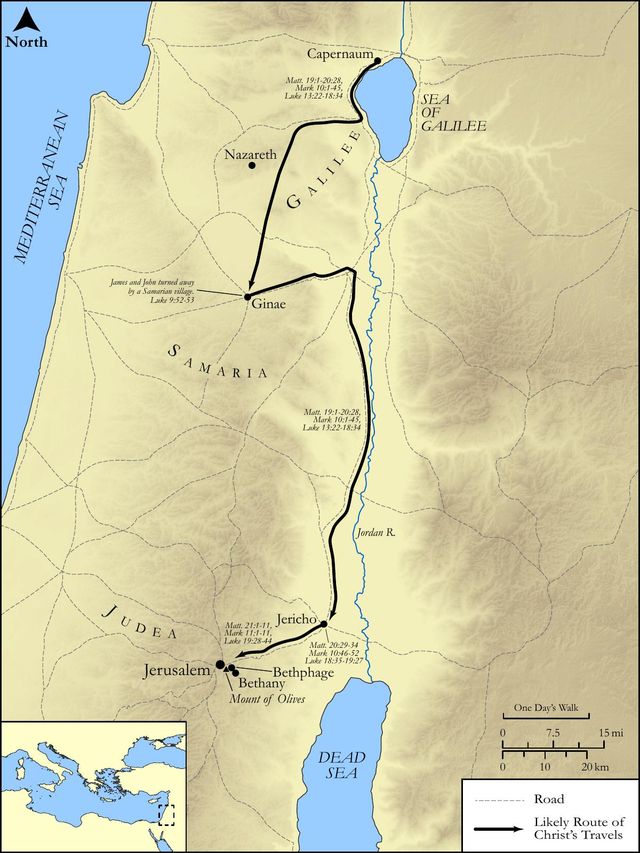
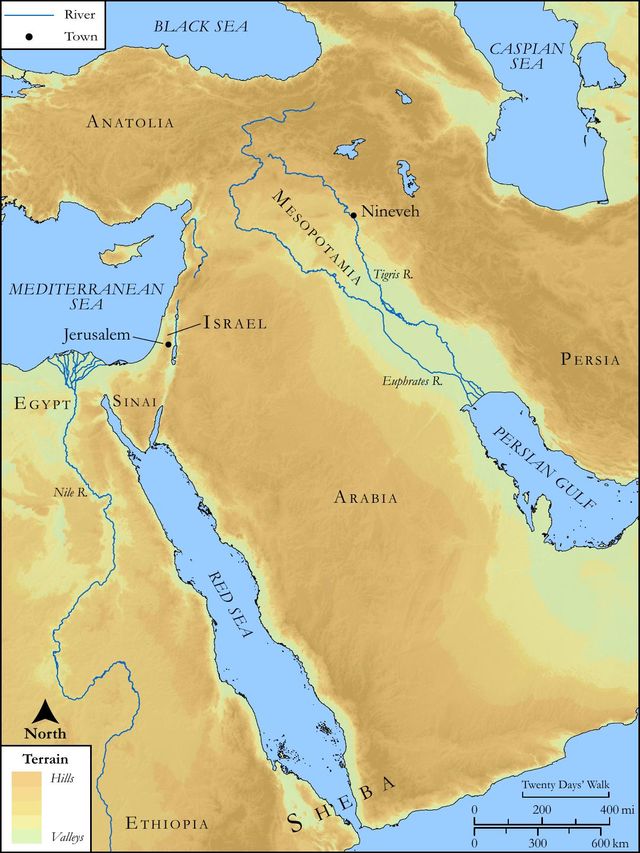
Study this verse
Public-domain commentary
Matthew Henry
From his Commentary on the Whole Bible. Henry comments on passages, not single verses — this entry covers Luke 10:17–24. His four-level outline is real structure in the source text, so it is rendered as structure.
Christ sent forth the seventy disciples as he was going up to Jerusalem to the feast of tabernacles, when he went up, not openly, but as it were in secret (Joh 7:10), having sent abroad so great a part of his ordinary retinue; and Dr. Lightfoot thinks it was before his return from that feast, and while he was yet at Jerusalem, or Bethany, which was hard by (for there he was, Luk 10:38), that they, or at least some of them, returned to him. Now here we are told,
1.What account they gave him of the success of their expedition: They returned again with joy (Luk 10:17); not complaining of the fatigue of their journeys, nor of the opposition and discouragement they met with, but rejoicing in their success, especially in casting out unclean spirits: Lord, even the devils are subject unto us through thy name. Though only the healing of the sick was mentioned in their commission (Luk 10:19), yet no doubt the casting out of devils was included, and in this they had wonderful success. 1. They give Christ the glory of this: It is through thy name. Note, all our victories over Satan are obtained by power derived from Jesus Christ. We must in his name enter the lists with our spiritual enemies, and, whatever advantages we gain, he must have all the praise; if the work be done in his name, the honour is due to his name. 2. They entertain themselves with the comfort of it; they speak of it with an air of exultation: Even the devils, those potent enemies, are subject to us. Note, the saints have no greater joy or satisfaction in any of their triumphs than in those over Satan. If devils are subject to us, what can stand before us?
II.What acceptance they found with him, and how he received this account.
1.He confirmed what they said, as agreeing with his own observation (Luk 10:18): "My heart and eye went along with you; I took notice of the success you had, and I saw Satan fall as lightning from heaven." Note, Satan and his kingdom fell before the preaching of the gospel. "I see how it is," saith Christ, "as you get ground the devil loseth ground." He falls as lightning falls from heaven, so suddenly, so irrecoverably, so visibly, that all may perceive it, and say, "See how Satan's kingdom totters, see how it tumbles." They triumphed in casting devils out of the bodies of people; but Christ sees and rejoices in the fall of the devil from the interest he has in the souls of men, which is called his power in high places, Eph 6:12. He foresees this to be but an earnest of what should now be shortly done and was already begun - the destroying of Satan's kingdom in the world by the extirpating of idolatry and the turning of the nations to the faith of Christ. Satan falls from heaven when he falls from the throne in men's hearts, Act 26:18. And Christ foresaw that the preaching of the gospel, which would fly like lightning through the world, would wherever it went pull down Satan's kingdom. Now is the prince of this world cast out. Some have given another sense of this, as looking back to the fall of the angels, and designed for a caution to these disciples, lest their success should puff them up with pride: "I saw angels turned into devils by pride: that was the sin for which Satan was cast down from heaven, where he had been an angel of light I saw it, and give you an intimation of it lest you, being lifted up with pride should fall into that condemnation of the devil, who fell by pride," Ti1 3:6.
2.He repeated, ratified, and enlarged their commission: Behold I give you power to tread on serpents, Luk 10:19. Note, To him that hath, and useth well what he hath, more shall be given. They had employed their power vigorously against Satan, and now Christ entrusts them with greater power.
(1.)An offensive power, power to tread on serpents and scorpions, devils and malignant spirits, the old serpent: "You shall bruise their heads in my name," according to the first promise, Gen 3:15. Come, set your feet on the necks of these enemies; you shall tread upon these lions and adders wherever you meet with them; you shall trample them under foot, Psa 91:13. You shall tread upon all the power of the enemy, and the kingdom of the Messiah shall be every where set up upon the ruins of the devil's kingdom. As the devils have now been subject to you, so they shall still be.
(2.)A defensive power: "Nothing shall by any means hurt you; not serpents nor scorpions, if you should be chastised with them or thrown into prisons and dungeons among them; you shall be unhurt by the most venomous creatures," as St. Paul was (Act 28:5), and as is promised in Mar 16:18. "If wicked men be as serpents to you, and you dwell among those scorpions (as Eze 2:6), you may despise their rage, and tread upon it; it need not disturb you, for they have no power against you but what is given them from above; they may hiss, but they cannot hurt." You may play upon the hole of the asp, for death itself shall not hurt nor destroy, Isa 11:8, Isa 11:9; Isa 25:8.
3.He directed them to turn their joy into the right channel (Luk 10:20): "Notwithstanding in this rejoice not, that the spirits are subject unto you, that they have been so, and shall be still so. Do not rejoice in this merely as it is your honour, and a confirmation of your mission, and as it sets you a degree above other good people; do not rejoice in this only, or in this chiefly, but rather rejoice because your names are written in heaven, because you are chosen of God to eternal life, and are the children of God through faith." Christ, who knew the counsels of God, could tell them that their names were written in heaven, for it is the Lamb's book of life that they are written in. All believers are through grace, entitled to the inheritance of sons, and have received the adoption of sons, and the Spirit of adoption, which is the earnest of that inheritance and so are enrolled among his family; now this is matter of joy, greater joy than casting out devils. Note, Power to become the children of God is to be valued more than a power to work miracles; for we read of those who did in Christ's name cast out devils, as Judas did, and yet will be disowned by Christ in the great day. But they whose names are written in heaven shall never perish; they are Christ's sheep, to whom he will give eternal life. Saving graces are more to be rejoiced in than spiritual gifts; holy love is a more excellent way than speaking with tongues.
4.He offered up a solemn thanksgiving to his Father, for employing such mean people as his disciples were in such high and honourable service, Luk 10:21, Luk 10:22. This we had before (Mat 11:25-27), only here it is prefixed that in that hour Jesus rejoiced. It was fit that particular notice should be taken of that hour, because there were so few such, for he was a man of sorrows. In that hour in which he saw Satan fall, and heard of the good success of his ministers, in that hour he rejoiced. Note, Nothing rejoices the heart of the Lord Jesus so much as the progress of the gospel, and its getting ground of Satan, by the conversion of souls to Christ. Christ's joy was a solid substantial joy, an inward joy: he rejoiced in spirit; but his joy, like deep waters, made no noise; it was a joy that a stranger did not intermeddle with. Before he applied himself to thank his Father, he stirred up himself to rejoice; for, as thankful praise is the genuine language of holy joy, so holy joy is the root and spring of thankful praise. Two things he gives thanks for: -
(1.)For what was revealed by the Father through the Son: I thank thee, O Father, Lord of heaven and earth, Luk 10:21. In all our adorations of God, we must have an eye to him, both as the Maker of heaven and earth and as the Father of our Lord Jesus Christ, and in him our Father. Now that which he gives thanks for is,
[1.]That the counsels of God concerning man's reconciliation to himself were revealed to some of the children of men, who might be fit also to teach others, and it is God that by his Son has spoken these things to us and by his Spirit has revealed them in us; he has revealed that which had been kept secret from the beginning of the world.
[2.]That they were revealed to babes, to those who were of mean parts and capacities, whose extraction and education had nothing in them promising, who were but children in understanding, till God by his Spirit elevated their faculties, and furnished them with this knowledge, and an ability to communicate it. We have reason to thank God, not so much for the honour he has hereby put upon babes, as for the honour he has hereby done himself in perfecting strength out of weakness.
[3.]That, at the same time when he revealed them unto babes, he hid them from the wise and prudent, the Gentile philosophers, the Jewish rabbin. He did not reveal the things of the gospel to them, nor employ them in preaching up his kingdom. Thanks be to God that the apostles were not fetched from their schools; for, First, they would have been apt to mingle their notions with the doctrine of Christ, which would have corrupted it, as afterwards it proved. For Christianity was much corrupted by the Platonic philosophy in the first ages of it, by the Peripatetic in its latter ages, and by the Judaizing teachers at the first planting of it. Secondly, If rabbin and philosophers had been made apostles, the success of the gospel would have been ascribed to their learning and wit and the force of their reasonings and eloquence; and therefore they must not be employed, lest they should have taken too much to themselves, and others should have attributed too much to them. They were passed by for the same reason that Gideon's army was reduced: The people are yet too many, Jdg 7:4. Paul indeed was bred a scholar among the wise and prudent; but he became a babe when he became an apostle, and laid aside the enticing words of man's wisdom, forgot them all, and made neither show nor use of any other knowledge than that of Christ and him crucified, Co1 2:2, Co1 2:4.
[4.]That God herein acted by way of sovereignty: Even so, Father, for so it seemed good in thy sight. If God gives his grace and the knowledge of his son to some that are less likely, and does not give it to others whom we should think better able to deliver it with advantage, this must satisfy: so it pleases God, whose thoughts are infinitely above ours. He chooses to entrust the dispensing of his gospel in the hands of those who with a divine energy will give it the setting on, rather than in theirs who with human art will give it the setting off.
(2.)For what was secret between the Father and the Son, Luk 10:22.
[1.]The vast confidence that the Father puts in the Son: All things are delivered to me of my Father, all wisdom and knowledge, all power and authority, all the grace and comfort which are intended for the chosen remnant; it is all delivered into the hands of the Lord Jesus; in him all fulness must dwell, and from him it must be derived: he is the great trustee that manages all the concerns of God's kingdom.
[2.]The good understanding that there is between the Father and the Son, and their mutual consciousness, such as no creature can be admitted to: No man knows who the Son is, nor what his mind is, but the Father, who possessed him in the beginning of his ways, before his works of old (Pro 8:22), nor who the Father is, and what his counsels are, but the Son, who lay in his bosom from eternity, was by him as one brought up with him, and was daily his delight (Pro 8:30), and he to whom the Son by the Spirit will reveal him. The gospel is the revelation of Jesus Christ, to him we owe all the discoveries made to us of the will of God for our salvation; and here he speaks of being entrusted with it as that which was a great pleasure to himself and for which he was very thankful to his Father.
5.He told his disciples how well it was for them that they had these things revealed to them, Luk 10:23, Luk 10:24. Having addressed himself to his Father, he turned to his disciples, designing to make them sensible how much it was for their happiness, as well as for the glory and honour of God, that they knew the mysteries of the kingdom and were employed to lead others into the knowledge of them, considering,
(1.)What a step it is towards something better. Though the bare knowledge of these things is not saving, yet it puts us in the way of salvation: Blessed are the eyes which see the things which we see. God therein blesseth them, and, if it be not their own fault it will be an eternal blessedness to them.
(2.)What a step it is above those that went before them, even the greatest saints, and those that were most the favourites of Heaven: "Many prophets and righteous men" (so it is in Mat 13:17), many prophets and kings (so it is here), "have desired to see and hear those things which you are daily and intimately conversant with, and have not seen and heard them." The honour and happiness of the New Testament saints far exceed those even of the prophets and kings of the Old Testament, though they also were highly favoured. The general ideas which the Old Testament saints had, according to the intimations given them, of the graces and glories of the Messiah's kingdom, made them wish a thousand times that their lot had been reserved for those blessed days, and that they might see the substance of those things of which they had faint shadows. Note, The consideration of the great advantages which we have in the New Testament light, above what they had who lived in Old Testament times, should awaken our diligence in the improvement of it; for, if it do not, it will aggravate our condemnation for the non-improvement of it.
Historical interpretation
Nine Centuries of Reception
22 surviving comments on this verse. Each one is dated, so this reads as a timeline rather than a list.
Select a marker to jump to its quote. Markers stagger vertically where authors wrote within a few decades of each other.
Again, our Lord Jesus Christ confesses this same Being as His Father, where He says: "I confess to thee, O Father, Lord of heaven and earth."
After we have repented of our sins, renounced our wickedness, and have been purified by baptism, we turn back to the eternal light, as children to their Father. “Rejoicing in the spirit, Jesus said, ‘I praise you, Father, God of heaven and earth, that you have hidden these things from the wise and prudent, and revealed them to little ones.’ ” The Educator and Teacher is naming us “little ones,” meaning that we are more ready for salvation than the worldly wise who, believing themselves wise, have blinded their own eyes. He cries out in joy and in great delight, as if attuning himself to the spirit of the little ones, “Yes, Father, for such was your good pleasure.” That is why he has revealed to little ones what has been hid from the wise and prudent of this world.
Jesus therefore, rejoicing in the spirit, said: "I thank Thee, O Father, God of heaven and earth, that Thou hast hid these things from the wise and prudent, and hast revealed them to babes; ".
And He exclaims in exultation and exceeding joy, as if lisping with the children, "Even so, Father; for so it seemed good in Thy sight."
Now, if He has designated His Christ as an enlightener of the Gentiles, saying, "I have set thee for a light of the Gentiles; " and if we understand these to be meant in the word babes -as having been once dwarfs in knowledge and infants in prudence, and even now also babes in their lowliness of faith-we shall of course more easily understand how He who had once hidden "these things," and promised a revelation of them through Christ, was the same God as He who had now revealed them unto babes.
Who shall be invoked as the Lord of heaven, that does not first show Himself to have been the maker thereof? For He says, "I thank thee, (O Father, )and own Thee, Lord of heaven, because those things which had been hidden from the wise and prudent, Thou has revealed unto babes." What things are these? And whose? And by whom hidden? And by whom revealed? If it was by Marcion's god that they were hidden and revealed, it was an extremely iniquitous proceeding; for nothing at all had he ever produced in which anything could have been hidden-no prophecies, no parables, no visions, no evidences of things, or words, or names, obscured by allegories and figures, or cloudy enigmas, but he had concealed the greatness even of himself, which he was with all his might revealing by his Christ.
His "Father" He Himself adores. When acknowledged by Peter as the "Christ (the Son) of God," He does not deny the relation.
For a feeling of deficiency is the preparation for coming perfection. For whoever by the presence of the apparent good perceives not that he is destitute of the true good, is deprived of the true good.
(con. Greg. Sabell. 3. con. gentes 6.) We know also that the Saviour often speaks as man. For His divine nature has human nature joined to it, yet you would not, because of His clothing Himself with a body, be ignorant that He was God. But what do they answer to this, who wish to make out a substance of evil, but form to themselves another God, other than the true Father of Christ? And they say that he is unbegotten, the creator of evil and prince of iniquity, as well as the maker of the world's fabric. (Gen. 1:1.) Now our Lord, affirming the word of Moses, says, I give thanks unto thee, Father, Lord of heaven and earth.
(Tract. in Matt. 11:22.) The followers of Arius, not rightly understanding this, rave against our Lord, saying, If all things were given to him, that is, the dominion of the creatures, there was a time when He had them not, and so was not of the substance of the Father. For if He had been, there would be no need for Him to receive. But hereby is their madness the rather detected. For if before He had received them, the creature was independent of the Word, how will that verse stand, In him all things consist? (Col. 4:17.) But if as soon as the creatures were made, they were all given to Him, where was the need to give, for by him were all things made? (John 13.) The dominion of the creation is not then, as they think, here meant, but the words signify the dispensation made in the flesh. For after that man sinned, all things were confounded; the Word then was made flesh, that He might restore all things. All things therefore were given Him, not because He was wanting in power, but that as Saviour He should repair all things; that as by the Word all things at the beginning were brought into being, so when the Word was made flesh, He should restore all things in Himself.
(Orat. 1. cont. Arian.) But though our Lord says this, it is plain that the Arians object to Him, saying, that the Father is not seen by the Son. But their folly is manifest, as if the Word did not know Itself which reveals to all men the knowledge of the Father and Itself; for it follows, And to whomsoever the Son will reveal him.
(non occ.) For all other things have been produced by Christ from nothing, but He alone was incomprehensibly begotten of His Father; Who therefore of the Only-begotten alone, as a true Son, is by nature the Father. Hence He alone says to His Father, I give thanks to thee, O Father, Lord, &c. that is, I glorify thee. Marvel not that the Son glorifies the Father. For the whole substance of the Only-begotten is the glory of the Father. For both those things which were created, and the Angels, are the glory of the Creator. But since these are placed too low in respect of His dignity, the Son alone, since He is perfect God like His Father, perfectly glorifies His Father.
Now a revelation is the communication of knowledge in proportion to each man's nature and capacity; and when indeed the nature is congenial, there is knowledge without teaching; but here the instruction is by revelation.
Lastly, he unveils the heavenly mystery by which it pleased God to reveal His grace, rather to the little ones than the wise of the world. Hence it follows, That thou hast hid these things from the wise and prudent.
Or by a babe we should here understand one who knew nothing of exalting himself, and of boasting in proud words of the excellence of his wisdom, as the Pharisees often do.
Or, when you read all things, you acknowledge the Almighty, not the Son lower than the Father; when you read delivered, you confess the Son, to whom by the nature of one substance all things rightly belong, not conferred as a gift by grace.
But that you may know that as the Son revealed the Father to whom He will, the Father also reveals the Son to whom He will, hear our Lord's words, Blessed art thou, Simon Barjona, for flesh and blood have not revealed it to thee, but my Father which is in heaven.
And that this is so our Lord Himself says, 'I thank you, Father of heaven and earth, because You have concealed these things from the wise and elder, and hast revealed them to sucking babes.' Thus God Himself has concealed a teacher from some, as foreknowing what they ought to do, and has revealed him to others, who are ignorant what they ought to do."
For this also the Master intimated, when He said, 'I will confess to You, O Father, Lord of heaven and earth, because You have concealed these things from the wise and prudent, and hast revealed them to babes.' By which it is certainly declared, that the people of the Hebrews, who were instructed out of the law, did not know Him; but the people of the Gentiles have acknowledged Jesus, and venerate Him; on which account also they shall be saved, not only acknowledging Him, but also doing His will.
(adv. Hær. 42.) But a Gospel composed by Marcion has, "I give thanks to Thee, O Lord," being silent as to the words of heaven and earth, and the word Father, lest it should be supposed that He calls the Father the Creator of the heaven and the earth.
The proof that the Son knows the Father perfectly rests on the fact that he is “the one who is from God.” The Son has clear knowledge of the Father, because he is from God. The fact that he is from God is a sign and indication that he knows him clearly. An inferior essence would not be able to have clear knowledge of a superior essence, even if the difference between them were slight.
(Hom. 38. in Matt.) Now He does not rejoice and give thanks because the mysteries of God were hid from the Scribes and Pharisees, (for this were not a subject of rejoicing, but of lament,) but for this cause gives He thanks, that what the wise knew not, babes knew. But moreover He gives thanks to the Father, together with whom He Himself does this, to show the great love wherewith He loves us. He explains in the next place, that the cause of this thing was first His own will and the Father's, who of His own will did this. As it follows, Even so, Father; for so it seemed good in thy sight.
(Hom. 38. in Matt.) But after He had said, I thank thee that thou hast revealed them to babes, lest you should suppose that Christ was destitute of the power to do this, He adds, All things are delivered to me of my Father.
He sent them, decorated with apostolic dignity and distinguished by the work of the grace of the Holy Spirit. He gave them power over unclean spirits to cast them out. Having performed many miracles, they returned, saying, "Lord, even the devils are subject to us in your name." As I have already said, he was full of joy, or rather of exultation because he knew that those he sent had benefited many, and they, above all others, had learned his glory by experience. Being good and loving to humanity and wishing that all should be saved, he found his reason for rejoicing in the conversion of those who were in error, the enlightenment of those in darkness, and the acknowledgment of his glory by those who were without knowledge and instruction.
He saw in truth that through the operation of the Holy Spirit, which He gave to the holy Apostles, the acquisition of many would be made, (or that many would be brought to the faith.) He is said therefore to have rejoiced in the Holy Spirit, that is, in the results which came forth through the Holy Spirit. For as one who loved mankind He considered the conversion of sinners to be a subject for rejoicing, for which He gives thanks. As it follows, I give thanks unto thee, O Father.
Now here, say they whose hearts are perverted, the Son gives thanks to the Father as being inferior. But what should prevent the Son of the same substance with the Father from praising His own Father, who saves the world by Him? But if you think that because of His giving thanks He shows Himself to be inferior, observe, that He calls Him His Father, and the Lord of heaven and earth.
(25. Moral. c. 14.) We receive these words as an example of humility, that we should not rashly presume to scan the heavenly counsel, concerning the calling of some, and the rejection of others; for that cannot be unjust which seemed good to the Just One. In all things therefore, externally disposed, the cause of the visible system is the justice of the hidden will.
Because you have hidden these things from the wise and prudent, and revealed them to infants. He gives thanks, rejoices in the Father, that he has revealed the mysteries of his arrival to the apostles, which the scribes and Pharisees, who consider themselves wise and prudent, and wisdom justified by her children (Luke VII), have ignored. Where he beautifully opposed infants, that is, the humble, to the wise and prudent, not as foolish and dull but to show he condemned pride, not intellect. For this is the key about which he says elsewhere: You have taken away the key of knowledge, that is, the humility of faith in Christ, by which you could have arrived at the recognition of his divinity, but you preferred to despise and reject it.
Confessing (confiteor) does not always signify penitence, but also thanksgiving, as is frequently found in the Psalms. (Ps. 18:49; 30:12; 52:9.)
He therefore gives thanks that He had revealed to the Apostles as unto babes the sacraments of His coming, of which the Scribes and Pharisees were ignorant, who think themselves wise, and are prudent in their own sight.
To the wise and prudent then He opposed not the dull and foolish, but babes; that is, the humble, to show that He condemned pride, not quickness of mind.
Or by the words, All things are delivered to me, He means not the elements of the world, but those babes to whom by the Spirit the Father made known the Sacraments of His Son; and in whose salvation when He here spoke He was rejoicing.
Yes, Father, for such was your gracious will. In these words of the Lord, we receive examples of humility, so that we might not rashly discuss the heavenly counsel concerning the calling of some and the rejection of others. For when He mentioned both, He did not immediately give a reason but said it was pleasing to God in this way. He thus showed that it cannot be unjust what is pleasing to the Just. Hence, in rewarding the workers in the vineyard, when he made some laborers equal in reward despite their unequal work, and one who sweated more in labor sought more reward, he said: Did you not agree with me for a denarius? But I want to give to this last one as I give to you. Or is it not lawful for me to do what I wish? (Matt. XX). In all these things arranged outwardly, the hidden justice of the will is the open cause of reason.
As a loving father rejoices to see his sons do right, so Christ also rejoices that His Apostles were made worthy of such good things. Hence it follows, In that hour, &c.
The distinction may be, that it is said, the wise, meaning, the Pharisees and Scribes who interpret the law, and the prudent, meaning those who were taught by the Scribes, for the wise man is he who teaches, but the prudent man he who is taught; but the Lord calls His disciples babes, whom He chose not from the teachers of the law, but out of the multitude, and by calling, fishermen; babes, that is, as devoid of malice.
The mysteries then were hid from those who think themselves wise, and are not; for if they had been, these would have been revealed to them.
Continue studying Luke 10:21 across the web’s major study libraries — every link below opens this exact verse, chapter, or book on the destination site.
Read & Compare
 BibleGatewayThis verse in more than 200 translations and 70 languages.
 Bible.comThe YouVersion reader — hundreds of translations, reading plans, and highlights.
 ESV.orgCrossway's official English Standard Version reader.
 NET BibleThe NET translation with 60,000+ translators' notes on every rendering decision.
 STEP BibleTyndale House's free study tool — original text, vocabulary, and scholarly resources.
 BibliaLogos Bible Software's free web reader.
 USCCBThe New American Bible (Revised Edition) with the U.S. bishops' study notes.
Commentaries
 BibleHub CommentariesDozens of classic commentaries on this verse, gathered on one page.
 StudyLightMore than 100 commentary sets — the largest collection on the web.
 BibleRefPlain-English commentary on what this verse means, verse by verse.
 Enduring WordDavid Guzik's free commentary on this chapter, widely used by Bible teachers.
 Bible Study ToolsVerse commentary alongside Greek and Hebrew study aids.
Original Language & Research
- BibleHub InterlinearThe verse word by word — original language, transliteration, and English.
- BibleHub LexiconEvery word's original-language definition and Strong's entry.
 Blue Letter BibleDeep-study tools — Strong's numbers, concordance, and word studies.
 CNTR CollationThe earliest Greek manuscripts of this verse, collated letter by letter.
Sermons, Hymns & Audio


TrulyRandomVerse is not affiliated with these sites and doesn’t control their content. They’re linked because they’re genuinely useful.
Summary
Luke 10:21 captures a moment of profound, Spirit-filled exultation from Jesus, immediately following the joyful return of the seventy disciples. In this prayer of thanksgiving to the Father, Jesus celebrates God's sovereign wisdom in choosing to reveal profound spiritual truths not to those considered intellectually superior or self-sufficient, but to the humble and teachable, whom He likens to "babes." This declaration underscores the divine paradox of revelation and the Father's benevolent, unchallengeable will in His redemptive plan.
Context
ShowHideLiterary Context
This powerful declaration from Jesus is situated within a significant narrative block in Luke's Gospel, specifically following the mission and successful return of the seventy-two disciples (Luke 10:1-20). Jesus had sent them out with authority to heal and proclaim the Kingdom of God, and they returned rejoicing that even demons were subject to them in His name (Luke 10:17). While acknowledging their power, Jesus immediately redirected their focus, emphasizing that their true cause for rejoicing should be that their names are written in heaven (Luke 10:20). It is "in that hour," filled with the Holy Spirit (as implied by "rejoiced in spirit"), that Jesus breaks into this prayer of thanksgiving, directly connecting the disciples' successful, Spirit-empowered ministry to the Father's sovereign plan of revelation. This prayer also contrasts sharply with the preceding woes pronounced upon the unrepentant cities of Chorazin, Bethsaida, and Capernaum (Luke 10:13-16), highlighting that while some reject the truth despite mighty works, others, the humble, receive it.
Historical & Cultural Context
Jesus' statement challenges the prevailing cultural and religious norms of His day. In Jewish society, wisdom was highly valued and often associated with rabbinic learning, adherence to the Law, and intellectual prowess, typically embodied by scribes, Pharisees, and the educated elite. These were "the wise and prudent" in the eyes of the world. Conversely, "babes" (Greek: nḗpios) would have represented the unlearned, the common people (the am ha'aretz), and those without formal religious training or social standing. Jesus' declaration subverts this hierarchy, asserting that God deliberately bypasses human intellectual pride and worldly status, choosing instead to reveal His profound truths to those with humble, receptive hearts. This was a radical concept that would have been counter-cultural, emphasizing God's unconventional methods and the spiritual blindness of those who relied on their own understanding.
Key Themes
ShowHideLuke 10:21 profoundly contributes to several overarching themes in Luke's Gospel and biblical theology. Firstly, it highlights the theme of Divine Revelation and Humility, asserting that spiritual understanding is not earned through human intellect or social status, but is a gracious gift from God, accessible only through a humble, childlike dependence on Him. This challenges conventional notions of wisdom and underscores a fundamental principle of the Kingdom of God. Secondly, the verse powerfully affirms God's Sovereignty and Good Pleasure in His redemptive plan. Jesus explicitly states that this method of revelation—hiding from the "wise" and revealing to "babes"—is entirely by the Father's deliberate design and benevolent will, demonstrating His absolute control and perfect wisdom in who receives understanding. This echoes themes found in passages like Ephesians 1:9-11. Finally, Jesus' "rejoiced in spirit" signifies a deep, inner, Spirit-Inspired Joy stemming from the Father's perfect plan unfolding through the humble instruments of the disciples, confirming God's power working through unexpected channels. This joy is not merely emotional but a profound spiritual exultation in the Father's wise and good purposes.
Exposition and Analysis
ShowHideKey Word Analysis
ShowHideThis word signifies an exultant, leaping, or exuberant joy, a profound inner delight that often manifests outwardly. It is not a superficial happiness but a deep, spiritual rejoicing, often associated with divine inspiration or the experience of God's presence and work. Here, it indicates Jesus' profound, Spirit-filled delight in the Father's perfect will.
Literally meaning "not speaking" or "infant," this term is used metaphorically here to describe those who are simple, unlearned, humble, or childlike in their dependence and receptivity. It contrasts sharply with the self-sufficient intellect of the "wise and prudent," emphasizing that spiritual truth is received through humility and openness, not through worldly sophistication or academic achievement.
This term conveys God's "good pleasure," "benevolent will," or "sovereign purpose." It emphasizes that God's decision to reveal truth to the humble and conceal it from the proud is not arbitrary but flows from His perfect, wise, and benevolent design. It underscores the divine initiative and intentionality in salvation history.
Verse Breakdown
ShowHide"In that hour Jesus rejoiced in spirit,"
This clause sets the immediate context and emotional tone. "In that hour" refers to the moment following the disciples' victorious return. Jesus' "rejoicing in spirit" (or "in the Holy Spirit," as some translations render it) indicates a profound, divinely inspired joy, a deep inner exultation that stems from His communion with the Father and the Holy Spirit's presence. It is a moment of profound spiritual affirmation.
"and said, "I thank thee, O Father, Lord of heaven and earth,"
Jesus addresses God with intimate reverence, acknowledging Him as "Father" (indicating a close relationship) and as "Lord of heaven and earth" (affirming His absolute sovereignty over all creation). This dual address highlights both God's relational intimacy and His ultimate authority, setting the stage for the profound theological statement that follows.
"that thou hast hid these things from the wise and prudent,"
"These things" refers to the truths of the Kingdom of God, the mysteries of salvation, and the power demonstrated through the disciples. Jesus thanks the Father for His sovereign act of concealing these truths from those who rely on their own human wisdom and intellectual prowess ("the wise and prudent"). This is not an act of arbitrary withholding, but a consequence of their spiritual pride and self-sufficiency.
"and hast revealed them unto babes:"
In stark contrast, the Father has chosen to disclose ("revealed") these same profound truths to "babes"—those who are humble, teachable, and childlike in their dependence. This highlights God's preference for humility over intellectual arrogance as the prerequisite for receiving spiritual revelation.
"even so, Father; for so it seemed good in thy sight."
Jesus concludes with an affirmation of perfect alignment with the Father's will. "Even so, Father" expresses complete agreement and submission. The reason given, "for so it seemed good in thy sight," emphasizes that this divine method of revelation is not a mistake or a mystery to be questioned, but a deliberate, benevolent, and perfectly wise choice made by the Father according to His sovereign "good pleasure."
Literary Devices
ShowHideLuke 10:21 masterfully employs several literary devices to convey its profound message. The most prominent is Antithesis (or Contrast), seen in the stark opposition between "the wise and prudent" and "babes." This highlights the paradoxical nature of God's revelation, where worldly wisdom leads to spiritual blindness, while humble simplicity leads to divine insight. There is also an element of Irony, as those who are intellectually esteemed by the world are precisely the ones from whom God hides His truths, while those considered insignificant receive them. The term "babes" functions as a Metaphor, representing not literal infants, but individuals who possess a childlike humility, dependence, and openness to receive truth, rather than relying on their own understanding. Finally, Jesus' address to God as "Lord of heaven and earth" is a declaration of Sovereignty, emphasizing God's absolute authority and control over all creation and His divine prerogative in choosing whom to reveal His truths to.
Theological and Thematic Connections
ShowHideThis passage profoundly shapes our understanding of divine revelation, emphasizing that access to God's deepest truths is not a matter of human intellect or social standing, but a gift bestowed by God's sovereign grace upon the humble. It underscores the biblical principle that true wisdom begins with the fear of the Lord and a recognition of one's own spiritual dependence, rather than self-reliance. God, in His perfect wisdom and good pleasure, deliberately chooses to confound the proud and illuminate the simple, demonstrating that His ways are higher than human ways and His Kingdom operates on principles counter to worldly values. This truth serves as both a comfort to the humble and a challenge to the intellectually arrogant, calling all to a posture of childlike faith.
Reflection and Application
ShowHideLuke 10:21 serves as a timeless mirror, inviting us to examine our own hearts and the posture with which we approach God and His truth. It challenges the pervasive human tendency to rely on intellectual prowess, worldly achievements, or self-sufficiency as pathways to understanding. Instead, Jesus reveals that the path to true spiritual insight is paved with humility, a childlike trust, and a receptive spirit. For those who feel inadequate, unlearned, or overlooked by the world, this verse offers immense encouragement, reminding us that God delights in revealing Himself to the humble. For those who are intellectually gifted or highly educated, it serves as a sobering reminder that academic achievement, while valuable, can become a barrier to spiritual truth if coupled with pride. Ultimately, it calls us to cultivate a heart that is open, dependent, and eager to receive from God, recognizing that all true wisdom is a gracious gift from the Father.
Questions for Reflection
ShowHideFAQ
ShowHideWhat does "rejoiced in spirit" mean in this verse?
ShowHideThe phrase "rejoiced in spirit" (Greek: agalliáō G21, and pneûma G4151) signifies a deep, exultant, and divinely inspired joy. It's not merely a superficial happiness but a profound inner delight, often understood as being filled with or moved by the Holy Spirit. In this context, it indicates Jesus' profound spiritual exultation and perfect alignment with the Father's will, particularly as He witnessed the unfolding of God's redemptive plan through the humble disciples. This joy is a spiritual response to the Father's wisdom and goodness.
Who are "the wise and prudent" and "babes" that Jesus refers to?
ShowHide"The wise and prudent" (Greek: sophós G4680 and synetós G4908) generally refer to those who are intellectually astute, educated, and esteemed in human society for their knowledge or worldly wisdom. In Jesus' context, this often included the religious elite, scribes, and Pharisees who relied on their own understanding and traditions. "Babes" (Greek: nḗpios G3516), on the other hand, are not literal infants but a metaphor for the humble, the unlearned, the simple, and those who are childlike in their dependence and receptivity. Jesus highlights God's counter-intuitive method of revealing spiritual truths to those who, in their humility, are open to receive them, rather than to those whose pride or self-sufficiency blinds them.
Why would God "hide" things from some and "reveal" them to others? Is this unfair?
ShowHideThis passage speaks to God's sovereign prerogative in revealing truth, not an arbitrary act of unfairness. God does not hide truth from those who genuinely seek it, but from those who are proud, self-sufficient, and unwilling to humble themselves before Him. Their "blindness" is often a consequence of their own spiritual arrogance and rejection of God's ways. Conversely, He "reveals" to "babes" because their humility and openness create a receptive heart. This aligns with the principle that God opposes the proud but gives grace to the humble (James 4:6). It underscores that spiritual understanding is a gift of grace, not a human achievement.
Christ-Centered Fulfillment
ShowHideLuke 10:21, with Jesus' exultant prayer, finds its ultimate fulfillment in Christ Himself. Jesus, the very Wisdom of God (1 Corinthians 1:24), is the embodiment of the Father's "good pleasure" and the means by which these hidden truths are revealed. He is the ultimate revelation of God to humanity (John 1:18, Hebrews 1:1-3). Paradoxically, Jesus, though divine, perfectly models the humility of a "babe," emptying Himself and taking on the form of a servant (Philippians 2:5-8), thereby making the Father's revelation accessible to all who come to Him in childlike faith. Through His atoning work on the cross, He breaks down the barriers of human pride and self-sufficiency, opening the way for anyone, regardless of their worldly wisdom, to receive the profound truths of salvation. The Spirit, whom Jesus sends (John 16:13-14), continues this work of revealing the Father's heart and the Son's glory to those who humble themselves and believe, fulfilling the Father's good pleasure to draw all people to Himself through Christ.