


Joshua 22:26
Bible text: King James Version (1769 Blayney text) · Public domain
Bible text: Berean Standard Bible · Public domain
Bible text: American Standard Version (1901) · Public domain
Bible text: World English Bible, Messianic edition · Public domain
Bible text: Geneva Bible (1599) · Public domain
Bible text: Young's Literal Translation · Public domain
- וַנֹּאמֶרva·No·merand we saidH559Conj-w ¦ V-Qal-ConsecImperf-1cpVerb Qal Consecutive Imperfect 1st Plural common genderוַandנֹּאמֶרwe said
- נַעֲשֶׂהna·'a·sehlet us actH6213V-Qal-Imperf-1cpVerb Qal Imperfect 1st Plural common gender
- נָּאna'pleaseH4994PrtParticle Interjection
- לָנוּLa·nufor <the> ourselvesPrep-l ¦ 1cpSuffix Personal 1st Plural common genderלָfor <the>נוּourselves
- לִבְנוֹתliv·Notby buildingH1129Prep-l ¦ V-Qal-InfVerb Qal Infinitive Constructלִbyבְנוֹתbuilding
- אֶת'et<obj.>H853DirObjMParticle Object Indicator
- הַמִּזְבֵּחַha·miz·Be·achthe altarH4196Art ¦ N-msNoun Singular Masculine Absoluteהַtheמִּזְבֵּחַaltar
- לֹאlo'notH3808NegParticle Negative
- לְעוֹלָהle·'o·Lahfor burnt offeringH5930Prep-l ¦ N-fsNoun Singular Feminine Absoluteלְforעוֹלָהburnt offering
- וְלֹאve·Lo'and notH3808Conj-w ¦ NegParticle Negativeוְandלֹאnot
- לְזָבַחle·Za·vachfor sacrificeH2077Prep-l ¦ N-msNoun Singular Masculine Absoluteלְforזָבַחsacrifice
English is a literal word-by-word gloss of the Hebrew, not the KJV's wording. Why?
This is the original text the KJV's translators worked from — each Hebrew word with its own literal English meaning in this verse, prepared by scholars at Tyndale House, Cambridge. The KJV translates whole sentences, not word by word, so its wording differs: one Hebrew word can become several English words, and the KJV may choose “the LORD” where the gloss reads “Yahweh”. Both are faithful — they answer different questions. For the KJV's own rendering, switch to the KJV text.
Details
See on the biblical-era map
Study this verse
Historical interpretation
Historical reception
1 surviving comment on this verse from the historical church.
But let us see what sacrament lies within this deed. The former people of the circumcision are represented in Reuben, who was the firstborn; but also in Gad, who also is the firstborn out of Zilpah; and Manasseh, no less a firstborn. But insofar as I say “firstborn,” I speak chronologically. Therefore, these things are said not that it might be evident some division and separation is between us and those who were righteous before the coming of Christ, but that they might reveal themselves to still be our brothers even if they existed before the coming of Christ. For although they possessed an altar then before the coming of the Savior, nevertheless, they knew and perceived that it was not that true altar but that it was a form and figure of what would be the true altar. Those persons knew this because the true victims and those who were able to take away sins were not offered on that altar that the firstborn people possessed but on this one where Jesus was. Here the heavenly victims, here the true sacrifices are consumed. Therefore, they are made “one flock and one shepherd,” those former righteous ones and those who are now Christians.
Continue studying Joshua 22:26 across the web’s major study libraries — every link below opens this exact verse, chapter, or book on the destination site.
Read & Compare
 BibleGatewayThis verse in more than 200 translations and 70 languages.
 Bible.comThe YouVersion reader — hundreds of translations, reading plans, and highlights.
 ESV.orgCrossway's official English Standard Version reader.
 NET BibleThe NET translation with 60,000+ translators' notes on every rendering decision.
 STEP BibleTyndale House's free study tool — original text, vocabulary, and scholarly resources.
 BibliaLogos Bible Software's free web reader.
 USCCBThe New American Bible (Revised Edition) with the U.S. bishops' study notes.
Commentaries
 BibleHub CommentariesDozens of classic commentaries on this verse, gathered on one page.
 StudyLightMore than 100 commentary sets — the largest collection on the web.
 BibleRefPlain-English commentary on what this verse means, verse by verse.
 Enduring WordDavid Guzik's free commentary on this chapter, widely used by Bible teachers.
 Bible Study ToolsVerse commentary alongside Greek and Hebrew study aids.
Original Language & Research
- BibleHub InterlinearThe verse word by word — original language, transliteration, and English.
- BibleHub LexiconEvery word's original-language definition and Strong's entry.
 Blue Letter BibleDeep-study tools — Strong's numbers, concordance, and word studies.
 SefariaThe Hebrew text with Rashi and centuries of Jewish commentary.
Sermons, Hymns & Audio


TrulyRandomVerse is not affiliated with these sites and doesn’t control their content. They’re linked because they’re genuinely useful.
Summary
Joshua 22:26 captures the pivotal moment when the Transjordanian tribes—Reuben, Gad, and the half-tribe of Manasseh—articulate their defense to the alarmed western tribes concerning the large altar they constructed by the Jordan River. Faced with accusations of apostasy and fears of divine judgment, this verse presents their initial, crucial clarification: the altar was emphatically not intended for illicit burnt offerings or sacrifices, but rather served as a monumental witness to their enduring covenant identity with the Lord God of Israel and their rightful participation in the nation's central worship, thereby safeguarding the spiritual heritage of their future generations from potential alienation due to geographical separation.
Context
ShowHideLiterary Context
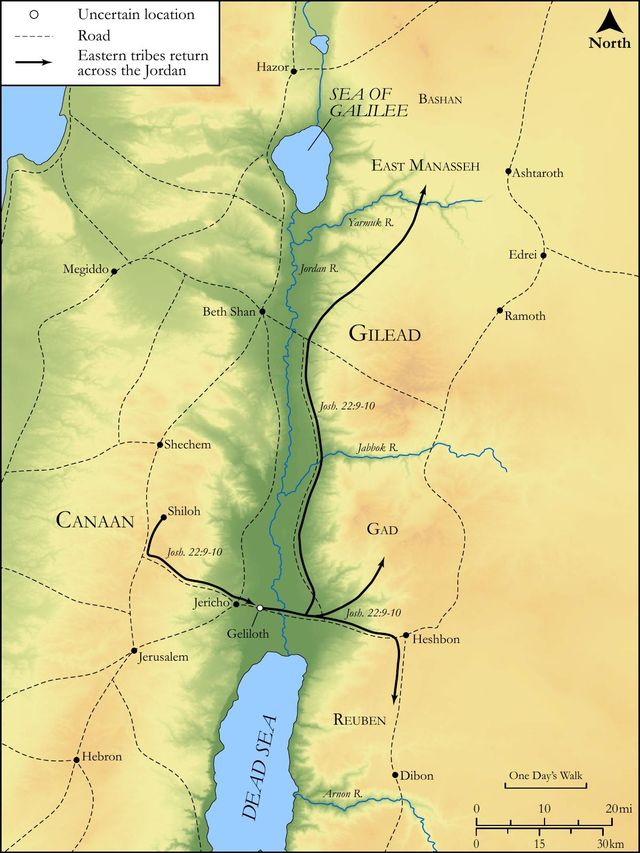
This verse is situated at the dramatic climax of Joshua 22, a narrative that meticulously details a near-civil war among the tribes of Israel. Following their faithful assistance in the conquest of Canaan, Joshua honorably dismisses the eastern tribes to their inheritance across the Jordan River (Joshua 22:1-6). Their subsequent construction of a large, conspicuous altar on their journey home immediately ignited alarm among the western tribes, who, interpreting it as a grave act of rebellion and idolatry, prepared for war (Joshua 22:10-12). This fear prompted the assembly of the entire congregation at Shiloh and the dispatch of a high-level delegation, led by Phinehas, to confront the eastern tribes (Joshua 22:12-15). Joshua 22:26 marks the precise point where the eastern tribes begin their formal defense, explicitly denying any sacrificial intent for the altar, thereby setting the stage for their comprehensive explanation of its true purpose as a "witness" in the verses that follow (Joshua 22:27-29).
Historical & Cultural Context
The period immediately following the conquest was a critical time for Israel, as the tribes transitioned from nomadic warfare to settled life, solidifying their national and religious identity under the Mosaic Covenant. A cornerstone of this identity was the exclusive worship of Yahweh at a single, divinely appointed sanctuary, initially the Tabernacle at Shiloh (Deuteronomy 12:5-6). Building any other altar for sacrifice was a direct and severe violation of this command, constituting apostasy and inviting dire divine judgment, as evidenced by catastrophic events like the sin at Baal Peor (Numbers 25:1-9) or Achan's sin (Joshua 7). The Jordan River, while a geographical boundary, also carried significant symbolic weight, potentially isolating the eastern tribes from the spiritual and communal heart of Israel. The eastern tribes' profound concern for future generations reflects the strong emphasis in ancient Israel on diligently passing down covenant loyalty and heritage.
Key Themes
ShowHideThis narrative powerfully illuminates several enduring theological and narrative themes. Firstly, unity and covenant loyalty are paramount, as the entire nation is bound by a shared covenant with Yahweh, demanding unwavering adherence to His laws and a unified approach to worship. The western tribes' intense reaction is driven by their zealous concern for preventing division and apostasy. Secondly, the passage underscores the critical importance of clear communication and preventing misunderstanding. What initially appears to be an act of rebellion is, in fact, an act of foresight and profound devotion, highlighting how quickly misinterpretations can escalate into severe conflict. Thirdly, it carefully distinguishes between legitimate worship and symbolic acts, emphasizing that while the Tabernacle was the sole legitimate place for sacrifice, monuments could serve as powerful memorials to identity and covenant. Finally, the eastern tribes' deep concern for their descendants powerfully articulates the theme of preserving spiritual heritage for future generations, ensuring their continued inclusion in the covenant community despite geographical separation, a concern beautifully echoed in Deuteronomy 6:6-7.
Exposition and Analysis
ShowHideKey Word Analysis
ShowHideThis noun is derived from the verb זָבַח (zabach), meaning "to slaughter" or "to sacrifice," inherently signifying "a place of sacrifice." The eastern tribes' explicit denial that their structure was for "burnt offering, nor for sacrifice" is profoundly significant. By employing this term and immediately negating its primary function, they demonstrate an understanding of the conventional use of an altar while simultaneously redefining its purpose in this specific context, emphasizing its non-sacrificial, memorial nature.
This term refers to a specific type of sacrifice where the entire animal was consumed by fire on the altar, symbolizing complete dedication, atonement, and ascending to God (Leviticus 1:3-9). It was one of the most common and significant offerings in Israelite worship. The explicit mention of ʻôlâh underscores the western tribes' gravest fear: that the eastern tribes were establishing an alternative, illicit cult that would draw people away from the central sanctuary and incur God's wrath upon the entire nation.
This is a more general term for an offering or sacrifice, often referring to peace offerings or fellowship offerings where parts of the animal were eaten by the worshippers (Leviticus 7:11-21). By negating both the specific "burnt offering" (ʻôlâh) and the general "sacrifice" (zebach), the eastern tribes leave no room for ambiguity regarding their intentions. They are unequivocally stating that they are not performing any act of worship that would violate the Mosaic Law's injunction against multiple sacrificial altars, directly addressing and dispelling the western tribes' core fear.
Verse Breakdown
ShowHide"Therefore we said"
This phrase introduces the collective decision and rationale of the eastern tribes. It indicates a deliberate, pre-meditated act, not a spontaneous one, and sets the stage for their subsequent, detailed explanation. It implies a significant discussion and agreement among their leaders and the people regarding the necessity and purpose of building this structure.
"Let us now prepare to build us an altar"
This clause reveals the specific action taken by the eastern tribes. The verb "prepare" (from H6213, ʻâsâh, "to do or make") suggests careful planning, execution, and construction. The building of an "altar" (מִזְבֵּחַ, mizbêach') is the precise act that caused such widespread alarm among the western tribes. The use of "us" emphasizes their tribal unity and shared purpose in this endeavor, highlighting their internal cohesion even as they faced external misunderstanding and suspicion.
"not for burnt offering, nor for sacrifice"
This is the crucial, immediate negation that clarifies their intent and forms the core of their defense. By explicitly stating what the altar was not for, they directly confront and seek to alleviate the western tribes' primary concern—the fear of illicit worship and a direct violation of the Mosaic Law regarding a single, central sanctuary for sacrifices. This declaration serves as a powerful disclaimer, setting the record straight before they elaborate on the altar's true, non-sacrificial purpose in the subsequent verses.
Literary Devices
ShowHideThe passage prominently employs Antithesis, creating a sharp contrast between the western tribes' initial assumption of a sacrificial altar and the eastern tribes' explicit denial of such an intent. This stark opposition generates significant dramatic tension and underscores the profound misunderstanding at the heart of the conflict. The altar itself functions as a powerful Symbolism; initially perceived as a symbol of rebellion and apostasy by the western tribes, it is subsequently reinterpreted by the eastern tribes to be a symbol of unity, remembrance, and shared covenant identity. The entire narrative unfolds through Dialogue, with the western tribes' accusations followed by the eastern tribes' detailed defense, powerfully demonstrating the indispensable role of clear and humble communication in resolving conflict and preventing schism within a community.
Theological and Thematic Connections
ShowHideJoshua 22:26 profoundly underscores the paramount importance of covenant fidelity and national unity in ancient Israel. The intense fear of the western tribes was deeply rooted in their understanding of God's zealous jealousy for His exclusive worship and the severe, nation-wide consequences of idolatry or divided loyalty, a theme consistently woven throughout the Pentateuch. The eastern tribes, in turn, demonstrate their own unwavering commitment to this same covenant, not by erecting a rival sanctuary, but by constructing a memorial specifically designed to ensure their continued place within the covenant community. This incident vividly highlights the inherent tension between strict adherence to ritual law and the broader spirit of the law concerning unity, identity, and the preservation of faith. It serves as a powerful reminder that outward actions can be deeply misunderstood without clear communication of underlying intentions and motivations.
Reflection and Application
ShowHideThe profound narrative in Joshua 22:26 offers invaluable lessons for contemporary faith communities and individual believers. It challenges us to critically examine our assumptions and resist the urge for hasty judgments, reminding us that appearances can be deeply deceiving and that genuine understanding often requires patient listening and open, empathetic dialogue. Just as the western tribes were poised to wage war based on a significant misunderstanding, so too can internal conflicts arise and escalate within churches, families, or any community when intentions are not clearly communicated or are misconstrued. This passage calls us to prioritize unity over suspicion, to actively seek reconciliation through humble inquiry rather than swift condemnation, and to cultivate a posture of assuming the best of our brethren until proven otherwise. Furthermore, the eastern tribes' deep concern for their children's spiritual heritage serves as a powerful impetus for believers today to proactively and intentionally pass on their faith, ensuring that future generations remain firmly connected to the covenant community and its core truths, bridging any "geographical" or cultural divides that might threaten their spiritual identity or sense of belonging.
Questions for Reflection
ShowHideFAQ
ShowHideWhy did the western tribes react so strongly to the building of this altar?
ShowHideThe western tribes reacted with extreme alarm and anger because they interpreted the building of a large altar east of the Jordan as a direct and egregious violation of God's command for centralized worship at the Tabernacle (Deuteronomy 12:5-6). In their eyes, this was an act of apostasy, a turning away from the Lord to worship other gods or establish a rival cult. Such a sin had historically brought severe divine judgment upon the entire nation of Israel, as tragically seen in the incident at Baal Peor (Numbers 25:1-9), and they feared similar catastrophic consequences for all Israel. Their strong, even aggressive, reaction was born out of a zealous and profound concern for the purity of Israel's worship and the sanctity of their covenant relationship with Yahweh.
What was the true purpose of the altar built by the eastern tribes?
ShowHideAs clarified in Joshua 22:27-28, the eastern tribes built the altar not for burnt offerings or sacrifices, but as a "witness" (Hebrew: עֵד, ed) between them and the western tribes. Its profound purpose was to serve as a tangible and enduring reminder to future generations that the tribes east of the Jordan shared the same God and the same right to worship at the central sanctuary as their brethren to the west. They feared that the Jordan River, while a geographical boundary, might become a spiritual barrier, leading future generations to question their shared inheritance and covenant identity with the rest of Israel. Therefore, the altar was a memorial, a testament to their unity and shared faith in Yahweh, not an illicit place of worship.
Christ-Centered Fulfillment
ShowHideThe dramatic misunderstanding and subsequent reconciliation recounted in Joshua 22:26-34 powerfully foreshadow the ultimate unity and direct access to God established through the person and work of Jesus Christ. The eastern tribes' altar, though not intended for sacrifice, pointed to the profound human need for a perpetual witness to their shared covenant identity and belonging. In Christ, this witness is fully and perfectly realized. He is the ultimate and perfect "burnt offering" and "sacrifice," whose single, definitive act on the cross provides complete and eternal atonement for sin, rendering all other sacrifices obsolete (Hebrews 9:26-28). Indeed, Jesus Himself becomes the true "altar" upon which genuine worship is offered and the "temple" where God dwells among His people (John 2:19-21; Hebrews 13:10). Furthermore, Christ decisively breaks down all geographical, cultural, and spiritual barriers that once divided humanity, uniting Jew and Gentile into one new humanity and one body through His reconciling blood (Ephesians 2:13-16). The deep concern of the eastern tribes for their children's future access to God's presence and their covenant heritage finds its ultimate fulfillment in the New Covenant, where all believers, regardless of their location or background, have direct and unhindered access to the Father through Christ by the Spirit (Ephesians 2:18). The Lord's Supper, much like the altar of witness, serves as a memorial, not a sacrifice, proclaiming Christ's redemptive death until He comes again (1 Corinthians 11:23-26), a constant and tangible reminder of our shared identity and unbreakable unity in Him.