


Job 27:11
Bible text: King James Version (1769 Blayney text) · Public domain
Bible text: Berean Standard Bible · Public domain
Bible text: American Standard Version (1901) · Public domain
Bible text: World English Bible, Messianic edition · Public domain
Bible text: Geneva Bible (1599) · Public domain
Bible text: Young's Literal Translation · Public domain
- אוֹרֶה'o·RehI will instructH3384V-Hiphil-Imperf-1csVerb Hiphil Imperfect 1st Singular common gender
- אֶתְכֶם'et·Khem<obj.> youH853DirObjM ¦ 2mpParticle Object Indicatorאֶתְ<obj.>כֶםyou
- בְּיַדbe·yadin [the] hand ofH3027Prep-b ¦ N-cscNoun Singular common gender Constructבְּinיַד[the] hand of
- אֵל'ElGodH410N-msNoun Singular Masculine Absolute
- אֲשֶׁר'a·Sher[that] whichH834RelParticle Relative
- עִם'i·mo·Sha[is] withH5973PrepPreposition
- שַׁדַּיSha·Dai[the] AlmightyH7706N-properNoun Proper Title
- לֹאlo'notH3808NegParticle Negative
- אֲכַחֵד'a·kha·ChedI will hideH3582V-Piel-Imperf-1csVerb Piel Imperfect 1st Singular common gender
English is a literal word-by-word gloss of the Hebrew, not the KJV's wording. Why?
This is the original text the KJV's translators worked from — each Hebrew word with its own literal English meaning in this verse, prepared by scholars at Tyndale House, Cambridge. The KJV translates whole sentences, not word by word, so its wording differs: one Hebrew word can become several English words, and the KJV may choose “the LORD” where the gloss reads “Yahweh”. Both are faithful — they answer different questions. For the KJV's own rendering, switch to the KJV text.
Details
See on the biblical-era map
Study this verse
Public-domain commentary
Matthew Henry
From his Commentary on the Whole Bible. Henry comments on passages, not single verses — this entry covers Job 27:11–23. His four-level outline is real structure in the source text, so it is rendered as structure.
Job's friends had seen a great deal of the misery and destruction that attend wicked people, especially oppressors; and Job, while the heat of disputation lasted, had said as much, and with as much assurance, of their prosperity; but now that the heat of the battle was nearly over he was willing to own how far he agreed with them, and where the difference between his opinion and theirs lay. 1. He agreed with them that wicked people are miserable people, that God will surely reckon with cruel oppressors, and one time or other, one way or other, his justice will make reprisals upon them for all the affronts they have put upon God and all the wrongs they have done to their neighbours. This truth is abundantly confirmed by the entire concurrence even of these angry disputants in it. But, 2. In this they differed - they held that these deserved judgments are presently and visibly brought upon wicked oppressors, that they travail with pain all their days, that in prosperity the destroyer comes upon them, that they shall not be rich, nor their branch green, and that their destruction shall be accomplished before their time (so Eliphaz, Job 15:20, Job 15:21, Job 15:29, Job 15:32), that the steps of their strength shall be straitened, that terrors shall make them afraid on every side (so Bildad, Job 18:7, Job 18:11), that he himself shall vomit up his riches, and that in the fulness of his sufficiency he shall be in straits, so Zophar, Job 20:15, Job 20:22. Now Job held that, in many cases, judgments do not fall upon them quickly, but are deferred for some time. That vengeance strikes slowly he had already shown (ch. 21 and 24); now he comes to show that it strikes surely and severely, and that reprieves are no pardons.
I.Job here undertakes to set this matter in a true light (Job 27:11, Job 27:12):
I will teach you. We must not disdain to learn even from those who are sick and poor, yea, and peevish too, if they deliver what is true and good. Observe,
1.What he would teach them: "That which is with the Almighty," that is, "the counsels and purposes of God concerning wicked people, which are hidden with him, and which you cannot hastily judge of; and the usual methods of his providence concerning them." This, says Job, will I not conceal. What God has not concealed from us we must not conceal from those we are concerned to teach. Things revealed belong to us and our children.
2.How he would teach them: By the hand of God, that is, by his strength and assistance. Those who undertake to teach others must look to the hand of God to direct them, to open their ear (Isa 50:4), and to open their lips. Those whom God teaches with a strong hand are best able to teach others, Isa 8:11.
3.What reason they had to learn those things which he was about to teach them (Job 27:12), that it was confirmed by their own observation - You yourselves have seen it (but what we have heard, and seen and known, we have need to be taught, that we may be perfect in our lesson), and that it would set them to rights in their judgment concerning him - "Why then are you thus altogether vain, to condemn me for a wicked man because I am afflicted?" Truth, rightly understood and applied, would cure us of that vanity of mind which arises from our mistakes. That particularly which he offers now to lay before them is the portion of a wicked man with God, particularly of oppressors, Job 27:13. Compare Job 20:29. Their portion in the world may be wealth and preferment, but their portion with God is ruin and misery. They are above the control of any earthly power, it may be, but the Almighty can deal with them.
II.He does it, by showing that wicked people may, in some instances, prosper, but that ruin follows them in those very instances; and that is their portion, that is their heritage, that is it which they must abide by.
1.They may prosper in their children, but ruin attends them. His children perhaps are multiplied (Job 27:14) or magnified (so some); they are very numerous and are raised to honour and great estates. Worldly people are said to be full of children (Psa 17:14), and, as it is in the margin there, their children are full. In them the parents hope to live and in their preferment to be honoured. But the more children they leave, and the greater prosperity they leave them in, the more and the fairer marks do they leave for the arrows of God's judgments to be levelled at, his three sore judgments, sword, famine, and pestilence, Sa2 24:13.
(1.)Some of them shall die by the sword, the sword of war perhaps (they brought them up to live by their sword, as Esau, Gen 27:40, and those that do so commonly die by the sword, first or last), or by the sword of justice for their crimes, or the sword of the murderer for their estates.
(2.)Others of them shall die by famine (Job 27:14): His offspring shall not be satisfied with bread. He thought he had secured to them large estates, but it may happen that they may be reduced to poverty, so as not to have the necessary supports of life, at least not to live comfortably. They shall be so needy that they shall not have a competency of necessary food, and so greedy, or so discontented, that what they have they shall not be satisfied with, because not so much, or not so dainty, as what they have been used to. You eat, but you have not enough, Hag 1:6.
(3.)Those that remain shall be buried in death, that is, shall die of the plague, which is called death (Rev 6:8), and be buried privately and in haste, as soon as they are dead, without any solemnity, buried with the burial of an ass; and even their widows shall not weep; they shall not have wherewithal to put them in mourning. Or it denotes that these wicked men, as they live undesired, so they die unlamented, and even their widows will think themselves happy that they have got rid of them.
2.They may prosper in their estates, but ruin attends them too, Job 27:16-18.
(1.)We will suppose them to be rich in money and plate, in clothing and furniture. They heap up silver in abundance as the dust, and prepare raiment as the clay; they have heaps of clothes about them, as plentiful as heaps of clay. Or it intimates that they have such abundance of clothes that they are even a burden to them. They lade themselves with thick clay, Hab 2:6. See what is the care and business of worldly people - to heap up worldly wealth. Much would have more, until the silver is cankered and the garments are moth-eaten, Jam 5:2, Jam 5:3. But what comes of it? He shall never be the better for it himself; death will strip him, death will rob him, if he be not robbed and stripped sooner, Luk 12:20. Nay, God will so order it that the just shall wear his raiment and the innocent shall divide his silver.
[1.]They shall have it, and divide it among themselves. In some way or other Providence shall so order it that good men shall come honestly by that wealth which the wicked man came dishonestly by. The wealth of the sinner is laid up for the just, Pro 13:22. God disposes of men's estates as he pleases, and often makes their wills against their wills. The just, whom he hated and persecuted, shall have rule over all his labour, and, in due time, recover with interest what was violently taken from him. The Egyptians' jewels were the Israelites' pay. Solomon observes (Ecc 2:26) that God makes the sinners drudges to the righteous; for the sinner he gives travail to gather and heap up, that he may give to him that is good before God.
[2.]They shall do good with it. The innocent shall not hoard the silver, as he did that gathered it, but shall divide it to the poor, shall give a portion to seven and also to eight, which is laying up the best securities. Money is like manure, good for nothing if it be not spread. When God enriches good men they must remember they are but stewards and must give an account. What bad men bring a curse upon their families with the ill-getting of good men bring a blessing upon their families with the well-using of. He that by unjust gain increaseth his substance shall gather it for him that will pity the poor, Pro 28:8.
(2.)We will suppose them to have built themselves strong and stately houses; but they are like the house which the moth makes for herself in an old garment, out of which she will soon be shaken, Job 27:18. He is very secure in it, as a moth, and has no apprehension of danger; but it will prove of as short continuance as a booth which the keeper makes, which will quickly be taken down and gone, and his place shall know him no more.
3.Destruction attends their persons, though they lived long in health and at ease (Job 27:19): The rich man shall lie down to sleep, to repose himself in the abundance of his wealth (Soul, take thy ease), shall lie down in it as his strong city, and seem to others to be very happy and very easy; but he shall not be gathered, that is, he shall not have his mind composed, and settled, and gathered in, to enjoy his wealth. He does not sleep so contentedly as people think he does. He lies down, but his abundance will not suffer him to sleep, at least not so sweetly as the labouring man, Ecc 5:12. He lies down, but he is full of tossings to and fro till the dawning of the day, and then he opens his eyes and he is not; he sees himself, and all he has, hastening away, as it were, in the twinkling of an eye. His cares increase his fears, and both together make him uneasy, so that, when we attend him to his bed, we do not find him happy there. But, in the close, we are called to attend his exit, and see how miserable he is in death and after death.
(1.)He is miserable in death. It is to him the king of terrors, Job 27:20, Job 27:21. When some mortal disease seizes him what a fright is he in! Terrors take hold of him as waters, as if he were surrounded by the flowing tides. He trembles to think of leaving this world, and much more of removing to another. This mingles sorrow and wrath with his sickness, as Solomon observes, Ecc 5:17. These terrors put him either [1.] Into a silent and sullen despair; and then the tempest of God's wrath, the tempest of death, may be said to steal him away in the night, when no one is aware or takes any notice of it. Or, [2.] Into an open and clamorous despair; and then he is said to be carried away, and hurled out of his place as with a storm, and with an east wind, violent, and noisy, and very dreadful. Death, to a godly man, is like a fair gale of wind to convey him to the heavenly country, but, to a wicked man, it is like an east wind, a storm, a tempest, that hurries him away in confusion and amazement, to destruction.
(2.)He is miserable after death.
[1.]His soul falls under the just indignation of God, and it is the terror of that indignation which puts him into such amazement at the approach of death (Job 27:22): For God shall cast upon him and not spare. While he lived he had the benefit of sparing mercy; but now the day of God's patience is over, and he will not spare, but pour out upon him the full vials of his wrath. What God casts down upon a man there is no flying from nor bearing up under. We read of his casting down great stones from heaven upon the Canaanites (Jos 10:11), which made terrible execution among them; but what was that to his casting down his anger in its full weight upon the sinner's conscience, like the talent of lead? Zac 5:7, Zac 5:8. The damned sinner, seeing the wrath of God break in upon him, would fain flee out of his hand; but he cannot: the gates of hell are locked and barred, and the great gulf fixed, and it will be in vain to call for the shelter of rocks and mountains. Those who will not be persuaded now to fly to the arms of divine grace, which are stretched out to receive them, will not be able to flee from the arms of divine wrath, which will shortly be stretched out to destroy them.
[2.]His memory falls under the just indignation of all mankind (Job 27:23): Men shall clap their hands at him, that is, they shall rejoice in the judgments of God, by which he is cut off, and be well pleased in his fall. When the wicked perish there is shouting, Pro 11:10. When God buries him men shall hiss him out of his place, and leave on his name perpetual marks of infamy. In the same place where he has been caressed and cried up he shall be laughed at (Psa 52:7) and his ashes shall be trampled on.
Historical interpretation
Historical reception
2 surviving comments on this verse. Each one is dated, so this reads as a timeline rather than a list.
Select a marker to jump to its quote. Markers stagger vertically where authors wrote within a few decades of each other.
“I will teach you through the hand of God.” He says that he will describe to them with his teaching the afflictions that are given to the hypocrites through the hand of God. In order to show his full knowledge of the things that he will describe, he adds a full account of them. They cannot ignore what he is going to relate. The Greek text reads, “I will announce to you the things that are in the hand of God, the things that are with the Almighty, and I will not lie.”
18. In such a way does blessed Job speak in his own words as to denote something connected with what relates to us. For Holy Church in teaching, in so far as it is expedient to know it, hides not a particle of truth. Thus because ‘the Hand of God’ is a name for the Son; for, by Him were all things made [John 1, 3]; she tells that by the Hand of God she teaches those, whom she sees continuing foolish in their own wisdom. As if she said in plain words; ‘I know not any thing of myself; but whatever I perceive of the Truth, this I comprehend by the bountifulness of that same Truth. Ye for this reason are not embued with right wisdom, because this same wisdom that you have yon ascribe not to the Hand of God, but to your own selves.’ For the adversaries of Holy Church, if they do at times perceive any thing true, this they attribute to their own powers, and they deprive themselves so much the more of the Wisdom from Above, in the same proportion as they wish to have it appropriated to themselves as being derived from their own wits. Unto whom it is sometimes vouchsafed for their judgment, that they should indeed know some things aright, but by this very same knowledge be rendered the more obnoxious to punishment.
Continue studying Job 27:11 across the web’s major study libraries — every link below opens this exact verse, chapter, or book on the destination site.
Read & Compare
 BibleGatewayThis verse in more than 200 translations and 70 languages.
 Bible.comThe YouVersion reader — hundreds of translations, reading plans, and highlights.
 ESV.orgCrossway's official English Standard Version reader.
 NET BibleThe NET translation with 60,000+ translators' notes on every rendering decision.
 STEP BibleTyndale House's free study tool — original text, vocabulary, and scholarly resources.
 BibliaLogos Bible Software's free web reader.
 USCCBThe New American Bible (Revised Edition) with the U.S. bishops' study notes.
Commentaries
 BibleHub CommentariesDozens of classic commentaries on this verse, gathered on one page.
 StudyLightMore than 100 commentary sets — the largest collection on the web.
 BibleRefPlain-English commentary on what this verse means, verse by verse.
 Enduring WordDavid Guzik's free commentary on this chapter, widely used by Bible teachers.
 Bible Study ToolsVerse commentary alongside Greek and Hebrew study aids.
Original Language & Research
- BibleHub InterlinearThe verse word by word — original language, transliteration, and English.
- BibleHub LexiconEvery word's original-language definition and Strong's entry.
 Blue Letter BibleDeep-study tools — Strong's numbers, concordance, and word studies.
 SefariaThe Hebrew text with Rashi and centuries of Jewish commentary.
Sermons, Hymns & Audio


TrulyRandomVerse is not affiliated with these sites and doesn’t control their content. They’re linked because they’re genuinely useful.
Summary
In Job 27:11, Job, in the midst of his culminating discourse, makes a profound declaration of his unwavering commitment to impart divine wisdom and truth. He asserts that his instruction originates directly "by the hand of God," signifying a divinely sourced authority and insight, and pledges emphatically never to "conceal" the profound truths he has learned concerning the "Almighty." This declaration underscores Job's steadfast integrity, his deep understanding of God's character, and his resolve to speak openly about divine justice and sovereignty, even as he grapples with his own inexplicable suffering and the flawed counsel of his friends.
Context
ShowHideLiterary Context
Job 27:11 is strategically placed within Job's final, extended monologue (chapters 27-31), which serves as his definitive rebuttal to the accusations of his three friends. Following a period where Eliphaz, Bildad, and Zophar have presented their arguments, often based on a rigid retribution theology, Job takes the floor with renewed vigor and authority. He reasserts his blamelessness and challenges their erroneous theological framework that simplistically links suffering to sin. This particular verse follows Job's solemn oath of integrity and commitment to his righteousness (Job 27:2-6) and precedes his vivid description of the inevitable fate of the wicked (Job 27:7-23). By declaring his intent to "teach" and "not conceal" divine truths, Job positions himself as a reliable and divinely-guided interpreter of God's ways, contrasting sharply with his friends whom he has often accused of misrepresenting God. This powerful speech sets the stage for God's dramatic appearance in Job 38 and Job's ultimate vindication.
Historical & Cultural Context
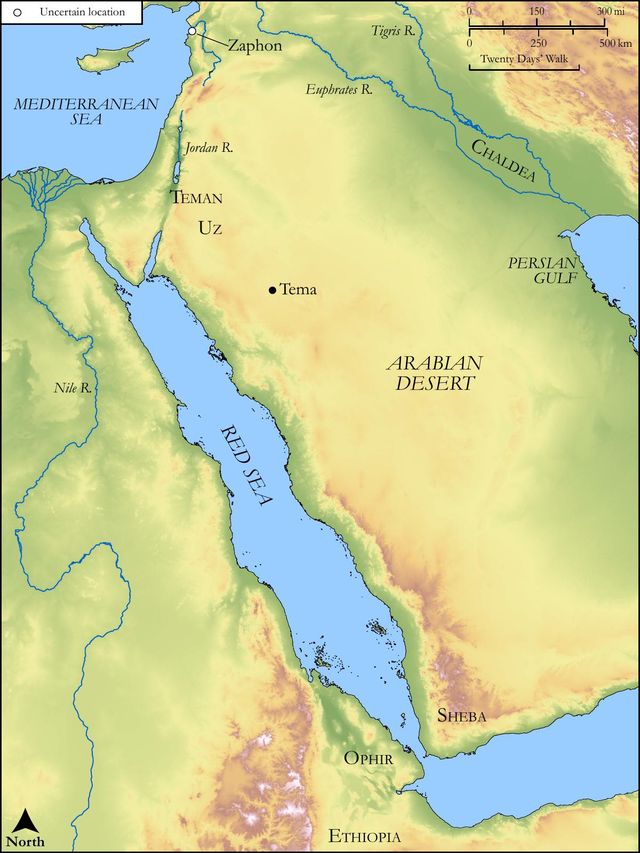
The Book of Job is set in the ancient land of Uz, a region likely located in the Edomite or Arabian territories, indicating a non-Israelite, patriarchal cultural setting. The cultural milieu reflects the wisdom of the men of the east, which frequently explored complex questions of divine justice, human suffering, and the nature of the divine. Unlike the Deuteronomic theology that often presented a direct correlation between obedience and blessing, and disobedience and curse, wisdom literature, particularly Job, delved into the ambiguities and paradoxes of life, challenging simplistic cause-and-effect explanations for suffering. In this culture, the transmission of wisdom and knowledge was highly esteemed, often flowing from respected elders or those believed to possess divine insight. The idiom "the hand of God" was a universally understood expression signifying divine power, intervention, or authoritative guidance, making Job's claim to teach "by the hand of God" a powerful assertion of his divine mandate and the authoritative nature of his message.
Key Themes
ShowHideThis verse powerfully contributes to several overarching themes in the Book of Job. Firstly, it highlights the theme of Divine Wisdom and Revelation. Job claims a direct, authoritative pipeline to God's understanding, asserting that his insights are not merely human speculation but are "by the hand of God," implying a divinely sanctioned and revealed perspective. This stands in stark contrast to the limited and often flawed human wisdom presented by his friends throughout the preceding chapters. Secondly, the verse underscores Integrity and Truth-Telling. Job's refusal to "conceal" what is "with the Almighty" speaks to his profound commitment to honesty, transparency, and unvarnished truth concerning God's character and His dealings, even when those truths are difficult to grasp or challenge prevailing theological assumptions. This aligns with his consistent plea for vindication and his steadfastness in maintaining his righteousness, as seen in his resolute declaration in Job 13:15. Lastly, it touches upon the theme of Suffering and Justice. While Job suffers unjustly and profoundly, he does not abandon his belief in God's ultimate justice or His sovereign control, even if he cannot comprehend its immediate manifestation. His teaching aims to offer a deeper, divinely informed perspective on God's mysterious ways, moving beyond the simplistic explanations of his interlocutors.
Exposition and Analysis
ShowHideKey Word Analysis
ShowHideThe Hebrew verb יָרָה (yârâh), occurring here as a Hiphil imperfect, literally means "to flow as water" or "to throw," but figuratively, it means "to point out," "to direct," or "to teach." In this context, it signifies Job's intention to instruct or inform his audience, not merely with human knowledge, but with divinely guided insight. The Hiphil stem emphasizes a causative action, meaning Job will cause them to know or understand, acting as a direct instructor.
The Hebrew noun יָד (yâd), meaning "hand," is used here in the idiomatic phrase "by the hand of God" (יַד־אֵל, yad-'êl). This idiom is a powerful metonymy for divine power, agency, authority, or direct influence. It indicates that Job's teaching is not merely his own opinion or deduction, but carries a measure of divine authority or insight, as if God Himself is guiding his words or revealing truth through him. This elevates his instruction beyond mere human wisdom or speculation.
The Hebrew term שַׁדַּי (Shadday) is one of the most ancient and profound names for God in the Old Testament, often translated as "Almighty" or "All-Sufficient One." It conveys God's omnipotence, self-sufficiency, and sovereign power over all creation and human affairs. Job's refusal to conceal what is "with the Almighty" means he is committed to speaking openly about the deep, perhaps mysterious, truths concerning God's nature, His attributes, and His actions in the world, even when they are challenging to human understanding or defy conventional explanations.
The Hebrew verb כָּחַד (kâchad) means "to hide," "to withhold," "to deny," or "to keep secret." Job's emphatic declaration "will I not conceal" (לֹא־אֲכַחֵד, lo'-'akachêd) highlights his resolute commitment to complete transparency and forthrightness in his teaching about God. This is a direct challenge to his friends, whom he often accuses of misrepresenting God's nature or of holding back from acknowledging the full complexity of divine justice in their simplistic arguments. It signifies a commitment to unvarnished truth, regardless of its difficulty.
Verse Breakdown
ShowHide"I will teach you by the hand of God:"
Job asserts his firm intention to instruct his audience, which includes his friends but also potentially a wider circle, with knowledge and understanding that is not of human origin but derived directly from God. The phrase "by the hand of God" indicates that his teaching is not based on his own limited human reasoning or conventional wisdom, but on a divinely imparted insight or authority. He claims to be a conduit for divine truth, setting his words apart from the often-flawed counsel of his companions.
"[that] which [is] with the Almighty will I not conceal."
This clause powerfully reinforces and expands upon the first, emphasizing Job's unwavering commitment to transparency and truthfulness regarding divine matters. "That which is with the Almighty" refers to the deep truths, characteristics, and ways of God—His nature, His justice, His dealings with humanity, and the mysteries of His sovereignty. Job pledges that he will not hide, distort, or withhold any of these truths, even if they are complex, challenging, or contradict the prevailing, simplistic theological views of his friends. It is a profound declaration of intellectual, spiritual, and moral integrity.
Literary Devices
ShowHideJob 27:11 employs several potent literary devices to convey its powerful message. Metonymy is prominently featured in the phrase "by the hand of God," where "hand" serves as a substitute for God's power, agency, or direct influence. This elevates Job's teaching from mere human opinion to divinely inspired insight. The verse also functions as a strong Declarative Statement, as Job's words are a firm, assertive proclamation of his intent and integrity, leaving no room for doubt about his commitment to truth. Furthermore, an implicit Parallelism exists between the two clauses: "I will teach you by the hand of God" and "that which is with the Almighty will I not conceal." Both clauses emphasize the divine source of Job's knowledge and his resolute commitment to openly share it, reinforcing the central theme of transparent, divinely-informed instruction. This contributes significantly to the overall Rhetorical Force of Job's final discourse, as he positions himself as the authentic interpreter of God's ways, in stark contrast to his friends.
Theological and Thematic Connections
ShowHideJob 27:11 stands as a profound statement on the nature of divine revelation and the human responsibility to speak truth with integrity. It underscores the biblical principle that genuine wisdom and understanding originate from God, not from human ingenuity or conventional thought. Job's assertion to teach "by the hand of God" and to "not conceal" what is with the Almighty highlights the critical importance of seeking and proclaiming unvarnished truth about God's character and His ways, even when those truths are complex, difficult to reconcile with immediate circumstances, or challenge prevailing theological assumptions. This verse serves as a powerful reminder that integrity in theological discourse requires both divine illumination and courageous transparency, reflecting a deep trust in God's ultimate justice and wisdom, even amidst profound and inexplicable suffering.
Reflection and Application
ShowHideJob's declaration in Job 27:11 offers profound and enduring lessons for believers today, challenging us to embody a similar commitment to divine truth and unwavering integrity. In a world often characterized by superficiality, misinformation, and a reluctance to confront difficult or unpopular truths, Job's resolute stance—to teach "by the hand of God" and to "not conceal" what is with the Almighty—stands as a powerful and convicting model. It calls us to cultivate a deep, abiding relationship with God through diligent study of His Word and earnest prayer, seeking His wisdom above all human reasoning or cultural trends. It also compels us to be courageous and transparent communicators of God's truth, speaking with conviction and clarity about His character, His justice, and His redemptive plan, even when it is unpopular, challenging, or requires us to stand against prevailing narratives. Like Job, we are called to maintain our spiritual and intellectual integrity, trusting in God's ultimate sovereignty and goodness even when life's circumstances are perplexing, painful, or seem contradictory to our understanding of His ways. Our witness to the world should be one of unwavering truth, rooted in divine revelation and expressed with unwavering conviction.
Questions for Reflection
ShowHideFAQ
ShowHideWhat does "by the hand of God" mean in this context?
ShowHideIn Job 27:11, "by the hand of God" (Hebrew: yad 'el) is a powerful idiomatic expression that signifies divine agency, guidance, authority, or direct influence. It means that Job's teaching is not based on his own human wisdom, speculation, or conventional thought, but is divinely inspired, sanctioned, or revealed. He is claiming that his understanding and the profound truths he is about to impart come directly from God, giving his words a profound weight and authority that contrasts sharply with the often-flawed and simplistic arguments of his friends. This phrase underscores the divine source of true wisdom and knowledge, asserting that Job's insights are not merely his own but carry a divine imprimatur.
Why does Job emphasize that he "will not conceal" what is with the Almighty?
ShowHideJob's emphatic statement that he "will not conceal" what is with the Almighty highlights his unwavering commitment to transparency, honesty, and truthfulness regarding God's character and His ways. Throughout the book, Job's friends have offered simplistic and often distorted views of God's justice, implying that Job's suffering must be a direct result of his sin. Job, however, knows his innocence and grapples deeply with the mystery of God's actions and the apparent injustice of his suffering. By declaring he will not conceal anything, Job asserts his intention to speak the full, unvarnished truth about God, even if it challenges conventional wisdom, contradicts the neat theological boxes his friends try to put God in, or reveals complexities that are difficult to reconcile. It is a pledge of profound intellectual and spiritual honesty, asserting that he will not hide, deny, or distort the complex realities of divine sovereignty and human experience, even when those realities are painful or perplexing.
Christ-Centered Fulfillment
ShowHideJob's declaration in Job 27:11, where he pledges to teach "by the hand of God" and not to "conceal" what is with the Almighty, finds its ultimate and perfect fulfillment in the person and ministry of Jesus Christ. Jesus is the quintessential teacher, the very embodiment of divine wisdom and truth, who perfectly revealed the Father. He did not merely speak "by the hand of God," but as John 1:1 declares, He is the Word, God Himself, eternally existing with God and being God. As the Son, Jesus perfectly knows the Father and fully reveals Him, as stated in Matthew 11:27. He came not to conceal any truth about God but to make Him known in the fullest possible way, proclaiming the kingdom of God and the way of salvation with unparalleled authority, as powerfully demonstrated in His Sermon on the Mount (Matthew 5-7). Jesus is the truth (John 14:6), and through His life, His atoning death on the cross, and His glorious resurrection, He fully unveiled the Father's boundless love, perfect justice, and redemptive plan for humanity—truths that had been partially revealed in the Old Testament. He is the ultimate "hand of God" reaching out to humanity, perfectly revealing the "Almighty" in a way that Job, in his limited human understanding, could only aspire to teach. Indeed, in Christ, all the treasures of wisdom and knowledge are hidden (Colossians 2:3).