


Jeremiah 32:19
- גְּדֹלge·Dol<the> great ofH1419Adj-mscAdjective Singular Masculine Construct
- הָעֵצָהha·'e·Tzah<the> counselH6098Art ¦ N-fsNoun Singular Feminine Absoluteהָ<the>עֵצָהcounsel
- וְרַבve·Ravand [the] great ofH7227Conj-w ¦ Adj-mscAdjective Singular Masculine Constructוְandרַב[the] great of
- הָעֲלִילִיָּהha·'a·li·li·Yah<the> deed[s]H5950Art ¦ N-fsNoun Singular Feminine Absoluteהָ<the>עֲלִילִיָּהdeed[s]
- אֲשֶׁר'a·SherwhoH834RelParticle Relative
- עֵינֶיךָ'ei·Nei·khayour eyesH5869N-fdc ¦ 2msNoun Dual Feminine Constructעֵינֶיeyesךָyour
- פְקֻחוֹתfe·ku·Chot[are] openedH6491V-Qal-PassPrtcpl-fpVerb Qal Participle Passive Plural Feminine Absolute
- עַל'alonH5921PrepPreposition
- כָּלkolallH3605N-mscNoun Singular Masculine Construct
- דַּרְכֵיdar·Khei[the] ways ofH1870N-cpcNoun Plural common gender Construct
- בְּנֵיbe·Nei[the] children ofH1121N-mpcNoun Plural Masculine Construct
- אָדָם'a·DamhumankindH120N-msNoun Singular Masculine Absolute
- לָתֵתla·Tetto giveH5414Prep-l ¦ V-Qal-InfVerb Qal Infinitive Constructלָtoתֵתgive
- לְאִישׁle·'Ishto everyoneH376Prep-l ¦ N-msNoun Singular Masculine Absoluteלְtoאִישׁeveryone
- כִּדְרָכָיוkid·ra·Khavaccording to his waysH1870Prep-k ¦ N-mpc ¦ 3msNoun Plural Masculine Constructכִּaccording toדְרָכָיwaysוhis
- וְכִפְרִיve·khif·Riand according to [the] fruit ofH6529Conj-w ¦ Prep-k ¦ N-mscNoun Singular Masculine Constructוְandכִaccording toפְרִי[the] fruit of
- מַעֲלָלָיוma·'a·la·Lavhis deedsH4611N-mpc ¦ 3msNoun Plural Masculine Constructמַעֲלָלָיdeedsוhis
English is a literal word-by-word gloss of the Hebrew, not the KJV's wording. Why?
This is the original text the KJV's translators worked from — each Hebrew word with its own literal English meaning in this verse, prepared by scholars at Tyndale House, Cambridge. The KJV translates whole sentences, not word by word, so its wording differs: one Hebrew word can become several English words, and the KJV may choose “the LORD” where the gloss reads “Yahweh”. Both are faithful — they answer different questions. For the KJV's own rendering, switch to the KJV text.
Details
See on the biblical-era map
Study this verse
Public-domain commentary
Matthew Henry
From his Commentary on the Whole Bible. Henry comments on passages, not single verses — this entry covers Jeremiah 32:16–25. His two-level outline is real structure in the source text, so it is rendered as structure.
We have here Jeremiah's prayer to God upon occasion of the discoveries God had made to him of his purposes concerning this nation, to pull it down, and in process of time to build it up again, which puzzled the prophet himself, who, though he delivered his messages faithfully, yet, in reflecting upon them, was greatly at a loss within himself how to reconcile them; in that perplexity he poured out his soul before God in prayer, and so gave himself ease. That which disturbed him was not the bad bargain he seemed to have made for himself in purchasing a field that he was likely to have no good of, but the case of his people, for whom he was still a kind and faithful intercessor, and he was willing to hope that, if God had so much mercy in store for them hereafter as he had promised, he would not proceed with so much severity against them now as he had threatened. Before Jeremiah went to prayer he delivered the deeds that concerned his new purchase to Baruch, which may intimate to us that when we are going to worship God we should get our minds as clear as may be from the cares and incumbrances of this world. Jeremiah was in prison, in distress, in the dark about the meaning of God's providences, and then he prays. Note, Prayer is a salve for every sore. Whatever is a burden to us, we may by prayer cast it upon the Lord and then be easy.
In this prayer, or meditation,
I.Jeremiah adores God and his infinite perfections, and gives him the glory due to his name as the Creator, upholder, and benefactor, of the whole creation, thereby owning his irresistible power, that he can do what he will, and his incontestable sovereignty, that he may do what he will, Jer 32:17-19. Note, When at any time we are perplexed about the particular methods and dispensations of Providence it is good for us to have recourse to our first principles, and to satisfy ourselves with the general doctrines of God's wisdom, power, and goodness. Let us consider, as Jeremiah does here,
1.That God is the fountain of all being, power, life, motion, and perfection: He made the heaven and the earth with his outstretched arm; and therefore who can control him? Who dares contend with him?
2.That with him nothing is impossible, no difficulty insuperable: Nothing is too hard for thee. When human skill and power are quite nonplussed, with God are strength and wisdom sufficient to master all the opposition.
3.That he is a God of boundless bottomless mercy; mercy is his darling attribute; it is his goodness that is his glory: "Thou not only art kind, but thou showest lovingkindness, not to a few, to here and there one, but to thousands, thousands of persons, thousands of generations." 4. That he is a God of impartial and inflexible justice. His reprieves are not pardons, but if in mercy he spares the parents, that they may be led to repentance, yet such a hatred has he to sin, and such a displeasure against sinners, that he recompenses their iniquity into the bosom of their children, and yet does them no wrong; so hateful is the unrighteousness of man, and so jealous of its own honour is the righteousness of God. 5. That he is a God of universal dominion and command: He is the great God, for he is the mighty God, and might among men makes them great. He is the Lord of hosts, of all hosts, that is his name, and he answers to his name, for all the hosts of heaven and earth, of men and angels, are at his beck. 6. That he contrives every thing for the best, and effects every thing as he contrived it: He is great in counsel, so vast are the reaches and so deep are the designs of his wisdom; and he is mighty in doing, according to the counsel of his will. Now such a God as this is not to be quarrelled with. His service is to be constantly adhered to and all his disposals cheerfully acquiesced in.
II.He acknowledges the universal cognizance God takes of all the actions of the children of men and the unerring judgment he passes upon them (Jer 32:19): Thy eyes are open upon all the sons of men, wherever they are, beholding the evil and the good, and upon all their ways, both the course they take and every step they take, not as an unconcerned spectator, but as an observing judge, to give every one according to his ways and according to his deserts, which are the fruit of his doings; for men shall find God as they are found of him.
III.He recounts the great things God had done for his people Israel formerly.
1.He brought them out of Egypt, that house of bondage, with signs and wonders, which remain, if not in the marks of them, yet in the memorials of them, even unto this day; for it would never be forgotten, not only in Israel, who were reminded of it every year by the ordinance of the passover, but among other men: all the neighbouring nations spoke of it, as that which redounded exceedingly to the glory of the God of Israel, and made him a name as at this day. This is repeated (Jer 32:21), that God brought them forth, not only with comforts and joys to them, but with glory to himself, with signs and wonders (witness the ten plagues), with a strong hand, too strong for the Egyptians themselves, and with a stretched-out arm, that reached Pharaoh, proud as he was, and with great terror to them and all about them. This seems to refer to Deu 4:34.
2.He brought them into Canaan, that good land, that land flowing with milk and honey. He swore to their fathers to give it them, and, because he would perform his oath, he did give it to the children (Jer 32:22) and they came in and possessed it. Jeremiah mentions this both as an aggravation of their sin and disobedience and also as a plea with God to work deliverance for them. Note, It is good for us often to reflect upon the great things that God did for his church formerly, especially in the first erecting of it, that work of wonder.
IV.He bewails the rebellions they had been guilty of against God, and the judgments God had brought upon them for these rebellions.
It is a sad account he here gives of the ungrateful conduct of that people towards God. He had done every thing that he had promised to do (they had acknowledged it, Kg1 8:56), but they had done nothing of all that he commanded them to do (Jer 32:23); they made no conscience of any of his laws; they walked not in them, paid no respect to any of his calls by his prophets, for they obeyed not his voice. And therefore he owns that God was righteous in causing all this evil to come upon them. The city is besieged, is attacked by the sword without, is weakened and wasted by the famine and pestilence within, so that it is ready to fall into the hands of the Chaldeans that fight against it (Jer 32:24); it is given into their hands, Jer 32:25. Now,
1.He compares the present state of Jerusalem with the divine predictions, and finds that what God has spoken has come to pass. God had given them fair warning of it before; and, if they had regarded this, the ruin would have been prevented; but, if they will not do what God has commanded, they can expect no other than that he should do what he had threatened.
2.He commits the present state of Jerusalem to the divine consideration and compassion (Jer 32:24): Behold the mounts, or ramparts, or the engines which they make use of to batter the city and beat down the wall of it. And again, "Behold thou seest it, and takest cognizance of it. Is this the city that thou has chosen to put thy name there? And shall it be thus abandoned?" He neither complains of God for what he had done nor prescribes to God what he should do, but desires he would behold their case, and is pleased to think that he does behold it. Whatever trouble we are in, upon a personal or public account, we may comfort ourselves with this, that God sees it and sees how to remedy it.
V.He seems desirous to be let further into the meaning of the order God had now given him to purchase his kinsman's field (Jer 32:25):
"Though the city is given into the hand of the Chaldeans, and no man is likely to enjoy what he has, yet thou hast said unto me, Buy thou the field." As soon as he understood that it was the mind of God he did it, and made no objections, was not disobedient to the heavenly vision; but, when he had done it, he desired better to understand why God had ordered him to do it, because the thing looked strange and unaccountable. Note, Though we are bound to follow God with an implicit obedience, yet we should endeavour that it may be more and more an intelligent obedience. We must never dispute God's statutes and judgments, but we may and must enquire, What mean these statutes and judgments? Deu 6:20.
Historical interpretation
Two Centuries of Reception
3 surviving comments on this verse. Each one is dated, so this reads as a timeline rather than a list.
Select a marker to jump to its quote. Markers stagger vertically where authors wrote within a few decades of each other.
You, as a person, know any other person from the way he appears outside. You think the way you see. And you see as far only as your eyes do. But the Scripture says, “The eyes of the Lord are lofty,” “People look at the outward appearance, but God looks at the heart,” “The Lord sees and knows his own,” and “the plant that my heavenly Father has not planted, he roots up,” and “the first shall,” as he shows, “be last,” and he carries “his fan in his hand to purge his threshing floor.” Let the chaff of a fickle faith fly off as much as it will at every blast of temptation; all the purer will be that heap of corn that shall be laid up in the garner of the Lord.
Of course nothing is “too hard for the Lord.” But if we choose to apply this principle so extravagantly and harshly in our capricious imaginations, we may then make out God to have done anything we please, on the ground that it was not impossible for him to do it. We must not suppose, however, because he is able to do all things, that he has done what he has not done. But we must inquire whether he has really done it. God could, if he had liked, have furnished humankind with wings to fly with, just as he gave wings to kites. We must not, however, run to the conclusion that he did this because he was able to do it. He might also have extinguished Praxeas and all other heretics at once; it does not follow, however, that he did, simply because he was able. For it was necessary that there should be both kites and heretics; it was necessary also that the Father should be crucified. In one sense there will be something difficult even for God—namely, that which he has not done—not because he could not but because he would not do it. For with God, to be willing is to be able and to be unwilling is to be unable; all that he has willed, however, he has both been able to accomplish and has displayed his ability.
(Verse 16 and following) And I prayed to the Lord after I had delivered the book of possession to Baruch the son of Neriah, saying: Alas, alas, alas, O Lord God (or who you are, O Lord God). Behold, you have made the heaven and the earth with your great power, and with your outstretched (or exalted) arm nothing will be difficult (or impossible) for you (or according to the Septuagint, nothing is hidden from you). You show mercy to thousands and repay the iniquity of the fathers into the bosom of their children after them, O mighty, great, powerful (which is said in Hebrew) Gibbor (): The Lord of hosts (or of powers) is your name. Great in counsel and incomprehensible in thought. Whose eyes are open upon all the ways of the sons of Adam (or humans), to render to each according to his ways, and according to the fruit of his inventions (Vulgate: his). After the celebration of the lawful purchase of the field, and after the sentence of the Lord, in which he promised houses, fields, and vineyards to be possessed henceforth, the Prophet prays to the Lord and expresses the anguish of his heart with groans, saying: Alas, alas, alas, Lord God: for which the Septuagint translated, ὁ ὢν, that is, who is, Lord God, according to what is said to Moses: Go, speak to the people of Israel: The One who is, has sent me to you (Exod. III, 14). Not that there are no others; but it is one thing for the Creator to exist by His own beneficence, another for Him to exist by the eternity of His nature. He praises the Lord and proclaims the Creator through His creatures. First, with his voice, he extols His power, mercy, and justice towards all of mankind; then he turns to Israel and describes in a famous discourse the great things He has done for them. And after so many blessings, he says that they, being forgetful of His goodness, provoked His mercy to bitterness, so that the city was besieged, and before the enemy broke in, it was consumed by famine, sword, and plague. But he first put forward all these things so that he could subsequently present what seemed to be a reproach to the divine judgment. And you say to me, Lord God, buy a field for silver, and have witnesses, when the city has been given into the hands of the Chaldeans? This portion of the text contains the entirety of this passage. Now let us return to each point individually. You made heaven and earth in your great power. And John says of the Son: All things were made through him, and without him was not anything made that was made (John 1:3). For this is the strength of the Lord, as the Apostle confirms: Christ is the power of God and the wisdom of God (1 Cor. I, 24). And in your outstretched or lofty arm, both of which are indications of striking. But what is this arm, of which Isaiah speaks: And the arm of the Lord, to whom it is revealed (Isa. LIII, 1)? No word will be difficult for you. For what is impossible for men is possible for God; to whom nothing is hidden (Mic. XIX), according to the saying of the Psalmist: For the darkness shall not obscure you, and the night shall be as bright as day (Psalm CXXXVIII, 12). You show mercy to thousands; and you repay the iniquity of the fathers into the bosom of their children after them. The great mercy of the Creator, to extend his mercy to a thousand generations, and to show justice immediately in the next generation, which, however, is also mixed with mercy. For he does not immediately punish the wrongdoer, but waits for repentance, so that if the children imitate the vices of their parents, punishment is delayed for a long time. Most powerful, great, mighty, Lord of hosts, or virtue, is your name. These names indicate the power of the Creator. However, properly speaking, the name of God is Father, which is revealed in the Gospel when the Lord says: Father, I have revealed your name to mankind (John 17:6). Great in counsel. And anyone who presumes to insert themselves secretly into the Lord's affairs and judge his judgments. And incomprehensible in thought. The mind that cannot comprehend him, how can speech comprehend him? Whose eyes are open upon all the ways of the sons of Adam. Therefore, in vain does man think he can hide himself from God's knowledge. And this leads to the fact that in order to render to each according to their ways, and according to the fruit of their inventions, this indicates that sometimes, due to excessive patience, his judgments may seem unjust. This place the Apostle further explains to the Romans: Do you not know that the kindness of God is leading you to repentance? But because of your stubbornness and unrepentant heart, you are storing up wrath for yourself on the day of wrath and revelation of the righteous judgment of God (Rom. II, 4, 5). Therefore, the later the punishment of sinners, the more just it is: in the likeness of Pharaoh, who, after being warned by ten plagues, was not punished, and persisting in his hardness, was finally overwhelmed by the waves of the Red Sea (Exodus 14).
Continue studying Jeremiah 32:19 across the web’s major study libraries — every link below opens this exact verse, chapter, or book on the destination site.
Read & Compare
 BibleGatewayThis verse in more than 200 translations and 70 languages.
 Bible.comThe YouVersion reader — hundreds of translations, reading plans, and highlights.
 ESV.orgCrossway's official English Standard Version reader.
 NET BibleThe NET translation with 60,000+ translators' notes on every rendering decision.
 STEP BibleTyndale House's free study tool — original text, vocabulary, and scholarly resources.
 BibliaLogos Bible Software's free web reader.
 USCCBThe New American Bible (Revised Edition) with the U.S. bishops' study notes.
Commentaries
 BibleHub CommentariesDozens of classic commentaries on this verse, gathered on one page.
 StudyLightMore than 100 commentary sets — the largest collection on the web.
 BibleRefPlain-English commentary on what this verse means, verse by verse.
 Enduring WordDavid Guzik's free commentary on this chapter, widely used by Bible teachers.
 Bible Study ToolsVerse commentary alongside Greek and Hebrew study aids.
Original Language & Research
- BibleHub InterlinearThe verse word by word — original language, transliteration, and English.
- BibleHub LexiconEvery word's original-language definition and Strong's entry.
 Blue Letter BibleDeep-study tools — Strong's numbers, concordance, and word studies.
 SefariaThe Hebrew text with Rashi and centuries of Jewish commentary.
Sermons, Hymns & Audio


TrulyRandomVerse is not affiliated with these sites and doesn’t control their content. They’re linked because they’re genuinely useful.
Summary
Jeremiah 32:19 stands as a profound declaration of God's character, articulated within Jeremiah's prayer during the Babylonian siege of Jerusalem and his own imprisonment. It powerfully asserts God's supreme and perfect wisdom in planning, His irresistible and absolute power in execution, and His flawless omniscience, which constantly surveys every human action and intention. The verse culminates in a foundational statement of divine justice, affirming that God meticulously recompenses every individual precisely according to their conduct and the inevitable consequences that arise from their deeds. This comprehensive affirmation provides Jeremiah, and by extension, all believers, with an unshakable bedrock of trust in God's sovereign control and moral order, even amidst bewildering circumstances and impending judgment.
Context
ShowHideLiterary Context
This verse is an integral and climactic part of Jeremiah's prayer to the Lord, found in Jeremiah 32:17-25. This prayer immediately follows God's seemingly paradoxical command for Jeremiah to purchase a field in Anathoth, even as the Babylonian army lays siege to Jerusalem, threatening its imminent destruction (Jeremiah 32:6-15). Jeremiah's act of obedience, buying land that would soon be overrun, serves as a powerful prophetic sign of future restoration and return from exile (Jeremiah 32:15). His prayer begins with an awe-filled acknowledgment of God's omnipotence and creative power, particularly His ability to do "nothing too hard" (Jeremiah 32:17). Verse 19 then transitions to extol God's wisdom, comprehensive oversight, and unwavering justice, providing the theological framework for understanding how God can both justly judge His people for their sin and yet promise their future redemption. The prayer continues with a review of Israel's history of persistent disobedience and God's consistent judgment, yet it concludes with a renewed plea for God's faithfulness, setting the stage for God's subsequent reaffirmation of the covenant and the promise of restoration.
Historical & Cultural Context
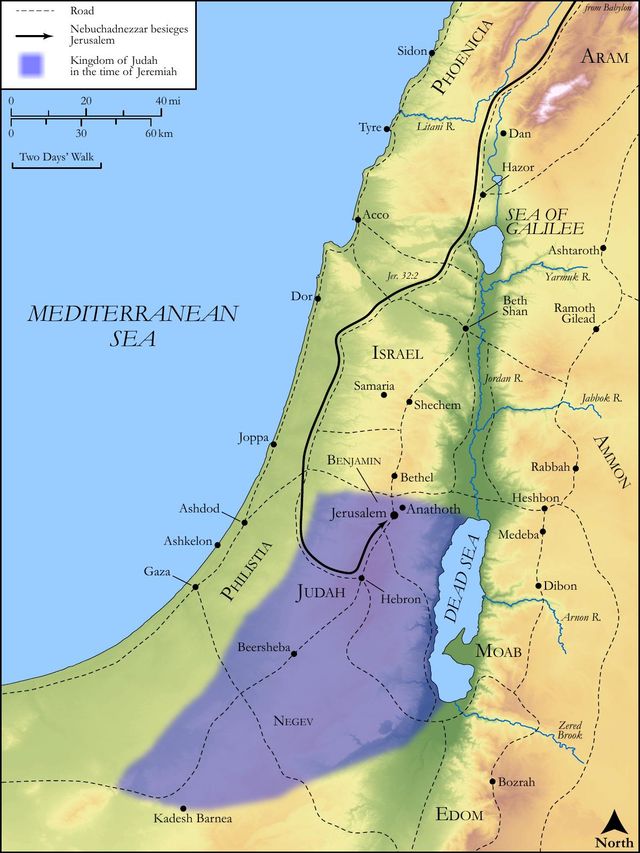
Jeremiah prophesied during the tumultuous final decades of the Kingdom of Judah, a period marked by profound political instability, widespread spiritual apostasy, and the overwhelming threat of the rising Babylonian Empire. By 588 BC, Nebuchadnezzar's forces had laid siege to Jerusalem, a siege that would culminate in the city's destruction and the exile of its inhabitants in 586 BC. Jeremiah himself was imprisoned in the court of the guard in King Zedekiah's palace (Jeremiah 32:2). The act of purchasing land during a siege was culturally counter-intuitive and economically irrational; land value would plummet, and immediate possession would be impossible. However, within ancient Near Eastern culture, land ownership was deeply tied to identity, inheritance, and covenant promises, symbolizing continuity and future hope. Jeremiah's purchase, therefore, was not merely a financial transaction but a profound prophetic act, demonstrating God's ultimate control over history and His unwavering commitment to His covenant, even when His people faced the severe consequences of their unfaithfulness. The cultural understanding of divine justice also played a significant role, where actions were believed to directly lead to corresponding outcomes, either blessings for obedience or curses for disobedience, a principle deeply embedded in the Mosaic Law.
Key Themes
ShowHideJeremiah 32:19 contributes significantly to several overarching themes within the book of Jeremiah and broader biblical theology. Firstly, it powerfully underscores God's absolute sovereignty and omnipotence, emphasizing that His plans are perfectly conceived ("Great in counsel") and flawlessly executed ("mighty in work"), even when human circumstances appear chaotic or hopeless. This theme is foundational to Jeremiah's message, as he continually calls Judah to trust God despite the impending judgment and destruction. Secondly, the verse highlights God's omniscience and constant oversight ("for thine eyes are open upon all the ways of the sons of men"). This divine attribute means that no human action, motive, or intention is hidden from Him, a truth that provides both comfort for the righteous and a solemn warning for the wicked. This theme resonates deeply with passages like Proverbs 15:3 and Psalm 139:1-6. Finally, the latter part of the verse firmly establishes the theme of divine justice and accountability, asserting that God's governance includes a righteous recompense for every individual based on their actions ("to give every one according to his ways, and according to the fruit of his doings"). This principle of just retribution is a recurring motif throughout Scripture, seen in Psalm 62:12 and Romans 2:6, and it serves to explain the impending judgment on Judah as a just consequence of their persistent sin and rebellion against God's covenant.
Exposition and Analysis
ShowHideKey Word Analysis
ShowHideThis word signifies something immense, significant, or superior in quantity, size, age, number, rank, or quality. When applied to God's "counsel," it emphasizes the vastness, profundity, and unparalleled excellence of His wisdom and strategic planning. It suggests that His plans are not merely good but are of the highest possible order, beyond human comprehension or limitation.
From the root meaning "to advise," this noun refers to deliberate planning, purpose, and profound wisdom. In the context of God, it speaks to His perfect foresight, the intentionality behind His decrees, and the unchangeable nature of His eternal purposes. It implies that God's plans are not reactive or arbitrary but are the result of infinite wisdom, ensuring their ultimate and perfect fulfillment.
Literally meaning "a road" or "path" (as trodden), this term is used figuratively to denote a course of life, a mode of action, or one's conduct. In the phrase "the ways of the sons of men," it refers to the entire trajectory of human behavior, choices, and moral conduct, encompassing both outward actions and inward intentions. God's eyes are open upon these "ways," indicating His comprehensive awareness of humanity's every path, whether righteous or wicked.
Derived from a verb meaning "to act" or "to do," this noun refers to an act or deed, whether good or bad, emphasizing the concrete actions and works performed by individuals. The phrase "fruit of his doings" is a powerful metaphor, highlighting the inevitable consequences or outcomes that naturally arise from one's actions, much like a tree bears fruit according to its nature. It underscores the principle of moral causality and accountability.
Verse Breakdown
ShowHide"Great in counsel, and mighty in work:"
This opening clause extols God's supreme attributes, setting the foundation for His just governance. "Great in counsel" (Hebrew: gâdôwl bᵉʻêtsâh) emphasizes His infinite wisdom, His perfect strategic planning, and His profound understanding of all things. His plans are not merely good but are conceived with unmatched depth and foresight, ensuring their ultimate success. "Mighty in work" (Hebrew: rab bᵉʻălîylîyâh) highlights His irresistible power and ability to execute His plans flawlessly. His deeds are not just effective but are performed with overwhelming strength, demonstrating His absolute sovereignty over creation and history, bringing His counsel to fruition.
"for thine eyes [are] open upon all the ways of the sons of men:"
This clause provides the theological basis ("for") for God's greatness in counsel and might in work, linking His attributes to His pervasive knowledge and active engagement with humanity. The anthropomorphic phrase "thine eyes are open" signifies God's complete, constant, and discerning omniscience. He is not a distant or indifferent deity but intimately aware of "all the ways" – the entire course of life, conduct, and moral choices – of "the sons of men" (humanity, encompassing every individual). Nothing is hidden from His gaze; He observes every action, every intention, and every secret thought, making Him the ultimate witness.
"to give every one according to his ways, and according to the fruit of his doings:"
This final clause articulates the inevitable consequence of God's omniscience and His just character. Because He sees all, He is able to "give every one" – to recompense, reward, or judge each individual – precisely "according to his ways" (their conduct, moral choices, and the path they have chosen in life) and "according to the fruit of his doings" (the natural and inevitable outcomes or consequences that arise from their actions). This affirms the principle of divine justice, where God's righteous governance ensures that actions lead to appropriate outcomes, whether blessing for obedience or judgment for rebellion, demonstrating His perfect moral order.
Literary Devices
ShowHideJeremiah 32:19 employs several potent literary devices to convey its profound theological truths with clarity and impact. Anthropomorphism is strikingly evident in the phrase "thine eyes are open," attributing human physical characteristics (eyes) to God. This device makes God's omnipresence and omniscience more comprehensible and relatable to a human audience, powerfully communicating that God is not a passive observer but an active, discerning, and intimately aware witness to all human activity. Parallelism is used effectively in the latter part of the verse: "to give every one according to his ways, and according to the fruit of his doings." This synonymous parallelism reinforces the central idea of divine recompense, emphasizing that both the path one chooses and the resulting actions are subject to God's precise and just judgment. Furthermore, the phrase "fruit of his doings" is a vivid metaphor, comparing the consequences of human actions to the natural yield of a plant. Just as a tree bears fruit consistent with its nature, so too do human deeds inevitably produce outcomes that reflect their inherent quality, illustrating the biblical principle of sowing and reaping.
Theological and Thematic Connections
ShowHideJeremiah 32:19 serves as a cornerstone for understanding God's character as both supremely sovereign and perfectly just. It reveals a God whose wisdom is beyond human comprehension and whose power is limitless, yet who is intimately involved in the affairs of humanity, observing every choice and action with perfect clarity. This divine oversight is not merely for observation but for the righteous administration of justice, ensuring that every individual receives what is due to them based on their conduct. This principle undergirds the entire biblical narrative, explaining God's judgments against sin (like the impending exile for Judah) and His promises of restoration for repentance. It assures believers that God is ultimately in control, and His moral order will prevail, even when circumstances seem chaotic or unjust, providing a foundation for trust in His perfect governance.
Reflection and Application
ShowHideJeremiah 32:19 offers a profound anchor for faith in times of uncertainty and a powerful call to integrity in our daily lives. In a world often characterized by chaos, injustice, and seemingly random events, this verse reminds us that a God of infinite counsel and mighty work is meticulously overseeing all things. His wisdom ensures that His purposes will prevail, and His power guarantees their execution, even when our immediate circumstances suggest otherwise, much like Jeremiah buying land during a siege. This truth invites us to trust in His overarching plan, even when we don't understand the details or when our circumstances seem contradictory to His promises. Furthermore, the verse's declaration that God's eyes are open upon all our ways, and that He will give us according to the fruit of our doings, serves as a sober reminder of our accountability. It encourages us to live with intentionality, knowing that our choices, both public and private, have eternal significance and are always observed by our just God. This should motivate us to pursue righteousness, to cultivate a character pleasing to Him, and to align our actions with His will, knowing that ultimately, God will bring all things to account and His perfect justice will be revealed.
Questions for Reflection
ShowHideFAQ
ShowHideWhat does "Great in counsel, and mighty in work" mean about God's character?
ShowHideThis phrase describes two fundamental and interconnected aspects of God's character: His infinite wisdom and His irresistible power. "Great in counsel" (Hebrew: gâdôwl bᵉʻêtsâh) means God possesses perfect, profound, and strategic wisdom that is beyond human comprehension. His plans are not only well-conceived but are the best possible plans, eternally purposed and flawlessly designed. "Mighty in work" (Hebrew: rab bᵉʻălîylîyâh) means God has the absolute power to execute His plans flawlessly and decisively. His actions are not arbitrary but flow from His perfect counsel, ensuring that His purposes are always accomplished, regardless of any obstacles or human resistance. This combination assures us that God is both the ultimate strategist and the supreme executor of His will, making Him utterly trustworthy.
How does God's omniscience relate to His justice in this verse?
ShowHideThe verse explicitly links God's omniscience ("for thine eyes are open upon all the ways of the sons of men") to His justice ("to give every one according to his ways, and according to the fruit of his doings"). God's perfect knowledge of every human action, motive, and intention is the prerequisite for His perfect justice. Because He sees everything—nothing is hidden from His gaze—He is able to administer righteous judgment and recompense without error, partiality, or incomplete information. His justice is not based on human perception or limited understanding but on His comprehensive and infallible understanding of all deeds and their underlying intentions, ensuring that every individual receives what is truly due to them. This profound connection between His seeing and His judging is also powerfully articulated in Hebrews 4:13.
Christ-Centered Fulfillment
ShowHideJeremiah 32:19, with its declaration of God's great counsel, mighty work, comprehensive oversight, and perfect justice, finds its ultimate fulfillment and clearest revelation in the person and work of Jesus Christ. He is the very embodiment of God's "great counsel," for in Him "are hidden all the treasures of wisdom and knowledge" (Colossians 2:3). The "mighty work" of God is supremely demonstrated in Christ's redemptive work on the cross and His glorious resurrection, through which God disarmed spiritual powers and triumphed over sin and death, accomplishing His eternal plan of salvation (Colossians 2:15). While God's eyes are indeed open upon all the ways of humanity, seeing every sin and shortcoming, Christ, as the "Lamb of God who takes away the sin of the world" (John 1:29), offers a way for humanity to be reconciled to a just God, not by perfectly fulfilling "his ways" or earning the "fruit of his doings" through their own efforts, but through faith in His perfect obedience and atoning sacrifice. The principle of giving "every one according to his ways, and according to the fruit of his doings" is upheld in Christ, who will return as the righteous judge of all (Revelation 22:12). However, for those who are "in Christ," their "doings" are covered by His imputed righteousness, and they receive the "fruit" of His perfect life and atoning death—eternal life, reconciliation with God, and reigning in life through Him (Romans 5:17). Thus, Christ is both the perfect demonstration of God's unwavering justice and the divine means by which sinful humanity can stand righteous and receive grace before Him.