


Isaiah 66:20
Bible text: King James Version (1769 Blayney text) · Public domain
Bible text: King James Version with Strong's numbers · Public domain
Bible text: Berean Standard Bible · Public domain
Bible text: American Standard Version (1901) · Public domain
Bible text: World English Bible, Messianic edition · Public domain
Bible text: Geneva Bible (1599) · Public domain
Bible text: Young's Literal Translation · Public domain
- וְהֵבִיאוּve·he·Vi·'uand they will bring backH935Conj-w ¦ V-Hiphil-ConsecPerf-3cpVerb Hiphil Consecutive Perfect 3rd Plural common genderוְandהֵבִיאוּthey will bring back
- אֶת'et<obj.>H853DirObjMParticle Object Indicator
- כָּלkolallH3605N-mscNoun Singular Masculine Construct
- אֲחֵיכֶם'a·chei·Khemyour relativesH251N-mpc ¦ 2mpNoun Plural Masculine Constructאֲחֵיrelativesכֶםyour
- מִכָּלmi·kolfrom allH3605Prep-m ¦ N-mscNoun Singular Masculine Constructמִfromכָּלall
- הַגּוֹיִםha·go·Yimthe nationsH1471Art ¦ N-mpNoun Plural Masculine Absoluteהַtheגּוֹיִםnations
- מִנְחָהmin·Chahan offeringH4503N-fsNoun Singular Feminine Absolute
- לַיהוָהla·Yah·wehto YahwehH3068Prep-l ¦ N-properNoun Proper TitleלַtoיהוָהYahweh
- בַּסּוּסִיםba·su·Simon <the> horsesH5483Prep-b ¦ N-mpNoun Plural Masculine Absoluteבַּon <the>סּוּסִיםhorses
- וּבָרֶכֶבU·va·re·khevand in <the> chariot[s]H7393Conj-w ¦ Prep-b ¦ N-msNoun Singular Masculine Absoluteוּandבָin <the>רֶכֶבchariot[s]
- וּבַצַּבִּיםu·va·tza·Bimand in <the> wagonsH6632Conj-w ¦ Prep-b ¦ N-mpNoun Plural Masculine Absoluteוּandבַin <the>צַּבִּיםwagons
- וּבַפְּרָדִיםu·va·pe·ra·Dimand on <the> mulesH6505Conj-w ¦ Prep-b ¦ N-mpNoun Plural Masculine Absoluteוּandבַon <the>פְּרָדִיםmules
- וּבַכִּרְכָּרוֹתu·va·kir·ka·Rotand on <the> camelsH3753Conj-w ¦ Prep-b ¦ N-fpNoun Plural Feminine Absoluteוּandבַon <the>כִּרְכָּרוֹתcamels
- עַל'altoH5921PrepPreposition
- הַרhar[the] mountain ofH2022N-mscNoun Singular Masculine Construct
- קָדְשִׁיkod·shimy holinessH6944N-msc ¦ 1csNoun Singular Masculine Constructקָדְשִׁholinessיmy
- יְרוּשָׁלִַםye·ru·sha·LimJerusalemH3389N-properNoun Proper Location
- אָמַר'a·Marhe saysH559V-Qal-Perf-3msVerb Qal Perfect 3rd Singular Masculine
- יְהוָהYah·wehYahwehH3068N-properNoun Proper Title
- כַּאֲשֶׁרka·'a·Sherjust asH834Prep-k ¦ RelParticle Relativeכַּjustאֲשֶׁרas
- יָבִיאוּya·vi·'Uthey will bringH935V-Hiphil-Imperf-3mpVerb Hiphil Imperfect 3rd Plural Masculine
- בְנֵיve·Nei[the] people ofH1121N-mpcNoun Plural Masculine Construct
- יִשְׂרָאֵלYis·ra·'ElIsraelH3478N-properNoun Proper Location
- אֶת'et<obj.>H853DirObjMParticle Object Indicator
- הַמִּנְחָהha·min·Chahthe grain offeringH4503Art ¦ N-fsNoun Singular Feminine Absoluteהַtheמִּנְחָהgrain offering
- בִּכְלִיbikh·Liin a vesselH3627Prep-b ¦ N-msNoun Singular Masculine Absoluteבִּinכְלִיa vessel
- טָהוֹרta·HorpureH2889Adj-msAdjective Singular Masculine Absolute
- בֵּיתbeit[the] house ofH1004N-mscNoun Singular Masculine Construct
- יְהוָהYah·wehYahwehH3068N-properNoun Proper Title
English is a literal word-by-word gloss of the Hebrew, not the KJV's wording. Why?
This is the original text the KJV's translators worked from — each Hebrew word with its own literal English meaning in this verse, prepared by scholars at Tyndale House, Cambridge. The KJV translates whole sentences, not word by word, so its wording differs: one Hebrew word can become several English words, and the KJV may choose “the LORD” where the gloss reads “Yahweh”. Both are faithful — they answer different questions. For the KJV's own rendering, switch to the KJV text.
Details
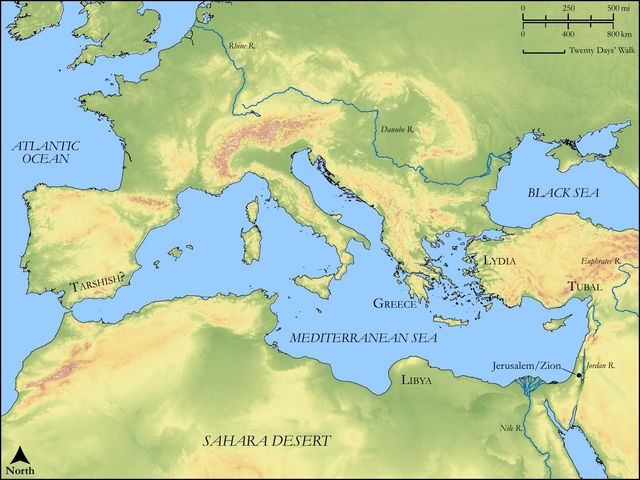
See on the biblical-era map
Study this verse
Public-domain commentary
Matthew Henry
From his Commentary on the Whole Bible. Henry comments on passages, not single verses — this entry covers Isaiah 66:15–24. His four-level outline is real structure in the source text, so it is rendered as structure.
These verses, like the pillar of cloud and fire, have a dark side towards the enemies of God's kingdom and all that are rebels against his crown, and a bright side towards his faithful loyal subjects. Probably they refer to the Jews in captivity in Babylon, of whom some are said to have been sent thither for their hurt, and with them God here threatens to proceed in his controversy; they hated to be reformed, and therefore should be ruined by the calamity (Jer 24:9); others were sent thither for their good, and they should have the trouble sanctified to them, should in due time get well through it and see many a good day after it. Many of the expressions here used are accommodated to that glorious dispensation; but doubtless the prophecy looks further, to the judgment for which Christ did come once, and will come again, into this world, and to the distinction which his word in both makes between the precious and the vile.
I.Christ will appear to the confusion and terror of all those that stand it out against him.
Sometimes he will appear in temporal judgments. The Jews that persisted in infidelity were cut off by fire and by his sword. The ruin was very extensive; the Lord then pleaded with all flesh; and, it being his sword with which they are cut off, they are called his slain, sacrificed to his justice, and they shall be many. In the great day the wrath of God will be his fire and sword, with which he will cut off and consume all the impenitent; and his word, when it takes hold of sinners' consciences, burns like fire, and is sharper than any two-edged sword. Idolaters will especially be contended with in the day of wrath, Isa 66:17. Perhaps some of those who returned out of Babylon retained such instances of idolatry and superstition as are here mentioned, had their idols in their gardens (not daring to set them up publicly in the high places) and there purified themselves (as the worshippers of the true God used to do) when they went about their idolatrous rites, one after another, or, as we read it, behind one tree in the midst, behind Ahad or Ehad, some idol that they worshipped by that name and in honour of which they ate swine's flesh (which was expressly forbidden by the law of God), and other abominations, as the mouse, or some other like animal. But the prophecy may refer to all those judgments which the wrath of God, according to the word of God, will bring upon provoking sinners, that live in contempt of God and are devoted to the world and the flesh: They shall be consumed together. From the happiness of heaven we find expressly excluded all idolaters, and whosoever worketh abomination, Rev 21:27; Rev 22:15. In the day of vengeance secret wickedness will be brought to light and brought to the account; for (Isa 66:18), I know their works and their thoughts. God knows both what men do and from what principle and with what design they do it; and therefore is fit to judge the world, because he can judge the secrets of men, Rom 2:16.
II.He will appear to the comfort and joy of all that are faithful to him in the setting up of his kingdom in this world, the kingdom of grace, the earnest and first-fruits of the kingdom of glory. The time shall come that he will gather all nations and tongues to himself, that they may come and see his glory as it shines in the face of Jesus Christ, Isa 66:18. This was fulfilled when all nations were to be discipled and the gift of tongues was bestowed in order thereunto. The church had hitherto been confined to one nation and in one tongue only God was worshipped; but in the days of the Messiah the partition-wall should be taken down, and those that had been strangers to God should be brought acquainted with him and should see his glory in the gospel, as the Jews had seen it in the sanctuary. As to this, it is here promised,
1.That some of the Jewish nation should, by the grace of God, be distinguished form the rest, and marked for salvation: I will not only set up a gathering ensign among them, to which the Gentiles shall seek (as is promised, Isa 11:12), but there shall be those among them on whom I will set a differencing sign; for so the word signifies. Though they are a corrupt degenerate nation, yet God will set apart a remnant of them, that shall be devoted to him and employed for him, and a mark shall be set upon them, with such certainty will God own them, Eze 9:4. The servants of God shall be sealed in their foreheads, Rev 7:3. The Lord knows those that are his. Christ's sheep are marked.
2.That those who are themselves distinguished thus by the grace of God shall be commissioned to invite others to come and take the benefit of that grace. Those that escape the power of those prejudices by which the generality of that nation is kept in unbelief shall be sent to the nations to carry the gospel among them, and preach it to every creature. Note, Those who themselves have escaped the wrath to come should do all they can to snatch others also as brands out of the burning. God chooses to send those on his errands that can deliver their message feelingly and experimentally, and warn people of their danger by sin as those who have themselves narrowly escaped the danger.
(1.)They shall be sent to the nations, several of which are here named, Tarshish, and Pul, and Lud, etc. It is uncertain, nor are interpreters agreed, what countries are here intended. Tarshish signifies in general the sea, yet some take it for Tarsus in Cilicia. Pul is mentioned sometimes as the name of one of the kings of Assyria; perhaps some part of that country might likewise bear that name. Lud is supposed to be Lydia, a warlike nation, famed for archers: the Lydians are said to handle and bend the bow, Jer 46:9. Tubal, some think, is Italy or Spain; and Javan most agree to be Greece, the Iones; and the isles of the Gentiles, that were peopled by the posterity of Japhet (Gen 10:5), probably are here meant by the isles afar off, that have not heard my name, neither have seen my glory. In Judah only was God known, and there only his name was great for many ages. Other countries sat in darkness, heard no the joyful sound, saw not the joyful light. This deplorable state of theirs seems to be spoken of here with compassion; for it is a pity that any of the children of men should be at such a distance from their Maker as not to hear his name and see his glory. In consideration of this,
(2.)Those that are sent to the nations shall go upon God's errand, to declare his glory among the Gentiles. The Jews that shall be dispersed among the nations shall declare the glory of God's providence concerning their nation all along, by which many shall be invited to join with them, as also by the appearances of God's glory among them in his ordinances. Some out of all languages of the nations shall take hold of the skirt of him that is a Jew, entreating him to take notice of them, to admit them into his company, and to stay a little while for them, till they are ready, "for we will go with you, having heard that God is with you," Zac 8:23. Thus the glory of God was in part declared among the Gentiles; but more clearly and fully by the apostles and early preachers of the gospel, who were sent into all the world, even to the isles afar off, to publish the glorious gospel of the blessed God. They went forth and preached every where, the Lord working with them, Mar 16:20.
3.That many converts shall hereby be made, Isa 66:20.
(1.)They shall bring all your brethren (for proselytes ought to be owned and embraced as brethren) for an offering unto the Lord. God's glory shall not be in vain declared to them, but they shall be both invited and directed to join themselves to the Lord. Those that are sent to them shall succeed so well in their negotiation that thereupon there shall be as great flocking to Jerusalem as used to be at the time of a solemn feast, when all the males from all parts of the country were to attend there, and not to appear empty. Observe,
[1.]The conveniences that they shall be furnished with for their coming. Some shall come upon horses, because they came from far and the journey was too long to travel on foot, as the Jews usually did to their feasts. Persons of quality shall come in chariots, and the aged, and sickly, and little children, shall be brought in litters or covered wagons, and the young men on mules and swift beasts. This intimates their zeal and forwardness to come. They shall spare no trouble nor charge to get to Jerusalem. Those that cannot ride on horseback shall come in litters; and in such haste shall they be, and so impatient of delay, that those that can shall ride upon mules and swift beasts. These expressions are figurative, and these various means of conveyance are heaped up to intimate (says the learned Mr. Gataker) the abundant provision of all those gracious helps requisite for the bringing of God's elect home to Christ. All shall be welcome, and nothing shall be wanting for their assistance and encouragement.
[2.]The character under which they shall be brought. They shall come, not as formerly they used to come to Jerusalem, to be offerers, but to be themselves an offering unto the Lord, which must be understood spiritually, of their being presented to God as living sacrifices, Rom 12:1. The apostle explains this, and perhaps refers to it, Rom 15:16, where he speaks of his ministering the gospel to the Gentiles, that the offering up, or sacrificing, of the Gentiles might be acceptable. They shall offer themselves, and those who are the instruments of their conversion shall offer them, as the spoils which they have taken for Christ and which are devoted to his service and honour. They shall be brought as the children of Israel bring an offering in a clean vessel, with great care that they be holy, purified from sin, and sanctified to God. It is said of the converted Gentiles (Act 15:9) that their hearts were purified by faith. Whatever was brought to God was brought in a clean vessel, a vessel appropriated to religious uses. God will be served and honoured in the way that he has appointed, in the ordinances of his own institution, which are the proper vehicles for these spiritual offerings. When the soul is offered up to God the body must be a clean vessel for it, possessed in sanctification and honour, and not in the lusts of uncleanness (Th1 4:4, Th1 4:5); and converts to Christ are not only purged from an evil conscience, but have their bodies also washed with pure water, Heb 10:22. Now,
(2.)This may refer,
[1.]To the Jews, devout men, and proselytes out of every nation under heaven, that flocked together to Jerusalem, expecting the kingdom of the Messiah to appear, Act 2:5, Act 2:6, Act 2:10. They came from all parts to the holy mountain of Jerusalem, as an offering to the Lord, and there many of them were brought to the faith of Christ by the gift of tongues poured out on the apostles. Methinks there is some correspondence between that history and this prophecy. The eunuch some time after came to worship at Jerusalem in his chariot and took home with him the knowledge of Christ and his holy religion.
[2.]To the Gentiles, some of all nations, that should be converted to Christ, and so added to his church, which, though a spiritual accession, is often in prophecy represented by a local motion. The apostle says of all true Christians that they have come to Mount Zion, and the heavenly Jerusalem (Heb 12:22), which explains this passage, and shows that the meaning of all this parade is only that they shall be brought into the church by the grace of God, and in the use of the means of that grace, as carefully, safely, and comfortably, as if they were carried in chariots and litters. Thus God shall persuade Japhet and he shall dwell in the tents of Shem, Gen 9:27.
4.That a gospel ministry shall be set up in the church, it being thus enlarged by the addition of such a multitude of members to it (Isa 66:21): I will take of them (of the proselytes, of the Gentile converts) for priests and for Levites, to minister in holy things and to preside in their religious assemblies, which is very necessary for doctrine, worship, and discipline. Hitherto the priests and Levites were all taken from among the Jews and were all of one tribe; but in gospel times God will take of the converted Gentiles to minister to him in holy things, to teach the people, to bless them in the name of the Lord, to be the stewards of the mysteries of God as the priests and Levites were under the law, to be pastors and teachers (or bishops), to give themselves to the word and prayer, and deacons to serve tables, and, as the Levites, to take care of the outward business of the house of God, Phi 1:1; Act 6:2-4. The apostles were all Jews, and so were the seventy disciples; the great apostle of the Gentiles was himself a Hebrew of the Hebrews; but, when churches were planted among the Gentiles, they had ministers settled who were of themselves, elders in every church (Act 14:23, Tit 1:5), which made the ministry to spread the more easily, and to be the more familiar, and, if not the more venerable, yet the more acceptable; gospel grace, it might be hoped, would cure people of those corruptions which kept a prophet from having honour in his own country. God says, I will take, not all of them, though they are all in a spiritual sense made to our God kings and priests, but of them, some of them. It is God's work originally to choose ministers by qualifying them for and inclining them to the service, as well as to make ministers by giving them their commission. I will take them, that is, I will admit them, though Gentiles, and will accept of them and their ministrations. This is a great honour and advantage to the Gentile church, as it was to the Jewish church that God raised up of their sons for prophets and their young men for Nazarites, Amo 2:11.
5.That the church and ministry, being thus settled, shall continue and be kept up in a succession from one generation to another, Isa 66:22. The change that will be made by the setting up of the kingdom of the Messiah is here described to be,
(1.)A very great and universal change; it shall be a new world, the new heavens and the new earth promised before, Isa 65:17. Old things have passed away, behold all things have become new (Co2 5:17), the old covenant of peculiarity is set aside, and a new covenant, a covenant of grace, established, Heb 8:13. We are now to serve in newness of the spirit, and not in the oldness of the letter, Rom 7:6. New commandments are given relating both to heaven and earth, and new promises relating to both, and both together make a New Testament; so that they are new heavens and a new earth that God will create, and these a preparative for the new heavens and new earth designed at the end of time, Pe2 3:13.
(2.)A change of God's own making; he will create the new heavens and the new earth. The change was made by him that had authority to make new ordinances, as well as power to make new worlds.
(3.)It will be an abiding lasting change, a change never to be changed, a new world that will be always new, and never wax old, as that does which is ready to vanish away: It shall remain before me unalterable; for the gospel dispensation is to continue to the end of time and not to be succeeded by any other. The kingdom of Christ is a kingdom that cannot be moved; the laws and privileges of it are things that cannot be shaken, but shall for ever remain, Heb 12:27, Heb 12:28. It shall therefore remain, because it is before God; it is under his eye, and care, and special protection.
(4.)It will be maintained in a seed that shall serve Christ: Your seed, and in them your name, shall remain - a seed of ministers, a seed of Christians; as one generation of both passes away, another generation shall come; and thus the name of Christ, with that of Christians, shall continue on earth while the earth remains, and his throne as the days of heaven. The gates of hell, though they fight against the church, shall not prevail, nor wear out the saints of the Most High.
6.That the public worship of God in religious assemblies shall be carefully and constantly attended upon by all that are thus brought as an offering to the Lord, Isa 66:23. This is described in expressions suited to the Old Testament dispensation, to show that though the ceremonial law should be abolished, and the temple service should come to an end, yet God should be still as regularly, constantly, and acceptably worshipped as ever. Heretofore only Jews went up to appear before God, and they were bound to attend only three times a year, and the males only; but now all flesh, Gentiles as well as Jews, women as well as men, shall come and worship before God, in his presence, though not in his temple at Jerusalem, but in religious assemblies dispersed all the world over, which shall be to them as the tabernacle of meeting was to the Jews. God will in them record his name, and, though but two or three come together, he will be among them, will meet them, and bless them. And they shall have the benefit of these holy convocations frequently, every new moon and every sabbath, not, as formerly, at the three annual feasts only. There is no necessity of one certain place, as the temple was of old. Christ is our temple, in whom by faith all believers meet, and now that the church is so far extended it is impossible that all should meet at one place; but it is fit that there should be a certain time appointed, that the service may be done certainly and frequently, and a token thereby given of the spiritual communion which all Christian assemblies have with each other by faith, hope, and holy love. The new moons and the sabbaths are mentioned because, under the law, though the yearly feasts were to be celebrated at Jerusalem, yet the new moons and the sabbaths were religiously observed all the country over, in the schools of the prophets first and afterwards in the synagogues (Kg2 4:23, Amo 8:5, Act 15:21), according to the model of which Christian assemblies seem to be formed. Where the Lord's day is weekly sanctified, and the Lord's supper monthly celebrated, and both are duly attended on, there this promise is fulfilled, there the Christian new moons and sabbaths are observed. See, here,
(1.)That God is to be worshipped in solemn assemblies, and that it is the duty of all, as they have opportunity, to wait upon God in those assemblies: All flesh must come; though flesh, weak, corrupt, and sinful, let them come that the flesh may be mortified.
(2.)In worshipping God we present ourselves before him, and are in a special manner in his presence.
(3.)For doing this there ought to be stated times, and are so; and we must see that it is our interest as well as our duty constantly and conscientiously to observe these times.
7.That their thankful sense of God's distinguishing favour to them should be very much increased by the consideration of the fearful doom and destruction of those that persist and perish in their infidelity and impiety, Isa 66:24. Those that have been worshipping the Lord of hosts, and rejoicing before him in the goodness of his house, shall, in order to affect themselves the more with their own happiness, take a view of the misery of the wicked. Observe,
(1.)Who they are whose misery is here described. They are men that have transgressed against God, not only broken his laws, but broken covenant with him, and thought themselves able to contend with him. It may be meant especially of the unbelieving Jews that rejected the gospel of Christ.
(2.)What their misery is. It is here represented by the frightful spectacle of a field of battle, covered with the carcases of the slain, that lie rotting above ground, full of worms crawling about them and feeding on them; and, if you go to burn them, they are so scattered, and it is such a noisome piece of work to get them together, that it would be endless, and the fire would never be quenched; so that they are an abhorring to all flesh, nobody cares to come near them. Now this is sometimes accomplished in temporal judgments, and perhaps never nearer the letter than in the destruction of Jerusalem and the Jewish nation by the Romans, in which destruction it is computed that above two millions, first and last, were cut off by the sword, besides what perished by famine and pestilence. It may refer likewise to the spiritual judgments that came upon the unbelieving Jews, which St. Paul looks upon, and shows us, Rom 11:8, etc. They became dead in sins, twice dead. The church of the Jews was a carcase of a church; all its members were putrid carcases; their worm died not, their own consciences made them continually uneasy, and the fire of their rage against the gospel was not quenched, which was their punishment as well as their sin; and they became, more than ever any nation under the sun, an abhorring to all flesh. But our Saviour applies it to the everlasting misery and torment of impenitent sinners in the future state, where their worm dies not, and their fire is not quenched (Mar 9:44); for the soul, whose conscience is its constant tormentor, is immortal, and God, whose wrath is its constant terror, is eternal.
(3.)What notice shall be taken of it. Those that worship God shall go forth and look upon them, to affect their own hearts with the love of their Redeemer, when they see what misery they are redeemed from. As it will aggravate the miseries of the damned to see others in the kingdom of heaven and themselves thrust out (Luk 13:28), so it will illustrate the joys and glories of the blessed to see what becomes of those that died in their transgression, and it will elevate their praises to think that they were themselves as brands plucked out of that burning. To the honour of that free grace which thus distinguished them let the redeemed of the Lord with all humility, and not without a holy trembling, sing their triumphant songs.
Historical interpretation
Historical reception
2 surviving comments on this verse. Each one is dated, so this reads as a timeline rather than a list.
Select a marker to jump to its quote. Markers stagger vertically where authors wrote within a few decades of each other.
(Verse 20.) And they shall proclaim my glory among the nations, and they shall bring all your brothers from all the nations as an offering to the Lord, on horses, and in chariots, and in litters, and on mules, and on carts, to my holy mountain Jerusalem, says the Lord. LXX: And they shall proclaim my glory among the nations, and they shall bring your brothers from all the nations as an offering to the Lord, with horses and chariots, and with litters on the backs of mules, with sunshades to the holy city Jerusalem, says the Lord. Those who have been saved and sent to various nations, and to those who have not heard or seen the glory of the Lord, will proclaim it to all nations, and will bring the brothers of the Jewish people, whose remains have been saved, as a gift to the Lord from all nations: either those who have followed the knowledge of the true God, rejecting the error of idolatry, or those who have believed from the entire world among the Israelite people. To them, the apostle Peter writes (1 Peter 1). They brought in horses, chariots, litters, mules, and wagons. As for the wagons, which Symmachus alone interpreted and which we have followed in this place, Aquila, Septuagint, and Theodotion translated them as 'mulos'. And where Septuagint placed 'cum umbraculis', which we can interpret as dormitories or sleeping chambers, others translated with the similar-sounding word 'basternas'. And when they said 'φορεῖα', which we interpret as various types of vehicles, Septuagint and Theodotion used the term 'lampenas', for which Symmachus interpreted as 'lecticas'. Aquila used 'σκεπαστὰ', which itself means 'covered with skins', as a translation for 'lecticas'. This is said about the variety of translations. However, by horses, and chariots, and litters, and mules and wagons, and vehicles of various kinds, we can understand Angelic ministries, of which elsewhere it is said to God: Ascend upon your horses, and your riding is salvation (Hab. 3:8). With these horses, chariots, and chariots, Elijah was taken up to heaven, and Elisha showed himself to be surrounded and protected by them, demonstrating to the unaware boy (2 Kings 2). And Zacharias saw in the night: Behold a man ascending upon a red horse, and he stood in the midst of two shady mountains: and after him there were red, black, and white horses. And I said: What are these, my Lord? And he said to me: I will show thee what these are. And the man that stood in the midst of the mountains answered, and said to me: These are they, whom the Lord hath sent to walk through the earth (Zach. I, 8-10). John also testifies in the Apocalypse that he saw these things: I saw heaven opened, and behold, a white horse: and he who sat upon it was called Faithful and True, and in righteousness he judges and makes war. His eyes are like a flame of fire, and on his head are many diadems; and he has a name inscribed which no one knows but himself. He is clothed in a robe dipped in blood, and the name by which he is called is The Word of God. And the armies of heaven, arrayed in fine linen, white and pure, followed him on white horses. From his mouth issues a sharp sword with which to smite the nations (Rev. 19:11-15). The Lord and Savior was sitting on a red horse, assuming a human body, to whom it is said: Why are your garments red? And: Who is this that comes from Edom, with dyed garments from Bozrah (Isaiah 63:2). And there followed him horses of various colors, either red in martyrdom, or starlings in flight, or varied in virtues, or white in virginity. But he was sitting on a white horse when he took on an immortal and incorruptible body after the resurrection. And whoever followed him used white horses, clearly with incorruptible and immortal bodies. It would take a long time, if we wanted to explain both testimonies: I will only say this, that the different vehicles by which people are led to faith are angels, or holy men who have progressed from being human to being angels. That each of us has angels is taught by many Scriptures, among which is this: Do not despise one of these little ones, for their angels behold the face of the Father who is in heaven (Matthew 18:10). And when Rhoda, a girl, announced that Peter was at the door, others believed that he was his angel (Acts 12). But if this is said about the least, and about one man, how much more should it be thought about all the saints, and especially about the Apostles? Whose angels see the face of the Father daily, according to what is written: The angel of the Lord encamps around those who fear him (Psalm 34:7). And Jacob speaks of himself: The angel who redeemed me. These are those who ascend and descend upon the Son of Man. Those who are swift in faith ride on horses; those who are abundant in grace ride on chariots; those who are in need of consolation are carried in covered litters and shaded tents, so that they may deserve to hear: The sun shall not scorch you by day, nor the moon by night (Psalm 121:6). However, we understand mules in Holy Scripture in two ways: either in terms of barrenness and continence, which is how David and Solomon sat, one interpreted as strong-handed and the other as peaceful, or in a negative sense, of which it is said: Do not be like the horse and the mule, without understanding (Psalm 32:9), to which Doeg was appointed (1 Samuel 21). But the carriages, for which (as we said above) the Seventy, the covered vehicles, the others simply carried them, they are to be understood as the ones the Apostle is speaking of: Bear one another's burdens (Galatians VI, 2). Moreover, the lamps are to be understood as the shining bodies of the saints, and the souls illuminated by the faith of the Lord, of which it can be said: You are the light of the world (Matthew V, 14). However, all this apparatus serves to enter the holy city of God, or the holy mountain of the Lord Jerusalem: not the one that kills the Prophets, and that stones those sent to her; but the heavenly Jerusalem, of which we have frequently said: But the Jerusalem that is above is free, which is our mother (Galatians IV, 26). And again: But you have approached Mount Zion and the city of the living God, the heavenly Jerusalem (Heb. XII, 22). This can be understood either of the present Church, which is gathered throughout the whole world by the Apostles, or of the future: so that what the Apostle prophesied by the Holy Spirit may be fulfilled: We shall be caught up together with the Lord in the clouds to meet the Lord in the air, and so we shall always be with the Lord (I Thess. IV, 16). The Jews and the followers of the Judaic error, the Ebionites, who, for the sake of affected humility, have taken the name of the poor; all those who are looking forward to a thousand years of delight, understand horses and chariots, and chariots, and litters, or palanquins, and beds, and mules and donkeys, and carts, and various types of vehicles, as they are written. Indeed, at the consummation of the world, when Christ will come to reign in Jerusalem, and the Temple will be restored, and the Judaic victims will be offered, the sons of Israel will be gathered from the whole world, not on horses, but on the mules of Numidia. And those who will be of senatorial rank and hold positions of authority, they will come in carts from the Britons, the Spaniards, and the Morini, who are called Morinos by Virgil (Aeneid VIII), and from where the Rhine is divided by the two-horned [river], with all the nations prepared for their service meeting them.
Christ makes here in these words something like a summary of the whole message and of the whole prophecy, and in short compass in summary form he announces the things from start to finish and the power of his economy in the flesh. He mentions the calling of the nations, the election of the holy apostles, and that he will be worshiped by the whole wide world. For the former law gathered one people only, that is, those from Israel, and called to those only speaking that language. But our Lord Jesus Christ did not grant the power of his economy in the flesh only to those from Israel by blood but to every nation and language.…For like something consecrated to God, the host of the nations are given over to God’s glory, released from all charges through faith and washed from all filth through holy baptism, like a guest’s gift, as if given out of the apostolic fervor for God. On that account they rejoice, naming him their joy and crown. For that the return of the nations to God happens in an extremely comfortable fashion and without sweat and struggle is clearly declared in parabolic fashion when he speaks for our instruction, saying that “they will be led with horses, chariots, now with illuminations, now with shade.… And I will take from them priests and Levites.” From whom? This is not yet so clear, meaning either those sent to call them out from the nations or from those who were thus called out. For the divine disciples served through Christ as priests. But many were called to the priesthood, and many are still called who are of Greek stock, once God has changed them into the newness of life and knowledge.
Continue studying Isaiah 66:20 across the web’s major study libraries — every link below opens this exact verse, chapter, or book on the destination site.
Read & Compare
 BibleGatewayThis verse in more than 200 translations and 70 languages.
 Bible.comThe YouVersion reader — hundreds of translations, reading plans, and highlights.
 ESV.orgCrossway's official English Standard Version reader.
 NET BibleThe NET translation with 60,000+ translators' notes on every rendering decision.
 STEP BibleTyndale House's free study tool — original text, vocabulary, and scholarly resources.
 BibliaLogos Bible Software's free web reader.
 USCCBThe New American Bible (Revised Edition) with the U.S. bishops' study notes.
Commentaries
 BibleHub CommentariesDozens of classic commentaries on this verse, gathered on one page.
 StudyLightMore than 100 commentary sets — the largest collection on the web.
 BibleRefPlain-English commentary on what this verse means, verse by verse.
 Enduring WordDavid Guzik's free commentary on this chapter, widely used by Bible teachers.
 Bible Study ToolsVerse commentary alongside Greek and Hebrew study aids.
Original Language & Research
- BibleHub InterlinearThe verse word by word — original language, transliteration, and English.
- BibleHub LexiconEvery word's original-language definition and Strong's entry.
 Blue Letter BibleDeep-study tools — Strong's numbers, concordance, and word studies.
 SefariaThe Hebrew text with Rashi and centuries of Jewish commentary.
Sermons, Hymns & Audio


TrulyRandomVerse is not affiliated with these sites and doesn’t control their content. They’re linked because they’re genuinely useful.
Summary
Isaiah 66:20 presents a magnificent prophetic vision of future restoration and universal worship, depicting a time when God's people, gathered from every nation, will be brought as a consecrated offering to the Lord in Jerusalem. This grand ingathering, facilitated by various modes of transport, signifies a global dedication to God, mirroring the meticulous and pure offerings historically presented by the children of Israel in the temple. The verse underscores God's sovereign initiative in bringing about this ultimate, pure worship centered in His holy city, a testament to His expansive redemptive plan for all humanity.
Context
ShowHideLiterary Context
Isaiah 66 concludes the prophetic book of Isaiah, serving as a powerful crescendo to its overarching themes of judgment, restoration, and the ultimate glory of God's kingdom. The immediate preceding verses, Isaiah 66:18-19, speak of God's intention to gather "all nations and tongues" and to send survivors from His people to declare His glory among the Gentiles. Verse 20 directly follows this, detailing the manner in which these nations will participate in bringing God's scattered people back to Jerusalem. The subsequent verse, Isaiah 66:21, further clarifies the universal reach of this ingathering, stating that God will even take some of these Gentiles to be priests and Levites. The chapter then culminates in a sweeping vision of new heavens and a new earth and perpetual worship in Isaiah 66:22-24, making verse 20 a pivotal link between the global call to salvation and the eternal reality of God's kingdom.
Historical & Cultural Context
The Book of Isaiah was primarily composed during a period of significant political and spiritual turmoil for the kingdom of Judah, marked by threats from powerful empires like Assyria and Babylon, culminating in the Babylonian exile. While many prophecies address the immediate historical horizon of exile and return, Isaiah's vision often extends far beyond, envisioning a future restoration that transcends the immediate circumstances. The concept of an "offering" (Hebrew: minchâh) was deeply embedded in Israelite culture, typically referring to bloodless grain offerings or tributes brought to the Temple as acts of worship, thanksgiving, or atonement. The mention of various modes of transport—horses, chariots, litters, mules, and swift beasts—reflects the common means of travel for long journeys in Isaiah's day, emphasizing the immense scale, earnestness, and diverse origins of this prophetic pilgrimage from distant lands. Jerusalem, referred to as "my holy mountain," was the established center of Israelite worship, the site of the Temple, and the symbolic dwelling place of the Lord.
Key Themes
ShowHideIsaiah 66:20 powerfully articulates several overarching themes found throughout Isaiah and the broader prophetic literature. The most prominent is Universal Ingathering and Salvation, where God's redemptive plan extends beyond the nation of Israel to encompass "all nations." This vision is foundational to understanding the breadth of God's love, as seen in passages like Isaiah 49:6. This verse also highlights the Restoration of Zion, with Jerusalem serving as the divinely appointed focal point for this global pilgrimage and worship, a theme echoed in Isaiah 2:2-4. The unique concept of "people as an offering" points to a profound Consecration and Dedication of Lives to God, moving beyond mere animal sacrifices to a living, human offering, foreshadowing the spiritual worship emphasized in the New Covenant. Furthermore, the repeated phrase "saith the LORD" underscores the theme of Divine Sovereignty and Fulfillment, affirming that this grand vision is entirely God's initiative and will be brought to pass by His power, as seen in His promises for a new heavens and new earth.
Exposition and Analysis
ShowHideKey Word Analysis
ShowHideThis term, derived from an unused root meaning "to apportion" or "bestow," typically denotes a "donation," "tribute," or specifically a "sacrificial offering" that is usually bloodless and voluntary, such as a grain offering. Its highly significant and unusual application here to human beings ("all your brethren") being brought as an offering transforms the conventional understanding of an offering from material goods to consecrated lives. It underscores the deep dedication and intrinsic value of these individuals to God, suggesting a complete surrender and presentation of people for divine service and worship, rather than a literal sacrifice.
This word refers to a "foreign nation" or, by extension, a "Gentile." Its use here emphasizes the global scope of this prophecy, signifying that the ingathering will not be limited to the scattered tribes of Israel but will include people from all ethnic and national backgrounds. This highlights God's expansive redemptive plan for humanity and is crucial for understanding the universal nature of the future kingdom and worship.
This adjective describes something as "pure" in a physical, chemical, ceremonial, or moral sense. When applied to the "vessel" in which the offering is brought, it emphasizes the purity, reverence, and acceptability required for worship in God's presence. It suggests that the manner of bringing the offering, and by extension the lives of those being brought and those bringing them, must be sanctified and undefiled, reflecting the holiness of God Himself and the sacredness of the act of worship.
Verse Breakdown
ShowHide"And they shall bring all your brethren [for] an offering unto the LORD out of all nations"
This opening clause sets the stage for a global pilgrimage of immense spiritual significance. "They" refers to the survivors sent to the nations (as mentioned in Isaiah 66:19), who will gather "your brethren"—primarily referring to the scattered Israelites in exile, but also implicitly encompassing those from other nations who have joined God's people in faith. These individuals are presented as a spiritual "offering" to Yahweh, signifying their dedication and consecration. The phrase "out of all nations" powerfully underscores the universal scope, indicating that this ingathering will draw people from every corner of the earth, transcending ethnic and geographical boundaries.
"upon horses, and in chariots, and in litters, and upon mules, and upon swift beasts, to my holy mountain Jerusalem, saith the LORD"
This section provides a vivid and majestic description of the diverse and earnest modes of transport used for this grand procession. The variety of conveyances—from majestic horses and chariots, symbolizing speed and prominence, to more humble mules and swift beasts—emphasizes the immense scale of the gathering and the dedication of those making the journey, indicating that no effort will be spared. The declared destination, "my holy mountain Jerusalem," reaffirms Zion as the divinely appointed, sacred center of this future worship and the focal point for God's global kingdom. The concluding declaration "saith the LORD" serves as a divine imprimatur, guaranteeing the certain fulfillment of this prophecy by God's own power and will.
"as the children of Israel bring an offering in a clean vessel into the house of the LORD"
This powerful simile provides a crucial interpretive key, bridging the prophetic vision with familiar Israelite worship practices. It compares the grand, global ingathering of people to the meticulous, ritualistic presentation of offerings by the Israelites in the Temple. The emphasis on "a clean vessel" highlights the purity, reverence, and acceptability of this future "human offering." It suggests that just as ancient offerings had to meet specific purity standards to be acceptable to God, so too will this future presentation of people be characterized by holiness and divine approval, brought into the very "house of the LORD," symbolizing direct access, intimate communion, and acceptable worship in God's presence.
Literary Devices
ShowHideIsaiah 66:20 is rich in Imagery, painting a vivid and dynamic picture of a grand procession from distant lands. The detailed enumeration of conveyances—"horses, and in chariots, and in litters, and upon mules, and upon swift beasts"—evokes a strong sense of movement, diversity, and the sheer magnitude of the ingathering. This imagery contributes to the prophetic vision of a world united in worship and pilgrimage. The verse also employs powerful Symbolism. "My holy mountain Jerusalem" symbolizes God's dwelling place, the spiritual and physical center of His universal kingdom, and the ultimate focal point of future worship and divine presence. The "offering" of "brethren" is highly symbolic, transforming the traditional understanding of sacrifice from material goods (animals or grain) to consecrated human lives, representing a complete dedication and presentation of people to God. Most significantly, the verse utilizes a profound Simile: "as the children of Israel bring an offering in a clean vessel into the house of the LORD." This comparison elevates the global ingathering of people to the sacredness and purity of ancient Israelite temple worship, emphasizing that this future worship will be divinely acceptable, conducted with utmost reverence, and characterized by holiness.
Theological and Thematic Connections
ShowHideIsaiah 66:20 profoundly expands the scope of God's redemptive plan, moving beyond a nationalistic focus on Israel to embrace a universal vision of salvation and worship. It reveals God's ultimate intention to gather people from "all nations" into His kingdom, transforming them into living offerings. This concept challenges the traditional understanding of sacrifice, suggesting that the most pleasing offering to God is not merely ritualistic, but the dedication of human lives in pure and holy worship. The verse thus prefigures the New Covenant emphasis on spiritual sacrifice and the inclusion of Gentiles into the family of God, with Jerusalem remaining a symbolic, if not literal, center of divine activity and the ultimate destination for global worship.
Reflection and Application
ShowHideIsaiah 66:20 offers a breathtaking vision of God's global heart and the ultimate destiny of humanity: to gather in pure, consecrated worship before Him. For believers today, this verse serves as both an assurance and a compelling call to action. It assures us that God's plan of salvation is expansive, reaching every tribe, tongue, and nation, and that His kingdom will ultimately encompass all peoples under His glorious reign. It calls us to actively participate in this divine mission, recognizing that our lives, and indeed the lives of those we reach with the Gospel, are meant to be living offerings presented to the Lord. This means actively engaging in missions, evangelism, and discipleship, helping to bring others into God's presence and family. Furthermore, the emphasis on "a clean vessel" reminds us of the paramount importance of personal holiness, integrity, and purity in our worship and service, ensuring that our lives are a pure and acceptable offering to the One who deserves all glory and honor.
Questions for Reflection
ShowHideFAQ
ShowHideWho are the "brethren" mentioned in Isaiah 66:20, and how are they an "offering"?
ShowHideThe "brethren" primarily refer to the scattered people of Israel, those in exile or dispersed among the nations, whom God promises to gather back to Jerusalem. However, in the broader context of Isaiah 66:18-19, which speaks of God gathering "all nations and tongues," and Isaiah 66:21, which mentions taking some of these Gentiles as "priests and Levites," the term can also encompass those from Gentile nations who have come to faith and are now part of God's spiritual family. They are considered an "offering" not in the sense of a literal sacrifice, but as a consecrated gift or tribute to the Lord. This signifies their dedication, their intrinsic value to God, and their inclusion in His worship and service. It represents a living, spiritual offering of people brought into relationship with God, rather than a material sacrifice.
Christ-Centered Fulfillment
ShowHideIsaiah 66:20 finds its ultimate and profound fulfillment in Jesus Christ and the establishment of His New Covenant Church. The prophecy of a global ingathering, where people from "all nations" are brought as an "offering" to God's "holy mountain Jerusalem," is realized in the person and redemptive work of Christ. Jesus, the true Lamb of God who takes away the sin of the world, offered Himself as the perfect and final sacrifice, making it possible for all humanity, both Jew and Gentile, to draw near to God. Through His death and resurrection, the dividing wall of hostility between Jew and Gentile was broken down, as described in Ephesians 2:14, and the Church, composed of believers from every tribe, tongue, people, and nation, became the spiritual "house of the LORD." Believers are now called "living stones" built into a spiritual house, as seen in 1 Peter 2:5. The "brethren" brought as an offering are now those who are reconciled to God through Christ, presented as a "living sacrifice, holy and acceptable to God," as exhorted in Romans 12:1, sanctified by the Holy Spirit. The "holy mountain Jerusalem" is spiritually fulfilled in the heavenly Jerusalem, the Church, where God dwells with His people, a vision beautifully depicted in Revelation 21:2-3. Thus, Isaiah's grand vision points to the reality of Christ's universal reign, where people from every corner of the earth are joyfully gathered into His kingdom, offering their lives in pure and acceptable worship through Him.