


Genesis 50:7
Bible text: King James Version (1769 Blayney text) · Public domain
Bible text: King James Version with Strong's numbers · Public domain
Bible text: Berean Standard Bible · Public domain
Bible text: American Standard Version (1901) · Public domain
Bible text: World English Bible, Messianic edition · Public domain
Bible text: Geneva Bible (1599) · Public domain
Bible text: Young's Literal Translation · Public domain
- וַיַּעַלvai·Ya·'aland he went upH5927Conj-w ¦ V-Qal-ConsecImperf-3msVerb Qal Consecutive Imperfect 3rd Singular Masculineוַandיַּעַלhe went up
- יוֹסֵףyo·SefJosephH3130N-proper-mNoun Proper Masculine
- לִקְבֹּרlik·Borto buryH6912Prep-l ¦ V-Qal-InfVerb Qal Infinitive Constructלִtoקְבֹּרbury
- אֶת'et<obj.>H853DirObjMParticle Object Indicator
- אָבִיו'a·Vivhis fatherH1N-msc ¦ 3msNoun Singular Masculine Constructאָבִיfatherוhis
- וַיַּעֲלוּvai·ya·'a·Luand they went upH5927Conj-w ¦ V-Qal-ConsecImperf-3mpVerb Qal Consecutive Imperfect 3rd Plural Masculineוַandיַּעֲלוּthey went up
- אִתּוֹ'i·Towith himH854Prep ¦ 3msPrepositionאִתּwithוֹhim
- כָּלkolallH3605N-mscNoun Singular Masculine Construct
- עַבְדֵי'av·Dei[the] servants ofH5650N-mpcNoun Plural Masculine Construct
- פַרְעֹהfar·'OhPharaohH6547N-msNoun Title Singular Masculine Absolute
- זִקְנֵיzik·Nei[the] elders ofH2205Adj-mpcAdjective Plural Masculine Construct
- בֵיתוֹvei·Tohis householdH1004N-msc ¦ 3msNoun Singular Masculine Constructבֵיתhouseholdוֹhis
- וְכֹלve·Kholand allH3605Conj-w ¦ N-mscNoun Singular Masculine Constructוְandכֹלall
- זִקְנֵיzik·Nei[the] elders ofH2205Adj-mpcAdjective Plural Masculine Construct
- אֶרֶץ'e·retz[the] land ofH776N-fscNoun Singular Feminine Construct
- מִצְרָיִםmitz·Ra·yimEgyptH4714N-properNoun Proper Location
English is a literal word-by-word gloss of the Hebrew, not the KJV's wording. Why?
This is the original text the KJV's translators worked from — each Hebrew word with its own literal English meaning in this verse, prepared by scholars at Tyndale House, Cambridge. The KJV translates whole sentences, not word by word, so its wording differs: one Hebrew word can become several English words, and the KJV may choose “the LORD” where the gloss reads “Yahweh”. Both are faithful — they answer different questions. For the KJV's own rendering, switch to the KJV text.
Details
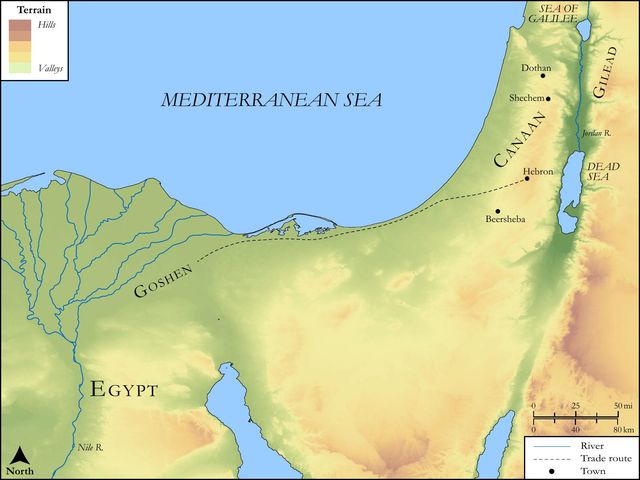
See on the biblical-era maps


Study this verse
Public-domain commentary
Matthew Henry
From his Commentary on the Whole Bible. Henry comments on passages, not single verses — this entry covers Genesis 50:7–14.
We have here an account of Jacob's funeral. Of the funerals of the kings of Judah, usually, no more is said than this, They were buried with their fathers in the city of David: but the funeral of the patriarch Jacob is more largely and fully described, to show how much better God was to him than he expected (he had spoken more than once of dying for grief, and going to the grave bereaved of his children, but, behold, he dies in honour, and is followed to the grave by all his children), and also because his orders concerning his burial were given and observed in faith, and in expectation both of the earthly and of the heavenly Canaan. Now, 1. It was a stately funeral. He was attended to the grave, not only by his own family, but by the courtiers, and all the great men of the kingdom, who, in token of their gratitude to Joseph, showed this respect to his father for his sake, and did him honour at his death. Though the Egyptians had had an antipathy to the Hebrews, and had looked upon them with disdain (Gen 43:32), yet now, that they were better acquainted with them, they began to have a respect for them. Good old Jacob had conducted himself so well among them as to gain universal esteem. Note, Professors of religion should endeavour, by wisdom and love, to remove the prejudices which many may have conceived against them because they do not know them. There went abundance of chariots and horsemen, not only to attend them a little way, but to go through with them. Note, The decent solemnities of funerals, according to a man's situation, are very commendable; and we must not say of them, To what purpose is this waste? See Act 8:2; Luk 7:12. 2. It was a sorrowful funeral (Gen 50:10, Gen 50:11); standers-by took notice of it as a grievous mourning. Note, The death of good men is a great loss to any place, and ought to be greatly lamented. Stephen dies a martyr, and yet devout men make great lamentations for him. The solemn mourning for Jacob gave a name to the place, Abel-Mizraim, the mourning of the Egyptians, which served for a testimony against the next generation of the Egyptians, who oppressed the posterity of this Jacob to whom their ancestors showed such respect.
Continue studying Genesis 50:7 across the web’s major study libraries — every link below opens this exact verse, chapter, or book on the destination site.
Read & Compare
 BibleGatewayThis verse in more than 200 translations and 70 languages.
 Bible.comThe YouVersion reader — hundreds of translations, reading plans, and highlights.
 ESV.orgCrossway's official English Standard Version reader.
 NET BibleThe NET translation with 60,000+ translators' notes on every rendering decision.
 STEP BibleTyndale House's free study tool — original text, vocabulary, and scholarly resources.
 BibliaLogos Bible Software's free web reader.
 USCCBThe New American Bible (Revised Edition) with the U.S. bishops' study notes.
Commentaries
 BibleHub CommentariesDozens of classic commentaries on this verse, gathered on one page.
 StudyLightMore than 100 commentary sets — the largest collection on the web.
 BibleRefPlain-English commentary on what this verse means, verse by verse.
 Enduring WordDavid Guzik's free commentary on this chapter, widely used by Bible teachers.
 Bible Study ToolsVerse commentary alongside Greek and Hebrew study aids.
Original Language & Research
- BibleHub InterlinearThe verse word by word — original language, transliteration, and English.
- BibleHub LexiconEvery word's original-language definition and Strong's entry.
 Blue Letter BibleDeep-study tools — Strong's numbers, concordance, and word studies.
 SefariaThe Hebrew text with Rashi and centuries of Jewish commentary.
Sermons, Hymns & Audio


TrulyRandomVerse is not affiliated with these sites and doesn’t control their content. They’re linked because they’re genuinely useful.
Summary
Genesis 50:7 describes the impressive commencement of Jacob's funeral procession, as Joseph, fulfilling his solemn promise to his deceased father, leads a distinguished delegation from the highest echelons of Egyptian society. This grand retinue, comprising Pharaoh's servants, the elders of his household, and the elders from across the land of Egypt, embarks on the journey from Goshen towards Canaan to inter Jacob in the ancestral burial ground. The verse powerfully illustrates the immense honor bestowed upon Jacob and underscores Joseph's unparalleled status and profound influence within the Egyptian empire.
Context
ShowHideLiterary Context
This verse is situated at the climax of the Genesis narrative, following the death and embalming of Jacob, which occupied a significant period (forty days for embalming, seventy days of mourning, as described in Genesis 50:3). Joseph had previously secured a solemn oath from Jacob to be buried in Canaan (Genesis 47:29-31), and Jacob himself had reiterated this desire to all his sons, emphasizing the importance of interment in the cave of Machpelah alongside his patriarchal ancestors (Genesis 49:29-32). Genesis 50:7 marks the pivotal moment when Joseph, having obtained explicit permission from Pharaoh in Genesis 50:4-6, begins to execute this sacred promise, transforming a family burial into an event of national significance, thereby concluding the patriarchal narratives with a demonstration of God's faithfulness and Joseph's exalted position.
Historical & Cultural Context
In ancient Egypt, embalming was a meticulous and lengthy process, reserved primarily for royalty and high-ranking officials, signifying the deceased's importance and the family's wealth. The seventy-day mourning period mentioned in Genesis 50:3 aligns with known Egyptian practices for royal mourning. The presence of "servants of Pharaoh" and "elders of his house" indicates the direct involvement and endorsement of the royal court, while "elders of the land of Egypt" suggests representatives from various regions or administrative districts. This level of participation for a non-Egyptian's funeral was extraordinary, reflecting Joseph's unparalleled influence as vizier and the deep respect he commanded. The journey from Egypt to Canaan was a significant undertaking, requiring considerable logistical planning and resources, further underscoring the magnitude of the event and the honor accorded to Jacob.
Key Themes
ShowHideGenesis 50:7 powerfully reinforces several overarching themes found throughout the book of Genesis. Firstly, it highlights filial piety and covenant faithfulness, as Joseph meticulously honors his father's dying wish and the oath he made, echoing the importance of oaths and promises seen throughout the patriarchal narratives. Secondly, it serves as a vivid demonstration of God's providential care and Joseph's exaltation, showcasing how God elevated Joseph from slavery to a position of such power that the entire Egyptian court honors his family, fulfilling the dreams of his youth (Genesis 37:5-11). Thirdly, the journey back to Canaan for burial, rather than interment in Egypt, profoundly underscores the enduring connection to the Promised Land and the covenant God made with Abraham, Isaac, and Jacob, even in death. This act reaffirms the identity of the patriarchs as sojourners whose ultimate hope lay in the land of promise, a theme vital to understanding the future of Israel.
Exposition and Analysis
ShowHideKey Word Analysis
ShowHideDerived from a root meaning "let him add," Joseph's name itself is prophetic of his life, where God continually "added" to him—first, favor and dreams, then wisdom and power, and finally, a position to preserve his family and nations. Here, Joseph is the central figure orchestrating this grand procession, signifying his role as the one through whom God's promises to Jacob's family are being meticulously fulfilled, even in death.
This verb signifies an ascent, both literally and figuratively. Geographically, it accurately describes the movement from the lower elevation of Egypt to the higher terrain of Canaan. Theologically, "going up" often denotes a movement towards a place of spiritual significance or prominence, such as Jerusalem or the Promised Land. In this context, it subtly reinforces Canaan's status as the covenant land, a place of divine promise and ultimate rest for the patriarchs, contrasting with the temporary dwelling in Egypt.
This term refers to individuals who are "old" in age, but by extension, denotes respected leaders, wise men, or magistrates. Their presence signifies not merely age but authority, experience, and societal standing. The inclusion of "elders of his house" (Pharaoh's palace) and "elders of the land of Egypt" indicates a broad representation of the highest levels of Egyptian administration and society, transforming Jacob's funeral into an event of national importance and royal endorsement.
Verse Breakdown
ShowHide"And Joseph went up to bury his father:"
This opening clause establishes Joseph as the primary agent of the action, fulfilling his solemn oath to Jacob. The phrase "went up" is significant, indicating the geographical ascent from the lower Nile Valley to the higher ground of Canaan, but also carrying a symbolic weight of moving towards the land of promise. This act of burial is not merely a personal duty but a profound act of filial piety and covenant faithfulness, ensuring Jacob's final rest is in the land God promised his ancestors.
"and with him went up all the servants of Pharaoh,"
The inclusion of "all the servants of Pharaoh" is a striking detail. These were not mere household staff but high-ranking officials, ministers, and personal attendants of the king. Their presence signifies Pharaoh's direct endorsement and participation in the funeral, lending it immense royal authority and prestige. It underscores the extraordinary respect Pharaoh had for Joseph and, by extension, for Joseph's family and the deceased patriarch.
"the elders of his house,"
This refers to the senior officials, administrators, and venerable advisors within Pharaoh's own royal household and government. Their participation further emphasizes the state-level involvement in Jacob's funeral. It highlights the deeply integrated nature of Joseph within the highest echelons of Egyptian power, demonstrating that his influence extended even to the most intimate circles of the monarchy.
"and all the elders of the land of Egypt,"
This phrase indicates that representatives from various regions, cities, or administrative districts across Egypt were present. These "elders" were respected community leaders, magistrates, or wise men. Their collective presence signifies broad societal representation and national importance, elevating Jacob's funeral from a private family affair to a public spectacle of national mourning and respect, a testament to Joseph's unparalleled standing and the profound honor accorded to him and his family by the entire nation.
Literary Devices
ShowHideThe narrative in Genesis 50:7 employs several literary devices to convey the magnitude and significance of Jacob's burial. The sheer enumeration of high-ranking Egyptian officials—"all the servants of Pharaoh, the elders of his house, and all the elders of the land of Egypt"—functions as Hyperbole, emphasizing the unprecedented scale and grandeur of the procession. While perhaps not literally "all" individuals in these categories, the phrase conveys an overwhelming presence, underscoring the immense honor and respect. This grand procession also serves as powerful Symbolism. The journey itself, from Egypt to Canaan, symbolizes the enduring connection of the patriarchs to the Promised Land, even in death, and foreshadows the future exodus of the entire nation of Israel. Furthermore, the presence of such a distinguished Egyptian retinue is a symbolic testament to Joseph's extraordinary influence and God's providential hand in elevating him to a position where he could command such an honor for his family. The entire scene also subtly Foreshadows the eventual return of the Israelites to Canaan, not as a funeral procession, but as a nation fulfilling God's covenant.
Theological and Thematic Connections
ShowHideGenesis 50:7 is far more than a historical account of a funeral; it is a profound theological statement on God's faithfulness, the significance of covenant, and the enduring hope of the Promised Land. Joseph's unwavering commitment to his father's dying wish exemplifies profound filial piety and faithfulness to a solemn oath, reflecting a core biblical value of honoring parents and keeping one's word. The grand procession itself is a visible manifestation of God's providential hand in Joseph's life, elevating him from a slave and prisoner to a position of such power that the entire Egyptian court honors his family. This extraordinary display of respect for Jacob, a non-Egyptian patriarch, underscores the divine favor resting upon Joseph and, by extension, upon the nascent nation of Israel. The journey back to Canaan for burial, rather than interment in Egypt, powerfully reinforces the patriarchal identity and their enduring connection to the land promised by God to Abraham, Isaac, and Jacob, even in death. It speaks to a hope that transcends the immediate circumstances of death, pointing towards the ultimate fulfillment of God's covenant with his descendants.
Reflection and Application
ShowHideThe extraordinary scale of Jacob's funeral procession, meticulously orchestrated by Joseph, serves as a powerful testament to the importance of honoring one's parents and fulfilling solemn commitments, even when doing so requires significant effort and crosses cultural and national boundaries. For contemporary believers, this act provides a profound example of integrity, demonstrating that true honor is not merely a matter of sentiment but of tangible action, rooted in love and respect. Joseph's unwavering dedication to his father's final wish, despite his immense responsibilities in Egypt, challenges us to prioritize family obligations and sacred promises. Furthermore, the scene subtly redirects the reader's attention back to the covenant land, reminding us of God's larger, unfolding plans for Jacob's descendants and their future return to Canaan, not as a funeral procession, but as a thriving nation. This links personal faithfulness to a grander divine purpose, encouraging us to live with an eternal perspective, remembering that our ultimate hope and inheritance lie beyond this temporary world.
Questions for Reflection
ShowHideFAQ
ShowHideWhy was such a grand procession necessary for Jacob's burial, and what does it signify?
ShowHideThe lavish funeral procession for Jacob was not strictly "necessary" in a practical sense, but it served multiple crucial purposes and carried significant symbolic weight. Firstly, it was Joseph's profound act of filial piety, honoring his father's dying wish and the solemn oath he had made to him, demonstrating a deep respect for his parent and his word. Secondly, it was a public display of Joseph's immense power, influence, and esteemed status within Egypt. Having risen to the position of vizier, Joseph could command the highest echelons of Egyptian society—including Pharaoh's own servants and the elders of the land—to participate in what was ostensibly a private family matter. This showcased his unparalleled authority and the deep respect the Egyptians had for him. Lastly, and perhaps most importantly, it underscored the deep reverence the Egyptians had for Joseph, and by extension, for the patriarch Jacob. By elevating Jacob's burial to an event of national significance, it highlighted the unique position of Joseph and the implicit recognition of the God he served, even in a polytheistic society. This extraordinary honor for a non-Egyptian patriarch also subtly foreshadowed the future prominence of the Israelite people.
Christ-Centered Fulfillment
ShowHideWhile Jacob's burial in the Promised Land signifies a deep connection to God's covenant promises and the hope of a future inheritance, it ultimately foreshadows the far greater hope found in Christ Jesus. Jacob's "going up" from Egypt to Canaan for burial points to the ultimate "going up" – Christ's glorious ascension to the right hand of the Father after His resurrection, securing for all believers a heavenly inheritance that is imperishable, undefiled, and unfading (1 Peter 1:3-4). Just as Jacob's body was brought to the land of promise, believers, through their union with Christ, are promised an eternal dwelling in the true Promised Land, the New Heavens and New Earth, where God will dwell with His people forever (Revelation 21:1-4). Christ's death and resurrection fulfill the deepest longing for a permanent home and a final rest, offering a hope far grander than any earthly burial place. Through His victory over death, Christ ensures that those who are "in Christ" are truly "going up" to an eternal inheritance, not merely to a physical land, but to the very presence of God, where there is fullness of joy and pleasures forevermore (Psalm 16:11).