


Ezekiel 16:7
- רְבָבָהre·va·Vahten thousandH7233N-fsNoun Singular Feminine Absolute
- כְּצֶמַחke·Tze·machlike [the] growth ofH6780Prep-k ¦ N-mscNoun Singular Masculine Constructכְּlikeצֶמַח[the] growth of
- הַשָּׂדֶהha·sa·Dehthe fieldH7704Art ¦ N-msNoun Singular Masculine Absoluteהַtheשָּׂדֶהfield
- נְתַתִּיךְne·ta·TikhI made youH5414V-Qal-Perf-1cs ¦ 2fsVerb Qal Perfect 1st Singular common genderנְתַתִּיI madeךְyou
- וַתִּרְבִּיva·tir·Biand you grewH7235Conj-w ¦ V-Qal-ConsecImperf-2fsVerb Qal Consecutive Imperfect 2nd Singular Feminineוַandתִּרְבִּיyou grew
- וַתִּגְדְּלִיva·tig·de·Liand you grew upH1431Conj-w ¦ V-Qal-ConsecImperf-2fsVerb Qal Consecutive Imperfect 2nd Singular Feminineוַandתִּגְדְּלִיyou grew up
- וַתָּבֹאִיva·ta·Vo·'iand you cameH935Conj-w ¦ V-Qal-ConsecImperf-2fsVerb Qal Consecutive Imperfect 2nd Singular Feminineוַandתָּבֹאִיyou came
- בַּעֲדִיba·'a·Diinto adornmentH5716Prep-b ¦ N-mscNoun Singular Masculine Constructבַּintoעֲדִיadornment
- עֲדָיִים'a·da·YimornamentsH5716N-mpNoun Plural Masculine Absolute
- שָׁדַיִםsha·Da·yimbreastsH7699N-mdNoun Dual Masculine Absolute
- נָכֹנוּna·Kho·nuthey were firmH3559V-Niphal-Perf-3cpVerb Niphal Perfect 3rd Plural common gender
- וּשְׂעָרֵךְu·se·'a·Rekhand your hairH8181Conj-w ¦ N-msc ¦ 2fsNoun Singular Masculine Constructוּandשְׂעָרֵhairךְyour
- צִמֵּחַtzi·Me·achit had grownH6779V-Piel-Perf-3msVerb Piel Perfect 3rd Singular Masculine
- וְאַתְּve·'Atand youH859Conj-w ¦ Pro-2fsPronoun Personal 2nd Singular Feminineוְandאַתְּyou
- עֵרֹם'e·Rom[were] nakednessH5903Adj-msAdjective Singular Masculine Absolute
- וְעֶרְיָהve·'er·Yahand barenessH6181Conj-w ¦ N-fsNoun Singular Feminine Absoluteוְandעֶרְיָהbareness
English is a literal word-by-word gloss of the Hebrew, not the KJV's wording. Why?
This is the original text the KJV's translators worked from — each Hebrew word with its own literal English meaning in this verse, prepared by scholars at Tyndale House, Cambridge. The KJV translates whole sentences, not word by word, so its wording differs: one Hebrew word can become several English words, and the KJV may choose “the LORD” where the gloss reads “Yahweh”. Both are faithful — they answer different questions. For the KJV's own rendering, switch to the KJV text.
Details
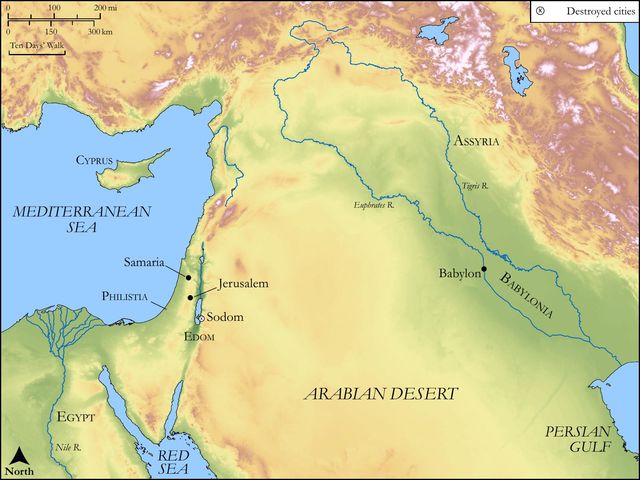
See on the biblical-era map
Study this verse
Public-domain commentary
Matthew Henry
From his Commentary on the Whole Bible. Henry comments on passages, not single verses — this entry covers Ezekiel 16:6–14.
In there verses we have an account of the great things which God did for the Jewish nation in raising them up by degrees to be very considerable. 1. God saved them from the ruin they were upon the brink of in Egypt (Eze 16:6): "When I passed by thee, and saw thee polluted in thy own blood, loathed and abandoned, and appointed to die, as sheep for the slaughter, then I said unto thee, Live. I designed thee for life when thou wast doomed to destruction, and resolved to save thee from death." Those shall live to whom God commands life. God looked upon the world of mankind as thus cast off, thus cast out, thus polluted, thus weltering in blood, and his thoughts towards it were thoughts of good, designing it life, and that more abundantly. By converting grace, he says to the soul, Live. 2. He looked upon them with kindness and a tender affection, not only pitied them, but set his love upon them, which was unaccountable, for there was nothing lovely in them; but I looked upon thee, and, behold, thy time was the time of love, Eze 16:8. It was the kindness and love of God our Saviour that sent Christ to redeem us, that sends the Spirit to sanctify us, that brought us out of a state of nature into a state of grace. That was a time of love indeed, distinguishing love, when God manifested his love to us, and courted our love to him. Then was I in his eyes as one that found favour, Sol 8:10. 3. He took them under his protection: "I spread my skirt over thee, to shelter thee from wind and weather, and to cover thy nakedness, that the shame of it might not appear." Boaz spread his skirt over Ruth, in token of the special favour he designed her, Rut 3:9. God took them into his care, as an eagle bears her young ones upon her wings, Deu 32:11, Deu 32:12. When God owned them for his people, and sent Moses to Egypt to deliver them, which was an expression of the good-will of him that dwelt in the bush, then he spread his skirt over them. 4. He cleared them from the reproachful character which their bondage in Egypt laid them under (Eze 16:9): "Then washed I thee with water, to make thee clean, and anointed thee with oil, to make thee sweet and supple thee." All the disgrace of their slavery was rolled away when they were brought, with a high hand and a stretched-out arm, into the glorious liberty of the children of God. When God said, Israel is my son, my first-born - Let my people go, that they may serve me, that word, backed as it was with so many works of wonder, thoroughly washed away their blood; and when God led them under the convoy of the pillar of cloud and fire he spread his skirt over them. 5. He multiplied them and built them up into a people. This is here mentioned (Eze 16:7) before his spreading his skirt over them, because their numbers increased exceedingly while they were yet bond-slaves in Egypt. They multiplied as the bud of the field in spring time; they waxed great, exceedingly mighty, Exo 1:7. 20. Their breasts were fashioned when they were formed into distinct tribes and had officers of their own (Exo 5:19); their hair grew when they grew numerous, whereas they had been naked and bare, very few and therefore contemptible. 6. He admitted them into covenant with himself. See what glorious nuptials this poor forlorn infant is preferred to at last. How she is dignified who at first had scarcely her life given her for a prey: I swore unto thee and entered into covenant with thee. This was done at Mount Sinai: "when the covenant between God and Israel was sealed and ratified then thou becamest mine." God called them his people, and himself the God of Israel. Note, Those to whom God gives spiritual life he takes into covenant with himself; by that covenant they become his subjects and servants, which intimates their duty - his portion, his treasure, which intimates their privilege; and it is confirmed with an oath, that we might have strong consolation. 7. He beautified and adorned them. This maid cannot forget her ornaments, and she is gratified with abundance of them, Eze 16:10-13. We need not be particular in the application of these. Her wardrobe was well furnished with rich apparel; they had embroidered work to wear, shoes of fine badgers' skins, linen girdles, and silk veils, bracelets and necklaces, jewels and ear-rings, and even a beautiful crown, or coronet. Perhaps this may refer to the jewels and other rich goods which they took from the Egyptians, which might well be spoken of thus long after as a merciful circumstance of their deliverance, when it was spoken of long before, Gen 15:14. They shall come out with great substance. Or it may be taken figuratively for all those blessings of heaven which adorned both their church and state. In a little time they came to excellent ornaments, Eze 16:7. The laws and ordinances which God gave them were to them as ornaments of grace to the head and chains about the neck, Pro 1:9. God's sanctuary, which he set up among them, was a beautiful crown upon their head; it was the beauty of holiness. 8. He fed them with abundance, with plenty, with dainty: Thou didst eat fine flour, and honey, and oil - manna, angels' food - honey out of the rock, oil out of the flinty rock. In Canaan they did eat bread to the full, the finest of the wheat, Deu 32:13, Deu 32:14. Those whom God takes into covenant with himself are fed with the bread of life, clothed with the robe of righteousness, adorned with the graces and comforts of the spirit. The hidden man of the heart is that which is incorruptible. 9. He gave them great reputation among their neighbours, and made them considerable, acceptable to their friends and allies and formidable to their adversaries: Thou didst prosper into a kingdom (Eze 16:13), which speaks both dignity and dominion; and, They renown went forth among the heathen for thy beauty, Eze 16:14. The nations about had their eye upon them, and admired them for the excellent laws by which they were governed, the privilege they had of access to God, Deu 4:7, Deu 4:8. Solomon's wisdom, and Solomon's temple, were very much the renown of that nation; and, if we put all the privileges of the Jewish church and kingdom together, we must own that it was the most accomplished beauty of all the nations of the earth. The beauty of it was perfect; you could not name the thing that would be the honour of a people but it was to be found in Israel, in David's and Solomon's time, when that kingdom was in its zenith-piety, learning, wisdom, justice, victory, peace, wealth, and all sure to continue if they had kept close to God. It was perfect, saith God, through my comeliness which I had put upon thee, through the beauty of their holiness, as they were a people set apart for God, and devoted to him, to be to him for a name, and for a praise, and for a glory. It was this that put a lustre upon all their other honours and was indeed the perfection of their beauty. We may apply this spiritually. Sanctified souls are truly beautiful; they are so in God's sight, and they themselves may take the comfort of it. But God must have all the glory, for they were by nature deformed and polluted, and, whatever comeliness they have, it is that which God has put upon them and beautified them with, and he will be well pleased with the work of his own hands.
Historical interpretation
Historical reception
1 surviving comment on this verse from the historical church.
(Verse 6, 7.) But passing by you, I saw you trampled in your own blood. And I said to you when you were in your own blood, live: I said to you, indeed, in your own blood, live. I made you multiply like the growth of the field, and you entered and came to womanhood. Your breasts swelled, and your hair grew: and you were naked and full of confusion. LXX: And I passed by you, and saw you mixed in your own blood, and I said to you, multiply your life from your blood, as I gave you growth like the plants of the field, and you multiplied, and you were magnified, and you entered into cities of cities. Your breasts were erect, and your hair was grown; but you were naked and full of shame. After you were cast down on the face of the field, or on the face of the earth, because of the wickedness of your soul, I no longer deserved to help you. Nevertheless, passing by, I saw you trampled upon, or mixed in your own blood, that is, guilty of mortal crimes. And I provoked you, granting you repentance, and said to you: Though you are in blood, nevertheless live in conversion; and there was such an abundance of all things in you, that you had the likeness of the most fertile land, and the blessing of Jacob, with which his father blessed him, saying: Behold the smell of my son is like the smell of a full field, which the Lord has blessed (Gen. XXVII, 27); and you would enter the inner chambers of the Lord, and say with the bride: The king brought me into his chamber (Cant. I, 3); and you would go to the world of women, for which the Seventy translated: and you entered into the cities of cities; so that just as the Song of Songs is called the world of worlds; so let cities be called the cities of cities. Concerning which it is said in the Gospel: You have authority over ten, or over five cities (Luke 19:17, 18): so that you may be called not only a city, but a metropolis city, according to what is read in Isaiah: Faithful mother of cities, Zion (Isaiah 1:26, 27). Moreover, what Symmachus interpreted, and you have reached the adornment of women, or as Theodotio, and you have entered the adornment of adornments, for which we have stated the Hebrew sense: and you have reached the world of women, it shows the time of puberty, when young girls are called marriageable, and can be united with the embrace of husbands. Finally it follows: your breasts have swelled, and your hair has grown. The maturity of young women is indicated by the swelling or raising of the breasts, and the growth of hair. And when she was prepared for marriage, and had the beauty of the body, she did not have the coverings of clothing, nor was she protected by the help of God. If anyone does not have the clothing of Christ, they are naked. If anyone is not clothed with the bowels of mercy, goodness, humility, modesty, meekness, patience, they lie face down on the ground: and their beauty is marred by shame and nakedness.
Continue studying Ezekiel 16:7 across the web’s major study libraries — every link below opens this exact verse, chapter, or book on the destination site.
Read & Compare
 BibleGatewayThis verse in more than 200 translations and 70 languages.
 Bible.comThe YouVersion reader — hundreds of translations, reading plans, and highlights.
 ESV.orgCrossway's official English Standard Version reader.
 NET BibleThe NET translation with 60,000+ translators' notes on every rendering decision.
 STEP BibleTyndale House's free study tool — original text, vocabulary, and scholarly resources.
 BibliaLogos Bible Software's free web reader.
 USCCBThe New American Bible (Revised Edition) with the U.S. bishops' study notes.
Commentaries
 BibleHub CommentariesDozens of classic commentaries on this verse, gathered on one page.
 StudyLightMore than 100 commentary sets — the largest collection on the web.
 BibleRefPlain-English commentary on what this verse means, verse by verse.
 Enduring WordDavid Guzik's free commentary on this chapter, widely used by Bible teachers.
 Bible Study ToolsVerse commentary alongside Greek and Hebrew study aids.
Original Language & Research
- BibleHub InterlinearThe verse word by word — original language, transliteration, and English.
- BibleHub LexiconEvery word's original-language definition and Strong's entry.
 Blue Letter BibleDeep-study tools — Strong's numbers, concordance, and word studies.
 SefariaThe Hebrew text with Rashi and centuries of Jewish commentary.
Sermons, Hymns & Audio


TrulyRandomVerse is not affiliated with these sites and doesn’t control their content. They’re linked because they’re genuinely useful.
Summary
Ezekiel 16:7 is a pivotal verse within the Lord's extended allegory of Jerusalem as an abandoned infant, vividly portraying God's profound and providential care for the nascent nation of Israel. It details the miraculous stage of physical growth and maturation that God sovereignly brought about in this "foundling," transforming her from a state of utter helplessness and nakedness to one of readiness and potential, thereby setting the stage for the glorious adornment and covenant relationship that would follow.
Context
ShowHideLiterary Context
Ezekiel 16 unfolds as a powerful and graphic parable, where Yahweh addresses Jerusalem (representing the nation of Israel) as a child born to Amorite and Hittite parents, abandoned at birth, unwashed, and left to die in the open field. The preceding verses, particularly Ezekiel 16:4-6, vividly portray her initial state of utter destitution and vulnerability, emphasizing that no one pitied her. Verse 7 marks a pivotal shift, detailing the Lord's active, life-giving intervention. It describes her miraculous physical development under divine care, moving her from a state of infancy and exposure to one of youthful maturity, a necessary prelude to the covenant described in Ezekiel 16:8. This progression underscores God's initiative in rescuing and nurturing His chosen people, highlighting His sovereign power over life and growth.
Historical & Cultural Context
The allegory draws on the common ancient Near Eastern practice of abandoning unwanted infants, particularly those with deformities or from illicit unions, to die by exposure. Such a child would be "naked and bare," utterly helpless and destined for death. God's act of finding, cleansing, and nurturing this child would have resonated deeply with the audience in Babylonian exile, reminding them of their origins not in strength or nobility, but in God's undeserved grace and intervention. The imagery of physical maturation, including the development of "breasts" and "hair," signifies entry into puberty and readiness for marriage, a crucial cultural transition. This prepares the ground for the subsequent metaphor of God entering a marriage covenant with Israel, a common biblical theme found in books like Hosea and Jeremiah.
Key Themes
ShowHideThis verse powerfully contributes to several overarching themes in Ezekiel 16 and the broader prophetic message. It highlights Divine Providence and Nurturing, emphasizing God's direct and meticulous involvement in Israel's development from nothingness. He "caused thee to multiply" and "increased and waxen great," demonstrating His sovereign power over life and growth, a theme echoed in Deuteronomy 32:10. The transition from "naked and bare" to physical maturity signifies Growth and Maturation, moving the nation from infancy to a state of readiness for adulthood and responsibility. Furthermore, the phrase "thou art come to excellent ornaments" foreshadows Preparation for Glory and Covenant, indicating that this growth was not random but part of a divine purpose to make Israel glorious among the nations, as further detailed in Ezekiel 16:10-14.
Exposition and Analysis
ShowHideKey Word Analysis
ShowHideThis primitive root (H1431) signifies not merely growth in size but also in prominence, influence, and importance. When applied to Israel, it speaks of their increase in population and their rise to a position of significance among nations, all attributed to God's active hand. It encompasses the idea of becoming "large" in various senses—body, mind, estate, or honor, implying a divinely orchestrated advancement and promotion.
Derived from a root meaning "to be erect" or "to stand perpendicular," this word (H3559) implies setting up, establishing, fixing, or preparing. In the context of "breasts are fashioned," it conveys the idea of being properly formed, made ready, or firmly established. It speaks to the precise and purposeful work of God in bringing about the physical development of the nation, making her complete and suitable for her intended purpose.
This term (H5716) refers to finery, an outfit, or specifically an ornament. The repetition of the word in the KJV ("excellent ornaments") emphasizes the quality and preciousness of the adornment. It foreshadows the lavish spiritual and material blessings God would bestow upon Israel, transforming her from a state of destitution to one of beauty and splendor, indicative of her unique status as God's chosen people.
Verse Breakdown
ShowHide"I have caused thee to multiply as the bud of the field"
This clause highlights God's direct agency ("I have caused," H5414, nâthan') in Israel's rapid and abundant population growth. The simile "as the bud of the field" (H6780, tsemach ha-sadeh') evokes imagery of natural, vigorous, and widespread proliferation, suggesting an organic, divinely blessed expansion from a small, vulnerable beginning.
"and thou hast increased and waxen great"
This continues to emphasize the nation's remarkable development. "Increased" (H7235, râbâh') points to numerical and quantitative growth, while "waxen great" (H1431, gâdal') signifies qualitative growth, indicating a rise in stature, strength, and prominence, all still under God's sovereign hand.
"and thou art come to excellent ornaments"
This phrase marks a transition from mere physical growth to a state of readiness for adornment and honor. The "excellent ornaments" (H5716, ʻădîy') are symbolic of the blessings, beauty, and elevated status God intended to bestow upon Israel, preparing her for the covenant relationship.
"thy breasts are fashioned, and thine hair is grown"
These specific physical details use anthropomorphic language to personify the nation's maturation. The development of breasts (H7699, shad') and hair (H8181, sêʻâr') signifies the onset of puberty, marking the transition from helpless infancy to a stage of youthful womanhood, ready for marriage. This imagery underscores the completeness and readiness of the nation for the subsequent covenant.
"whereas thou wast naked and bare"
This concluding phrase serves as a stark contrast, powerfully reminding the audience of Israel's original, utterly destitute, and vulnerable state. It magnifies the extent of God's transformative work, highlighting His grace in bringing her from nothingness to a state of maturity and potential.
Literary Devices
ShowHideEzekiel 16:7 is rich in Allegory, as the entire chapter uses the sustained metaphor of an abandoned infant girl to represent the nation of Israel. This verse specifically employs Personification, attributing human physical development ("thy breasts are fashioned, and thine hair is grown") to the abstract entity of a nation. The phrase "as the bud of the field" is a powerful Simile, vividly comparing Israel's rapid and abundant growth to the natural proliferation of plants in a fertile environment. The overall narrative structure of the verse, moving from destitution to maturity, utilizes Contrast to emphasize the magnitude of God's transformative work. The explicit details of physical maturation serve as vivid Imagery, painting a clear picture of the nation's transition from vulnerability to readiness for a covenant relationship.
Theological and Thematic Connections
ShowHideEzekiel 16:7 profoundly illustrates God's sovereign grace and meticulous providence. It reveals that Israel's very existence, growth, and eventual prominence were not due to her own merit or strength, but entirely to Yahweh's compassionate intervention and nurturing care. This divine initiative in rescuing and developing a helpless entity sets the stage for the covenant, underscoring that God's relationship with His people is always rooted in His unmerited favor, transforming the vulnerable into a vessel for His glory. This truth resonates deeply, reminding believers that spiritual growth and transformation are fundamentally a work of God's grace, not human effort, and that He is intimately involved in every stage of our development.
Reflection and Application
ShowHideEzekiel 16:7 offers a profound mirror for personal and communal reflection on God's unwavering care. It assures us that no matter how desolate or helpless our beginnings, or how vulnerable our current state, God sees us, rescues us, and actively participates in our growth. Just as He nurtured Israel from "naked and bare" infancy to maturity, He is committed to our spiritual development, providing the necessary environment and means for us to "increase and wax great" in faith, character, and purpose. This verse encourages us to trust in His ongoing, transformative work in our lives, recognizing that our true strength and beauty are derived from His providential hand, preparing us for His divine purposes and glory. It calls us to acknowledge our utter dependence on Him for every stage of our spiritual journey, from initial salvation to ongoing sanctification.
Questions for Reflection
ShowHideFAQ
ShowHideWhat is the significance of the "bud of the field" imagery?
ShowHideThe imagery of "the bud of the field" (Hebrew: tsemach ha-sadeh) signifies rapid, abundant, and vigorous natural growth. In this context, it emphasizes that God's blessing facilitated a swift and significant increase in the population and strength of the nascent nation of Israel. It suggests a flourishing, organic expansion that was divinely orchestrated, contrasting sharply with their initial state of abandonment described in Ezekiel 16:4-5. This simile highlights the miraculous nature of Israel's growth, which was not due to natural circumstances but to divine intervention.
Why does the verse focus on physical details like "breasts are fashioned, and thine hair is grown"?
ShowHideThese specific physical details are crucial to the personification of Israel as a young girl. The development of "breasts" and "hair" symbolizes the onset of puberty and the transition from helpless infancy to youthful maturity. In ancient cultures, this signified readiness for marriage. This imagery prepares the reader for the subsequent verse, Ezekiel 16:8, where God "spread his skirt" over her, a symbolic act of taking her as His bride, establishing a covenant relationship. It vividly portrays the nation's emergence into a state of readiness for a deeper, more intimate relationship with God, emphasizing that God brought her to a state of wholeness and beauty for His purposes.
Christ-Centered Fulfillment
ShowHideEzekiel 16:7, with its depiction of God transforming a helpless, abandoned infant into a mature and adorned young woman, finds its ultimate and most profound fulfillment in the person and work of Jesus Christ. Just as God rescued Israel from destitution, Christ rescues humanity from spiritual nakedness and utter helplessness, a state of being "dead in trespasses and sins" (Ephesians 2:1). Through His atoning sacrifice, Christ takes away our spiritual nakedness, clothing us in His righteousness (Isaiah 61:10; 2 Corinthians 5:21). The "excellent ornaments" and maturation described in Ezekiel foreshadow the spiritual adornment of the Church, the Bride of Christ, who is being prepared and made beautiful by Him, "without spot or wrinkle or any such thing, that she might be holy and blameless" (Ephesians 5:27). Our spiritual growth, from infancy in faith to maturity in Christ, is entirely a work of God's grace, empowered by the Spirit, enabling us to "grow up in every way into him who is the head, into Christ" (Ephesians 4:15). Thus, Ezekiel 16:7 points forward to the ultimate divine rescue and transformation enacted through the Gospel, where believers are brought from spiritual death to life and adorned for eternal union with their Savior, reflecting His glory.