


Exodus 13:15
- וַיְהִיvay·Hiand it wasH1961Conj-w ¦ V-Qal-ConsecImperf-3msVerb Qal Consecutive Imperfect 3rd Singular Masculineוַandיְהִיit was
- כִּיkithatH3588PrtParticle Conditional
- הִקְשָׁהhik·Shahhe made stubbornH7185V-Hiphil-Perf-3msVerb Hiphil Perfect 3rd Singular Masculine
- פַרְעֹהfar·'OhPharaohH6547N-msNoun Title Singular Masculine Absolute
- לְשַׁלְּחֵנוּle·sha·le·che·Nuto let go usH7971Prep-l ¦ V-Piel-Inf ¦ 1cpVerb Piel Infinitive Constructלְtoשַׁלְּחֵlet goנוּus
- וַיַּהֲרֹגvai·ya·ha·Rogand he killedH2026Conj-w ¦ V-Qal-ConsecImperf-3msVerb Qal Consecutive Imperfect 3rd Singular Masculineוַandיַּהֲרֹגhe killed
- יְהֹוָהYah·wehYahwehH3068N-properNoun Proper Title
- כָּלkoleveryH3605N-mscNoun Singular Masculine Construct
- בְּכוֹרbe·khOrfirstbornH1060N-msNoun Singular Masculine Absolute
- בְּאֶרֶץbe·'E·retzin [the] land ofH776Prep-b ¦ N-fscNoun Singular Feminine Constructבְּinאֶרֶץ[the] land of
- מִצְרַיִםmitz·Ra·yimEgyptH4714N-properNoun Proper Location
- מִבְּכֹרmi·be·Khorfrom [the] firstborn ofH1060Prep-m ¦ N-mscNoun Singular Masculine Constructמִfromבְּכֹר[the] firstborn of
- אָדָם'a·DamhumankindH120N-msNoun Singular Masculine Absolute
- וְעַדve·'adand untoH5704Conj-w ¦ PrepPrepositionוְandעַדunto
- בְּכוֹרbe·Khor[the] firstborn ofH1060N-mscNoun Singular Masculine Construct
- בְּהֵמָהbe·he·MahlivestockH929N-fsNoun Singular Feminine Absolute
- עַל'althere-H5921PrepPreposition
- כֵּןken-foreH3651AdvAdverb
- אֲנִי'a·NiIH589Pro-1csPronoun Personal 1st Singular common gender
- זֹבֵחַzo·Ve·ach[am] sacrificingH2076V-Qal-Prtcpl-msVerb Qal Participle Singular Masculine Absolute
- לַיהוָהla·Yah·wehto YahwehH3068Prep-l ¦ N-properNoun Proper TitleלַtoיהוָהYahweh
- כָּלkoleveryH3605N-mscNoun Singular Masculine Construct
- פֶּטֶרPe·terfirstborn ofH6363N-mscNoun Singular Masculine Construct
- רֶחֶםre·chema wombH7358N-msNoun Singular Masculine Absolute
- הַזְּכָרִיםha·ze·kha·Rimthe malesH2145Art ¦ Adj-mpAdjective Plural Masculine Absoluteהַtheזְּכָרִיםmales
- וְכָלve·kholand everyH3605Conj-w ¦ N-mscNoun Singular Masculine Constructוְandכָלevery
- בְּכוֹרbe·Khor<the> firstborn ofH1060N-mscNoun Singular Masculine Construct
- בָּנַיba·Naimy sonsH1121N-mpc ¦ 1csNoun Plural Masculine Constructבָּנַsonsיmy
- אֶפְדֶּה'ef·DehI redeemH6299V-Qal-Imperf-1csVerb Qal Imperfect 1st Singular common gender
English is a literal word-by-word gloss of the Hebrew, not the KJV's wording. Why?
This is the original text the KJV's translators worked from — each Hebrew word with its own literal English meaning in this verse, prepared by scholars at Tyndale House, Cambridge. The KJV translates whole sentences, not word by word, so its wording differs: one Hebrew word can become several English words, and the KJV may choose “the LORD” where the gloss reads “Yahweh”. Both are faithful — they answer different questions. For the KJV's own rendering, switch to the KJV text.
Details
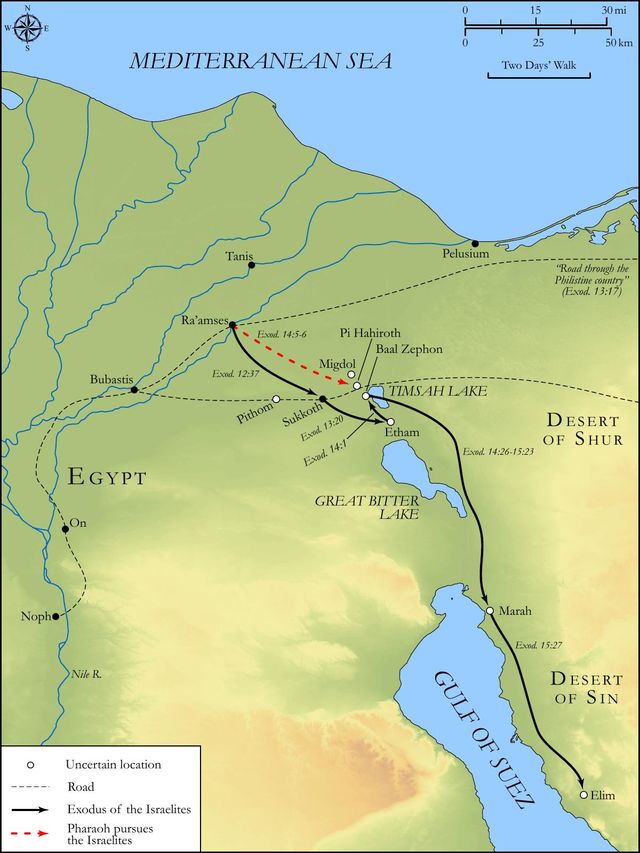
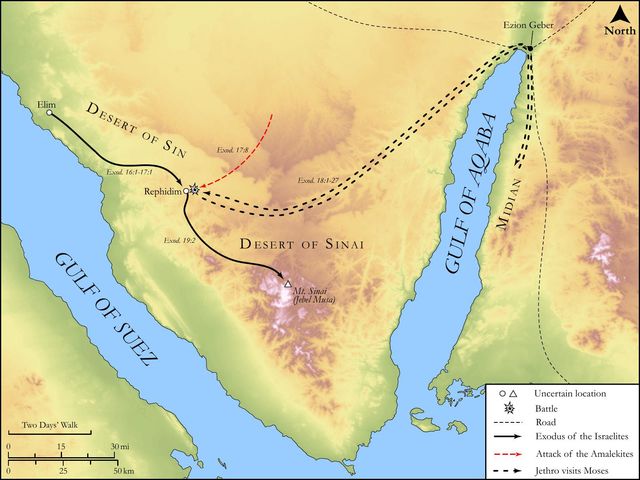
See on the biblical-era maps

Study this verse
Public-domain commentary
Matthew Henry
From his Commentary on the Whole Bible. Henry comments on passages, not single verses — this entry covers Exodus 13:11–16. His two-level outline is real structure in the source text, so it is rendered as structure.
Here we have,
I.Further directions concerning the dedicating of their firstborn to God.
1.The firstlings of their cattle were to be dedicated to God, as part of their possessions. Those of clean beasts - calves, lambs, and kids - if males, were to be sacrificed, Exo 22:30; Num 18:17, Num 18:18. Those of unclean beasts, as colts, were to be redeemed with a lamb, or knocked on the head. For whatsoever is unclean (as we all are by nature), if it be not redeemed, will be destroyed, Exo 13:11, Exo 13:13.
2.The firstborn of their children were to be redeemed, and by no means sacrificed, as the Gentiles sacrificed their children to Moloch. The price of the redemption of the firstborn was fixed by the law (Num 18:16) at five sheckles. We were all obnoxious to the wrath and curse of God; by the blood of Christ we are redeemed, that we may be joined to the church of the firstborn. They were to redeem their children, as well as the firstlings of the unclean beasts, for our children are by nature polluted. Who can bring a clean thing out of an unclean?
II.Further directions concerning the catechising of their children, and all those of the rising generation, from time to time, in this matter.
It is supposed that, when they saw all the firstlings thus devoted, they would ask the meaning of it, and their parents and teachers must tell them (Exo 13:14-16) that God's special propriety in their firstborn, and all their firstlings, was founded in his special preservation of them from the sword of the destroying angel. Being thus delivered, they must serve him. Note,
1.Children should be directed and encouraged to ask their parents questions concerning the things of God, a practice which would be perhaps of all others the most profitable way of catechising; and parents must furnish themselves with useful knowledge, that they may be ready always to give an answer to their enquiries. If ever the knowledge of God cover the earth, as the waters do the sea, the fountains of family-instruction must first be broken up.
2.We should all be able to show cause for what we do in religion. As sacraments are sanctified by the word, so they must be explained and understood by it. God's service is reasonable, and it is then acceptable when we perform it intelligently, knowing what we do and why we do it.
3.It must be observed how often it is said in this chapter that by strength of hand (Exo 13:3, Exo 13:14, Exo 13:16), with a strong hand (Exo 13:9), the Lord brought them out of Egypt. The more opposition is given to the accomplishment of God's purposes the more is his power magnified therein. It is a strong hand that conquers hard hearts. Sometimes God is said to work deliverance not by might nor power (Zac 4:6), not by such visible displays of his power as that recorded here.
4.Their posterity that should be born in Canaan are directed to say, The Lord brought us out of Egypt, Exo 13:14, Exo 13:16. Mercies to our fathers are mercies to us; we reap the benefit of them, and therefore must keep up a grateful remembrance of them. We stand upon the bottom of former deliverances, and were in the loins of our ancestors when they were delivered. Much more reason have we to say that in the death and resurrection of Jesus Christ we were redeemed.
Continue studying Exodus 13:15 across the web’s major study libraries — every link below opens this exact verse, chapter, or book on the destination site.
Read & Compare
 BibleGatewayThis verse in more than 200 translations and 70 languages.
 Bible.comThe YouVersion reader — hundreds of translations, reading plans, and highlights.
 ESV.orgCrossway's official English Standard Version reader.
 NET BibleThe NET translation with 60,000+ translators' notes on every rendering decision.
 STEP BibleTyndale House's free study tool — original text, vocabulary, and scholarly resources.
 BibliaLogos Bible Software's free web reader.
 USCCBThe New American Bible (Revised Edition) with the U.S. bishops' study notes.
Commentaries
 BibleHub CommentariesDozens of classic commentaries on this verse, gathered on one page.
 StudyLightMore than 100 commentary sets — the largest collection on the web.
 BibleRefPlain-English commentary on what this verse means, verse by verse.
 Enduring WordDavid Guzik's free commentary on this chapter, widely used by Bible teachers.
 Bible Study ToolsVerse commentary alongside Greek and Hebrew study aids.
Original Language & Research
- BibleHub InterlinearThe verse word by word — original language, transliteration, and English.
- BibleHub LexiconEvery word's original-language definition and Strong's entry.
 Blue Letter BibleDeep-study tools — Strong's numbers, concordance, and word studies.
 SefariaThe Hebrew text with Rashi and centuries of Jewish commentary.
Sermons, Hymns & Audio


TrulyRandomVerse is not affiliated with these sites and doesn’t control their content. They’re linked because they’re genuinely useful.
Summary
Exodus 13:15 provides the foundational theological rationale for the perpetual law of the firstborn in Israel, directly linking this sacred obligation to the climactic tenth plague in Egypt. This verse powerfully articulates that Israel's liberation was secured by God's decisive, devastating judgment upon Egypt's firstborn, compelling Pharaoh to release His people. It establishes a lasting memorial of God's sovereign power, His unwavering commitment to His covenant, and the profound cost of Israel's freedom, underscoring the divine claim on all life and the necessity of redemption.
Context
ShowHideLiterary Context
This verse is strategically placed within a section (Exodus 13:1-16) that immediately follows the momentous Passover institution and the actual Exodus from Egypt. Having just been miraculously set free, Israel receives God's instructions for remembering this pivotal event. The command to consecrate every firstborn was given at the outset of the chapter. Verse 15 then functions as a retrospective justification and theological explanation for that command, emphasizing the severity of the judgment that finally compelled Pharaoh to release Israel and the enduring significance of God's redemptive deliverance. It reinforces the "why" behind the "what," ensuring the practice is rooted in a profound historical and theological truth.
Historical & Cultural Context
In the ancient Near East, the firstborn son held a position of unparalleled preeminence, inheriting a double portion of the family's assets and assuming leadership responsibilities. Similarly, the firstborn of animals were highly valued as prime assets and often dedicated to deities. Therefore, the death of the firstborn was the most devastating blow imaginable to a household, representing the destruction of its future, strength, and continuity. For Egypt, the tenth plague was not merely an economic disaster but a direct assault on the very fabric of their society and their polytheistic religious beliefs, particularly Pharaoh's claim to divine sonship and the power of their patron gods. This plague demonstrated Yahweh's absolute supremacy over all Egyptian deities and their supposed protectors, unequivocally forcing Pharaoh's hand after his prolonged and stubborn resistance, as seen throughout Exodus 7, Exodus 8, Exodus 9, Exodus 10, Exodus 11.
Key Themes
ShowHideExodus 13:15 contributes significantly to several major themes present throughout the Book of Exodus and the broader Pentateuch. Firstly, it underscores God's absolute sovereignty and power over all creation, rulers, and even life and death, demonstrating His ability to deliver His people against overwhelming odds. Secondly, it highlights the theme of divine justice and judgment, showing that God acts decisively against oppression and rebellion, fulfilling His promises to His covenant people. Thirdly, the verse introduces and reinforces the principle of redemption and substitution, where something (or someone) is bought back or set free through a price or a substitute, a concept that will be developed throughout the Old Testament and find its ultimate fulfillment in the New. Finally, it emphasizes the importance of remembrance and perpetual obedience, ensuring that the foundational act of deliverance is never forgotten by future generations, as seen in the repeated commands to tell the story to their children (e.g., Exodus 13:8).
Exposition and Analysis
ShowHideExodus 13:15 unpacks the profound theological "why" behind the specific cultic practices concerning the firstborn, directly linking them to the climactic event of the Exodus.
Key Word Analysis
ShowHideFrom the root bâkar, meaning "firstborn" or "chief." This term refers to the first offspring, whether human or animal, symbolizing the strength, prime, and future of a family or flock. God's claim on the firstborn signifies His ultimate ownership and sovereignty over all life, particularly that which represents the best and strongest. The death of Egypt's firstborn was a direct assault on their future and their most valued possessions, demonstrating Yahweh's power over all that was considered most precious.
A primitive root meaning "to smite with deadly intent," "to kill," or "to murder." This verb describes a decisive, violent, and fatal blow. Its use here emphasizes the direct, intentional, and powerful action of the LORD in executing judgment upon Egypt. It leaves no doubt about the divine origin and devastating impact of the tenth plague, highlighting God's direct involvement in the historical event.
A primitive root meaning "to sever," "to ransom," or "to release/preserve by paying a price." This crucial verb signifies "to buy back" or "to set free by providing a substitute." In this context, it highlights that human firstborn, though belonging to God, were not to be sacrificed like animals but were to be bought back, pointing towards the sanctity of human life and establishing the profound biblical principle of substitutionary atonement.
Verse Breakdown
ShowHide"And it came to pass, when Pharaoh would hardly let us go"
This opening clause recalls Pharaoh's protracted and obstinate refusal to release Israel, despite the preceding nine plagues. The phrase "would hardly let us go" (literally, "hardened himself to send us away" or "was stiff-necked in sending us") underscores the intensity of his resistance and the divine hardening of his heart, making God's final, decisive judgment necessary to break his will and demonstrate His absolute power.
"that the LORD slew all the firstborn in the land of Egypt, both the firstborn of man, and the firstborn of beast"
This is the core event that serves as the basis for the subsequent command. It explicitly states that the LORD Himself was the agent of this devastating judgment, not a natural disaster or a human army. The comprehensive nature of the plague—affecting both human and animal firstborn—demonstrated God's absolute power over all life and His complete triumph over Egypt's gods and economic stability. This act was the ultimate demonstration of God's justice and His unwavering commitment to His covenant people.
"therefore I sacrifice to the LORD all that openeth the matrix, being males; but all the firstborn of my children I redeem"
This clause presents the direct consequence and divine command. Because God spared Israel's firstborn while striking Egypt's, Israel was obligated to acknowledge God's ownership of all firstborn. The distinction is crucial: the firstborn of clean animals were to be "sacrificed" (offered up) as an act of dedication to God, symbolizing their consecration. However, human firstborn males were to be "redeemed" (bought back) through a substitute or payment, underscoring the unique sanctity of human life and foreshadowing the broader biblical theme of redemption through a substitute.
Literary Devices
ShowHideExodus 13:15 employs a clear cause-and-effect structure ("when Pharaoh...that the LORD slew...therefore I sacrifice/redeem"), directly linking the historical event of the tenth plague to the subsequent religious obligation. This structure emphasizes the divine rationale for the law of the firstborn. There is also a powerful parallelism in "the firstborn of man, and the firstborn of beast," which highlights the comprehensive and indiscriminate nature of God's judgment upon Egypt. Furthermore, the contrast between "sacrifice" (for animals) and "redeem" (for humans) is a significant literary and theological device. This antithesis underscores the unique value of human life in God's eyes and introduces the profound principle of substitutionary atonement, where a payment or substitute is required for human liberation, a concept central to the biblical narrative of salvation.
Theological and Thematic Connections
ShowHideThis verse teaches several profound theological truths that resonate throughout the biblical narrative. Firstly, it powerfully asserts God's Absolute Sovereignty over life and death, over nations, and over all creation. The LORD's decisive action in slaying the firstborn demonstrates that no earthly ruler, not even the mighty Pharaoh, can thwart His divine will or withstand His judgment. Secondly, it highlights Divine Justice and Deliverance, showing that God hears the cries of the oppressed and acts righteously to deliver His people from bondage. His judgment on Egypt was a just response to Pharaoh's stubborn oppression and a powerful act of salvation for Israel, fulfilling His covenant promises. Thirdly, the verse introduces and establishes the Principle of Redemption, where what belongs to God can be bought back or set free through a substitute. This concept is foundational to understanding God's relationship with humanity, where a price is paid for liberation from a state of bondage or claim. Finally, it underscores the Importance of Remembrance and Perpetual Obedience, as the practice of consecrating or redeeming the firstborn served as a tangible, perpetual memorial, ensuring that every generation of Israelites would remember God's mighty hand in their salvation and His enduring claim on their lives.
Reflection and Application
ShowHideExodus 13:15 carries profound significance for believers today, inviting us to reflect deeply on God's character and our appropriate response to His redemptive work. Just as Israel was commanded to remember God's mighty act of deliverance from Egypt, we are called to remember God's faithfulness and mighty acts in our own lives and in the grand narrative of salvation history. Our worship, obedience, and gratitude should be rooted in a deep appreciation for what God has done to set us free from the bondage of sin and death. This verse reminds us that our spiritual freedom has a profound cost, a price paid by God Himself. Furthermore, the law of the firstborn signifies that the "first and best" of all we have belongs to God. This calls us to live lives of consecration, recognizing that our very existence, our abilities, and all our blessings are gifts from Him. It challenges us to offer our "firstfruits"—our time, talents, and resources—back to Him in gratitude and devoted service, not out of obligation, but out of love for the One who redeemed us. Finally, the distinction between sacrificing animals and redeeming humans highlights the sanctity of human life and the profound nature of redemption, pointing us to the ultimate redemption found in Christ, who paid the ultimate price for our freedom.
Questions for Reflection
ShowHideFAQ
ShowHideWhy did God kill the firstborn? Isn't that harsh?
ShowHideGod's judgment on the firstborn was the climactic tenth plague, a targeted and sovereign act in response to Pharaoh's prolonged and defiant rebellion against God's command to "let my firstborn son go" (Exodus 4:22-23). This severe judgment was not arbitrary but was necessary to break Pharaoh's hardened will and secure the liberation of His chosen people, fulfilling His covenant promises. It was a demonstration of God's absolute power over all Egyptian gods and their supposed protectors, including Pharaoh himself, who was considered a divine son. This act underscored that God's justice is absolute, and He will act decisively to deliver His people and vindicate His holy name, even when it involves severe judgment on those who oppose Him.
Why were animals also killed/sacrificed?
ShowHideThe inclusion of animal firstborn in the judgment demonstrated the totality and comprehensiveness of God's judgment on Egypt. It affected their economic stability (livestock was crucial to their wealth and sustenance) and directly challenged their polytheistic religious system, as many Egyptian deities were animal-headed or associated with specific animals. Furthermore, the subsequent command to sacrifice the firstborn of clean animals to the LORD underscored that all life, both human and animal, ultimately belongs to Him, and that the first and best of all creation are to be consecrated to Him as a recognition of His ownership and provision.
What's the difference between "sacrifice" and "redeem" here?
ShowHideThe distinction between "sacrifice" and "redeem" is crucial and highlights the sanctity of human life in God's eyes. The "firstborn of beast" (specifically clean animals, as only they were suitable for sacrifice) were to be "sacrificed" (offered up) to the LORD, signifying their dedication and God's ownership. This act involved their death and burning on an altar. However, the "firstborn of my children" were to be "redeemed" (pâdâh), meaning they were to be bought back or ransomed through a substitute or a payment (later specified as five shekels in Numbers 18:16). This practice affirmed that human life, though belonging to God, was not to be offered as a bloody sacrifice in the same manner as animals. Instead, a substitute was required, foreshadowing the ultimate substitutionary sacrifice of Christ for humanity.
Christ-Centered Fulfillment
ShowHideExodus 13:15, with its profound emphasis on the redemption of the firstborn through a substitute, powerfully foreshadows the person and redemptive work of Jesus Christ. While Israel was designated as God's "firstborn son" among the nations (Exodus 4:22), Jesus is uniquely the "firstborn over all creation" (Colossians 1:15), holding preeminence and embodying the strength and future of God's new creation. He is also the "firstborn from the dead" (Revelation 1:5), signifying His ultimate victory over death and His role as the pioneer of resurrection life for all who believe. The sparing of Israel's firstborn in Egypt was contingent on the blood of the Passover lamb applied to their doorposts (Exodus 12:7). In the New Testament, Jesus is revealed as "Christ, our Passover lamb, has been sacrificed" (1 Corinthians 5:7). His sinless life and sacrificial death on the cross serve as the ultimate substitute, providing atonement for our sins and freeing us from the spiritual death that is our just due. The Hebrew word pâdâh (redeem) finds its ultimate fulfillment in Christ. We, like the firstborn of Israel, were under a divine claim due to sin, destined for spiritual death and eternal separation from God. But Jesus, through His precious blood, paid the ultimate price to "redeem us from all lawlessness" (Titus 2:14) and bring us into God's family. Our redemption is "not with perishable things like silver or gold, but with the precious blood of Christ, a lamb without blemish or spot" (1 Peter 1:18-19). Just as the firstborn were redeemed to serve the Lord, so too are believers redeemed to live for Christ, who bought them with an infinite price, now serving as "a kingdom and priests to our God" (Revelation 5:10).