


Deuteronomy 10:22
Bible text: King James Version (1769 Blayney text) · Public domain
Bible text: Berean Standard Bible · Public domain
Bible text: American Standard Version (1901) · Public domain
Bible text: World English Bible, Messianic edition · Public domain
Bible text: Geneva Bible (1599) · Public domain
Bible text: Young's Literal Translation · Public domain
- בְּשִׁבְעִיםbe·shiv·'Im<in> seventyH7657Prep-b ¦ N-mpNoun Plural Masculine Absoluteבְּ<in>שִׁבְעִיםseventy
- נֶפֶשׁNe·feshperson[s]H5315N-fsNoun Singular Feminine Absolute
- יָרְדוּya·re·Duthey went downH3381V-Qal-Perf-3cpVerb Qal Perfect 3rd Plural common gender
- אֲבֹתֶיךָ'a·vo·Tei·khayour ancestorsH1N-fpc ¦ 2msNoun Plural Feminine Constructאֲבֹתֶיancestorsךָyour
- מִצְרָיְמָהּmitz·Ra·ye·mahEgypt towardsH4714N-proper ¦ SfxNoun Proper LocationמִצְרָיְמָEgyptהּtowards
- וְעַתָּהve·'a·Tahand nowH6258Conj-w ¦ AdvAdverbוְandעַתָּהnow
- שָׂמְךָsa·me·Khahe has made youH7760V-Qal-Perf-3ms ¦ 2msVerb Qal Perfect 3rd Singular Masculineשָׂמְhe has madeךָyou
- יְהוָהYah·wehYahwehH3068N-properNoun Proper Title
- אֱלֹהֶיךָ'e·lo·Hei·khayour GodH430N-mpc ¦ 2msNoun Plural Masculine ConstructאֱלֹהֶיGodךָyour
- כְּכוֹכְבֵיke·chokh·Veilike [the] stars ofH3556Prep-k ¦ N-mpcNoun Plural Masculine Constructכְּlikeכוֹכְבֵי[the] stars of
- הַשָּׁמַיִםha·sha·Ma·yimthe heavensH8064Art ¦ N-mpNoun Plural Masculine Absoluteהַtheשָּׁמַיִםheavens
- לָרֹבla·Rofor multitudeH7230Prep-l ¦ N-msNoun Singular Masculine Absoluteלָforרֹבmultitude
English is a literal word-by-word gloss of the Hebrew, not the KJV's wording. Why?
This is the original text the KJV's translators worked from — each Hebrew word with its own literal English meaning in this verse, prepared by scholars at Tyndale House, Cambridge. The KJV translates whole sentences, not word by word, so its wording differs: one Hebrew word can become several English words, and the KJV may choose “the LORD” where the gloss reads “Yahweh”. Both are faithful — they answer different questions. For the KJV's own rendering, switch to the KJV text.
Details
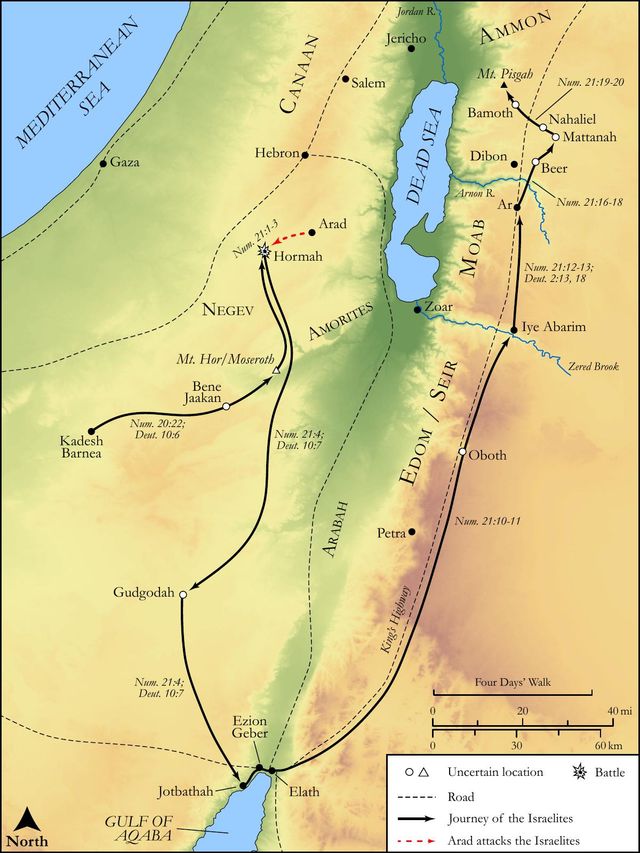
See on the biblical-era map
Study this verse
Public-domain commentary
Matthew Henry
From his Commentary on the Whole Bible. Henry comments on passages, not single verses — this entry covers Deuteronomy 10:12–22. His three-level outline is real structure in the source text, so it is rendered as structure.
Here is a most pathetic exhortation to obedience, inferred from the premises, and urged with very powerful arguments and a great deal of persuasive rhetoric. Moses brings it in like an orator, with an appeal to his auditors And now, Israel, what doth the Lord thy God require of thee? Deu 10:12. Ask what he requires; as David (Psa 116:12), What shall I render? When we have received mercy from God it becomes us to enquire what returns we shall make to him. Consider what he requires, and you will find it is nothing but what is highly just and reasonable in itself and of unspeakable benefit and advantage to you. Let us see here what he does require, and what abundant reason there is why we should do what he requires.
I.We are here most plainly directed in our duty to God, to our neighbour, and to ourselves.
1.We are here taught our duty to God, both in the dispositions and affections of our souls and in the actions of our lives, our principles and our practices.
(1.)We must fear the Lord our God, Deu 10:12, and again Deu 10:20. We must adore his majesty, acknowledge his authority, stand in awe of his power, and dread his wrath. This is gospel duty, Rev 14:6, Rev 14:7.
(2.)We must love him, be well pleased that he is, desire that he may be ours, and delight in the contemplation of him and in communion with him. Fear him as a great God, and our Lord, love him as a good God, and our Father and benefactor.
(3.)We must walk in his ways, that is, the ways which he has appointed us to walk in. The whole course of our conversation must be conformable to his holy will.
(4.)We must serve him (Deu 10:20), serve him with all our heart and soul (Deu 10:12), devote ourselves to his honour, put ourselves under his government, and lay out ourselves to advance all the interests of his kingdom among men. And we must be hearty and zealous in his service, engage and employ our inward man in his work, and what we do for him we must do cheerfully and with a good will.
(5.)We must keep his commandments and his statutes, Deu 10:13. Having given up ourselves to his service, we must make his revealed will our rule in every thing, perform all he prescribes, forbear all the forbids, firmly believing that all the statutes he commands us are for our good. Besides the reward of obedience, which will be our unspeakable gain, there are true honour and pleasure in obedience. It is really for our present good to be meek and humble, chaste and sober, just and charitable, patient and contented; these make us easy, and safe, and pleasant, and truly great.
(6.)We must give honour to God, in swearing by his name (Deu 10:20); so give him the honour of his omniscience, his sovereignty, his justice, as well as of his necessary existence. Swear by his name, and not by the name of any creature, or false god, whenever an oath for confirmation is called for.
(7.)To him we must cleave, Deu 10:20. Having chosen him for our God, we must faithfully and constantly abide with him and never forsake him. Cleave to him as one we love and delight in, trust and confide in, and from whom we have great expectations.
2.We are here taught our duty to our neighbour (Deu 10:19): Love the stranger; and, if the stranger, much more our brethren, as ourselves. If the Israelites that were such a peculiar people, so particularly distinguished from all people, must be kind to strangers, much more must we, that are not enclosed in such a pale; we must have a tender concern for all that share with us in the human nature, and as we have opportunity; (that is, according to their necessities and our abilities) we must do good to all men. Two arguments are here urged to enforce this duty: - (1.) God's common providence, which extends itself to all nations of men, they being all made of one blood. God loveth the stranger (Deu 10:18), that is, he gives to all life, and breath, and all things, even to those that are Gentiles, and strangers to the commonwealth of Israel and to Israel's God. He knows those perfectly whom we know nothing of. He gives food and raiment even to those to whom he has not shown his word and statutes. God's common gifts to mankind oblige us to honour all men. Or the expression denotes the particular care which Providence takes of strangers in distress, which we ought to praise him for (Psa 146:9, The Lord preserveth the strangers), and to imitate him, to serve him, and concur with him therein, being forward to make ourselves instruments in his hand of kindness to strangers. (2.) The afflicted condition which the Israelites themselves had been in, when they were strangers in Egypt. Those that have themselves been in distress, and have found mercy with God, should sympathize most feelingly with those that are in the like distress and be ready to show kindness to them. The people of the Jews, notwithstanding these repeated commands given them to be kind to strangers, conceived a rooted antipathy to the Gentiles, whom they looked upon with the utmost disdain, which made them envy the grace of God and the gospel of Christ, and this brought a final ruin upon themselves.
3.We are here taught our duty to ourselves (Deu 10:16): Circumcise the foreskin of your hearts. that is, "Cast away from you all corrupt affections and inclinations, which hinder you from fearing and loving God. Mortify the flesh with the lusts of it. Away with all filthiness and superfluity of naughtiness, which obstruct the free course of the word of God to your hearts. Rest not in the circumcision of the body, which was only the sign, but be circumcised in heart, which is the thing signified." See Rom 2:29. The command of Christ goes further than this, and obliges us not only to cut off the foreskin of the heart, which may easily be spared, but to cut off the right hand and to pluck out the right eye that is an offence to us; the more spiritual the dispensation is the more spiritual we are obliged to be, and to go the closer in mortifying sin. And be no more stiff-necked, as they had been hitherto, Deu 9:24. "Be not any longer obstinate against divine commands and corrections, but ready to comply with the will of God in both." The circumcision of the heart makes it ready to yield to God, and draw in his yoke.
II.We are here most pathetically persuaded to our duty. Let but reason rule us, and religion will.
1.Consider the greatness and glory of God, and therefore fear him, and from that principle serve and obey him. What is it that is thought to make a man great, but great honour, power, and possessions? Think then how great the Lord our God is, and greatly to be feared.
(1.)He has great honour, a name above every name. He is God of gods, and Lord of lords, Deu 10:17. Angels are called gods, so are magistrates, and the Gentiles had gods many, and lords many, the creatures of their own fancy; but God is infinitely above all these nominal deities. What an absurdity would it be for them to worship other gods when the God to whom they had sworn allegiance was the God of gods!
(2.)He has great power. He is a mighty God and terrible (Deu 10:17), who regardeth not persons. He has the power of a conqueror, and so he is terrible to those that resist him and rebel against him. He has the power of a judge, and so he is just to all those that appeal to him or appear before him. And it is as much the greatness and honour of a judge to be impartial in his justice, without respect to persons or bribes, as it is to a general to be terrible to the enemy. Our God is both.
(3.)He has great possessions. Heaven and earth are his (Deu 10:14), and all the hosts and stars of both. Therefore he is able to bear us out in his service, and to make up the losses we sustain in discharging our duty to him. And yet therefore he has no need of us, nor any thing we have or can do; we are undone without him, but he is happy without us, which makes the condescensions of his grace, in accepting us and our services, truly admirable. Heaven and earth are his possession, and yet the Lord's portion is his people.
2.Consider the goodness and grace of God, and therefore love him, and from that principle serve and obey him. His goodness is his glory as much as his greatness.
(1.)He is good to all. Whomsoever he finds miserable, to them he will be found merciful: He executes the judgment of the fatherless and widow, Deu 10:18. It is his honour to help the helpless, and to succour those that most need relief and that men are apt to do injury to, or at least to put a light upon. See Psa 68:4, Psa 68:5; Psa 146:7, Psa 146:9.
(2.)But truly God is good to Israel in a special obligations to him: "He is they praise, and he is thy God, Deu 10:21. Therefore love him and serve him, because of the relation wherein he stands to thee. He is thy God, a God in covenant with thee, and as such he is thy praise," that is [1.] "He puts honour upon thee; he is the God in whom, all the day long, thou mayest boast that thou knowest him, and art known of him. If he is thy God, he is thy glory." [2.] "He expects honour from thee. He is thy praise," that is "he is the God whom thou art bound to praise; if he has not praise from thee, whence may he expect it?" He inhabits the praises of Israel. Consider, First, The gracious choice he made of Israel, Deu 10:15. "He had a delight in thy fathers, and therefore chose their seed." Not that there was any thing in them to merit his favour, or to recommend them to it, but so it seemed good in his eyes. He would be kind to them, though he had no need of them. Secondly, The great things he had done for Israel, Deu 10:21, Deu 10:22. He reminds them not only of what they had heard with their ears, and which their fathers had told them of, but of what they had seen with their eyes, and which they must tell their children of, particularly that within a few generations seventy souls (for they were no more when Jacob went down into Egypt) increased to a great nation, as the stars of heaven for multitude. And the more they were in number the more praise and service God expected from them; yet it proved, as in the old world, that when they began to multiply they corrupted themselves.
Historical interpretation
Historical reception
1 surviving comment on this verse from the historical church.
When we read in sacred history that Jacob went down into Egypt with seventy-five souls, we understand the flesh also to be intended together with the souls. So then the Word, when he became flesh, took with the flesh the whole of human nature. And hence it was possible that hunger and thirst, fear and dread, desire and sleep, tears and trouble of spirit, and all such things, were in him. For the Godhead, in its proper nature, admits no such affections, nor is the flesh by itself involved in them, if the soul is not affected coordinately with the body.
Continue studying Deuteronomy 10:22 across the web’s major study libraries — every link below opens this exact verse, chapter, or book on the destination site.
Read & Compare
 BibleGatewayThis verse in more than 200 translations and 70 languages.
 Bible.comThe YouVersion reader — hundreds of translations, reading plans, and highlights.
 ESV.orgCrossway's official English Standard Version reader.
 NET BibleThe NET translation with 60,000+ translators' notes on every rendering decision.
 STEP BibleTyndale House's free study tool — original text, vocabulary, and scholarly resources.
 BibliaLogos Bible Software's free web reader.
 USCCBThe New American Bible (Revised Edition) with the U.S. bishops' study notes.
Commentaries
 BibleHub CommentariesDozens of classic commentaries on this verse, gathered on one page.
 StudyLightMore than 100 commentary sets — the largest collection on the web.
 BibleRefPlain-English commentary on what this verse means, verse by verse.
 Enduring WordDavid Guzik's free commentary on this chapter, widely used by Bible teachers.
 Bible Study ToolsVerse commentary alongside Greek and Hebrew study aids.
Original Language & Research
- BibleHub InterlinearThe verse word by word — original language, transliteration, and English.
- BibleHub LexiconEvery word's original-language definition and Strong's entry.
 Blue Letter BibleDeep-study tools — Strong's numbers, concordance, and word studies.
 SefariaThe Hebrew text with Rashi and centuries of Jewish commentary.
Sermons, Hymns & Audio


TrulyRandomVerse is not affiliated with these sites and doesn’t control their content. They’re linked because they’re genuinely useful.
Summary
Deuteronomy 10:22 powerfully encapsulates God's profound faithfulness and the miraculous fulfillment of His covenant promises to Israel. Moses, addressing a new generation on the cusp of entering the Promised Land, draws a stark contrast between their humble origins—a mere seventy souls who entered Egypt—and their present vast numbers, attributing this astonishing multiplication entirely to the Lord's sovereign power and unwavering commitment to His word. This verse serves as a foundational reminder that Israel's identity and strength are rooted not in themselves, but in the miraculous work of their God.
Context
ShowHideLiterary Context
This verse is situated within Moses' second major discourse in Deuteronomy (chapters 5-26), delivered on the plains of Moab as the Israelites prepared to enter Canaan. This discourse serves as a comprehensive covenant renewal, reiterating the Law, recounting Israel's history, and urging the new generation to remember God's mighty acts and covenant faithfulness. Specifically, Deuteronomy 10:12-22 forms a cohesive unit, following Moses' call to "fear the LORD your God, to walk in all his ways, to love him" (Deuteronomy 10:12). The preceding verses emphasize God's choice of Israel, His impartiality, and His love for the stranger, culminating in a reminder of their own humble beginnings and God's transformative power, as highlighted by their miraculous increase from the small group that went down to Egypt (see Genesis 46:27). The verse thus reinforces the call to obedience and gratitude by grounding it in God's demonstrated faithfulness throughout their history.
Historical & Cultural Context
Deuteronomy 10:22 speaks to a pivotal moment in Israelite history: the end of their forty-year wilderness wandering and their imminent entry into the land of Canaan. The generation that had experienced the Exodus was largely gone, and Moses was addressing their descendants, who needed to grasp their heritage and destiny. The reference to "threescore and ten persons" (70 individuals) directly recalls the small, vulnerable family of Jacob who sought refuge in Egypt during a famine, a detail recorded in Genesis 46:26-27. For Israel, a large population was a profound sign of divine blessing, prosperity, and national strength, the fulfillment of the promise to Abraham that his seed would be as the stars of heaven. The dramatic transformation from a small clan to a vast nation, despite centuries of enslavement and hardship, would have been seen as nothing short of a divine miracle, underscoring God's unique power and commitment to His chosen people, in stark contrast to the typical fate of enslaved or displaced populations.
Key Themes
ShowHideDeuteronomy 10:22 powerfully articulates several core theological and narrative themes. The most prominent is Divine Multiplication and Fulfillment of Promise, showcasing God's supernatural ability to take a seemingly insignificant beginning and multiply it beyond all human expectation. This directly fulfills the foundational covenant promises made to Abraham, Isaac, and Jacob that their descendants would be as numerous as the stars of heaven or the sand on the seashore (Genesis 22:17). The Israelite nation's vast growth is presented as irrefutable evidence of God's power and His unwavering commitment to His word. Secondly, the verse highlights God's Unwavering Faithfulness. Despite the Israelites' periods of disobedience, their challenges in the wilderness, and the harsh oppression they endured in Egypt, God remained true to His covenant, bringing them out as a mighty nation. Finally, Moses' instruction to remember their Humble Beginnings serves as a vital lesson in humility. It is not meant to diminish their present stature but to magnify God's grace and power, reminding them that their strength, identity, and multitude come not from their own merit or might, but solely from the Lord's divine providence and unmerited favor, as emphasized throughout Deuteronomy 8.
Exposition and Analysis
ShowHideKey Word Analysis
ShowHideThis numerical designation, meaning "seventy," precisely refers to the number of Jacob's immediate family (excluding his sons' wives) who entered Egypt with him (Genesis 46:27). The term emphasizes the incredibly small and vulnerable origin of the vast nation of Israel, highlighting the miraculous nature of their subsequent growth. It underscores that their immense multitude was not a natural outcome but a direct result of divine intervention.
This word, used in the phrase "stars of heaven," is a powerful, recurring biblical metaphor to describe an innumerable, countless multitude. It directly echoes God's foundational promises to Abraham regarding his descendants (e.g., Genesis 15:5 and Genesis 22:17). The imagery evokes not only vastness but also the divine, celestial origin of this blessing, implying that such a multitude is beyond human capacity to create or count, thus underscoring the supernatural agency of God.
This verb signifies God's active, intentional, and sovereign role in bringing about Israel's exponential growth. It denotes placing, appointing, or setting something into being. By stating that "the LORD thy God hath made thee as the stars of heaven for multitude," Moses unequivocally attributes the transformation from a small family to a vast nation directly to God's creative power and faithfulness, rather than to natural processes or human effort.
Verse Breakdown
ShowHide"Thy fathers went down into Egypt with threescore and ten persons;"
This clause serves as a historical anchor, recalling the humble and vulnerable beginnings of the Israelite nation. It points back to the patriarch Jacob (Israel) and his small family, emphasizing their initial dependence and lack of inherent power or multitude. The number "seventy" starkly contrasts with their present vast population, setting the stage for the miraculous transformation that follows and highlighting the profound depth of God's faithfulness from the very outset of their national story.
"and now the LORD thy God hath made thee as the stars of heaven for multitude."
This clause presents the astonishing outcome of God's faithfulness and power. The shift from "thy fathers" to "thee" (the current generation) highlights the continuity of God's work across generations, demonstrating His enduring covenant commitment. The active verb "hath made" unequivocally attributes the exponential growth from seventy to a countless multitude ("as the stars of heaven") directly to the LORD. This underscores God's sovereign power, His commitment to His covenant promises, and His ability to bring about the impossible, transforming a small, vulnerable clan into a mighty, numerous nation.
Literary Devices
ShowHideDeuteronomy 10:22 employs several potent literary devices to convey its message. The most prominent is Contrast, setting the initial "threescore and ten persons" against the current "stars of heaven for multitude." This striking juxtaposition dramatically highlights the magnitude of God's work and the miraculous nature of Israel's growth, emphasizing the divine agency involved. Closely related is Hyperbole, found in the phrase "as the stars of heaven for multitude." While the Israelites were indeed numerous, the phrase is not meant to be a literal count but an exaggeration to convey an immeasurable, countless number, underscoring the extraordinary scale of God's blessing. This hyperbole functions as a Simile, comparing the people's vast numbers to the countless stars, a common biblical image for divine blessing and progeny. Furthermore, the verse uses Allusion implicitly, echoing the repeated promises made to the patriarchs, reinforcing the theme of covenant fulfillment. These devices collectively serve to magnify God's power, faithfulness, and the profound impact of His covenant on the destiny of Israel.
Theological and Thematic Connections
ShowHideDeuteronomy 10:22 stands as a profound testament to God's covenant faithfulness and His omnipotent power to bring His promises to fruition, even from the most improbable beginnings. It encapsulates the core biblical narrative of a sovereign God choosing a people, multiplying them, and delivering them, not based on their merit, but on His steadfast love and unwavering commitment to His word. This verse serves as a powerful reminder that God's plans are not limited by human limitations or adverse circumstances. The miraculous growth of Israel from a small family to a vast nation is a foundational proof of God's redemptive power, establishing a pattern of divine intervention and blessing that permeates the entire biblical narrative. It underscores the truth that all true growth, strength, and blessing ultimately originate from the Lord's hand.
Reflection and Application
ShowHideDeuteronomy 10:22 offers profound encouragement and a call to humility for believers today. It reminds us that God is utterly faithful to His promises, regardless of how small or insignificant our beginnings may seem, or how overwhelming the obstacles. Just as He multiplied Israel from a mere seventy souls to a vast nation, He is capable of bringing about immense growth and fruitfulness in our lives, our families, our churches, or our ministries, often starting from humble or seemingly impossible circumstances. This verse encourages us to cultivate a deep trust in God's providence, to remember His past faithfulness as a guarantee for His future actions, and to resist the temptation to rely on our own strength or numbers. It calls us to a posture of profound humility, recognizing that all blessings, all strength, and all growth ultimately come from His gracious and powerful hand, prompting us to give Him all the glory.
Questions for Reflection
ShowHideFAQ
ShowHideWhy is the number 70 significant in this verse and other biblical contexts?
ShowHideThe number 70 (or "threescore and ten") in Deuteronomy 10:22 specifically refers to the initial number of Jacob's direct descendants (excluding his sons' wives) who went down into Egypt, as detailed in Genesis 46:27. This number is significant because it highlights the incredibly small and vulnerable origin of the nation of Israel, making their subsequent multiplication all the more miraculous and clearly attributable to divine intervention. Beyond this historical reference, the number 70 often carries symbolic weight in the Bible, sometimes representing completeness or a foundational group. For example, there are 70 nations listed in Genesis 10, 70 elders of Israel who went up Mount Sinai with Moses (Exodus 24:1), and Jesus sent out 70 (or 72) disciples in Luke 10:1. In Deuteronomy 10:22, its primary function is to underscore the dramatic contrast between Israel's meager beginnings and their divinely-granted vast multitude.
Christ-Centered Fulfillment
ShowHideDeuteronomy 10:22, with its powerful imagery of multiplication from a humble beginning, finds its ultimate and most profound fulfillment in Jesus Christ and the establishment of His church. The promise to Abraham that his descendants would be "as the stars of heaven for multitude" (Genesis 15:5) was not merely a physical promise to ethnic Israel, but a spiritual promise fulfilled in Christ, the true "seed" of Abraham (Galatians 3:16). Through His atoning work, Christ has gathered a new, spiritual Israel, a countless multitude drawn from "every tribe and language and people and nation" (Revelation 5:9) who believe in Him. Just as God multiplied Jacob's small family into a nation, so too has Christ, from His humble earthly origins and a small band of disciples, built His church, against which "the gates of hell shall not prevail" (Matthew 16:18). The "multitude" of God's redeemed people, spiritually born into His family through faith in Christ, far surpasses any physical nation, truly becoming "as the stars of heaven" in their countless number and eternal destiny, fulfilling God's ancient promise in a glorious, global, and spiritual reality (Revelation 7:9).