


Acts 2:6
Bible text: King James Version (1769 Blayney text) · Public domain
Bible text: King James Version with Strong's numbers · Public domain
Bible text: Berean Standard Bible · Public domain
Bible text: American Standard Version (1901) · Public domain
Bible text: World English Bible, Messianic edition · Public domain
Bible text: Geneva Bible (1599) · Public domain
Bible text: Young's Literal Translation · Public domain
- γενομένηςgenomenēsWhen was happeningG1096V-2ADP-GSFVerb 2nd Aorist Middle Deponent Participle Genitive Singular Feminine
- δὲdenowG1161CONJConjunction
- τῆςtēs<the>G3588T-GSFDefinite article Genitive Singular Feminine
- φωνῆςphōnēssoundG5456N-GSFNoun Genitive Singular Feminine
- ταύτηςtautēsthisG3778D-GSFDemonstrative pronoun Genitive Singular Feminine
- συνῆλθενsunēlthencame togetherG4905V-2AAI-3SVerb 2nd Aorist Active Indicative 3rd Singular
- τὸtotheG3588T-NSNDefinite article Nominative Singular Neuter
- πλῆθοςplēthosmultitudeG4128N-NSNNoun Nominative Singular Neuter
- καὶkaiandG2532CONJConjunction
- συνεχύθηsunechuthēwas confoundedG4797V-API-3SVerb Aorist Passive Indicative 3rd Singular
- ὅτιhotibecauseG3754CONJConjunction
- ἤκουονēkouonwas hearingG191V-IAI-3PVerb Imperfect Active Indicative 3rd Plural
- εἷςheisoneG1520A-NSMAdjective Nominative Singular Masculine
- ἕκαστοςhekastoseachG1538A-NSMAdjective Nominative Singular Masculine
- τῇtēain theirG3588T-DSFDefinite article Dative Singular Feminine
- ἰδίᾳidiaownG2398A-DSFAdjective Dative Singular Feminine
- διαλέκτῳdialektōlanguageG1258N-DSFNoun Dative Singular Feminine
- λαλούντωνlalountōnspeakingG2980V-PAP-GPMVerb Present Active Participle Genitive Plural Masculine
- αὐτῶνautōnthemG846P-GPMPersonal pronoun Genitive Plural Masculine
English is a literal word-by-word gloss of the Greek, not the KJV's wording. Why?
This is the original text the KJV's translators worked from — each Greek word with its own literal English meaning in this verse, prepared by scholars at Tyndale House, Cambridge. The KJV translates whole sentences, not word by word, so its wording differs: one Greek word can become several English words, and the KJV may choose “charity” where the gloss reads “love”. Both are faithful — they answer different questions. For the KJV's own rendering, switch to the KJV text.
Details
See on the biblical-era maps
Study this verse
Public-domain commentary
Matthew Henry
From his Commentary on the Whole Bible. Henry comments on passages, not single verses — this entry covers Acts 2:5–13. His four-level outline is real structure in the source text, so it is rendered as structure.
We have here an account of the public notice that was taken of this extraordinary gift with which the disciples were all on a sudden endued. Observe,
I.The great concourse of people that there was now at Jerusalem, it should seem more than was usual at the feast of pentecost.
There were dwelling or abiding at Jerusalem Jews that were devout men, disposed to religion, and that had the fear of God before their eyes (so the word properly signifies), some of them proselytes of righteousness, that were circumcised, and admitted members of the Jewish church, others only proselytes of the gate, that forsook idolatry, and gave up themselves to the worship of the true God, but not to the ceremonial law; some of those that were at Jerusalem now, out of every nation under heaven, whither the Jews were dispersed, or whence proselytes were come. The expression is hyperbolical, denoting that there were some from most of the then known parts of the world; as much as ever Tyre was, or London is, the rendezvous of trading people from all parts, Jerusalem at that time was of religious people from all parts. Now,
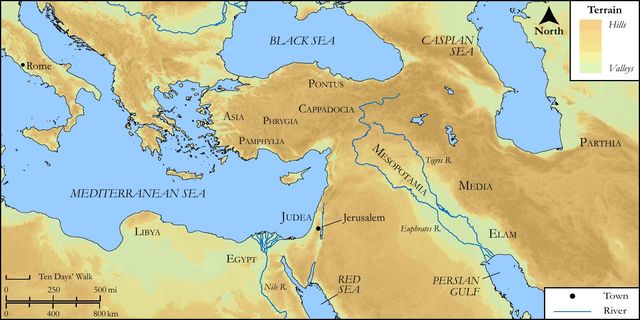
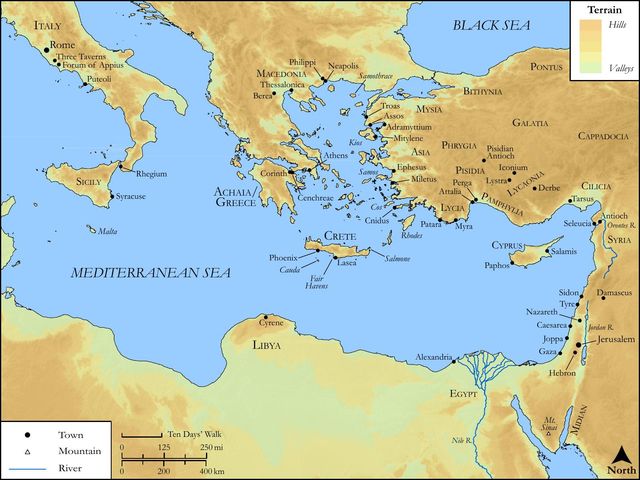
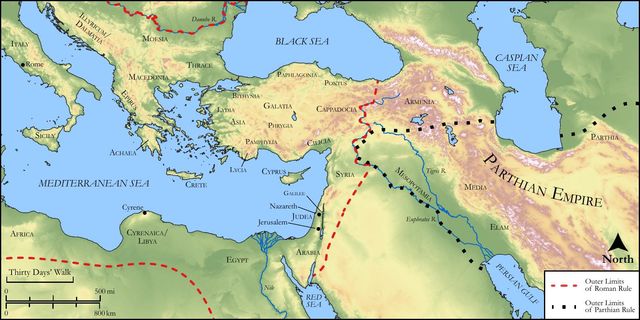
1.We may here see what were some of those countries whence those strangers came (Act 2:9-11), some from the eastern countries, as the Parthians, Medes, Elamites, and dwellers in Mesopotamia, the posterity of Shem; thence we come in order to Judea, which ought to be mentioned, because, though the language of those in Judea was the same with that which the disciples spoke, yet, before, they spoke it with the north-country tone and dialect (Thou art a Galilean, and thy speech betrays thee), but now they spoke it as correctly as the inhabitants of Judea themselves did. Next come the inhabitants of Cappadocia, Pontus, and that country about Propontis which was particularly called Asia, and these were the countries in which those strangers were scattered to whom St. Peter writes. Pe1 1:1. Next come the dwellers in Phrygia and Pamphylia, which lay westward, the posterity of Japhet, as were also the strangers of Rome; there were some also that dwelt in the southern parts of Egypt, in the parts of Libya about Cyrene; there were also some from the island of Crete, and some from the deserts of Arabia; but they were all either Jews originally, dispersed into those countries; or proselytes to the Jewish religion, but natives of those countries. Dr. Whitby observes that the Jewish writers about this time, as Philo and Josephus, speak of the Jews as dwelling every where through the whole earth; and that there is not a people upon earth among whom some Jews do not inhabit.
2.We may enquire what brought all those Jews and proselytes together to Jerusalem at this time: not to make a transient visit thither to the feast of pentecost, for they are said to dwell there. They took lodgings there, because there was at this time a general expectation of the appearing of the Messiah; for Daniel's weeks had just now expired, the sceptre had departed from Judah, and it was then generally thought that the kingdom of God would immediately appear, Luk 19:11. This brought those who were most zealous and devout to Jerusalem, to sojourn there, that they might have an early share in the kingdom of the Messiah and the blessings of that kingdom.
II.The amazement with which these strangers were seized when they heard the disciples speak in their own tongues.
It should seem, the disciples spoke in various languages before the people of those languages came to them; for it is intimated (Act 2:6) that the spreading of the report of this abroad was that which brought the multitude together, especially those of different countries, who seem to have been more affected with this work of wonder than the inhabitants of Jerusalem themselves.
1.They observe that the speakers are all Galileans, that know no other than their mother tongue (Act 2:7); they are despicable men, from whom nothing learned nor polite is to be expected. God chose the weak and foolish things of the world to confound the wise and mighty. Christ was thought to be a Galilean, and his disciples really were so, unlearned and ignorant men.
2.They acknowledge that they spoke intelligibly and readily their own language (which they were the most competent judges of), so correctly and fluently that none of their own countrymen could speak it better: We hear every man in our own tongue wherein we were born (Act 2:8), that is, we hear one or other of them speak our native language. The Parthians hear one of them speak their language, the Medes hear another of them speak theirs; and so of the rest; Act 2:11, We do hear them speak in our tongues the wonderful works of God. Their respective languages were not only unknown at Jerusalem, but probably despised and undervalued, and therefore it was not only a surprise, but a pleasing surprise, to them to hear the language of their own country spoken, as it naturally is to those that are strangers in a strange land.
(1.)The things they heard the apostles discourse of were the wonderful works of God, megaleia tou Theou - Magnalia Dei, the great things of God. It is probable that the apostles spoke of Christ, and redemption by him, and the grace of the gospel; and these are indeed the great things of God, which will be for ever marvellous in our eyes.
(2.)They heard them both praise God for these great things and instruct the people concerning these things, in their own tongue, according as they perceived the language of their hearers, or those that enquired of them, to be. Now though, perhaps, by dwelling some time at Jerusalem, they were got to be so much masters of the Jewish language that they could have understood the meaning of the disciples if they had spoken that language, yet,
[1.]This was more strange, and helped to convince their judgment, that this doctrine was of God; for tongues were for a sign to those that believed not, Co1 14:22.
[2.]It was more kind, and helped to engage their affections, as it was a plain indication of the favour intended to the Gentiles, and that the knowledge and worship of God should no longer be confined to the Jews, but the partition-wall should be broken down; and this is to us a plain intimation of the mind and will of God, that the sacred records of God's wonderful works should be preserved by all nations in their own tongue; that the scriptures should be read, and public worship performed, in the vulgar languages of the nations.
3.They wonder at it, and look upon it as an astonishing thing (Act 2:12): They were all amazed, they were in an ecstacy, so the word is; and they were in doubt what the meaning of it was, and whether it was to introduce the kingdom of the Messiah, which they were big with the expectation of; they asked themselves and one another ti an theloi touto einai; - Quid hoc sibi vult? - What is the tendency of this? Surely it is to dignify, and so to distinguish, these men as messengers from heaven; and therefore, like Moses at the bush, they will turn aside, and see this great sight.
III.The scorn which some made of it who were natives of Judea and Jerusalem, probably the scribes and Pharisees, and chief priests, who always resisted the Holy Ghost; they said, These men are full of new wine, or sweet wine; they have drunk too much this festival-time, Act 2:13. Not that they were so absurd as to think that wine in the head would enable men to speak languages which they never learned; but these, being native Jews, knew not, as the others did, that what was spoken was really the languages of other nations, and therefore took it to be gibberish and nonsense, such as drunkards, those fools in Israel, sometimes talk. As when they resolved not to believe the finger of the Spirit in Christ's miracles, they turned it off with this, "He casteth out devils by compact with the prince of the devils;" so, when they resolved not to believe the voice of the Spirit in the apostles' preaching, they turned it off with this, These men are full of new wine. And, if they called the Master of the house a wine-bibber, no marvel if they so call those of his household.
Historical interpretation
Nine Centuries of Reception
5 surviving comments on this verse. Each one is dated, so this reads as a timeline rather than a list.
Select a marker to jump to its quote. Markers stagger vertically where authors wrote within a few decades of each other.
"Behold, are not all these which speak Galileans?" For indeed this was confessed. "And how hear we" so much did the sound alarm them. "Every man in our own tongue," etc. for it found the greater part of the world assembled there.
Since the event had taken place in a house, of course they came together from without. The multitude was confounded: was all in commotion. They marvelled; "Because that every man heard them speak in his own language. And they were amazed," it says, "and marvelled, saying one to another, Behold, are not all these which speak Galileans?" They immediately turned their eyes towards the Apostles.
Since each one heard them speaking in his own language, they were all amazed and astonished, saying, "Are not all these who are speaking Galileans?" I know I have been criticized by some for saying that this sentence can be understood in two ways, or rather for asking how it should be understood. To them, I briefly respond that everything I wrote about the same sentence in my previous volume was not expressed from my own thought but taken from the words of the holy and utterly irreproachable teacher, that is, Gregory of Nazianzus. It is indeed clear that the apostles, filled with the Holy Spirit, spoke in all tongues, nor is it allowed for any of the faithful to doubt this. But how they spoke is rightly questioned, namely whether the speech of the apostles had such power that everyone who knew different languages could equally understand it when heard, or if whoever spoke, as it was necessary for someone to speak among such a multitude, while the rest were silent, at first made his speech in Hebrew for the Hebrews, with the rest not knowing what he said. Then for the Greeks, he spoke in Greek while the others waited. Then for the Parthians, and after them the Medes, and thus for the Elamites, and those peoples enumerated in order, he spoke in their own language, with each group waiting and remaining silent until their turn came, so they could understand what was said and thus give assent to the words of the teaching in faith. However, Luke reports Peter speaking to the crowds, but does not report him repeating the same things a second or third time. Instead, he notes that they, heeding the counsel of salvation, were consecrated in the mysteries of the Christian faith. I do not think it would be wrong for someone to believe that both things could have happened: that the apostles, filled with the Holy Spirit, could have understood and spoken the languages of all nations, and also that their words, by a greater miracle, could have been equally understood by all who heard them, regardless of the language in which they were spoken.
Because each one was hearing them speak in his own language. It is asked in this place how each one heard them speaking the great things of God in his own language: whether those who were speaking in different languages were delivering what was being said in the language of each one, that is, whether each of them now spoke in this, now in another language, thus running through all, or it was more marvelous in this, that the speech of those who were speaking, whatever language had been pronounced, was understood by each one hearing according to his own language, that (for example) when any one apostle was teaching in the church (for it was necessary that one should speak while the others were silent, and one speech should reach the hearing of all), that same speech would have such a force in itself, that although there were listeners of different nations, each one would receive the hearing and grasp the understanding of that one speech pronounced by the apostle according to his own language. Unless perhaps it seemed more wonderful that this was a miracle of the listeners rather than of the speakers.
Was it while speaking in one language they should be understood by all, or that they should speak in all languages? It was more fitting that they should speak in all languages, because this pertained to the perfection of their knowledge, whereby they were able not only to speak, but also to understand what was said by others. Whereas if their one language were intelligible to all, this would either have been due to the knowledge of those who understood their speech, or it would have amounted to an illusion, since a man's words would have had a different sound in another's ears, from that with which they were uttered.
Continue studying Acts 2:6 across the web’s major study libraries — every link below opens this exact verse, chapter, or book on the destination site.
Read & Compare
 BibleGatewayThis verse in more than 200 translations and 70 languages.
 Bible.comThe YouVersion reader — hundreds of translations, reading plans, and highlights.
 ESV.orgCrossway's official English Standard Version reader.
 NET BibleThe NET translation with 60,000+ translators' notes on every rendering decision.
 STEP BibleTyndale House's free study tool — original text, vocabulary, and scholarly resources.
 BibliaLogos Bible Software's free web reader.
 USCCBThe New American Bible (Revised Edition) with the U.S. bishops' study notes.
Commentaries
 BibleHub CommentariesDozens of classic commentaries on this verse, gathered on one page.
 StudyLightMore than 100 commentary sets — the largest collection on the web.
 BibleRefPlain-English commentary on what this verse means, verse by verse.
 Enduring WordDavid Guzik's free commentary on this chapter, widely used by Bible teachers.
 Bible Study ToolsVerse commentary alongside Greek and Hebrew study aids.
Original Language & Research
- BibleHub InterlinearThe verse word by word — original language, transliteration, and English.
- BibleHub LexiconEvery word's original-language definition and Strong's entry.
 Blue Letter BibleDeep-study tools — Strong's numbers, concordance, and word studies.
 CNTR CollationThe earliest Greek manuscripts of this verse, collated letter by letter.
Sermons, Hymns & Audio


TrulyRandomVerse is not affiliated with these sites and doesn’t control their content. They’re linked because they’re genuinely useful.
Summary
Acts 2:6 describes the immediate and overwhelming public reaction to the outpouring of the Holy Spirit on the Day of Pentecost. As the sound of the Spirit's descent and the disciples' miraculous speaking in diverse languages became widely known, a vast multitude of pilgrims from various nations converged, utterly bewildered and astonished. Their confusion stemmed from the extraordinary phenomenon that each person present heard the Galilean disciples proclaiming God's mighty works in their own native tongue, a clear sign of divine intervention.
Context
ShowHideLiterary Context
This verse is a pivotal moment following the dramatic events of Acts 2:1-4, where the Holy Spirit descends upon the disciples with the sound of a mighty rushing wind and visible tongues of fire, empowering them to speak in other tongues. Acts 2:6 specifically details the public's response to this supernatural manifestation, setting the stage for the broader narrative of the early church's evangelistic mission. It immediately precedes the crowd's questioning and Peter's subsequent sermon, which begins in Acts 2:14, providing the necessary context for the gospel message to be proclaimed to a diverse, international audience.
Historical & Cultural Context
The event takes place in Jerusalem during the Feast of Pentecost (Shavuot), one of the three major pilgrimage festivals for Jews. This meant Jerusalem was teeming with devout Jews and proselytes from across the Roman Empire and beyond, as detailed in Acts 2:9-11. This diverse demographic, representing numerous languages and cultures, was crucial for the immediate and widespread impact of the miracle. The Jewish expectation of a Messiah and the spiritual fervor surrounding the feast created a fertile ground for the Holy Spirit's dramatic arrival and the subsequent proclamation of the gospel.
Key Themes
ShowHideActs 2:6 powerfully contributes to several key themes within the book of Acts and broader biblical theology. It highlights Divine Communication as God supernaturally bridges linguistic barriers to deliver His message, often seen as a significant reversal of the confusion of languages at Babel. The Universal Scope of the Gospel is underscored, as the miracle demonstrates God's intent for His message to reach all nations, fulfilling the commission given by Jesus in Acts 1:8. Furthermore, the Empowering Presence of the Holy Spirit is central, as the Spirit enables ordinary Galileans to perform an extraordinary feat, drawing attention and preparing hearts for the message of Christ. The crowd's Astonishment and Wonder also serve to validate the divine origin of the event, distinguishing it from mere human performance.
Exposition and Analysis
ShowHideKey Word Analysis
ShowHideThe KJV phrase "when this was noised abroad" combines the Greek words phōnḗ, meaning "sound" or "voice," and gínomai, meaning "to come into being," "to happen," or "to become." Together, they convey the idea that the "sound" (likely referring to the "sound from heaven as of a rushing mighty wind" from Acts 2:2) "came to pass" or "became known" throughout the city. This indicates the rapid spread of information about the miraculous event, drawing the attention of the diverse multitude.
This word literally means "to pour together," "to mix up," or "to throw into confusion." It vividly describes the state of utter bewilderment, perplexity, and astonishment experienced by the crowd. They were not merely surprised but deeply disoriented and unable to comprehend how Galileans could speak in so many different foreign languages, highlighting the supernatural and inexplicable nature of the miracle from their perspective.
Derived from which we get "dialect," this term specifically refers to a distinct mode of discourse, a specific tongue or language. Its use here emphasizes that the disciples were not speaking in an unintelligible ecstatic utterance, but in actual, recognizable, and diverse human languages. This precision is crucial, as it confirms that the miracle was one of intelligible communication, enabling each listener to hear the gospel message in their native tongue.
Verse Breakdown
ShowHide"Now when this was noised abroad"
This opening clause indicates the rapid dissemination of information about the supernatural phenomena that just occurred (the sound of the wind, the tongues of fire, and the speaking in tongues). The news of these extraordinary events quickly spread throughout Jerusalem, drawing immediate public attention and curiosity.
"the multitude came together, and were confounded"
As the news spread, a vast and diverse crowd of people, representing various nations and languages, converged on the scene. Their immediate reaction was one of profound confusion and astonishment. They were utterly bewildered by what they were witnessing, unable to reconcile the ordinary background of the disciples with the extraordinary linguistic abilities they displayed.
"because that every man heard them speak in his own language"
This final clause provides the precise reason for the multitude's confusion and wonder. The miracle was not merely that the disciples spoke in tongues, but that each individual in the diverse crowd heard the message being proclaimed in their specific native tongue or dialect. This personalized, direct communication was the core of the astonishment, demonstrating a divine reversal of linguistic barriers.
Literary Devices
ShowHideThe verse employs several literary devices to convey the impact of the Pentecost event. Hyperbole is suggested in "the multitude came together," implying an immense, almost overwhelming crowd, emphasizing the widespread impact of the miracle. Irony is subtly present, as this event, where languages are miraculously understood, stands in stark contrast to the confusion of languages at the Tower of Babel, where communication was deliberately fractured by God. This reversal signifies a new era of unity and understanding in the Spirit. Furthermore, the emphasis on "every man heard them speak in his own language" highlights the specificity and personal relevance of the miracle, underscoring God's desire for His message to reach individuals directly and intelligibly.
Theological and Thematic Connections
ShowHideActs 2:6 is a foundational text demonstrating God's active involvement in the spread of His message and His desire for universal salvation. The miraculous ability of the disciples to speak in diverse languages signifies a profound theological truth: the gospel is not confined by cultural or linguistic barriers. This event marks a decisive turning point, illustrating the Holy Spirit's power to equip believers for global witness and to break down divisions that hinder the proclamation of God's saving truth. It foreshadows the church's mission to reach "all nations," ensuring that the good news of Jesus Christ is accessible and understandable to every person, regardless of their background.
Reflection and Application
ShowHideActs 2:6 serves as a powerful reminder of the Holy Spirit's transformative power and God's heart for all humanity. It challenges believers today to consider how we can effectively communicate the unchanging truth of the gospel in a world of diverse cultures, languages, and perspectives. Just as the Spirit enabled the early disciples to bridge linguistic divides, He empowers us to overcome barriers—whether cultural, social, or intellectual—to share Christ's love and truth. This verse encourages us to pray for and participate in missions, supporting efforts to translate the Bible, train indigenous leaders, and develop culturally relevant ministries. It also calls us to be attentive to the unique needs and contexts of those we seek to reach, ensuring our message is not only true but also intelligible and compelling. The astonishment of the multitude should inspire us to live lives that genuinely reflect the supernatural power of God, drawing others to inquire about the hope we possess.
Questions for Reflection
ShowHideFAQ
ShowHideWas the speaking in tongues at Pentecost the same as the "tongues" mentioned elsewhere in the New Testament (e.g., 1 Corinthians 14)?
ShowHideWhile both phenomena are referred to as "tongues," the context in Acts 2 strongly indicates that the disciples were speaking in actual, known human languages previously unknown to them. The text explicitly states that people from various nations heard "in his own language" (Greek diálektos, Acts 2:6, 8) and listed specific regions (Acts 2:9-11). This was a miracle of communication for evangelistic purposes. In contrast, the "tongues" described in 1 Corinthians 14 appear to be primarily for personal edification or, if interpreted, for the edification of the church, and are often described as unintelligible without an interpreter (1 Corinthians 14:2, 13). While both are spiritual gifts, their primary function and manifestation seem distinct based on their respective biblical contexts.
Christ-Centered Fulfillment
ShowHideThe events of Acts 2, culminating in the multi-ethnic crowd hearing the gospel in their own languages, are a profound Christ-centered fulfillment. The outpouring of the Holy Spirit was the direct result of Christ's ascension and His promise to send the Helper (John 14:26; John 16:7). This divine empowerment of the disciples to speak in diverse tongues immediately after Christ's glorification demonstrates that the new covenant, inaugurated by Jesus' death and resurrection, is for all peoples, not just Israel (Galatians 3:28). The reversal of the linguistic confusion at Babel (Genesis 11:1-9) through the Spirit's work at Pentecost signifies that in Christ, the divisions of humanity are overcome, and a new, unified humanity is being formed, reconciled to God and to one another (Ephesians 2:14-16). The miracle of tongues thus serves as a powerful witness to Christ's universal Lordship and the global reach of His salvation, gathering a people from every tribe, tongue, people, and nation to worship the Lamb (Revelation 5:9-10).