


1 Timothy 2:3
- τοῦτοtoutoThisG3778D-NSNDemonstrative pronoun Nominative Singular Neuter
- γὰρgarforG1063CONJConjunction
- καλὸνkalon[is] goodG2570A-NSNAdjective Nominative Singular Neuter
- καὶkaiandG2532CONJConjunction
- ἀπόδεκτονapodektonacceptableG587A-NSNAdjective Nominative Singular Neuter
- ἐνώπιονenōpionbeforeG1799PREPPreposition
- τοῦtoutheG3588T-GSMDefinite article Genitive Singular Masculine
- σωτῆροςsōtērosSaviorG4990N-GSMNoun Genitive Singular Masculine
- ἡμῶνhēmōnof usG3165P-1GPPersonal pronoun Genitive 1st Plural
- θεοῦtheouGodG2316N-GSM-TNoun Genitive Singular Masculine Title
English is a literal word-by-word gloss of the Greek, not the KJV's wording. Why?
This is the original text the KJV's translators worked from — each Greek word with its own literal English meaning in this verse, prepared by scholars at Tyndale House, Cambridge. The KJV translates whole sentences, not word by word, so its wording differs: one Greek word can become several English words, and the KJV may choose “charity” where the gloss reads “love”. Both are faithful — they answer different questions. For the KJV's own rendering, switch to the KJV text.
Details
See on the biblical-era map

Study this verse
Public-domain commentary
Matthew Henry
From his Commentary on the Whole Bible. Henry comments on passages, not single verses — this entry covers 1 Timothy 2:1–8. His three-level outline is real structure in the source text, so it is rendered as structure.
Here is, I. A charge given to Christians to pray for all men in general, and particularly for all in authority. Timothy must take care that this be done. Paul does not send him any prescribed form of prayer, as we have reason to think he would if he had intended that ministers should be tied to that way of praying; but, in general, that they should make supplications, prayers, intercessions, and giving of thanks: supplications for the averting of evil, prayers for the obtaining of good, intercessions for others, and thanksgivings for mercies already received. Paul thought it enough to give them general heads; they, having the scripture to direct them in prayer and the Spirit of prayer poured out upon them, needed not any further directions. Observe, The design of the Christian religion is to promote prayer; and the disciples of Christ must be praying people. Pray always with all prayer, Eph 6:18. There must be prayers for ourselves in the first place; this is implied here. We must also pray for all men, for the world of mankind in general, for particular persons who need or desire our prayers. See how far the Christian religion was from being a sect, when it taught men this diffusive charity, to pray, not only for those of their own way, but for all men. Pray for kings (Ti1 2:2); though the kings at this time were heathens, enemies to Christianity, and persecutors of Christians, yet they must pray for them, because it is for the public good that there should be civil government, and proper persons entrusted with the administration of it, for whom therefore we ought to pray, yea, though we ourselves suffer under them. For kings, and all that are in authority, that is, inferior magistrates: we must pray for them, and we must give thanks for them, pray for their welfare and for the welfare of their kingdoms, and therefore must not plot against them, that in the peace thereof we may have peace, and give thanks for them and for the benefit we have under their government, that we may lead a quiet and peaceable life in all godliness and honesty. Here see what we must desire for kings, that God will so turn their hearts, and direct them and make use of them, that we under them may lead a quiet and peaceable life. He does not say, "that we may get preferments under them, grow rich, and be in honour and power under them;" no, the summit of the ambition of a good Christian is to lead a quiet and peaceable life, to get through the world unmolested in a low private station. We should desire that we and others may lead a peaceable life in all godliness and honesty, implying that we cannot expect to be kept quiet and peaceable unless we keep in all godliness and honesty. Let us mind our duty, and then we may expect to be taken under the protection both of God and the government. In all godliness and honesty. Here we have our duty as Christians summed up in two words: godliness, that is, the right worshipping of God; and honesty, that is, a good conduct towards all men. These two must go together; we are not truly honest if we are not godly, and do not render to God his due; and we are not truly godly if we are not honest, for God hates robbery for burnt-offering. Here we may observe, 1. Christians are to be men much given to prayer: they ought to abound herein, and should use themselves to prayers, supplications, etc. 2. In our prayers we are to have a generous concern for others as well as for ourselves; we are to pray for all men, and to give thanks for all men; and must not confine our prayers nor thanksgiving to our own persons or families. 3. Prayer consists of various parts, of supplications, intercessions, and thanksgivings; for we must pray for the mercies we want, as well as be thankful for mercies already received; and we are to deprecate the judgments which our own sins or the sins of others have deserved. 4. All men, yea, kings themselves, and those who are in authority, are to be prayed for. They want our prayers, for they have many difficulties to encounter, many snares to which their exalted stations expose them. 5. In praying for our governors, we take the most likely course to lead a peaceable and quiet life. The Jews at Babylon were commanded to seek the peace of the city whither the Lord had caused them to be carried captives, and to pray to the Lord for it; for in the peace thereof they should have peace, Jer 29:7. 6. If we would lead a peaceable and quiet life, we must live in all godliness and honesty; we must do our duty to God and man. He that will love life, and see good days, let him refrain his tongue from evil, and his lips that they speak no guile; let him eschew evil, and do good; let him seek peace, and pursue it, Pe1 3:10, Pe1 3:11. Now the reason he gives for this is because this is good in the sight of God our Saviour; that is, the gospel of Christ requires this. That which is acceptable in the sight of God our Saviour we should do, and should abound in.
II.As a reason why we should in our prayers concern ourselves for all men, he shows God's love to mankind in general, Ti1 2:4.
1.One reason why all men are to be prayed for is because there is one God, and that God bears a good will to all mankind. There is one God (Ti1 2:5), and one only, there is no other, there can be no other, for there can be but one infinite. This one God will have all men to be saved; he desires not the death and destruction of any (Eze 33:11), but the welfare and salvation of all. Not that he has decreed the salvation of all, for then all men would be saved; but he has a good will to the salvation of all, and none perish but by their own fault, Mat 23:37. He will have all to be saved, and to come to the knowledge of the truth, to be saved in the way that he has appointed and not otherwise. It concerns us to get the knowledge of the truth, because that is the way to be saved; Christ is the way and the truth, and so he is the life.
2.There is one Mediator, and that mediator gave himself a ransom for all. As the mercy of God extends itself to all his works, so the mediation of Christ extends itself thus far to all the children of men that he paid a price sufficient for the salvation of all mankind; he brought mankind to stand upon new terms with God, so that they are not now under the law as a covenant of works, but as a rule of life. They are under grace; not under the covenant of innocence, but under a new covenant: He gave himself a ransom. Observe, The death of Christ was a ransom, a counter-price. We deserved to have died. Christ died for us, to save us from death and hell; he gave himself a ransom voluntarily, a ransom for all; so that all mankind are put in a better condition than that of devils. He died to work out a common salvation: in order hereunto, he put himself into the office of Mediator between God and man. A mediator supposes a controversy. Sin had made a quarrel between us and God; Jesus Christ is a Mediator who undertakes to make peace, to bring God and man together, in the nature of an umpire or arbitrator, a days - man who lays his hand upon u both, Job 9:33. He is a ransom that was to be testified in due time; that is, in the Old Testament times, his sufferings and the glory that should follow were spoken of as things to be revealed in the last times, Pe1 1:10, Pe1 1:11. And they are accordingly revealed, Paul himself having been ordained a preacher and an apostle, to publish to the Gentiles the glad tidings of redemption and salvation by Jesus Christ. This doctrine of Christ's mediation Paul was entrusted to preach to every creature, Mar 16:15. He was appointed to be a teacher of the Gentiles; besides his general call to the apostleship, he was commissioned particularly to preach to the Gentiles, in faith and truth, or faithfully and truly. Note,
(1.)It is good and acceptable in the sight of God and our Saviour that we pray for kings and for all men, and also that we lead a peaceable and quiet life; and this is a very good reason why we should do the one as well as the other.
(2.)God has a good will to the salvation of all; so that it is not so much the want of a will in God to save them as it is a want of will in themselves to be saved in God's way. Here our blessed Lord charges the fault: You will not come unto me that you may have life, Joh 5:40. I would have gathered you, and you would not.
(3.)Those who are saved must come to the knowledge of the truth, for this is God's appointed way to save sinners. Without knowledge the heart cannot be good; if we do not know the truth, we cannot be ruled by it.
(4.)It is observable that the unity of God is asserted, and joined with the unity of the Mediator; and the church of Rome might as well maintain a plurality of gods as a plurality of mediators.
(5.)He that is a Mediator in the New Testament sense, gave himself a ransom. Vain then is the pretence of the Romanists that there is but one Mediator of satisfaction, but many of intercession; for, according to Paul, Christ's giving himself a ransom was a necessary part of the Mediator's office; and indeed this lays the foundation for his intercession.
(6.)Paul was ordained a minister, to declare this to the Gentiles, that Christ is the one Mediator between God and men, who gave himself a ransom for all. This is the substance of which all ministers are to preach, to the end of the world; and Paul magnified his office, as he was the apostle of the Gentiles, Rom 11:13.
(7.)Ministers must preach the truth, what they apprehend to be so, and they must believe it themselves; they are, like our apostle, to preach in faith and verity, and they must also be faithful and trusty.
III.A direction how to pray, Ti1 2:8.
1.Now, under the gospel, prayer is not to be confined to any one particular house of prayer, but men must pray every where: no place is amiss for prayer, no place more acceptable to God than another, Joh 4:21. Pray every where. We must pray in our closets, pray in our families, pray at our meals, pray when we are on journeys, and pray in the solemn assemblies, whether more public or private.
2.It is the will of God that in prayer we should lift up holy hands: Lifting up holy hands, or pure hands, pure from the pollution of sin, washed in the fountain opened for sin and uncleanness. I will wash my hands, etc., Psa 26:6.
3.We must pray in charity: Without wrath, or malice, or anger at any person.
4.We must pray in faith without doubting (Jam 1:6), or, as some read it, without disputing, and then it falls under the head of charity.
Historical interpretation
Six Centuries of Reception
3 surviving comments on this verse. Each one is dated, so this reads as a timeline rather than a list.
Select a marker to jump to its quote. Markers stagger vertically where authors wrote within a few decades of each other.
He says, "supplications, prayers, intercessions, and giving of thanks." For we must give thanks to God for the good that befalls others, as that He maketh the sun to shine upon the evil and the good, and sendeth His rain both upon the just and the unjust. Observe how he would unite and bind us together, not only by prayer but by thanksgiving. For he who is urged to thank God for his neighbor's good, is also bound to love him, and be kindly disposed towards him. And if we must give thanks for our neighbor's good, much more for what happens to ourselves, and for what is unknown, and even for things against our will, and such as appear grievous to us, since God dispenses all things for our good.
What is said to be "acceptable"? The praying for all men. This God accepts, this He wills.
For this is good and acceptable in the sight of God our Savior, who desires all people to be saved and to come to the knowledge of the truth.
who desires all people to be saved. He says, if He Himself desires all to be saved, the Lord who also saves, who then needs my prayers? Yes. For you draw them and those to love, and you show affection. "Imitate," He says, "the purpose of God." (Eph. 5:1) For He Himself desires all people to be saved, and you pray for all people above all.
and to come to the knowledge of the truth. Paul said, "To the knowledge of the truth." Then he explains what the truth in doctrines is. If therefore God wills, he says, why does what He wills not happen? It does not happen because they do not want it. For God does nothing by compulsion.
Continue studying 1 Timothy 2:3 across the web’s major study libraries — every link below opens this exact verse, chapter, or book on the destination site.
Read & Compare
 BibleGatewayThis verse in more than 200 translations and 70 languages.
 Bible.comThe YouVersion reader — hundreds of translations, reading plans, and highlights.
 ESV.orgCrossway's official English Standard Version reader.
 NET BibleThe NET translation with 60,000+ translators' notes on every rendering decision.
 STEP BibleTyndale House's free study tool — original text, vocabulary, and scholarly resources.
 BibliaLogos Bible Software's free web reader.
 USCCBThe New American Bible (Revised Edition) with the U.S. bishops' study notes.
Commentaries
 BibleHub CommentariesDozens of classic commentaries on this verse, gathered on one page.
 StudyLightMore than 100 commentary sets — the largest collection on the web.
 BibleRefPlain-English commentary on what this verse means, verse by verse.
 Enduring WordDavid Guzik's free commentary on this chapter, widely used by Bible teachers.
 Bible Study ToolsVerse commentary alongside Greek and Hebrew study aids.
Original Language & Research
- BibleHub InterlinearThe verse word by word — original language, transliteration, and English.
- BibleHub LexiconEvery word's original-language definition and Strong's entry.
 Blue Letter BibleDeep-study tools — Strong's numbers, concordance, and word studies.
 CNTR CollationThe earliest Greek manuscripts of this verse, collated letter by letter.
Sermons, Hymns & Audio


TrulyRandomVerse is not affiliated with these sites and doesn’t control their content. They’re linked because they’re genuinely useful.
Summary
First Timothy 2:3 serves as a foundational theological declaration, providing the divine rationale for the preceding exhortation to pray for all people, including those in authority. This verse asserts that such comprehensive and intercessory prayer is inherently good and profoundly pleasing in the eyes of God, who is uniquely identified as "our Saviour," thereby linking the practice of prayer directly to God's redemptive character and universal salvific will.
Context
ShowHideLiterary Context
This verse immediately follows Paul's earnest instructions regarding prayer in the Ephesian church. In 1 Timothy 2:1-2, Paul urges that "supplications, prayers, intercessions, and giving of thanks be made for all people, for kings and all who are in high positions." Verse 3 then introduces the divine motivation for this expansive prayer, using the conjunction "For" (Greek: gar), indicating that what follows explains why such prayer is commanded and crucial. It sets the stage for the subsequent verses, particularly 1 Timothy 2:4, which elaborates on God's universal desire for humanity's salvation, thereby grounding the call to intercessory prayer in God's very nature and redemptive purpose.
Historical & Cultural Context
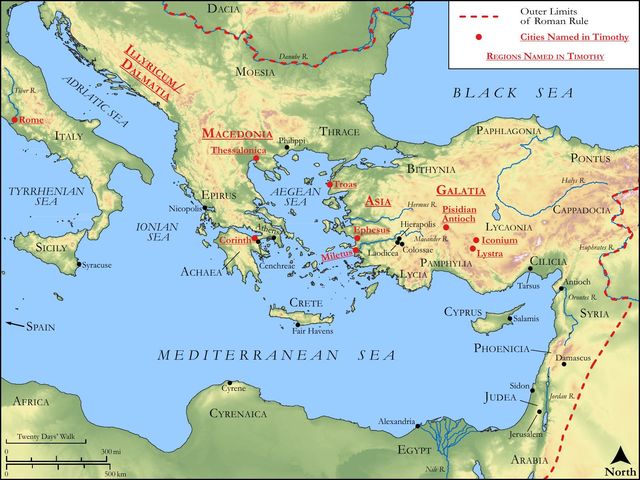
Paul is writing to Timothy, his protégé, who is ministering in Ephesus, a significant Greco-Roman city rife with diverse religious practices, imperial cult worship, and social hierarchies. The early Christian community often faced suspicion, persecution, or at least neglect from the Roman authorities. In this context, Paul's command to pray for "kings and all who are in high positions" was counter-cultural, encouraging submission to and prayer for governing authorities, even those who might be hostile. This directive aimed to foster a peaceful and orderly environment for the spread of the gospel, as stated in 1 Timothy 2:2. The emphasis on God as "Saviour" also resonated in a world where various deities and rulers claimed to offer salvation, subtly asserting the unique and ultimate saving power of the one true God.
Key Themes
ShowHideThe verse significantly contributes to several key themes within 1 Timothy and Paul's broader theology. Firstly, it underscores the priority and efficacy of prayer, particularly intercessory prayer for all humanity, as an act that aligns with God's will. Secondly, it highlights God's universal salvific will, foreshadowing the explicit statement in 1 Timothy 2:4 that God "desires all people to be saved and to come to a knowledge of the truth." This theme is central to Paul's understanding of God's character. Thirdly, the identification of God as "our Saviour" emphasizes His redemptive character and active involvement in human history, setting the stage for the role of Christ as the "one mediator" in 1 Timothy 2:5. This verse thus bridges the practical instruction on prayer with profound theological truths about God's nature and mission.
Exposition and Analysis
ShowHideKey Word Analysis
ShowHideThis term, G2570, signifies something that is inherently beautiful, morally excellent, honorable, and virtuous. It suggests that the act of praying for all people is not merely functionally beneficial but is intrinsically pleasing and commendable in its very nature, possessing an aesthetic and ethical superiority in God's eyes.
Derived from G587, this word means "accepted," "agreeable," or "well-received." It conveys the idea that this specific type of prayer is welcomed by God, resonating with His character and will, and finding favor in His presence. It implies divine approval and a positive reception.
This noun denotes a "deliverer," referring to God or Christ. Its use here emphasizes God's fundamental character as the one who rescues, preserves, and brings salvation. This title is crucial as it links the acceptability of prayer directly to God's ultimate redemptive purpose for humanity.
Verse Breakdown
ShowHide"For this is good and acceptable"
The conjunction "For" (Greek: gar) explicitly connects this statement to the preceding command for comprehensive prayer (1 Timothy 2:1-2), presenting it as the divine rationale. The phrase "this is good and acceptable" functions as a strong affirmation of the inherent value and divine approval of such prayer. It means that prayer for all people is not just a human duty or a beneficial social practice, but it aligns perfectly with God's moral and aesthetic standards, finding His full favor and delight.
"in the sight of God our Saviour"
This clause specifies the ultimate audience and approver of the prayer. It is not merely good in a general sense, but specifically "in the sight" (Greek: enṓpion, meaning "in the face of" or "in the presence of") of God Himself. The addition of "our Saviour" is profoundly significant. It identifies God by His redemptive character, implying that the prayer for all people is acceptable precisely because it harmonizes with God's own saving purpose for humanity. The title "our Saviour" also personalizes God's redemptive work, indicating that He is the one who has acted decisively to deliver His people.
Literary Devices
ShowHideThe verse employs several literary devices to convey its profound theological message. The initial "For" acts as a Purpose Clause or Reasoning Connector, clearly indicating that the statement that follows provides the divine rationale for the preceding command to pray for all people. This structure emphasizes the theological grounding of practical instruction. The phrase "good and acceptable" uses Double Adjectives to intensify the divine approval, highlighting both the intrinsic moral excellence ("good") and the favorable reception ("acceptable") of such prayer in God's eyes. Finally, the appellation "God our Saviour" functions as a powerful Theological Declaration and a Divine Title. It is a concise yet rich statement about God's character, emphasizing His redemptive nature and setting the stage for the broader theme of universal salvation that permeates the subsequent verses.
Theological and Thematic Connections
ShowHideThis verse profoundly connects the practice of prayer with the very character and will of God. It reveals that God is not a distant, indifferent deity, but an active "Saviour" who delights in the intercession of His people for the world, because such prayer aligns with His own desire for all humanity to experience salvation. The acceptability of this prayer is rooted in God's redemptive nature, making intercession a participation in His divine mission. It underscores that our prayers are not just petitions, but acts of worship that honor God by reflecting His heart for the lost and His desire for peace and order in society, which facilitate the spread of the gospel.
Reflection and Application
ShowHideFirst Timothy 2:3 provides a powerful and enduring motivation for the believer's prayer life. It transforms prayer from a mere obligation into a deeply meaningful act of worship that actively participates in God's redemptive purposes for the world. Knowing that our prayers for leaders, for the lost, and for the peace of society are not only heard but are considered "good and acceptable in the sight of God our Saviour" should ignite a fervent and consistent spirit of intercession within us. This truth calls us to expand the scope of our prayers beyond our immediate concerns, embracing a global perspective that mirrors God's universal love. It reminds us that our intercession is a vital spiritual discipline that aligns our hearts with the divine will, contributing to the conditions conducive for the gospel to flourish and for more people to come to the saving knowledge of Christ.
Questions for Reflection
ShowHideFAQ
ShowHideWhy is it important that God is called "our Saviour" in this verse?
ShowHideThe designation "God our Saviour" is critically important because it grounds the command for universal prayer in God's very nature and ultimate purpose. It signifies that God is not merely a distant ruler, but the one who actively delivers and redeems humanity. This title foreshadows the explicit statement in 1 Timothy 2:4 about God's desire for all people to be saved. Therefore, when believers pray for all people, they are not just fulfilling a command, but aligning their desires and actions with the redemptive heart of God Himself. This title also appears elsewhere in Paul's writings, such as Titus 2:10 and Titus 3:4, consistently emphasizing His saving character.
Christ-Centered Fulfillment
ShowHideFirst Timothy 2:3, in declaring that prayer for all people is "good and acceptable in the sight of God our Saviour," finds its ultimate fulfillment and deepest meaning in Jesus Christ. He is the preeminent expression of God's saving will and the perfect embodiment of the "Saviour" title. The very desire of God to save all people, which makes such prayer acceptable, is perfectly manifested in Christ's atoning work on the cross, where He gave Himself as a "ransom for all" (1 Timothy 2:6). Jesus is not only the object of our faith but also the ultimate intercessor, continually pleading for His people before the Father (Romans 8:34 and Hebrews 7:25). Furthermore, Christ's command to "go and make disciples of all nations" (Matthew 28:19) is the practical outworking of God's universal salvific desire, making our prayers for all people a direct participation in the Great Commission, empowered by the very Spirit of Christ. Thus, the "good and acceptable" prayer described in this verse is intrinsically Christ-centered, flowing from His redemptive work and furthering His kingdom purposes on earth.