


1 Samuel 7:3
Bible text: King James Version (1769 Blayney text) · Public domain
Bible text: King James Version with Strong's numbers · Public domain
Bible text: Berean Standard Bible · Public domain
Bible text: American Standard Version (1901) · Public domain
Bible text: World English Bible, Messianic edition · Public domain
Bible text: Geneva Bible (1599) · Public domain
Bible text: Young's Literal Translation · Public domain
- וַיֹּאמֶרvai·Yo·merand he saidH559Conj-w ¦ V-Qal-ConsecImperf-3msVerb Qal Consecutive Imperfect 3rd Singular Masculineוַandיֹּאמֶרhe said
- שְׁמוּאֵלshe·mu·'ElSamuelH8050N-proper-mNoun Proper Masculine
- אֶל'eltoH413PrepPreposition
- כָּלkolallH3605N-mscNoun Singular Masculine Construct
- בֵּיתbeit[the] house ofH1004N-mscNoun Singular Masculine Construct
- יִשְׂרָאֵלYis·ra·'ElIsraelH3478N-properNoun Proper Location
- לֵאמֹרle·Mor<to> sayingH559Prep-l ¦ V-Qal-InfVerb Qal Infinitive Constructלֵ<to>אמֹרsaying
- אִם'imifH518PrtParticle Conditional
- בְּכָלbe·kholwith allH3605Prep-b ¦ N-mscNoun Singular Masculine Constructבְּwithכָלall
- לְבַבְכֶםle·vav·Khemyour heartH3824N-msc ¦ 2mpNoun Singular Masculine Constructלְבַבְheartכֶםyour
- אַתֶּם'a·TemyouH859Pro-2mpPronoun Personal 2nd Plural Masculine
- שָׁבִיםsha·Vim[are] turning backH7725V-Qal-Prtcpl-mpVerb Qal Participle Plural Masculine Absolute
- אֶל'eltoH413PrepPreposition
- יְהוָהYah·wehYahwehH3068N-properNoun Proper Title
- הָסִירוּha·Si·ruremoveH5493V-Hiphil-Imp-2mpVerb Hiphil Imperative 2nd Plural Masculine
- אֶת'et<obj.>H853DirObjMParticle Object Indicator
- אֱלֹהֵי'e·lo·Hei[the] gods ofH430N-mpcNoun Plural Masculine Construct
- הַנֵּכָרha·ne·Khar<the> foreignnessH5236Art ¦ N-msNoun Singular Masculine Absoluteהַ<the>נֵּכָרforeignness
- מִתּוֹכְכֶםmi·tokh·Khemfrom among youH8432Prep-m ¦ N-msc ¦ 2mpNoun Singular Masculine Constructמִfromתּוֹכְamongכֶםyou
- וְהָעַשְׁתָּרוֹתve·ha·'ash·ta·Rotand the AshtarothH6252Conj-w ¦ Art ¦ N-fpNoun Plural Feminine AbsoluteוְandהָtheעַשְׁתָּרוֹתAshtaroth
- וְהָכִינוּve·ha·Khi·nuand directH3559Conj-w ¦ V-Hiphil-Imp-2mpVerb Hiphil Imperative 2nd Plural Masculineוְandהָכִינוּdirect
- לְבַבְכֶםle·vav·Khemyour heartH3824N-msc ¦ 2mpNoun Singular Masculine Constructלְבַבְheartכֶםyour
- אֶל'eltoH413PrepPreposition
- יְהוָהYah·wehYahwehH3068N-properNoun Proper Title
- וְעִבְדֻהוּve·'iv·Du·huand serve himH5647Conj-w ¦ V-Qal-Imp-2mp ¦ 3msVerb Qal Imperative 2nd Plural Masculineוְandעִבְדֻserveהוּhim
- לְבַדּוֹle·va·Doto only himH905Prep-l ¦ N-msc ¦ 3msNoun Singular Masculine Constructלְtoבַדּonlyוֹhim
- וְיַצֵּלve·ya·Tzelso may he deliverH5337Conj-w ¦ V-Hiphil-Imperf-3msVerb Hiphil Imperfect 3rd Singular Masculineוְsoיַצֵּלmay he deliver
- אֶתְכֶם'et·Khem<obj.> youH853DirObjM ¦ 2mpParticle Object Indicatorאֶתְ<obj.>כֶםyou
- מִיַּדmi·Yadfrom [the] hand ofH3027Prep-m ¦ N-cscNoun Singular common gender Constructמִfromיַּד[the] hand of
- פְּלִשְׁתִּיםpe·lish·Tim[the] PhilistinesH6430N-mpNoun Gentilic Plural Masculine Absolute
English is a literal word-by-word gloss of the Hebrew, not the KJV's wording. Why?
This is the original text the KJV's translators worked from — each Hebrew word with its own literal English meaning in this verse, prepared by scholars at Tyndale House, Cambridge. The KJV translates whole sentences, not word by word, so its wording differs: one Hebrew word can become several English words, and the KJV may choose “the LORD” where the gloss reads “Yahweh”. Both are faithful — they answer different questions. For the KJV's own rendering, switch to the KJV text.
Details
See on the biblical-era maps
Study this verse
Public-domain commentary
Matthew Henry
From his Commentary on the Whole Bible. Henry comments on passages, not single verses — this entry covers 1 Samuel 7:3–6. His four-level outline is real structure in the source text, so it is rendered as structure.
We may well wonder where Samuel was and what he was doing all this while, for we have not had him so much as named till now, since Sa1 4:1, not as if he were unconcerned, but his labours among his people are not mentioned till there appears the fruit of them. When he perceived that they began to lament after the Lord he struck while the iron was hot, and two things he endeavoured to do for them, as a faithful servant of God and a faithful friend to the Israel of God: -
I.He endeavoured to separate between them and their idols, for there reformation must begin.
He spoke to all the house of Israel (Sa1 7:3), going, as it should seem, from place to place, an itinerant preacher (for we find not that they were gathered together till Sa1 7:5), and wherever he came this was his exhortation, "If you do indeed return to the Lord, as you seem inclined to do, by your lamentations for your departure from him and his from you, then know, 1. That you must renounce and abandon your idols, put away the strange gods, for your God will admit no rival; put them away from you, each one from himself, nay, and put them from among you, do what you can, in your places, to rid them out of the country. Put away Baalim, the strange gods, and Ashtaroth, the strange goddesses," for such also they had. Or Ashtaroth is particularly named because it was the best-beloved idol, and that which they were most wedded to. Note, True repentance strikes at the darling sin, and will with a peculiar zeal and resolution put away that, the sin which most easily besets us. 2. "That you must make a solemn business of returning to God, and do it with a serious consideration and a stedfast resolution, for both are included in preparing the heart, directing, disposing, establishing, the heart unto the Lord. 3. That you must be wholly for God, for him and no other, serve him only, else you do not serve him at all so as to please him. 4. That this is the only way and a sure way to prosperity and deliverance. Take this course, and he will deliver you out of the hand of the Philistines; for it was because you forsook him and served other gods that he delivered you into their hands." This was the purport of Samuel's preaching, and it had a wonderfully good effect (Sa1 7:4): They put away Baalim and Ashtaroth, not only quitted the worship of them, but destroyed their images, demolished their altars, and quite abandoned them. What have we to do any more with idols? Hos 14:8; Isa 30:22.
II.He endeavoured to engage them for ever to God and his service. Now that he had them in a good mind he did all he could to keep them in it.
1.He summons all Israel, at least by their elders, as their representatives, to meet him at Mizpeh (Sa1 7:5), and there he promises to pray for them. And it was worth while for them to come from the remotest part of the country to join with Samuel in seeking God's favour. Note, Ministers should pray for those to whom they preach, that God by his grace would make the preaching effectual. And, when we come together in religious assemblies, we must remember that it is as much our business there to join in public prayers as it is to hear a sermon. He would pray for them that, by the grace of God, they might be parted from their idols, and that then, by the providence of God, they might be delivered from the Philistines. Ministers would profit their people more if they did but pray more for them.
2.They obey his summons, and not only come to the meeting, but conform to the intentions of it, and appear there very well disposed, Sa1 7:6.
(1.)They drew water and poured it out before the Lord, signifying,
[1.]Their humiliation and contrition for sin, owning themselves as water spilt upon the ground, which cannot be gathered up again (Sa2 14:14), so mean, so miserable, before God, Psa 22:14. The Chaldee reads it, They poured out their hearts in repentance before the Lord. They wept rivers of tears, and sorrowed after a godly sort, for it was before the Lord and with an eye to him.
[2.]Their earnest prayers and supplications to God for mercy. The soul is, in prayer, poured out before God, Psa 62:8.
[3.]Their universal reformation; they thus expressed their willingness to part with all their sins, and to retain no more of the relish or savour of them than the vessel does of the water that is poured out of it. They were free and full in their confession, and fixed in their resolution to cast away from them all their transgressions. Israel is now baptized from their idols, so Dr. Lightfoot.
[4.]Some think it signifies their joy in the hope of God's mercy, which Samuel had assured them of. This ceremony was used with that signification at the feast of tabernacles, Joh 7:37, Joh 7:38, and see Isa 12:3. Taking it in this sense, it must be read, They drew water after they had fasted. In the close of their humiliation they thus expressed their hope of pardon and reconciliation.
(2.)They fasted, abstained from food, afflicted their souls, so expressing repentance and exciting devotion.
(3.)They made a public confession: We have sinned against the Lord, so giving glory to God and taking shame to themselves. And, if we thus confess our sins, we shall find our God faithful and just to forgive us our sins.
3.Samuel judged them at that time in Mizpeh, that is, he assured them, in God's name, of the pardon of their sins, upon their repentance, and that God was reconciled to them. It was a judgment of absolution. Or he received informations against those that did not leave their idols, and proceeded against them according to law. Those that would not judge themselves he judged. Or now he settled courts of justice among them, and appointed the terms and circuits which he observed afterwards, Sa1 7:16. Now he set those wheels a-going; and, whereas he began to act as a magistrate, to prevent their relapsing into those sins which now they seemed to have renounced.
Historical interpretation
Historical reception
2 surviving comments on this verse. Each one is dated, so this reads as a timeline rather than a list.
And prepare your hearts for the Lord, etc. The Lord, author of a new priesthood, which is according to the order of Melchizedek, appearing in the flesh, teaches the whole house of Israel, that is, the Church of those desiring to see God, to remove from themselves the traditions of the Pharisees; and not only the works, which the law also taught, but also to prepare their hearts themselves to serve the Lord alone, saying: You have heard that it was said to the ancients: But I say to you (Matthew V.) Thus they can be freed from all enemies in the life to come.
If with all your heart you return to the Lord, etc. Here it is shown figuratively how the Lord teaching in Judea, performing miracles, suffering and rising, ascending into heaven and sending the grace of the Holy Spirit, made not only the Jews but also the Gentiles partakers of His mercy. Therefore, Samuel, having taken the priesthood after the death of Eli, addresses the whole house of Israel to remove foreign gods from among them.
Continue studying 1 Samuel 7:3 across the web’s major study libraries — every link below opens this exact verse, chapter, or book on the destination site.
Read & Compare
 BibleGatewayThis verse in more than 200 translations and 70 languages.
 Bible.comThe YouVersion reader — hundreds of translations, reading plans, and highlights.
 ESV.orgCrossway's official English Standard Version reader.
 NET BibleThe NET translation with 60,000+ translators' notes on every rendering decision.
 STEP BibleTyndale House's free study tool — original text, vocabulary, and scholarly resources.
 BibliaLogos Bible Software's free web reader.
 USCCBThe New American Bible (Revised Edition) with the U.S. bishops' study notes.
Commentaries
 BibleHub CommentariesDozens of classic commentaries on this verse, gathered on one page.
 StudyLightMore than 100 commentary sets — the largest collection on the web.
 BibleRefPlain-English commentary on what this verse means, verse by verse.
 Enduring WordDavid Guzik's free commentary on this chapter, widely used by Bible teachers.
 Bible Study ToolsVerse commentary alongside Greek and Hebrew study aids.
Original Language & Research
- BibleHub InterlinearThe verse word by word — original language, transliteration, and English.
- BibleHub LexiconEvery word's original-language definition and Strong's entry.
 Blue Letter BibleDeep-study tools — Strong's numbers, concordance, and word studies.
 SefariaThe Hebrew text with Rashi and centuries of Jewish commentary.
Sermons, Hymns & Audio


TrulyRandomVerse is not affiliated with these sites and doesn’t control their content. They’re linked because they’re genuinely useful.
Summary
First Samuel 7:3 presents the prophet Samuel's urgent and pivotal call to the nation of Israel, urging them to abandon their widespread idolatrous practices and return to Yahweh with sincere, undivided devotion. This programmatic verse outlines the divine conditions for national deliverance: a wholehearted turning away from foreign gods, specifically the prominent Canaanite deity Ashtaroth, coupled with an exclusive commitment to serving the Lord alone. Samuel's message establishes a clear and foundational link between Israel's spiritual fidelity and God's promised intervention, setting the stage for their liberation from oppressive Philistine rule and a renewal of their covenant relationship.
Context
ShowHideLiterary Context
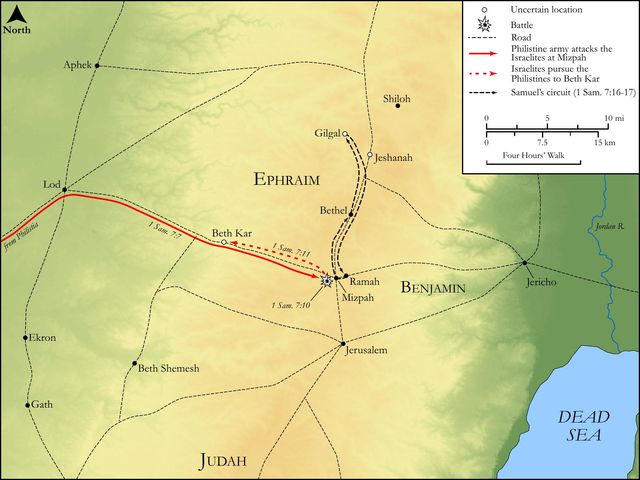
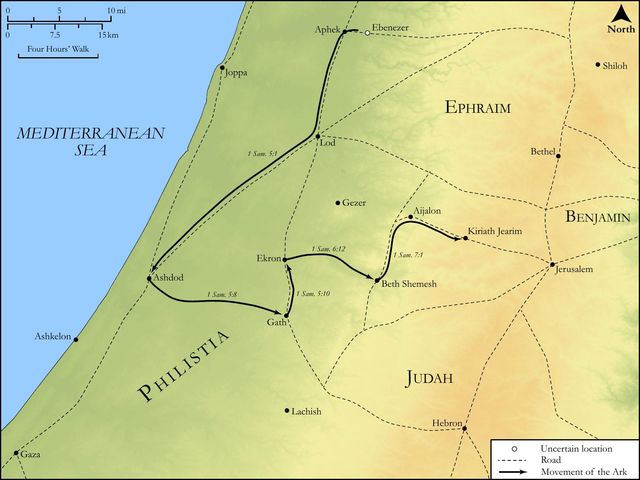
This verse is situated at a crucial turning point in Israel's history, immediately following a prolonged period of national humiliation and spiritual decline. The preceding chapters (1 Samuel 4-6) graphically detail the catastrophic loss of the Ark of the Covenant to the Philistines, the tragic deaths of Eli's sons, and Eli himself, marking the end of a corrupt priestly era. While the Ark's miraculous return in 1 Samuel 6 signifies God's sovereignty, it does not immediately rectify Israel's deep-seated spiritual malaise. Instead, it highlights their continued unfaithfulness. 1 Samuel 7 opens with the Ark residing in Kiriath-Jearim for two decades, during which the people "lamented after the LORD" (1 Samuel 7:2). Samuel, now firmly established as God's prophet and judge, seizes this moment of national introspection to issue a direct call for genuine spiritual reformation. Thus, 1 Samuel 7:3 serves as the foundational, conditional statement for the subsequent national revival and the decisive victory over the Philistines at Mizpah, detailed in 1 Samuel 7:7-11.
Historical & Cultural Context
During this period, Israel functioned as a loosely confederated tribal society, frequently plagued by internal disunity and severe external threats. The Philistines, a formidable "Sea People" who had settled on the southwestern coastal plain, represented the primary military and cultural challenge. Their advanced iron technology afforded them a significant military advantage over Israel, among whom, as a later chapter of this book records, "there was no smith found throughout all the land of Israel." Culturally, Israel was perpetually enticed by the polytheistic and fertility-oriented religions of their Canaanite neighbors. The worship of Baal (the storm god) and Ashtaroth (his consort, goddess of fertility, war, and sexuality) was particularly pervasive. These deities appealed to a people whose agricultural livelihood was dependent on rain and who sought divine favor in warfare. The explicit mention of "strange gods and Ashtaroth" (1 Samuel 7:3) among them reveals a widespread syncretism, where Israel attempted to blend the worship of Yahweh with pagan practices. This spiritual compromise was a recurring problem throughout their history, as evidenced in Judges 2:13. Samuel's prophetic call is a direct and uncompromising confrontation with this spiritual infidelity, demanding a return to the exclusive covenant relationship established at Sinai.
Key Themes
ShowHideFirst Samuel 7:3 powerfully articulates several foundational themes central to the book of Samuel and the broader Old Testament narrative. Firstly, it underscores the theme of repentance and return (שׁוּב), emphasizing that true spiritual renewal necessitates a wholehearted turning back to God, not merely outward ritual or lament. This echoes the covenant stipulations found in Deuteronomy 30:2 and the prophetic calls in Joel 2:12-13. Secondly, the verse highlights exclusive worship and monotheism, demanding the complete abandonment of idolatry. The specific mention of "strange gods and Ashtaroth" directly addresses the pervasive syncretism that violated the First Commandment. God's covenant with Israel permitted no rivals, a principle reinforced throughout the Pentateuch and prophetic literature. Finally, the verse establishes the theme of divine deliverance contingent on obedience. Samuel's promise, "and he will deliver you out of the hand of the Philistines," demonstrates God's faithfulness to His covenant promises when His people demonstrate genuine repentance and devotion. This pattern of sin, judgment, repentance, and deliverance is a recurring motif in the book of Judges and continues into Samuel, reinforcing God's sovereignty over history and His unwavering commitment to His people.
Exposition and Analysis
ShowHideKey Word Analysis
ShowHideThis primitive root (H7725) signifies "to turn back (hence, away) transitively or intransitively, literally or figuratively (not necessarily with the idea of return to the starting point); generally to retreat; often adverbial, again." In this context, it denotes a spiritual turning, a fundamental reorientation of one's allegiance and direction from idolatry back to Yahweh. It implies a reversal of behavior and a renewed commitment to the covenant.
This primitive root (H5493) means "to turn off (literal or figurative); be(-head), bring, call back, decline, depart, eschew, get (you), go (aside), lay away (by), leave undone, be past, pluck away, put (away, down), rebel, remove (to and fro), revolt, take (away, off), turn (aside, away, in), withdraw." Here, it is a strong imperative, demanding the active, decisive removal and renunciation of foreign gods and idols from Israel's midst, signifying a break from past unfaithfulness.
This primitive root (H3559) means "properly, to be erect (i.e. stand perpendicular); hence (causatively) to set up, in a great variety of applications, whether literal (establish, fix, prepare, apply), or figurative (appoint, render sure, proper or prosperous); certain(-ty), confirm, direct, faithfulness, fashion, fasten, firm, be fitted, be fixed, frame, be meet, ordain, order, perfect, (make) preparation, prepare (self), provide, make provision, (be, make) ready, right, set (aright, fast, forth), be stable, (e-) stablish, stand, tarry." When applied to the heart (lêbâb, H3824), it implies a deliberate, intentional act of setting one's inner being—thoughts, affections, and intentions—firmly and steadfastly toward the Lord, making the heart ready and steadfast for His service.
Verse Breakdown
ShowHide"¶ And Samuel spake unto all the house of Israel, saying,"
This opening clause establishes Samuel's divinely appointed authority as a prophet and judge, addressing the entire nation of Israel (H3478, H1004). It underscores the communal and public nature of this call to repentance, indicating that the spiritual state of the nation as a whole is at stake. Samuel acts as God's mouthpiece (H559), delivering a divine imperative that requires a corporate response.
"If ye do return unto the LORD with all your hearts,"
This is the crucial conditional clause, setting the prerequisite for divine intervention. The phrase "return unto the LORD" (H7725, H3068) is a common biblical idiom for repentance, signifying a turning away from sin and back to God. The intensifying phrase "with all your hearts" (H3824) emphasizes that this return must be genuine, complete, and internal, involving every aspect of one's being—intellect, emotion, and will—rather than a superficial or ritualistic gesture. It demands undivided devotion.
"[then] put away the strange gods and Ashtaroth from among you,"
This is the first specific command stemming from the condition of wholehearted return. It demands the active removal and renunciation (H5493) of all foreign deities (H5236, H430) and, specifically, the prominent Canaanite fertility goddess Ashtaroth (H6252). This command highlights the practical, tangible outworking of true repentance: the eradication of idolatry from their midst (H8432), both physically (destroying idols) and spiritually (renouncing their worship). It is a call to purify the nation from spiritual defilement.
"and prepare your hearts unto the LORD, and serve him only:"
This clause presents a two-fold command that further defines the nature of true repentance and devotion. "Prepare your hearts" (H3559, H3824) reiterates the internal commitment, an active readiness and dedication of one's inner life to God. "And serve him only" (H5647) emphasizes the exclusivity of Yahweh worship, a direct affirmation of the First Commandment. It demands singular allegiance, rejecting any form of syncretism or divided loyalty, and dedicating all service and worship to God alone (H3068).
"and he will deliver you out of the hand of the Philistines."
This final clause is the divine promise (H5337), the assured consequence of Israel's obedience to the preceding conditions. It guarantees that God Himself will act on their behalf, providing military and national liberation from their oppressive Philistine enemies (H3027, H6430). This demonstrates God's covenant faithfulness: when His people genuinely turn to Him and obey His commands, He will respond with powerful deliverance, proving His sovereignty and care.
Literary Devices
ShowHideFirst Samuel 7:3 employs several significant literary devices that amplify its message. Primarily, it is structured as a Conditional Covenant or Conditional Promise, utilizing a clear "if...then" construct ("If ye do return... then... he will deliver"). This structure underscores the reciprocal nature of the covenant relationship between God and Israel, where divine blessing and intervention are contingent upon human obedience and faithfulness. The verse also functions as a powerful Exhortation, with Samuel's words serving as a forceful and direct appeal to the people, urging them toward decisive action and profound spiritual transformation. The repetition of "hearts" ("with all your hearts" and "prepare your hearts") serves as a form of Emphasis or Anaphora, drawing critical attention to the internal, volitional nature of the required repentance and devotion, highlighting that true change begins within. Furthermore, the specific naming of "strange gods and Ashtaroth" is a form of Merism or Synecdoche, where particular examples (Ashtaroth, the prominent Canaanite deity) are used to represent the broader category of all forms of idolatry, emphasizing the pervasive nature of the spiritual problem. Finally, the verse demonstrates Parallelism in its series of commands ("put away... and prepare... and and serve"), creating a rhythmic and memorable structure that reinforces the multi-faceted demands of true repentance and exclusive devotion.
Theological and Thematic Connections
ShowHideFirst Samuel 7:3 stands as a foundational text for understanding the Old Testament's unwavering emphasis on genuine repentance and exclusive worship. It articulates a core covenant principle: God's deliverance and blessing are directly tied to His people's wholehearted devotion and obedience. This verse underscores that true spiritual renewal is not merely about outward actions or ritualistic lament but a profound internal transformation—a turning of the entire being towards God and away from anything that rivals His rightful place. This principle resonates throughout biblical theology, affirming God's demand for singular allegiance and His faithfulness to deliver those who truly seek Him. The Philistine oppression serves as a tangible consequence of Israel's spiritual unfaithfulness, illustrating the divine discipline that often precedes the call to repentance and subsequent restoration. It reveals God's sovereignty over the nations and His commitment to purify His people.
Reflection and Application
ShowHideFirst Samuel 7:3 offers a timeless blueprint for spiritual revival, applicable to both individuals and communities today. It challenges us to examine our own "hearts" and honestly assess what "strange gods" or "Ashtaroths" might subtly occupy the throne that rightfully belongs to God alone. These modern idols may not be carved images, but they can manifest as materialism, career ambition, self-reliance, comfort, entertainment, technological obsession, or even relationships that subtly displace God as our ultimate priority. The call to "return unto the LORD with all your hearts" means a complete reorientation of our affections, desires, and allegiances. It demands a deliberate "putting away" of anything that competes for our ultimate devotion, actively preparing our inner lives to serve God exclusively. When we genuinely turn from these competing loyalties and commit ourselves fully to Him, we can trust in His promise of deliverance from spiritual bondage, anxiety, the pressures of the world, and the challenges of life, just as He delivered Israel from the Philistines. This verse powerfully reminds us that true freedom, peace, and purpose are found only in undivided, wholehearted devotion to the One True God.
Questions for Reflection
ShowHideFAQ
ShowHideWhat were "strange gods and Ashtaroth," and why were they so problematic for Israel?
ShowHide"Strange gods" (Hebrew: ʾĕlōhê hannēkār) refers to any foreign deities or idols worshipped by the surrounding nations, which were fundamentally alien to Israel's covenant relationship with Yahweh. "Ashtaroth" (Hebrew: ʿašttārôt) specifically refers to the plural form of Ashtoreth (Astarte), a prominent Canaanite goddess of fertility, war, and sexuality, often associated with Baal worship. These deities were profoundly problematic for Israel because their worship directly violated the First Commandment, which demanded exclusive worship of Yahweh. Engaging in polytheistic practices, often involving immoral rites and syncretism, corrupted Israel's unique identity as God's chosen people and broke their covenant with Him, leading to spiritual decline, national weakness, and divine judgment, as seen repeatedly in the book of Judges. Samuel's command was a crucial call to purify the nation from this pervasive spiritual defilement and restore their singular allegiance to God.
Christ-Centered Fulfillment
ShowHideFirst Samuel 7:3, with its profound call for wholehearted repentance and exclusive devotion to the Lord, finds its ultimate and most glorious fulfillment in Jesus Christ. While Samuel's message offered deliverance from physical oppression by the Philistines, Christ offers deliverance from the far greater and more pervasive oppression of sin, death, and the dominion of darkness. The Old Testament command to "return unto the LORD with all your hearts" is perfectly embodied and enabled in the New Covenant, where the law is not merely external but is written on the heart by the Holy Spirit (Jeremiah 31:33). True worship, as Jesus Himself declared, is now in "spirit and truth" (John 4:24), a worship that transcends physical location and ritual, centered on an authentic relationship with God through His Son. Jesus is the ultimate "deliverer" who frees us from the tyranny of sin and false gods, not through military might, but through His atoning sacrifice on the cross (Colossians 1:13-14). He calls for an even deeper, more profound "putting away" of idols—not just physical ones, but anything that competes for our supreme allegiance, including self-righteousness, materialism, worldly ambition, or the love of comfort (Matthew 6:24). In Christ, our hearts are truly "prepared unto the LORD" through regeneration by the Holy Spirit, enabling us to "serve him only" with undivided loyalty, not out of obligation or fear, but out of love, gratitude, and the empowering grace of the salvation He provides (Romans 6:17-18). He is the true and living God, and in Him, we find complete and eternal deliverance from every spiritual enemy.