


Revelation 3:16
- οὕτωςhoutōsSoG3779ADVAdverb
- ὅτιhotibecauseG3754CONJConjunction
- χλιαρὸςchliaroslukewarmG5513A-NSMAdjective Nominative Singular Masculine
- εἶeiyou areG1510V-PAI-2SVerb Present Active Indicative 2nd Singular
- καὶkaiandG2532CONJConjunction
- οὔτεouteneitherG3777CONJ-NConjunction Negative
- ζεστὸςzestoshotG2200A-NSMAdjective Nominative Singular Masculine
- οὔτεoutenorG3777CONJ-NConjunction Negative
- ψυχρόςpsuchroscoldG5593A-NSMAdjective Nominative Singular Masculine
- μέλλωmellōI am aboutG3195V-PAI-1SVerb Present Active Indicative 1st Singular
- σεseyouG4771P-2ASPersonal pronoun Accusative 2nd Singular
- ἐμέσαιemesaito spitG1692V-AANVerb Aorist Active Infinitive
- ἐκekout ofG1537PREPPreposition
- τοῦtoutheG3588T-GSNDefinite article Genitive Singular Neuter
- στόματόςstomatosmouthG4750N-GSNNoun Genitive Singular Neuter
- μουmouof MineG3165P-1GSPersonal pronoun Genitive 1st Singular
English is a literal word-by-word gloss of the Greek, not the KJV's wording. Why?
This is the original text the KJV's translators worked from — each Greek word with its own literal English meaning in this verse, prepared by scholars at Tyndale House, Cambridge. The KJV translates whole sentences, not word by word, so its wording differs: one Greek word can become several English words, and the KJV may choose “charity” where the gloss reads “love”. Both are faithful — they answer different questions. For the KJV's own rendering, switch to the KJV text.
Details
See on the biblical-era map

Study this verse
Public-domain commentary
Matthew Henry
From his Commentary on the Whole Bible. Henry comments on passages, not single verses — this entry covers Revelation 3:14–22. His four-level outline is real structure in the source text, so it is rendered as structure.
We now come to the last and worst of all the seven Asian churches, the reverse of the church of Philadelphia; for, as there was nothing reproved in that, here is nothing commended in this, and yet this was one of the seven golden candlesticks, for a corrupt church may still be a church. Here we have, as before,
I.The inscription, to whom, and from whom.
1.To whom: To the angel of the church of Laodicea. This was a once famous city near the river Lycus, had a wall of vast compass, and three marble theatres, and, like Rome, was built on seven hills. It seems, the apostle Paul was very instrumental in planting the gospel in this city, from which he wrote a letter, as he mentions in the epistle to the Colossians, the last chapter, in which he sends salutations to them, Laodicea not being above twenty miles distant from Colosse. In this city was held a council in the fourth century, but it has been long since demolished, and lies in its ruins to this day, an awful monument of the wrath of the Lamb.
2.From whom this message was sent. Here our Lord Jesus styles himself the Amen, the faithful and true witness, the beginning of the creation of God.
(1.)The Amen, one that is steady and unchangeable in all his purposes and promises, which are all yea, and all amen.
(2.)The faithful and true witness, whose testimony of God to men ought to be received and fully believed, and whose testimony of men to God will be fully believed and regarded, and will be a swift but true witness against all indifferent lukewarm professors.
(3.)The beginning of the creation of God, either of the first creation, and so he is the beginning, that is, the first cause, the Creator, and the Governor of it; or of the second creation, the church; and so he is the head of that body, the first-born from the dead, as it is in Rev 1:5, whence these titles are taken. Christ, having raised up himself by his own divine power, as the head of a new world, raises up dead souls to be a living temple and church to himself.
II.The subject-matter, in which observe,
1.The heavy charge drawn up against this church, ministers and people, by one who knew them better than they knew themselves: Thou art neither cold nor hot, but worse than either; I would thou wert cold or hot, Rev 3:15. Lukewarmness or indifference in religion is the worst temper in the world. If religion is a real thing, it is the most excellent thing, and therefore we should be in good earnest in it; if it is not a real thing, it is the vilest imposture, and we should be earnest against it. If religion is worth any thing, it is worth every thing; an indifference here is inexcusable: Why halt you between two opinions? If God be God, follow him; if Baal (be God), follow him. Here is no room for neutrality. An open enemy shall have a fairer quarter than a perfidious neuter; and there is more hope of a heathen than of such. Christ expects that men should declare themselves in earnest either for him or against him.
2.A severe punishment threatened: I will spue thee out of my mouth. As lukewarm water turns the stomach, and provokes to a vomit, lukewarm professors turn the heart of Christ against them. He is sick of them, and cannot long bear them. They may call their lukewarmness charity, meekness, moderation, and a largeness of soul; it is nauseous to Christ, and makes those so that allow themselves in it. They shall be rejected, and finally rejected; for far be it from the holy Jesus to return to that which has been thus rejected.
3.We have one cause of this indifference and inconsistency in religion assigned, and that is self-conceitedness or self-delusion. They thought they were very well already, and therefore they were very indifferent whether they grew better or no: Because thou sayest, I am rich, and increased with goods, etc., Rev 3:17. Here observe, What a difference there was between the thoughts they had of themselves and the thoughts that Christ had of them.
(1.)The high thoughts they had of themselves: Thou sayest, I am rich, and increased with goods, and have need of nothing, rich, and growing richer, and increased to such a degree as to be above all want or possibility of wanting. Perhaps they were well provided for as to their bodies, and this made them overlook the necessities of their souls. Or they thought themselves well furnished in their souls: they had learning, and they took it for religion; they had gifts, and they took them for grace; they had wit, and they took it for true wisdom; they had ordinances, and they took up with them instead of the God of ordinances. How careful should we be not to put the cheat upon our own souls! Doubtless there are many in hell that once thought themselves to be in the way to heaven. Let us daily beg of God that we may not be left to flatter and deceive ourselves in the concerns of our souls.
(2.)The mean thoughts that Christ had of them; and he was not mistaken. He knew, though they knew not, that they were wretched, and miserable, and poor, and blind, and naked. Their state was wretched in itself, and such as called for pity and compassion from others: though they were proud of themselves, they were pitied by all who knew their case. For,
[1.]They were poor, really poor, when they said and thought they were rich; they had no provision for their souls to live upon; their souls were starving in the midst of their abundance; they were vastly in debt to the justice of God, and had nothing to pay off the least part of the debt.
[2.]They were blind; they could not see their state, nor their way, nor their danger; they could not see into themselves; they could not look before them; they were blind, and yet they thought they saw; the very light that was in them was darkness, and then how great must that darkness be! They could not see Christ, though evidently set forth, and crucified, before their eyes. They could not see God by faith, though always present in them. They could not see death, though it was just before them. They could not look into eternity, though they stood upon the very brink of it continually.
[3.]They were naked, without clothing and without house and harbour for their souls. They were without clothing, had neither the garment of justification nor that of sanctification. Their nakedness both of guilt and pollution had no covering. They lay always exposed to sin and shame. Their righteousnesses were but filthy rags; they were rags, and would not cover them, filthy rags, and would defile them. And they were naked, without house or harbour, for they were without God, and he has been the dwelling-place of his people in all ages; in him alone the soul of man can find rest, and safety, and all suitable accommodations. The riches of the body will not enrich the soul; the sight of the body will not enlighten the soul; the most convenient house for the body will not afford rest nor safety to the soul. The soul is a different thing from the body, and must have accommodation suitable to its nature, or else in the midst of bodily prosperity it will be wretched and miserable.
4.We have good counsel given by Christ to this sinful people, and that is that they drop their vain and false opinion they had of themselves, and endeavour to be that really which they would seem to be: I counsel thee to buy of me, etc., Rev 3:18. Observe,
(1.)Our Lord Jesus Christ continues to give good counsel to those who have cast his counsels behind their backs.
(2.)The condition of sinners in never desperate, while they enjoy the gracious calls and counsels of Christ.
(3.)Our blessed Lord, the counsellor, always gives the best advice, and that which is most suitable to the sinner's case; as here, [1.] These people were poor; Christ counsels them to buy of him gold tried in the fire, that they might be rich. He lets them know where they might have true riches and how they might have them. First, Where they might have them - from himself; he sends them not to the streams of Pactolus, nor to the mines of Potosi, but invites them to himself, the pearl of price. Secondly, And how must they have this true gold from him? They must buy it. This seems to be unsaying all again. How can those that are poor buy gold? Just as they may buy of Christ wine and milk, that is, without money and without price, Isa 55:1. Something indeed must be parted with, but it is nothing of a valuable consideration, it is only to make room for receiving true riches. "Part with sin and self-sufficiency, and come to Christ with a sense of your poverty and emptiness, that you may be filled with his hidden treasure." [2.] These people were naked; Christ tells them where they might have clothing, and such as would cover the shame of their nakedness. This they must receive from Christ; and they must only put off their filthy rags that they might put on the white raiment which he had purchased and provided for them - his own imputed righteousness for justification and the garments of holiness and sanctification. [3.] They were blind; and he counsels them to buy of him eye-salve, that they might see, to give up their own wisdom and reason, which are but blindness in the things of God, and resign themselves to his word and Spirit, and their eyes shall be opened to see their way and their end, their duty and their true interest; a new and glorious scene would then open itself to their souls; a new world furnished with the most beautiful and excellent objects, and this light would be marvellous to those who were but just now delivered from the powers of darkness. This is the wise and good counsel Christ gives to careless souls; and, if they follow it, he will judge himself bound in honour to make it effectual.
5.Here is added great and gracious encouragement to this sinful people to take the admonition and advice well that Christ had given them, Rev 3:19, Rev 3:20. He tells them,
(1.)It was given them in true and tender affection: "Whom I love, I rebuke and chasten. You may think I have given you hard words and severe reproofs; it is all out of love to your souls. I would not have thus openly rebuked and corrected your sinful lukewarmness and vain confidence, if I had not been a lover of your souls; had I hated you, I would have let you alone, to go on in sin till it had been your ruin." Sinners ought to take the rebukes of God's word and rod as tokens of his good-will to their souls, and should accordingly repent in good earnest, and turn to him that smites them; better are the frowns and wounds of a friend than the flattering smiles of an enemy.
(2.)If they would comply with his admonitions, he was ready to make them good to their souls: Behold, I stand at the door and knock, etc., Rev 3:20. Here observe,
[1.]Christ is graciously pleased by his word and Spirit to come to the door of the heart of sinners; he draws near to them in a way of mercy, ready to make them a kind visit.
[2.]He finds this door shut against him; the heart of man is by nature shut up against Christ by ignorance, unbelief, sinful prejudices.
[3.]When he finds the heart shut, he does not immediately withdraw, but he waits to be gracious, even till his head be filled with the dew.
[4.]He uses all proper means to awaken sinners, and to cause them to open to him: he calls by his word, he knocks by the impulses of his Spirit upon their conscience.
[5.]Those who open to him shall enjoy his presence, to their great comfort and advantage. He will sup with them; he will accept of what is good in them; he will eat his pleasant fruit; and he will bring the best part of the entertainment with him. If what he finds would make but a poor feast, what he brings will make up the deficiency: he will give fresh supplies of graces and comforts, and thereby stir up fresh actings of faith, and love, and delight; and in all this Christ and his repenting people will enjoy pleasant communion with each other. Alas! what do careless obstinate sinners lose by refusing to open the door of the heart to Christ!
III.We now come to the conclusion of this epistle; and here we have as before,
1.The promise made to the overcoming believer. It is here implied,
(1.)That though this church seemed to be wholly overrun and overcome with lukewarmness and self-confidence, yet it was possible that by the reproofs and counsels of Christ they might be inspired with fresh zeal and vigour, and might come off conquerors in their spiritual warfare.
(2.)That, if they did so, all former faults should be forgiven, and they should have a great reward. And what is that reward? They shall sit down with me on my throne, as I also overcame, and have sat down with my Father on his throne, Rev 3:21. Here it is intimated,
[1.]That Christ himself had met with his temptations and conflicts.
[2.]That he overcame them all, and was more than a conqueror.
[3.]That, as the reward of his conflict and victory, he has sat down with God the Father on his throne, possessed of that glory which he had with the Father from eternity, but which he was pleased very much to conceal on earth, leaving it as it were in the hands of the Father, as a pledge that he would fulfil the work of a Saviour before he reassumed that manifestative glory; and, having done so, then pignus reposcere - he demands the pledge, to appear in his divine glory equal to the Father.
[4.]That those who are conformed to Christ in his trials and victories shall be conformed to him in his glory; they shall sit down with him on his throne, on his throne of judgment at the end of the world, on his throne of glory to all eternity, shining in his beams by virtue of their union with him and relation to him, as the mystical body of which he is the head.
2.All is closed up with the general demand of attention (Rev 3:22), putting all to whom these epistles shall come in mind that what is contained in them is not of private interpretation, not intended for the instruction, reproof, and correction of those particular churches only, but of all the churches of Christ in all ages and parts of the world: and as there will be a resemblance in all succeeding churches to these, both in their graces and sins, so they may expect that God will deal with them as he dealt with these, which are patterns to all ages what faithful, and fruitful churches may expect to receive from God, and what those who are unfaithful may expect to suffer from his hand; yea, that God's dealings with his churches may afford useful instruction to the rest of the world, to put them upon considering, If judgment begin at the house of God, what shall the end of those be that do not obey the gospel of Christ? Pe1 4:17. Thus end the messages of Christ to the Asian churches, the epistolary part of this book. We now come to the prophetical part.
Historical interpretation
Seven Centuries of Reception
7 surviving comments on this verse. Each one is dated, so this reads as a timeline rather than a list.
Select a marker to jump to its quote. Markers stagger vertically where authors wrote within a few decades of each other.
Moreover, the seventh association of the Church declares that they are rich men placed in positions of dignity, but believing that they are rich, among whom indeed the Scriptures are discussed in their bedchamber, while the faithful are outside; and they are understood by none, although they boast themselves, and say that they know all things,-endowed with the confidence of learning, but ceasing from its labour. And thus He says:-
"That they are neither cold nor hot." That is, neither unbelieving nor believing, for they are all things to all men. And because he who is neither cold nor hot, but lukewarm, gives nausea, He says:-
"I will vomit thee out of My mouth." Although nausea is hateful, still it hurts no one; so also is it with men of this kind when they have been cast forth. But because there is time of repentance, He says:-
"I persuade thee to buy of Me gold tried in the fire." That is, that in whatever manner you can, you should suffer for the Lord's name tribulations and passions.
"And anoint thine eyes with eye-salve." That what you gladly know by the Scripture, you should strive also to do the work of the same. And because, if in these ways men return out of great destruction to great repentance, they are not only useful to themselves, but they are able also to be of advantage to many, He promised them no small reward,-to sit, namely, on the throne of judgment.
They learn good and do evil who, it is written, confess God by words and deny him by deeds. They, as the apostle says, repose in the law and know its intent and approve of those things that are the more profitable. They have the form of knowledge and of truth in the law. They preach that they must not steal, yet they do steal. They read that they must not commit adultery, yet they commit it. They glory in the law, yet by transgression of the law they dishonor God. Therefore, for this very reason, Christians are worse because they should be better. They do not practice what they preach, and they struggle against their faith by their morals. All the more blameworthy is evil which the label of goodness accuses, and the holy name is the crime of an unholy person. Hence, the Savior also said in the Apocalypse to the lukewarm Christian: “Would that you were cold or hot. But now because you are lukewarm, I will begin to vomit you out of my mouth.”
Let us not only beware of serious sins, as I suggested above, but let us also spurn small daily acts of negligence as the poison of the devil. There are some people who are weakened by excessive unconcern after their religious profession, because they seem to have left the world. In such people is fulfilled that sentence of our Lord in which it is said, “How I wish you were one or the other—hot or cold! But because you are lukewarm, I will spew you out of my mouth!” What does it mean that he said, How I wish you were one or the other—hot or cold? This means that it would have been better for you to have remained cold in the world or to be fervent in the monastery. Now because you have withdrawn from the world and still have refused to acquire spiritual warmth because of your carelessness, you have become lukewarm and will be vomited from the Lord’s mouth, scarcely ever to be recovered again. For this reason, dearest brothers, with God’s help carefully listen to the sentence of sacred Scripture, in which it is said, “With closest custody guard your heart.” There should be rejoicing over the monk who has come to the monastery and, in a meek and humble spirit, wills to practice meekness, obedience and patience.
In this passage we recognize persons of nobility in the world, whom he says are neither hot nor cold but lukewarm, because, although they possess an abundance of wealth, they are empty of works of piety, nor are they inflamed by any feeling of compassion toward good works. They are therefore [considered] as poor, said to be neither cold nor hot, for they abound in riches which they use tepidly and so become sluggish, and by not sharing those riches with the needy are rightly regarded as lacking in the desire for good works. But this passage may also refer to those persons who interpret the Scriptures in private while outside it is not known whether they are faithful and being confident in their literary knowledge, they are found to be empty of works.… Now they may purchase gold for themselves, of which he says, “Receive wisdom as gold and knowledge like chosen silver.” And, should they be able to derive something from the sources of the divine Scriptures, as though illumined by the light of wisdom; they might perfect it by works themselves, either the former enkindled by the depths of piety through the largess of their wealth, or the latter informed spiritually through their knowledge of the Scriptures.
Just as that which is lukewarm induces vomiting in those who take it in, so also, he says, I will vomit you out through the word of my mouth into eternal destruction, as though you were rotten food. For mixing together the seed of the divine word with the thistles of wealth, you have become unaware of your poverty in spiritual matters and of the blindness of your spiritual eyes and of your nakedness in good works.
I know thy works, that thou art neither cold, nor hot. I would thou wert cold, or hot. But because thou art lukewarm, and neither cold, nor hot, I will begin to vomit thee out of my mouth. The cold ones are those whom either the perfidy of the Jews or the error of the Gentiles keeps bound, because the one who said, I will sit in the sides of the North, [Is. 14:13] binds them with his ice. On the other hand, the hot ones are those whose hearts the South wind, that is the Holy Spirit, comes to and touches with the heat of faith, so that, the hardness of incredulity being softened and the cold of error being lost, they emanate the heat of good works. Both someone cold and someone hot often become lukewarm: someone cold becomes lukewarm when they turn away from the cold of iniquity but do not pass to the perfect heat of justice, and someone hot becomes lukewarm if they come down from the heat of justice to the inactivity of sluggishness. Then, we have all learned from experience that something cold or hot easily passes into our body, but something lukewarm provokes nausea and is thrown right out of the mouth. So can teachers more easily attract an unfaithful person to faith or a perverted Christian to fervor for good work, than they can a lukewarm person; and so they forsake him, as a farmer leaves an unfruitful land and cultivates the one from which he has already plucked out the thorns and which is fruitful, or the one which, albeit still full of thorns, seems to promise it will be fruitful.
Because, he says, that you are lukewarm. Lukewarm is called the one who has indeed received the Holy Spirit through baptism, but has extinguished the gift through negligence and concern for temporary matters. This is also a divine command: "Do not quench the Spirit." (1 Thess. 5:19)
I wish you were cold or hot! So, because you are lukewarm, and neither hot nor cold. He says, "I wish that you were either hot, aflame with the energy of the Spirit, or entirely cold and completely uninvolved, unbaptized, and not lukewarm, lacking the grace of the Spirit. For the one who possesses the spiritual fire of the Spirit in men is perfect, "who have their powers of discernment trained by constant practice to distinguish good from evil," (Heb. 5:14) and they are spiritual; but the one who has not yet received the grace of the Spirit, hoping to receive it someday, is not counted among the hopeless. However, the lukewarm person, being uncaring both to ignorance and to the possibility of being baptized and living, is rejected.
He says that I am about to vomit you out of my mouth. He indeed used the metaphor of lukewarmness appropriately; for every lukewarm thing, as the physicians say, when swallowed, provokes vomiting in the one who has drank it. Therefore, for those who have difficulty vomiting, they are given lukewarm water to drink, which is called by this name because it induces vomiting. He says that he intends to make you rejected from his household. But what is the cause of such a situation?
Continue studying Revelation 3:16 across the web’s major study libraries — every link below opens this exact verse, chapter, or book on the destination site.
Read & Compare
 BibleGatewayThis verse in more than 200 translations and 70 languages.
 Bible.comThe YouVersion reader — hundreds of translations, reading plans, and highlights.
 ESV.orgCrossway's official English Standard Version reader.
 NET BibleThe NET translation with 60,000+ translators' notes on every rendering decision.
 STEP BibleTyndale House's free study tool — original text, vocabulary, and scholarly resources.
 BibliaLogos Bible Software's free web reader.
 USCCBThe New American Bible (Revised Edition) with the U.S. bishops' study notes.
Commentaries
 BibleHub CommentariesDozens of classic commentaries on this verse, gathered on one page.
 StudyLightMore than 100 commentary sets — the largest collection on the web.
 BibleRefPlain-English commentary on what this verse means, verse by verse.
 Enduring WordDavid Guzik's free commentary on this chapter, widely used by Bible teachers.
 Bible Study ToolsVerse commentary alongside Greek and Hebrew study aids.
Original Language & Research
- BibleHub InterlinearThe verse word by word — original language, transliteration, and English.
- BibleHub LexiconEvery word's original-language definition and Strong's entry.
 Blue Letter BibleDeep-study tools — Strong's numbers, concordance, and word studies.
 CNTR CollationThe earliest Greek manuscripts of this verse, collated letter by letter.
Sermons, Hymns & Audio


TrulyRandomVerse is not affiliated with these sites and doesn’t control their content. They’re linked because they’re genuinely useful.
Summary
Revelation 3:16 delivers a potent and graphic warning from Jesus Christ to the church in Laodicea, condemning their spiritual indifference and lukewarmness. This verse encapsulates the severe consequence of a faith that lacks fervent commitment or clear conviction, presenting a powerful metaphor for spiritual apathy that is so repulsive to Christ that He vows to utterly reject them, likening their spiritual state to nauseating, tepid water.
Context
ShowHideLiterary Context
Revelation 3:16 is part of the seventh and final letter to the churches in Asia Minor, specifically addressed to the church in Laodicea (Revelation 3:14-22). Each letter follows a similar structure, beginning with a self-description of Christ, followed by commendation (or lack thereof), rebuke, exhortation, and a promise to the overcomer. The letter to Laodicea is unique in that it contains no commendation, only a scathing rebuke for their spiritual complacency. This verse serves as the climax of Christ's indictment, immediately preceding His call for them to repent and buy true spiritual riches from Him, rather than relying on their material wealth.
Historical & Cultural Context
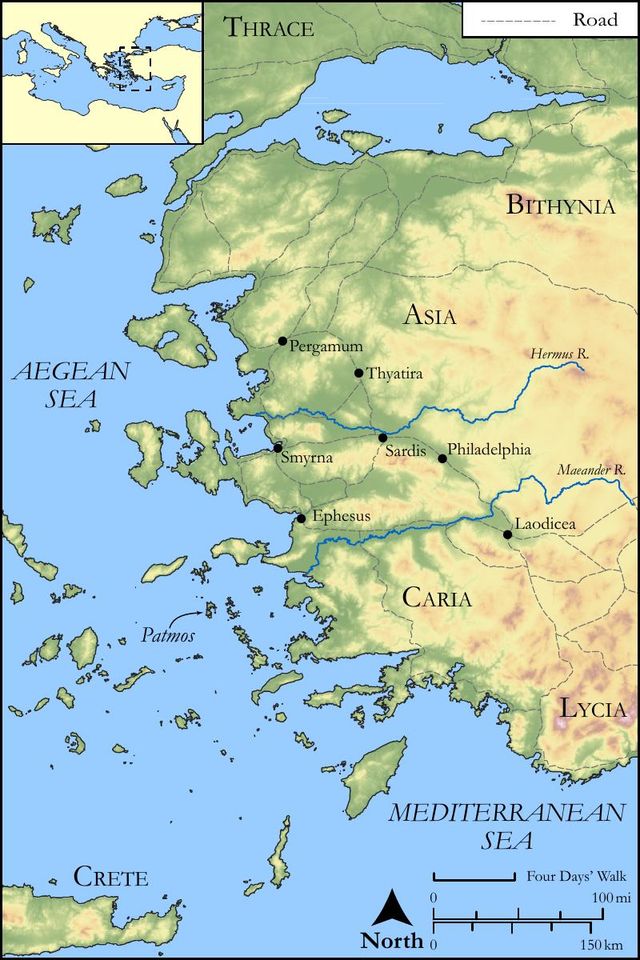
The imagery of "cold," "hot," and "lukewarm" water is deeply rooted in Laodicea's unique geographical and economic situation. Laodicea was a wealthy city, renowned for its banking, its black wool industry, and its medical school, particularly known for an eye salve. However, unlike its neighboring cities, it lacked a natural, reliable water source. Hierapolis, located about six miles north, was famous for its therapeutic hot springs, rich in mineral deposits. Colossae, about ten miles east, was known for its refreshing, cold mountain water. Laodicea, by contrast, had an aqueduct system that brought water from these distant hot springs, but by the time it reached the city, it was tepid, often mineral-laden, and unpalatable—neither invigoratingly hot nor refreshingly cold. This physical reality serves as a vivid illustration for the spiritual state of the Laodicean church: they were neither spiritually zealous ("hot") nor clearly opposed to Christ ("cold"), but rather bland, ineffective, and spiritually nauseating to Him.
Key Themes
ShowHideThe central theme in this verse and the broader letter to Laodicea is the danger of spiritual indifference and complacency. The church's lukewarmness is presented as a more offensive state than outright coldness, as it signifies a lack of genuine commitment and a pretense of faith without its transformative power. This directly contrasts with the fervent love and devotion expected by Christ, as seen in passages like Matthew 22:37. Another key theme is divine judgment and rejection, powerfully conveyed by the visceral image of Christ "spuing" them out of His mouth, which underscores the severity of God's intolerance for half-hearted faith. Implicit in this warning is also a call to radical commitment and repentance, urging the church to abandon its self-sufficiency and embrace a zealous, active faith, echoing the broader call for repentance found throughout the book of Revelation.
Exposition and Analysis
ShowHideKey Word Analysis
ShowHideThis word, G5513, means "tepid" or "lukewarm." It refers to something that is neither hot nor cold, lacking any distinct quality or benefit. Spiritually, it signifies a state of indifference, apathy, and compromise—a lack of fervent commitment or clear conviction for Christ. It's a dangerous middle ground that offers no spiritual refreshment or healing.
This word, G2200, means "boiled" or "calid," and figuratively, "fervent." In the context of the Laodicean water supply, it would refer to the therapeutic hot springs of Hierapolis. Spiritually, "hot" signifies zealous devotion, passionate commitment, and active engagement in faith, providing spiritual healing and vitality.
This word, G1692, means "to vomit" or "to spew out." It is a strong, visceral term that conveys profound disgust and intolerance. Christ's use of this word emphasizes the utter repulsion He feels toward the Laodiceans' spiritual state, indicating a complete and forceful rejection rather than a mere dismissal.
Verse Breakdown
ShowHide"So then because thou art lukewarm"
This phrase directly addresses the Laodicean church, identifying their core spiritual problem. Their "lukewarmness" is not merely a lack of enthusiasm but a state of spiritual indifference and compromise that fails to honor Christ. It implies a superficial adherence to faith without genuine, transformative power or heartfelt devotion.
"and neither cold nor hot"
This further clarifies the nature of their lukewarmness by contrasting it with two distinct, and paradoxically, potentially more useful states. "Hot" represents fervent, zealous faith that is invigorating and healing, like the hot springs. "Cold" represents refreshing, life-giving faith, like pure mountain water, or perhaps even outright rejection, which, though opposing, at least presents a clear stance. The Laodiceans are neither, occupying a useless, unpalatable middle ground.
"I will spue thee out of my mouth."
This is the stark and graphic consequence of their spiritual state. The verb "spue" (vomit) powerfully conveys Christ's utter disgust and revulsion. It signifies a complete and forceful rejection, a severance of relationship, highlighting that a half-hearted, indifferent commitment is utterly unacceptable to the Lord. It is a divine expulsion from His presence and fellowship.
Literary Devices
ShowHideRevelation 3:16 is rich in Metaphor and Symbolism. The entire verse functions as an extended metaphor, where the physical properties of water—hot, cold, and lukewarm—symbolize spiritual states. "Hot" symbolizes zealous, fervent, and healing faith, while "cold" can symbolize refreshing, life-giving faith, or even a decisive, clear opposition. "Lukewarm" powerfully symbolizes spiritual apathy, indifference, and compromise, a state that is spiritually useless and nauseating. The phrase "I will spue thee out of my mouth" is an example of vivid Imagery and Hyperbole, employing a highly visceral and shocking action to convey the depth of Christ's revulsion and the severity of the impending judgment. This graphic language serves to underscore the gravity of spiritual complacency and to provoke a strong response from the hearers.
Theological and Thematic Connections
ShowHideThe condemnation of lukewarmness in Revelation 3:16 underscores a profound theological truth: God desires wholehearted devotion and genuine commitment, not superficial adherence or indifferent religiosity. This verse highlights that spiritual apathy is not merely a minor flaw but a repulsive condition that jeopardizes one's relationship with Christ. It challenges the notion that a passive or compromised faith is acceptable, emphasizing that true faith must be active, fervent, and transformative, reflecting a deep love for God and His kingdom. The divine disgust expressed here serves as a potent reminder that God's covenant relationship demands fidelity and passionate engagement, rejecting any form of spiritual neutrality.
Reflection and Application
ShowHideRevelation 3:16 serves as a piercing mirror for believers today, challenging us to honestly examine the true depth of our faith and commitment. Are we truly "hot" with a fervent passion for Christ, actively pursuing His will and living out our faith with zeal? Or are we "cold," perhaps clearly rejecting Him or living in open rebellion, which, while tragic, at least presents a clear choice? Most dangerously, are we "lukewarm"—going through the motions of Christianity without genuine conviction, active love, or transformative power? This verse urges us to avoid spiritual complacency, where we might be comfortable in our routines, yet devoid of the vibrant, active faith that pleases God. It calls us to a radical re-evaluation, prompting us to shed indifference, repent of apathy, and embrace a life characterized by wholehearted devotion, active service, and an unquenchable love for God and others. It's a call to be fully devoted, to live with purpose, and to avoid the perils of spiritual apathy that can lead to divine disfavor and a severed relationship with Christ.
Questions for Reflection
ShowHideFAQ
ShowHideWhat does "lukewarm" mean in a spiritual sense?
ShowHideIn a spiritual sense, "lukewarm" refers to a state of spiritual indifference, apathy, or compromise. It describes a person or church that is neither passionately devoted to Christ ("hot") nor openly hostile or rejecting of Him ("cold"). Instead, they exist in a comfortable, non-committal middle ground, going through the motions of faith without genuine fervor, conviction, or active engagement. This state is seen as particularly repulsive to Christ because it lacks the transformative power of true faith and offers no spiritual benefit, much like tepid, mineral-laden water. The letter to the church in Laodicea in Revelation 3:14-22 is a primary example of this condemnation.
Why is being "lukewarm" worse than being "cold" or "hot"?
ShowHideFrom Christ's perspective, being "lukewarm" is worse because it signifies a deceptive and useless state. "Hot" faith is desirable because it is fervent, zealous, and brings healing and refreshment. "Cold" faith, while seemingly negative, could paradoxically be preferable because it represents a clear, decisive stance—either a refreshing, life-giving faith or an outright rejection, which at least allows for a clear point of engagement or repentance. Lukewarmness, however, is unpalatable and ineffective; it pretends to be something it is not, lacking any distinct quality or benefit. It implies a lack of integrity and a failure to live up to the calling of Christ, making it spiritually nauseating to Him. This is why Jesus declares, "I will spue thee out of my mouth," indicating utter rejection.
Christ-Centered Fulfillment
ShowHideWhile Revelation 3:16 is a stern warning, its ultimate fulfillment and resolution are found in the person and work of Jesus Christ. The very reason Christ abhors lukewarmness is His own nature: He is the "faithful and true witness" (Revelation 3:14), embodying perfect zeal and unwavering commitment to God's will. His life was one of absolute devotion, culminating in His fervent obedience even to death on the cross (Philippians 2:8). He did not offer a half-hearted sacrifice; His love was "hot" and all-consuming, taking away the sin of the world (John 1:29). Furthermore, Christ's call to the lukewarm Laodiceans to "buy from me gold refined by fire... and white garments... and eye salve" (Revelation 3:18) is an invitation to receive true spiritual riches and healing that only He can provide, freely given through His atoning work. He is the source of genuine spiritual fervor and integrity, and it is by drawing near to Him, through faith and repentance, that believers can be transformed from lukewarmness into a vibrant, Christ-like passion, reflecting the new creation He inaugurates (2 Corinthians 5:17).