


Revelation 12:13
Bible text: King James Version (1769 Blayney text) · Public domain
Bible text: Berean Standard Bible · Public domain
Bible text: American Standard Version (1901) · Public domain
Bible text: World English Bible, Messianic edition · Public domain
Bible text: Geneva Bible (1599) · Public domain
Bible text: Young's Literal Translation · Public domain
- ΚαὶKaiAndG2532CONJConjunction
- ὅτεhotewhenG3753CONJConjunction
- εἶδενeidensawG1492V-2AAI-3SVerb 2nd Aorist Active Indicative 3rd Singular
- ὁhotheG3588T-NSMDefinite article Nominative Singular Masculine
- δράκωνdrakōndragonG1404N-NSMNoun Nominative Singular Masculine
- ὅτιhotithatG3754CONJConjunction
- ἐβλήθηeblēthēhe had been thrown downG906V-API-3SVerb Aorist Passive Indicative 3rd Singular
- εἰςeistoG1519PREPPreposition
- τὴνtēntheG3588T-ASFDefinite article Accusative Singular Feminine
- γῆνgēnearthG1093N-ASFNoun Accusative Singular Feminine
- ἐδίωξενediōxenhe pursuedG1377V-AAI-3SVerb Aorist Active Indicative 3rd Singular
- τὴνtēntheG3588T-ASFDefinite article Accusative Singular Feminine
- γυναῖκαgunaikawomanG1135N-ASFNoun Accusative Singular Feminine
- ἥτιςhētiswhoG3748R-NSFRelative pronoun Nominative Singular Feminine
- ἔτεκενetekenhad brought forthG5088V-2AAI-3SVerb 2nd Aorist Active Indicative 3rd Singular
- τὸνtontheG3588T-ASMDefinite article Accusative Singular Masculine
- ἄρσεναarsenamale [child]G730A-ASMAdjective Accusative Singular Masculine
English is a literal word-by-word gloss of the Greek, not the KJV's wording. Why?
This is the original text the KJV's translators worked from — each Greek word with its own literal English meaning in this verse, prepared by scholars at Tyndale House, Cambridge. The KJV translates whole sentences, not word by word, so its wording differs: one Greek word can become several English words, and the KJV may choose “charity” where the gloss reads “love”. Both are faithful — they answer different questions. For the KJV's own rendering, switch to the KJV text.
Details
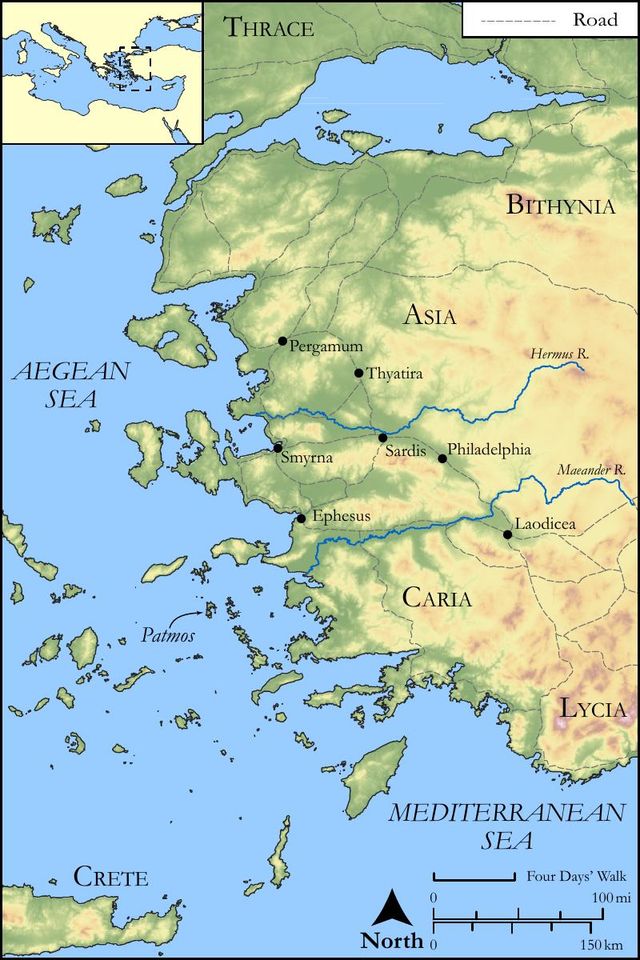
See on the biblical-era maps

Study this verse
Public-domain commentary
Matthew Henry
From his Commentary on the Whole Bible. Henry comments on passages, not single verses — this entry covers Revelation 12:12–17. His two-level outline is real structure in the source text, so it is rendered as structure.
We have here an account of this war, so happily finished in heaven, or in the church, as it was again renewed and carried on in the wilderness, the place to which the church had fled, and where she had been for some time secured by the special care of her God and Saviour. Observe,
I.The warning given of the distress and calamity that should fall upon the inhabitants of the world in general, through the wrath and rage of the devil. For, though his malice is chiefly bent against the servants of God, yet he is an enemy and hater of mankind as such; and, being defeated in his designs against the church, he is resolved to give all the disturbance he can to the world in general: Woe to the inhabitants of the earth, and the sea, Rev 12:12. The rage of Satan grows so much the greater as he is limited both in place and time; when he was confined to the wilderness, and had but a short time to reign there, he comes with the greater wrath.
II.His second attempt upon the church now in the wilderness: He persecuted the woman who brought forth the man-child, Rev 12:13. Observe,
1.The care that God had taken of his church. He had conveyed her as on eagles' wings, into a place of safety provided for her, where she was to continue for a certain space of time, couched in prophetic characters, taken from Dan 7:25.
2.The continual malice of the dragon against the church. Her obscurity could not altogether protect her; the old subtle serpent, which at first lurked in paradise, now follows the church into the wilderness, and casts out a flood of water after her, to carry her away. This is thought to be meant of a flood of error and heresy, which was breathed by Arius, Nestorius, Pelagius, and many more, by which the church of God was in danger of being overwhelmed and carried away. The church of God is in more danger from heretics than from persecutors; and heresies are as certainly from the devil as open force and violence.
3.The seasonable help provided for the church in this dangerous juncture: The earth helped the woman, and opened her mouth, and swallowed up the flood, Rev 12:16. Some think we are to understand the swarms of Goths and Vandals that invaded the Roman empire, and found work for the Arian rulers, who otherwise would have been as furious persecutors as the pagan had been, and had exercised great cruelties already; but God opened a breach of war, and the flood was in a manner swallowed up thereby, and the church enjoyed some respite. God often sends the sword to avenge the quarrel of his covenant; and, when men choose new gods, then there is danger of war in the gates; intestine broils and contentions often end in the invasions of a common enemy.
4.The devil, being thus defeated in his designs upon the universal church, now turns his rage against particular persons and places; his malice against the woman pushes him on to make war with the remnant of her seed. Some think hereby are meant the Albigenses, who were first by Dioclesian driven up into barren and mountainous places, and afterwards cruelly murdered by popish rage and power, for several generations; and for no other reason than because they kept the commandments of God and held the testimony of Jesus Christ. Their fidelity to God and Christ, in doctrine, worship, and practice, was that which exposed them to the rage of Satan and his instruments; and such fidelity will expose men still, less or more, to the end of the world, when the last enemy shall be destroyed.
Historical interpretation
Four Centuries of Reception
4 surviving comments on this verse. Each one is dated, so this reads as a timeline rather than a list.
Select a marker to jump to its quote. Markers stagger vertically where authors wrote within a few decades of each other.
As we said before, the devil carries on a hatred against the church that is without bounds and with all means. For the more he is defeated and is expelled, the more sharply does he try to multiply his deceptions.
When the devil wrestled with Christ after his baptism, he was overcome. Then arming himself against the holy apostles, he was again shamed when he saw that they found life through death, while as a snake he had been condemned to crawl upon the ground and to eat dirt, that is, earthly thoughts. He then began to persecute the church, for it has borne and continues to bear the masculine people of God which is not womanly because of desire.
And when the dragon saw that he was cast down to the earth, etc. The devil, attacking the Church with inextricable cunning, persecutes all the more intensely the more he is cast down.
The present passage is a repetition of what has been said before; for it does not mean that immediately after the Dragon saw that he had been cast down to the earth, he pursued the woman, but rather that when the Dragon saw himself existing in such evils, and that he had fallen from angelic dignity, he became exceedingly bitter against humanity, and pursued the woman who had borne the Savior of mankind, in order to destroy her. He pursued the woman because he recognized that the one born of her was mightier than he who had been captured, being envious of mankind's salvation through the Lord, and not accepting such a great reversal, that although he himself was cast down from heaven, men from the earth would ascend to heaven through virtue.
Continue studying Revelation 12:13 across the web’s major study libraries — every link below opens this exact verse, chapter, or book on the destination site.
Read & Compare
 BibleGatewayThis verse in more than 200 translations and 70 languages.
 Bible.comThe YouVersion reader — hundreds of translations, reading plans, and highlights.
 ESV.orgCrossway's official English Standard Version reader.
 NET BibleThe NET translation with 60,000+ translators' notes on every rendering decision.
 STEP BibleTyndale House's free study tool — original text, vocabulary, and scholarly resources.
 BibliaLogos Bible Software's free web reader.
 USCCBThe New American Bible (Revised Edition) with the U.S. bishops' study notes.
Commentaries
 BibleHub CommentariesDozens of classic commentaries on this verse, gathered on one page.
 StudyLightMore than 100 commentary sets — the largest collection on the web.
 BibleRefPlain-English commentary on what this verse means, verse by verse.
 Enduring WordDavid Guzik's free commentary on this chapter, widely used by Bible teachers.
 Bible Study ToolsVerse commentary alongside Greek and Hebrew study aids.
Original Language & Research
- BibleHub InterlinearThe verse word by word — original language, transliteration, and English.
- BibleHub LexiconEvery word's original-language definition and Strong's entry.
 Blue Letter BibleDeep-study tools — Strong's numbers, concordance, and word studies.
 CNTR CollationThe earliest Greek manuscripts of this verse, collated letter by letter.
Sermons, Hymns & Audio


TrulyRandomVerse is not affiliated with these sites and doesn’t control their content. They’re linked because they’re genuinely useful.
Summary
Revelation 12:13 vividly portrays the immediate aftermath of the war in heaven, where the "dragon," identified as Satan, is decisively defeated and expelled from the heavenly realms. Enraged by his downfall and limited to the earthly sphere, his malevolent focus immediately shifts to persecuting "the woman," a symbolic representation of God's people, particularly Israel, who gave birth to the Messiah. This verse marks a critical turning point, highlighting the intensified spiritual warfare against those connected to Christ, as the adversary unleashes his wrath upon the earth.
Context
ShowHideLiterary Context
Revelation 12:13 is situated at a pivotal juncture within the apocalyptic visions of Revelation 12, which introduces a grand drama of heaven and earth. The chapter opens with the symbolic vision of a woman clothed with the sun, universally understood to represent Israel, the lineage through which the Messiah would come. This woman gives birth to a male child, who is immediately caught up to God's throne, clearly identifying him as Jesus Christ. The narrative then introduces the "great red dragon," explicitly named as that old serpent, called the Devil, and Satan, who attempts to devour the child but fails. Verses 7-9 describe a war in heaven, where Michael and his angels cast the dragon and his angels down to earth. Revelation 12:10-12 celebrates this heavenly victory and the silencing of "the accuser of our brethren," yet it also warns of the dragon's great wrath on earth, knowing his time is short. Verse 13, therefore, directly follows this expulsion, explaining the dragon's immediate and vengeful response to his defeat: the persecution of the woman.
Historical & Cultural Context
The book of Revelation was written during a period of intense persecution for early Christians, likely under the Roman Emperor Domitian (c. AD 95). John, exiled on Patmos, received these visions to encourage and warn the suffering church. The "dragon" is named in Revelation 12:9 as "that old serpent, called the Devil, and Satan," the serpent who deceived Eve in the garden of Eden. For Jewish readers, the "serpent" would immediately evoke the tempter in Genesis 3, solidifying the dragon's identity as the ultimate adversary. The concept of persecution was a lived reality for the original audience, as they faced social ostracism, economic hardship, and even martyrdom for their faith. The "woman" could be understood as both historical Israel (from whom Christ came) and, by extension, the church, which inherits the promises and the spiritual conflict. The "earth" (gē) in this context signifies the terrestrial realm, where the dragon's influence is now concentrated, contrasting with his former access to the heavenly courts.
Key Themes
ShowHideRevelation 12:13 contributes significantly to several overarching themes within the book of Revelation and biblical theology. Firstly, it underscores the theme of Spiritual Warfare, revealing the war between God's forces and Satan's kingdom. The dragon's expulsion from heaven, though a victory for God's people, precipitates an intensified earthly battle, as seen in his immediate turn to persecution. Secondly, the verse highlights the Malice and Persistence of Evil. Despite his defeat, Satan's nature remains unchanged; his rage is redirected, not diminished. This portrays an enemy who is relentless in his opposition to God's redemptive plan and His people, a theme echoed in 1 Peter 5:8. Thirdly, it emphasizes the Vulnerability and Protection of God's People. The woman, though persecuted, is not destroyed. This foreshadows the divine protection and ultimate triumph that God provides for His church, even amidst severe trials, a promise woven throughout the fabric of Revelation, particularly in passages like Revelation 7:9-17.
Exposition and Analysis
ShowHideKey Word Analysis
ShowHideThis term, derived from a word suggesting "to look" or "to fascinate," denotes a "fabulous kind of serpent." In Revelation 12, this symbolic creature is explicitly identified as "that old serpent, called the Devil, and Satan" (Revelation 12:9). The imagery connects to the primordial serpent in Genesis 3, establishing Satan's ancient enmity against God and humanity. The "dragon" here embodies the ultimate embodiment of evil, chaos, and destructive power.
This verb, a prolonged and causative form of a primary verb meaning "to flee," signifies "to pursue (literally or figuratively); by implication, to persecute." While it can mean simple pursuit, in this context, it carries the strong connotation of hostile, aggressive, and relentless harassment with the intent to harm, oppress, or destroy. It reveals the dragon's active, vengeful strategy against the woman, driven by his recent defeat.
This term simply means "a woman" or "a wife." In the highly symbolic context of Revelation 12, the "woman" is a profound allegorical figure. Given that she "brought forth the man child" who is Christ, she primarily represents Israel, the nation from whom the Messiah descended. By extension, and in the ongoing spiritual conflict, she also symbolizes God's faithful people—the church—who are spiritually connected to Christ and continue to bear witness to Him.
Verse Breakdown
ShowHide"And when the dragon saw that he was cast unto the earth"
This clause describes the dragon's realization of his new, diminished status. The act of "being cast unto the earth" refers to his definitive expulsion from heaven, a defeat in heaven at the hands of Michael and his angels (Revelation 12:7-9). "Saw" (eídō) implies not just visual perception, but a full understanding and awareness of his new, confined sphere of operation. This awareness ignites his wrath, as he knows his time is now short and his ultimate defeat is certain.
"he persecuted the woman which brought forth the man [child]"
This segment reveals the immediate and direct consequence of the dragon's expulsion and rage. His defeated malice is redirected from the heavenly realm to the earthly, specifically targeting "the woman." As established, the woman represents Israel, the people from whom the Messiah (the "man child") originated. The persecution signifies Satan's relentless, hostile pursuit and oppression of God's chosen people throughout history, extending to all who identify with Christ, because they are the lineage and spiritual offspring connected to the one who defeated him.
Literary Devices
ShowHideRevelation 12:13 is rich in Symbolism and Allegory, which are central to apocalyptic literature. The "dragon" is not a literal creature but a powerful symbol for Satan, the Devil, representing the ultimate evil and adversary of God. The "woman" is a multifaceted symbol, embodying Israel as the mother of the Messiah and, by extension, the church, the people of God who continue the witness of Christ. The "man child" is a clear symbol for Jesus Christ, whose ascension to God's throne secures His victory. The entire scene is an Allegory for the spiritual warfare between good and evil, depicting Satan's defeat in heaven and his subsequent earthly rage. The dragon's "seeing" and subsequent "persecuting" also employ Personification, attributing human-like actions and motivations (realization, malice, active pursuit) to a spiritual entity.
Theological and Thematic Connections
ShowHideRevelation 12:13 provides profound theological insight into the nature of spiritual warfare and the enemy's tactics. It reveals that Satan, though defeated in the heavenly realm and stripped of his access to accuse believers before God's throne, remains a formidable and enraged adversary on earth. His expulsion from heaven does not lead to his cessation of activity but rather a redirection of his malice towards God's people. This highlights the reality that while Christ's victory is decisive, its full manifestation awaits His return, and in the interim, believers must contend with the dragon's intensified wrath. The persecution of the woman underscores the historical and ongoing suffering of God's people at the hands of evil, yet it also implicitly points to God's protective hand, as the woman is not utterly consumed.
Reflection and Application
ShowHideRevelation 12:13 serves as a stark reminder that the Christian life is lived in the midst of an ongoing spiritual conflict. The dragon's rage, redirected to the earth, signifies that believers should expect opposition, trials, and even direct attacks from the enemy. This understanding should not breed fear, but rather vigilance and a sober recognition of the spiritual realities at play. It calls us to remain grounded in Christ's ultimate victory, knowing that while the enemy is active, his power is limited and his defeat is sealed. Our response to persecution should be rooted in faith, perseverance, and reliance on God's sovereign protection, rather than succumbing to despair or retaliation. This verse encourages us to stand firm, trusting that even in the fiercest storms, God is with His people, preserving them for His ultimate triumph.
Questions for Reflection
ShowHideFAQ
ShowHideWho is "the woman" in Revelation 12:13, and why is the dragon persecuting her?
ShowHideIn Revelation 12, "the woman" is a profound symbolic figure. Primarily, she represents Israel, the nation from whom the Messiah, Jesus Christ, was born. This interpretation is strongly supported by her giving birth to the "man child" who is caught up to God's throne (Revelation 12:5). By extension, and in the ongoing spiritual conflict, she also symbolizes God's faithful people—the church—who are spiritually connected to Christ and continue to bear witness to Him. The dragon, identified as Satan (Revelation 12:9), persecutes her because she is the instrument through which God's redemptive plan, culminating in Christ, was brought forth. Having failed to destroy the Messiah directly, and having been cast out of heaven, Satan redirects his intense wrath and malice towards those who belong to Christ and bear His testimony on earth, seeking to hinder God's purposes and inflict suffering upon His people.
What does it mean that the dragon "was cast unto the earth"?
ShowHideThe phrase "cast unto the earth" signifies Satan's decisive defeat and expulsion from his former position of access and influence in the heavenly realms. Prior to this, Satan is depicted as having access to God's presence, where he could "accuse our brethren" (Revelation 12:10). The war in heaven described in Revelation 12:7-9, where Michael and his angels fight against the dragon, results in Satan's permanent removal from heaven. This does not mean he is powerless, but rather that his sphere of operation is now confined to the earthly realm. His rage is intensified precisely because he knows his time is short and his ultimate defeat is certain (Revelation 12:12). It marks a significant turning point in the spiritual battle, shifting the primary arena of conflict to the earth.
Christ-Centered Fulfillment
ShowHideRevelation 12:13, though describing Satan's post-defeat rage, is profoundly Christ-centered in its implications. The "man child" whom the woman brought forth is unequivocally Jesus Christ, whose ascension to God's throne (Revelation 12:5) signifies His ultimate victory over sin, death, and the devil. It is Christ's perfect life, atoning death, and glorious resurrection that disarmed the powers and authorities (Colossians 2:15), leading to Satan's expulsion from heaven. The dragon's persecution of the woman, therefore, is a direct consequence of his defeat by Christ. This ongoing spiritual warfare against God's people is a testament to the enemy's hatred for Christ and all who bear His name. Yet, Christ's work on the cross and His present reign ensure that while persecution may rage, the gates of hell will not prevail against His church (Matthew 16:18). The ultimate fulfillment of this narrative lies in Christ's promised return, when the dragon will be finally and eternally cast into the lake of fire (Revelation 20:10), bringing an end to all persecution and ushering in the new heavens and new earth where righteousness dwells (2 Peter 3:13).