


Numbers 14:43
Bible text: King James Version (1769 Blayney text) · Public domain
Bible text: King James Version with Strong's numbers · Public domain
Bible text: Berean Standard Bible · Public domain
Bible text: American Standard Version (1901) · Public domain
Bible text: World English Bible, Messianic edition · Public domain
Bible text: Geneva Bible (1599) · Public domain
Bible text: Young's Literal Translation · Public domain
- כִּיkiforH3588PrtParticle Conditional
- הָעֲמָלֵקִיha·'a·mal·Kithe Amalekite[s]H6003Art ¦ N-msNoun Gentilic Singular Masculine AbsoluteהָtheעֲמָלֵקִיAmalekite[s]
- וְהַכְּנַעֲנִיve·ha·ke·na·'a·Niand the Canaanite[s]H3669Conj-w ¦ Art ¦ N-msNoun Gentilic Singular Masculine AbsoluteוְandהַtheכְּנַעֲנִיCanaanite[s]
- שָׁםsham[are] thereH8033AdvAdverb
- לִפְנֵיכֶםlif·nei·Khem<to> before youH6440Prep-l ¦ N-mpc ¦ 2mpNoun Plural Masculine Constructלִ<to>פְנֵיbeforeכֶםyou
- וּנְפַלְתֶּםu·ne·fal·Temand you will fallH5307Conj-w ¦ V-Qal-ConsecPerf-2mpVerb Qal Consecutive Perfect 2nd Plural Masculineוּandנְפַלְתֶּםyou will fall
- בֶּחָרֶבbe·Cha·revby the swordH2719Prep-b ¦ N-fsNoun Singular Feminine Absoluteבֶּby theחָרֶבsword
- כִּיkiforH3588PrtParticle Conditional
- עַל'alsinceH5921PrepPreposition
- כֵּןken<thus>H3651AdvAdverb
- שַׁבְתֶּםshav·Temyou have turned backH7725V-Qal-Perf-2mpVerb Qal Perfect 2nd Plural Masculine
- מֵאַחֲרֵיme·'a·cha·Reifrom afterH310Prep-m ¦ Adj-mpcAdjective Numerical Plural Masculine Constructמֵfromאַחֲרֵיafter
- יְהוָהYah·wehYahwehH3068N-properNoun Proper Title
- וְלֹאve·lo'and notH3808Conj-w ¦ NegParticle Negativeוְandלֹאnot
- יִהְיֶהyih·Yehhe will beH1961V-Qal-Imperf-3msVerb Qal Imperfect 3rd Singular Masculine
- יְהוָהYah·wehYahwehH3068N-properNoun Proper Title
- עִמָּכֶם'i·ma·Khemwith youH5973Prep ¦ 2mpPreposition Definiteעִמָּwithכֶםyou
English is a literal word-by-word gloss of the Hebrew, not the KJV's wording. Why?
This is the original text the KJV's translators worked from — each Hebrew word with its own literal English meaning in this verse, prepared by scholars at Tyndale House, Cambridge. The KJV translates whole sentences, not word by word, so its wording differs: one Hebrew word can become several English words, and the KJV may choose “the LORD” where the gloss reads “Yahweh”. Both are faithful — they answer different questions. For the KJV's own rendering, switch to the KJV text.
Details
See on the biblical-era map
Study this verse
Public-domain commentary
Matthew Henry
From his Commentary on the Whole Bible. Henry comments on passages, not single verses — this entry covers Numbers 14:36–45. His three-level outline is real structure in the source text, so it is rendered as structure.
Here is, I. The sudden death of the ten evil spies. While the sentence was passing upon the people, before it was published, they died of the plague before the Lord, Num 14:36, Num 14:37. Now,
1.God hereby showed his particular displeasure against those who sinned and made Israel to sin.
(1.)They sinned themselves, in bringing up a slander upon the land of promise. Note, Those greatly provoke God who misrepresent religion, cast reproach upon it, and raise prejudices in men's minds against it, or give occasion to those to do so who seek occasion. Those that represent the service of God as mean and despicable, melancholy and uncomfortable, hard and impracticable, needless and unprofitable, bring up an evil report upon the good land, pervert the right ways of the Lord, and in effect give him the lie.
(2.)They made Israel to sin. They designedly made all the congregation murmur against God. Note, Ring-leaders in sin may expect to fall under particular marks of the wrath of God, who will severely reckon for the blood of souls, which is thus spilt.
2.God hereby showed what he could have done with the whole congregation, and gave an earnest of the execution of the sentence now passed upon them. He that thus cut off one of a tribe could have cut off their whole tribes suddenly, and would do it gradually. Note, The remarkable deaths of notorious sinners are earnests of the final perdition of ungodly men, Pe2 2:5, Pe2 2:6. Thus the wrath of God is revealed, that sinners may hear and fear.
II.The special preservation of Caleb and Joshua:
They lived still, Num 14:38. It is probable that all the twelve spies stood together, for the eyes of all Israel were now upon them; and therefore it is taken notice of as very remarkable, and which could not but be affecting to the whole congregation, that when the ten evil spies fell down dead of the plague, a malignant infectious distemper, yet these two that stood among them lived, and were well. God hereby confirmed their testimony, and put those to confusion that spoke of stoning them. He likewise gave them an assurance of their continued preservation in the wilderness, when thousands should fall on their right hand and on their left, Psa 91:7. Death never misses his mark, nor takes any by oversight that were designed for life, though in the midst of those that were to die.
III.The publication of the sentence to all the people, Num 14:36.
He told them all what the decree was which had gone forth concerning them, and which could not be reversed, that they must all die in the wilderness, and Canaan must be reserved for the next generation. It was a very great disappointment, we may well think, to Moses himself, who longed to be in Canaan, as well as to all the people; yet he acquiesced, but they wept and mourned greatly. The assurance which Moses had of God's being glorified by this sentence gave him satisfaction, while the consciousness of their own guilt, and their having procured it to themselves, gave them the greatest vexation. They wept for nothing (Num 14:1), and now they have cause given them to weep; so justly are murmurers made mourners. If they had mourned for the sin when they were faithfully reproved for it (Num 14:9), the sentence would have been prevented; but now that they mourned for the judgment only their grief came too late, and did them no service; they found no place for repentance, though they sought it carefully with tears, Heb 12:17. Such mourning as this there is in hell, but the tears will not quench the flames, no, nor cool the tongue.
IV.The foolish fruitless attempts of some of the Israelites to enter Canaan, notwithstanding the sentence.
1.They were now eager to go forward towards Canaan, Num 14:40. They were up early, mustered all their force, got together in a body, and begged of Moses to lead them on against the enemy, and now there is no more talk among them of making a captain to return into Egypt. They confess their fault: We have sinned; they profess reformation: Lo, we be here, and will go up. They now desire the land which they had despised, and put a confidence in the promise which they had distrusted. Thus when God judges he will overcome, and, first or last, will convince sinners of the evil of all their ungodly deeds, and hard speeches, and force them to recall their own words. But, though God was glorified by this recantation of theirs, they were not benefited by it, because it came too late. The decree had gone forth, the consumption was determined; they did not seek the Lord while he might be found, and now he would not be found. O, if men would but be as earnest for heaven while their day of grace lasts as they will be when it is over, would be as solicitous to provide themselves with oil while the bridegroom tarries as they will be when the bridegroom comes, how well were it for them!
2.Moses utterly disallows their motion, and forbids the expedition they were meditating: Go not up, Num 14:41-43.
(1.)He gives them warning of the sin; it is transgressing the commandment of the Lord, who had expressly ordered them, when they did move, to move back towards the Red Sea. Note, That which has been duty, in its season, when it comes to be mistimed may be turned into sin. It is true the command he refers to was in the nature of a punishment, but he that has not obeyed the law is obliged to submit to the penalty, for the Lord is our Judge as well as Lawgiver.
(2.)He gives them this warning of the danger: "It shall not prosper, never expect it." Note, It is folly to promise ourselves success in that which we undertake contrary to the mind of God. "The Canaanites are before you to attack you, and the Lord is not among you to protect you and fight for you, and therefore look to yourselves that you be not smitten before your enemies." Those that are out of the way of their duty are from under God's protection, and go at their peril. It is dangerous going where we cannot expect God should go along with us. Nay, he plainly foresees and foretels their defeat: You shall fall by the sword of the Amalekites and Canaanites (who were to have fallen by their sword); Because you are turned away from the Lord, from following the guidance of his precept and promise, therefore the Lord will not be with you. Note, God will certainly leave those that leave him; and those that are left of him lie exposed to all misery.
3.They venture notwithstanding. Never was people so perverse and so desperately resolved in every thing to walk contrary to God. God bade them go, and they would not; he forbade them, and they would. Thus is the carnal mind enmity to God: They presumed to go up unto the hill-top, Num 14:44. Here,
(1.)They struggled against the sentence of divine justice, and would press on in defiance of it.
(2.)They slighted the tokens of God's presence, for they would go though they left Moses and the ark of the covenant behind them. They had distrusted God's strength, and now they presume upon their own without his.
4.The expedition speeds accordingly, Num 14:45. The enemy had posted themselves upon the top of the hill, to make good that pass against the invaders, and, being informed by their scouts of their approach, sallied out upon them, and defeated them, and it is probable that many of the Israelites were killed. Now the sentence began to be executed that their carcases should fall in the wilderness. Note, That affair can never end well that begins with sin. The way to obtain peace with our friends, and success against our enemies, is to make God our friend, and keep ourselves in his love. The Jews, like these their ancestors, when they had rejected Christ's righteousness, attempted to establish their own, and it sped as this.
Continue studying Numbers 14:43 across the web’s major study libraries — every link below opens this exact verse, chapter, or book on the destination site.
Read & Compare
 BibleGatewayThis verse in more than 200 translations and 70 languages.
 Bible.comThe YouVersion reader — hundreds of translations, reading plans, and highlights.
 ESV.orgCrossway's official English Standard Version reader.
 NET BibleThe NET translation with 60,000+ translators' notes on every rendering decision.
 STEP BibleTyndale House's free study tool — original text, vocabulary, and scholarly resources.
 BibliaLogos Bible Software's free web reader.
 USCCBThe New American Bible (Revised Edition) with the U.S. bishops' study notes.
Commentaries
 BibleHub CommentariesDozens of classic commentaries on this verse, gathered on one page.
 StudyLightMore than 100 commentary sets — the largest collection on the web.
 BibleRefPlain-English commentary on what this verse means, verse by verse.
 Enduring WordDavid Guzik's free commentary on this chapter, widely used by Bible teachers.
 Bible Study ToolsVerse commentary alongside Greek and Hebrew study aids.
Original Language & Research
- BibleHub InterlinearThe verse word by word — original language, transliteration, and English.
- BibleHub LexiconEvery word's original-language definition and Strong's entry.
 Blue Letter BibleDeep-study tools — Strong's numbers, concordance, and word studies.
 SefariaThe Hebrew text with Rashi and centuries of Jewish commentary.
Sermons, Hymns & Audio


TrulyRandomVerse is not affiliated with these sites and doesn’t control their content. They’re linked because they’re genuinely useful.
Summary
Numbers 14:43 delivers a severe prophetic warning from Moses to the Israelites, immediately following their defiant and presumptuous decision to invade the Promised Land despite God's explicit judgment and command not to proceed. The verse unequivocally declares that their self-willed advance will culminate in a devastating defeat by the Amalekites and Canaanites, precisely because their profound rebellion has caused the LORD to withdraw His protective presence and divine favor, leading to their inevitable and tragic downfall.
Context
ShowHideLiterary Context
Numbers 14:43 is a critical juncture in the narrative of Israel's wilderness wanderings, directly following the catastrophic report of the ten unfaithful spies in Numbers 13. Upon hearing of the formidable inhabitants of Canaan, the entire congregation erupted in rebellion against the LORD and Moses, weeping bitterly and even proposing to appoint a new leader to return to Egypt (Numbers 14:1-4). This profound act of faithlessness provoked God's righteous wrath, leading Him to declare that the entire generation of adults, save for Caleb and Joshua, would perish in the wilderness over forty years (Numbers 14:26-35). Struck by the severity of this judgment, a segment of the people, in a misguided and presumptuous attempt to reverse God's decree, decided to ascend to the land anyway, despite Moses' explicit warning that the LORD would not be with them (Numbers 14:39-42). Verse 43 serves as Moses' final, dire prophecy of their certain defeat, which is tragically and immediately fulfilled in Numbers 14:45.
Historical & Cultural Context
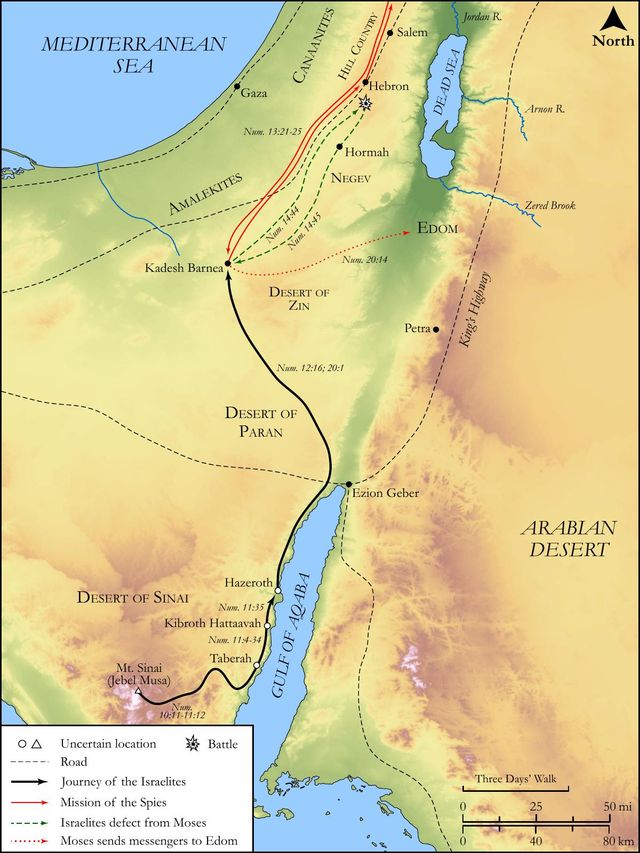
The setting for this event is the wilderness of Paran, situated on the very threshold of the Promised Land. The Amalekites were a notoriously nomadic and warlike people, consistently depicted as a persistent and formidable enemy of Israel throughout their history (e.g., Exodus 17:8-16). The Canaanites, on the other hand, were the settled inhabitants of the land, renowned for their well-fortified cities, advanced military organization, and diverse cultural practices. Among the nations at war, the perceived presence or absence of a god was considered paramount for securing victory in battle. Armies frequently carried divine symbols, such as idols or sacred objects (like the Ark of the Covenant for Israel), into conflict, believing these ensured their god's active participation and favor. For Israel, the LORD's presence was far more than symbolic; it was the tangible manifestation of His power, guidance, and unwavering protection, without which any military endeavor was unequivocally doomed to failure. The people's presumptuous attempt to engage in battle without the Ark of the Covenant and without Moses (who represented God's direct command and leadership) constituted a profound cultural and spiritual transgression, signifying a complete and defiant disregard for the established means of divine favor and legitimate leadership.
Key Themes
ShowHideThis verse powerfully underscores several major theological and narrative themes prevalent within the book of Numbers and the broader Pentateuch. First, it highlights the severe consequences of disobedience and rebellion against divine command. The Israelites' initial refusal to trust God and enter the land, followed by their presumptuous attempt to do so against His explicit instruction, directly precipitates their devastating defeat. Second, it emphasizes the absolute necessity of God's divine presence for success, protection, and prosperity. The chilling phrase "the LORD will not be with you" is articulated as the core, decisive reason for their failure, illustrating unequivocally that human effort, no matter how determined or numerous, is utterly futile and doomed without divine backing, a profound truth echoed in Psalm 127:1. Third, this passage sharply distinguishes between presumption and genuine faith. Their action was not an act of humble faith, but rather a self-willed and arrogant attempt to force God's hand and achieve His promises through disobedient means, demonstrating a profound misunderstanding of God's holy character, His sovereign timing, and the nature of His covenant. Finally, it illustrates the role of enemies; the very nations God had promised to drive out now paradoxically become instruments of His righteous judgment against His disobedient people.
Exposition and Analysis
ShowHideKey Word Analysis
ShowHideThis primitive root means "to turn back (hence, away) transitively or intransitively, literally or figuratively." In this context, it signifies a deliberate and decisive act of spiritual defection or rebellion. It implies a conscious turning from the LORD, a rejection of His authority, His commands, and the covenant relationship. This is not a mere accidental deviation but an intentional shift in allegiance and trust, indicating a pursuit of one's own will over God's. This "turning away" is presented as the direct cause for the withdrawal of God's protective presence.
This is the self-existent or eternal God, the Jewish national name for God, Jehovah. The repetition of "the LORD" in this verse emphasizes His sovereign authority and His direct involvement in the consequences of Israel's actions. The phrase "the LORD will not be with you" underscores that it is the covenant God Himself who is withdrawing His active presence, signaling a broken relationship due to Israel's rebellion. His presence is the source of life and victory; His absence means certain defeat.
This primitive root means "to fall, in a great variety of applications (intransitive or causative, literal or figurative)." Here, "ye shall fall by the sword" explicitly denotes military defeat, death in battle, and utter destruction. It conveys the certainty and severity of the judgment, indicating a complete rout rather than a minor setback. This "falling" is the tangible outcome of their spiritual "turning away" from the LORD.
Verse Breakdown
ShowHide"For the Amalekites and the Canaanites [are] there before you"
This clause sets the immediate, tangible scene of confrontation. It highlights the formidable and present threat that awaits the presumptuous Israelites. These were the very enemies whose strength had initially caused the Israelites to fear and rebel, leading to God's judgment. The irony is poignant: now, in their disobedient attempt to enter, these same powerful enemies are strategically positioned to become instruments of God's righteous judgment against them.
"and ye shall fall by the sword"
This is the direct, inevitable, and dire consequence of their defiance. It is a prophetic declaration of military defeat and death. The phrase "by the sword" specifies violent destruction in battle, signifying a complete and decisive rout rather than a minor skirmish or retreat. This outcome represents a stark reversal of the victories God had previously granted them when they walked in humble obedience and reliance on Him.
"because ye are turned away from the LORD"
This is the crucial causal link, explicitly stating the reason for their impending doom. The military defeat is not random misfortune, nor is it solely due to superior enemy strength; it is a direct and unavoidable result of Israel's profound spiritual rebellion. Their "turning away" from God's explicit command and covenant relationship is identified as the root cause of their vulnerability and the subsequent withdrawal of divine favor. It powerfully underscores the principle that disobedience fundamentally breaks the protective and empowering relationship with God.
"therefore the LORD will not be with you"
This final clause articulates the ultimate and decisive reason for their defeat. God's absence, His withdrawal of active participation, is the critical factor. Because they have defiantly turned away from Him and His explicit instructions, He will not extend His protective presence, His empowering might, or His strategic guidance. Without the LORD's active involvement, Israel is left to its own limited strength, which is utterly insufficient against their enemies, confirming the profound theological truth that true victory and success belong to God alone and are contingent upon His sovereign presence.
Literary Devices
ShowHideNumbers 14:43 employs several powerful literary devices that amplify its message of judgment and consequence. Foreshadowing is prominently featured, as Moses' dire warning directly and accurately predicts the tragic military defeat detailed in Numbers 14:45, thereby demonstrating the unwavering certainty of God's word, whether it be a promise or a judgment. There is profound Irony at play: the very enemies (Amalekites and Canaanites) whose perceived strength initially caused Israel to rebel and fear entering the land are now, paradoxically, the instruments of God's judgment when Israel presumptuously attempts to enter against His explicit will. The people who refused to trust God's presence for victory now face defeat precisely because that divine presence is withdrawn. The verse also functions as a clear example of Cause and Effect, explicitly linking the Israelites' "turning away from the LORD" (the spiritual cause) to the inevitable consequence of "ye shall fall by the sword" because "the LORD will not be with you" (the physical and spiritual effect). This highlights the direct correlation between covenant faithfulness and divine blessing and protection, and conversely, between rebellion and divine judgment and withdrawal.
Theological and Thematic Connections
ShowHideNumbers 14:43 profoundly illustrates the biblical principle that divine presence is not an automatic right, but is inherently contingent upon covenant faithfulness and humble obedience. While God's commitment to His people is unwavering in His overarching redemptive plan, His active, protective, and empowering presence in their immediate endeavors can be withdrawn when they defiantly turn away from His clear commands and revealed will. This verse starkly underscores God's absolute holiness and His intolerance for human presumption and rebellion, demonstrating unequivocally that He will not be manipulated or coerced into blessing disobedient acts. It teaches a timeless truth: true strength, victory, and flourishing come not from human might, strategic prowess, or self-will, but from humble reliance on God's leading and the assurance of His empowering presence. The devastating defeat of the Israelites here serves as a potent object lesson for all generations, emphasizing that walking in God's will and aligning with His purposes is paramount for experiencing His divine favor and accomplishing His redemptive plans.
Reflection and Application
ShowHideNumbers 14:43 offers a sobering yet profoundly vital lesson for believers today, challenging the pervasive and dangerous notion that God's blessings and protection are automatic, regardless of our obedience, attitude, or alignment with His will. We often, perhaps subtly, presume upon God's grace, attempting to forge ahead with our own plans, in our own strength, or even in defiance of clear biblical principles, yet still expecting Him to bless our efforts and ensure our success. This verse serves as a powerful reminder that true spiritual and practical success is inextricably linked to our humble submission to God's will and our constant, unwavering reliance on His active presence. It calls us to deeply examine our motivations: are we truly acting in genuine faith, trusting God's perfect timing and infinite wisdom, or are we operating out of presumption, attempting to force outcomes or achieve goals through self-will and human ingenuity? When we defiantly turn away from the LORD's clear guidance, whether in major life decisions or the seemingly mundane choices of daily living, we effectively remove ourselves from the protective sphere of His divine presence, leaving us vulnerable to spiritual defeat and the natural, often painful, consequences of our actions. This passage urges us to cultivate a posture of constant dependence, diligently seeking God's counsel through His inspired Word and fervent prayer, and aligning our steps with His revealed will, knowing with absolute certainty that His presence is our ultimate victory and our only true security.
Questions for Reflection
ShowHideFAQ
ShowHideWhy did God "not be with" the Israelites after He had been so faithful to them throughout their journey?
ShowHideGod's faithfulness is indeed constant and unwavering in His character and ultimate redemptive plan, but His active, protective presence and blessing in specific endeavors are often contingent upon His people's obedience and covenant fidelity. In this particular instance, the Israelites had not merely made a minor mistake; they had engaged in a profound and defiant act of rebellion and presumption. After hearing the fearful report of the spies, they chose to disbelieve God's explicit promise to give them the land and even desired to return to the slavery of Egypt (Numbers 14:1-4). God then declared a severe judgment: that the entire rebellious generation would perish in the wilderness (Numbers 14:26-35). Their subsequent attempt to invade the land, against Moses' explicit warning that God would not be with them (Numbers 14:42), was a further act of defiance, not genuine repentance. God's withdrawal of His active presence was a just and necessary consequence of their persistent turning away from Him, demonstrating that He will not bless disobedience or be coerced into fulfilling His promises outside of His own holy terms and conditions.
Christ-Centered Fulfillment
ShowHideNumbers 14:43, with its stark warning about the devastating consequences of rebellion and the withdrawal of God's protective presence, finds its ultimate fulfillment and glorious reversal in the person and work of Jesus Christ. The Israelites' tragic failure stemmed from their inability to trust God's promises and their presumptuous attempts to achieve His will through their own flawed strength, inevitably leading to the absence of divine favor and certain defeat. In profound contrast, Jesus, as the ultimate obedient Son, perfectly fulfilled the will of the Father, demonstrating unparalleled faithfulness even to the point of death on the cross (Philippians 2:8). He is Immanuel, "God with us" (Matthew 1:23), signifying the permanent, indwelling presence of God that the Old Testament people longed for and so often lost due to their sin. Through Christ's perfect life, atoning sacrifice, and victorious resurrection, the formidable barrier of sin that caused God's presence to be withdrawn from His rebellious people has been eternally removed. Believers are now reconciled to God, graciously indwelt by the Holy Spirit (John 14:16-17), and assured of God's abiding presence and ultimate victory, not based on their own imperfect obedience or self-willed efforts, but solely on Christ's perfect obedience and His completed, all-sufficient work. The "promised land" for believers is now the spiritual inheritance in Christ, entered not by human might or presumption, but by humble faith in the Lamb of God who takes away the sin of the world, securing for us the eternal, unwavering presence of God.