


Matthew 6:22
Bible text: King James Version (1769 Blayney text) · Public domain
Bible text: Berean Standard Bible · Public domain
Bible text: American Standard Version (1901) · Public domain
Bible text: World English Bible, Messianic edition · Public domain
Bible text: Geneva Bible (1599) · Public domain
Bible text: Young's Literal Translation · Public domain
- ὉHoTheG3588T-NSMDefinite article Nominative Singular Masculine
- λύχνοςluchnoslampG3088N-NSMNoun Nominative Singular Masculine
- τοῦtouof theG3588T-GSNDefinite article Genitive Singular Neuter
- σώματόςsōmatosbodyG4983N-GSNNoun Genitive Singular Neuter
- ἐστινestinisG1510V-PAI-3SVerb Present Active Indicative 3rd Singular
- ὁhotheG3588T-NSMDefinite article Nominative Singular Masculine
- ὀφθαλμόςophthalmoseyeG3788N-NSMNoun Nominative Singular Masculine
- ἐὰνeanIfG1437CONDConjunction
- οὖνounthereforeG3767CONJConjunction
- ᾖēshall beG1510V-PAS-3SVerb Present Active Subjunctive 3rd Singular
- ὁhotheG3588T-NSMDefinite article Nominative Singular Masculine
- ὀφθαλμόςophthalmoseyeG3788N-NSMNoun Nominative Singular Masculine
- σουsouof youG4771P-2GSPersonal pronoun Genitive 2nd Singular
- ἁπλοῦςhaplousclearG573A-NSMAdjective Nominative Singular Masculine
- ὅλονholon[the] wholeG3650A-NSNAdjective Nominative Singular Neuter
- τὸto<the>G3588T-NSNDefinite article Nominative Singular Neuter
- σῶμάsōmabodyG4983N-NSNNoun Nominative Singular Neuter
- σουsouof youG4771P-2GSPersonal pronoun Genitive 2nd Singular
- φωτεινὸνphōteinonfull of lightG5460A-NSNAdjective Nominative Singular Neuter
- ἔσται·estaiwill beG1510V-FDI-3SVerb Future Middle Deponent Indicative 3rd Singular
English is a literal word-by-word gloss of the Greek, not the KJV's wording. Why?
This is the original text the KJV's translators worked from — each Greek word with its own literal English meaning in this verse, prepared by scholars at Tyndale House, Cambridge. The KJV translates whole sentences, not word by word, so its wording differs: one Greek word can become several English words, and the KJV may choose “charity” where the gloss reads “love”. Both are faithful — they answer different questions. For the KJV's own rendering, switch to the KJV text.
Details
See on the biblical-era maps
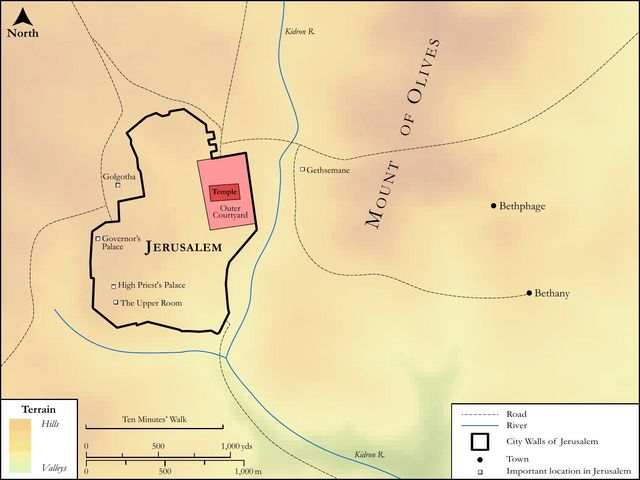

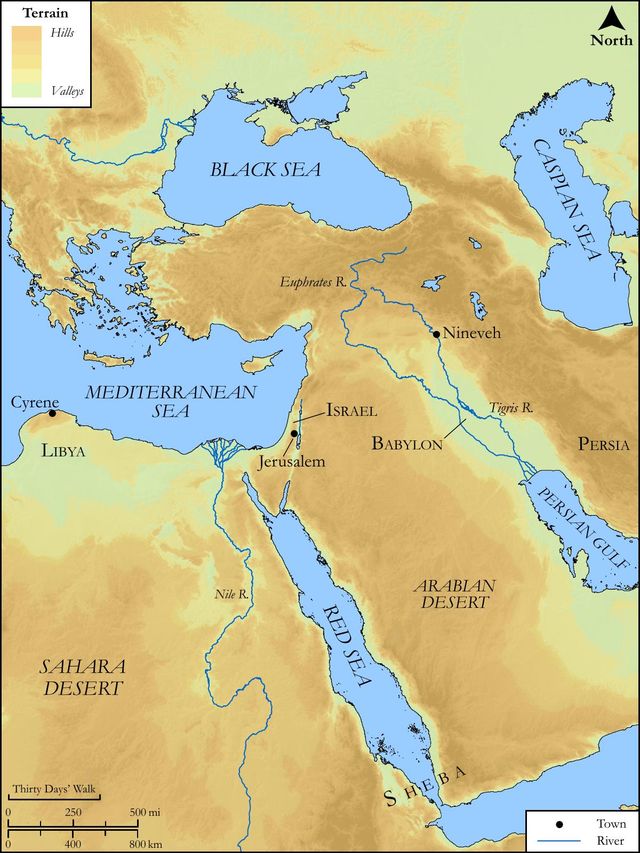
Study this verse
Public-domain commentary
Matthew Henry
From his Commentary on the Whole Bible. Henry comments on passages, not single verses — this entry covers Matthew 6:19–24. His three-level outline is real structure in the source text, so it is rendered as structure.
Worldly-mindedness is as common and as fatal a symptom of hypocrisy as any other, for by no sin can Satan have a surer and faster hold of the soul, under the cloak of a visible and passable profession of religion, than by this; and therefore Christ, having warned us against coveting the praise of men, proceeds next to warn us against coveting the wealth of the world; in this also we must take heed, lest we be as the hypocrites are, and do as they do: the fundamental error that they are guilty of is, that they choose the world for their reward; we must therefore take heed of hypocrisy and worldly-mindedness, in the choice we make of our treasure, our end, and our masters.
I.In choosing the treasure we lay up.
Something or other every man has which he makes his treasure, his portion, which his heart is upon, to which he carries all he can get, and which he depends upon for futurity. It is that good, that chief good, which Solomon speaks of with such an emphasis, Ecc 2:3. Something the soul will have, which it looks upon as the best thing, which it has a complacency and confidence in above other things. Now Christ designs not to deprive us of our treasure, but to direct us in the choice of it; and here we have,
1.A good caution against making the things that are seen, that are temporal, our best things, and placing our happiness in them. Lay not up for yourselves treasures upon earth. Christ's disciples had left all to follow him, let them still keep in the same good mind. A treasure is an abundance of something that is in itself, at least in our opinion, precious and valuable, and likely to stand us in stead hereafter. Now we must not lay up our treasures on earth, that is,
(1.)We must not count these things the best things, nor the most valuable in themselves, nor the most serviceable to us: we must not call them glory, as Laban's sons did, but see and own that they have no glory in comparison with the glory that excelleth.
(2.)We must not covet an abundance of these things, nor be still grasping at more and more of them, and adding to them, as men do to that which is their treasure, as never knowing when we have enough.
(3.)We must not confide in them for futurity, to be our security and supply in time to come; we must not say to the gold, Thou art my hope.
(4.)We must not content ourselves with them, as all we need or desire: we must be content with a little for our passage, but not with all for our portion. These things must not be made our consolation (Luk 6:24), our good things, Luk 16:25. Let us consider we are laying up, not for our posterity in this world, but for ourselves in the other world. We are put to our choice, and made in a manner our own carvers; that is ours which we lay up for ourselves. It concerns thee to choose wisely, for thou art choosing for thyself, and shalt have as thou choosest. If we know and consider ourselves what we are, what we are made for, how large our capacities are, and how long our continuance, and that our souls are ourselves, we shall see it is foolish thing to lay up our treasures on earth.
2.Here is a good reason given why we should not look upon any thing on earth as our treasure, because it is liable to loss and decay:
(1.)From corruption within. That which is treasure upon earth moth and rust do corrupt. If the treasure be laid up in fine clothes, the moth frets them, and they are gone and spoiled insensibly, when we thought them most securely laid up. If it be in corn or other eatables, as his was who had his barns full (Luk 12:16, Luk 12:17), rust (so we read it) corrupts that: brōsis - eating, eating by men, for as goods are increased they are increased that eat them (Ecc 5:11); eating by mice or other vermin; manna itself bred worms; or it grows mouldy and musty, is struck, or smutted, or blasted; fruits soon rot. Or, if we understand it of silver and gold, they tarnish and canker; they grow less with using, and grow worse with keeping (Jam 5:2, Jam 5:3); the rust and the moth breed in the metal itself and in the garment itself. Note, Worldly riches have in themselves a principal of corruption and decay; they wither of themselves, and make themselves wings.
(2.)From violence without. Thieves break through and steal. Every hand of violence will be aiming at the house where treasure is laid up; nor can any thing be laid up so safe, but we may be spoiled of it. Numquam ego fortunae credidi, etiam si videretur pacem agere; omnia illa quae in me indulgentissime conferebat, pecuniam, honores, gloriam, eo loco posui, unde posset ea, since metu meo, repetere - I never reposed confidence in fortune, even if she seemed propitious: whatever were the favours which her bounty bestowed, whether wealth, honours, or glory, I so disposed of them, that it was in her power to recall them without occasioning me any alarm. Seneca. Consol. ad Helv. It is folly to make that our treasure which we may so easily be robbed of.
3.Good counsel, to make the joys and glories of the other world, those things not seen that are eternal, our best things, and to place our happiness in them. Lay up for yourselves treasures in heaven. Note,
(1.)There are treasures in heaven, as sure as there are on this earth; and those in heaven are the only true treasures, the riches and glories and pleasures that are at God's right hand, which those that are sanctified truly arrive at, when they come to be sanctified perfectly.
(2.)It is our wisdom to lay up our treasure in those treasures; to give all diligence to make sure our title to eternal life through Jesus Christ, and to depend upon that as our happiness, and look upon all things here below with a holy contempt, as not worthy to be compared with it. We must firmly believe there is such a happiness, and resolve to be content with that, and to be content with nothing short of it. If we thus make those treasures ours, they are laid up, and we may trust God to keep them safe for us; thither let us then refer all our designs, and extend all our desires; thither let us send before our best efforts and best affections. Let us not burthen ourselves with the cash of this world, which will but load and defile us, and be liable to sink us, but lay up in store good securities. The promises are bills of exchange, by which all true believers return their treasure to heaven, payable in the future state: and thus we make that sure that will be made sure.
(3.)It is a great encouragement to us to lay up our treasure in heaven, that there it is safe; it will not decay of itself, no moth nor rust will corrupt it; nor can we be by force or fraud deprived of it; thieves do not break through and steal. It is a happiness above and beyond the changes and chances of time, an inheritance incorruptible.
4.A good reason why we should thus choose, and an evidence that we have done so (Mat 6:21), Where your treasure is, on earth or in heaven, there will you heart be. We are therefore concerned to be right and wise in the choice of our treasure, because the temper of our minds, and consequently the tenor of our lives, will be accordingly either carnal or spiritual, earthly or heavenly. The heart follows the treasure, as the needle follows the loadstone, or the sunflower the sun. Where the treasure is there the value and esteem are, there the love and affection are (Col 3:2), that way the desires and pursuits go, thitherward the aims and intents are levelled, and all is done with that in view. Where the treasure is, there our cares and fears are, lest we come short of it; about that we are most solicitous; there our hope and trust are (Pro 18:10, Pro 18:11); there our joys and delights will be (Psa 119:111); and there our thoughts will be, there the inward thought will be, the first thought, the free thought, the fixed thought, the frequent, the familiar thought. The heart is God's due (Pro 23:26), and that he may have it, our treasure must be laid up with him, and then our souls will be lifted up to him.
This direction about laying up our treasure, may very fitly be applied to the foregoing caution, of not doing what we do in religion to be seen of men. Our treasure is our alms, prayers, and fastings, and the reward of them; if we have done these only to gain the applause of men, we have laid up this treasure on earth, have lodged it in the hands of men, and must never expect to hear any further of it. Now it is folly to do this, for the praise of men we covet so much is liable to corruption: it will soon be rusted, and moth-eaten, and tarnished; a little folly, like a dead fly, will spoil it all, Ecc 10:1. Slander and calumny are thieves that break through and steal it away, and so we lose all the treasure of our performances; we have run in vain, and laboured in vain, because we misplaced our intentions in doing of them. Hypocritical services lay up nothing in heaven (Isa 58:3); the gain of them is gone, when the soul is called for, Job 27:8. But if we have prayed and fasted and given alms in truth and uprightness, with an eye to God and to his acceptance, and have approved ourselves to him therein, we have laid up that treasure in heaven; a book of remembrance is written there (Mal 3:16), and being there recorded, they shall be there rewarded, and we shall meet them again with comfort on the other side death and the grave. Hypocrites are written in the earth (Jer 17:13), but God's faithful ones have their names written in heaven, Luk 10:20. Acceptance with God is treasure in heaven, which can neither be corrupted nor stolen. His well done shall stand for ever; and if we have thus laid up our treasure with him, with him our hearts will be; and where can they be better?
II.We must take heed of hypocrisy and worldly-mindedness in choosing the end we look at.
Our concern as to this is represented by two sorts of eyes which men have, a single eye and an evil eye, Mat 6:22, Mat 6:23. The expressions here are somewhat dark because concise; we shall therefore take them in some variety of interpretation. The light of the body is the eye, that is plain; the eye is discovering and directing; the light of the world would avail us little without this light of the body; it is the light of the eye that rejoiceth the heart (Pro 15:30), but what is that which is here compared to the eye in the body.
1.The eye, that is, the heart (so some) if that be single - haplous - free and bountiful (so the word is frequently rendered, as Rom 12:8; Co2 8:2, Co2 9:11, Co2 9:13; Jam 1:5, and we read of a bountiful eye, Pro 22:9). If the heart be liberally affected and stand inclined to goodness and charity, it will direct the man to Christian actions, the whole conversation will be full of light, full of evidences and instances of true Christianity, that pure religion and undefiled before God and the Father (Jam 1:27), full of light, of good works, which are our light shining before men; but if the heart be evil, covetous, and hard, and envious, griping and grudging (such a temper of mind is often expressed by an evil eye, Mat 20:15; Mar 7:22; Pro 23:6, Pro 23:7), the body will be full of darkness, the whole conversation will be heathenish and unchristian. The instruments of the churl are and always will be evil, but the liberal deviseth liberal things, Isa 32:5-8. If the light that is in us, those affections which should guide us to that which is good, be darkness, if these be corrupt and worldly, if there be not so much as good nature in a man, not so much as a kind disposition, how great is the corruption of a man, and the darkness in which he sits! This sense seems to agree with the context; we must lay up treasure in heaven by liberality in giving alms, and that not grudgingly but with cheerfulness, Luk 12:33; Co2 9:7. But these words in the parallel place do not come in upon any such occasion, Luk 11:34, and therefore the coherence here does not determine that to be the sense of them.
2.The eye, that is, the understanding (so some); the practical judgment, the conscience, which is to the other faculties of the soul, as the eye is to the body, to guide and direct their motions; now if this eye be single, if it make a true and right judgment, and discern things that differ, especially in the great concern of laying up the treasure so as to choose aright in that, it will rightly guide the affections and actions, which will all be full of the light of grace and comfort; but if this be evil and corrupt, and instead of leading the inferior powers, is led, and bribed, and biassed by them, if this be erroneous and misinformed, the heart and life must needs be full of darkness, and the whole conversation corrupt. They that will not understand, are said to walk on in darkness, Psa 82:5. It is sad when the spirit of a man, that should be the candle of the Lord, is an ignis fatuus: when the leaders of the people, the leaders of the faculties, cause them to err, for then they that are led of them are destroyed, Isa 9:16. An error in the practical judgment is fatal, it is that which calls evil good and good evil (Isa 5:20); therefore it concerns us to understand things aright, to get our eyes anointed with eye-salve.
3.The eye, that is, the aims and intentions; by the eye we set our end before us, the mark we shoot at, the place we go to, we keep that in view, and direct our motion accordingly; in every thing we do in religion; there is something or other that we have in our eye; now if our eye be single, if we aim honestly, fix right ends, and move rightly towards them, if we aim purely and only at the glory of God, seek his honor and favour, and direct all entirely to him, then the eye is single; Paul's was so when he said, To me to live is Christ; and if we be right here, the whole body will be full of light, all the actions will be regular and gracious, pleasing to God and comfortable to ourselves; but if this eye be evil, if, instead of aiming only at the glory of God, and our acceptance with him, we look aside at the applause of men, and while we profess to honour God, contrive to honour ourselves, and seek our own things under colour of seeking the things of Christ, this spoils all, the whole conversation will be perverse and unsteady, and the foundations being thus out of course, there can be nothing but confusion and every evil work in the superstructure. Draw the lines from the circumference to any other point but the centre, and they will cross. If the light that is in thee be not only dim, but darkness itself, it is a fundamental error, and destructive to all that follows. The end specifies the action. It is of the last importance in religion, that we be right in our aims, and make eternal things, not temporal, our scope, Co2 4:18. The hypocrite is like the waterman, that looks one way and rows another; the true Christian like the traveller, that has his journey's end in his eye. The hypocrite soars like the kite, with his eye upon the prey below, which he is ready to come down to when he has a fair opportunity; the true Christian soars like the lark, higher and higher, forgetting the things that are beneath.
III.We must take heed of hypocrisy and worldly-mindedness in choosing the master we serve, Mat 6:24.
No man can serve two masters. Serving two masters is contrary to the single eye; for the eye will be to the master's hand, Psa 123:1, Psa 123:2. Our Lord Jesus here exposes the cheat which those put upon their own souls, who think to divide between God and the world, to have a treasure on earth, and a treasure in heaven too, to please God and please men too. Why not? says the hypocrite; it is good to have two strings to one's bow. They hope to make their religion serve their secular interest, and so turn to account both ways. The pretending mother was for dividing the child; the Samaritans will compound between God and idols. No, says Christ, this will not do; it is but a supposition that gain is godliness, Ti1 6:5. Here is,
1.A general maxim laid down; it is likely it was a proverb among the Jews, No man can serve two masters, much less two gods; for their commands will some time or other cross or contradict one another, and their occasions interfere. While two masters go together, a servant may follow them both; but when they part, you will see to which he belongs; he cannot love, and observe, and cleave to both as he should. If to the one, not to the other; either this or that must be comparatively hated and despised. This truth is plain enough in common cases.
2.The application of it to the business in hand. Ye cannot serve God and Mammon. Mammon is a Syriac word, that signifies gain; so that whatever in this world is, or is accounted by us to be, gain (Phi 3:7), is mammon. Whatever is in the world, the lust of the flesh, the lust of the eye, and the pride of life, is mammon. To some their belly is their mammon, and they serve that (Phi 3:19); to others their ease, their sleep, their sports and pastimes, are their mammon (Pro 6:9); to others worldly riches (Jam 4:13); to others honours and preferments; the praise and applause of men was the Pharisees' mammon; in a word, self, the unity in which the world's trinity centres, sensual, secular self, is the mammon which cannot be served in conjunction with God; for if it be served, it is in competition with him and in contradiction to him. He does not say, We must not or we should not, but we cannot serve God and Mammon; we cannot love both (Jo1 2:15; Jam 4:4); or hold to both, or hold by both in observance, obedience, attendance, trust, and dependence, for they are contrary the one to the other. God says, "My son, give me thy heart." Mammon says, "No, give it me." God says, "Be content with such things as ye have." Mammon says, "Grasp at all that ever thou canst. Rem, rem, quocunque modo rem - Money, money; by fair means or by foul, money." God says, "Defraud not, never lie, be honest and just in all thy dealings." Mammon says "Cheat thine own Father, if thou canst gain by it." God says, "Be charitable." Mammon says, "Hold thy own: this giving undoes us all." God says, "Be careful for nothing." Mammon says, "Be careful for every thing." God says, "Keep holy thy sabbath-day." Mammon says, "Make use of that day as well as any other for the world." Thus inconsistent are the commands of God and Mammon, so that we cannot serve both. Let us not then halt between God and Baal, but choose ye this day whom ye will serve, and abide by our choice.
Historical interpretation
Eight Centuries of Reception
14 surviving comments on this verse. Each one is dated, so this reads as a timeline rather than a list.
Select a marker to jump to its quote. Markers stagger vertically where authors wrote within a few decades of each other.
The single eye is the love unfeigned; for when the body is enlightened by it, it sets forth through the medium of the outer members only things which are perfectly correspondent with the inner thoughts. But the evil eye is the pretended love, which is also called hypocrisy, by which the whole body of the man is made darkness. We have to consider that deeds meet only for darkness may be within the man, while through the outer members he may produce words that seem to be of the light: for there are those who are in reality wolves, though they may be covered with sheep's clothing. Such are they who wash only the outside of the cup and platter, and do not understand that, unless the inside of these things is cleansed, the outside itself cannot be made pure. Wherefore, in manifest confutation of such persons, the Saviour says: If the light that is in you be darkness, how great is that darkness! That is to say, if the love which seems to you to be light is really a work meet for darkness, by reason of some hypocrisy concealed in you, what must be your patent transgressions!
Otherwise; from the office of the light of the eye, He calls it the light of the heart; which if it continue single and brilliant, will confer on the body the brightness of the eternal light, and pour again into the corrupted flesh the splendor of its origin, that is, in the resurrection. But if it be obscured by sin, and evil in will, the bodily nature will yet abide subject to all the evils of the understanding.
What He saith is like this: Bury not gold in the earth, nor do any other such thing, for thou dost but gather it for the moth, and the rust, and the thieves. And even if thou shouldest entirely escape these evils, yet the enslaving of thine heart, the nailing it to all that is below, thou wilt not escape: "For wheresoever thy treasure may be, there is thine heart also." As then, laying up stores in heaven, thou wilt reap not this fruit only, the attainment of the rewards for these things, but from this world thou already receivest thy recompence, in getting into harbor there, in setting thine affections on the things that are there, and caring for what is there (for where thou hast laid up thy treasures, it is most clear thou transferrest thy mind also); so if thou do this upon earth, thou wilt experience the contrary.
But if the saying be obscure to thee, hear what comes next in order. "The light of the body is the eye; if therefore thine eye be single, thy whole body shall be full of light. But if thine eye be evil, thy whole body shall be full of darkness. But if the light that is in thee be darkness, how great is the darkness!" He leads His discourse to the things which are more within the reach of our senses. I mean, forasmuch as He had spoken of the mind as enslaved and brought into captivity, and there were not many who could easily discern this, He transfers the lesson to things outward, and lying before men's eyes, that by these the others also might reach their understanding. Thus, "If thou knowest not," saith He, "what a thing it is to be injured in mind, learn it from the things of the body; for just what the eye is to the body, the same is the mind to the soul." As therefore thou wouldest not choose to wear gold, and to be clad in silken garments, thine eyes withal being put out, but accountest their sound health more desirable than all such superfluity (for, shouldest thou lose this health or waste it, all thy life besides will do thee no good): for just as when the eyes are blinded, most of the energy of the other members is gone, their light being quenched; so also when the mind is depraved, thy life will be filled with countless evils: as therefore in the body this is our aim, namely, to keep the eye sound, so also the mind in the soul. But if we mutilate this, which ought to give light to the rest, by what means are we to see clearly any more? For as he that destroys the fountain, dries up also the river, so he who hath quenched the understanding hath confounded all his doings in this life. Wherefore He saith, "If the light that is in thee be darkness, how great is the darkness?"
For when the pilot is drowned, and the candle is put out, and the general is taken prisoner; what sort of hope will there be, after that, for those that are under command?
Thus then, omitting now to speak of the plots to which wealth gives occasion, the strifes, the suits (these indeed He had signified above, when He said, "The adversary shall deliver thee to the judge, and the judge to the officer"); and setting down what is more grievous than all these, as sure to occur, He so withdraws us from the wicked desire. For to inhabit the prison is not nearly so grievous, as for the mind to be enslaved by this disease; and the former is not sure to happen, but the other is connected as an immediate consequent with the desire of riches. And this is why He puts it after the first, as being a more grievous thing, and sure to happen.
For God, He saith, gave us understanding, that we might chase away all ignorance, and have the right judgment of things, and that using this as a kind of weapon and light against all that is grievous or hurtful, we might remain in safety. But we betray the gift for the sake of things superfluous and useless.
For what is the use of soldiers arrayed in gold, when the general is dragged along a captive? what the profit of a ship beautifully equipped, when the pilot is sunk beneath the waves? what the advantage of a well-proportioned body, when the sight of the eyes is stricken out? As therefore, should any one cast into sickness the physician (who should be in good health, that he may end our diseases), and then bid him lie on a silver couch, and in a chamber of gold, this will nothing avail the sick persons; even so, if thou corrupt the mind (which hath power to put down our passions), although thou set it by a treasure, so far from doing it any good, thou hast inflicted the very greatest loss, and hast harmed thy whole soul.
Having spoken of the bringing the understanding into captivity because it was not easy to be understood of many, He transfers it to a sensible instance, saying, The light of thy body is thy eye. As though He had said, If you do not know what is meant by the loss of the understanding, learn a parable of the bodily members; for what the eye is to the body, that the understanding is to the soul. As by the loss of the eyes we lose much of the use of the other limbs, so when the understanding is corrupted, your life is filled with many evils.
Or; The eye He speaks of is not the external but the internal eye. The light is the understanding, through which the soul sees God. He whose heart is turned to God, has an eye full of light; that is, his understanding is pure, not distorted by the influence of worldly lusts. The darkness in us is our bodily senses, which always desire the things that pertain to darkness. Whoso then has a pure eye, that is, a spiritual understanding, preserves his body in light, that is, without sin; for though the flesh desires evil, yet by the might of divine fear the soul resists it. But whoever has an eye, that is, an understanding, either darkened by the influence of the malignant passions, or fouled by evil lusts, possesses his body in darkness; he does not resist the flesh when it lusts after evil things, because he has no hope in Heaven, which hope alone gives us the strength to resist desire.
And as they that are in darkness see nothing distinct, but if they look at a rope, they suppose it to be a serpent, if at mountains and ravines, they are dead with fear; so these also: what is not alarming to them that have sight, that they regard with suspicion. Thus among other things they tremble at poverty: or rather not at poverty only, but even at any trifling loss. Yea, and if they should lose some little matter, those who are in want of necessary food do not so grieve and bewail themselves as they. At least many of the rich have come even to the halter, not enduring such ill fortune: and to be insulted also, and to be despitefully used, seems to them so intolerable, that even because of this again many have actually torn themselves from this present life. For to everything wealth had made them soft, except to the waiting on it.
Thus, when it commands them to do service unto itself, they venture on murders, and stripes, and revilings, and all shame. A thing which comes of the utmost wretchedness; to be of all men most effeminate, where one ought to practise self-command, but where more caution was required, in these cases again to become more shameless and obstinate. Since in fact the same kind of thing befalls them, as one would have to endure who had spent all his goods on unfit objects. For such an one, when the time of necessary expenditure comes on, having nothing to supply it, suffers incurable evils, forasmuch as all that he had hath been ill spent beforehand.
And as they that are on the stage, skilled in those wicked arts, do in them go through many things strange and dangerous, but in other necessary and useful things none so ridiculous as they; even so is it with these men likewise. For so such as walk upon a stretched rope, making a display of so much courage, should some great emergency demand daring or courage, they are not able, neither do they endure even to think of such a thing. Just so they likewise that are rich, daring all for money, for self-restraint's sake endure not to submit to anything, be it small or great. And as the former practise both a hazardous and fruitless business; even so do these undergo many dangers and downfalls, but arrive at no profitable end. Yea, they undergo a twofold darkness, both having their eyes put out by the perversion of their mind, and being by the deceitfulness of their cares involved in a great mist. Wherefore neither can they easily so much as see through it. For he that is in darkness, is freed from the darkness by the mere appearance of the sun; but he that hath his eyes mutilated not even when the sun shines; which is the very case of these men: not even now that the Sun of Righteousness hath shone out, and is admonishing, do they hear, their wealth having closed their eyes. And so they have a twofold darkness to undergo, part from themselves, part from disregard to their teacher.
Let us then give heed unto Him exactly, that though late we may at length recover our sight. And how may one recover sight? If thou learn how thou wast blinded. How then wast thou blinded? By thy wicked desire. For the love of money, like an evil humor which hath collected upon a clear eyeball, hath caused the cloud to become thick.
(Verse 22, 23.) If your eye is sound, your whole body will be full of light. But if your eye is bad, your whole body will be full of darkness. If therefore the light that is in you is darkness, how great is that darkness! Those with failing eyesight often see many lights: a sound and pure eye perceives only one light. This can be transferred to the realm of perception. For just as the whole body is in darkness if the eye is not sound, so the soul, if it has lost its primary light, will abide in darkness in all its senses. If therefore the light which is within you is darkness, how great is that darkness! If the sense which is light is obscured by the fault of the soul, do you think in what darkness it will be enveloped!
This is an illustration drawn from the senses. As the whole body is in darkness, where the eye is not single, so if the soul has lost her original brightness, every sense, or that whole part of the soul to which sensation belongs, will abide in darkness. Wherefore He says, If then the light which is in thee be darkness, how great is that darkness! that is, if the senses which are the soul's light be darkened by vice, in how great darkness do you suppose the darkness itself will be wrapped?
Those who have thick eye-sight see the lights multiplied; but the single and clear eye sees them single and clear.
(ubi sup.) Otherwise; by the eye here we may understand our purpose; if that be pure and right, all our works which we work according thereto are good. These He here calls the body, as the Apostle speaks of certain works as members; Mortify your members, fornication and uncleanness. (Col. 3:5.) We should look then, not to what a person does, but with what mind he does it. For this is the light within us, because by this we see that we do with good intention what we do. For all which doth make manifest is light. (Eph. 5:13.) But the deeds themselves, which go forth to men's society, have a result to us uncertain, and therefore He calls them darkness; as when I give money to one in need, I know not what he will do with it. If then the purport of your heart, which you can know, is defiled with the lust of temporal things, much more is the act itself, of which the issue is uncertain, defiled. For even though one should reap good of what you do with a purport not good; it will be imputed to you as you did it, not as it resulted to him. If however our works are done with a single purport, that is with the aim of charity, then are they pure and pleasing in God's sight.
(cont. Mendac. 7.) But acts which are known to be in themselves sins, are not to be done as with a good purpose; but such works only as are either good or bad, according as the motives from which they are done are either good or bad, and are not in themselves sins; as to give food to the poor is good if it be done from merciful motives, but evil if it be done from ostentation. But such works as are in themselves sins, who will say that they are to be done with good motives, or that they are not sins? Who would say, Let us rob the rich, that we may have to give to the poor?
We know that all our works are pure and pleasing in the sight of God if they are performed with a single heart. This means that they are performed out of charity and with an intention that is fixed on heaven. For "love is the fulfillment of the law." Therefore in this passage we ought to understand the eye as the intention with which we perform all our actions. If this intention is pure and upright and directing its gaze where it ought to be directed, then unfailingly all our works are good works, because they are performed in accordance with that intention. And by the expression "whole body," Christ designated all those works that he reproves and that he commands us to put to death. For the apostle also designates certain works as our "members." "Therefore," Paul writes, "mortify your members which are on earth: fornication, uncleanness, covetousness," and all other such things.
And here He makes it manifest that He gives all these precepts with a view to the cleansing of the heart.
And this passage we are to understand in such a way as to learn from it that all our works are pure and well-pleasing in the sight of God, when they are done with a single heart, i.e. with a heavenly intent, having that end of love in view; for love is also the fulfilling of the law. Hence we ought to take the eye here in the sense of the intent itself, wherewith we do whatever we are doing; and if this be pure and right, and looking at that which ought to be looked at, all our works which we perform in accordance therewith are necessarily good. And all those works He has called the whole body; for the apostle also speaks of certain works of which he disapproves as our members, and teaches that they are to be mortified, saying, Mortify therefore your members which are upon the earth; fornication, uncleanness, covetousness, and all other such things.
Otherwise; He now teaches the benefit of almsgiving. He who places his treasure on earth has nothing to look for in Heaven; for why should he look up to Heaven where he has nothing laid up for himself? Thus he doubly sins; first, because he gathers together things evil; secondly, because he has his heart in earth; and so on the contrary he does right in a twofold manner who lays up his treasure in Heaven.
It seems that He is not here speaking of the bodily eye, or of the outward body that is seen, or He would have said, If thine eye be sound, or weak; but He says, single, and, evil. But if one have a benign yet diseased eye, is his body therefore in light? Or if an evil yet a sound, is his body therefore in darkness?
(ap. Gloss. ord.) Otherwise; faith is likened to a light, because by it the goings of the inner man, that is, action, are lightened, that he should not stumble according to that, Thy word is a light to my feet. (Ps. 119:105.) If that then be pure and single, the whole body is light; but if defiled, the whole body will be dark. Yet otherwise; by the light may be understood the ruler of the Church, who may be well called the eye, as he it is that ought to see that wholesome things be provided for the people under him, which are understood by the body. If then the ruler of the Church err, how much more will the people subject to him err?
(Mor. xxviii. 11.) Otherwise; if the light that is in thee, that is, if what we have begun to do well, we overcloud with evil purpose, when we do things which we know to be in themselves evil, how great is the darkness!
This means, if you fill your mind with worries over money, you have extinguished the lamp and darkened your soul. Just as the eye that is sound, or "healthy" brings light to the body, and the eye that is evil, or "diseased" brings darkness, so also does the state of the mind affect the soul. If the mind is blinded by these worries, it is cast into darkness; then the soul becomes dark, and how much more so the body as well?
Continue studying Matthew 6:22 across the web’s major study libraries — every link below opens this exact verse, chapter, or book on the destination site.
Read & Compare
 BibleGatewayThis verse in more than 200 translations and 70 languages.
 Bible.comThe YouVersion reader — hundreds of translations, reading plans, and highlights.
 ESV.orgCrossway's official English Standard Version reader.
 NET BibleThe NET translation with 60,000+ translators' notes on every rendering decision.
 STEP BibleTyndale House's free study tool — original text, vocabulary, and scholarly resources.
 BibliaLogos Bible Software's free web reader.
 USCCBThe New American Bible (Revised Edition) with the U.S. bishops' study notes.
Commentaries
 BibleHub CommentariesDozens of classic commentaries on this verse, gathered on one page.
 StudyLightMore than 100 commentary sets — the largest collection on the web.
 BibleRefPlain-English commentary on what this verse means, verse by verse.
 Enduring WordDavid Guzik's free commentary on this chapter, widely used by Bible teachers.
 Bible Study ToolsVerse commentary alongside Greek and Hebrew study aids.
Original Language & Research
- BibleHub InterlinearThe verse word by word — original language, transliteration, and English.
- BibleHub LexiconEvery word's original-language definition and Strong's entry.
 Blue Letter BibleDeep-study tools — Strong's numbers, concordance, and word studies.
 CNTR CollationThe earliest Greek manuscripts of this verse, collated letter by letter.
Sermons, Hymns & Audio


TrulyRandomVerse is not affiliated with these sites and doesn’t control their content. They’re linked because they’re genuinely useful.
Summary
Matthew 6:22, nestled within Jesus' Sermon on the Mount, employs the metaphor of the eye to illuminate the profound connection between one's inner disposition and overall spiritual state. It posits that just as the physical eye is the conduit for light to the body, our spiritual "eye"—representing our focus, intention, and inner clarity—determines whether our entire being is filled with spiritual light or darkness, particularly in the context of our pursuit of God's kingdom versus worldly treasures.
Context
ShowHideLiterary Context
This verse is an integral part of Jesus' discourse on true righteousness and spiritual priorities in the Sermon on the Mount, specifically within Matthew 6. It immediately follows Jesus' teaching on storing up treasures in heaven rather than on earth (Matthew 6:19-21), serving as a metaphorical explanation for how one's focus on either heavenly or earthly treasures impacts their spiritual condition. The verse then directly precedes the stark declaration that "No one can serve two masters" (Matthew 6:24), thereby framing the eye's "singleness" as essential for undivided loyalty to God. The entire section from Matthew 6:19-34 forms a cohesive unit addressing anxiety, material possessions, and the pursuit of God's kingdom.
Historical & Cultural Context
In that day, the eye was universally understood as the primary organ for receiving light, essential for navigating the physical world. Beyond its literal function, the "eye" held significant metaphorical weight in Jewish thought. A "good eye" (Hebrew: ayin tovah) often connoted generosity, benevolence, and contentment, while an "evil eye" (ayin ra'ah) signified envy, greed, or a miserly disposition. This dualistic understanding, prevalent in wisdom literature (e.g., Proverbs 28:22) and rabbinic teachings, provides the backdrop for Jesus' use of "single" (or "sound") eye versus "evil" eye. Jesus leverages this familiar cultural idiom to shift the focus from mere physical sight to profound spiritual perception and moral integrity, particularly concerning one's relationship with wealth and God.
Key Themes
ShowHideMatthew 6:22 contributes significantly to several overarching themes in the Sermon on the Mount. Foremost among these is the theme of inner disposition and authenticity, emphasizing that true righteousness stems from the heart, not merely outward actions. It reinforces the theme of spiritual priorities, contrasting the fleeting nature of earthly treasures with the enduring value of heavenly ones. The concept of "light" and "darkness" is a pervasive biblical theme, here signifying spiritual understanding, moral clarity, and divine illumination versus spiritual blindness and confusion. Ultimately, the verse underscores the necessity of single-minded devotion to God and His kingdom, a core tenet of Jesus' teaching that culminates in the exhortation to "seek first the kingdom of God and His righteousness" (Matthew 6:33).
Exposition and Analysis
ShowHideKey Word Analysis
ShowHideFrom the base of λευκός; a portable lamp or other illuminator (literally or figuratively):--candle, light. Here, "light" refers to the illumination that enables the body to function properly. Metaphorically, it signifies spiritual understanding, moral clarity, and divine guidance that fills one's life.
From ὀπτάνομαι; the eye (literally or figuratively); by implication, vision; figuratively, envy (from the jealous side-glance):--eye, sight. While literally referring to the organ of sight, in this context, "eye" functions as a metaphor for one's inner disposition, spiritual perception, focus, or intention. Its figurative meaning of "envy" (as suggested by the Strong's definition) is particularly relevant when contrasted with the "evil eye" in the subsequent verse.
Probably from Α (as a particle of union) and the base of πλέκω; properly, folded together, i.e. single (figuratively, clear):--single. This crucial word describes the quality of the "eye." It means undivided, sincere, sound, healthy, or clear. In the context of the surrounding verses on wealth, it implies a heart singularly devoted to God, free from competing loyalties or a greedy, grasping disposition.
Verse Breakdown
ShowHide"The light of the body is the eye"
This clause establishes the foundational analogy. Just as the physical eye is the essential gateway through which light enters the body, enabling it to see, navigate, and function, so too is there a spiritual "eye" that determines the spiritual state and direction of one's entire being. It highlights the critical role of perception and focus.
"if therefore thine eye be single"
Here, Jesus applies the analogy spiritually. The "eye" is no longer merely the physical organ but represents one's inner disposition, moral focus, or spiritual intention. To be "single" (Greek, haploûs') means this inner focus is undivided, healthy, sincere, and clear. It implies a singular devotion, particularly to God and His kingdom, rather than being distracted or corrupted by worldly pursuits or a greedy mindset.
"thy whole body shall be full of light"
This is the profound consequence of a "single eye." If one's inner focus is pure and undivided, their entire life—their actions, thoughts, and character—will be permeated by spiritual light. This "light" signifies spiritual understanding, moral integrity, divine wisdom, and a life lived in alignment with God's will, free from the darkness of sin, confusion, or anxiety.
Literary Devices
ShowHideJesus masterfully employs Metaphor and Analogy in Matthew 6:22. The physical eye, the conduit for light to the body, serves as a powerful metaphor for the spiritual "eye"—the inner disposition or focus of an individual. The analogy is drawn between physical sight and spiritual perception, illustrating how the clarity and health of one's inner focus directly determine the spiritual state of their entire being. There is also an implicit Contrast between the "single" eye of this verse and the "evil" eye mentioned in the very next verse (Matthew 6:23), highlighting the binary outcomes of spiritual focus: light or darkness. The phrase "thy whole body shall be full of light" can also be seen as a form of Hyperbole, emphasizing the pervasive and transformative impact of a pure, undivided spiritual focus on every aspect of one's life.
Theological and Thematic Connections
ShowHideMatthew 6:22 is a profound statement on the nature of spiritual perception and its holistic impact on human existence. Theologically, it underscores the biblical emphasis on the heart (or inner being) as the wellspring of life, from which all actions and attitudes flow. Jesus teaches that true spiritual vitality and clarity are not external achievements but rather emanate from an undivided inner focus, particularly concerning one's ultimate allegiance. This verse connects the pursuit of God's kingdom with an internal state of purity and sincerity, suggesting that a lack of spiritual light is not due to an absence of divine revelation, but rather a corrupted or divided inner "eye" that prevents the light from entering and illuminating the whole person. It is a call to radical integrity, where one's spiritual priorities dictate their entire outlook and way of life.
Reflection and Application
ShowHideMatthew 6:22 serves as a timeless challenge to examine the true focus of our lives. In a world constantly vying for our attention and allegiance—whether through material possessions, social status, or personal ambition—Jesus calls us to a radical simplicity: a "single eye." This means cultivating an inner disposition that is uncorrupted, sincere, and singularly devoted to God and His kingdom. Practically, this involves regularly assessing our motivations, priorities, and the objects of our affection. Are we driven by a desire for heavenly treasures, or are our hearts subtly (or overtly) drawn to the fleeting allure of earthly gain? A "single eye" leads to spiritual clarity, moral integrity, and freedom from the anxieties that often accompany divided loyalties. It empowers us to live generously, to pursue righteousness without hypocrisy, and to see God's will with unclouded vision, allowing His light to permeate every facet of our existence.
Questions for Reflection
ShowHideFAQ
ShowHideWhy does Jesus use the metaphor of the eye?
ShowHideJesus uses the metaphor of the eye because it is the primary organ for receiving light, essential for physical navigation and perception. He leverages this familiar concept to illustrate how our inner disposition—our spiritual "eye"—functions as the gateway for spiritual light or darkness. Just as a healthy physical eye allows light to fill the body, a "single" or healthy spiritual eye allows divine light to illuminate our entire being, granting us clarity, integrity, and purpose in our walk with God.
What is the meaning of "single" (haploûs) in this context?
ShowHideThe Greek word translated "single" is haploûs' (G573), which implies undivided, sincere, sound, healthy, or clear. In the context of Matthew 6:19-24, it refers to a heart and mind singularly devoted to God and His kingdom, free from the competing allegiances of worldly wealth or divided priorities. It contrasts sharply with the "evil eye" mentioned in Matthew 6:23, which signifies a diseased, greedy, or covetous disposition that leads to spiritual darkness. A "single eye" is one that sees God as the sole treasure and ultimate priority.
Christ-Centered Fulfillment
ShowHideMatthew 6:22 finds its ultimate fulfillment and deepest meaning in Jesus Christ, who is Himself the "light of the world" (John 8:12). A "single eye" is, at its core, an eye fixed upon Christ, the perfect embodiment of undivided devotion to the Father. Jesus' entire life was a demonstration of a perfectly "single eye," as He consistently declared, "I can do nothing on my own; I judge only as I hear, and my judgment is just, for I seek not my own will but the will of him who sent me" (John 5:30). Through His atoning work, Christ not only removes the darkness of sin but also illuminates our spiritual understanding, enabling our "eyes" to be opened to the truth of God's kingdom (Ephesians 1:18). When we behold Christ, the light of God's glory shines into our hearts (2 Corinthians 4:6), transforming us into His image "from one degree of glory to another" (2 Corinthians 3:18). Thus, to have a "single eye" is to have Christ as the singular focus of our lives, allowing His light to permeate and purify our entire being.