


Matthew 27:48
Bible text: King James Version (1769 Blayney text) · Public domain
Bible text: King James Version with Strong's numbers · Public domain
Bible text: Berean Standard Bible · Public domain
Bible text: American Standard Version (1901) · Public domain
Bible text: World English Bible, Messianic edition · Public domain
Bible text: Geneva Bible (1599) · Public domain
Bible text: Young's Literal Translation · Public domain
- καὶkaiAndG2532CONJConjunction
- εὐθέωςeutheōsimmediatelyG2112ADVAdverb
- δραμὼνdramōnhaving runG5143V-2AAP-NSMVerb 2nd Aorist Active Participle Nominative Singular Masculine
- εἷςheisoneG1520A-NSMAdjective Nominative Singular Masculine
- ἐξexofG1537PREPPreposition
- αὐτῶνautōnthemG846P-GPMPersonal pronoun Genitive Plural Masculine
- καὶkaiandG2532CONJConjunction
- λαβὼνlabōnhaving takenG2983V-2AAP-NSMVerb 2nd Aorist Active Participle Nominative Singular Masculine
- σπόγγονspongona spongeG4699N-ASMNoun Accusative Singular Masculine
- πλήσαςplēsashaving filled [it]G4130V-AAP-NSMVerb Aorist Active Participle Nominative Singular Masculine
- τεteandG5037CONJConjunction
- ὄξουςoxouswith vinegarG3690N-GSNNoun Genitive Singular Neuter
- καὶkaiandG2532CONJConjunction
- περιθεὶςperitheishaving put [it] onG4060V-2AAP-NSMVerb 2nd Aorist Active Participle Nominative Singular Masculine
- καλάμῳkalamōa reedG2563N-DSMNoun Dative Singular Masculine
- ἐπότιζενepotizenwere giving to drinkG4222V-IAI-3SVerb Imperfect Active Indicative 3rd Singular
- αὐτόνautonHimG846P-ASMPersonal pronoun Accusative Singular Masculine
English is a literal word-by-word gloss of the Greek, not the KJV's wording. Why?
This is the original text the KJV's translators worked from — each Greek word with its own literal English meaning in this verse, prepared by scholars at Tyndale House, Cambridge. The KJV translates whole sentences, not word by word, so its wording differs: one Greek word can become several English words, and the KJV may choose “charity” where the gloss reads “love”. Both are faithful — they answer different questions. For the KJV's own rendering, switch to the KJV text.
Details
See on the biblical-era maps
Study this verse
Historical interpretation
Ten Centuries of Reception
15 surviving comments on this verse. Each one is dated, so this reads as a timeline rather than a list.
Select a marker to jump to its quote. Markers stagger vertically where authors wrote within a few decades of each other.
And perhaps all who know the ecclesiastical doctrine, but live amiss, have given them to drink wine mingled with gall; but they who attribute to Christ untrue opinions, these filling a sponge with vinegar, put it upon the reed of Scripture, and put it to His mouth.
One can use the spiritual sense of this text profitably against those who write malicious things against Christ. Concerning them Isaiah says, "Woe to those who write wickedness." (I say that they who publish such things are speaking "iniquity in the highest.") Some will use this text with a view toward those who, constructing a narrative gathered from pagan tongues, fill the sponge not with the word that is drinkable or with the wine which "gladdens the heart" or with the water of restoration but, on the contrary, with poisonous, undrinkable, unwise vinegar. They place this sponge on the reed of their writing and (as far as they are able) seem to offer a swallow of these diatribes for Jesus to drink. Others give Jesus "to drink of wine mixed with gall," which Jesus the Son of God does not want. Others offer him vinegar instead of wine. Others offer him "wine mixed with gall" when they, having understood the doctrine of the church, live unworthily of it. Those who attribute to the lips of Christ doctrines that are alien to the truth turn the metaphor around. They fill the sponge with vinegar, place it on a reed and drink it themselves.
(de Trin. x. 50 &c.) From these words heretical spirits contend either that God the Word was entirely absorbed into the soul at the time it discharged the function of a soul in quickening the body; or that Christ could not have been born man, because the Divine Word dwelt in Him after the manner of a prophetical spirit. As though Jesus Christ was a man of ordinary soul and body, having His beginning then when He began to be man, and thus now deserted upon the withdrawal of the protection of God's word cries out, My God, my God, why hast thou forsaken me? Or at least that the nature of the Word being transmuted into soul, Christ, who had depended in all things upon His Father's support, now deserted and left to death, mourns over this desertion, and pleads with Him departing. But amidst these impious and feeble opinions, the faith of the Church imbued with Apostolic teaching does not sever Christ that He should be considered as Son of God and not as Son of Man. The complaint of His being deserted is the weakness of the dying man; the promise of Paradise is the kingdom of the living God. You have Him complaining that He is left to death, and thus He is Man; you have Him as He is dying declaring that He reigns in Paradise; and thus He is God. Wonder not then at the humility of these words, when you know the form of a servant, and see the offence of the cross.
Vinegar is wine, which has turned sour either from neglect, or the fault of the vessel. Wine is the honour of immortality, or virtue. When this then had been turned sour in Adam, He took and drunk it at the hands of the Gentiles. It is offered to Him on a reed and a spunge; that is, He took from the bodies of the Gentiles immortality spoiled and corrupted, and transfused in Himself into a mixture of immortality that in us which was spoiled.
Or, He gave up the ghost with a loud voice, in grief that He was not carrying the sins of all men.
(Hom. lxxxviii.) This darkness lasted three hours, whereas an eclipse is transient, and not enduring, as they know who have studied the matter.
Or otherwise; The wonder was in this, that the darkness was over the whole earth, which had never come to pass before, save only in Egypt what time the Passover was celebrated; for the things done then were a type of these. And consider the time when this is done; at mid-day, while over the whole world it was day, that all the dwellers on the earth might perceive it. This is the sign He promised to them that asked Him, An evil and adulterous generation seeketh a sign, and there shall no sign be given it save the sign of Jonas the Prophet, (Matt. 12:39.) alluding to His cross and resurrection. And it was a much greater marvel that this should come to pass when He was fastened to the cross, than when He was walking at large on the earth. Surely here was enough to convert them, not by the greatness of the miracle alone, but because it was done not till after all these instances of their frenzy, when their passion was past, when they had uttered all that they would, and were satiated with taunts and gibes. But how did they not all marvel and conclude Him to be God? Because the human race was at that time plunged in exceeding sluggishness and vice, and this wonder was but one, and quickly past away, and none cared to search out its cause, or perhaps they attributed it to eclipse, or some other physical consequence. And on this account He shortly afterwards lifts up His voice to show that He yet lives, and Himself wrought this miracle; And about the ninth hour Jesus cried with a loud voice, &c.
He uttered this word of prophecy, that He might bear witness to the very last hour to the Old Testament, and that they might see that He honours the Father, and is not against God. And therefore too, He used the Hebrew tongue, that what He said might be intelligible to them.
Also for this reason He cried out with a loud voice to show that this is done by His own power. For by crying out with a loud voice when dying, He showed incontestably that He was the true God; because a man in dying can scarcely utter even a feeble sound.
This is the sign which before He had promised to give them when they asked it, saying, "An evil and adulterous generation seeketh after a sign, and there shall no sign be given to it, but the sign of the prophet Jonas;" meaning His cross, and His death, His burial, and His resurrection. And again, declaring in another way the virtue of the cross, He said, "When ye have lifted up the Son of Man, then shall ye know that I am He." And what He saith is to this purport: "When ye have crucified me, and think ye have overcome me, then, above all, shall ye know my might."
For after the crucifixion, the city was destroyed, and the Jewish state came to an end, they fell away from their polity and their freedom, the gospel flourished, the word was spread abroad to the ends of the world; both sea and land, both the inhabited earth and the desert perpetually proclaim its power. These things then He meaneth, and those which took place at the very time of the crucifixion. For indeed it was much more marvellous that these things should be done, when He was nailed to the cross, than when He was walking on earth. And not in this respect only was the wonder, but because from heaven also was that done which they had sought, and it was over all the world, which had never before happened, but in Egypt only, when the passover was to be fulfilled. For indeed those events were a type of these.
And observe when it took place. At midday, that all that dwell on the earth may know it, when it was day all over the world; which was enough to convert them, not by the greatness of the miracle only, but also by its taking place in due season. For after all their insulting, and their lawless derision, this is done, when they had let go their anger, when they had ceased mocking, when they were satiated with their jeerings, and had spoken all that they were minded; then He shows the darkness, in order that at least so (having vented their anger) they may profit by the miracle. For this was more marvellous than to come down from the cross, that being on the cross He should work these things. For whether they thought He Himself had done it, they ought to have believed and to have feared; or whether not He, but the Father, yet thereby ought they to have been moved to compunction, for that darkness was a token of His anger at their crime. For that it was not an eclipse, but both wrath and indignation, is not hence alone manifest, but also by the time, for it continued three hours, but an eclipse takes place in one moment of time, and they know it, who have seen this; and indeed it hath taken place even in our generation.
And how, you may say, did not all marvel, and account Him to be God? Because the race of man was then held in a state of great carelessness and vice. And this miracle was but one, and when it had taken place, immediately passed away; and no one was concerned to inquire into the cause of it, and great was the prejudice and the habit of ungodliness. And they knew not what was the cause of that which took place, and they thought perhaps this happened so, in the way of an eclipse or some natural effect. And why dost thou marvel about them that are without, that knew nothing, neither inquired by reason of great indifference, when even those that were in Judaea itself, after so many miracles, yet continued using Him despitefully, although He plainly showed them that He Himself wrought this thing.
But mark herein also their wantonness, and intemperance, and folly. They thought (it is said) that it was Elias whom He called, and straightway they gave Him vinegar to drink. But another came unto Him, and "pierced His side with a spear." What could be more lawless, what more brutal, than these men; who carried their madness to so great a length, offering insult at last even to a dead body?
But mark thou, I pray thee, how He made use of their wickednesses for our salvation. For after the blow the fountains of our salvation gushed forth from thence.
(Verse 48.) And immediately one of them, running, filled a sponge with vinegar and put it on a reed, and gave him to drink. And these things were done so that the prophecy would be fulfilled: They gave me vinegar for my thirst (Psalm 68:22). Even to this day, the Jews and all the unbelievers give Jesus vinegar and gall to drink on the Sunday of his resurrection; and they give him wine mixed with myrrh to make him sleepy, so that he does not see their evil.
He employed the beginning of the twenty-first Psalm. (Ps. 22:1. Vulg.) That clause in the middle of the verse, Look upon me, is superfluous; for the Hebrew has only 'Eli, Eli, lama sabachthani,' that is, My God, my God, why hast thou forsaken me? It is impiety therefore to think that this Psalm was spoken in the character of David or Esther or Mardocheus, when passages taken out of it by the Evangelist are understood of the Saviour; as, They parted my garments among them, and, They pierced my hands.
It follows, Some of them that stood by, &c.; some, not all; whom I suppose to have been Roman soldiers, ignorant of Hebrew, but from the words Eli, Eli, thought that He called upon Elias. But if we prefer to suppose them Jews, they do it after their usual manner, that they may accuse the Lord of weakness in thus invoking Elias.
It was a mark of Divine power in Him thus to dismiss the Spirit as Himself had said, No man can take my life from me, but I lay it down and take it again. (John 10:18.) For by the ghost in this place we understand the soul; so called either because it is that which makes the body quick or spiritual, or because the substance of the soul itself is spirit, according to that which is written, Thou takest away their breath, and they die. (Ps. 104:29.)
(Vigil. cont. Felicianum. 14.) Far be from the faithful any suspicion that Christ experienced our death in such sort that life (as far as it can) ceased to live. Had this been so, how could aught have been said to live during that three days, if the Fountain of Life itself was dried up? Therefore Christ's Godhead experienced death through its partaking of humanity or of human feeling, which it had voluntarily taken on it; but it lost not the properties of its nature by which it gives life to all things. For when we die, without doubt the loss of life by the body is not the destruction of the soul, but the soul quitting the body loses not its own properties, but only lets go what it had quickened, and as far as in it lays produces the death of somewhat else, but itself defies death. To speak now of the Saviour's soul; it might depart without being itself destroyed from His body for this three days' space, even by the common laws of death, and without taking into account the indwelling Godhead, and His singular righteousness. For I believe that the Son of God died not in punishment of unrighteousness which He had not at all, but according to the law of that nature which He took upon Him for the redemption of the human race.
(Pseudo Chrys. in Hom. de Cruce et Latr. ubi sup.) Creation could not bear the outrage offered to the Creator; whence the sun withdrew his beams, that he might not look upon the crime of these impious men.
(Hom. vi. in Pass. [vol. iii. p. 733.]) Thus the Source of living water is made to drink vinegar, the Giver of honey is fed with gall; Forgiveness is scourged, Acquittance is condemned, Majesty is mocked, Virtue ridiculed, the Bestower of showers is repaid with spitting.
(ad Polycarp. Ep. 7.) When we were together at Heliopolis, we both observed such an interference of the moon with the sun quite unexpectedly, for it was not the season of their conjunction; and then from the ninth hour until evening, beyond the power of nature, continuing in a direct line between us and the sun. And this obscuration we saw begin from the east, and so pass to the extreme of the sun's orb, and again return back the same way, being thus the very reverse of an ordinary eclipse.
Or otherwise; The Jews as degenerating from the wine of the Patriarchs and Prophets were vinegar; they had deceitful hearts, like to the winding holes and hollows in spunge. By the reed, Sacred Scripture is denoted, which was fulfilled in this action; for as we call that which the tongue utters, the Hebrew tongue, or the Greek tongue, for example; so the writing, or letters which the seed produces, we may call a reed.
(de Fid. Orth. iii. 27.) Although He died as man, and His holy soul was separated from His unstained body, yet His Godhead remained inseparate from either body or soul. Yet was not the one Person divided into two; for as both body and soul had from the beginning an existence in the Person of the Word, so also had they in death. For neither soul nor body had ever a Person of their own, besides the Person of the Word.
Or, The Saviour said this as bearing about with Him our feelings, who when placed in dangers think ourselves forsaken by God. Human nature was forsaken by God because of its sins, and the Son of God becoming our Advocate laments the misery of those whose guilt He took upon Himf; there in showing how they who sin ought to mourn, when He who never sinned did thus mourn.
The soldiers misunderstanding the sound of the Lord's words, foolishly looked for the coming of Elias. But God, whom the Saviour thus invoked in the Hebrew tongue, He had ever inseparably with Him.
(non occ.) God is said to have forsaken Him in death because He exposed Him to the power of His persecutors; He withdrew His protection, but did not break the union.
Continue studying Matthew 27:48 across the web’s major study libraries — every link below opens this exact verse, chapter, or book on the destination site.
Read & Compare
 BibleGatewayThis verse in more than 200 translations and 70 languages.
 Bible.comThe YouVersion reader — hundreds of translations, reading plans, and highlights.
 ESV.orgCrossway's official English Standard Version reader.
 NET BibleThe NET translation with 60,000+ translators' notes on every rendering decision.
 STEP BibleTyndale House's free study tool — original text, vocabulary, and scholarly resources.
 BibliaLogos Bible Software's free web reader.
 USCCBThe New American Bible (Revised Edition) with the U.S. bishops' study notes.
Commentaries
 BibleHub CommentariesDozens of classic commentaries on this verse, gathered on one page.
 StudyLightMore than 100 commentary sets — the largest collection on the web.
 BibleRefPlain-English commentary on what this verse means, verse by verse.
 Enduring WordDavid Guzik's free commentary on this chapter, widely used by Bible teachers.
 Bible Study ToolsVerse commentary alongside Greek and Hebrew study aids.
Original Language & Research
- BibleHub InterlinearThe verse word by word — original language, transliteration, and English.
- BibleHub LexiconEvery word's original-language definition and Strong's entry.
 Blue Letter BibleDeep-study tools — Strong's numbers, concordance, and word studies.
 CNTR CollationThe earliest Greek manuscripts of this verse, collated letter by letter.
Sermons, Hymns & Audio


TrulyRandomVerse is not affiliated with these sites and doesn’t control their content. They’re linked because they’re genuinely useful.
Summary
Matthew 27:48 vividly captures a critical moment during Jesus' crucifixion, immediately following His profound cry of dereliction. It describes a bystander's swift action to offer Him a drink of sour wine on a sponge attached to a reed, highlighting the intense physical agony Christ endured and the varied human responses to His suffering in His final moments on the cross. This act, whether born of pity or further derision, fulfills ancient prophecy and underscores the depth of Christ's sacrifice.
Context
ShowHideLiterary Context
This verse is situated within the climactic narrative of Jesus' crucifixion, specifically following His loud cry, "Eli, Eli, lama sabachthani?" ("My God, my God, why hast thou forsaken me?") as recorded in Matthew 27:46. The preceding verses detail the supernatural darkness that fell over the land and the mockery Jesus endured from religious leaders and passersby. The act of offering the drink in Matthew 27:48 is a direct response to His suffering, immediately preceding His final breath and the dramatic events that follow, such as the tearing of the temple veil and the earthquake in Matthew 27:50-54. The narrative flow emphasizes the culmination of Jesus' suffering and the divine significance of His death.
Historical & Cultural Context
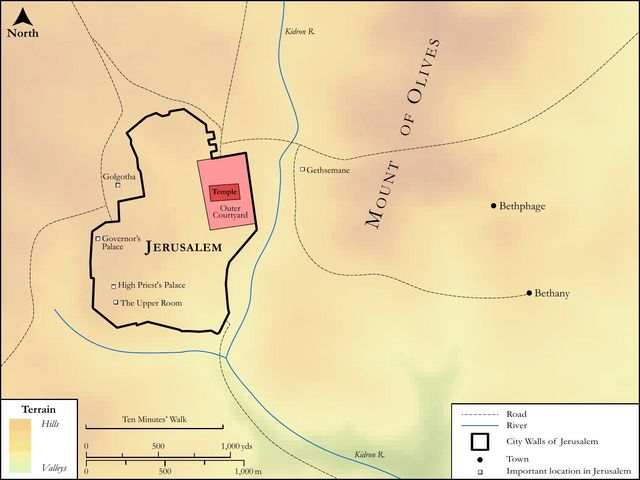
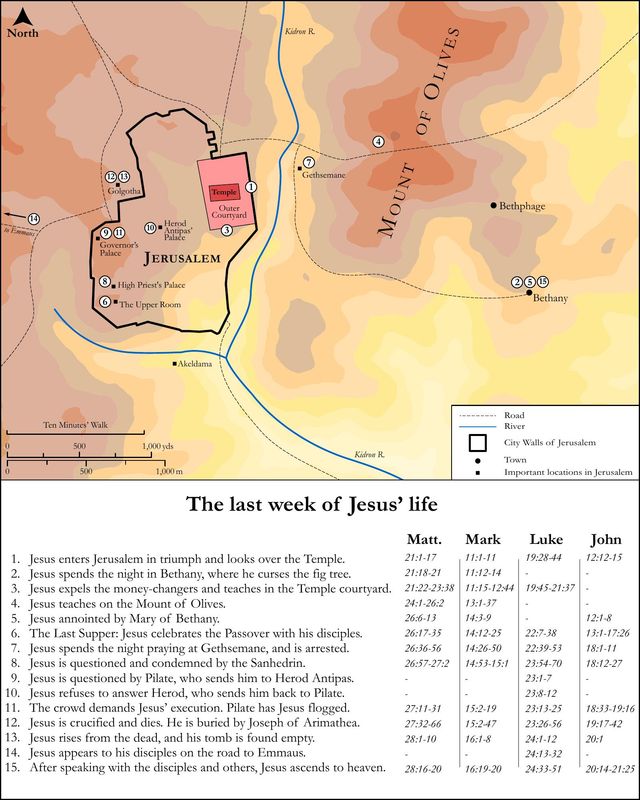
Crucifixion was a brutal form of execution designed to inflict maximum pain and public humiliation, often lasting for days. Victims experienced excruciating thirst due to blood loss, fever, and exposure. The "vinegar" (Greek: oxos) offered was a common, cheap, sour wine, often diluted with water, consumed by Roman soldiers and laborers. It was not a refreshing drink but could offer a temporary, albeit harsh, relief from extreme thirst. The presence of Roman soldiers and Jewish onlookers, some mocking and others perhaps curious or sympathetic, paints a picture of the diverse societal reactions to this public execution. The use of a "reed" (Greek: kálamos) was practical, allowing the sponge to reach the elevated mouth of the crucified. This scene unfolds at Golgotha, "the place of a skull" in Matthew 27:33, outside Jerusalem's city walls, a site of public executions.
Key Themes
ShowHideMatthew 27:48 contributes significantly to several key themes within the Gospel of Matthew and the broader biblical narrative. It powerfully highlights Jesus' Physical Suffering, emphasizing the very real human agony He endured on the cross, including intense thirst, which is a central aspect of the crucifixion accounts. This moment underscores the Humanity of Christ, demonstrating that even as the Son of God, He experienced genuine physical needs and pain, fulfilling His role as a fully human, yet sinless, Savior. Furthermore, the scene portrays the Mixed Reactions to Christ, ranging from the cruel mockery detailed in Matthew 27:39-44 to this seemingly compassionate, or at least responsive, act. This diversity of response foreshadows the ongoing division among humanity regarding Jesus' identity and claims. Ultimately, the verse also subtly points to the Fulfillment of Prophecy, as the offering of sour wine aligns with Old Testament predictions concerning the Messiah's suffering, particularly in Psalm 69:21.
Exposition and Analysis
ShowHideKey Word Analysis
ShowHideThis adverb emphasizes the immediacy and swiftness of the action. It suggests that the individual reacted without hesitation, either in a moment of genuine, albeit crude, compassion or in a quick, perhaps thoughtless, continuation of the taunting. The word conveys a sense of directness and promptness in response to Jesus' cry.
This verb signifies an active and objective taking or getting hold of something. It highlights the deliberate action of the individual in acquiring the sponge and the vinegar. Unlike a passive reception, lambánō indicates a purposeful engagement in the act of preparing the drink for Jesus.
This term refers to sour wine, a common and inexpensive drink of the time, often consumed by soldiers and laborers. It was not a refreshing, pure water, but a fermented, acidic beverage. Its offering here is ambiguous: it could be a crude attempt at relief for extreme thirst, or another element of the humiliation, as it was not a pleasant drink for a dying man.
Verse Breakdown
ShowHide"And straightway one of them ran,"
This clause establishes the immediate and decisive action of an unnamed individual from the crowd of onlookers. The verb "ran" (G5143, tréchō) underscores the urgency and haste of their movement, setting a dynamic tone for the subsequent actions.
"and took a spunge, and filled [it] with vinegar,"
This part details the preparation. The person actively "took" (G2983, lambánō) a sponge, a common item, and "filled" (G4130, plḗthō) it with "vinegar" (G3690, óxos), the sour wine available. This precise action shows intentionality in preparing the specific kind of drink.
"and put [it] on a reed,"
To reach Jesus on the cross, the sponge saturated with vinegar was "put...on" (G4060, peritíthēmi) a "reed" (G2563, kálamos). This practical detail illustrates the physical height of the cross and the necessity of such a tool to administer the drink.
"and gave him to drink."
This final clause describes the completion of the action: the individual offered the prepared drink to Jesus. The verb "gave...to drink" (G4222, potízō) indicates the direct act of providing the liquid, culminating the sequence of swift actions.
Literary Devices
ShowHideMatthew 27:48 employs several literary devices to deepen its impact. Symbolism is evident in the "vinegar" itself, which, while a common drink, here symbolizes the bitter cup of suffering Jesus had to drink, echoing His prayer in Matthew 26:39. The "reed" can symbolize the frailty of human instruments used in divine plans, or perhaps even a subtle echo of the "reed" used earlier to mock Jesus as a king in Matthew 27:29. There is also a powerful sense of Irony in this act. While seemingly compassionate, the offering of sour wine, especially in the context of the preceding mockery, could also be seen as a final indignity or a crude, inadequate response to ultimate suffering. This ambiguity forces the reader to ponder the true intent of the bystander. The Contrast between the immense suffering of the Son of God and the mundane, earthly act of offering a common drink further highlights the profound paradox of the Incarnation and the crucifixion.
Theological and Thematic Connections
ShowHideThis seemingly small act in Matthew 27:48 carries significant theological weight, underscoring the depth of Jesus' suffering as part of God's redemptive plan. The offering of sour wine directly fulfills Old Testament prophecy, confirming that every detail of the Messiah's passion was divinely orchestrated. This demonstrates God's meticulous sovereignty over even the most painful and humiliating aspects of His Son's sacrifice. It highlights that Jesus truly experienced the full spectrum of human agony, including intense thirst, making Him a sympathetic high priest who understands our weaknesses. This moment, whether an act of pity or mockery, serves to complete the prophetic picture of the suffering servant, ensuring that the scriptural narrative of redemption was precisely followed.
Reflection and Application
ShowHideMatthew 27:48 invites us to reflect deeply on the multifaceted nature of Jesus' suffering and its profound implications for our faith. It is a stark reminder that the Son of God, in His humanity, endured unimaginable physical agony, including the torment of extreme thirst. This scene challenges us to move beyond a superficial understanding of the cross and to truly grasp the immense cost of our salvation. It compels us to consider our own responses to suffering, both in our lives and in the lives of others. Do we, like some onlookers, stand by in indifference or even contribute to pain? Or do we, even in imperfect ways, seek to offer relief and compassion, recognizing the dignity of every individual created in God's image? This verse also encourages us to see God's sovereign hand at work even in the most mundane or painful details, reminding us that His plan of redemption is meticulously fulfilled, offering hope and purpose even in our own trials.
Questions for Reflection
ShowHideFAQ
ShowHideWhat was the "vinegar" offered to Jesus?
ShowHideThe "vinegar" (Greek: óxos) mentioned in Matthew 27:48 was not the household vinegar we typically use today. It was a common, inexpensive, sour wine, often diluted with water, that was a staple drink for Roman soldiers and laborers. It was a fermented, acidic beverage, not a refreshing, pure water. While it might have offered a temporary, albeit harsh, relief from intense thirst, it was not considered a pleasant or luxurious drink. Its offering to Jesus is often interpreted in two ways: either as a crude act of pity to alleviate His extreme suffering, or as a final act of mockery, given its unpalatable nature for someone in His condition. This same "sour wine" is also mentioned in the parallel accounts in Mark 15:36 and John 19:29.
Was this act of offering a drink compassionate or mocking?
ShowHideThe intent behind the offering of the sour wine in Matthew 27:48 is ambiguous and has been debated by scholars. On one hand, it could be seen as an act of crude compassion, as Jesus had just cried out, indicating extreme thirst, and even sour wine might offer some temporary relief to a dying man. The swiftness of the action ("straightway one of them ran") might suggest a spontaneous, albeit rough, attempt to help. On the other hand, given the pervasive atmosphere of mockery and derision surrounding the cross (as seen in Matthew 27:39-44), it could also be interpreted as a final act of humiliation or a twisted form of "mercy" that prolonged His agony. The fact that it was sour wine, not pure water, adds to this ambiguity. Ultimately, regardless of the individual's intent, the act served to fulfill Old Testament prophecy, as seen in Psalm 69:21, highlighting God's sovereign plan.
Why was a sponge and reed used?
ShowHideA sponge and reed were used in Matthew 27:48 for practical reasons related to the nature of crucifixion. Victims were typically elevated on the cross, making it difficult to reach their mouths directly. A "reed" (Greek: kálamos) was a long stalk, similar to a cane or stick, which allowed the person to extend the sponge soaked in vinegar up to Jesus' lips. The "sponge" (Greek: spóngos) was absorbent and could hold the liquid, making it an effective way to administer the drink. This method was common for providing liquids to those in elevated positions or to the sick. The Gospel of John specifies that the reed was a "hyssop branch" in John 19:29, which might carry additional symbolic weight related to Old Testament purification rituals.
Christ-Centered Fulfillment
ShowHideMatthew 27:48, though seemingly a minor detail, profoundly contributes to the Christ-centered narrative of salvation. The intense thirst and the offering of sour wine underscore the very real humanity of Jesus, affirming that He fully entered into the depths of human suffering, "being made in the likeness of men" (Philippians 2:7). This physical agony was not incidental but integral to His atoning work, as He bore the full weight of humanity's sin and its consequences. His suffering, including this moment of thirst, fulfills the prophetic declarations of the Old Testament, particularly Psalm 69:21, demonstrating God's meticulous orchestration of salvation history. By willingly enduring such a humiliating and painful death, Jesus, "who knew no sin, was made to be sin for us" (2 Corinthians 5:21), thereby securing our redemption. His cry of thirst, followed by this bitter drink, symbolizes the "cup" of God's wrath against sin that He fully drained for us, culminating in His triumphant declaration, "It is finished" (John 19:30), signifying the completed work of salvation for all who believe.