


Matthew 26:13
Bible text: King James Version (1769 Blayney text) · Public domain
Bible text: King James Version with Strong's numbers · Public domain
Bible text: Berean Standard Bible · Public domain
Bible text: American Standard Version (1901) · Public domain
Bible text: World English Bible, Messianic edition · Public domain
Bible text: Geneva Bible (1599) · Public domain
Bible text: Young's Literal Translation · Public domain
- ἈμὴνAmēnAmenG281INJ-HEBInterjection
- λέγωlegōI sayG3004V-PAI-1SVerb Present Active Indicative 1st Singular
- ὑμῖν·huminto youG4771P-2DPPersonal pronoun Dative 2nd Plural
- ὅπουhopouwhereverG3699CONJConjunction
- ἐὰνeanifG1437CONDConjunction
- κηρυχθῇkēruchthēashall be proclaimedG2784V-APS-3SVerb Aorist Passive Subjunctive 3rd Singular
- τὸto<the>G3588T-NSNDefinite article Nominative Singular Neuter
- εὐαγγέλιονeuangeliongospelG2098N-NSNNoun Nominative Singular Neuter
- τοῦτοtoutothisG3778D-NSNDemonstrative pronoun Nominative Singular Neuter
- ἐνeninG1722PREPPreposition
- ὅλῳholōallG3650A-DSMAdjective Dative Singular Masculine
- τῷtōtheG3588T-DSMDefinite article Dative Singular Masculine
- κόσμῳkosmōworldG2889N-DSMNoun Dative Singular Masculine
- λαληθήσεταιlalēthēsetaiwill be spoken ofG2980V-FPI-3SVerb Future Passive Indicative 3rd Singular
- καὶkaialsoG2532CONJConjunction
- ὃhothat whichG3739R-ASNRelative pronoun Accusative Singular Neuter
- ἐποίησενepoiēsendidG4160V-AAI-3SVerb Aorist Active Indicative 3rd Singular
- αὕτηhautēthis [woman]G3778D-NSFDemonstrative pronoun Nominative Singular Feminine
- εἰςeisforG1519PREPPreposition
- μνημόσυνονmnēmosunona memorialG3422N-ASNNoun Accusative Singular Neuter
- αὐτῆςautēsof herG846P-GSFPersonal pronoun Genitive Singular Feminine
English is a literal word-by-word gloss of the Greek, not the KJV's wording. Why?
This is the original text the KJV's translators worked from — each Greek word with its own literal English meaning in this verse, prepared by scholars at Tyndale House, Cambridge. The KJV translates whole sentences, not word by word, so its wording differs: one Greek word can become several English words, and the KJV may choose “charity” where the gloss reads “love”. Both are faithful — they answer different questions. For the KJV's own rendering, switch to the KJV text.
Details
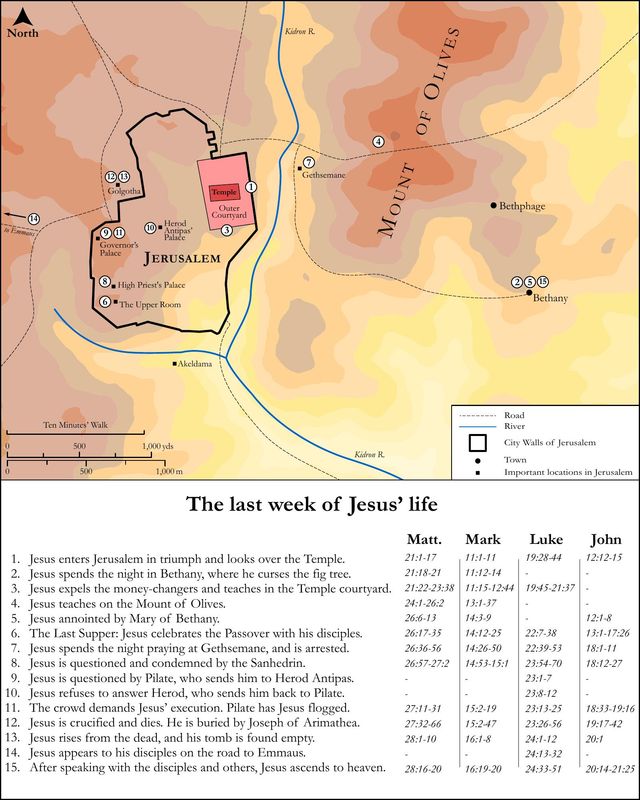
See on the biblical-era maps


Study this verse
Historical interpretation
Ten Centuries of Reception
13 surviving comments on this verse. Each one is dated, so this reads as a timeline rather than a list.
Select a marker to jump to its quote. Markers stagger vertically where authors wrote within a few decades of each other.
The ointment with an agreeable odor represents what the faithful do for God. This very work of the faithful of God, which is ointment, becomes something else for the good of humanity—for instance, almsgiving, visits to the sick, welcoming strangers, humility, gentleness, pardon, and so forth. These are things that benefit human beings. He who does them to Christians anoints the Lord’s feet with ointment, for they are the Lord’s feet with which he will always walk.… This is the ointment which also anoints Christ’s head and flows down over his whole body, that is, it pours down on the whole church. This is the precious ointment that fills the whole house with its odor, that is, the church of Christ. This is the work that is proper not for penitents but for the preeminently holy people. Certainly the teaching necessary for people which feeds those who are poor in spiritually good things or those who are perhaps weak in avoiding sin—this is the plain ointment with which the Lord’s feet are anointed. However, the knowledge of the true faith which pertains to God alone—this is the precious ointment that anoints God, Christ’s head.
In this woman is prefigured the people of the Gentiles, who gave glory to God in Christ's passion; for she anointed His head, but the head of Christ is God, and ointment is the fruit of good works. But the disciples, anxious for the salvation of Israel, say that this ought to have been sold for the use of the poor; designating by a prophetic instinct the Jews, who lacked faith, by the name of the poor. The Lord answers that there is abundant time in which they may show their care for the poor, but that salvation cannot be extended to the Gentiles but by obedience to His command, if, that is, by the pouring out of this woman's ointment they are buried together with Him, because regeneration can only be given to those who are dead in the profession of baptism. And this her work shall be told wherever this Gospel is preached, because when Israel draws back, the glory of the Gospel is preached by the belief of the Gentiles.
(in Luc. 7, 37.) It is possible therefore that they were different persons, and so all appearance of contradiction between the Evangelists is removed. Or it is possible that it was the same woman at two different times and two different stages of desert; first while yet a sinner, afterwards more advanced.
(Hom. lxxx.) And in this way it may be the same in the three Evangelists, Matthew, Mark, and Luke. And not without good reason does the Evangelist mention Simon's leprosy, to show what gave this woman confidence to come to Christ. The leprosy was an unclean disease; when then she saw that Jesus had healed the man with whom He now lodged, she trusted that He could also cleanse the uncleanness of her soul; and so whereas other women came to Christ to be healed in their bodies, she came only for the honour and the healing of her soul, having nothing diseased in her body; and for this she is worthy our highest admiration. But she in John is a different woman, the wonderful sister of Lazarus.
The disciples had heard their Master say, I will have mercy, and not sacrifice, (Matt. 9:13.) wherefore they thought among themselves, If He accepts not burnt-offerings, much less will He the application of such ointment as this.
The disciples then thought thus, but Jesus, who saw the thoughts of the woman, suffered it. For her piety was great, and her ardour unspeakable, wherefore He condescended to suffer her to pour the ointment on His head. As the Father admitted the smoke and odour of the slain victim, so also Christ admitted this votive anointing of His head, though the disciples, who saw not her heart, murmured.
And He says not merely, She hath wrought a good work, but says first, Why trouble ye the woman? to teach us that every good act that is wrought by any, even though it lack somewhat of exact propriety, yet we ought to receive, cherish, and cultivate it, and not to require strict correctness in a beginner. If He had been asked before this was done by the woman, He would not have directed its doing; but when it was done, the rebuke of the disciples had no longer any place, and He Himself to guard the woman from importunate attacks speaks these things for her comfort.
That this mention of His death and burial might not cause her to despond, He comforts her by what follows, Verily I say unto you, Wheresoever &c.
Behold the accomplishment of this saying; to whatsoever part of the world you go, you will find this woman famous, and this has been wrought by the power of Him who spake this word. How many victories of kings and captains have passed into oblivion; how many who built cities and enslaved many nations are now known neither by report nor by name; but the deed of this woman pouring forth ointment in the house of a leper in the presence of twelve men, this resoimds throughout the world, and though so much time has elapsed, the memory of that which was done is not effaced. But why promised He no spiritual gift to this woman, but everlasting remembrance only? Because this He did promise made her confident of receiving the other also; whereas she wrought a good work, it is clear that she shall receive an adequate reward.
This woman seems indeed to be one and the same with all the evangelists, yet she is not so; but though with the three she doth seem to me to be one and the same, yet not so with John, but another person, one much to be admired, the sister of Lazarus.
But not without purpose did the evangelist mention the leprosy of Simon, but in order that He might show whence the woman took confidence, and came unto Him. For inasmuch as the leprosy seemed a most unclean disease, and to be abhorred, and yet she saw Jesus had both healed the man (for else He would not have chosen to have tarried with a leper), and had gone into his house; she grew confident, that He would also easily wipe off the uncleanness of her soul. And not for nought doth He name the city also, Bethany, but that thou mightest learn, that of His own will He cometh to His passion. For He who before this was fleeing through the midst of them; then, at the time when their envy was most kindled, comes near within about fifteen furlongs; so completely was His former withdrawing Himself a part of a dispensation.
The woman therefore having seen Him, and having taken confidence from thence came unto Him. For if she that had the issue of blood, although conscious to herself of nothing like this, yet because of that natural seeming uncleanness, approached Him trembling and in fear; much more was it likely this woman should be slow, and shrink back because of her evil conscience. Wherefore also it is after many women, the Samaritan, the Canaanite, her that had the issue of blood, and other besides, that she cometh unto Him, being conscious to herself of much impurity; and then not publicly but in a house. And whereas all the others were coming unto Him for the healing of the body alone, she came unto Him by way of honor only, and for the amendment of the soul. For neither was she at all afflicted in body, so that for this most especially one might marvel at her.
And not as to a mere man did she come unto Him; for then she would not have wiped His feet with her hair, but as to one greater than man can be. Therefore that which is the most honorable member of the whole body, this she laid at Christ's feet, even her own head.
And whence had they this thought? They used to hear their Master saying, "I will have mercy, and not sacrifice," and blaming the Jews, because they omitted the weightier matters, judgment, and mercy, and faith, and discoursing much on the mount concerning almsgiving, and from these things they inferred with themselves, and reasoned, that if He accepts not whole burnt offerings, neither the ancient worship, much more will He not accept the anointing of oil.
But though they thus thought, He knowing her intention suffers her. For indeed great was her reverence, and unspeakable her zeal; wherefore of this exceeding condescension, He permitted the oil to be poured even on His head.
For if He refused not to become man, and to be borne in the womb, and to be fed at the breast, why marvellest thou, if He doth not utterly reject this? For like as the Father suffered a savor of meat, and smoke, even so did He the harlot, accepting, as I have already said, her intention. For Jacob too anointed a pillar to God, and oil was offered in the sacrifices, and the priests were anointed with ointment.
But the disciples not knowing her purpose found fault unseasonably, and by the things they laid to her charge, they show the woman's munificence. For saying, that it might have been sold for three hundred pence, they showed how much this woman had spent on the ointment, and how great generosity she had manifested. Wherefore He also rebuked them, saying, "Why trouble ye the woman?" And He adds a reason, as it was His will again to put them in mind of His passion, "For she did it," He said, "for my burial." And another reason. "For ye have the poor always with you, but me ye have not always;" and, "Wheresoever the gospel shall be preached, that shall be told also which this woman hath done."
Seest thou how again He declares beforehand the going forth unto the Gentiles, in this way also consoling them for His death, if after the cross His power was so to shine forth, that the Gospel should be spread abroad in every part of the earth.
Who then is so wretched as to set his face against so much truth? For lo! what He said is come to pass, and to whatever part of the earth thou mayest go, thou wilt see her celebrated.
And yet neither was the person that did it distinguished, nor had what was done many witnesses, neither was it in a theatre, but in a house, that it took place, the disciples only being present.
Who then proclaimed it, and caused it to be spread abroad? It was the power of Him who is speaking these words. And while of countless kings and generals the noble exploits even of those whose memorials remain have sunk into silence; and having overthrown cities, and encompassed them with walls, and set up trophies, and enslaved many nations, they are not known so much as by hearsay, nor by name, though they have both set up statues, and established laws; yet that a woman who was a harlot poured out oil in the house of some leper, in the presence of ten men, this all men celebrate throughout the world; and so great a time has passed, and yet the memory of that which was done hath not faded away, but alike Persians and Indians, Scythians and Thracians, and Sarmatians, and the race of the Moors, and they that dwell in the British Islands, spread abroad that which was done secretly in a house by a woman that had been a harlot.
Great is the loving-kindness of the Lord. He endureth an harlot, an harlot kissing his feet, and moistening them with oil, and wiping them with her hair, and He receives her, and reproves them that blame her. For neither was it right that for so much zeal the woman should be driven to despair.
But mark thou this too, how far they were now raised up above the world, and forward in almsgiving. And why was it He did not merely say, "She hath wrought a good work," but before this, "Why trouble ye the woman?" That they might learn not at the beginning to require too high principles of the weaker sort. Therefore neither doth He examine the act merely itself by itself, but taking into account the person of the woman. And indeed if He had been making a law, He would not have brought in the woman, but that thou mightest learn that for her sake these things were said, that they might not mar her budding faith, but rather cherish it, therefore He saith it, teaching us whatever good thing may be done by any man, though it be not quite perfect, to receive it, and encourage it, and advance it, and not to seek all perfection at the beginning. For, that at least He Himself would rather have desired this, is manifest from the fact, that He required a bag to be borne, who had not where to lay His head. But then the time demanded not this, that He should correct the deed, but that He should accept it only. For even as, if any one asked Him, without the woman's having done it, He would not have approved this; so, after she had done it, He looks to one thing only, that she be not driven to perplexity by the reproof of the disciples, but that she should go from His care, having been made more cheerful and better. For indeed after the oil had been poured out, their rebuke had no seasonableness.
Do thou then likewise, if thou shouldest see any one provide sacred vessels and offer them, and loving to labor upon any other ornament of the church, about its walls or floor; do not command what has been made to be sold, or overthrown, lest thou spoil his zeal. But if, before he had provided them, he were to tell thee of it, command it to be given to the poor; forasmuch as He also did this not to spoil the spirit of the woman, and as many things as He says, He speaks for her comfort.
Then because He had said, "She hath done it for my burial;" that He might not seem to perplex the woman, by making mention of such a thing as this, His burial and death, I mean; see how by that which follows He recovers her, saying, "What she hath done shall be spoken of in the whole world."
And this was at once consolation to His disciples, and comfort and praise to her. For all men, He saith, shall celebrate her hereafter; and now too hath she announced beforehand my passion, by bringing unto me what was needed for a funeral, let not therefore any man reprove her. For I am so far from condemning her as having done amiss, or from blaming her as having not acted rightly, that I will not suffer what hath been done to lie hid, but the world shall know that which has been done in a house, and in secret. For in truth the deed came of a reverential mind, and fervent faith, and a contrite soul.
And wherefore did He promise the woman nothing spiritual; but the perpetual memory? From this He is causing her to feel a confidence about the other things also. For if she hath wrought a good work, it is quite evident she shall receive a due reward.
(Verse 12-14) Truly I tell you, wherever this Gospel is proclaimed in the whole world, what she has done will be told in memory of her. Then one of the twelve, who was called Judas Iscariot, went to the chief priests. In the whole world, not so much this woman, as the Church is preached, that she has buried the Savior, that she has anointed his head. And pay attention to the knowledge of the future, that he will suffer in two days and die, and his Gospel will be celebrated in the whole world.
Not that he was a leper yet, but having been so, and having been healed by the Saviour, he retained the appellation to show forth the power of Him who healed him.
Another Evangelist (John 12:3.) instead of 'alabastrum' has 'nardum pisticam,' that is, genuine, unadulterated.
For let no one think that she who anointed His head and she who anointed His feet were one and the same; for the latter washed His feet with her tears, and wiped them with her hair, and is plainly said to have been a harlot. But of this woman nothing of this kind is recorded, and indeed a harlot could not have at once been made deserving of the Lord's head.
I know that some raise a cavil here, because John says that Judas alone was grieved because he had the bag, and was a thief from the beginning; but Matthew, that all the disciples were sorrowful. These know not the figure syllepsis, by which one name is put for many, and many for one; as Paul in the Epistle to the Hebrews says, They were sawn asunder, when it is thought that one only, Esaias namely, was so. (Heb. 11:37.)
Here a question arises how the Lord should have said elsewhere to His disciples, Lo, I am with you always, even to the end of the world; but here, Me ye shall not have always. (Matt. 28:20.) I suppose that in this place He speaks of His bodily presence, which shall not be with them after the resurrection in daily intercourse and friendship, as it is now.
Note His knowledge of things to come, how though about to suffer death within two days, He knows that His Gospel will be preached throughout the whole world.
Mystically; The Lord, about to suffer for the whole world, sojourns in Bethany, in the house of obedience, which once was that of Simon the leper. Simon also is interpreted 'obedient,' or, according to another interpretation, 'the world,' in whose house the Church is healed.
(Serm. 58, 1.) We recognise here a providential arrangement whereby the chief men of the Jews, who had often sought occasion of effecting their cruel purposes against Christ, could never yet succeed till the days of the paschal celebration. For it behoved that the things which had long been promised in symbol and mystery should be accomplished in manifest reality, that the typical lamb should be displaced by the true, and one sacrifice embrace the whole catalogue of the varied victims. That shadows should give way to substance, and copies to the presence of the original; victim is commuted for victim, blood is abolished by blood, and the festival of the Law is at once fulfilled and changed.
He clearly shows that the Apostles had uttered something harsh against her, when He says, Why trouble ye the woman? And beautifully He adds, She hath wrought a good work in me; as much as to say, It is not a waste of ointment, as ye say, but a good work, that is, a service of piety and devotion.
For the poor ye have ever with you. The Lord shows in these words as of set purpose, that they were not to be blamed who ministered of their substance to Him while He dwelt in a mortal body; forasmuch as the poor were ever in the Church, to whom the believers might do good whensoever they would, but He would abide in the body with them but a very short time; whence it follows, But me ye shall not have always.
Or, it is to be explained by supposing this spoken to Judas only; and He said not, Ye have not, but Ye shall not have, because this was spoken in the person of Judas to all his followers. And He says, Not always, though they have it at no time, because the wicked seem to have Christ in this present world, while they mix among His members and approach His table, but they shall not always so have Him when He shall say to His elect, Come, ye blessed of my Father. (Matt. 25:34.) It was the custom among this people to embalm the bodies of (Matt. 25:34.) the dead with divers spices, to the end that they might be kept from corruption as long as possible. And as this woman was desirous of embalming the Lord's dead Body, and would not be able because she would be anticipated by His resurrection, it was therefore arranged by Divine Providence that she should anoint the Lord's living Body. This then is what He says, In that she hath poured, that is, By anointing My living Body she shows forth My death and burial.
(Hom. in Ev. xxxiii. 1.) Or, we may think that this is the same woman whom Luke calls a sinner, and John names Mary.
Alabaster is a kind of marble, white but marked with veins of different colours, which was in use for vessels to hold ointment, because it was said to preserve it from corruption.
From the Greek πίστις, faith, whence 'pisticus,' faithful. For this ointment was pure, unadulterated.
That is, To whatsoever place throughout the whole world the Church shall be propagated, there this also that she hath done shall be told. That also that is added signifies, that as Judas by his reproof of her has earned evil character of treachery, so has she also earned the glory of pious devotedness.
. He teaches us that the woman did this by some divine inspiration, prefiguring His death and the burial of His Body. For the Lord would not have allowed Himself to be anointed with myrrh if it did not reveal a mystery. Being God, He foretold what would be, that the deed which the woman did would be told everywhere in praise of her. Behold God’s love for mankind, how He rewards the woman with a great gift; for He causes her memorial to be kept universally, for as long as His Gospel endures. How did the myrrh symbolize His burial? It was the practice among the Jews to prepare bodies for burial by anointing them with myrrh, as the Egyptians did, to prevent decay and foul odor. He is saying, "By pouring the myrrh the woman shows that My Body will be buried." He said all these things to shame and reprove Judas by whom He would be betrayed and handed over for burial. Understand it also in a spiritual sense: the leper is the Gentile people, the sinful woman is the congregation and the Church from among the Gentiles, who poured out myrrh, that is, faith, on the head of Christ, which is His divinity. For everyone who believes that Christ is God pours out myrrh on the head of Christ. But Judas, who rebuked the woman, as John says (Jn. 12:4-6), is a symbol of the Jews who still to this day murmur against the Church.
(non occ.) Having set before us the counsels of the chief of the Jews concerning the death of Christ, the Evangelist would proceed to follow out their execution, and to relate the bargain of Judas with the Jews to deliver Him up, but he first shows the cause of this betrayal. He was grieved that the ointment which the woman poured upon Christ's head had not been sold that he might have carried off something out of the price it brought, and to make up this loss he was willing to betray his Master. And therefore he proceeds, Now when Jesus was in Bethany, in the house of Simon the leper.
Continue studying Matthew 26:13 across the web’s major study libraries — every link below opens this exact verse, chapter, or book on the destination site.
Read & Compare
 BibleGatewayThis verse in more than 200 translations and 70 languages.
 Bible.comThe YouVersion reader — hundreds of translations, reading plans, and highlights.
 ESV.orgCrossway's official English Standard Version reader.
 NET BibleThe NET translation with 60,000+ translators' notes on every rendering decision.
 STEP BibleTyndale House's free study tool — original text, vocabulary, and scholarly resources.
 BibliaLogos Bible Software's free web reader.
 USCCBThe New American Bible (Revised Edition) with the U.S. bishops' study notes.
Commentaries
 BibleHub CommentariesDozens of classic commentaries on this verse, gathered on one page.
 StudyLightMore than 100 commentary sets — the largest collection on the web.
 BibleRefPlain-English commentary on what this verse means, verse by verse.
 Enduring WordDavid Guzik's free commentary on this chapter, widely used by Bible teachers.
 Bible Study ToolsVerse commentary alongside Greek and Hebrew study aids.
Original Language & Research
- BibleHub InterlinearThe verse word by word — original language, transliteration, and English.
- BibleHub LexiconEvery word's original-language definition and Strong's entry.
 Blue Letter BibleDeep-study tools — Strong's numbers, concordance, and word studies.
 CNTR CollationThe earliest Greek manuscripts of this verse, collated letter by letter.
Sermons, Hymns & Audio


TrulyRandomVerse is not affiliated with these sites and doesn’t control their content. They’re linked because they’re genuinely useful.
Summary
Matthew 26:13 captures Jesus's profound declaration regarding an unnamed woman's act of anointing Him with expensive ointment in Bethany. Despite the disciples' indignation at what they perceived as a waste, Jesus affirms her deed as a beautiful preparation for His burial, prophesying that her loving, sacrificial act would be proclaimed as an enduring memorial wherever the gospel is preached throughout the entire world. This verse underscores the eternal significance of genuine devotion to Christ, contrasting human utilitarianism with divine recognition of uncalculating love.
Context
ShowHideLiterary Context
This verse is situated within the final week of Jesus's earthly ministry, just days before His crucifixion. The preceding verses (Matthew 26:6-12) describe the scene in Bethany at the house of Simon the leper, where a woman pours costly perfume on Jesus's head. The disciples, particularly Judas Iscariot (as noted in John 12:4-6), grumble, suggesting the ointment could have been sold for the poor. Jesus immediately defends the woman, stating her act is a preparation for His burial, setting the stage for the powerful declaration in Matthew 26:13. This episode is immediately followed by Judas's agreement to betray Jesus (Matthew 26:14-16), highlighting the stark contrast between selfless devotion and calculating treachery.
Historical & Cultural Context
Anointing with oil or perfume was a common practice in ancient Israel, often associated with hospitality, purification, or commissioning. However, this woman's act was extraordinary due to the immense value of the nard (likely spikenard, a rare and expensive perfume imported from India) and its application to Jesus's head (and feet in parallel accounts). Such an act would typically be reserved for kings, priests, or for embalming the dead. The disciples' indignation stemmed from a cultural understanding of stewardship, where such a valuable commodity might be better used for charity. Jesus's reinterpretation elevates the act from a mere social custom or economic transaction to a prophetic and deeply spiritual gesture, aligning it with the sacred rituals of burial preparation, which were culturally significant in preparing a body for its final rest.
Key Themes
ShowHideMatthew 26:13 powerfully contributes to several key themes within Matthew's Gospel and the broader biblical narrative. It highlights the theme of true discipleship, contrasting the woman's selfless devotion with the disciples' misunderstanding and Judas's impending betrayal. It underscores the value of sacrificial love and worship, demonstrating that God values acts of genuine adoration over pragmatic calculations. Furthermore, it foreshadows the global proclamation of the gospel, connecting a singular act of devotion to the worldwide spread of the good news, echoing the universal mission that culminates in the Great Commission. This verse also subtly points to the imminence of Jesus's death and burial, a central theme in the passion narrative that follows.
Exposition and Analysis
ShowHideKey Word Analysis
ShowHideFrom Hebrew origin, this word signifies "firm" or "trustworthy." When Jesus uses "Verily" (or "Amen"), it serves as a solemn affirmation, underscoring the absolute truth, certainty, and divine authority of the statement He is about to make. It demands attention and conveys the weight of His prophetic utterance.
Derived from a word meaning "to bring good news," this term refers to the "good message" or "good tidings." In the New Testament, it specifically denotes the good news of God's salvation through Jesus Christ, encompassing His life, death, resurrection, and reign. Its global proclamation is central to Jesus's mission and the church's mandate.
This word denotes something that serves as a reminder, a lasting record, or a remembrance. It implies more than a fleeting memory; it is a permanent testament or a perpetual commemoration. Jesus's use of this term ensures that the woman's act will not merely be recalled but will be perpetually recounted and honored as an integral part of the gospel narrative.
Verse Breakdown
ShowHide"Verily I say unto you,"
This opening phrase, a signature of Jesus's teaching, emphasizes the absolute truth and divine authority of His subsequent declaration. It signals a profound and certain pronouncement that demands attention and belief.
"Wheresoever this gospel shall be preached in the whole world,"
This clause prophesies the universal and global reach of the Christian message. Jesus foresees a time when the good news of His saving work will extend beyond geographic and cultural boundaries, encompassing all nations and peoples.
"[there] shall also this, that this woman hath done, be told for a memorial of her."
This final clause directly links the woman's specific act of devotion to the worldwide proclamation of the gospel. Jesus declares that her deed will not be forgotten but will be perpetually recounted and honored as a lasting testament to her love and faith, becoming an inseparable part of the very message that spreads globally.
Literary Devices
ShowHideMatthew 26:13 employs several powerful literary devices. Prophecy is central, as Jesus foretells the global spread of the gospel and the enduring legacy of the woman's act, demonstrating His divine foresight and authority. The statement also utilizes Hyperbole to emphasize the vastness of the gospel's reach ("in the whole world") and, by extension, the extraordinary and lasting impact of the woman's seemingly small deed. There is a strong element of Contrast in the broader narrative, where Jesus's affirmation of the woman's devotion stands in stark opposition to the disciples' worldly judgment and Judas's imminent betrayal, highlighting the difference between true spiritual value and material calculation. Finally, the phrase "for a memorial of her" functions as a form of Epitaph, a lasting inscription or tribute that ensures her act will be perpetually remembered and honored as part of the unfolding story of salvation.
Theological and Thematic Connections
ShowHideMatthew 26:13 profoundly illustrates the divine economy of value, where acts of sincere, uncalculating devotion to Christ are eternally significant, often in ways unseen or misunderstood by human observers. It teaches that true worship is not measured by pragmatic utility but by the heart's extravagant love, aligning with the principle that giving one's best to God, even at great personal cost, is always honored. This verse also establishes an inseparable link between the proclamation of the gospel and the living testimonies of those transformed by it. The woman's act becomes an embodied sermon, a tangible expression of the love that the gospel inspires, demonstrating that the message of Christ is not merely abstract theology but a living reality that calls for radical devotion.
Reflection and Application
ShowHideMatthew 26:13 serves as a powerful and enduring encouragement for every believer, reminding us that our acts of devotion, however small or seemingly insignificant in the eyes of the world, are seen, valued, and eternally remembered by God. This woman's extravagant act, deemed wasteful by some, was transformed by Jesus into a timeless testament to sacrificial love. It challenges us to examine our own hearts: are we holding back our "best" from God, or are we willing to offer our time, talents, resources, and affections with the same unreserved generosity? The lasting legacy promised to this woman assures us that genuine, humble, and uncalculating devotion to Jesus is never in vain. Our lives, when lived in surrendered love for Christ, become part of the ongoing story of His gospel, a testament to His transformative power that echoes through generations.
Questions for Reflection
ShowHideFAQ
ShowHideWho was the woman who anointed Jesus, and why was her act so significant?
ShowHideWhile Matthew's account does not name her, parallel Gospel accounts (specifically John 12:1-8) identify her as Mary of Bethany, the sister of Martha and Lazarus. Her act was significant not only because of the immense value of the perfume (likely a year's wages for a common laborer) but primarily because Jesus interpreted it as a prophetic act of preparation for His imminent burial. It was an extravagant, selfless expression of love and worship, contrasting sharply with the disciples' pragmatic concerns and Judas's treachery. Jesus's declaration in Matthew 26:13 elevates her deed to eternal significance, making it an inseparable part of the gospel narrative.
Christ-Centered Fulfillment
ShowHideMatthew 26:13 finds its ultimate Christ-centered fulfillment in the very gospel that is to be preached throughout the world. The woman's act of anointing Jesus for burial foreshadows and points to the central truth of the Christian faith: the death, burial, and resurrection of Jesus Christ. Her devotion, though beautiful, gains its lasting significance because it is directed towards the One who would become the ultimate sacrifice for the sins of the world. The "gospel" that is preached globally is not merely a set of abstract doctrines, but the good news of Jesus Christ, crucified and risen. Her memorial is forever linked to His, as His sacrifice is the foundation upon which the entire gospel message rests. Her act of love mirrors the greater love of Christ, who poured out His very life as an offering for humanity (as seen in Ephesians 5:2). Thus, the global proclamation of her deed serves as a perpetual reminder of the profound love and sacrifice that both she, and supremely Christ, demonstrated, ensuring that the story of His redemptive work, and those who responded to it, will never be forgotten (as promised in Revelation 7:9-10).