


Matthew 18:10
Bible text: King James Version (1769 Blayney text) · Public domain
Bible text: King James Version with Strong's numbers · Public domain
Bible text: Berean Standard Bible · Public domain
Bible text: American Standard Version (1901) · Public domain
Bible text: World English Bible, Messianic edition · Public domain
Bible text: Geneva Bible (1599) · Public domain
Bible text: Young's Literal Translation · Public domain
- ὉρᾶτεHoratedo see [that]G3708V-PAM-2PVerb Present Active Imperative 2nd Plural
- μὴmēnotG3361PRT-NNegative Particle Negative
- καταφρονήσητεkataphronēsētemay you despiseG2706V-AAS-2PVerb Aorist Active Subjunctive 2nd Plural
- ἑνὸςhenosoneG1520A-GSMAdjective Genitive Singular Masculine
- τῶνtōnof theG3588T-GPMDefinite article Genitive Plural Masculine
- μικρῶνmikrōnlittle onesG3398A-GPMAdjective Genitive Plural Masculine
- τούτων·toutōnof theseG3778D-GPMDemonstrative pronoun Genitive Plural Masculine
- λέγωlegōI sayG3004V-PAI-1SVerb Present Active Indicative 1st Singular
- γὰρgarforG1063CONJConjunction
- ὑμῖνhuminto youG4771P-2DPPersonal pronoun Dative 2nd Plural
- ὅτιhotithatG3754CONJConjunction
- οἱhoitheG3588T-NPMDefinite article Nominative Plural Masculine
- ἄγγελοιangeloiangelsG32N-NPMNoun Nominative Plural Masculine
- αὐτῶνautōnof themG846P-GPMPersonal pronoun Genitive Plural Masculine
- ἐνeninG1722PREPPreposition
- οὐρανοῖςouranois[the] heavensG3772N-DPMNoun Dative Plural Masculine
- διὰdiathroughG1223PREPPreposition
- παντὸςpantosall [times]G3956A-GSMAdjective Genitive Singular Masculine
- βλέπουσινblepousinbeholdG991V-PAI-3PVerb Present Active Indicative 3rd Plural
- τὸtotheG3588T-ASNDefinite article Accusative Singular Neuter
- πρόσωπονprosōponfaceG4383N-ASNNoun Accusative Singular Neuter
- τοῦtouof theG3588T-GSMDefinite article Genitive Singular Masculine
- πατρόςpatrosFatherG3962N-GSM-TNoun Genitive Singular Masculine Title
- μουmouof mineG3165P-1GSPersonal pronoun Genitive 1st Singular
- τοῦtouwho [is]G3588T-GSMDefinite article Genitive Singular Masculine
- ἐνeninG1722PREPPreposition
- οὐρανοῖςouranois[the] heavensG3772N-DPMNoun Dative Plural Masculine
English is a literal word-by-word gloss of the Greek, not the KJV's wording. Why?
This is the original text the KJV's translators worked from — each Greek word with its own literal English meaning in this verse, prepared by scholars at Tyndale House, Cambridge. The KJV translates whole sentences, not word by word, so its wording differs: one Greek word can become several English words, and the KJV may choose “charity” where the gloss reads “love”. Both are faithful — they answer different questions. For the KJV's own rendering, switch to the KJV text.
Details
See on the biblical-era maps
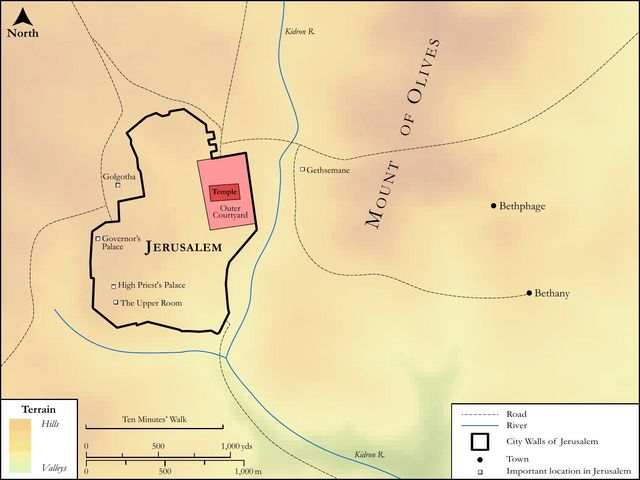
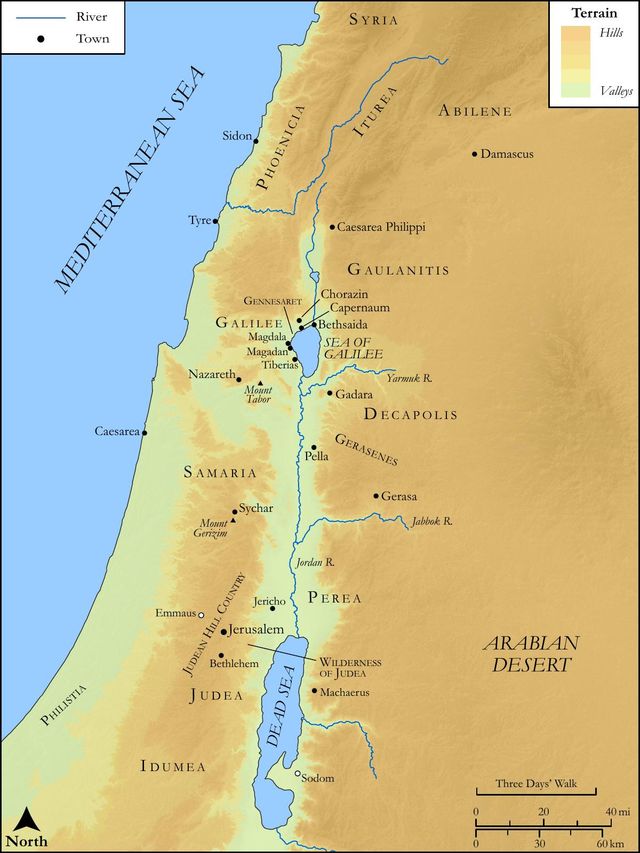
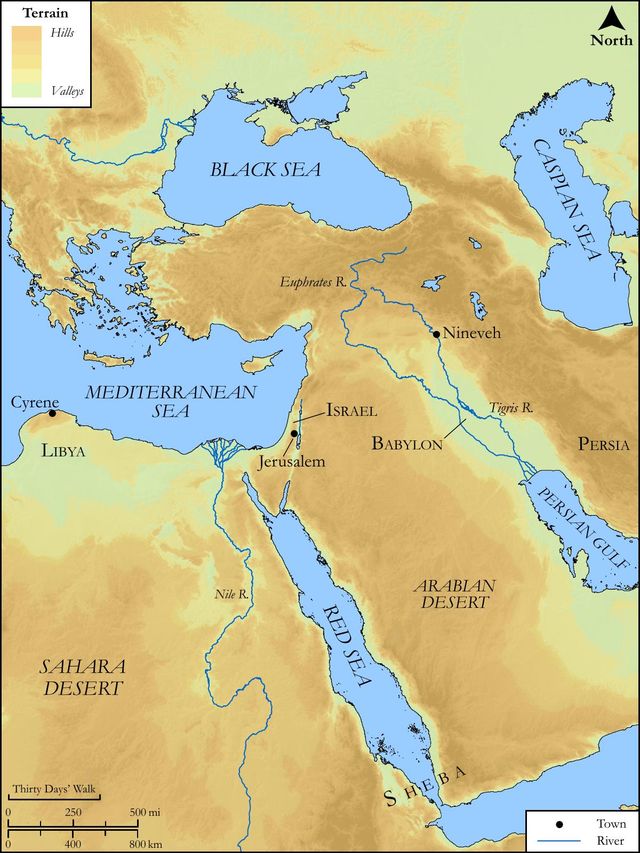
Study this verse
Public-domain commentary
Matthew Henry
From his Commentary on the Whole Bible. Henry comments on passages, not single verses — this entry covers Matthew 18:1–35. His four-level outline is real structure in the source text, so it is rendered as structure.
As there never was a greater pattern of humility, so there never was a greater preacher of it, than Christ; he took all occasions to command it, to commend it, to his disciples and followers.
I.The occasion of this discourse concerning humility was an unbecoming contest among the disciples for precedency; they came to him, saying, among themselves (for they were ashamed to ask him, Mar 9:34), Who is the greatest in the kingdom of heaven? They mean not, who by character (then the question had been good, that they might know what graces and duties to excel in), but who by name. They had heard much, and preached much, of the kingdom of heaven, the kingdom of the Messiah, his church in this world; but ass yet they were so far from having any clear notion of it, that they dreamt of a temporal kingdom, and the external pomp and power of it. Christ had lately foretold his sufferings, and the glory that should follow, that he should rise again, from whence they expected his kingdom would commence; and now they thought it was time to put in for their places in it; it is good, in such cases, to speak early. Upon other discourses of Christ to that purport, debates of this kind arose (Mat 20:19, Mat 20:20; Luk 22:22, Luk 22:24); he spoke many words of his sufferings, but only one of his glory; yet they fasten upon that, and overlook the other; and, instead of asking how they might have strength and grace to suffer with him, they ask him, "Who shall be highest in reigning with him." Note, Many love to hear and speak of privileges and glory, who are willing to pass by the thoughts of work and trouble. They look so much at the crown, that they forget the yoke and the cross. So the disciples here did, when they asked, Who is the greatest in the kingdom of heaven?
1.They suppose that all who have a place in that kingdom are great, for it is a kingdom of priests. Note, Those are truly great who are truly good; and they will appear so at last, when Christ shall own them as his, though ever so mean and poor in the world.
2.They suppose that there are degrees in this greatness. All the saints are honourable, but not all alike so; one star differs from another star in glory. All David's officers were not worthies, nor all his worthies of the first three.
3.They suppose it must be some of them, that must be prime ministers of state. To whom should King Jesus delight to do honour, but to them who had left all for him, and were now his companions in patience and tribulation?
4.They strive who it should be, each having some pretence or other to it. Peter was always the chief speaker, and already had the keys given him; he expects to be lord-chancellor, or lord-chamberlain of the household, and so to be the greatest. Judas had the bag, and therefore he expects to be lord-treasurer, which, though now he come last, he hopes, will then denominate him the greatest. Simon and Jude are nearly related to Christ, and they hope to take place of all the great officers of state, as princes of the blood. John is the beloved disciple, the favourite of the Prince, and therefore hopes to be the greatest. Andrew was first called, and why should not he be first preferred? Note, We are very apt to amuse and humour ourselves with foolish fancies of things that will never be.
II.The discourse itself, which is a just rebuke to the question, Who shall be greatest? We have abundant reason to think, that if Christ ever intended that Peter and his successors at Rome should be heads of the church, and his chief vicars on earth, having so fair an occasion given him, he would now have let his disciples know it; but so far is he from this, that his answer disallows and condemns the thing itself. Christ will not lodge such an authority or supremacy any where in his church; whoever pretend to it are usurpers; instead of settling any of the disciples in this dignity, he warns them all not to put in for it.
Christ here teacheth them to be humble,
1.By a sign (Mat 18:2); He called a little child to him, and set him in the midst of them. Christ often taught by signs or sensible representations (comparisons to the eye), as the prophets of old. Note, Humility is a lesson so hardly learned, that we have need by all ways and means to be taught it. When we look upon a little child, we should be put in mind of the use Christ made of this child. Sensible things must be improved to spiritual purposes. He set him in the midst of them; not that they might play with him, but that they might learn by him. Grown men, and great men, should not disdain the company of little children, or think it below them to take notice of them. They may either speak to them, and give instruction to them; or look upon them, and receive instruction from them. Christ himself, when a child, was in the midst of the doctors, Luk 2:46.
2.By as sermon upon this sign; in which he shows them and us,
(1.)The necessity of humility, Mat 18:3. His preface is solemn, and commands both attention and assent; Verily I say unto you, I, the Amen, the faithful Witness, say it, Except ye be converted, and become as little children, ye shall not enter into the kingdom of heaven. Here observe,
[1.]What it is that he requires and insists upon.
First, "You must be converted, you must be of another mind, and in another frame and temper, must have other thoughts, both of yourselves and of the kingdom of heaven, before you be fit for a place in it. The pride, ambition, and affectation of honour and dominion, which appear in you, must be repented of, mortified, and reformed, and you must come to yourselves." Note, Besides the first conversion of a soul from a state of nature to a state of grace, there are after-conversions from particular paths of backsliding, which are equally necessary to salvation. Every step out of the way by sin, must be a step into it again by repentance. When Peter repented of his denying his Master, he was converted. Secondly, You must become as little children. Note, Converting grace makes us like little children, not foolish as children (Co1 14:20), nor fickle (Eph 4:14), nor playful (Mat 11:16); but, as children, we must desire the sincere milk of the word (Pe1 2:2); as children, we must be careful for nothing, but leave it to our heavenly Father to care for us (Mat 6:31); we must, as children, be harmless and inoffensive, and void of malice (Co1 14:20), governable, and under command (Gal 4:2); and (which is here chiefly intended) we must be humble as little children, who do not take state upon them, nor stand upon the punctilios of honour; the child of a gentleman will play with the child of a beggar (Rom 12:16), the child in rags, if it have the breast, is well enough pleased, and envies not the gaiety of the child in silk; little children have no great aims at great places, or projects to raise themselves in the world; they exercise not themselves in things too high for them; and we should in like manner behave, and quiet ourselves, Psa 131:1, Psa 131:2. As children are little in body and low in stature, so we must be little and low in spirit, and in our thoughts of ourselves. This is a temper which leads to other good dispositions; the age of childhood is the learning age.
[2.]What stress he lays upon this; Without this, you shall not enter into the kingdom of heaven. Note, Disciples of Christ have need to be kept in awe by threatenings, that they may fear lest they seem to come short, Heb 4:1. The disciples, when they put that question (Mat 18:1), thought themselves sure of the kingdom of heaven; but Christ awakens them to be jealous of themselves. They were ambitious of being greatest in the kingdom of heaven; Christ tells them, that, except they came to a better temper, they should never come thither. Note, many that set up for great ones in the church, prove not only little, but nothing, and are found to have no part or lot in the matter. Our Lord designs here to show the great danger of pride and ambition; whatever profession men make, if they allow themselves in this sin, they will be rejected both from God's tabernacle and from his holy hill. Pride threw the angels that sinned out of heaven, and will keep us out, if we be not converted from it. They that are lifted up with pride, fall into the condemnation of the devil; to prevent this, we must become as little children, and, in order to do that, must be born again, must put on the new man, must be like the holy child Jesus; so he is called, even after his ascension, Act 4:27.
(2.)He shows the honour and advancement that attend humility (Mat 18:4), thus furnishing a direct but surprising answer to their question. He that humbles himself as a little child, though he may fear that hereby he will render himself contemptible, as men of timid minds, who thereby throw themselves out of the way of preferment, yet the same is greatest in the kingdom of heaven. Note, The humblest Christians are the best Christians, and most like to Christ, and highest in his favour; are best disposed for the communications of divine grace, and fittest to serve God in this world, and enjoy him in another. They are great, for God overlooks heaven and earth, to look on such; and certainly those are to be most respected and honoured in the church that are most humble and self-denying; for, though they least seek it, they best deserve it.
(3.)The special care Christ takes for those that are humble; he espouses their cause, protects them, interests himself in their concerns, and will see that they are not wronged, without being righted.
Those that thus humble themselves will be afraid,
[1.]That nobody will receive them; but (Mat 18:5), Whoso shall receive one such little child in my name, receiveth me. Whatever kindnesses are done to such, Christ takes as done to himself. Whoso entertains a meek and humble Christian, keeps him in countenance, will not let him lose by his modesty, takes him into his love and friendship, and society and care, and studies to do him a kindness; and doth this in Christ's name, for his sake, because he bears the image of Christ, serves Christ, and because Christ has received him; this shall be accepted and recompensed as an acceptable piece of respect to Christ. Observe, Though it be but one such little child that is received in Christ's name, it shall be accepted. Note, The tender regard Christ has to his church extends itself to every particular member, even the meanest; not only to the whole family, but to every child of the family; the less they are in themselves, to whom we show kindness, the more there is of good will in it to Christ; the less it is for their sakes, the more it is for his; and he takes it accordingly. If Christ were personally among us, we think we should never do enough to welcome him; the poor, the poor in spirit, we have always with us, and they are his receivers. See Mat 25:35-40.
[2.]They will be afraid that every body will abuse them; the basest men delight to trample upon the humble; Vexat censura columbas - Censure pounces on doves. This objection he obviates (Mat 18:6), where he warns all people, as they will answer it at their utmost peril, not to offer any injury to one of Christ's little ones. This word makes a wall of fire about them; he that touches them, touches the apple of God's eye.
Observe, First, The crime supposed; offending one of these little ones that believe in Christ. Their believing in Christ, though they be little ones, unites them to him, and interests him in their cause, so that, as they partake of the benefit of his sufferings, he also partakes in the wrong of theirs. Even the little ones that believe have the same privileges with the great ones, for they have all obtained like precious faith. There are those that offend these little ones, by drawing them to sin (Co1 8:10, Co1 8:11), grieving and vexing their righteous souls, discouraging them, taking occasion from their mildness to make a prey of them in their persons, families, goods, or good name. Thus the best men have often met with the worst treatment in this world.
Secondly, The punishment of this crime; intimated in that word, Better for him that he were drowned in the depth of the sea. The sin is so heinous, and the ruin proportionably so great, that he had better undergo the sorest punishments inflicted on the worst of malefactors, which can only kill the body. Note, 1. Hell is worse than the depth of the sea; for it is a bottomless pit, and it is a burning lake. The depth of the sea is only killing, but hell is tormenting. We meet with one that had comfort in the depth of the sea, it was Jonah (Jon 2:2, Jon 2:4, Jon 2:9); but never any had the least grain or glimpse of comfort in hell, nor will have to eternity. 2. The irresistible irrevocable doom of the great Judge will sink sooner and surer, and bind faster, than a mill-stone hanged about the neck. It fixes a great gulf, which can never be broken through, Luk 16:26. Offending Christ's little ones, though by omission, is assigned as the reason of that dreadful sentence, Go ye cursed, which will at last be the doom of proud persecutors.
Historical interpretation
Ten Centuries of Reception
16 surviving comments on this verse. Each one is dated, so this reads as a timeline rather than a list.
Select a marker to jump to its quote. Markers stagger vertically where authors wrote within a few decades of each other.
The little ones are those that are but lately born in Christ, or those who abide without advance, as though lately born. But Christ judged it needless to give command concerning not despising the more perfect believers, but concerning the little ones, as He had said above, If any man shall offend one of these little ones. A man may perhaps say that a little one here means a perfect Christian, according to that He says elsewhere, Whoso is least among you, he shall be great. (Luke 9:48.)
But this exposition does not seem to agree with that which was said, If any one scandalizes one of these little ones; for the perfect man is not scandalized, nor does he perish. But he who thinks this the true exposition, says, that the mind of a righteous man is variable, and is sometimes offended, but not easily.
Some will have it that an Angel is given as an attendant minister from the time when in the laver of regeneration the infant is born in Christ; for, say they, it is incredible that a holy Angel watches over those who are unbelieving and in error, but in his time of unbelief and sin man is under the Angels of Satan. Others will have it, that those who are foreknown of God, have straightway from their very birth a guardian Angel.
The bodies of people differ from each other in size, so that some are short, some are tall, and some are in between. Again the short are different in their shortness since they are more short or less short, and the same likewise of the tall, and again of those in between. So it is also in human souls, it seems to me: There is something which distinguishes their shortness, and again, so to speak, their tallness, and, again analogous to the bodily differences, their moderateness. But the bodily difference does not depend on the individuals themselves but on the nature of the seed. So this person becomes tall, that one short and another in between. But with our souls, our own agency that is our actions and our character causes one to be large or small or belonging to those in the middle. And it is in our power whether we grow in stature and receive an increase in size or do not grow and remain small. For we must believe that to attain to manhood and mature manhood at that depends on the person within: passing out of the times of childhood and advancing to manhood and putting aside the stuff of childhood and perfecting the stage of manhood. Just so we must suppose that there is still some measure of spiritual growth to which the most perfect soul can advance in glorifying the Lord and so become great.
But see, he says, that you do not at all despise those forced out of the church for wickedness. He does not want them to be cast out with any hatred or curse. But he spares those who are guilty of some damage or disorder and often hardened in their own depravity. It is as if it were possible to see even these change again for the better. By “little ones” he means those imperfect in their knowledge or those recently baptized. He does not want these to be looked down upon as ignorant in his teaching.
The Angels offer daily to God the prayers of those that are to be saved by Christ; it is therefore perilous to despise him whose desires and requests are conveyed to the eternal and invisible God, by the service and ministry of Angels.
But by the one sheep is to be understood one man, and under this one man is comprehended the whole human race. He that seeks man is Christ, and the ninety and nine are the host of the heavenly glory which He left.
And rightly the Lord has said, “The Son of man has come to save what had perished,” so that all the more he might show that not one of these little ones who believe in Christ should be despised. For their sake the Son of God came down from heaven and saved them by his Passion. It was for this that he took on the body of our human weakness, so that he might in every way save this one who had perished. For the elements of the world have kept the law given them by the Lord. Humanity alone has been found the transgressor. Alone we had fallen from immortality into death. And for this reason to save us the Son of God at a mature time descended from heaven according to the will of the Father. Hence, quite rightly Solomon speaks of a time of destroying and a time of saving. There was a time when the devil destroyed humankind. But again there came a time when the Son of God, the only begotten Son of God, saved the human race for life.
For just as the Lord commands that unbelieving and treacherous persons who are a stumbling block to the body of the church should be cut off or plucked out, so he also warns us not to despise any of the little children, that is, humble people in the laity who simply and faithfully believe in the Son of God. For it is not right to despise anyone who believes in Christ. A believer is called not only a servant of God but also a son though the grace of adoption, to whom the kingdom of heaven and the company of the angels is promised. And rightly the Lord adds, “For I tell you that in heaven their angels always behold the face of my Father who is in heaven.” How much grace the Lord has toward each one believing in him he himself declares when he shows their angels always beholding the face of the Father who is in heaven. Great is the grace of the angels toward all who believe in Christ. Finally, the angels carry their prayers to heaven. Hence the word of Raphael to Tobias: “When you prayed along with your daughter-in-law Sara, I offered the memory of your prayer in the sight of God.” Around them there is also the strong guard of the angels; they help each of us to be free from the traps of the enemy. For a human in his weakness could not be safe amid so many forceful attacks of that enemy if he were not strengthened by the help of the angels.
Or otherwise; As to shun the evil, so to honour the good, has great recompense. Above then He had bid them to cut off the friendships of those that gave offence, here He teaches them to show honour and service to the saints.
Or because the perfect are esteemed of many as little ones, as poor, namely, and despicable.
Here He is speaking not of any Angels, but of the higher sort; for when He says, Behold the face of my Father, He shows that their presence before God is free and open, and their honour great.
He gives yet another reason weightier than the foregoing, why the little ones are not to be despised, For the Son of Man is come to save that which was lost.
And to this reasoning He adds a parable, in which He sets forth the Father as seeking the salvation of men, and saying, What think you, If a man have a hundred sheep.
"Take heed that ye despise not one of these little ones; for I say unto you, that their angels do always behold the face of my Father which is in Heaven."
He calleth little ones not them that are really little, but them that are so esteemed by the multitude, the poor, the objects of contempt, the unknown (for how should he be little who is equal in value to the whole world; how should he be little, who is dear to God?); but them who in the imagination of the multitude are so esteemed.
And He speaks not of many only, but even of one, even by this again warding off the hurt of the many offenses. For even as to flee the wicked, so also to honor the good, hath very great gain, and would be a twofold security to him who gives heed, the one by rooting out the friendships with them that offend, the other from regarding these saints with respect and honor.
Then in another way also He makes them objects of reverence, saying, "That their angels do always behold the face of my Father which is in Heaven."
Hence it is evident, that the saints have angels, or even all men. For the apostle too saith of the woman, "That she ought to have power on her head because of the angels." And Moses, "He set the bounds of the nations according to the number of the angels of God."
But here He is discoursing not of angels only, but rather of angels that are greater than others. But when He saith, "The face of my Father," He means nothing else than their fuller confidence, and their great honor.
"For the Son of Man is come to save that which was lost."
Again, He is putting another reason stronger than the former, and connects with it a parable, by which He brings in the Father also as desiring these things. "For how think ye?" saith He; "If a man have an hundred sheep, and one of them be gone astray, doth he not leave the ninety and nine, and goeth into the mountains, and seeketh that which is gone astray? And if so be that he find it, he rejoiceth over it more than over the ninety and nine, which went not astray. Even so it is not will before your Father, that one of these little ones should perish."
Seest thou by how many things He is urging to the care of our mean brethren. Say not then, "Such a one is a blacksmith, a shoemaker, he is a ploughman, he is a fool," and so despise him. For in order that thou shouldest not feel this, see by how many motives He persuades thee to practise moderation, and presses thee into a care for these. He set a little child, and saith, "Be ye as little children." And, "Whosoever receiveth such a little child receiveth me;" and, "Whosoever shall offend," shall suffer the utmost penalties. And He was not even satisfied with the comparison of the "millstone," but added also His "woe," and commanded us to cut off such, though they be in the place of hands and eyes to us. And by the angels again that are entrusted with these same mean brethren, He makes them objects of veneration, and from His own will and passion (for when He said, "The Son of Man is come to save that which was lost," He signifies even the cross, like as Paul saith, speaking of a brother, "For whom Christ died"); and from the Father, for that neither to Him doth it seem good that one should perish; and from common custom, because the shepherd leaves them that are safe, and seeks what is lost; and when he hath found what was gone astray, he is greatly delighted at the finding and the saving of this.
If then God thus rejoices over the little one that is found, how dost thou despise them that are the objects of God's earnest care, when one ought to give up even one's very life for one of these little ones? But is he weak and mean? Therefore for this very cause most of all, one ought to do everything in order to preserve him. For even He Himself left the ninety and nine sheep, and went after this, and the safety of so many availed not to throw into the shade the loss of one. But Luke saith, that He even brought it on his shoulders, and that "There was greater joy over one sinner that repenteth, than over ninety and nine just persons" And from His forsaking those that were saved for it, and from His taking more pleasure in this one, He showed His earnestness about it to be great.
Let us not then be careless about such souls as these. For all these things are said for this object. For by threatening, that he who has not become a little child should not so much as at all set foot in the Heavens, and speaking of "the millstone," He hath brought down the haughtiness of the boastful; for nothing is so hostile to love as pride; and by saying, "It must needs be that offenses come," He made them to be wakeful; and by adding, "Woe unto him by whom the offense cometh," He hath caused each to endeavor that it be not by him. And while by commanding to cut off them that offend He made salvation easy; by enjoining not to despise them, and not merely enjoining, but with earnestness (for "take heed," saith He, "that ye despise not one of these little ones"), and by saying, "Their angels behold the face of my Father," and, "For this end am I come," and "my Father willeth this," He hath made those who should take care of them more diligent.
Seest thou what a wall He hath set around them, and what earnest care He taketh of them that are contemptible and perishing, at once threatening incurable ills to them that make them fall, and promising great blessings to them that wait upon them, and take care of them, and bringing an example from Himself again and from the Father?
Him let us also imitate, refusing none of the tasks that seem lowly and troublesome for our brethren's sake; but though we have to do service, though he be small, though he be mean for whom this is done, though the work be laborious, though we must pass over mountains and precipices, let all things be held endurable for the salvation of our brother. For a soul is an object of such earnest care to God, that "He spared not His own Son."
(Verses 10, 11.) See that you do not despise one of these little ones. For I tell you that their angels in heaven always see the face of my Father who is in heaven. The Son of Man came to save what was lost. Above, he had said that all close relationships and connections that could cause scandal should be cut off by hand, foot, or eye. Therefore, he tempers the severity of the sentence with a subordinate command, saying: See that you do not despise one of these little ones. Thus, he said, I command severity, so that I may teach the mixing of mercy. As much as is in you, do not despise, but seek the health even of those. But if you see them persevering in sins, and serving vices, it is better for you to be saved alone than to perish with many. For their angels in heaven always see the face of the Father. Great is the dignity of souls, so that each one has been assigned a guardian angel from birth to watch over them. Where do we read in the Apocalypse of John: 'To the angel of the church in Ephesus, write...' (Rev. 2:1). The apostle also commands women to cover their heads in the churches, because of the angels (1 Cor. 11).
The Lord had said, under the type of hand, foot, and eye, that all kin and connection which could afford scandal must be cut off. The harshness of this declaration He accordingly tempers with the following precept, saying, Take heed that ye despise not one of these little ones; i. e. As far as you may avoid despising them, but next to your own salvation seek also to heal them. But if ye see that they hold to their sins, it is better that ye be saved, than that ye perish in much company.
High dignity of souls, that each from its birth has an Angel set in charge over it!
Others think that by the ninety and nine sheep are understood the number of the righteous, and by the one sheep the sinners, according to that said in another place, I am not come to call the righteous but sinners to repentance. (Matt. 9:13.)
What follows, Even so it is not the will, &c. is to be referred to what was said above, Take heed that ye despise not one of these little ones; and so He shows that this parable was set forth to enforce that same saying. Also in saying, It is not the will of my Father which is in heaven that one of these little ones should perish, He shows that so oft as one of these little ones does perish, it is not by the Father's will that it perishes.
(de Civ. Dei, xxii. 29.) Or; They are called our Angels who are indeed the Angels of God. they are Gods because they have not forsaken Him; they are ours because they have begun to have us for their fellow-citizens. As they now behold God, so shall we also behold Him face to face, of which vision John speaks, We shall see him as he is. (1 John 3:2.) For by the face of God is to be understood the manifestation of Himself, not a member or feature of the body, such as we call by that name.
As much as to say, Despise not little ones, for I also for men condescended to become man. By that which was lost, understand the human race; for all the elements have kept their place, but man was lost, because he has broken his ordained place.
(Hom. in Ev. 34. 12) But Dionysius says, that it is from the ranks of the lesser Angels that these are sent to perform this ministry, either visibly or invisibly, for that those higher ranks have not the employment of an outward ministry.
(Mor. ii. 3.) And therefore the Angels always behold the face of the Father, and yet they come to us, for by a spiritual presence they come forth to us, and yet by internal contemplation keep themselves there whence they come forth; for they come not so forth from the divine vision, as to hinder the joys of inward contemplation.
(Hom. in Ev. xxxiv. 3.) This refers to the Creator of man Himself; for a hundred is a perfect number, and He had a hundred sheep when He created the substance of Angels and men.
(ubi sup.) The Evangelist says they were left on the mountains, to signify that the sheep which were not lost abode on high.
(ubi sup.) We must consider whence it is that the Lord declares that He has joy rather over the converted sinners, than over the righteous that stand. Because these last are often slothful and slack to practise the greater good works, as being very secure within themselves, for that they have committed none of the heavier sins. While on the other hand those who have their wicked deeds to remember, do often through the compunction of sorrow glow with the more heat in their love of God, and when they think how they have strayed from Him, they replace their former losses by gains following. So the general in a battle loves best that soldier who turns in his flight and courageously presses the enemy, than him who never turned his back, yet never did any valorous deed. Yet there be some righteous over whom is joy so great, that no penitent can be preferred before them, those, who though not conscious to themselves of sins, yet reject things lawful, and humble themselves in all things. How great is the joy when the righteous mourns, and humbles himself, if there be joy when the unrighteous condemns himself wherein he has done amiss?
(ap. Anselm.) The Lord found the sheep when He restored man, and over that sheep that is found there is more joy in heaven than over the ninety and nine, because there is a greater matter for thanksgiving to God in the restoration of man than in the creation of the Angels. Wonderfully are the Angels made, but more wonderfully man restored.
(ap. Anselm.)f; Or, By the ninety-nine sheep, which He left on the mountains, are signified the proud to whom a unit is still wanting for perfection. When then He has found the sinner, He rejoices over him, that is, He makes his own to rejoice over him, rather than over the false righteous.
Note, that nine wants only one to make it ten, and ninety and nine the same to be a hundred. Thus members which want one only to be perfect, may be larger or smaller, but yet the unit remaining invariable, when it is added makes the rest perfect. And that the number of sheep might be made up perfect in heaven, lost man was sought on earth.
(ap. Anselm.) Or otherwise; Because so great evils come of brethren being scandalized, Take heed that ye despise not one of these little ones.
(ap. Anselm.) Therefore are they not to be despised for that they are so dear to God, that Angels are deputed to be their guardians; For I say unto you, that in heaven their Angels do always behold the face of my Father which is in heaven.
Continue studying Matthew 18:10 across the web’s major study libraries — every link below opens this exact verse, chapter, or book on the destination site.
Read & Compare
 BibleGatewayThis verse in more than 200 translations and 70 languages.
 Bible.comThe YouVersion reader — hundreds of translations, reading plans, and highlights.
 ESV.orgCrossway's official English Standard Version reader.
 NET BibleThe NET translation with 60,000+ translators' notes on every rendering decision.
 STEP BibleTyndale House's free study tool — original text, vocabulary, and scholarly resources.
 BibliaLogos Bible Software's free web reader.
 USCCBThe New American Bible (Revised Edition) with the U.S. bishops' study notes.
Commentaries
 BibleHub CommentariesDozens of classic commentaries on this verse, gathered on one page.
 StudyLightMore than 100 commentary sets — the largest collection on the web.
 BibleRefPlain-English commentary on what this verse means, verse by verse.
 Enduring WordDavid Guzik's free commentary on this chapter, widely used by Bible teachers.
 Bible Study ToolsVerse commentary alongside Greek and Hebrew study aids.
Original Language & Research
- BibleHub InterlinearThe verse word by word — original language, transliteration, and English.
- BibleHub LexiconEvery word's original-language definition and Strong's entry.
 Blue Letter BibleDeep-study tools — Strong's numbers, concordance, and word studies.
 CNTR CollationThe earliest Greek manuscripts of this verse, collated letter by letter.
Sermons, Hymns & Audio


TrulyRandomVerse is not affiliated with these sites and doesn’t control their content. They’re linked because they’re genuinely useful.
Summary
Matthew 18:10 delivers a profound warning from Jesus against despising or causing harm to those who are humble, vulnerable, or new in faith, often referred to as "little ones." This admonition is underscored by the astonishing revelation that these individuals are so highly esteemed by God that their angelic representatives have constant, direct access to the very presence of the Father in heaven, signifying their immense divine value and unwavering heavenly protection.
Context
ShowHideLiterary Context
Matthew 18:10 is a pivotal statement within Jesus' extensive discourse on kingdom ethics, specifically addressing humility, the value of believers, and the necessity of forgiveness. The chapter begins with the disciples' pragmatic question, "Who is the greatest in the kingdom of heaven?" (Matthew 18:1). Jesus responds by placing a child in their midst, declaring that true greatness is found in humble, childlike faith (Matthew 18:3). This sets the stage for a series of warnings against causing these "little ones" to stumble (Matthew 18:6), emphasizing the severe consequences of such actions. Verse 10 serves as a powerful theological underpinning for these warnings, revealing the divine perspective on the value and protection afforded to those who embody this childlike humility. The subsequent parable of the lost sheep (Matthew 18:12-14) further reinforces God's diligent care for each individual "little one."
Historical & Cultural Context
In the ancient Near Eastern world, children generally held a low social status, possessing little power, rights, or influence. They were dependent and often overlooked. By using a child as the paradigm for kingdom greatness and then extending the term "little ones" to include vulnerable or new believers, Jesus radically subverts societal norms. The concept of angelic beings serving as messengers or representatives of God was familiar in Jewish tradition (e.g., Daniel 10:13). While the idea of a personal guardian angel for every individual is debated, the statement that "their angels do always behold the face of my Father" highlights the profound access and advocacy these specific angels have on behalf of the "little ones," underscoring their unique dignity and importance in God's eyes. This access to the "face" of God was considered the highest privilege, reserved for those in closest proximity to the divine presence.
Key Themes
ShowHideThis verse powerfully contributes to several overarching themes within Matthew and the broader New Testament. Firstly, it emphasizes the Divine Value of the Vulnerable, revealing God's immense love and high regard for the humble, the innocent, and those who are spiritually dependent, whether literal children or new converts. Secondly, it highlights Heavenly Advocacy and Protection, suggesting a unique and intimate access to God's presence on behalf of these "little ones," implying a powerful heavenly intercession and divine safeguarding. This theme resonates with God's providential care for His people throughout salvation history. Thirdly, the initial command, "Take heed that ye despise not," serves as a strong Warning Against Spiritual Harm, admonishing against any attitude or action that devalues, neglects, or causes spiritual stumbling to those whom God cherishes so deeply. This call for careful consideration and protection of the vulnerable is a hallmark of true kingdom living, contrasting sharply with worldly ambitions for greatness as seen in Matthew 20:25-28.
Exposition and Analysis
ShowHideKey Word Analysis
ShowHideDerived from katá (down) and phronéō (to think), this verb literally means "to think against" or "to think down upon." It signifies an attitude of contempt, disdain, or disregard, implying a devaluation of another person. Jesus' warning is not merely against outward actions of harm, but against the internal disposition that would lead one to consider "little ones" as insignificant or unworthy of respect and care.
This adjective denotes something small in size, quantity, number, or, significantly, dignity. In this context, while it certainly includes literal children, its primary application extends metaphorically to those who are humble, unassuming, spiritually nascent, or considered insignificant by worldly standards. It refers to those who are dependent, vulnerable, and perhaps easily overlooked within the community of faith.
This verb means "to look at," "to discern clearly," or "to attend to." It implies an active, attentive, and purposeful gaze, not a mere casual glance. When applied to the angels, it suggests their constant, focused attention on the Father's face, indicative of their privileged position and continuous service in His presence on behalf of the "little ones."
Verse Breakdown
ShowHide"Take heed that ye despise not one of these little ones"
This is a solemn imperative, an urgent warning from Jesus. "Take heed" (from horáō, to see, perceive, attend to) emphasizes the need for careful consideration and vigilance. The prohibition "despise not" condemns any attitude or action that devalues, neglects, or treats with contempt those who are humble, vulnerable, or new in faith. It is a direct command against spiritual elitism or disregard for the lowly.
"for I say unto you"
This phrase asserts Jesus' divine authority and the absolute truth of the statement that follows. It signals that what He is about to reveal is a profound spiritual reality, directly from the Son of God, providing the divine rationale for the preceding warning.
"That in heaven their angels do always behold the face of my Father which is in heaven"
This clause reveals the astonishing reason for the "little ones'" immense value. It states that these individuals have angelic representatives or advocates who are perpetually in the direct, intimate presence of God the Father. "Behold the face" signifies unhindered access and a privileged, continuous audience with the Almighty, reflecting the extraordinary importance and divine protection accorded to these "little ones." It underscores that God Himself cares deeply for them.
Literary Devices
ShowHideMatthew 18:10 employs several potent literary devices to convey its message. The initial phrase, "Take heed," functions as a Solemn Admonition or Warning, immediately capturing the audience's attention and emphasizing the gravity of the command. The use of Metonymy is evident in "little ones," where the term for literal children stands for a broader category of humble, vulnerable, or spiritually nascent believers, expanding the scope of Jesus' teaching. The statement about "their angels" beholding "the face of my Father" utilizes Symbolism and Anthropomorphism. "The face of my Father" is an anthropomorphic expression for God's direct presence and intimate fellowship, while the angels' constant gaze symbolizes the profound divine care, advocacy, and protection extended to these individuals. Furthermore, the verse presents a powerful Contrast between the often-overlooked status of the "little ones" in human society and their exalted, divinely protected position in the heavenly realm.
Theological and Thematic Connections
ShowHideMatthew 18:10 profoundly shapes our understanding of God's character and the nature of His kingdom. It reveals a God who is intimately concerned with the vulnerable and the humble, subverting worldly notions of power and significance. The verse underscores the universal reach of the kingdom, where the least among us are held in highest esteem by the Father. It connects to the broader biblical theme of divine protection for the righteous and the weak, emphasizing that God's care extends even to the unseen, spiritual realm through angelic ministry. This passage calls believers to mirror God's heart by actively valuing, protecting, and nurturing those who might be easily dismissed, recognizing that their dignity is rooted in their profound worth in God's eyes.
Reflection and Application
ShowHideMatthew 18:10 serves as a powerful call to re-evaluate our attitudes and actions towards others, particularly those we might deem insignificant or overlook. It challenges us to embrace a kingdom mindset where humility is valued above worldly status, and where every individual, regardless of their perceived strength or influence, is recognized as bearing immense divine worth. This verse compels us to be vigilant guardians of the vulnerable within our families, churches, and communities, actively protecting children, new believers, and anyone who is spiritually or physically weak from neglect, abuse, or contempt. It reminds us that our treatment of the "little ones" reflects our understanding of God's heart and our commitment to His kingdom values. Furthermore, for those who identify as "little ones"—the humble, the dependent, the overlooked—this verse offers profound comfort and assurance, knowing that they are not forgotten but are under the constant, watchful care of God Himself, with heavenly advocates perpetually in His presence.
Questions for Reflection
ShowHideFAQ
ShowHideDoes "their angels" mean that every person has a personal guardian angel?
ShowHideWhile Matthew 18:10 has often been interpreted to support the idea of personal guardian angels, the primary emphasis of the verse is on the immense value and divine protection of the "little ones," rather than providing a detailed angelology. The phrase "their angels" could refer to angelic representatives or advocates who serve on behalf of these individuals, having direct access to God's presence. This signifies that the "little ones" are so precious to God that they have powerful, privileged intercessors in heaven. The focus is on the dignity of the "little ones" and the Father's watchful care, rather than a definitive statement on the mechanics of angelic assignment. The Bible does indicate that angels serve and minister to believers (e.g., Hebrews 1:14), but this verse specifically highlights the unique status of the "little ones" in God's eyes.
Christ-Centered Fulfillment
ShowHideMatthew 18:10 finds its ultimate fulfillment in the person and work of Jesus Christ, who perfectly embodies the divine value of the "little ones" and the Father's profound care. Jesus Himself, though God, "made himself of no reputation, and took upon him the form of a servant, and was made in the likeness of men" (Philippians 2:7), becoming "little" in the eyes of the world. He consistently identified with the lowly, the humble, and the vulnerable, declaring that whatever is done "unto one of the least of these my brethren, ye have done it unto me" (Matthew 25:40). His entire mission was to "seek and to save that which was lost" (Luke 19:10), demonstrating God's relentless pursuit of every individual, especially those who are spiritually lost and helpless. Through His atoning sacrifice, Jesus secured the eternal protection and salvation for all who humble themselves and believe in Him, making them "little ones" in the kingdom, eternally valued and protected by the Father. The angels' access to the Father's face is a powerful foreshadowing of the direct access believers now have to God through Christ, who is "the way, the truth, and the life" (John 14:6), enabling us to "come boldly unto the throne of grace" (Hebrews 4:16).