


Mark 3:14
Bible text: King James Version (1769 Blayney text) · Public domain
Bible text: Berean Standard Bible · Public domain
Bible text: American Standard Version (1901) · Public domain
Bible text: World English Bible, Messianic edition · Public domain
Bible text: Geneva Bible (1599) · Public domain
Bible text: Young's Literal Translation · Public domain
- ΚαὶKaiAndG2532CONJConjunction
- ἐποίησενepoiēsenHe appointedG4160V-AAI-3SVerb Aorist Active Indicative 3rd Singular
- δώδεκαdōdekatwelveG1427A-NUIAdjective
- ἵναinathatG2443CONJConjunction
- ὦσινōsinthey may beG1510V-PAS-3PVerb Present Active Subjunctive 3rd Plural
- μετ᾽met᾽withG3326PREPPreposition
- αὐτοῦautouHimG846P-GSMPersonal pronoun Genitive Singular Masculine
- καὶkaiandG2532CONJConjunction
- ἵναinathatG2443CONJConjunction
- ἀποστέλλῃapostellēHe may sendG649V-PAS-3SVerb Present Active Subjunctive 3rd Singular
- αὐτοὺςautousthemG846P-APMPersonal pronoun Accusative Plural Masculine
- κηρύσσεινkērusseinto preachG2784V-PANVerb Present Active Infinitive
English is a literal word-by-word gloss of the Greek, not the KJV's wording. Why?
This is the original text the KJV's translators worked from — each Greek word with its own literal English meaning in this verse, prepared by scholars at Tyndale House, Cambridge. The KJV translates whole sentences, not word by word, so its wording differs: one Greek word can become several English words, and the KJV may choose “charity” where the gloss reads “love”. Both are faithful — they answer different questions. For the KJV's own rendering, switch to the KJV text.
Details
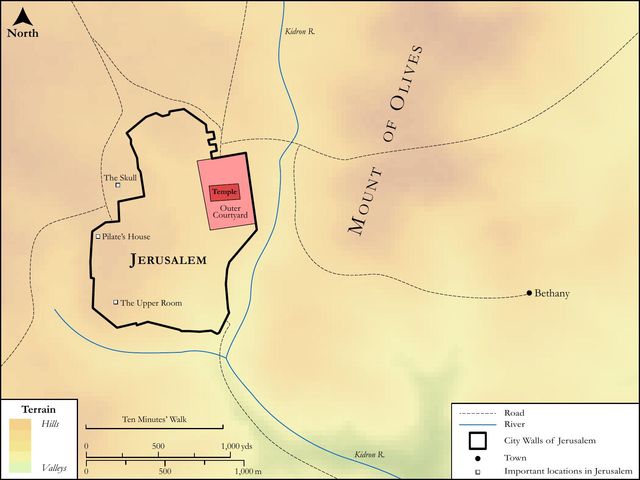
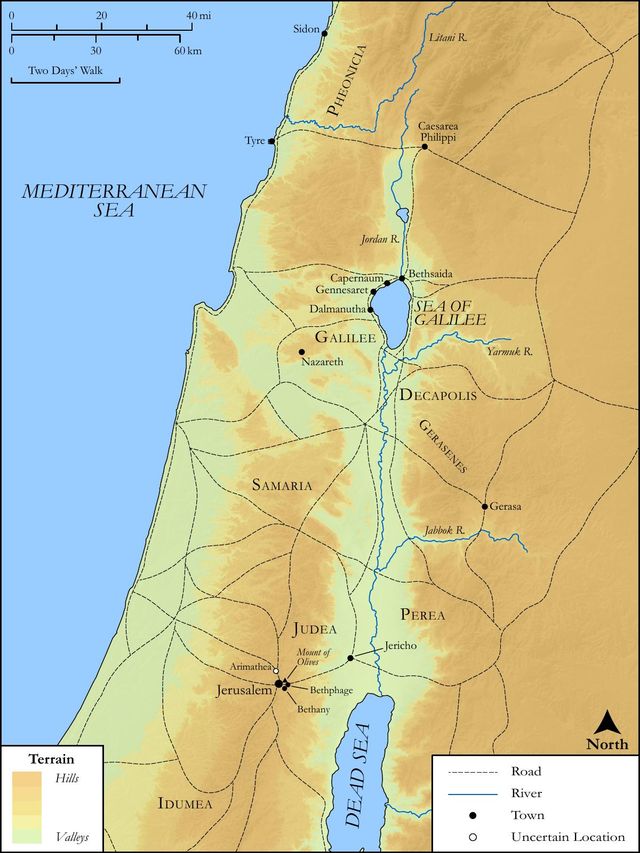
See on the biblical-era maps
Study this verse
Public-domain commentary
Matthew Henry
From his Commentary on the Whole Bible. Henry comments on passages, not single verses — this entry covers Mark 3:13–21. His two-level outline is real structure in the source text, so it is rendered as structure.
In these verses, we have,
I.The choice Christ made of the twelve apostles to be his constant followers and attendants, and to be sent abroad as there was occasion, to preach the gospel. Observe,
1.The introduction to this call or promotion of disciples; He goes up into a mountain, and his errand thither was to pray. Ministers must be set apart with solemn prayer for the pouring out of the Spirit upon them; though Christ had authority to confer the gifts of the Holy Ghost, yet, to set us an example, he prayed for them.
2.The rule he went by in his choice, and that was his own good pleasure; He called unto him whom he would. Not such as we should have thought fittest to be called, looking upon the countenance, and the height of the stature; but such as he thought fit to call, and determined to make fit for the service to which he called them: even so, blessed Jesus, because it seemed good in thine eyes. Christ calls whom he will; for he is a free Agent, and his grace is his own.
3.The efficacy of the call; He called them to separate themselves from the crowd, and stand by him, and they came unto him. Christ calls those who were given him (Joh 17:6); and all that the Father gave him, shall come to him, Joh 6:37. Those whom it was his will to call, he made willing to come; his people shall be willing in the day of his power. Perhaps they came to him readily enough, because they were in expectation of reigning with him in temporal pomp and power; but when afterward they were undeceived in that matter, yet they had such a prospect given them of better things, that they would not say they were deceived in their Master, nor repented their leaving all to be with him.
4.The end and intention of this call; He ordained them (probably by the imposition of hands, which was a ceremony used among the Jews), that they should be with him constantly, to be witnesses of his doctrine, manner of life, and patience, that they might fully know it, and be able to give an account of it; and especially that they might attest the truth of his miracles; they must be with him to receive instructions from him, that they might be qualified to give instructions to others. It would require time to fit them for that which he designed them for; for they must be sent forth to preach; not to preach till they were sent, and not to be sent till by a long and intimate acquaintance with Christ they were fitted. Note, Christ's ministers must be much with him.
5.The power he gave them to work miracles; and hereby he put a very great honour upon them, beyond that of the great men of the earth. He ordained them to heal sicknesses and to cast out devils. This showed that the power which Christ had to work these miracles was an original power; that he had it not as a Servant, but as a Son in his own house, in that he could confer it upon others, and invest them with it: they have a rule in the law, Deputatus non potest deputare - He that is only deputed himself, cannot depute another; but our Lord Jesus had life in himself, and the Spirit without measure; for he could give this power even to the weak and foolish things of the world.
6.Their number and names; He ordained twelve, according to the number of the twelve tribes of Israel. They are here named not just in the same order as they were in Matthew, nor by couples, as they were there; but as there, so here, Peter is put first and Judas last. Here Matthew is put before Thomas, probably being called in that order; but in that catalogue which Matthew himself drew up, he puts himself after Thomas; so far was he from insisting upon the precedency of his consecration. But that which Mark only takes notice of in this list of the apostles, is, that Christ called James and John Boanerges, which is, The sons of thunder; perhaps they were remarkable for a loud commanding voice, they were thundering preachers; or, rather, it denotes the zeal and fervency of their spirits, which would make them active for God above their brethren. These two (saith Dr. Hammond) were to be special eminent ministers of the gospel, which is called a voice shaking the earth, Heb 12:26. Yet John, one of those sons of thunder, was full of love and tenderness, as appears by his epistles, and was the beloved disciple.
7.Their retirement with their Master, and close adherence to him; They went into a house. Now that this jury was impanelled, they stood together, to hearken to their evidence. They went together into the house, to settle the orders of their infant college; and now, it is likely, the bag was given to Judas, which pleased him, and made him easy.
II.The continual crowds that attended Christ's motions (Mar 3:20); The multitude cometh together again, unsent for, and unseasonably pressing upon him, some with one errand and some with another; so that he and his disciples could not get time so much as to eat bread, much less for a set and full meal. Yet he did not shut his doors against the petitioners, but bade them welcome, and gave to each of them an answer of peace. Note, They whose hearts are enlarged in the work of God, can easily bear with great inconveniences to themselves, in the prosecution of it, and will rather lose a meal's meat at any time than slip an opportunity of doing good. It is happy when zealous hearers and zealous preachers thus meet, and encourage one another. Now the kingdom of God was preached, and men pressed into it, Luk 16:16. This was a gale of opportunity worth improving; and the disciples might well afford to adjourn their meals, to lay hold on it. It is good striking while the iron is hot.
III.The care of his relations concerning him (Mar 3:21); When his friends in Capernaum heard how he was followed, and what pains he took, they went out, to lay hold on him, and fetch him home, for they said, He is beside himself.
1.Some understand it of an absurd preposterous care, which had more in it of reproach to him than of respect; and so we must take it as we read it, He is beside himself; either they suspected it themselves, or it was suggested to them, and they gave credit to the suggestion, that he was gone distracted, and therefore his friends ought to bind him, and put him in a dark room, to bring him to his right mind again. His kindred, many of them, had mean thoughts of him (Joh 7:5), and were willing to hearken to this ill construction which some put upon his great zeal, and to conclude him crazed in his intellects, and under that pretence to take him off from his work. The prophets were called mad fellows, Kg2 9:11.
2.Others understand it of a well-meaning care; and then they read exestē - "He fainteth, he has no time to eat bread, and therefore his strength will fail him; he will be stifled with the crowd of people, and will have his spirits quite exhausted with constant speaking, and the virtue that goes out of him in his miracles; and therefore let us use a friendly violence with him, and get him a little breathing-time." In his preaching-work, as well as his suffering-work, he was attacked with, Master, spare thyself. Note, They who go on with vigour and zeal in the work of God, must expect to meet with hindrances, both from the groundless disaffection of their enemies, and the mistaken affections of their friends, and they have need to stand upon their guard against both.
Historical interpretation
Six Centuries of Reception
7 surviving comments on this verse. Each one is dated, so this reads as a timeline rather than a list.
Select a marker to jump to its quote. Markers stagger vertically where authors wrote within a few decades of each other.
Or spiritually, Christ is the mount, from which living waters flow, and milk is procured for the health of infants; whence the spiritual feast of fat things is made known, and whatsoever is believed to be most highly good is established by the grace of that Mountain. Those therefore who are highly exalted in merits and in words are called up into a mountain, that the place may correspond to the loftiness of their merits. It goes on: And they came unto him, &c. For the Lord loved the beauty of Jacob, (Ps. 46 Vulg.) that they might sit upon twelve thrones, judging the twelve tribes of Israel, (Matt. 19:28) who also in bands of threes and fours watch around the tabernacle of the Lord, and carry the holy words of the Lord, bearing them forward on their actions, as men do burdens on their shoulders.
Thus from obedience, which Simon signifies, the ascent is made to knowledge, which is meant by Peter. It goes on: And James the son of Zebedee, and John his brother.
Namely, James who has supplanted all the desires of the flesh, and John, who received by grace what others held by labour. There follows: And he surnamed them, Boanerges. (Gen. 27:36. v. Aur. Cat. in Matt. 10:2)
Or by this the lofty merit of the three mentioned above is shown, who merited to hear in the mountain the thunders of the Father, when he proclaimed in thunder through a cloud concerning the Son, This is my beloved Son; that they also through the cloud of the flesh and the fire of the word1, (Matt. 17:1) might as it were scatter the thunderbolts in rain on the earth, since the Lord turned the thunderbolts into rain, so that mercy extinguishes what judgment sets on fire. It goes on: And Andrew, who manfully does violence to perdition, so that he had ever ready within him his own death, to give as an answer, and his soul was ever in his hands. (1 Pet. 3:15. Ps. 119:109. Bede ubi sup.)
Or, 'the mouth of a lamp,' that is, one who can throw light by his mouth upon what he has conceived in his heart, to whom the Lord gave the opening of a mouth, which diffused light. We know that this mode of speaking belongs to holy Scripture; for Hebrew names are put down in order to intimate a mystery. There follows: And Bartholomew, which means, the son of him who suspends the waters; of him, that is, who said, I will also command the clouds that they rain no rain upon it. (Is. 5:6) But the name of son of God is obtained by peace and loving one's enemy; for, Blessed are the peacemakers, for they are the sons of God. (Matt. 5:9, 44, 45) And, Love your enemies, that ye may be the sons of God. There follows: And Matthew, that is, 'given,' to whom it is given by the Lord, not only to obtain remission of sins, but to be enrolled in the number of the Apostles. And Thomas, which means, 'abyss;' for men who have knowledge by the power of God, put forward many deep things. It goes on: And James the son of Alphæus, that is, of 'the learned' or 'the thousandth,' (Ps. 91:7) beside whom a thousand will fall. This other James is he, whose wrestling is not against flesh and blood, but against spiritual wickedness. (Eph. 6:12) There follows, And Thaddæus, that is, 'corculum,' (qu. cordis cultor) which means 'he who guards the heart,' one who keeps his heart in all watchfulness.
But Simon is interpreted, 'laying aside sorrow;' for blessed are they that mourn, for they shall be comforted. (Matt. 5:4) And he is called Canaanite, that is, Zealot, because the zeal of the Lord ate him up. But Judas Iscariot is one who does not do away his sins by repentance. For Judas means 'boaster,' or vain-glorious. And Iscariot, 'the memory of death.' But many are the proud and vain-glorious confessors in the Church, as Simon Magus, and Arius, and other heretics, whose deathlike memory is celebrated in the Church, that it may be avoided.
(Vict. Ant. e Cat. in Marc.) He also instructs the Prelates of the Church to pass the night in prayer before they ordain, that their office be not impeded. When therefore, according to Luke, it was day, He called whom He would; for there were many who followed Him.
(Vict. Ant. e Cat. in Marc.) He calls the sons of Zebedee by this name, because they were to spread over the world the mighty and illustrious decrees of the Godhead.
(in Marc. i. 16) After having forbidden the evil spirits to preach Him, He chose holy men, to cast out the unclean spirits, and to preach the Gospel; wherefore it is said, And he went up into a mountain, &c. (Luke 6)
(ubi sup.) For it was not a matter of their choice and zeal, but of Divine condescension and grace, that they should be called to the Apostleship. The mount also in which the Lord chose His Apostles, shows the lofty righteousness in which they were to be instructed, and which they were about to preach to men.
(ubi sup.) For as a sacrament of this the children of Israel once used to encamp about the Tabernacle, so that on each of the four sides of the square three tribes were stationed. Now three times four are twelve, and in three bands of four the Apostles were sent to preach, that through the four quarters of the whole world they might baptize the nations in the name of the Father, the Son, and the Holy Ghost. It goes on: And he gave them power, &c. That is, in order that the greatness of their deeds might bear witness to the greatness of their heavenly promises, and that they, who preached unheard-of things, might do unheard-of actions.
(ubi sup.) And the reason that the Lord willed that he should at first be called otherwise, was that from the change itself of the name, a mystery might be conveyed to us. Peter then in Latin or in Greek means the same thing as Cephas in Hebrew, and in each language the name is drawn from a stone. Nor can it be doubted that is the rock of which Paul spoke, And this rock was Christ. (1 Cor. 10:4) For as Christ was the true light, and allowed also that the Apostles should be called the light of the world, (Matt. 5:14.) so also to Simon, who believed on the rock Christ, He gave the name of Rock.
(ubi sup.) We must connect this with what went before, He goeth up into a mountain, and calleth.
For Andrew is a Greek name, which means 'manly,' from ἀνὴδ, that is, man, for he manfully adhered to the Lord. There follows, And Philip.
(ubi sup.) But Thaddæus is the same person, as Luke calls in the Gospel and in the Acts, Jude of James, for he was the brother of James, the brother of the Lord, as he himself has written in his Epistle. There follows, And Simon the Canaanite, and Judas Iscariot, who betrayed him. He has added this by way of distinction from Simon Peter, and Jude the brother of James. Simon is called the Canaanite from Cana, a village in Galilee, and Judas, Scariotes, from the village from which he had his origin, or he is so called from the tribe of Issachar.
And he made it so that there were twelve with him. Certainly, for the sake of the mystery of grace, so that they might commend the salvation of the world, which they were to preach by word, also by their number. Indeed, three times four makes twelve. And three times four are the apostles sent to preach, so that they might baptize the nations in the name of the Father, and of the Son, and of the Holy Spirit through all the regions of the fourfold world. Whence it is also written concerning the holy city, Jerusalem, descending from heaven from God, that it had three gates on the east, and three gates on the north, and three gates on the south, and three gates on the west (Rev 21). Where it is shown figuratively that, with the apostles and their successors preaching, all the nations throughout the world would enter the Church in the faith of the Holy Trinity. In which sacrament as well, the children of Israel once encamped around the tabernacle, so that on every side, in a square, three tribes would remain (Num 1). For undoubtedly the early Church which was in Judea was, surrounded on all sides by believing nations from the whole world, going to set up spiritual camps to God in faith and confession of the Holy Trinity.
And going up into the mountain, he called to himself those whom he wanted, and they came to him, and he made it so that there were twelve with him. That mountain on which the Lord chose the apostles signifies the height of justice, by which they were to be instructed and which they were to preach to men. For because he was going to send them to preach the Gospel of the heavenly kingdom, he rightly wished to remind them, by the height of the place where they were chosen, not to dissolve their mind in low desires, but always to raise it to desire and seek higher things. Thus also, intending to give the law to his former people, he appeared on a mountain; from the mountain he thundered what was to be done. Indeed, because it was not yet time to say: "Repent, for the kingdom of heaven is at hand" (Matt. 4), but only to say, "Honor your father and your mother so that you may live long on the land which the Lord your God is giving you" (Exod. 20), these same words, however, typically promise us the eternal kingdom, which is in the land of the living: the people could not approach the Lord speaking on the mountain, but heard from below what was being said, because they did not yet know how to ascend with a mind capable of understanding the mysteries being mentioned; Moses alone, because he had learned to hear the law spiritually, ascended the summit of the mountain where God was. It is well said, that ascending the mountain, the Lord called to himself those he wanted. For it was not by their choice and zeal, but by divine will and grace, that they were called to apostleship. Hence, he also says to them elsewhere: "You have not chosen me, but I have chosen you" (John 15).
And to send them to preach the Gospel, He gave them the power to heal diseases and to cast out demons. After He forbid the unworthy spirits to preach, He chose the saints, who would cast out the impure spirits, and they themselves would preach the Gospel with a pure mind and tongue. To whom (as the evangelist Matthew writes) He also conferred the power of healing other sicknesses, and even of raising the dead, so that the greatness of the promised heavenly things might be attested by the greatness of the deeds, and the power shown might give faith to the words, and those who preached new things might also do new things. Whence also now, when the number of the faithful has grown, within the holy Church there are many who hold to the way of virtues without having the signs of virtues. For a miracle is displayed in vain outwardly, if there is lacking the work accomplished inwardly. For according to the voice of the master of the nations, tongues are a sign not for the faithful, but for the unbelievers (1 Cor 14).
Luke, however, says that He went up to pray, for after the showing forth of miracles He prays, teaching us that we should give thanks, when we obtain any thing good, and refer it to Divine grace.
Further, He gives the names of the Apostles, that the true Apostles might be known, so that men might avoid the false. And therefore it continues: And Simon he surnamed Cephas.
Whom he reckons amongst the Apostles, that we may learn that God does not repel any man for wickedness, which is future, but counts him worthy on account of his present virtue.
Continue studying Mark 3:14 across the web’s major study libraries — every link below opens this exact verse, chapter, or book on the destination site.
Read & Compare
 BibleGatewayThis verse in more than 200 translations and 70 languages.
 Bible.comThe YouVersion reader — hundreds of translations, reading plans, and highlights.
 ESV.orgCrossway's official English Standard Version reader.
 NET BibleThe NET translation with 60,000+ translators' notes on every rendering decision.
 STEP BibleTyndale House's free study tool — original text, vocabulary, and scholarly resources.
 BibliaLogos Bible Software's free web reader.
 USCCBThe New American Bible (Revised Edition) with the U.S. bishops' study notes.
Commentaries
 BibleHub CommentariesDozens of classic commentaries on this verse, gathered on one page.
 StudyLightMore than 100 commentary sets — the largest collection on the web.
 BibleRefPlain-English commentary on what this verse means, verse by verse.
 Enduring WordDavid Guzik's free commentary on this chapter, widely used by Bible teachers.
 Bible Study ToolsVerse commentary alongside Greek and Hebrew study aids.
Original Language & Research
- BibleHub InterlinearThe verse word by word — original language, transliteration, and English.
- BibleHub LexiconEvery word's original-language definition and Strong's entry.
 Blue Letter BibleDeep-study tools — Strong's numbers, concordance, and word studies.
 CNTR CollationThe earliest Greek manuscripts of this verse, collated letter by letter.
Sermons, Hymns & Audio


TrulyRandomVerse is not affiliated with these sites and doesn’t control their content. They’re linked because they’re genuinely useful.
Summary
Mark 3:14 records a foundational moment in Jesus' ministry: the deliberate appointment of twelve men whom He called to be His apostles. This pivotal act established a core group for intimate discipleship, ensuring they would spend significant time in His presence, and simultaneously commissioned them for the outward mission of proclaiming the Gospel. This dual purpose—fellowship and proclamation—underscores Jesus' strategic design for the propagation of His Kingdom and the future leadership of His church.
Context
ShowHideLiterary Context
Mark 3:14 is situated at a critical juncture in Jesus' Galilean ministry. Prior to this, Jesus has been actively demonstrating His divine authority through healing the sick, casting out demons, and teaching with unparalleled wisdom, drawing large crowds (e.g., Mark 1:32-34). However, His growing popularity is paralleled by escalating opposition from the religious establishment, particularly the Pharisees and Herodians, who conspire against Him (e.g., Mark 3:6). Recognizing the immense scope of the harvest and the intensity of the spiritual warfare, Jesus retreats to a mountain, a place often associated with divine revelation and significant decisions in biblical narratives (e.g., Exodus 19). It is from this elevated position of authority that He "calls to Him those whom He desired," signifying a sovereign, intentional selection, not a democratic vote. This act serves as a strategic response to both the expanding needs of the ministry and the intensifying opposition, laying the groundwork for a structured, enduring movement.
Historical & Cultural Context
The selection of "twelve" is profoundly significant within a Jewish context, immediately evoking the twelve tribes of Israel. This number symbolizes the reconstitution of God's people, signaling that Jesus is not merely reforming Judaism but inaugurating a new covenant community—the spiritual Israel. Among the Jews of that day, a rabbi would gather disciples (talmidim) who would follow him, learn his teachings, and emulate his life. However, Jesus' method differs: He actively chooses His disciples, rather than them choosing Him, asserting His unique divine authority. The concept of "sending forth" (apostellein) was also familiar, as messengers or emissaries were vital for communication and representation. Jesus' "apostles" would serve as His authoritative representatives, carrying His message and embodying His presence, much like an ambassador represents a king. This formal commissioning on a mountain echoes significant covenant-making events in Israel's history, further emphasizing the gravity and divine nature of this appointment.
Key Themes
ShowHideMark 3:14 contributes significantly to several overarching themes in Mark's Gospel and broader biblical theology. Firstly, it highlights Divine Authority and Sovereignty. Jesus' act of "ordaining" (or "making" in the Greek) the twelve underscores His absolute prerogative in choosing and commissioning His workers. Their calling is not self-initiated but divinely bestowed, granting them legitimate authority to represent Him. Secondly, the verse emphasizes Discipleship as Relational Immersion. The primary purpose, "that they should be with him," reveals that intimate fellowship, personal mentorship, and shared life with Jesus are foundational to effective ministry. Before they are sent, they must first learn to walk with Him, internalizing His teachings and observing His character. This theme of relational discipleship is central to the Christian life, echoing the call to abide in Christ found in John 15:4-5. Thirdly, the verse establishes the theme of Mission and Proclamation. The secondary purpose, "and that he might send them forth to preach," defines their outward-focused calling. Their training is not an end in itself but preparation for active service in proclaiming the good news of the Kingdom of God. This commission to preach the Gospel is a recurring motif in Mark, culminating in the Great Commission (e.g., Mark 16:15). Finally, this act foreshadows the Foundation of the Church, as these twelve, later empowered by the Holy Spirit, would become the pillars upon which the early Christian community would be built (e.g., Ephesians 2:20).
Exposition and Analysis
ShowHideKey Word Analysis
ShowHideMeaning "to make or do (in a very wide application, more or less direct)." In this context, it signifies Jesus' active and authoritative appointment or constitution of the twelve. It's not merely a passive selection but an intentional act of establishing them in a specific role and function. Jesus "made" them apostles, investing them with a new identity and purpose.
A primary preposition denoting accompaniment, "amid." Here, it emphasizes the intimate, personal fellowship and shared experience that was paramount to their training. It implies a close association, a living alongside Jesus, observing His life, listening to His teachings, and participating in His ministry. This "being with him" was the crucible of their formation.
Meaning "to herald (as a public crier), especially divine truth (the gospel)." This word highlights the public, authoritative, and urgent nature of their mission. They were not merely to teach or discuss, but to proclaim a message with conviction and clarity, acting as heralds of God's Kingdom. It implies a message of divine origin and universal significance.
Verse Breakdown
ShowHide"And he ordained twelve,"
This opening clause establishes Jesus' sovereign initiative and authority in selecting a specific number of individuals. The verb "ordained" (or "made") indicates a deliberate, constitutive act, setting these twelve apart for a unique purpose. The number "twelve" is highly symbolic, immediately evoking the twelve tribes of Israel, signifying the re-establishment of God's people around a new covenant.
"that they should be with him,"
This is the primary and immediate purpose of their ordination. It emphasizes the necessity of intimate fellowship, personal mentorship, and shared life with Jesus. Before any outward mission, their foundational calling was to spend time in His presence, observing His character, learning His teachings, and internalizing His Spirit. This period of close association was crucial for their formation as His representatives.
"and that he might send them forth to preach,"
This is the secondary yet equally vital purpose, flowing directly from the first. The Greek word for "send forth" (apostéllō) is the root of "apostle," meaning "one who is sent." Their intimate training was not an end in itself but preparation for an outward-focused mission: to publicly proclaim the good news (the Gospel). This highlights the dynamic tension and essential connection between inward formation and outward mission in Christian service.
Literary Devices
ShowHideMark 3:14 employs several significant literary devices. The most prominent is the Purpose Clause, indicated by the repeated use of "that" (Greek: hína). This grammatical structure explicitly states the dual objectives behind Jesus' action: first, the disciples' intimate fellowship with Him ("that they should be with him"), and second, their subsequent mission ("and that he might send them forth to preach"). This clearly articulated purpose highlights Jesus' intentionality and foresight in establishing His ministry. Furthermore, the Symbolism of the number "twelve" is profound, immediately connecting Jesus' new community to the twelve tribes of Israel, signifying a spiritual restoration and the inauguration of a new covenant people. This numerical symbolism carries significant theological weight. Finally, the verse functions as Foreshadowing, pointing to the future ministry of the apostles after Jesus' ascension. Their initial training and commissioning anticipate their pivotal role in spreading the Gospel and establishing the early church, as recorded throughout the book of Acts and the Epistles.
Theological and Thematic Connections
ShowHideMark 3:14 is a foundational text for understanding the nature of Christian discipleship, ministry, and the church's mission. It reveals that true ministry flows from a deep, intimate relationship with Christ. The priority of "being with him" before being "sent forth" underscores that spiritual formation precedes effective service. This principle applies not only to the original apostles but to all believers: our capacity to represent Christ and proclaim His message is directly proportional to our communion with Him. The verse also highlights the divine initiative in calling and equipping individuals for service, emphasizing that all legitimate ministry is a divine appointment, not a human endeavor. The dual emphasis on fellowship and proclamation establishes a timeless paradigm for the church's life—a community rooted in Christ, yet outwardly focused on sharing His truth.
Reflection and Application
ShowHideMark 3:14 provides a timeless blueprint for Christian life and ministry, challenging believers to prioritize intimacy with Christ as the wellspring of all effective service. In a world that often values outward activity and immediate results, Jesus' model reminds us that spiritual power and authentic proclamation emerge from a deep, abiding relationship with Him. We are called first to be His disciples, to sit at His feet, to learn from His life, and to internalize His teachings. Only then are we truly prepared to be His ambassadors in the world, equipped to share His message with both integrity and power. This verse encourages us to examine our own lives: are we prioritizing "being with Him" through prayer, Scripture, and worship, or are we rushing to "do" for Him without sufficient spiritual grounding? It also affirms that every believer, in some capacity, is called to participate in the Great Commission, whether through direct proclamation, living out the Gospel's truths, or supporting those who are sent.
Questions for Reflection
ShowHideFAQ
ShowHideWhy did Jesus choose exactly twelve apostles?
ShowHideThe choice of twelve is deeply symbolic and theologically significant. It deliberately echoes the twelve tribes of Israel (e.g., Genesis 49), signaling that Jesus was not merely gathering a group of followers but was reconstituting God's people, establishing a new spiritual Israel. These twelve would serve as the foundational pillars of the new covenant community, representing the continuity and fulfillment of God's redemptive plan from the Old Testament into the New. Their number underscores the comprehensive and representative nature of their future mission to the whole world, starting with the "lost sheep of the house of Israel" (e.g., Matthew 10:6).
What is the significance of the dual purpose: "be with him" and "send them forth to preach"?
ShowHideThis dual purpose highlights the essential balance and progression in Christian discipleship and ministry. "That they should be with him" emphasizes the priority of intimate relationship, personal formation, and deep learning from Jesus' life and teachings. It signifies that spiritual power and effective ministry flow from communion with Christ. "And that he might send them forth to preach" reveals the outward-focused, missional nature of their calling. Their training was not an end in itself but preparation for active proclamation of the Gospel. This sequence teaches that inward spiritual growth is foundational for outward service, and that true discipleship always culminates in a commission to share the Good News. It's a model for all believers: we are called to be with Christ so that we can be sent by Christ (e.g., John 20:21).
Christ-Centered Fulfillment
ShowHideMark 3:14 finds its profound Christ-centered fulfillment in Jesus Himself as the ultimate "Apostle" and the one who perfectly embodies both "being with" and "being sent." Jesus, eternally "with" the Father (e.g., John 1:1-2), was Himself "sent" by the Father into the world to preach the good news of the Kingdom of God (e.g., John 3:17). The apostles, therefore, are not merely a leadership team but extensions of Christ's own mission, empowered by His Spirit to continue His redemptive work. Their "being with him" was a participation in His incarnate life, preparing them to bear witness to His death, resurrection, and ascension. Their "being sent forth to preach" was a commission to proclaim the very message that Jesus initiated—the message of salvation through His atoning sacrifice and victorious resurrection. Thus, the apostles' call in Mark 3:14 is a direct participation in Christ's own divine sending, establishing the pattern for the church's ongoing mission until He returns (e.g., Matthew 28:18-20).