


Mark 12:24
Bible text: King James Version (1769 Blayney text) · Public domain
Bible text: King James Version with Strong's numbers · Public domain
Bible text: Berean Standard Bible · Public domain
Bible text: American Standard Version (1901) · Public domain
Bible text: World English Bible, Messianic edition · Public domain
Bible text: Geneva Bible (1599) · Public domain
Bible text: Young's Literal Translation · Public domain
- ΚαὶKaiandG2532CONJConjunction
- ἔφηephēWas sayingG5346V-IAI-3SVerb Imperfect Active Indicative 3rd Singular
- αὐτοῖςautoisto themG846P-DPMPersonal pronoun Dative Plural Masculine
- ὁho<the>G3588T-NSMDefinite article Nominative Singular Masculine
- ἸησοῦςIēsousJesusG2424N-NSM-PNoun Nominative Singular Masculine Individual
- εἶπεν·eipensaidG2036V-2AAI-3SVerb 2nd Aorist Active Indicative 3rd Singular
- οὐouSurelyG3756PRT-NNegative Particle Negative
- διὰdiabecause ofG1223PREPPreposition
- τοῦτοtoutothisG3778D-ASNDemonstrative pronoun Accusative Singular Neuter
- πλανᾶσθεplanasthedo you errG4105V-PPI-2PVerb Present Passive Indicative 2nd Plural
- μὴmēnotG3361PRT-NNegative Particle Negative
- εἰδότεςeidotesknowingG1492V-RAP-NPMVerb Perfect Active Participle Nominative Plural Masculine
- τὰςtastheG3588T-APFDefinite article Accusative Plural Feminine
- γραφὰςgraphasScripturesG1124N-APFNoun Accusative Plural Feminine
- μηδὲmēdenor [knowing]G3366CONJ-NConjunction Negative
- τὴνtēntheG3588T-ASFDefinite article Accusative Singular Feminine
- δύναμινdunaminpowerG1411N-ASFNoun Accusative Singular Feminine
- τοῦtou<the>G3588T-GSMDefinite article Genitive Singular Masculine
- θεοῦ;theouof God?G2316N-GSM-TNoun Genitive Singular Masculine Title
English is a literal word-by-word gloss of the Greek, not the KJV's wording. Why?
This is the original text the KJV's translators worked from — each Greek word with its own literal English meaning in this verse, prepared by scholars at Tyndale House, Cambridge. The KJV translates whole sentences, not word by word, so its wording differs: one Greek word can become several English words, and the KJV may choose “charity” where the gloss reads “love”. Both are faithful — they answer different questions. For the KJV's own rendering, switch to the KJV text.
Details
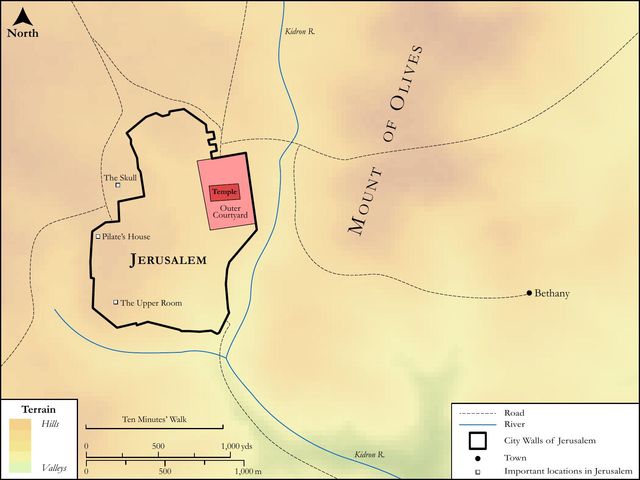
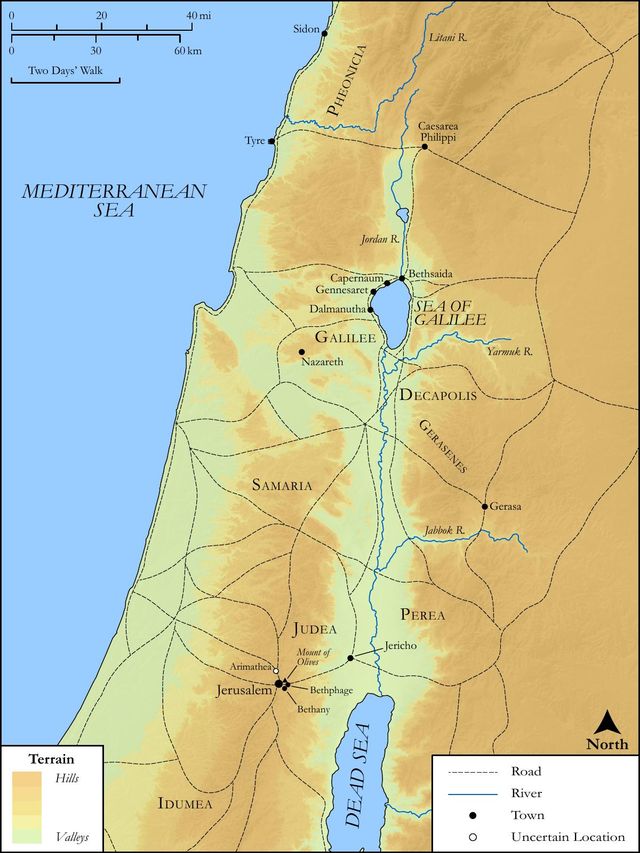
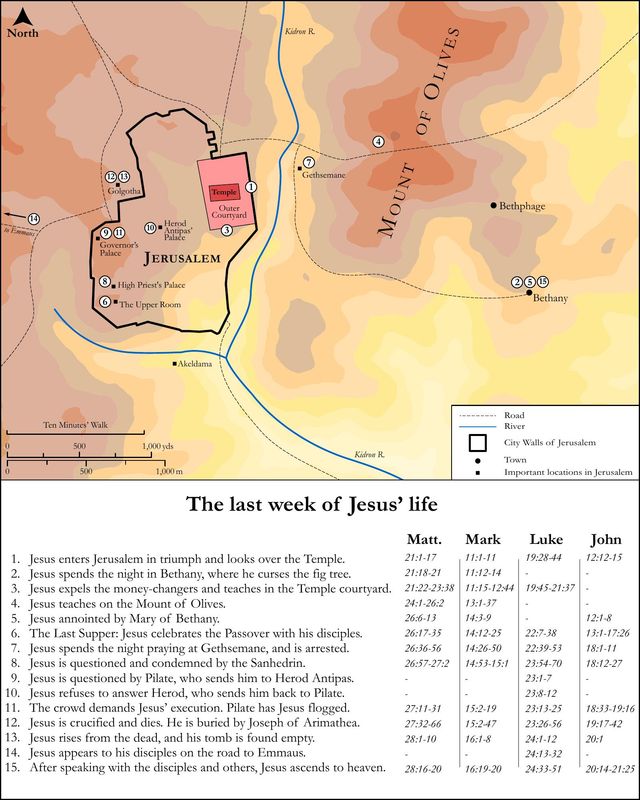
See on the biblical-era maps
Study this verse
Public-domain commentary
Matthew Henry
From his Commentary on the Whole Bible. Henry comments on passages, not single verses — this entry covers Mark 12:18–27. His three-level outline is real structure in the source text, so it is rendered as structure.
The Sadducees, who were the deists of that age, here attack our Lord Jesus, it should seem, not as the scribes, and Pharisees, and chief-priests, with any malicious design upon his person; they were not bigots and persecutors, but sceptics and infidels, and their design was upon his doctrine, to hinder the spreading of that: they denied that there was any resurrection, and world of spirits, any state of rewards and punishments on the other side of death: now those great and fundamental truths which they denied, Christ had made it his business to establish and prove, and had carried the notion of them much further that ever it was before carried; and therefore they set themselves to perplex his doctrine.
I.See here the method they take to entangle it; they quote the ancient law, by which, if a man died without issue, his brother was obliged to marry his widow, Mar 12:19. They suppose a case to happen that, according to that law, seven brothers were, successively, the husbands of one woman, Mar 12:20. Probably, these Sadducees, according to their wonted profaneness, intended hereby to ridicule that law, and so to bring the whole frame of the Mosaic institution into contempt, as absurd and inconvenient in the practice of it. Those who deny divine truths, commonly set themselves to disparage divine laws and ordinances. But this was only by the by; their design was to expose the doctrine of the resurrection; for they suppose that if there be a future state, it must be such a one as this, and then the doctrine, they think, is clogged either with this invincible absurdity, that a woman in that state must have seven husbands, or else with this insolvable difficulty, whose wife must she be. See with what subtlety these heretics undermine the truth; they do not deny it, nor say, There can be no resurrection; nay, they do not seem to doubt of it, nor say, If there be a resurrection, whose wife shall she be? as the devil to Christ, If thou be the Son of God. But, as though these beasts of the field were more subtle than the serpent himself, they pretend to own the truth, as if they were not Sadducees, no not they; who said that they denied the resurrection? They take it for granted that there is a resurrection, and would be thought to desire instruction concerning it, when really they are designing to give a fatal stab, and think that they shall do it. Note, It is the common artifice of heretics and Sadducees to perplex and entangle the truth, which they have not the impudence to deny.
II.See here the method Christ takes to clear and establish this truth, which they attempted to darken, and give a shock to.
This was a matter of moment, and therefore Christ does not pass it over lightly, but enlarges upon it, that, if they should not be reclaimed, yet others might be confirmed.
1.He charges the Sadducees with error, and charges that upon their ignorance. They who banter the doctrine of the resurrection as some do in our age, would be thought the only knowing men, because the only free thinkers, when really they are the fools in Israel, and the most enslaved and, prejudiced thinkers in the world. Do ye not therefore err? Ye cannot but be sensible of it yourselves, and that the cause of your error is,
(1.)Because ye do not know the scriptures. Not but that the Sadducees had read the scriptures, and perhaps were ready in them; yet they might be truly said not to know the scriptures, because they did not know the sense and meaning of them, but put false constructions upon them; or they did not receive the scriptures as the word of God, but set up their own corrupt reasonings in opposition to the scripture, and would believe nothing but what they could see. Note, A right knowledge of the scripture, as the fountain whence all revealed religion now flows, and the foundation on which it is built, is the best preservative against error. Keep the truth, the scripture-truth, and it shall keep thee.
(2.)Because ye know not the power of God. They could not but know that God is almighty, but they would not apply that doctrine to this matter, but gave up the truth to the objections of the impossibility of it, which would all have been answered, if they had but stuck to the doctrine of God's omnipotence, to which nothing is impossible. This therefore which God hath spoken once, we are concerned to hear twice, to hear and believe, to hear and apply - that power belongs to God, Psa 62:11; Rom 4:19-21. The same power that made soul and body and preserved them while they were together, can preserve the body safe, and the soul active, when they are parted, and can unite them together again; for behold, the Lord's arm is not shortened. The power of God, seen in the return of the spring (Psa 104:30), in the reviving of the corn (Joh 12:24), in the restoring of an abject people to their prosperity (Eze 37:12-14), in the raising of so many to life, miraculously, both in the Old Testament and in the New, and especially in the resurrection of Christ (Eph 1:19, Eph 1:20), are all earnests of our resurrection by the same power (Phi 3:21); according to the mighty working whereby he is able to subdue all things to himself.
2.He sets aside all the force of their objection, by setting the doctrine of the future state in a true light (Mar 12:25); When they shall rise from the dead, they neither marry, nor are given in marriage. It is a folly to ask, Whose wife shall she be of the seven? For the relation between husband and wife, though instituted in the earthly paradise, will not be known in the heavenly one. Turks and infidels expect sensual pleasures in their fools' paradise, but Christians know better things - that flesh and blood shall not inherit the kingdom of God (Co1 15:50); and expect better things - even a full satisfaction in God's love and likeness (Psa 17:15); they are as the angels of God in heaven, and we know that they have neither wives nor children. It is no wonder if we confound ourselves with endless absurdities, when we measure our ideas of the world of spirits by the affairs of this world of sense.
III.He builds the doctrine of the future state, and of the blessedness of the righteous in that state, upon the covenant of God with Abraham, which God was pleased to own, being after Abraham's death, Mar 12:26, Mar 12:27. He appeals to the scriptures; Have ye not read in the book of Moses? We have some advantage in dealing with those that have read the scriptures, though many that have read them, wrest them, as these Sadducees did, to their own destruction. Now that which he refers them to is, what God says to Moses at the bush, I am the God of Abraham; not only, I was so, but I am so; I am the portion and happiness of Abraham, a God all-sufficient to him. Note, It is absurd to think that God's relation to Abraham should be continued, and thus solemnly recognised, if Abraham was annihilated, or that the living God should be the portion and happiness of a man that is dead, and must be for ever so; and therefore you must conclude,
1.That Abraham's soul exists and acts as a state of separation from the body.
2.That therefore, some time or other, the body must rise again; for there is such an innate inclination in a human soul towards its body, as would make a total and everlasting separation inconsistent with the ease and repose, much more with the bliss and joy of those souls that have the Lord for their God. Upon the whole matter, he concludes, Ye therefore do greatly err. Those that deny the resurrection, greatly err, and ought to be told so.
Historical interpretation
Eleven Centuries of Reception
9 surviving comments on this verse. Each one is dated, so this reads as a timeline rather than a list.
Select a marker to jump to its quote. Markers stagger vertically where authors wrote within a few decades of each other.
But in a mystical sense: what can this woman, leaving no seed of seven brothers, and last of all dying, mean except the Jewish synagogue, deserted by the seven-fold Spirit, which filled those seven patriarchs, who did not leave to her the seed of Abraham, that is, Jesus Christ? For although a Son was born to them, nevertheless He was given to us Gentiles. This woman was dead to Christ, nor shall she be joined in the resurrection to any patriarch of the seven; for by the number seven is meant the whole company of the faithful. Thus it is said contrariwise by Isaiah, Seven women shall take hold of one man; (Is. 4:1) that is, the seven Churches, which the Lord loves, reproves, and chastises, adore Him with one faith. Wherefore it goes on: And Jesus answering, said unto them, Do ye not therefore err, not knowing the Scripture, neither the power of God?
Thus then they do not understand the Scripture, in that in the resurrection, men shall be as the Angels of God, that is, no man there dies, no one is born, no infant is there, no old man.
But 1 say, in the bush, in which is an image of you; for in it the fire was kindled, but it did not consume its thorns; so my words set you on fire, but do not burn off your thorns, which have grown under the curse.
But when He says, The God of Abraham, the God of Isaac, and the God of Jacob; by naming God thrice, He implied the Trinity. But when He says, He is not the God of the dead, by naming again the One God, he implies One Substance. But they live who make good the portion, which they had chosen; and they are dead, who have lost what they had made good. Ye therefore do greatly err.
God; who have restored the honour of their flesh, and who have already dedicated themselves as sons of that (future) age, by slaying in themselves the concupiscence of lust, and that whole (propensity) which could not be admitted within Paradise! Whence it is presumable that such as shall wish to be received within Paradise, ought at last to begin to cease from that thing from which Paradise is intact.
Then Peter said: "If, therefore, some of the Scriptures are true and some false, with good reason said our Master, 'Be ye good money-changers,' inasmuch as in the Scriptures there are some true sayings and some spurious. And to those who err by reason of the false scriptures He fitly showed the cause of their error, saying, 'You therefore err, not knowing the true things of the Scriptures; for this reason you are ignorant also of the power of God.'" Then said I: " You have spoken very excellently."
"But one might with good reason maintain that it was with reference to those who thought Him to be such that the statement was made, 'No one knows the Father but the Son, as no one knows even the Son, but the Father.' And reasonably. For if they had known, they would not have sinned, by trusting to the books written against God, really for the purpose of trying. But somewhere also He says, wishing to exhibit the cause of their error more distinctly to them, 'On this account ye do err, not knowing the true things of the Scriptures, on which account you are ignorant also of the power of God.' Wherefore every man who wishes to be saved must become, as the Teacher said, a judge of the books written to try us. For thus He spoke: 'Become experienced bankers.' Now the need of bankers arises from the circumstance that the spurious is mixed up with the genuine."
The Sadducees do not have our hope for the resurrection, since they “know neither the scriptures nor the power of God,” who is able to restore what is lost, to raise what is dead to life, to revive what has rotted away, to gather together what is corruptible and finite. The Lord promised to do this, and he gives as a guarantee the promises he has already fulfilled. So let your faith speak of this to you, since your hope will not be disappointed even though your love may be put to the test.
And Jesus answered them, saying: Are you not mistaken because you do not know the Scriptures or the power of God? They err because they do not know the Scriptures. And because they are ignorant of the Scriptures, consequently they do not know the power of God, which is Christ, who is the power of God and the wisdom of God (I Cor. I).
(ubi sup.) And fitly do they frame such a fable in order to prove the madness of those who assert the resurrection of the body. Such a thing however might really have happened at some time or other among them.
(ubi sup.) We must here consider that the Latin custom does not answer to the Greek idiom. For properly 1different words are used for the marriage of men, and that of women; but here we may simply understand that, marry is meant of men, and given in marriage of women.
(ubi sup.) Or else; because after proving that the soul remained after death, (for God could not be God of those who did not exist at all,) the resurrection of the body also might be inferred as a consequence, since it had done good and evil with the soul.
A certain heretical sect of the Jews called Sadducees denied the resurrection, and said that there was neither angel nor spirit. These then coming to Jesus, craftily proposed to Him a certain tale, in order to show that no resurrection should take place, or had taken place; and therefore there is added, And they asked him, saying, Master. And in this tale they lay down that seven men had married one woman, in order to make men draw back from belief in the resurrection.
As if He had said, Ye understand not what sort of a resurrection the Scriptures announce; for ye believe that there will be a restoration of our bodies, such as they are now, but it shall not be so. Thus then ye know not the Scriptures; neither again do ye know the power of God; for ye consider it as a difficult thing, saying, How can the limbs, which have been scattered, be united together and joined to the soul? But this in respect of the Divine power is as nothing. There follows: For when they shall rise from the dead, they neither marry, nor are given in marriage; but are as the angels which are in heaven; as if He had said, There will be a certain heavenly and angelic restoration to life, when there shall be no more decay, and we shall remain unchanged; and for this reason marriage shall cease. For marriage now exists on account of our decay, that we may be carried on by succession of our race, and not fail; but then we shall be as the Angels, who need no succession by marriage, and never come to an end.
In another way also they are deceived, not understanding the Scriptures; for if they had understood them, they should also have understood how by the Scriptures the resurrection of the dead may be proved; wherefore He adds, And as touching the dead, that they rise, have ye not read in the book of Moses, how in the bush God spake unto him, saying, I am the God of Abraham, and the God of Isaac, and the God of Jacob?
But I say, I am the God of Abraham, the God of Isaac, and the God of Jacob. As if He had said, The God of the living, wherefore He adds, He is not the God of the dead, but of the living; for He did not say, I have been, but I am, as if they had been present. But some one perhaps will say, that God spake this only of the soul of Abraham, not of his body; to which I answer, that Abraham implies both, that is, soul and body, so that He also is the God of the body, and the body lives with God, that is, in God's ordinance.
(non occ.) After that our Lord has prudently escaped the crafty temptation of the Pharisees, it is shown how He also confounds the Sadducees, who tempt Him; wherefore it is said: Then come unto him the Sadducees, which say there is no resurrection.
(non occ.) That is, because they contradicted the Scriptures, and derogated from the power of God.
Continue studying Mark 12:24 across the web’s major study libraries — every link below opens this exact verse, chapter, or book on the destination site.
Read & Compare
 BibleGatewayThis verse in more than 200 translations and 70 languages.
 Bible.comThe YouVersion reader — hundreds of translations, reading plans, and highlights.
 ESV.orgCrossway's official English Standard Version reader.
 NET BibleThe NET translation with 60,000+ translators' notes on every rendering decision.
 STEP BibleTyndale House's free study tool — original text, vocabulary, and scholarly resources.
 BibliaLogos Bible Software's free web reader.
 USCCBThe New American Bible (Revised Edition) with the U.S. bishops' study notes.
Commentaries
 BibleHub CommentariesDozens of classic commentaries on this verse, gathered on one page.
 StudyLightMore than 100 commentary sets — the largest collection on the web.
 BibleRefPlain-English commentary on what this verse means, verse by verse.
 Enduring WordDavid Guzik's free commentary on this chapter, widely used by Bible teachers.
 Bible Study ToolsVerse commentary alongside Greek and Hebrew study aids.
Original Language & Research
- BibleHub InterlinearThe verse word by word — original language, transliteration, and English.
- BibleHub LexiconEvery word's original-language definition and Strong's entry.
 Blue Letter BibleDeep-study tools — Strong's numbers, concordance, and word studies.
 CNTR CollationThe earliest Greek manuscripts of this verse, collated letter by letter.
Sermons, Hymns & Audio


TrulyRandomVerse is not affiliated with these sites and doesn’t control their content. They’re linked because they’re genuinely useful.
Summary
In this pivotal encounter, Jesus directly confronts the Sadducees' theological error regarding the resurrection, pinpointing their fundamental misunderstanding. He diagnoses their problem as a twofold deficiency: an inadequate grasp of the Holy Scriptures and a limited perception of the boundless power of God. This concise yet profound statement serves as a foundational principle for sound theological reasoning, emphasizing the indispensable role of both divine revelation and divine omnipotence in understanding spiritual truths.
Context
ShowHideLiterary Context
This verse is situated within a series of confrontations between Jesus and various Jewish religious leaders in the temple courts during the Passion Week, as recorded in Mark 11-12. Following challenges from the chief priests, scribes, and elders regarding His authority (Mark 11:27-33), and parables illustrating Israel's rejection of God's messengers (Mark 12:1-12), Jesus is then tested by the Pharisees and Herodians on the issue of paying taxes to Caesar (Mark 12:13-17). Immediately preceding Mark 12:24, the Sadducees, who famously denied the resurrection, angels, and spirits (Acts 23:8), attempt to trap Jesus with a hypothetical scenario based on the Mosaic law of levirate marriage from Deuteronomy 25:5-6. Their elaborate question about a woman who had seven husbands in succession is designed to expose what they perceive as the absurdity of resurrection, prompting Jesus' sharp rebuke in this verse.
Historical & Cultural Context
The Sadducees were a prominent Jewish sect during the Second Temple period, primarily composed of aristocratic priests and wealthy landowners. Unlike the Pharisees, they accepted only the written Torah (the first five books of Moses) as divinely inspired, rejecting oral traditions and many theological developments, including the concept of a bodily resurrection, which was not explicitly detailed in the Pentateuch. Their worldview was largely materialistic and pragmatic, focused on earthly life and the maintenance of the temple cult. Levirate marriage was a specific law designed to ensure the continuation of a deceased brother's lineage and inheritance within the family, preventing his name from dying out in Israel. The Sadducees' use of this law in their question to Jesus was a deliberate attempt to force a logical conundrum, believing that if resurrection were true, it would lead to an absurd polygamous situation in the afterlife, thereby discrediting the doctrine.
Key Themes
ShowHideThis verse contributes significantly to several key themes within the Gospel of Mark and broader New Testament theology. It highlights the authority of Jesus as a teacher who transcends the limitations of human wisdom and religious tradition, capable of correcting even the most learned religious leaders. It underscores the primacy and clarity of Scripture, asserting that proper interpretation is essential for theological accuracy, and that even the Old Testament, when rightly understood, testifies to truths like the resurrection. Furthermore, it emphasizes the omnipotence of God, reminding us that divine power is not bound by human logic or earthly constraints, and that God's ability to create a new reality in the resurrection is beyond human comprehension. Jesus' response also subtly introduces the theme of the transformed nature of resurrected life, implying that the future state will be fundamentally different from earthly existence, a point He clarifies in the subsequent verse (Mark 12:25).
Exposition and Analysis
ShowHideKey Word Analysis
ShowHideMeaning "to roam (from safety, truth, or virtue); to go astray, deceive, seduce, wander, be out of the way." Jesus uses this term to diagnose the Sadducees' intellectual and spiritual wandering from truth. Their flawed premise about the resurrection stemmed from a fundamental deviation from God's revealed truth and understanding of His nature. It implies not just a minor mistake, but a significant departure from the correct path of understanding.
Meaning "a document, i.e., holy Writ (or its contents or a statement in it)." This refers specifically to the sacred writings of the Old Testament. Jesus' critique is that the Sadducees, despite being experts in the Law, had failed to truly "know" or comprehend the full implications and coherence of these divinely inspired texts, particularly concerning the resurrection. Their selective reading and rejection of certain truths within the Scriptures led them astray.
Meaning "force (literally or figuratively); specially, miraculous power (usually by implication, a miracle itself); ability, might, strength." Jesus points to God's inherent, limitless ability. The Sadducees' error was not only in their interpretation of Scripture but also in their inability to conceive of God's capacity to transcend human limitations and create a new, transformed reality for the resurrected. They confined God's actions to their own earthly experiences and understanding, rather than acknowledging His omnipotence.
Verse Breakdown
ShowHide"And Jesus answering said unto them,"
This phrase sets the stage for Jesus' authoritative response. He is not merely engaging in a debate but is providing a divine diagnosis and correction to the Sadducees' flawed theology, demonstrating His superior wisdom and authority over the religious elite.
"Do ye not therefore err,"
This is a rhetorical question, implying a strong affirmative: "Indeed, you do err!" Jesus directly challenges their reasoning and exposes the fundamental flaw in their argument. The "therefore" links their error directly to the subsequent reasons He provides.
"because ye know not the scriptures,"
Jesus identifies the first root cause of their error: a lack of true, deep knowledge and understanding of the Holy Scriptures. This isn't merely about knowing the words, but grasping their full meaning, their coherence, and their implications, especially regarding God's redemptive plan and eternal purposes. Despite their scholarly claim to uphold the Torah, they had missed its profound truths.
"neither the power of God?"
The second, equally critical, cause of their error is their failure to comprehend or acknowledge the infinite power of God. Their limited view of God's capabilities led them to project earthly limitations onto the divine realm, making the resurrection seem illogical or impossible. Jesus implies that a true understanding of God's nature includes His limitless ability to accomplish what seems impossible to humans.
Literary Devices
ShowHideJesus employs a powerful Rhetorical Question ("Do ye not therefore err...?"), which serves not to elicit an answer, but to make a forceful assertion and diagnosis of the Sadducees' spiritual and intellectual blindness. This question is immediately followed by a clear Diagnosis, identifying two specific and interconnected reasons for their error: ignorance of the Scriptures and ignorance of God's power. This structure highlights a profound Juxtaposition between human limitations (their flawed understanding) and divine realities (the truth of Scripture and the omnipotence of God). The twin causes of their error form a concise and memorable Parallelism, emphasizing that both theological knowledge (Scripture) and a proper understanding of God's nature (His power) are indispensable for sound doctrine.
Theological and Thematic Connections
ShowHideJesus' declaration in Mark 12:24 provides a timeless theological principle: error in belief often stems from either a misunderstanding of God's revealed Word or a failure to grasp the infinite scope of His power. The Sadducees, by denying the resurrection, had effectively limited both the authority of Scripture (by misinterpreting or rejecting parts that implied eternal life) and the omnipotence of God (by assuming He could not create a new state of being beyond earthly experience). This verse underscores the foundational importance of biblical literacy and a robust theology of God's attributes. To truly "know" the Scriptures means to understand their divine origin, their unified testimony, and their implications for all of life and eternity. Likewise, to truly "know" the power of God means acknowledging His ability to transcend human logic and accomplish what is humanly impossible, including raising the dead and transforming creation. This dual emphasis serves as a critical safeguard against theological error and spiritual stagnation for believers in every age.
Reflection and Application
ShowHideJesus' incisive critique of the Sadducees remains profoundly relevant for believers today. We, too, can err if our understanding of God is not firmly rooted in the twin pillars of His revealed Word and His infinite power. Are we diligently studying the Scriptures, not just for information, but for transformative understanding, allowing them to shape our worldview and correct our misconceptions? Do we approach the Bible with humility, recognizing that its truths may challenge our preconceived notions or human logic? Furthermore, do we truly believe in and live in light of the boundless power of God? Our faith can become anemic if we limit God to what we can comprehend or what seems possible within our earthly experience. This verse calls us to expand our vision of God, to trust in His ability to do "immeasurably more than all we ask or imagine" (Ephesians 3:20), and to allow this expansive view to fuel our hope, prayer, and obedience. When we align our knowledge with His Word and our expectations with His power, we are less likely to "err" in our understanding of His will and His kingdom.
Questions for Reflection
ShowHideFAQ
ShowHideWhat exactly did the Sadducees believe about the resurrection, and why did Jesus say they erred?
ShowHideThe Sadducees were a Jewish sect that denied the resurrection of the dead, the existence of angels, and the concept of a spiritual afterlife. Their theology was primarily based on the Pentateuch (the first five books of Moses), which they interpreted as not explicitly supporting these doctrines. They believed that rewards and punishments were experienced only in this life. Jesus stated they erred because their denial of the resurrection stemmed from two fundamental flaws: first, they failed to properly understand the Scriptures, which, even in the Torah they revered, implicitly pointed to a life beyond death (as Jesus would demonstrate by referencing Exodus 3:6 in Mark 12:26-27); second, they underestimated or denied the boundless "power of God" to raise the dead and establish a new order of existence that transcends earthly limitations, including marriage.
Christ-Centered Fulfillment
ShowHideMark 12:24, while a direct rebuke to the Sadducees, finds its ultimate Christ-centered fulfillment in Jesus Himself. He is the living embodiment of the "scriptures" and the ultimate demonstration of the "power of God." Jesus is the Word made flesh (John 1:1, 14), the one who perfectly understood and fulfilled the Old Testament, revealing its true meaning and pointing to Himself. The Sadducees' ignorance of the Scriptures was, at its core, an ignorance of the Christ to whom those Scriptures bore witness (John 5:39). Moreover, Jesus' own resurrection from the dead is the supreme manifestation of the "power of God" that the Sadducees denied. His bodily resurrection, foretold in the Scriptures and accomplished by divine power, utterly refutes their skepticism and establishes the reality of a transformed, eternal life. In Him, both the true meaning of God's Word and the undeniable might of God's power are perfectly revealed, offering the definitive answer to all who "err" in their understanding of God's redemptive plan and His ability to bring about new creation (2 Corinthians 5:17).