


Luke 11:24
Bible text: King James Version (1769 Blayney text) · Public domain
Bible text: King James Version with Strong's numbers · Public domain
Bible text: Berean Standard Bible · Public domain
Bible text: American Standard Version (1901) · Public domain
Bible text: World English Bible, Messianic edition · Public domain
Bible text: Geneva Bible (1599) · Public domain
Bible text: Young's Literal Translation · Public domain
- ὍτανHotanWhenG3752CONJConjunction
- τὸtotheG3588T-NSNDefinite article Nominative Singular Neuter
- ἀκάθαρτονakathartonuncleanG169A-NSNAdjective Nominative Singular Neuter
- πνεῦμαpneumaspiritG4151N-NSNNoun Nominative Singular Neuter
- ἐξέλθῃexelthēis gone outG1831V-2AAS-3SVerb 2nd Aorist Active Subjunctive 3rd Singular
- ἀπὸapofromG575PREPPreposition
- τοῦtoutheG3588T-GSMDefinite article Genitive Singular Masculine
- ἀνθρώπουanthrōpoumanG444N-GSMNoun Genitive Singular Masculine
- διέρχεταιdierchetaiit passesG1330V-PNI-3SVerb Present Middle Or Passive Deponent Indicative 3rd Singular
- δι᾽di᾽throughG1223PREPPreposition
- ἀνύδρωνanudrōnwaterlessG504A-GPMAdjective Genitive Plural Masculine
- τόπωνtopōnplacesG5117N-GPMNoun Genitive Plural Masculine
- ζητοῦνzētounseekingG2212V-PAP-NSNVerb Present Active Participle Nominative Singular Neuter
- ἀνάπαυσινanapausinrestG372N-ASFNoun Accusative Singular Feminine
- καὶkaiandG2532CONJConjunction
- μὴmēnotG3361PRT-NNegative Particle Negative
- εὑρίσκονheuriskonfinding [any]G2147V-PAP-NSNVerb Present Active Participle Nominative Singular Neuter
- λέγει·legeiit saysG3004V-PAI-3SVerb Present Active Indicative 3rd Singular
- ὑποστρέψωhupostrepsōI will returnG5290V-FAI-1SVerb Future Active Indicative 1st Singular
- εἰςeistoG1519PREPPreposition
- τὸνtontheG3588T-ASMDefinite article Accusative Singular Masculine
- οἶκόνoikonhouseG3624N-ASMNoun Accusative Singular Masculine
- μουmouof mineG3165P-1GSPersonal pronoun Genitive 1st Singular
- ὅθενhothenfrom whereG3606PREPPreposition
- ἐξῆλθονexēlthonI came outG1831V-2AAI-1SVerb 2nd Aorist Active Indicative 1st Singular
English is a literal word-by-word gloss of the Greek, not the KJV's wording. Why?
This is the original text the KJV's translators worked from — each Greek word with its own literal English meaning in this verse, prepared by scholars at Tyndale House, Cambridge. The KJV translates whole sentences, not word by word, so its wording differs: one Greek word can become several English words, and the KJV may choose “charity” where the gloss reads “love”. Both are faithful — they answer different questions. For the KJV's own rendering, switch to the KJV text.
Details
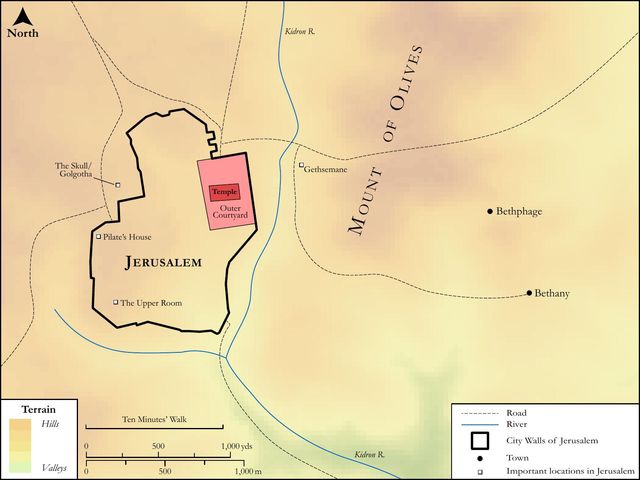
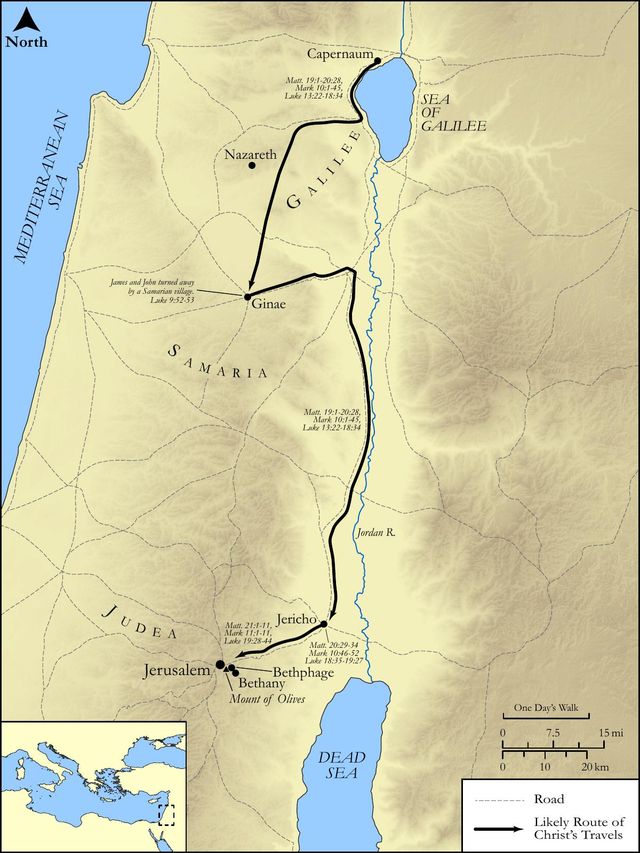
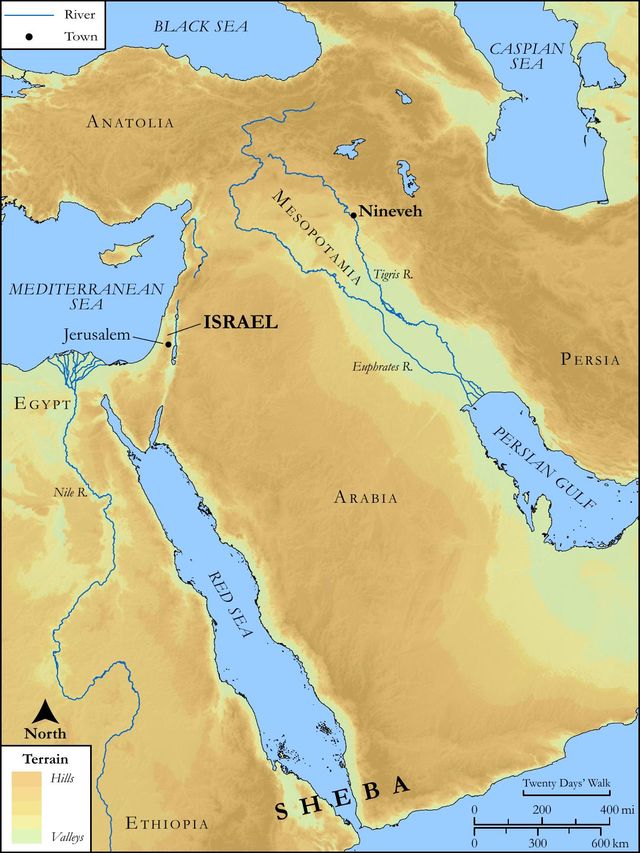
See on the biblical-era maps
Study this verse
Public-domain commentary
Matthew Henry
From his Commentary on the Whole Bible. Henry comments on passages, not single verses — this entry covers Luke 11:14–26. His four-level outline is real structure in the source text, so it is rendered as structure.
The substance of these verses we had in Mat 12:22, etc. Christ is here giving a general proof of his divine mission, by a particular proof of his power over Satan, his conquest of whom was an indication of his great design in coming into the world, which was, to destroy the works of the devil. Here too he gives an earnest of the success of that undertaking. He is here casting out a devil that made the poor possessed man dumb: in Matthew we are told that he was blind and dumb. When the devil was forced out by the word of Christ, the dumb spoke immediately, echoed to Christ's word, and the lips were opened to show forth his praise. Now,
I.Some were affected with this miracle.
The people wondered; they admired the power of God, and especially that it should be exerted by the hand of one who made so small a figure, that one who did the work of the Messiah should have so little of that pomp of the Messiah which they expected.
II.Others were offended at it, and, to justify their infidelity, suggested that it was by virtue of a league with Beelzebub, the prince of the devils, that he did this, Luk 11:15. It seems, in the devil's kingdom there are chiefs, which supposes that there are subalterns. Now they would have it thought, or said at least, that there was a correspondence settled between Christ and the devil, that the devil should have the advantage in the main and be victorious at last, but that in order hereto, in particular instances, he should yield Christ the advantage and retire by consent. Some, to corroborate this suggestion, and confront the evidence of Christ's miraculous power, challenged him to give them a sign from heaven (Luk 11:16), to confirm his doctrine by some appearance in the clouds, such as was upon mount Sinai when the law was given; as if a sign from heaven, not disprovable by any sagacity of theirs, could not have been given them as well by a compact and collusion with the prince of the power of the air, who works with power and lying wonders, as the casting out of a devil; nay, that would not have been any present prejudice to his interest, which this manifestly was. Note, Obstinate infidelity will never be at a loss for something to say in its own excuse, though ever so frivolous and absurd. Now Christ here returns a full and direct answer to this cavil of theirs; in which he shows,
1.That it can by no means be imagined that such a subtle prince as Satan is should ever agree to measures that had such a direct tendency to his own overthrow, and the undermining of his own kingdom, Luk 11:17, Luk 11:18. What they objected they kept to themselves, afraid to speak it, lest it should be answered and baffled; but Jesus knew their thoughts, even when they industriously thought to conceal them, and he said, "You yourselves cannot but see the groundlessness, and consequently the spitefulness, of this charge; for it is an allowed maxim, confirmed by every day's experience, that no interest can stand that is divided against itself; not the more public interest of a kingdom, nor the private interest of a house or family; if either the one or the other be divided against itself, it cannot stand. Satan would herein act against himself; not only by the miracle which turned him out of possession of the bodies of people, but much more in the doctrine for the explication and confirmation of which the miracle was wrought, which had a direct tendency to the ruin of Satan's interest in the minds of men, by mortifying sin, and turning men to the service of God. Now, if Satan should thus be divided against himself, he would hasten his own overthrow, which you cannot suppose an enemy to do that acts so subtlely for his own establishment, and is so solicitous to have his kingdom stand."
2.That was a very partial ill-natured thing for them to impute that in him to a compact with Satan which yet they applauded and admired in others that were of their own nation (Luk 11:19): "By whom do your sons cast them out? Some of your own kindred, as Jews, nay, and some of your own followers, as Pharisees, have undertaken, in the name of the God of Israel, to cast out devils, and they were never charged with such a hellish combination as I am charged with." Note, It is gross hypocrisy to condemn that in those who reprove us which yet we allow in those that flatter us.
3.That, in opposing the conviction of this miracle, they were enemies to themselves, stood in their own light, and put a bar in their own door, for they thrust from them the kingdom of God (Luk 11:20): "If I with the finger of God cast out devils, as you may assure yourselves I do, no doubt the kingdom of God is come upon you, the kingdom of the Messiah offers itself and all its advantages to you, and, if you receive it not, it is at your peril." In Matthew it is by the Spirit of God, here by the finger of God; the Spirit is the arm of the Lord, Isa 53:1. His greatest and most mighty works were wrought by his Spirit; but, if the Spirit in this work is said to be the finger of the Lord, it perhaps may intimate how easily Christ did and could conquer Satan, even with the finger of God, the exerting of the divine power in a less and lower degree than in many other instances. He needed not make bare his everlasting arm; that roaring lion, when he pleases, is crushed, like a moth, with a touch of a finger. Perhaps here is an allusion to the acknowledgment of Pharaoh's magicians, when they were run aground (Exo 8:19): This is the finger of God. "Now if the kingdom of God be herein come to you, and you be found by those cavils and blasphemies fighting against it, it will come upon you as a victorious force which you cannot stand before."
4.That his casting out devils was really the destroying of them and their power, for it confirmed a doctrine which had a direct tendency to the ruining of his kingdom, Luk 11:21, Luk 11:22. Perhaps there had been some who had cast out the inferior devils by compact with Beelzebub their chief, but that was without any real damage or prejudice to Satan and his kingdom, what he lost one way he gained another. The devil and such exorcists played booty, as we say, and, while the forlorn hope of his army gave ground, the main body thereby gained ground; the interest of Satan in the souls of men was not weakened by it in the least. But, when Christ cast out devils, he needed not do it by any compact with them, for he was stronger than they, and could do it by force, and did it so as to ruin Satan's power and blast his great design by that doctrine and that grace which break the power of sin, and so rout Satan's main body, take from him all his armour, and divide his spoils, which no one devil ever did to another or ever will. Now this is applicable to Christ's victories over Satan both in the world and in the hearts of particular persons, by that power which went along with the preaching of his gospel, and does still. And so we may observe here,
(1.)The miserable condition of an unconverted sinner. In his heart, which was fitted to be a habitation of God, the devil has his palace; and all the powers and the faculties of the soul, being employed by him in the service of sin, are his goods. Note,
[1.]The heart of every unconverted sinner is the devil's palace, where he resides and where he rules; he works in the children of disobedience. The heart is a palace, a noble dwelling; but the unsanctified heart is the devil's palace. His will is obeyed, his interests are served, and the militia is in his hands; he usurps the throne in the soul.
[2.]The devil, as a strong man armed, keeps this palace, does all he can to secure it to himself, and to fortify it against Christ. All the prejudices with which he hardens men's hearts against truth and holiness are the strong-holds which he erects for the keeping of his palace; this palace is his garrison.
[3.]There is a kind of peace in the palace of an unconverted soul, while the devil, as a strong man armed, keeps it. The sinner has a good opinion of himself, is very secure and merry, has no doubt concerning the goodness of his state nor any dread of the judgment to come; he flatters himself in his own eyes, and cries peace to himself. Before Christ appeared, all was quiet, because all went one way; but the preaching of the gospel disturbed the peace of the devil's palace.
(2.)The wonderful change that is made in conversion, which is Christ's victory over this usurper. Satan is a strong man armed; but our Lord Jesus is stronger than he, as God, as Mediator. If we speak of strength, he is strong: more are with us than against us. Observe,
[1.]The manner of this victory: He comes upon him by surprise, when his goods are in peace and the devil thinks it is all his own for ever, and overcomes him. Note, The conversion of a soul to God is Christ's victory over the devil and his power in that soul, restoring the soul to its liberty, and recovering his own interest in it and dominion over it.
[2.]The evidences of this victory. First, He takes from him all his armour wherein he trusted. The devil is a confident adversary; he trusts to his armour, as Pharaoh to his rivers (Eze 29:3): but Christ disarms him. When the power of sin and corruption in the soul is broken, when the mistakes are rectified, the eyes opened, the heart humbled and changed, and made serious and spiritual, then Satan's armour is taken away. Secondly, He divides the spoils; he takes possession of them for himself. All the endowments of mind and body, the estate, power, interest, which before were made use of in the service of sin and Satan, are now converted to Christ's service and employed for him; yet this is not all; he makes a distribution of them among his followers, and, and having conquered Satan, gives to all believers the benefit of that victory. Hence Christ infers that, since the whole drift of his doctrine and miracles was to break the power of the devil, that great enemy of mankind, it was the duty of all to join with him and to follow his guidance, to receive his gospel and come heartily into the interests of it; for otherwise they would justly be reckoned as siding with the enemy (Luk 11:23): He that is not with me is against me. Those therefore who rejected the doctrine of Christ, and slighted his miracles, were looked upon as adversaries to him, and in the devil's interest.
5.That there was a vast difference between the devil's going out by compact and his being cast out by compulsion. Those out of whom Christ cast him he never entered into again, for so was Christ's charge (Mar 9:25); whereas, if he had gone out, whenever he saw fit he would have made a re-entry, for that is the way of the unclean spirit, when he voluntarily and with design goes out of a man, Luk 11:24-26. The prince of the devils may give leave, nay, may give order, to his forces to retreat, or make a feint, to draw the poor deluded soul into an ambush; but Christ, as he gives a total, so he gives a final, defeat to the enemy. In this part of the argument he has a further intention, which is to represent the state of those who have had fair offers made them, - among whom, and in whom, God has begun to break the devil's power and overthrow his kingdom, - but they reject his counsel against themselves, and relapse into a state of subjection to Satan. Here we have,
(1.)The condition of a formal hypocrite, his bright side and his dark side. His heart still remains the devil's house; he calls it his own, and he retains his interest in it; and yet,
[1.]The unclean spirit is gone out. He was not driven out by the power of converting grace; there was none of that violence which the kingdom of heaven suffers; but he went out, withdrew for a time, so that the man seemed not to be under the power of Satan as formerly, nor so followed with his temptations. Satan is gone, or has turned himself into an angel of light.
[2.]The house is swept from common pollutions, by a forced confession of sin, as Pharaoh's - a feigned contrition for it, as Ahab's, - and a partial reformation, as Herod's. There are those that have escaped the pollutions of the world, and yet are still under the power of the god of this world, Pe2 2:20. The house is swept, but it is not washed; and Christ hath said, If I wash thee not, thou hast no part with me; the house must be washed, or it is none of his. Sweeping takes off only the loose dirt, while the sin that besets the sinner, the beloved sin, is untouched. It is swept from the filth that lies open to the eye of the world, but it is not searched and ransacked for secret filthiness, Mat 23:25. It is swept, but the leprosy is in the wall, and will be till something more be done.
[3.]The house is garnished with common gifts and graces. It is not furnished with any true grace, but garnished with the pictures of all graces. Simon Magus was garnished with faith, Balaam with good desires, Herod with a respect for John, the Pharisees with many external performances. It is garnished, but it is like a potsherd covered with silver dross, it is all paint and varnish, not real, not lasting. The house is garnished, but the property is not altered; it was never surrendered to Christ, nor inhabited by the Spirit. Let us therefore take heed of resting in that which a man may have and yet come short.
(2.)Here is the condition of a final apostate, into whom the devil returns after he had gone out: Then goes he, and takes seven other spirits more wicked than himself (Luk 11:26); a certain number for an uncertain, as seven devils are said to be cast out of Mary Magdalene. Seven wicked spirits are opposed to the seven spirits of God, Rev 3:1. These are said to be more wicked than himself. It seems, even devils are not all alike wicked; probably, the degrees of their wickedness, now that they are fallen, are as the degrees of their holiness were while they stood. When the devil would do mischief most effectually, he employs those that are more mischievous than himself. These enter in without any difficulty or opposition; they are welcomed, and they dwell there; there they work, there they rule; and the last state of that man is worse than the first. Note,
[1.]Hypocrisy is the high road to apostasy. If the heart remains in the interest of sin and Satan, the shows and shadows will come to nothing; those that have not set that right will not long be stedfast. Where secret haunts of sin are kept up, under the cloak of a visible profession, conscience is debauched, God is provoked to withdraw his restraining grace, and the close hypocrite commonly proves an open apostate,
[2.]The last state of such is worse than the first, in respect both of sin and punishment. Apostates are usually the worst of men, the most vain and profligate, the most bold and daring; their consciences are seared, and their sins of all others the most aggravated. God often sets marks of his displeasure upon them in this world, and in the other world they will receive the greater damnation. Let us therefore hear, and fear, and hold fast our integrity.
Historical interpretation
Five Centuries of Reception
10 surviving comments on this verse. Each one is dated, so this reads as a timeline rather than a list.
Select a marker to jump to its quote. Markers stagger vertically where authors wrote within a few decades of each other.
The unclean spirit dwelt in us before we believed, before we came to Christ when our soul was still committing fornication against God and was with its lovers, the demons. Afterward it said, "I will return to my first husband," and came to Christ, who "created" it from the beginning "in his image." Necessarily the adulterous spirit gave up his place when it saw the legitimate husband. Christ received us, and our house has been "cleansed" from its former sins. It has been "furnished" with the furnishing of the sacraments of the faithful that they who have been initiated know. This house does not deserve to have Christ as its resident immediately unless its life and conduct are so holy, pure and incapable of being defiled that it deserves to be the "temple of God." It should not still be a house, but a temple in which God dwells. If it neglects the grace that was received and entangles itself in secular affairs, immediately that unclean spirit returns and claims the vacant house for itself. "It brings with it seven other spirits more wicked," so that it may not be able again to be expelled, "and the last state of that kind of person is worse than the first." It would be more tolerable that the soul would not have returned to its first husband once it became a prostitute than having gone back after confession to her husband, to have become an adulteress again. There is no "fellowship," as the apostle says, "between the temple of God and idols," no "agreement between Christ and Belial."
And He who makes us free from the law, became subject to the law; and there is offered for Him, who hath sanctified us, a pair of clean birds,
The comparison then is between one man and the whole Jewish people, from whom through the Law the unclean spirit had been cast out. But because in the Gentiles, whose hearts were first barren, but afterwards in baptism moistened with the dew of the Spirit, the devil could find no rest because of their faith in Christ, (for to the unclean spirits Christ is a flaming fire,) he then returned to the Jewish people. Hence it follows, And finding none, he saith, I will return to my house whence I came.
For Israel being adorned with a mere outward and superficial beauty, remains inwardly the more polluted in her heart. For she never quenched or allayed her fires in the water of the sacred fountain, and rightly did the unclean spirit return to her, bringing with him seven other spirits more wicked than himself. Hence it follows, And he goeth and taketh with him seven other spirits more wicked than himself, and they enter in and dwell there. Seeing that in truth she has sacrilegiously profaned the seven weeks of the Law, (i. e. from Easter to Pentecost,) and the mystery of the eighth day. Therefore as upon us is multiplied the seven-fold gifts of the Spirit, so upon them falls the whole accumulated attack of the unclean spirits. For the number seven is frequently taken to mean the whole.
(Hom. 41. in Matt.) But if he who does not work with Me is My adversary, how much more he who opposes Me? It seems however to me that he here under a figure refers to the Jews, ranging them with the devil. For they also acted against, and scattered those whom He gathered together.
(Hom. 43. in Matt.) Now the evil spirits who dwell in the souls of the Jews, are worse than those in former times. For then the Jews raged against the Prophets, now they lift up their hands against the Lord of the Prophets, and therefore suffered worse things from Vespasian and Titus than in Egypt and Babylon. Hence it follows, And the last state of that man is worse than the former. Then too they had with them the Providence of God, and the grace of the Holy Spirit; but now they are deprived even of this protection, so that there is now a greater lack of virtue, and their sorrows are more intense, and the tyranny of the evil spirits more terrible.
(ut sup.) Let us receive the words which follow, as said not only to them, but also to ourselves, And the last state of that man shall be worse than the first; for if enlightened and released from our former sins we again return to the same course of wickedness, a heavier punishment will await our latter sins.
That the Jewish crowds fall into such thoughts concerning Christ he makes plain by saying, “When the wicked spirit has gone out from the man, it returns with seven other spirits more bitter than itself, and the last state of that man is worse than the first.” As long as they were in bondage in Egypt and lived according to the customs and laws of the Egyptians that were full of all impurity, they led polluted lives. An evil spirit dwelled in them, because it dwells in the hearts of the wicked. When in the mercy of God they had been delivered by Moses and received the law as a schoolmaster calling them to the light of the true knowledge of God, the impure and polluted spirit was driven out. Since they did not believe in Christ but rejected the Savior, the impure spirit again attacked them. He found their heart empty and devoid of all fear of God, swept and took up his dwelling in them.
After what had gone before, our Lord proceeds to show how it was that the Jewish people had sunk to these opinions concerning Christ, saying, When the unclean spirit is gone out of a man, &c. For that this example relates to the Jews, Matthew has explained when he says, Even so shall it be also unto this wicked generation. (Matt. 12:45.) For all the time that they were living in Egypt in the practice of the Egyptians, there dwelt in them an evil spirit, which was drawn out of them when they sacrificed the lamb as a type of Christ, and were sprinkled with its blood, and so escaped the destroyer.
The last state also is worse than the first, according to the words of the Apostle, It were better not to have known the way of truth, than after they have known it to turn back from it. (2 Pet. 2:21.)
When an unclean spirit goes out of a man, he walks through dry places. Although it can be simply understood that the Lord added these things for the distinction between His works and those of Satan, namely that He always cleanses the defiled, while Satan hurries to defile the cleansed with even graver filth, it can nevertheless also be aptly taken to refer to any heretic, schismatic, or even a bad Catholic. From the time of baptism, the unclean spirit that had previously inhabited him is driven away by the confession of Catholic faith and the renunciation of worldly ways, and it wanders through dry places, that is, the hearts of the faithful which have been purged of the laxity of fluid thoughts. The cunning adversary sees if he can fix his wicked steps anywhere there. But it is well said:
He says: "I will return to my house from which I came out." This verse should be feared, not expounded upon, lest through careless neglect, the sin we believed extinguished in us should crush us.
"Seeking rest and finding none, for, fleeing chaste minds, the devil can only find a pleasant rest in the heart of the wicked." Hence the Lord says of him: "He sleeps under the shadow, in the covert of the reed, and in moist places." The shadow, that is, dark consciences; in the reed, which, shiny on the outside, is empty within, being a hypocrite; in moist places, insinuating himself into lascivious and soft minds.
This may also be taken to refer to certain heretics or schismatics, or even to a bad Catholic, from whom at the time of his baptism the evil spirit had gone out. And he wanders about in dry places, that is, his crafty device is to try the hearts of the faithful, which have been purged of all unstable and transient knowledge, if he can plant in them any where the footsteps of his iniquity. But he says, I will return to my house whence I came out. And here we must beware lest the sin which we supposed extinguished in us, by our neglect overcome us unawares. But he finds his house swept and garnished, that is, purified by the grace of baptism from the stain of sin, yet replenished with no diligence in good works. By the seven evil spirits which he takes to himself, he signifies all the vices. And they are called more wicked, because he will have not only those vices which are opposed to the seven spiritual virtues, but also by his hypocrisy he will pretend to have the virtues themselves.
It may also be simply understood, that our Lord added these words to show the distinction between the works of Satan and His own, that in truth He is ever hastening to cleanse what has been defiled, Satan to defile with still greater pollution what has been cleansed.
Continue studying Luke 11:24 across the web’s major study libraries — every link below opens this exact verse, chapter, or book on the destination site.
Read & Compare
 BibleGatewayThis verse in more than 200 translations and 70 languages.
 Bible.comThe YouVersion reader — hundreds of translations, reading plans, and highlights.
 ESV.orgCrossway's official English Standard Version reader.
 NET BibleThe NET translation with 60,000+ translators' notes on every rendering decision.
 STEP BibleTyndale House's free study tool — original text, vocabulary, and scholarly resources.
 BibliaLogos Bible Software's free web reader.
 USCCBThe New American Bible (Revised Edition) with the U.S. bishops' study notes.
Commentaries
 BibleHub CommentariesDozens of classic commentaries on this verse, gathered on one page.
 StudyLightMore than 100 commentary sets — the largest collection on the web.
 BibleRefPlain-English commentary on what this verse means, verse by verse.
 Enduring WordDavid Guzik's free commentary on this chapter, widely used by Bible teachers.
 Bible Study ToolsVerse commentary alongside Greek and Hebrew study aids.
Original Language & Research
- BibleHub InterlinearThe verse word by word — original language, transliteration, and English.
- BibleHub LexiconEvery word's original-language definition and Strong's entry.
 Blue Letter BibleDeep-study tools — Strong's numbers, concordance, and word studies.
 CNTR CollationThe earliest Greek manuscripts of this verse, collated letter by letter.
Sermons, Hymns & Audio


TrulyRandomVerse is not affiliated with these sites and doesn’t control their content. They’re linked because they’re genuinely useful.
Summary
Luke 11:24 presents a vivid parable from Jesus, illustrating the precarious spiritual state of an individual from whom an unclean spirit has been expelled, but whose life remains spiritually uncultivated and empty. The spirit, finding no suitable "rest" in the desolate spiritual landscape outside a human host, resolves to return to its former dwelling. This teaching serves as a profound warning that mere deliverance from evil is insufficient; the vacated spiritual space must be actively filled with the presence and truth of God to prevent a more severe spiritual relapse.
Context
ShowHideLiterary Context
This verse is part of a larger discourse by Jesus following a powerful exorcism where He cast out a demon from a mute man (Luke 11:14). His critics, particularly the Pharisees, accused Him of casting out demons by the power of Beelzebub, the prince of demons (Luke 11:15). Jesus refutes this accusation by demonstrating the logical inconsistency of Satan casting out Satan (Luke 11:17-18) and by highlighting that His power signifies the arrival of the Kingdom of God (Luke 11:20). The parable of the strong man guarding his house (Luke 11:21-22) further illustrates His superior power over Satan. Verse 23 then establishes the critical principle of allegiance: "He that is not with me is against me." Luke 11:24-26, the parable of the returning unclean spirit, serves as a crucial follow-up, emphasizing that deliverance from evil must be accompanied by a positive commitment to God and His kingdom, lest the last state of the person be worse than the first.
Historical & Cultural Context
In the ancient world, and particularly within Jewish thought, the existence and activity of malevolent spirits (demons) were widely accepted. Exorcism was a recognized practice, and there were various beliefs about where these spirits resided when not possessing a human. "Dry places" or deserts were often associated with demonic activity or as places of desolation and emptiness, unsuitable for human habitation and thus, perhaps, fitting for disembodied spirits seeking a temporary "rest." This cultural understanding would have made Jesus's illustration immediately comprehensible to His audience. The concept of a "house" being swept clean but left empty would also resonate, as a clean but unoccupied dwelling invited further infestation or decay. The parable implicitly critiques a superficial approach to spiritual cleansing that does not culminate in a positive spiritual filling.
Key Themes
ShowHideThis verse powerfully contributes to several key themes within Luke's Gospel and broader biblical theology. It underscores the reality and persistence of spiritual warfare, highlighting that evil spirits are not passive but actively seek habitation and influence (Luke 11:21-22). It emphasizes the danger of a spiritual vacuum: merely being freed from evil is insufficient; the void must be filled with the presence of God and His righteousness. This points to the necessity of active spiritual transformation and not just negative abstinence. The parable also implicitly contrasts the temporary "rest" sought by the spirit with the true and lasting rest found in Christ, and reinforces the theme of discipleship and allegiance to God's kingdom, as opposed to spiritual neutrality, which Jesus warns against in Luke 11:23.
Exposition and Analysis
ShowHideKey Word Analysis
ShowHideMeaning "impure ( ceremonially, morally (lewd) or specially, (demonic))." This term highlights the defiling nature of the spirit, emphasizing its inherent opposition to God's holiness and its capacity to corrupt and pollute any human host or environment it inhabits. It's not just "not clean," but actively "defiling."
Meaning "to traverse (literally):--come, depart, go (about, abroad, everywhere, over, through, throughout), pass (by, over, through, throughout), pierce through, travel, walk through." This verb signifies active movement and exploration, depicting the spirit's persistent and restless search for a suitable dwelling place, underscoring its relentless nature and determination.
Meaning "intermission; by implication, recreation:--rest." For the unclean spirit, "rest" implies a place of settled habitation where it can cease its wandering and resume its malevolent activity. The inability to find this rest in "dry places" highlights the spirit's fundamental need for a host, and the desolation of these places from the spirit's perspective.
Verse Breakdown
ShowHide"When the unclean spirit is gone out of a man,"
This opening clause establishes the initial premise: a person has been delivered from demonic influence. It implies an act of exorcism or a departure of the spirit for some other reason, setting the stage for the subsequent spiritual vulnerability.
"he walketh through dry places, seeking rest;"
Once expelled, the spirit does not simply cease to exist or remain dormant. It actively roams through "dry places"—desolate, waterless regions often associated with spiritual emptiness or the abode of demons in ancient thought. The spirit's motivation is to find "rest," a stable environment or host where it can settle and operate, highlighting its inherent need for a dwelling.
"and finding none,"
This phrase indicates the spirit's failure to achieve its objective in the desolate regions. The "dry places" offer no true solace or suitable environment for its purposes, reinforcing the idea that these spirits are inherently restless and seek to inhabit living beings.
"he saith, I will return unto my house whence I came out."
Unable to find an alternative, the spirit resolves to return to its original "house"—the man from whom it was expelled. This decision reveals the spirit's proprietary view of its former host and its persistent desire to re-establish control, setting up the dire warning of the subsequent verses about the dangers of an empty spiritual life.
Literary Devices
ShowHideJesus employs several potent literary devices in this short parable. Personification is evident as the unclean spirit is given human-like qualities: it "walketh," "seeketh," "findeth," and "saith." This makes the abstract concept of a spirit's activity more tangible and relatable. Symbolism is central, with "dry places" symbolizing spiritual desolation, emptiness, or regions devoid of life and God's refreshing presence, which offer no true "rest" to these entities. The "house" symbolizes the human person, particularly their inner spiritual life or being. The narrative itself functions as an allegory or parable, using a concrete, relatable scenario (a spirit seeking a home) to convey a profound spiritual truth about the dangers of an empty spiritual life after initial cleansing. The implied irony is that the "dry places," though desolate, are not suitable for the spirit's true "rest," which it paradoxically finds in a human host.
Theological and Thematic Connections
ShowHideThis parable serves as a critical warning against spiritual neutrality or a superficial understanding of salvation. It teaches that deliverance from evil is not the end of the spiritual journey, but rather the beginning of a call to active discipleship and filling one's life with God's presence. A vacuum, whether physical or spiritual, tends to be filled. If not filled with the Holy Spirit and the fruit of righteousness, it risks being re-occupied by former evils, often with increased intensity. This highlights the ongoing nature of spiritual warfare and the necessity of cultivating an internal life that is actively surrendered to Christ and continually nourished by His truth. True spiritual security comes from the indwelling of God's Spirit, not merely the absence of evil.
Reflection and Application
ShowHideLuke 11:24-26 (which includes the conclusion of this parable) delivers a sobering message that resonates deeply with the human experience of change and transformation. It's not enough to merely stop a bad habit, break free from an addiction, or even be delivered from a demonic influence. If the space left by the departure of that negative influence is not actively and intentionally filled with something good, purposeful, and God-centered, it creates a dangerous void. This spiritual vacuum becomes an invitation for the old patterns, or even worse ones, to return and take deeper root. For believers, this means that repentance and deliverance must be followed by active pursuit of Christ, diligent study of His Word, consistent prayer, and a life empowered by the Holy Spirit. Our "house"—our inner being—must be swept clean, but then it must be furnished with God's presence and purpose, becoming a dwelling place for His Spirit, not an empty vessel awaiting re-infestation. This calls for intentional spiritual disciplines and a continuous surrender to God's will, ensuring that our last state is not worse than our first.
Questions for Reflection
ShowHideFAQ
ShowHideDoes this parable mean that deliverance from evil spirits is only temporary or futile?
ShowHideNo, the parable does not suggest that deliverance is futile, but rather that it is incomplete if not followed by a positive spiritual filling. Jesus's power to cast out demons is real and effective. The warning in this parable is about the person's subsequent spiritual state. If the "house" (the person's life) is merely "swept and garnished" but left empty and unoccupied by God's Spirit, it creates a dangerous vacuum. The problem isn't the deliverance itself, but the failure to cultivate a relationship with God and allow His Spirit to indwell and govern one's life. True and lasting freedom comes from being "in Christ," not just from being "out of the demon."
What are "dry places" in this context?
ShowHide"Dry places" (Greek: anydros topos) typically refer to deserts or desolate, waterless regions. In this context, they are symbolic. They represent places devoid of life, refreshment, or spiritual sustenance. For an unclean spirit, these are places where they cannot find true "rest" or a suitable environment to operate and exert their influence, as they inherently seek to inhabit living beings. Metaphorically, they could represent spiritual emptiness or a state of desolation where the spirit finds no satisfaction or opportunity for its malicious purposes, driving it back to a human host.
How does one "fill" the house to prevent the spirit's return?
ShowHideThe "house" is filled by inviting and cultivating the presence of God through the Holy Spirit. This involves a conscious decision to follow Christ and allow Him to be Lord of one's life. Practically, it means actively engaging in spiritual disciplines such as consistent prayer (Luke 11:9-13), diligent study and application of God's Word (Luke 11:28), fellowship with other believers (Acts 2:42), and living a life of obedience to God's commands. It's about replacing the emptiness with the fruit of the Spirit (Galatians 5:22-23) and allowing Christ to truly indwell and transform one's being (Ephesians 3:17).
Christ-Centered Fulfillment
ShowHideThis parable, while a stark warning, finds its ultimate fulfillment and solution in the person and work of Jesus Christ. The "unclean spirit" seeking rest highlights the pervasive reality of spiritual evil and its relentless pursuit of human habitation. However, Christ is the "stronger man" who has overcome the "strong man" (Satan), plundering his house and demonstrating His absolute authority over all demonic powers (Luke 11:21-22). He doesn't just cast out demons; He offers a permanent solution to the spiritual vacuum. When a person is truly united with Christ through faith, their "house" is no longer left empty or vulnerable. Instead, it is filled with the Holy Spirit, who is given as a down payment of our inheritance (Ephesians 1:13-14). The presence of the Holy Spirit provides true spiritual rest and empowers believers to live a new life, walking in the Spirit and producing the fruit of righteousness, thereby making the "house" an unsuitable and unwelcoming dwelling for evil spirits (Galatians 5:16-17). Thus, the danger of the returning spirit is overcome not by human effort alone, but by the indwelling Christ, who establishes His unshakeable kingdom within the believer, ensuring that the last state is indeed better than the first (2 Corinthians 5:17).