


Job 2:2
Bible text: King James Version (1769 Blayney text) · Public domain
Bible text: King James Version with Strong's numbers · Public domain
Bible text: Berean Standard Bible · Public domain
Bible text: American Standard Version (1901) · Public domain
Bible text: World English Bible, Messianic edition · Public domain
Bible text: Geneva Bible (1599) · Public domain
Bible text: Young's Literal Translation · Public domain
- וַיֹּאמֶרvai·Yo·merand he saidH559Conj-w ¦ V-Qal-ConsecImperf-3msVerb Qal Consecutive Imperfect 3rd Singular Masculineוַandיֹּאמֶרhe said
- יְהוָהYah·wehYahwehH3068N-properNoun Proper Title
- אֶל'eltoH413PrepPreposition
- הַשָּׂטָןha·sa·Tanthe adversaryH7854Art ¦ N-msNoun Title Singular Masculine Absoluteהַtheשָּׂטָןadversary
- אֵי'eiwhere?H335InterrogParticle Interrogative
- מִזֶּהmi·Zehfrom thisH2088Prep-m ¦ PrtParticle Demonstrativeמִfromזֶּהthis
- תָּבֹאta·Vo'are you comingH935V-Qal-Imperf-2msVerb Qal Imperfect 2nd Singular Masculine
- וַיַּעַןvai·Ya·'anand he answeredH6030Conj-w ¦ V-Qal-ConsecImperf-3msVerb Qal Consecutive Imperfect 3rd Singular Masculineוַandיַּעַןhe answered
- הַשָּׂטָןha·sa·Tanthe adversaryH7854Art ¦ N-msNoun Title Singular Masculine Absoluteהַtheשָּׂטָןadversary
- אֶת'et<obj.>H853DirObjMParticle Object Indicator
- יְהוָהYah·wehYahwehH3068N-properNoun Proper Title
- וַיֹּאמַרvai·yo·Marand he saidH559Conj-w ¦ V-Qal-ConsecImperf-3msVerb Qal Consecutive Imperfect 3rd Singular Masculineוַandיֹּאמַרhe said
- מִשֻּׁטmi·Shutfrom roving aboutH7751Prep-m ¦ V-Qal-InfVerb Qal Infinitive Constructמִfromשֻּׁטroving about
- בָּאָרֶץba·'A·retzon the earthH776Prep-b ¦ N-fsNoun Singular Feminine Absoluteבָּon theאָרֶץearth
- וּמֵהִתְהַלֵּךְu·me·hit·ha·Lekhand from going aboutH1980Conj-w ¦ Prep-m ¦ V-Hithpael-InfVerb Hithpael Infinitive Constructוּandמֵfromהִתְהַלֵּךְgoing about
- בָּהּBahon itPrep-b ¦ 3fsSuffix Personal 3rd Singular Feminineבָּonהּit
English is a literal word-by-word gloss of the Hebrew, not the KJV's wording. Why?
This is the original text the KJV's translators worked from — each Hebrew word with its own literal English meaning in this verse, prepared by scholars at Tyndale House, Cambridge. The KJV translates whole sentences, not word by word, so its wording differs: one Hebrew word can become several English words, and the KJV may choose “the LORD” where the gloss reads “Yahweh”. Both are faithful — they answer different questions. For the KJV's own rendering, switch to the KJV text.
Details
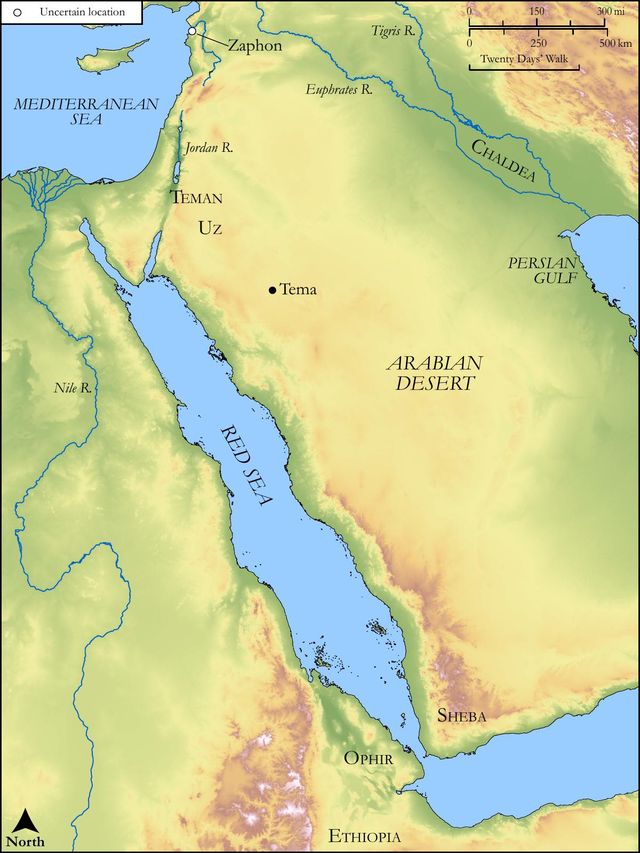
See on the biblical-era map
Study this verse
Public-domain commentary
Matthew Henry
From his Commentary on the Whole Bible. Henry comments on passages, not single verses — this entry covers Job 2:1–6. His two-level outline is real structure in the source text, so it is rendered as structure.
Satan, that sworn enemy to God and all good men, is here pushing forward his malicious prosecution of Job, whom he hated because God loved him, and did all he could to separate between him and his God, to sow discord and make mischief between them, urging God to afflict him and then urging him to blaspheme God. One would have thought that he had enough of his former attempt upon Job, in which he was so shamefully baffled and disappointed; but malice is restless: the devil and his instruments are so. Those that calumniate good people, and accuse them falsely, will have their saying, though the evidence to the contrary be ever so plain and full and they have been cast in the issue which they themselves have put it upon. Satan will have Job's cause called over again. The malicious, unreasonable, importunity of that great persecutor of the saints is represented (Rev 12:10) by his accusing them before our God day and night, still repeating and urging that against them which has been many a time answered: so did Satan here accuse Job day after day. Here is,
I.The court set, and the prosecutor, or accuser, making his appearance (Job 2:1, Job 2:2), as before, Job 1:6, Job 1:7.
The angels attended God's throne and Satan among them. One would have expected him to come and confess his malice against Job and his mistake concerning him, to cry, Peccavi - I have done wrong, for belying one whom God spoke well of, and to beg pardon; but, instead of that, he comes with a further design against Job. He is asked the same question as before, Whence comest thou? and answers as before, From going to and fro in the earth; as if he had been doing no harm, though he had been abusing that good man.
II.The judge himself of counsel for the accused, and pleading for him (Job 2:3):
"Hast thou considered my servant Job better than thou didst, and art thou now at length convinced that he is a faithful servant of mine, a perfect and an upright man; for thou seest he still holds fast his integrity?" This is now added to his character, as a further achievement; instead of letting go his religion, and cursing God, he holds it faster than ever, as that which he has now more than ordinary occasion for. He is the same in adversity that he was in prosperity, and rather better, and more hearty and lively in blessing God than ever he was, and takes root the faster for being thus shaken. See,
1.How Satan is condemned for his allegations against Job: "Thou movedst me against him, as an accuser, to destroy him without cause." Or, "Thou in vain movedst me to destroy him, for I will never do that." Good men, when they are cast down, are not destroyed, Co2 4:9. How well is it for us that neither men nor devils are to be our judges, for perhaps they would destroy us, right or wrong; but our judgment proceeds from the Lord, whose judgment never errs nor is biassed.
2.How Job is commended for his constancy notwithstanding the attacks made upon him: "Still he holds fast his integrity, as his weapon, and thou canst not disarm him - as his treasure, and thou canst not rob him of that; nay, thy endeavours to do it make him hold it the faster; instead of losing ground by the temptation, he gets ground." God speaks of it with wonder, and pleasure, and something of triumph in the power of his own grace; Still he holds fast his integrity. Thus the trial of Job's faith was found to his praise and honour, Pe1 1:7. Constancy crowns integrity.
III.The accusation further prosecuted, Job 2:4.
What excuse can Satan make for the failure of his former attempt? What can he say to palliate it, when he had been so very confident that he should gain his point? Why, truly, he has this to say, Skin for skin, and all that a man has, will he give for his life. Something of truth there is in this, that self-love and self-preservation are very powerful commanding principles in the hearts of men. Men love themselves better than their nearest relations, even their children, that are parts of themselves, will not only venture, but give, their estates to save their lives. All account life sweet and precious, and, while they are themselves in health and at ease, they can keep trouble from their hearts, whatever they lose. We ought to make a good use of this consideration, and, while God continues to us our life and health and the use of our limbs and senses, we should the more patiently bear the loss of other comforts. See Mat 6:25. But Satan grounds upon this an accusation of Job, slyly representing him,
1.As unnatural to those about him, and one that laid not to heart the death of his children and servants, nor cared how many of them had their skins (as I may say) stripped over their ears, so long as he slept in a whole skin himself; as if he that was so tender of his children's souls could be careless of their bodies, and, like the ostrich, hardened against his young ones, as though they were not his.
2.As wholly selfish, and minding nothing but his own ease and safety; as if his religion made him sour, and morose, and ill-natured. Thus are the ways and people of God often misrepresented by the devil and his agents.
IV.A challenge given to make a further trial of Job's integrity (Job 2:5):
"Put forth thy hand now (for I find my hand too short to reach him, and too weak to hurt him) and touch his bone and his flesh (that is with him the only tender part, make him sick with smiting him, Mic 6:13), and then, I dare say, he will curse thee to thy face, and let go his integrity." Satan knew it, and we find it by experience, that nothing is more likely to ruffle the thoughts and put the mind into disorder than acute pain and distemper of body. There is no disputing against sense. St. Paul himself had much ado to bear a thorn in the flesh, nor could he have borne it without special grace from Christ, Co2 12:7, Co2 12:9.
V.A permission granted to Satan to make this trial, Job 2:6.
Satan would have had God put forth his hand and do it; but he afflicts not willingly, nor takes any pleasure in grieving the children of men, much less his own children (Lam 3:33), and therefore, if it must be done, let Satan do it, who delights in such work: "He is in thy hand, do thy worst with him; but with a proviso and limitation, only save his life, or his soul. Afflict him, but not to death." Satan hunted for the precious life, would have taken that if he might, in hopes that dying agonies would force Job to curse his God; but God had mercy in store for Job after this trial, and therefore he must survive it, and, however he is afflicted, must have his life given him for a prey. If God did not chain up the roaring lion, how soon would he devour us! As far as he permits the wrath of Satan and wicked men to proceed against his people he will make it turn to his praise and theirs, and the remainder thereof he will restrain, Psa 76:10. "Save his soul," that is, "his reason" (so some), "preserve to him the use of that, for otherwise it will be no fair trial; if, in his delirium, he should curse God, that will be no disproof of his integrity. It would be the language not of his heart, but of his distemper." Job, in being thus maligned by Satan, was a type of Christ, the first prophecy of whom was that Satan should bruise his heel (Gen 3:15), and so he was foiled, as in Job's case. Satan tempted him to let go his integrity, his adoption (Mat 4:6): If thou be the Son of God. He entered into the heart of Judas who betrayed Christ, and (some think) with his terrors put Christ into his agony in the garden. He had permission to touch his bone and his flesh without exception of his life, because by dying he was to do that which Job could not do - destroy him that had the power of death, that is, the devil.
Historical interpretation
Historical reception
1 surviving comment on this verse from the historical church.
Why does the author describe the angels in the act of presenting themselves daily before the Lord? He does so that we might learn no actual event is overlooked by God’s providence, and that the angels report what happens every day. Every day they are sent to settle some question, even though we ignore all this. That is the reason why they were created; that is their task, as the blessed Paul says, “They are sent to serve for the sake of those who are to inherit salvation.” “And the devil,” the text says, “also came among them.” You know why the angels are present. But why is the devil present? The latter is present to tempt Job; the former, in order to regulate our matters. Why is the devil questioned again before the angels themselves? Because he had said before them, “He will curse you to your face.” What a shameless nature! He has dared come back!
Continue studying Job 2:2 across the web’s major study libraries — every link below opens this exact verse, chapter, or book on the destination site.
Read & Compare
 BibleGatewayThis verse in more than 200 translations and 70 languages.
 Bible.comThe YouVersion reader — hundreds of translations, reading plans, and highlights.
 ESV.orgCrossway's official English Standard Version reader.
 NET BibleThe NET translation with 60,000+ translators' notes on every rendering decision.
 STEP BibleTyndale House's free study tool — original text, vocabulary, and scholarly resources.
 BibliaLogos Bible Software's free web reader.
 USCCBThe New American Bible (Revised Edition) with the U.S. bishops' study notes.
Commentaries
 BibleHub CommentariesDozens of classic commentaries on this verse, gathered on one page.
 StudyLightMore than 100 commentary sets — the largest collection on the web.
 BibleRefPlain-English commentary on what this verse means, verse by verse.
 Enduring WordDavid Guzik's free commentary on this chapter, widely used by Bible teachers.
 Bible Study ToolsVerse commentary alongside Greek and Hebrew study aids.
Original Language & Research
- BibleHub InterlinearThe verse word by word — original language, transliteration, and English.
- BibleHub LexiconEvery word's original-language definition and Strong's entry.
 Blue Letter BibleDeep-study tools — Strong's numbers, concordance, and word studies.
 SefariaThe Hebrew text with Rashi and centuries of Jewish commentary.
Sermons, Hymns & Audio


TrulyRandomVerse is not affiliated with these sites and doesn’t control their content. They’re linked because they’re genuinely useful.
Summary
Job 2:2 continues the profound celestial drama, depicting a second divine council where God directly interrogates Satan regarding his activities. This verse captures Satan's revealing response, indicating his relentless, purposeful movement across the earth, actively seeking opportunities to accuse and undermine humanity. It powerfully underscores God's absolute sovereignty over all creation, including the forces of evil, and sets the stage for the next phase of Job's severe testing, shifting the focus from his possessions to his physical well-being, all under the watchful eye of the Almighty.
Context
ShowHideLiterary Context
This verse immediately follows the opening of the second heavenly council scene in the book of Job, mirroring the dramatic encounter described in the first divine council. After Satan's initial, devastating assault on Job's family and wealth, which failed to break Job's integrity, the adversary returns to the divine presence. God initiates this second dialogue by commending Job's unwavering faithfulness despite immense suffering, highlighting Job's steadfastness as a righteous man even in the face of profound loss. Satan's subsequent answer in Job 2:2 serves as the direct prelude to his proposal for a second, more severe test, one that targets Job's physical health. This escalation intensifies the challenge to Job's faith and God's justice, advancing the narrative's central conflict concerning the nature of true piety and the source of undeserved suffering.
Historical & Cultural Context
The book of Job, often categorized as wisdom literature, transcends a precise historical setting, though it is typically placed in a patriarchal era, possibly pre-Mosaic. The concept of a "divine council" or "assembly of gods" was a familiar motif among the nations round about. However, the biblical portrayal in Job uniquely asserts the singular sovereignty of Yahweh over all beings, including the spiritual realm, where Satan is a subordinate figure, not an equal deity. Satan's role as an "accuser" (the literal meaning of his name) reflects a legal or judicial context common among the nations, where an adversary would present a case against someone. His description of "going to and fro in the earth" would have evoked imagery of a scout or patrol, actively surveying the land for weaknesses or opportunities, a culturally understandable metaphor for a diligent, albeit malevolent, agent.
Key Themes
ShowHideJob 2:2 significantly contributes to several overarching themes within the book and broader biblical theology. Firstly, it powerfully reinforces the theme of Divine Sovereignty and Control. Despite Satan's malevolent intent and destructive power, he is not an independent agent but remains utterly subordinate to God's authority, operating strictly within divinely ordained parameters. This truth offers profound comfort and assurance that even the forces of evil are under the ultimate control of the Almighty, as further emphasized in Job 2:6. Secondly, the verse vividly portrays Satan's Relentless Activity and Adversarial Nature. His answer, "From going to and fro in the earth, and from walking up and down in it," paints a picture of a restless, vigilant, and malevolent presence, constantly searching for opportunities to accuse, tempt, and bring destruction upon humanity. This imagery resonates deeply with the description of Satan as a "roaring lion, seeking someone to devour" found in 1 Peter 5:8. Finally, the dialogue underscores the reality of The Unseen Spiritual Conflict. Job's trials are not random misfortunes but are revealed to be part of a challenge to his integrity and God's justice, initiated by an "accuser of the brethren," a role also highlighted in Revelation 12:10. This reveals that behind visible human suffering, there is often an unseen spiritual battle at play.
Exposition and Analysis
ShowHideKey Word Analysis
ShowHideThis is the covenant name of God, emphasizing His personal, relational, and self-existent character. His direct address to Satan underscores His absolute authority and control over all spiritual beings, including the adversary. It is not merely a question of inquiry born of ignorance, but a declarative statement of His sovereign oversight, compelling Satan to report.
Derived from a root meaning "to oppose" or "to be an adversary," this term denotes the primary antagonist in the heavenly drama. Here, it functions as a proper name, identifying the specific spiritual being who acts as the accuser and tempter. His presence in the divine council highlights his role as a prosecuting attorney or challenger, operating within God's purview and subject to His will.
This verb implies a purposeful, active movement, often with the intent of scouting, patrolling, or surveying. It suggests a methodical and diligent search, not aimless wandering. In this context, it reveals Satan's nature as a vigilant adversary, actively seeking out vulnerabilities, opportunities for accusation, and targets for destruction among humanity, like a mariner rowing to and fro.
This verb, akin to "to go" or "to come," reinforces the continuous and pervasive nature of Satan's activity. While "shûwṭ" implies a more investigative or surveying movement, "hâlak" emphasizes the general, constant presence and movement across the earth. Together, these two verbs paint a picture of tireless, comprehensive reconnaissance.
Verse Breakdown
ShowHide"And the LORD said unto Satan, From whence comest thou?"
This opening clause firmly establishes God's initiative and absolute authority. The question is not born of ignorance but serves as a divine summons, compelling Satan to account for his activities. It is a rhetorical question that sets the stage for Satan's self-incriminating confession, confirming that even the adversary must report to and operate under the divine gaze. It underscores God's complete oversight of all creation, visible and invisible.
"And Satan answered the LORD, and said, From going to and fro in the earth, and from walking up and down in it."
Satan's reply is a candid admission of his constant, active, and malevolent engagement with the human realm. The repetition of similar phrases ("going to and fro," "walking up and down") emphasizes the pervasive and tireless nature of his adversarial work. It signifies his role as a spiritual scout or patrol, constantly surveying the earth to identify potential targets for temptation, accusation, and destruction, seeking to undermine faith and cause spiritual harm, much like a predator stalking its prey.
Literary Devices
ShowHideThe passage employs several potent literary devices to convey its profound theological truths. Dialogue is central, driving the narrative forward and revealing character. The direct exchange between God and Satan is dramatic and serves to unveil the unseen spiritual conflict that undergirds Job's suffering. Imagery is powerfully used in Satan's description of his activities: "going to and fro in the earth, and from walking up and down in it." This creates a vivid picture of a restless, vigilant, and predatory being, constantly on the move, searching for vulnerabilities. This imagery evokes the sense of a scout or a hunter, meticulously surveying his territory for weaknesses. Furthermore, there is an element of Dramatic Irony, as the reader is privy to this celestial conversation and the true cause of Job's suffering, while Job himself remains unaware, grappling with his inexplicable pain from a human perspective. This contrast heightens the tension and deepens the reader's understanding of the eternal stakes involved. The Repetition of synonymous phrases ("going to and fro," "walking up and down") emphasizes the relentless and pervasive nature of Satan's malevolent activity.
Theological and Thematic Connections
ShowHideJob 2:2 profoundly illuminates the biblical understanding of spiritual warfare and divine sovereignty. It unequivocally asserts that even the most powerful spiritual adversary, Satan, is not an independent force but operates strictly within the confines of God's permission and ultimate control. This truth provides immense comfort, assuring believers that no trial or temptation is outside of God's oversight. Furthermore, Satan's self-description reveals his tireless, malevolent nature as the "accuser of the brethren," constantly seeking to undermine faith and bring destruction. This necessitates spiritual vigilance and reliance on God's strength for believers, reminding us that our struggle is not merely against flesh and blood but against spiritual forces that seek to devour.
Reflection and Application
ShowHideJob 2:2 offers a sobering yet ultimately reassuring perspective on the reality of spiritual opposition. It reminds us that while an active, malevolent adversary exists, his power is strictly limited by God's sovereign will. This understanding can transform our response to suffering and temptation; rather than feeling isolated or bewildered by trials, we can recognize them within a larger spiritual context, knowing that God permits nothing without purpose and that He works all things for the good of those who love Him. This verse calls us to a posture of spiritual vigilance, recognizing that the "walking to and fro" of the adversary is a constant reality. It encourages us to be sober-minded and watchful, not to fear Satan, but to understand his tactics and rely more fully on God's protection and provision. Our comfort lies not in the absence of spiritual conflict, but in the certainty of God's ultimate victory and His unwavering faithfulness to His children, even in the midst of the most profound tests.
Questions for Reflection
ShowHideFAQ
ShowHideDoes this passage imply God and Satan are equal powers?
ShowHideAbsolutely not. Job 2:2, like the entire book of Job, emphatically demonstrates God's absolute sovereignty over Satan. Satan is depicted as a subordinate being who must present himself before God and seeks permission to act. He is not an independent, co-equal deity but a created being operating entirely within the bounds of divine decree. God initiates the conversation, asks the questions, and ultimately sets the limits for Satan's actions, as seen in Job 2:6. This passage powerfully refutes any dualistic notion of two opposing, equally powerful forces in the universe, asserting instead the singular, supreme authority of the LORD.
What does "going to and fro in the earth, and from walking up and down in it" tell us about Satan's character?
ShowHideThis phrase vividly portrays Satan's relentless, purposeful, and malevolent activity. It suggests he is not a passive or localized entity but an active, vigilant adversary constantly surveying the earth. The imagery is akin to a scout or a predator, meticulously searching for weaknesses, vulnerabilities, and opportunities to accuse, tempt, and bring destruction. It highlights his role as the "accuser of the brethren" (Revelation 12:10) and a "roaring lion seeking whom he may devour" (1 Peter 5:8). This description underscores his tireless pursuit of humanity, seeking to undermine faith and separate individuals from God, a stark reminder of the spiritual battle believers face.
Christ-Centered Fulfillment
ShowHideJob 2:2, while revealing the active nature of the adversary, ultimately points to the greater triumph of Christ over Satan. The restless "going to and fro" of Satan in search of vulnerabilities finds its ultimate confrontation in Jesus Christ. Unlike Job, who endured suffering without knowing the unseen reason, Jesus perfectly resisted Satan's temptations in the wilderness, demonstrating His unblemished integrity and absolute authority over the evil one (Matthew 4:1-11). Throughout His earthly ministry, Jesus consistently cast out demons, demonstrating His power to bind the "strong man" and plunder his house (Mark 3:27), signifying His dominion over the forces of darkness. The cross, far from being Satan's victory, was his decisive defeat, where Christ disarmed the principalities and powers and triumphed over them (Colossians 2:15). Where Satan acts as the accuser, Christ stands as our advocate (1 John 2:1), having paid the full penalty for sin and securing our eternal redemption. Thus, the restless activity of the adversary, so evident in Job 2:2, is now met with the finished work of Christ, who has secured eternal victory and promises that the God of peace will soon crush Satan under our feet (Romans 16:20), offering believers ultimate hope and security in Him.