


John 9:32
Bible text: King James Version (1769 Blayney text) · Public domain
Bible text: Berean Standard Bible · Public domain
Bible text: American Standard Version (1901) · Public domain
Bible text: World English Bible, Messianic edition · Public domain
Bible text: Geneva Bible (1599) · Public domain
Bible text: Young's Literal Translation · Public domain
- ἐκekOut ofG1537PREPPreposition
- τοῦtoutheG3588T-GSMDefinite article Genitive Singular Masculine
- αἰῶνοςaiōnosageG165N-GSMNoun Genitive Singular Masculine
- οὐκoukneverG3756PRT-NNegative Particle Negative
- ἠκούσθηēkousthēit has been heardG191V-API-3SVerb Aorist Passive Indicative 3rd Singular
- ὅτιhotithatG3754CONJConjunction
- ἠνέῳξένēneōxenopenedG455V-AAI-3SVerb Aorist Active Indicative 3rd Singular
- τιςtisanyoneG5100X-NSMIndefinite pronoun Nominative Singular Masculine
- ὀφθαλμοὺςophthalmous[the] eyesG3788N-APMNoun Accusative Plural Masculine
- τυφλοῦtuphlouof [one] blindG5185A-GSMAdjective Genitive Singular Masculine
- γεγεννημένουgegennēmenoubornG1080V-RPP-GSMVerb Perfect Passive Participle Genitive Singular Masculine
English is a literal word-by-word gloss of the Greek, not the KJV's wording. Why?
This is the original text the KJV's translators worked from — each Greek word with its own literal English meaning in this verse, prepared by scholars at Tyndale House, Cambridge. The KJV translates whole sentences, not word by word, so its wording differs: one Greek word can become several English words, and the KJV may choose “charity” where the gloss reads “love”. Both are faithful — they answer different questions. For the KJV's own rendering, switch to the KJV text.
Details
See on the biblical-era maps
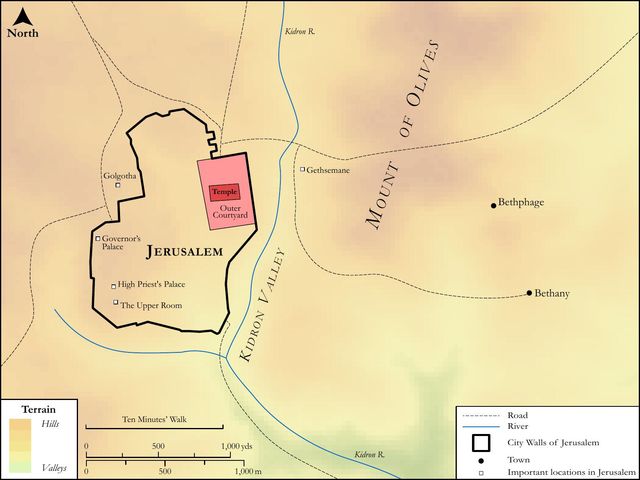
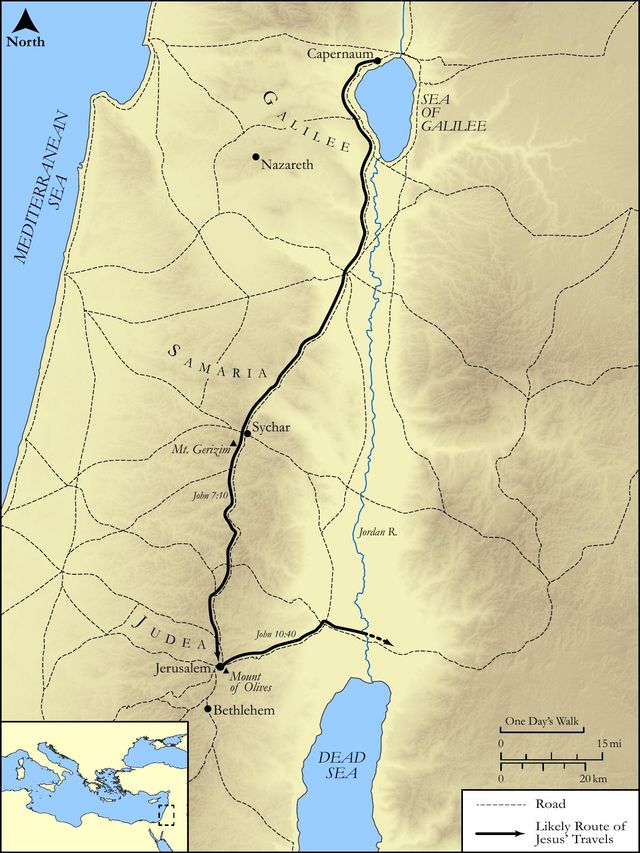
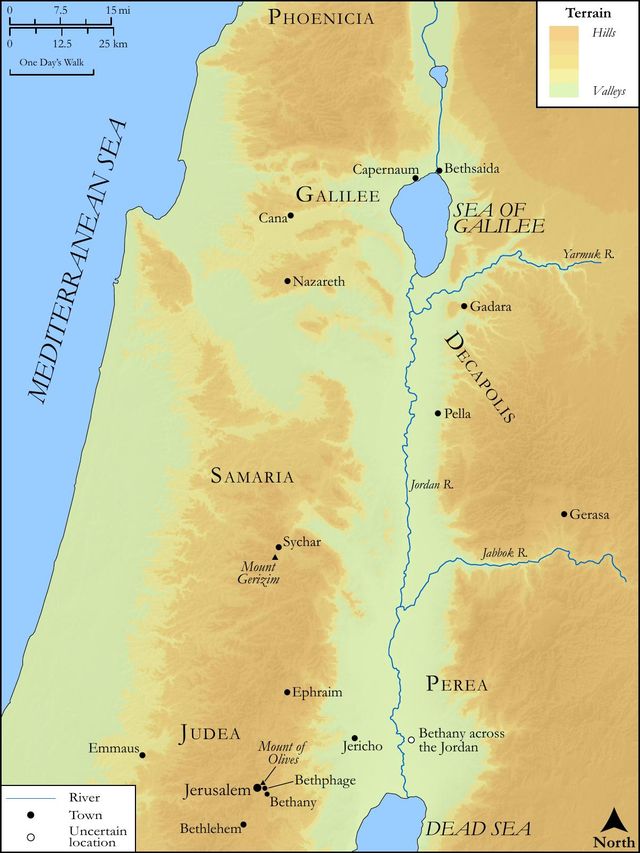
Study this verse
Public-domain commentary
Matthew Henry
From his Commentary on the Whole Bible. Henry comments on passages, not single verses — this entry covers John 9:13–34. His four-level outline is real structure in the source text, so it is rendered as structure.
One would have expected that such a miracle as Christ wrought upon the blind man would have settled his reputation, and silenced and shamed all opposition, but it had the contrary effect; instead of being embraced as a prophet for it, he is prosecuted as a criminal.
I.Here is the information that was given in to the Pharisees concerning this matter:
They brought to the Pharisees him that aforetime was blind, v. 13. They brought him to the great sanhedrim, which consisted chiefly of Pharisees, at least the Pharisees in the sanhedrim were most active against Christ. 1. Some think that those who brought this man to the Pharisees did it with a good design, to show them that this Jesus, whom they persecuted, was not what they represented him, but really a great man, and one that gave considerable proofs of a divine mission. What hath convinced us of the truth and excellency of religion, and hath removed our prejudices against it, we should be forward, as we have opportunity, to offer to others for their conviction. 2. It should seem, rather, that they did it with an ill design, to exasperate the Pharisees the more against Christ, and there was no need of this, for they were bitter enough of themselves. They brought him with such a suggestion as that in ch. xi. 47, 48, If we let him thus alone, all men will believe on him. Note, Those rulers that are of a persecuting spirit shall never want ill instruments about them, that will blow the coals, and make them worse.
II.The ground which was pretended for this information, and the colour given to it.
That which is good was never maligned but under the imputation of something evil. And the crime objected here (v. 14) was that it was the sabbath day when Jesus made the clay, and opened his eyes. The profanation of the sabbath day is certainly wicked, and gives a man a very ill character; but the traditions of the Jews had made that to be a violation of the law of the sabbath which was far from being so. Many a time this matter was contested between Christ and the Jews, that it might be settled for the benefit of the church in all ages. But it may be asked, "Why would Christ not only work miracles on the sabbath day, but work them in such a manner as he knew would give offence to the Jews? When he had healed the impotent man, why should he bid him carry his bed? Could he not have cured this blind man without making clay?" I answer,
1.He would not seem to yield to the usurped power of the scribes and Pharisees. Their government was illegal, their impositions were arbitrary, and their zeal for the rituals consumed the substantials of religion; and therefore Christ would not give place to them, by subjection, no not for an hour. Christ was made under the law of God, but not under their law.
2.He did it that he might, both by word and action, expound the law of the fourth commandment, and vindicate it from their corrupt glosses, and so teach us that a weekly sabbath is to be perpetually observed in the church, one day in seven (for what need was there to explain that law, if it must be presently abrogated?) and that it is not to be so ceremonially observed by us as it was by the Jews? Works of necessity and mercy are allowed, and the sabbath-rest to be kept, not so much for its own sake as in order to the sabbath-work.
3.Christ chose to work his cures on the sabbath day to dignify and sanctify the day, and to intimate that spiritual cures should be wrought mostly on the Christian sabbath day. How many blind eyes have been opened by the preaching of the gospel, that blessed eye-salve, on the Lord's day! How many impotent souls cured on that day!
III.The trial and examination of this matter by the Pharisees, v.
15. So much passion, prejudice, and ill-humour, and so little reason, appear here, that the discourse is nothing but crossing questions. One would think, when a man in these circumstances was brought before them, they would have been so taken up in admiring the miracle, and congratulating the happiness of the poor man, that they could not have been peevish with him. But their enmity to Christ had divested them of all manner of humanity, and divinity too. Let us see how they teased this man.
1.They interrogated him concerning the cure itself.
(1.)They doubted whether he had indeed been born blind, and demanded proof of that which even the prosecutors had acknowledged (v. 18): They did not believe, that is, they would not, that he was born blind. Men that seek occasion to quarrel with the clearest truths may find it if they please; and they that resolve to hold fast deceit will never want a handle to hold it by. This was not a prudent caution, but a prejudiced infidelity. However, it was a good way that they took for the clearing of this: They called the parents of the man who had received his sight. This they did in hopes to disprove the miracle. These parents were poor and timorous, and if they had said that they could not be sure that this was their son, or that it was only some weakness or dimness in his sight that he had been born with, which if they had been able to get help for him might have been cured long since, or had otherwise prevaricated, for fear of the court, the Pharisees had gained their point, had robbed Christ of the honour of this miracle, which would have lessened the reputation of all the rest. But God so ordered and overruled this counsel of theirs that it turned to the more effectual proof of the miracle, and left them under a necessity of being either convinced or confounded. Now in this part of the examination we have,
[1.]The questions that were put to them (v. 19): They asked them in an imperious threatening way, "Is this your son? Dare you swear to it? Do you say he was born blind? Are you sure of it? Or did he but pretend to be so, to have an excuse for his begging? How then doth he now see? That is impossible, and therefore you had better unsay it." Those who cannot bear the light of truth do all they can to eclipse it, and hinder the discovery of it. Thus the managers of evidence, or mismanagers rather, lead witnesses out of the way, and teach them how to conceal or disguise the truth, and so involve themselves in a double guilt, like that of Jeroboam, who sinned, and made Israel to sin.
[2.]Their answers to these interrogatories, in which,
First, They fully attest that which they could safely say in this matter; safely, that is, upon their own knowledge, and safely, that is, without running themselves into a premunire (v. 20): We know that this is our son (for they were daily conversant with him, and had such a natural affection to him as the true mother had, 1 Kings iii. 26, which made them know it was their own); and we know that he was born blind. They had reason to know it, inasmuch as it had cost them many a sad thought, and many a careful troublesome hour, about him. How often had they looked upon him with grief, and lamented their child's blindness more than all the burdens and inconveniences of their poverty, and wished he had never been born, rather than be born to such an uncomfortable life! Those who are ashamed of their children, or any of their relations, because of their bodily infirmities, may take a reproof from these parents, who freely owned, This is our son, though he was born blind, and lived upon alms.
Secondly, They cautiously decline giving any evidence concerning his cure; partly because they were not themselves eye-witnesses of it, and could say nothing to it of their own knowledge; and partly because they found it was a tender point, and would not bear to be meddled with. And therefore, having owned that he was their son and was born blind, further these deponents say not.
a.Observe how warily they express themselves (v. 21): "By what means he now seeth we know not, or who has opened his eyes we know not, otherwise than by hearsay; we can give no account either by what means or by whose hand it was done." See how the wisdom of this world teaches men to trim the matter in critical junctures. Christ was accused as a sabbath-breaker, and as an imposter. Now these parents of the blind man, though they were not eye-witnesses of the cure, were yet fully assured of it, and were bound in gratitude to have borne their testimony to the honour of the Lord Jesus, who had done their son so great a kindness; but they had not courage to do it, and then thought it might serve to atone for their not appearing in favour of him that they said nothing to his prejudice; whereas, in the day of trial, he that is not apparently for Christ is justly looked upon as really against him, Luke xi. 23; Mark viii. 38. That they might not be further urged in this matter, they refer themselves and the court to him: He is of age, ask him, he shall speak for himself. This implies that while children are not of age (while they are infants, such as cannot speak) it is incumbent upon their parents to speak for them, speak to God for them in prayer, speak to the church for them in baptism; but, when they are of age, it is fit that they should be asked whether they be willing to stand to that which their parents did for them, and let them speak for themselves. This man, though he was born blind, seems to have been of quick understanding above many, which enabled him to speak for himself better than his friends could speak for him. Thus God often by a kind providence makes up in the mind what is wanting in the body, 1 Cor. xii. 23, 24. His parents turning them over to him was only to save themselves from trouble, and expose him; whereas they that had so great an interest in his mercies had reason to embark with him in his hazards for the honour of that Jesus who had done so much for them.
b.See the reason why they were so cautious (v. 22, 23): Because they feared the Jews. It was not because they would put an honour upon their son, by making him his own advocate, or because they would have the matter cleared by the best hand, but because they would shift trouble off from themselves, as most people are in care to do, no matter on whom they throw it. Near is my friend, and near is my child, and perhaps near is my religion, but nearer is myself—Proximus egomet mihi. But Christianity teaches another lesson, 1 Cor. x. 24; Esth. viii. 6. Here is,
(a.)The late law which the sanhedrim had made. It was agreed and enacted by their authority that, if any man within their jurisdiction did confess that Jesus was Christ, he should be put out of the synagogue. Observe,
[a.]The crime designed to be punished, and so prevented, by this statute, and that was embracing Jesus of Nazareth as the promised Messiah, and manifesting this by any overt-act, which amounted to a confessing of him. They themselves did expect a Messiah, but they could by no means bear to think that this Jesus should be he, nor admit the question whether he were or no, for two reasons:—First, Because his precepts were all so contrary to their traditional laws. The spiritual worship he prescribed overthrew their formalities; nor did any thing more effectually destroy their singularity and narrow-spiritedness than that universal charity which he taught; humility and mortification, repentance and self-denial, were lessons new to them, and sounded harsh and strange in their ears. Secondly, Because his promises and appearances were so contrary to their traditional hopes. They expected a Messiah in outward pomp and splendour, that should not only free the nation from the Roman yoke, but advance the grandeur of the sanhedrim, and make all the members of it princes and peers: and now to hear of a Messiah whose outward circumstances were all mean and poor, whose first appearance and principal residence were in Galilee, a despised province, who never made his court to them, nor sought their favour, whose followers were neither sword-men nor gown-men, nor any men of honour, but contemptible fishermen, who proposed and promised no redemption but from sin, no consolation of Israel but what is spiritual and divine, and at the same time bade his followers expect the cross, and count upon persecution; this was such a reproach to all the ideas they had formed and filled the minds of their people with, such a blow to their power and interest, and such a disappointment to all their hopes, that they could never be reconciled to it, nor so much as give it a fair or patient hearing, but, right or wrong, it must be crushed.
[b.]The penalty to be inflicted for this crime. If any should own himself a disciple of Jesus, he should be deemed and taken as an apostate from the faith of the Jewish church, and a rebel and traitor against the government of it, and should therefore be put out of the synagogue, as one that had rendered himself unworthy of the honours, and incapable of the privileges, of their church; he should be excommunicated, and expelled the commonwealth of Israel. Nor was this merely an ecclesiastical censure, which a man that made no conscience of their authority might slight, but it was, in effect, an outlawry, which excluded a man from civil commerce and deprived him of his liberty and property. Note, First, Christ's holy religion, from its first rise, has been opposed by penal laws made against the professors of it; as if men's consciences would otherwise naturally embrace it, this unnatural force has been put upon them. Secondly, The church's artillery, when the command of it has fallen into ill hands, has often been turned against itself, and ecclesiastical censures have been made to serve a carnal secular interest. It is no new thing to see those cast out of the synagogue that were the greatest ornaments and blessings of it, and to hear those that expelled them say, The Lord be glorified, Isa. lxvi. 5. Now of this edict it is said, 1. That the Jews had agreed it, or conspired it. Their consultation and communion herein were a perfect conspiracy against the crown and dignity of the Redeemer, against the Lord and his Anointed. 2. That they had already agreed it. Though he had been but a few months in any public character among them, and, one would think, in so short a time could not have made them jealous of him, yet thus early were they aware of his growing interest, and already agreed to do their utmost to suppress it. He had lately made his escape out of the temple, and, when they saw themselves baffled in their attempts to take him, they presently took this course, to make it penal for any body to own him. Thus unanimous and thus expeditious are the enemies of the church, and their counsels; but he that sits in heaven laughs at them, and has them in derision, and so may we.
(b.)The influence which this law had upon the parents of the blind man. They declined saying any thing of Christ, and shuffled it off to their son, because they feared the Jews. Christ had incurred the frowns of the government to do their son a kindness, but they would not incur them to do him any honour. Note, The fear of man brings a snare (Prov. xxix. 25), and often makes people deny and disown Christ, and his truths and ways, and act against their consciences. Well, the parents have thus disentangled themselves, and are discharged from any further attendance; let us now go on with the examination of the man himself; the doubt of the Pharisees, whether he was born blind, was put out of doubt by them; and therefore,
(2.)They enquired of him concerning the manner of the cure, and made their remarks upon it, v. 15, 16.
[1.]The same question which his neighbours had put to him now again the Pharisees asked him, how he had received his sight. This they enquired not with any sincere desire to find out the truth, by tracing the report to the original, but with a desire to find an occasion against Christ; for, if the man should relate the matter fully, they would prove Christ a sabbath-breaker; if he should vary from his former story, they would have some colour to suspect the whole to be a collusion.
[2.]The same answer, in effect, which he had before given to his neighbours, he here repeats to the Pharisees: He put clay upon mine eyes, and I washed, and do see. He does not here speak of the making of the clay, for indeed he had not seen it made. That circumstance was not essential, and might give the Pharisees most occasion against him, and therefore he waives it. In the former account he said, I washed, and received sight; but lest they should think it was only a glimpse for the present, which a heated imagination might fancy itself to have, he now says, "I do see: it is a complete and lasting cure."
[3.]The remarks made upon this story were very different, and occasioned a debate in the court, v. 16.
First, Some took this occasion to censure and condemn Christ for what he had done. Some of the Pharisees said, This man is not of God, as he pretends, because he keepeth not the sabbath day. 1. The doctrine upon which this censure is grounded is very true—that those are not of God—those pretenders to prophecy not sent of God, those pretenders to saintship not born of God—who do not keep the sabbath day. Those that are of God will keep the commandments of God; and this is his commandment, that we sanctify the sabbath. Those that are of God keep up communion with God, and delight to hear from him, and speak to him, and therefore will observe the sabbath, which is a day appointed for intercourse with heaven. The sabbath is called a sign, for the sanctifying of it is a sign of a sanctified heart, and the profaning of it a sign of a profane heart. But, 2. The application of it to our Saviour is very unjust, for he did religiously observe the sabbath day, and never in any instance violated it, never did otherwise than well on the sabbath day. He did not keep the sabbath according to the tradition of the elders and the superstitious observances of the Pharisees, but he kept it according to the command of God, and therefore, no doubt, he was of God, and his miracles proved him to be Lord also of the sabbath day. Note, much unrighteous and uncharitable judging is occasioned by men's making the rules of religion more strict than God has made them, and adding their own fancies to God's appointments, as the Jews here, in the case of sabbath-sanctification. We ourselves may forbear such and such things, on the sabbath day, as we find a distraction to us, and we do well, but we must not therefore tie up others to the same strictness. Every thing that we take for a rule of practice must not presently be made a rule of judgment.
Secondly, Others spoke in his favour, and very pertinently urged, How can a man that is a sinner do such miracles? It seems that even in this council of the ungodly there were some that were capable of a free thought, and were witnesses for Christ, even in the midst of his enemies. The matter of fact was plain, that this was a true miracle, the more it was searched into the more it was cleared; and this brought his former similar works to mind, and gave occasion to speak magnificently of them, toiauta semeia—such great signs, so many, so evident. And the inference from it is very natural: Such things as these could never be done by a man that is a sinner, that is, not by any mere man, in his own name, and by his own power; or, rather, not by one that is a cheat or an imposter, and in that sense a a sinner; such a one may indeed show some signs and lying wonders, but not such signs and true wonders as Christ wrought. How could a man produce such divine credentials, if he had not a divine commission? Thus there was a division among them, a schism, so the word is; they clashed in their opinion, a warm debate arose, and the house divided upon it. Thus God defeats the counsels of his enemies by dividing them; and by such testimonies as these given against the malice of persecutors, and the rubs they meet with, their designs against the church are sometimes rendered ineffectual and always inexcusable.
2.After their enquiry concerning the cure, we must observe their enquiry concerning the author of it. And here observe,
(1.)What the man said of him, in answer to their enquiry. They ask him (v. 17), "What sayest thou of him, seeing that he has opened thine eyes? What dost thou think of his doing this? And what idea hast thou of him that did it?" If he should speak slightly of Christ, in answer to this, as he might be tempted to do, to please them, now that he was in their hands, as his parents had done—if he should say, "I know not what to make of him; he may be a conjuror for aught I know, or some mountebank"—they would have triumphed in it. Nothing confirms Christ's enemies in their enmity to him so much as the slights put upon him by those that have passed for his friends. But, if he should speak honourably of Christ, they would prosecute him upon their new law, which did not except, no, not his own patient; they would make him an example, and so deter others from applying to Christ for cures, for which, though they came cheap from Christ, yet they would make them pay dearly. Or perhaps Christ's friends proposed to have the man's own sentiments concerning his physician, and were willing to know, since he appeared to be a sensible man, what he thought of him. Note, Those whose eyes Christ has opened know best what to say of him, and have great reason, upon all occasions, to say well of him. What think we of Christ? To this question the poor man makes a short, plain, and direct answer: "He is a prophet, he is one inspired and sent of God to preach, and work miracles, and deliver to the world a divine message." There had been no prophets among the Jews for three hundred years; yet they did not conclude that they should have no more, for they knew that he was yet to come who should seal up vision and prophecy, Dan. ix. 24. It should seem, this man had not any thoughts that Christ was the Messiah, the great prophet, but one of the same rank with the other prophets. The woman of Samaria concluded he was a prophet before she had any thought of his being the Messiah (ch. iv. 19); so this blind man thought well of Christ according to the light he had, though he did not think well enough of him; but, being faithful in what he had already attained to, God revealed even that unto him. This poor blind beggar had a clearer judgment of the things pertaining to the kingdom of God, and saw further into the proofs of a divine mission, than the masters in Israel, that assumed an authority to judge of prophets.
(2.)What they said of him, in reply to the man's testimony. Having in vain attempted to invalidate the evidence of the fact, and finding that indeed a notable miracle was wrought, and they could not deny it, they renew their attempt to banter it, and run it down, and do all they can to shake the good opinion the man had of him that opened his eyes, and to convince him that Christ was a bad man (v. 24): Give God the praise, we know that this man is a sinner. Two ways this is understood: [1.] By way of advice, to take heed of ascribing the praise of his cure to a sinful man, but to give it all to God, to whom it was due. Thus, under colour of zeal for the honour of God, they rob Christ of his honour, as those do who will not worship Christ as God, under pretence of zeal for this great truth, that there is but one God to be worshipped; whereas this is his declared will, that all men should honour the Son even as they honour the Father; and in confessing that Christ is Lord we give glory to God the Father. When God makes use of men that are sinners as instruments of good to us, we must give God the glory, for every creature is that to us which he makes it to be; and yet there is gratitude owing to the instruments. It was a good word, Give God the praise, but here it was ill used; and there seems to be this further in it, "This man is a sinner, a bad man, and therefore give the praise so much the more to God, who could work by such an instrument." [2.] By way of adjuration; so some take it. "We know (though thou dost not, who hast but lately come, as it were, into a new world) that this man is a sinner, a great impostor, and cheats the country; this we are sure of, therefore give God praise" (as Joshua said to Achan) "by making an ingenuous confession of the fraud and collusion which we are confident there is in this matter; in God's name, man, tell the truth." Thus is God's name abused in papal inquisitions, when by oaths, ex officio, they extort accusations of themselves from the innocent, and of others from the ignorant. See how basely they speak of the Lord Jesus: We know that this man is a sinner, is a man of sin. In which we may observe, First, Their insolence and pride. They would not have it thought, when they asked the man what he thought of him, that they needed information; nay, they know very well that he is a sinner, and nobody can convince them of the contrary. He had challenged them to their faces (ch. viii. 46) to convince him of sin, and they had nothing to say; but now behind his back they speak of him as a malefactor, convicted upon the notorious evidence of the fact. Thus false accusers make up in confidence what is wanting in proof. Secondly, The injury and indignity hereby done to the Lord Jesus. When he became man, he took upon him the form not only of a servant, but of a sinner (Rom. viii. 3), and passed for a sinner in common with the rest of mankind. Nay, he was represented as a sinner of the first magnitude, a sinner above all men; and, being made sin for us, he despised even this shame.
3.The debate that arose between the Pharisees and this poor man concerning Christ. They say, He is a sinner; he says, He is a prophet. As it is an encouragement to those who are concerned for the cause of Christ to hope that it shall never be lost for want of witnesses, when they find a poor blind beggar picked up from the way-side, and made a witness for Christ, to the faces of his most impudent enemies; so it is an encouragement to those who are called out to witness for Christ to find with what prudence and courage this man managed his defence, according to the promise, It shall be given you in that same hour what you shall speak. Though he had never seen Jesus, he had felt his grace. Now in the parley between the Pharisees and this poor man we may observe three steps:—
(1.)He sticks to the certain matter of fact the evidence of which they endeavour to shake. That which is doubtful is best resolved into that which is plain, and therefore,
[1.]He adheres to that which to himself at least, and to his own satisfaction, was past dispute (v. 25): "Whether he be a sinner or no I know not, I will not now stand to dispute, nor need I, the matter is plain, and though I should altogether hold my peace would speak for itself;" or, as it might better be rendered, "If he be a sinner, I know it not, I see no reason to say so, but the contrary; for this one thing I know, and can be more sure of than you can be of that of which you are so confident, that whereas I was blind, now I see, and therefore must not only say that he has been a good friend to me, but that he is a prophet; I am both able and bound to speak well of him." Now here, First, He tacitly reproves their great assurance of the ill character they gave of the blessed Jesus: "You say that you know him to be a sinner; I, who know him as well as you do, cannot give any such character." Secondly, He boldly relies upon his own experience of the power and goodness of the holy Jesus, and resolves to abide by it. There is no disputing against experience, nor arguing a man out of his senses; here is one that is properly an eyewitness of the power and grace of Christ, though he had never seen him. Note, As Christ's mercies are most valued by those that have felt the want of them, that have been blind and now see, so the most powerful and durable affections to Christ are those that arise from an experimental knowledge of him, 1 John i. 1; Acts iv. 20. The poor man does not here give a nice account of the method of the cure, nor pretend to describe it philosophically, but in short, Whereas I was blind, now I see. Thus in the work of grace in the soul, though we cannot tell when and how, by what instruments and by what steps and advances, the blessed change was wrought, yet we may take the comfort of it if we can say, through grace, "Whereas I was blind, now I see. I did live a carnal, worldly, sensual life, but, thanks be to God, it is now otherwise with me," Eph. v. 8.
[2.]They endeavour to baffle and stifle the evidence by a needless repetition of their enquiries into it (v. 26): What did he to thee? How opened he thine eyes? They asked these questions, First, Because they wanted something to say, and would rather speak impertinently than seem to be silenced or run a-ground. Thus eager disputants, that resolve they will have the last word, by such vain repetitions, to avoid the shame of being silenced, make themselves accountable for many idle words. Secondly, Because they hoped, by putting the man upon repeating his evidence, to catch him tripping in it, or wavering, and then they would think they had gained a good point.
(2.)He upbraids them with their obstinate infidelity and invincible prejudices, and they revile him as a disciple of Jesus, v. 27-29, where the man is more bold with them and they are more sharp upon him than before.
[1.]The man boldly upbraids them with their wilful and unreasonable opposition to the evidence of this miracle, v. 27. He would not gratify them with a repetition of the story, but bravely replied, I have told you already, and you did not hear, wherefore would you hear it again, will you also be his disciples? Some think that he spoke seriously, and really expecting that they would be convinced. "He had many disciples, I will be one, will you also come in among them?" Some zealous young Christians see so much reason for religion that they are ready to think every one will presently be on their mind. But it rather seems to be spoken ironically: "Will you be his disciples? No, I know you abhor the thoughts of it; why then should you desire to hear that which will either make you his disciples or leave you inexcusable if you be not?" Those that wilfully shut their eyes against the light, as these Pharisees here did, First, Make themselves contemptible and base, as these here did, who were justly exposed by this poor man for denying the conclusion, when they had nothing to object against either of the premises. Secondly, They forfeit all the benefit of further instructions and means of knowledge and conviction: they that have been told once, and would not hear, why should they be told it again? Jer. li. 9. See Matt. x. 14. Thirdly, They hereby receive the grace of God in vain. This implied in that, "Will you be his disciples? No, you resolve you will not; why then would you hear it again, only that you may be his accusers and persecutors?" Those who will not see cause to embrace Christ, and join with his followers, yet, one would think, should see cause enough not to hate and persecute him and them.
[2.]For this they scorn and revile him, v. 28. When they could not resist the wisdom and spirit by which he spoke, they broke out into a passion, and scolded him, began to call names, and give him ill language. See what Christ's faithful witnesses must expect from the adversaries of his truth and cause; let them count upon all manner of evil to be said of them, Matt. v. 11. The method commonly taken by unreasonable man is to make out with railing what is wanting in truth and reason.
First, They taunted this man for his affection to Christ; they said, Thou art his disciple, as if that were reproach enough, and they could not say worse of him. "We scorn to be his disciples, and will leave that preferment to thee, and such scoundrels as thou art." They do what they can to put Christ's religion in an ill name, and to represent the profession of it as a contemptible scandalous thing. They reviled him. The Vulgate reads it, maledixerunt eum—they cursed him; and what was their curse? It was this, Be thou his disciple. "May such a curse" (saith St. Augustine here) "ever be on us and on our children!" If we take our measures of credit and disgrace from the sentiment or rather clamours of a blind deluded world, we shall glory in our shame, and be ashamed of our glory. They had no reason to call this man a disciple of Christ, he had neither seen him nor heard him preach, only he had spoken favourably of a kindness Christ had done him, and this they could not bear.
Secondly, They gloried in their relation to Moses as their Master: "We are Moses's disciples, and do not either need or desire any other teacher." Note, 1. Carnal professors of religion are very apt to trust to, and be proud of, the dignities and privileges of their profession, while they are strangers to the principles and powers of their religion. These Pharisees had before boasted of their good parentage: We are Abraham's seed; here they boast of their good education, We are Moses's disciples; as if these would save them. 2. It is sad to see how much one part of religion is opposed, under colour of zeal for another part. There was a perfect harmony between Christ and Moses; Moses prepared for Christ, and Christ perfected Moses, so that they might be disciples of Moses, and become the disciples of Christ too; and yet they here put them in opposition, nor could they have persecuted Christ but under the shelter of the abused name of Moses. Thus those who gainsay the doctrine of free grace value themselves as promoters of man's duty, We are Moses's disciples; while, on the other hand, those that cancel the obligation of the law value themselves as the assertors of free grace, and as if none were the disciples of Jesus but they; whereas, if we rightly understand the matter, we shall see God's grace and man's duty meet together and kiss and befriend each other.
Thirdly, They gave some sort of reason for their adhering to Moses against Christ (v. 29): We know that God spoke unto Moses; as for this fellow, we know not whence he is. But did they not know that among other things which God spoke unto Moses this was one, that they must expect another prophet, and further revelation of the mind of God? yet, when our Lord Jesus, pursuant to what God said to Moses, did appear, and gave sufficient proofs of his being that prophet, under pretence of sticking to the old religion, and the established church, they not only forfeited, but forsook, their own mercies. In this argument of theirs observe, 1. How impertinently they allege, in defence of their enmity to Christ, that which none of his followers ever denied: We know that God spoke unto Moses, and, thanks be to God, we know it too, more plainly to Moses than to any other of the prophets; but what then? God spoke to Moses, and does it therefore follow that Jesus is an impostor? Moses was a prophet also? Moses spoke honourably of Jesus (ch. v. 46), and Jesus spoke honourably of Moses (Luke xvi. 29); they were both faithful in the same house of God, Moses as a servant, Christ as a Son; therefore their pleading Moses' divine warrant in opposition to Christ's was an artifice, to make unthinking people believe it was as certain that Jesus was a false prophet as that Moses was a true one; whereas they were both true. 2. How absurdly they urge their ignorance of Christ as a reason to justify their contempt of him: As for this fellow. Thus scornfully do they speak of the blessed Jesus, as if they did not think it worth while to charge their memories with a name so inconsiderable; they express themselves with as much disdain of the Shepherd of Israel as if he had not been worthy to be set with the dogs of their flock: As for this fellow, this sorry fellow, we know not whence he is. They looked upon themselves to have the key of knowledge, that none must preach without a license first had and obtained from them, under the seal of their court. They expected that all who set up for teachers should apply to them, and give them satisfaction, which this Jesus had never done, never so far owned their power as to ask their leave, and therefore they concluded him an intruder, and one that came not in by the door: They knew not whence nor what he was, and therefore concluded him a sinner; whereas those we know little of we should judge charitably of; but proud and narrow souls will think none good but themselves, and those that are in their interest. It was not long ago that the Jews had made the contrary to this an objection against Christ (ch. vii. 27): We know this man whence he is, but when Christ comes no man knows whence he is. Thus they could with the greatest assurance either affirm or deny the same thing, according as they saw it would serve their turn. They knew not whence he was; and whose fault was that? (1.) It is certain that they ought to have enquired. The Messiah was to appear about this time, and it concerned them to look about them, and examine every indication; but these priests, like those, Jer. ii. 6, said not, Where is the Lord? (2.) It is certain that they might have known whence he was, might not only have known, by searching the register, that he was born in Bethlehem; but by enquiring into his doctrine, miracles, and conversation, they might have known that he was sent of God, and had better orders, a better commission, and far better instructions, than any they could give him. See the absurdity of infidelity. Men will not know the doctrine of Christ because they are resolved they will not believe it, and then pretend they do not believe it because they do not know it. Such ignorance and unbelief, which support one another, aggravate one another.
(3.)He reasons with them concerning this matter, and they excommunicate him.
[1.]The poor man, finding that he had reason on his side, which they could not answer, grows more bold, and, in prosecution of his argument, is very close upon them.
First, He wonders at their obstinate infidelity (v. 30); not at all daunted by their frowns, nor shaken by their confidence, he bravely answered, "Why, herein is a marvelous thing, the strangest instance of wilful ignorance that ever was heard of among men that pretend to sense, that you know not whence he is, and yet he has opened mine eyes." Two things he wonders at:—1. That they should be strangers to a man so famous. He that could open the eyes of the blind must certainly be a considerable man, and worth taking notice of. The Pharisees were inquisitive men, had a large correspondence and acquaintance, thought themselves the eyes of the church and its watchmen, and yet that they should talk as if they thought it below them to take cognizance of such a man as this, and have conversation with him, this is a strange thing indeed. There are many who pass for learned and knowing men, who understand business, and can talk sensibly in other things, who yet are ignorant, to a wonder, of the doctrine of Christ, who have no concern, no, not so much as a curiosity, to acquaint themselves with that which the angels desire to look into. 2. That they should question the divine mission of one that had undoubtedly wrought a divine miracle. When they said, We know not whence he is, they meant, "We know not any proof that his doctrine and ministry are from heaven." "Now this is strange," saith the poor man, "that the miracle wrought upon me has not convinced you, and put the matter out of doubt,—that you, whose education and studies give you advantages above others of discerning the things of God, should thus shut your eyes against the light." It is a marvelous work and wonder, when the wisdom of the wise thus perisheth (Isa. xxix. 14), that they deny the truth of that of which they cannot gainsay the evidence. Note, (1.) The unbelief of those who enjoy the means of knowledge and conviction is indeed a marvelous thing, Mark vi. 6. (2.) Those who have themselves experienced the power and grace of the Lord Jesus do especially wonder at the wilfulness of those who reject him, and, having such good thoughts of him themselves, are amazed that others have not. Had Christ opened the eyes of the Pharisees, they would not have doubted his being a prophet.
Secondly, He argues strongly against them, v. 31-33. They had determined concerning Jesus that he was not of God (v. 16), but was a sinner (v. 24), in answer to which the man here proves not only that he was not a sinner (v. 31), but that he was of God, v. 33.
a.He argues here, (a.) With great knowledge. Though he could not read a letter of the book, he was well acquainted with the scripture and the things of God; he had wanted the sense of seeing, yet had well improved that of hearing, by which faith cometh; yet this would not have served him if he had not had an extraordinary presence of God with him, and special aids of his Spirit, upon this occasion. (b.) With great zeal for the honour of Christ, whom he could not endure to hear run down, and evil spoken of. (c.) With great boldness, and courage, and undauntedness, not terrified by the proudest of his adversaries. Those that are ambitious of the favours of God must not be afraid of the frowns of men. "See here," saith Dr. Whitby, "a blind man and unlearned judging more rightly of divine things than the whole learned council of the Pharisees, whence we learn that we are not always to be led by the authority of councils, popes, or bishops; and that it is not absurd for laymen sometimes to vary from their opinions, these overseers being sometimes guilty of great oversights."
b.His argument may be reduced into form, somewhat like that of David, Ps. lxvi. 18-20. The proposition in David's argument is, If I regard iniquity in my heart, God will not hear me; here it is to the same purport, God heareth not sinners: the assumption there is, But verily God hath heard me; here it is, Verily God hath heard Jesus, he hath been honoured with the doing of that which was never done before: the conclusion there is to the honour, Blessed be God; here to the honour of the Lord Jesus, He is of God.
(a.)He lays it down for an undoubted truth that none but good men are the favourites of heaven (v. 31): Now we know, you know it as well as I, that God heareth not sinners; but if any man be a worshipper of God, and does his will, him he heareth. Here,
[a.]The assertions, rightly understood, are true. First, Be it spoken to the terror of the wicked, God heareth not sinners, that is, such sinners as the Pharisees meant when they said of Christ, He is a sinner, one that, under the shelter of God's name, advanced the devil's interest. This bespeaks no discouragement to repenting returning sinners, but to those that go on still in their trespasses, that make their prayers not only consistent with, but subservient to, their sins, as the hypocrites do; God will not hear them, he will not own them, nor give an answer of peace to their prayers. Secondly, Be it spoken to the comfort of the righteous, If any man be a worshipper of God, and does his will, him he heareth. Here is, 1. The complete character of a good man: he is one that worships God, and does his will; he is constant in his devotions at set times, and regular in his conversation at all times. He is one that makes it his business to glorify his Creator by the solemn adoration of his name and a sincere obedience to his will and law; both must go together. 2. The unspeakable comfort of such a man: him God hears; hears his complaints, and relieves him; hears his appeals, and rights him; hears his praises, and accepts them; hears his prayers, and answers them, Ps. xxxiv. 15.
[b.]The application of these truths is very pertinent to prove that he, at whose word such a divine power was put forth as cured one born blind, was not a bad man, but, having manifestly such an interest in the holy God as that he heard him always (ch. ix. 31, 32), was certainly a holy one.
(b.)He magnifies the miracles which Christ had wrought, to strengthen the argument the more (v. 32): Since the world began was it not heard that any man opened the eyes of one that was born blind. This is to show either, [a.] That it was a true miracle, and above the power of nature; it was never heard that any man, by the use of natural means, had cured one that was born blind; no doubt, this man and his parents had been very inquisitive into cases of this nature, whether any such had been helped, and could hear of none, which enabled him to speak this with the more assurance. Or, [b.] That it was an extraordinary miracle, and beyond the precedents of former miracles; neither Moses nor any of the prophets, though they did great things, ever did such things as this, wherein divine power and divine goodness seem to strive which should outshine. Moses wrought miraculous plagues, but Christ wrought miraculous cures. Note, First, The wondrous works of the Lord Jesus were such as the like had never been done before. Secondly, It becomes those who have received mercy from God to magnify the mercies they have received, and to speak honourably of them; not that thereby glory may redound to themselves, and they may seem to be extraordinary favourites of Heaven, but that God may have so much the more glory.
(c.)He therefore concludes, If this man were not of God, he could do nothing, that is, nothing extraordinary, no such thing as this; and therefore, no doubt, he is of God, notwithstanding his nonconformity to your traditions in the business of the sabbath day. Note, What Christ did on earth sufficiently demonstrated what he was in heaven; for, if he had not been sent of God, he could not have wrought such miracles. It is true the man of sin comes with lying wonders, but not with real miracles; it is likewise supposed that a false prophet might, by divine permission, give a sign or a wonder (Deut. xiii. 1, 2), yet the case is so put as that it would carry with it its own confutation, for it is to enforce a temptation to serve other gods, which was to set God against himself. It is true, likewise, that many wicked people have in Christ's name done many wonderful works, which did not prove those that wrought them to be of God, but him in whose name they were wrought. We may each of us know by this whether we are of God or no: What do we? What do we for God, for our souls, in working out our salvation? What do we more than others?
[2.]The Pharisees, finding themselves unable either to answer his reasonings or to bear them, fell foul upon him, and with a great deal of pride and passion broke off the discourse, v. 34. Here we are told,
First, What they said. Having nothing to reply to his argument, they reflected upon his person: Thou wast altogether born in sin, and dost thou teach us? They take that amiss which they had reason to take kindly, and are cut to the heart with rage by that which should have pricked them to the heart with penitence. Observe, 1. How they despised him, and what a severe censure they passed upon him: "Thou wast not only born in sin, as every man is, but altogether so, wholly corrupt, and bearing about with thee in thy body as well as in thy soul the marks of that corruption; thou wast one whom nature stigmatized." Had he still continued blind, it had been barbarous to upbraid him with it, and thence to gather that he was more deeply tainted with sin than other people; but it was most unjust to take notice of it now that the cure had not only rolled away the reproach of his blindness, but had signalized him as a favourite of Heaven. Some take it thus: "Thou hast been a common beggar, and such are too often common sinners, and thou hast, no doubt, been as bad as any of them;" whereas by his discourse he had proved the contrary, and had evinced a deep tincture of piety. But when proud imperious Pharisees resolve to run a man down, any thing shall serve for a pretence. 2. How they disdain to learn of him, or to receive instruction from him: Dost thou teach us? A mighty emphasis must be laid here upon thou and us. "What! wilt thou, a silly sorry fellow, ignorant and illiterate, that hast not seen the light of the sun a day to an end, a beggar by the way-side, of the very dregs and refuse of the town, wilt thou pretend to teach us, that are the sages of the law and grandees of the church, that sit in Moses's chair and are masters in Israel?" Note, Proud men scorn to be taught, especially by their inferiors, whereas we should never think ourselves too old, nor too wise, nor too good, to learn. Those that have much wealth would have more; and why not those that have much knowledge? And those are to be valued by whom we may improve in learning. What a poor excuse was this for the Pharisees' infidelity, that it would be a disparagement to them to be instructed, and informed, and convinced, by such a silly fellow as this!
Historical interpretation
Historical reception
5 surviving comments on this verse. Each one is dated, so this reads as a timeline rather than a list.
Select a marker to jump to its quote. Markers stagger vertically where authors wrote within a few decades of each other.
(Hom. lviii. 2) As then truth is strength, so falsehood is weakness: truth elevates and ennobles whomever it takes up, however mean before: falsehood brings even the strong to weakness and contempt.
Then they reviled him, and said, Thou art His disciple.
(Hom. lviii. s. 3) Ye think sight less evidence than hearing; for what ye say, ye know, is what ye have heard from your fathers. But is not He more worthy of belief, who has certified that He comes from God, by miracles which ye have not heard only, but seen? So argues the blind man: The man answered and said, Why herein is a marvellous thing, that ye know not whence He is, and yet He hath opened mine eyes. He brings in the miracle every where, as evidence which they could not invalidate: and, inasmuch as they had said that a man that was a sinner could not do such miracles, he turns their own words against them; Now we know that God heareth not sinners; as if to say, I quite agree with you in this opinion.
(Hom. lviii. 3) Observe then, when he said above, Whether He be a sinner, I know not, it was not that he spoke in doubt; for here he not only acquits him of all sin, but holds him up as one well pleasing to God: But if any man be a worshipper of God, and doeth His will, him He heareth. It is not enough to know God, we must do His will. Then he extols His deed: Since the world began, was it not heard that any man opened the eyes of one that was born blind: as if to say, If ye confess that God heareth not sinners; and this Man has worked a miracle, such an one, as no other man has; it is manifest that the virtue whereby He has wrought it, is more than human: If this Man were not of God, He could do nothing.
"Why herein is a marvelous thing, that ye know not whence He is, and He doeth such miracles."
"That a Man, who is not one of the distinguished or noble or illustrious among you, can do such things; so that it is in every way clear that He is God, needing no human aid."
"We know that God heareth not sinners."
Since they had been the first to say, "How can a man that is a sinner do such miracles?" he now brings forward even their judgment, reminding them of their own words. "This opinion," saith he, "is common to me and you. Stand fast now to it." And observe, I pray you, his wisdom. He turns about the miracle in every way, because they could not do away with it, and from it he draws his inferences. Seest thou that at first he said "Whether he be a sinner or not, I know not"? not doubting (God forbid!) but knowing that He was not a sinner. At least now, when he had an opportunity, see how he defended Him. "We know that God heareth not sinners":
"But if any man be a worshiper of God, and doeth His will."
Here he not only hath cleared Him from sin, but declareth that He is very pleasing to God, and doeth all His will. For since they called themselves worshipers of God, he added, "and doeth His will"; "since," saith he, "it is not sufficient to know God: men must also do His will." Then he magnifies what had been done, saying,
"Since the world began was it not heard that any man opened the eyes of one that was born blind."
"If now ye acknowledge that God heareth not sinners, and this Person hath wrought a miracle, and such a miracle as no man ever wrought, it is clear that He hath surpassed all things in virtue, and that His power is greater than belongeth to man."
"The man answered and said unto them, Why, herein is a marvellous thing, that ye know not whence he is, and yet he hath opened mine eyes." I have been enlightened, and with mine eyes I see Him whom with my heart I do not yet see; and He "hath opened mine eyes," and ye know not whence He is! For whose sake, then, if not for yours, hath mine eye been opened? "We know that God heareth not sinners; but if any man be a worshipper of God, and doeth His will, him He heareth. Since the world began was it not heard that any man opened the eyes of one that was born blind." Such miracles had taken place, but not on the part of any man; only of God, who made the sun. "If this man were not of God, he could do nothing."
(Tr. xliv. 13) Freely, stedfastly, truly. For how could what our Lord did, be done by any other than God, or by disciples even, except when their Lord dwelt in them?
Pained as it seems very keenly, and grieving as we may say over their revilings against Christ, so as to be vexed beyond endurance because they contemptuously said; Thou art His disciple, but we are disciples of Moses, he is eager to speak on behalf of his Master; hence he draws a sort of comparison between the achievements of Moses and the brilliant deeds of Our Saviour, showing that as the latter is greater in wonder-working, so far He is the better. For indeed, is it not a matter of course that he who accomplishes the greater work should be in every way superior in glory? Surely it is not to be doubted. And at the same time he probably signifies something of this sort. Whereas a very ancient prophecy foretells and declares thus concerning the coming of Christ: Then shall the eyes of the blind be opened, and no one ever before caused astonishment by having done any such deed; now it has been fulfilled by Him and Him only, Whom you (I know not why, he says) do not scruple to call a sinner. Moreover, a great company of holy prophets are spoken of, and a number not easily computed of just men are mentioned throughout the Sacred Scriptures, but since the world began it was never heard that any one opened the eyes of a man born blind. Is it not therefore certain that this is the Christ, Who accomplishes the declarations of the Prophets, Who thoroughly and completely fulfils the things proclaimed of old? For if no other besides Him opens the eyes of the blind, what henceforth shall stand in the way of faith? What shall turn us aside from accepting Him? Or how can we fail, every doubt being cast aside, to attain by the very easiest way the mystery of knowing Him?
Thus in these words also the man who was healed speaks on behalf of the Saviour Christ. And see how cleverly he puts together the argument of his plea. For it would really have been altogether outspoken and frank to say that Christ was better and more illustrious than Moses and the Prophets, but it was not unreasonable to suppose that the Pharisees, frantic at that, would have pretended that they were contending for the saints thus insulted, and with a good excuse would have attempted to punish the man, that he might not live and be looked upon as a monument of Christ's glory and a sort of representative of the Divine power which Christ possessed: wherefore, craftily avoiding the passion that might arise, and depriving their murderous thoughts of this pretext for development, he diverts the application of the argument to what is universal and indefinite, saying: Since the world began that which Christ had wrought upon him had never been done by any one. This was nothing else than showing that Christ was certainly greater and more glorious than all, since He manifested by His actions such power and authority to be possessed by Him, as none of the saints had ever possessed. Thus he crowns his Physician with excellent honour in every thing, taking for justification the marvellous deed never before accomplished or attempted, namely, the removal of blindness.
Continue studying John 9:32 across the web’s major study libraries — every link below opens this exact verse, chapter, or book on the destination site.
Read & Compare
 BibleGatewayThis verse in more than 200 translations and 70 languages.
 Bible.comThe YouVersion reader — hundreds of translations, reading plans, and highlights.
 ESV.orgCrossway's official English Standard Version reader.
 NET BibleThe NET translation with 60,000+ translators' notes on every rendering decision.
 STEP BibleTyndale House's free study tool — original text, vocabulary, and scholarly resources.
 BibliaLogos Bible Software's free web reader.
 USCCBThe New American Bible (Revised Edition) with the U.S. bishops' study notes.
Commentaries
 BibleHub CommentariesDozens of classic commentaries on this verse, gathered on one page.
 StudyLightMore than 100 commentary sets — the largest collection on the web.
 BibleRefPlain-English commentary on what this verse means, verse by verse.
 Enduring WordDavid Guzik's free commentary on this chapter, widely used by Bible teachers.
 Bible Study ToolsVerse commentary alongside Greek and Hebrew study aids.
Original Language & Research
- BibleHub InterlinearThe verse word by word — original language, transliteration, and English.
- BibleHub LexiconEvery word's original-language definition and Strong's entry.
 Blue Letter BibleDeep-study tools — Strong's numbers, concordance, and word studies.
 CNTR CollationThe earliest Greek manuscripts of this verse, collated letter by letter.
Sermons, Hymns & Audio


TrulyRandomVerse is not affiliated with these sites and doesn’t control their content. They’re linked because they’re genuinely useful.
Summary
John 9:32 captures the profound testimony of the man born blind, miraculously healed by Jesus, as he confronts the skeptical Pharisees. His declaration underscores the unparalleled nature of his healing, asserting that never in human history had anyone opened the eyes of a person born blind. This statement serves as a powerful, unassailable witness to Jesus's unique authority and divine power, implicitly challenging the religious leaders to acknowledge the undeniable work of God before them.
Context
ShowHideLiterary Context
This verse is a pivotal moment within the broader narrative of John 9, which meticulously details Jesus's healing of a man who had been blind from birth. The chapter opens with Jesus initiating the healing, anointing the man's eyes with clay and instructing him to wash in the Pool of Siloam (John 9:6-7). Following this miraculous restoration of sight, the man becomes the central figure in a series of interrogations by his neighbors and, more significantly, by the Jewish religious leaders, particularly the Pharisees. Their persistent questioning of the man, his parents, and then the man again (John 9:13-34) reveals their deep-seated resistance to Jesus's claims and their attempts to discredit the miracle itself, especially because it occurred on the Sabbath. The man's bold declaration in John 9:32 is his culminating response to their relentless skepticism, a powerful and logical deduction from the undeniable reality of his healing.
Historical & Cultural Context
In ancient Israel, congenital blindness was often associated with sin, either of the individual or their parents (John 9:2). Such individuals were typically overlooked, relying on begging for survival. There was no known medical cure for congenital blindness, making any restoration of sight a profound and unprecedented event. Furthermore, Jewish tradition held that the opening of the eyes of the blind was a specific sign of the Messiah's coming (as prophesied in Isaiah 35:5 and Isaiah 42:7). The Pharisees, as guardians of the Law and tradition, were well aware of these prophecies. Their refusal to acknowledge Jesus's miracle, despite its clear fulfillment of messianic expectations, stemmed from their entrenched opposition to Jesus's authority and their rigid interpretation of the Sabbath law, which they believed Jesus had violated by performing the healing.
Key Themes
ShowHideThe narrative of John 9 powerfully explores several intertwined themes. Central among them is the unprecedented nature of Jesus's miracles, particularly the opening of eyes that had never seen, which distinguishes it from other healings. This miracle serves as undeniable evidence of Jesus's divine authority and identity as the Messiah, fulfilling ancient prophecies. The chapter also starkly contrasts spiritual blindness with physical sight. While the man born blind gains physical sight and, crucially, spiritual insight into Jesus's identity, the Pharisees, who claim to see and understand the Law, remain spiritually blind to the clear evidence of God's work before them (John 9:39-41). The man's journey from physical darkness to spiritual light serves as a powerful metaphor for belief and discipleship, highlighting that true sight is not merely physical, but spiritual discernment of God's truth.
Exposition and Analysis
ShowHideKey Word Analysis
ShowHideThis phrase, combining ek (G1537, "from, out of") and aiōn (G165, "an age; perpetuity; the world"), signifies an absolute and unparalleled span of time. It is not merely "within recorded history" but emphasizes "from eternity" or "throughout all time." The man's statement asserts that in the entire history of creation, no such miracle had ever been heard of, underscoring the unique and divine nature of Jesus's act.
Derived from akoúō (G191), meaning "to hear, to give audience, to understand," this word highlights the public and verifiable nature of the claim. The man is not merely stating his personal experience but appealing to common knowledge and historical precedent. The fact that such a thing "was not heard" implies a universal lack of precedent, making Jesus's action stand out as truly singular.
This phrase combines gennáō (G1080, "to procreate, to be born") and typhlós (G5185, "opaque, blind"). The specific emphasis on being "born blind" is crucial. It differentiates this miracle from the healing of someone who lost sight later in life. The man's eyes had never functioned, meaning Jesus did not merely restore sight but, in a sense, created it anew. This condition makes the miracle profoundly unique and a clear sign of divine, creative power.
Verse Breakdown
ShowHide"Since the world began"
This opening phrase establishes the extraordinary scope of the man's claim. He is not merely speaking of recent memory or local history, but of all human experience and knowledge from the very beginning of time. This sets a high bar for the unprecedented nature of the miracle.
"was it not heard"
This rhetorical question, posed as a definitive statement, asserts a universal truth. The man challenges his interrogators to recall any historical or anecdotal account of such a healing. The implication is that no such record exists, reinforcing the unique character of Jesus's action.
"that any man opened the eyes"
This clause directly addresses the nature of the miracle and the agent. The man emphasizes that no ordinary "man" (G5100, tìs) has ever possessed the power to perform such a feat. This implicitly points to Jesus as more than just a man, but one endowed with extraordinary, divine power.
"of one that was born blind"
This final phrase specifies the unique condition of the healed individual. It is not merely the blind, but specifically those "born blind" (G1080 gennáō G5185 typhlós) whose eyes had never functioned. This distinction elevates the miracle from a restoration to a creative act, further solidifying its unprecedented nature and its implications for Jesus's identity.
Literary Devices
ShowHideJohn 9:32 employs several powerful literary devices. The most prominent is Hyperbole, as the man's statement, "Since the world began was it not heard," is an emphatic overstatement used to underscore the truly unprecedented nature of his healing. While literally, one might argue about the absolute scope of "the world began," the phrase effectively conveys the idea that this miracle is utterly unique in all known human history, serving to highlight Jesus's extraordinary power. There is also profound Irony at play in the broader narrative, where the physically blind man gains not only sight but also spiritual insight and courage to confess Jesus, while the "seeing" Pharisees, who pride themselves on their knowledge, remain spiritually blind to the clear evidence of God's work before them. Finally, the verse functions as a powerful Testimony or Witness. The man's simple yet profound declaration is a direct, undeniable witness to Jesus's power and identity, cutting through the complex theological arguments and legalistic objections of the religious leaders.
Theological and Thematic Connections
ShowHideJohn 9:32 stands as a profound theological statement, asserting the unique and unprecedented nature of Jesus's power. The man's declaration that no one "since the world began" had opened the eyes of one born blind directly connects to ancient Jewish messianic prophecies, which foretold that the Messiah would perform such signs. This miracle, therefore, serves as undeniable evidence of Jesus's divine authority and His identity as the promised Messiah. It highlights that Jesus's work transcends human capability, pointing to a power that originates from God alone. Theologically, it underscores Jesus's role as the "Light of the World" (John 9:5), not only illuminating physical darkness but also dispelling spiritual blindness and revealing divine truth.
Reflection and Application
ShowHideThe bold declaration of the man born blind in John 9:32 challenges us to consider our own perception of Jesus and His work in the world. Just as the Pharisees struggled to accept an unprecedented act of God because it didn't fit their preconceived notions, we too can sometimes be resistant to God's unique and powerful interventions in our lives or in the world around us. This verse encourages us to cultivate a humble and open heart, ready to acknowledge and celebrate the extraordinary, even when it defies our expectations or challenges our comfort zones. The healed man's unwavering testimony, born from personal experience and logical deduction, serves as a powerful example of clear-sighted faith. It reminds us that true spiritual insight often comes not from intellectual prowess or religious status, but from a willingness to see and believe in Jesus for who He truly is—the One who performs the impossible and brings light where there was only darkness. We are called to be witnesses to His transformative power, just as this man was, allowing our lives to speak volumes about the unprecedented grace and truth we have found in Him.
Questions for Reflection
ShowHideFAQ
ShowHideWhy is the healing of a man born blind considered such a significant miracle in the Gospel of John?
ShowHideThe healing of a man born blind is exceptionally significant for several reasons. First, it was widely understood in Jewish tradition as a specific sign of the Messiah's coming, as prophesied in passages like Isaiah 35:5 and Isaiah 42:7. No one in recorded history had ever opened the eyes of someone born blind, making this miracle truly unprecedented and a clear indicator of divine power. Second, it highlights Jesus's identity as the "Light of the World" (John 9:5), demonstrating His power over darkness, both physical and spiritual. Third, it serves as a powerful allegory for spiritual blindness versus spiritual sight, contrasting the physical healing and spiritual enlightenment of the man with the spiritual darkness and stubborn unbelief of the Pharisees (John 9:39-41).
What does the phrase "Since the world began" truly imply in this context?
ShowHideThe phrase "Since the world began" (Greek: ek tou aiōnos) is a very strong expression that goes beyond merely "within recorded history" or "in living memory." It implies "from eternity" or "throughout all time." The man is asserting that in the entire history of humanity, from its very beginning, no such miracle had ever been heard of. This emphasizes the absolute uniqueness and unprecedented nature of Jesus's act. It elevates the miracle to a level that demands a divine explanation, challenging the Pharisees to consider that Jesus is not merely a prophet or a man, but one operating with the power of God Himself.
How did the Pharisees react to the man's bold statement in John 9:32?
ShowHideThe Pharisees reacted with increasing hostility and anger to the man's bold and logical statement. Instead of acknowledging the divine power behind the miracle, they became more entrenched in their unbelief. They had already expelled the man's parents from the synagogue for their testimony (John 9:22), and after the healed man's powerful declaration in John 9:32-33, they insulted him, called him "wholly born in sins," and cast him out of the synagogue (John 9:34). Their reaction underscores their spiritual blindness and their refusal to accept Jesus's authority, even in the face of undeniable evidence.
Christ-Centered Fulfillment
ShowHideJohn 9:32, with its declaration of an unprecedented miracle, finds its profound Christ-centered fulfillment in Jesus as the unique Son of God and the promised Messiah. The Old Testament consistently prophesied that the Messiah would open the eyes of the blind (Isaiah 35:5; Isaiah 42:7), and Jesus's ability to heal one born blind, an act never before witnessed, powerfully confirms His messianic identity. Beyond physical sight, Jesus's ultimate mission is to open the spiritual eyes of humanity, freeing them from the blindness of sin and unbelief. He declared Himself the "Light of the World" (John 8:12), and His healing of the blind man is a tangible demonstration of His power to bring spiritual light to those living in darkness. Through His atoning work on the cross and His resurrection, Jesus offers not just physical healing, but eternal salvation and the ability to truly "see" God and His truth, fulfilling the deepest human need for spiritual illumination and reconciliation with the Father (2 Corinthians 4:6 states, "For God, who commanded the light to shine out of darkness, hath shined in our hearts, to give the light of the knowledge of the glory of God in the face of Jesus Christ."). Thus, the miracle in John 9:32 points directly to Jesus as the one who brings true sight—physical, spiritual, and eternal—to all who believe.