


Job 6:16
Bible text: King James Version (1769 Blayney text) · Public domain
Bible text: Berean Standard Bible · Public domain
Bible text: American Standard Version (1901) · Public domain
Bible text: World English Bible, Messianic edition · Public domain
Bible text: Geneva Bible (1599) · Public domain
Bible text: Young's Literal Translation · Public domain
- הַקֹּדְרִיםha·ko·de·Rimthat are darkH6937Art ¦ V-Qal-Prtcpl-mpVerb Qal Participle Plural Masculine Absoluteהַthatקֹּדְרִיםare dark
- מִנִּיmi·nifromH4480PrepPreposition
- קָרַחKa·rachiceH7140N-msNoun Singular Masculine Absolute
- עָלֵימוֹ'a·Lei·movover themH5921Prep ¦ 3mpPrepositionעָלֵיoverמוֹthem
- יִתְעַלֶּםyit·'a·lemit hides itselfH5956V-Hithpael-Imperf-3msVerb Hithpael Imperfect 3rd Singular Masculine
- שָׁלֶגSha·legsnowH7950N-msNoun Singular Masculine Absolute
English is a literal word-by-word gloss of the Hebrew, not the KJV's wording. Why?
This is the original text the KJV's translators worked from — each Hebrew word with its own literal English meaning in this verse, prepared by scholars at Tyndale House, Cambridge. The KJV translates whole sentences, not word by word, so its wording differs: one Hebrew word can become several English words, and the KJV may choose “the LORD” where the gloss reads “Yahweh”. Both are faithful — they answer different questions. For the KJV's own rendering, switch to the KJV text.
Details
See on the biblical-era map
Study this verse
Public-domain commentary
Matthew Henry
From his Commentary on the Whole Bible. Henry comments on passages, not single verses — this entry covers Job 6:14–21. His three-level outline is real structure in the source text, so it is rendered as structure.
Eliphaz had been very severe in his censures of Job; and his companions, though as yet they had said little, yet had intimated their concurrence with him. Their unkindness therein poor Job here complains of, as an aggravation of his calamity and a further excuse of his desire to die; for what satisfaction could he ever expect in this world when those that should have been his comforters thus proved his tormentors?
I.He shows what reason he had to expect kindness from them.
His expectation was grounded upon the common principles of humanity (Job 6:14): "To him that is afflicted, and that is wasting and melting under his affliction, pity should be shown from his friend; and he that does not show that pity forsakes the fear of the Almighty." Note,
1.Compassion is a debt owing to those that are in affliction. The least which those that are at ease can do for those that are pained and in anguish is to pity them, - to manifest the sincerity of a tender concern for them, and to sympathize with them, - to take cognizance of their case, enquire into their grievances, hear their complaints, and mingle their tears with theirs, - to comfort them, and to do all they can to help and relieve them: this well becomes the members of the same body, who should feel for the grievances of their fellow-members, not knowing how soon the same may be their own.
2.Inhumanity is impiety and irreligion. He that withholds compassion from his friend forsakes the fear of the Almighty. So the Chaldee. How dwells the love of God in that man? Jo1 3:17. Surely those have no fear of the rod of God upon themselves who have no compassion for those that feel the smart of it. See Jam 1:27.
3.Troubles are the trials of friendship. When a man is afflicted he will see who are his friends indeed and who are but pretenders; for a brother is born for adversity, Pro 17:17; Pro 18:24.
II.He shows how wretchedly he was disappointed in his expectations from them (Job 6:15):
"My brethren, who should have helped me, have dealt deceitfully as a brook." They came by appointment, with a great deal of ceremony, to mourn with him and to comfort him (Job 2:11); and some extraordinary things were expected from such wise, learned, knowing men, and Job's particular friends. None questioned but that the drift of their discourses would be to comfort Job with the remembrance of his former piety, the assurance of God's favour to him, and the prospect of a glorious issue; but, instead of this, they most barbarously fall upon him with their reproaches and censures, condemn him as a hypocrite, insult over his calamities, and pour vinegar, instead of oil, into his wounds, and thus they deal deceitfully with him. Note, It is fraud and deceit not only to violate our engagements to our friends, but to frustrate their just expectations from us, especially the expectations we have raised. Note, further, It is our wisdom to cease from man. We cannot expect too little from the creature nor too much from the Creator. It is no new thing even for brethren to deal deceitfully (Jer 9:4, Jer 9:5; Mic 7:5); let us therefore put our confidence in the rock of ages, not in broken reeds - in the fountain of life, not in broken cisterns. God will out-do our hopes as much as men come short of them. This disappointment which Job met with he here illustrates by the failing of brooks in summer.
1.The similitude is very elegant, Job 6:15-20.
(1.)Their pretensions are fitly compared to the great show which the brooks make when they are swollen with the waters of a land flood, by the melting of the ice and snow, which make them blackish or muddy, Job 6:16.
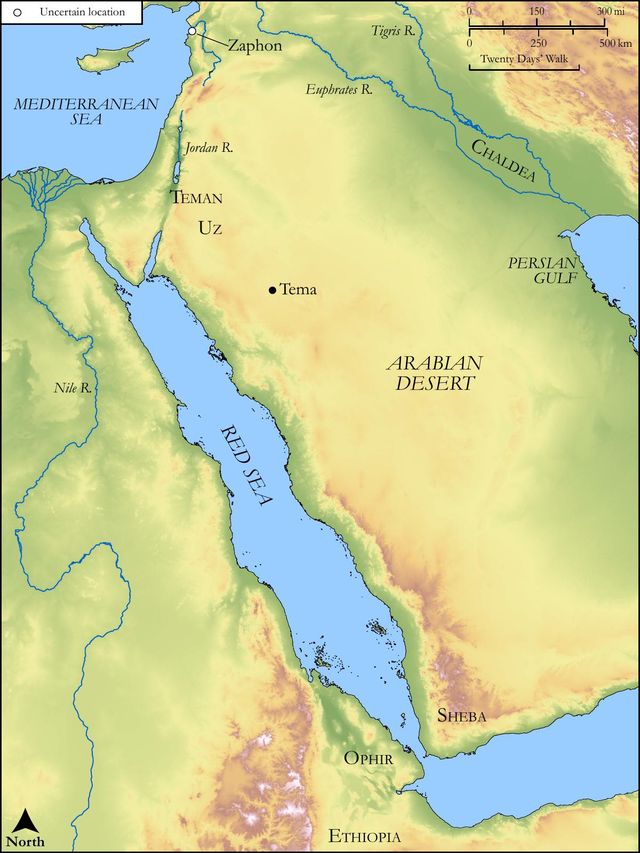
(2.)His expectations from them, which their coming so solemnly to comfort him had raised, he compares to the expectation which the weary thirsty travellers have of finding water in the summer where they have often seen it in great abundance in the winter, Job 6:19. The troops of Tema and Sheba, the caravans of the merchants of those countries, whose road lay through the deserts of Arabia, looked and waited for supply of water from those brooks. "Hard by here," says one, "A little further," says another, "when I last travelled this way, there was water enough; we shall have that to refresh us." Where we have met with relief or comfort we are apt to expect it again; and yet it does not follow; for,
(3.)The disappointment of his expectation is here compared to the confusion which seizes the poor travellers when they find heaps of sand where they expected floods of water. In the winter, when they were not thirsty, there was water enough. Every one will applaud and admire those that are full and in prosperity. But in the heat of summer, when they needed water, then it failed them; it was consumed (Job 6:17); it was turned aside, Job 6:18. When those who are rich and high are sunk and impoverished, and stand in need of comfort, then those who before gathered about them stand aloof from them, those who before commended them are forward to run them down. Thus those who raise their expectations high from the creature will find it fail them when it should help them; whereas those who make God their confidence have help in the time of need, Heb 4:16. Those who make gold their hope will sooner or later be ashamed of it, and of their confidence in it (Eze 7:19); and the greater their confidence was the greater their shame will be: They were confounded because they had hoped, Job 6:20. We prepare confusion for ourselves by our vain hopes: the reeds break under us because we lean upon them. If we build a house upon the sand, we shall certainly be confounded, for it will fall in the storm, and we must thank ourselves for being such fools as to expect it would stand. We are not deceived unless we deceive ourselves.
2.The application is very close (Job 6:21): For now you are nothing. They seemed to be somewhat, but in conference they added nothing to him. Allude to Gal 2:6. He was never the wiser, never the better, for the visit they made him. Note, Whatever complacency we may take, or whatever confidence we may put, in creatures, how great soever they may seem and how dear soever they may be to us, one time or other we shall say of them, Now you are nothing. When Job was in prosperity his friends were something to him, he took complacency in them and their society; but "Now you are nothing, now I can find no comfort but in God." It were well for us if we had always such convictions of the vanity of the creature, and its insufficiency to make us happy, as we have sometimes had, or shall have on a sick-bed, a death-bed, or in trouble of conscience: "Now you are nothing. You are not what you have been, what you should be, what you pretend to be, what I thought you would have been; for you see my casting down and are afraid. When you saw me in my elevation you caressed me; but now that you see me in my dejection you are shy of me, are afraid of showing yourselves kind, lest I should thereby be emboldened to beg something of you, or to borrow" (compare Job 6:22); "you are afraid lest, if you own me, you should be obliged to keep me." Perhaps they were afraid of catching his distemper or of coming within smell of the noisomeness of it. It is not good, either out of pride or niceness, for love of our purses or of our bodies, to be shy of those who are in distress and afraid of coming near them. Their case may soon be our own.
Historical interpretation
Two Centuries of Reception
2 surviving comments on this verse. Each one is dated, so this reads as a timeline rather than a list.
Select a marker to jump to its quote. Markers stagger vertically where authors wrote within a few decades of each other.
JOB MEANS TO SAY THIS: there is no memory or trace left of my former prosperity. And that is even worse than my misfortune itself. “Oh, that one would indeed weigh the wrath that is upon me and take up my sorrow in a balance together!” And Job now tries to describe his sorrows. “I perceive my food to be loathsome [as the smell of a lion].” I wish to die, but I do not die. I suffer so because I am a man and not a stone; I am an ephemeral human being, I do not enjoy the aid from above. Among my nearest relations, some pass me by without seeing me; others trample me underfoot. No trace of my former prosperity remains.
32. For the frost congeals below, but the snow falls down from above. And often there are persons, who, while they fear temporal adversities, expose themselves to the severity of everlasting visitation. Concerning whom it is rightly declared by the Psalmist, There were they in great fear where no fear was. [Ps. 14, 5] For this man already longs to defend the truth with freedom, yet being affrighted in that very longing that he feels, he shrinks from the indignation of a human power, and while on earth he fears man in opposition to the truth, he undergoes from heaven the wrath of Truth. That man, conscious of his sins, is already desirous to bestow upon the needy the things which he is possessed of, yet dreads lest he himself come to need them so bestowed. When, being alarmed, he provides with reservation for his own use succours of the flesh for the future, he starves the soul from the sustenance of mercy, and when he fears want on earth, he cuts off from himself the eternal plenitude of the heavenly cheer. Therefore it is well said, Over those that fear the frost, the snow rushes down. In that all who apprehend from below what ought to be trodden under the feet, undergo from above what is deserving of apprehension, and when they will not pass by what they might have trodden beneath them, they meet with a judgment from heaven which they can in no sort sustain. Now by acting thus they attain the glory of the world in time, but what will they do in the hour of their call, when terror-stricken they quit at once all the things which they kept here with grievous apprehensions?
Continue studying Job 6:16 across the web’s major study libraries — every link below opens this exact verse, chapter, or book on the destination site.
Read & Compare
 BibleGatewayThis verse in more than 200 translations and 70 languages.
 Bible.comThe YouVersion reader — hundreds of translations, reading plans, and highlights.
 ESV.orgCrossway's official English Standard Version reader.
 NET BibleThe NET translation with 60,000+ translators' notes on every rendering decision.
 STEP BibleTyndale House's free study tool — original text, vocabulary, and scholarly resources.
 BibliaLogos Bible Software's free web reader.
 USCCBThe New American Bible (Revised Edition) with the U.S. bishops' study notes.
Commentaries
 BibleHub CommentariesDozens of classic commentaries on this verse, gathered on one page.
 StudyLightMore than 100 commentary sets — the largest collection on the web.
 BibleRefPlain-English commentary on what this verse means, verse by verse.
 Enduring WordDavid Guzik's free commentary on this chapter, widely used by Bible teachers.
 Bible Study ToolsVerse commentary alongside Greek and Hebrew study aids.
Original Language & Research
- BibleHub InterlinearThe verse word by word — original language, transliteration, and English.
- BibleHub LexiconEvery word's original-language definition and Strong's entry.
 Blue Letter BibleDeep-study tools — Strong's numbers, concordance, and word studies.
 SefariaThe Hebrew text with Rashi and centuries of Jewish commentary.
Sermons, Hymns & Audio


TrulyRandomVerse is not affiliated with these sites and doesn’t control their content. They’re linked because they’re genuinely useful.
Summary
Job 6:16 vividly portrays the deceptive appearance of seasonal streams, which, swollen and dark from melting ice and hidden snow, promise abundant water but are destined to vanish in the heat. This verse is a critical component of Job's profound analogy, where he likens his unhelpful friends to these unreliable waterways, expressing his deep disappointment and the pain of their superficial comfort amidst his overwhelming suffering. It powerfully underscores the stark contrast between outward show and true substance, highlighting humanity's desperate need for genuine, steadfast support in times of profound crisis.
Context
ShowHideLiterary Context
Job 6:16 is an integral part of Job's impassioned and deeply personal lament, specifically within his first response to Eliphaz the Temanite, which commences in Job 6. In the preceding verses, Job has been pouring out his anguish, asserting that his immense suffering justifies his seemingly rash words (Job 6:2-3). He then transitions to a powerful and extended metaphor in Job 6:14-20, comparing his friends, who have failed to offer true comfort, to "a brook" or "streams of brooks" that "pass away." Verse 16 continues this vivid imagery, detailing the initial appearance of these streams—"Which are blackish by reason of the ice, [and] wherein the snow is hid"—setting the stage for the subsequent revelation of their ultimate unreliability in Job 6:17-20. This analogy serves as a profound indictment of his friends' superficial and ultimately unhelpful counsel, contrasting their initial promise of support with their actual abandonment and judgmental accusations.
Historical & Cultural Context
The imagery in Job 6:16 draws heavily from the natural phenomena of the land of Uz, particularly the seasonal wadis (dry riverbeds) or streams in mountainous or desert regions. In lands like Mesopotamia, Syria-Palestine, and the Arabian Peninsula, water sources were precious and often unpredictable. Streams fed by melting snow and ice from higher elevations, especially during winter and spring, would swell and appear robust, often dark or "blackish" due to silt, shadows, or the sheer depth of cold water. These streams offered a deceptive promise of sustained life to travelers and inhabitants, who would depend on them for survival. However, as the hot, dry summer months approached, these very waterways would quickly diminish and vanish, leaving behind only parched, empty channels. This cycle of deceptive abundance followed by complete desiccation was a common and often fatal experience, making the metaphor deeply resonant with an audience familiar with the harsh realities of desert survival and the critical importance of reliable water.
Key Themes
ShowHideThis verse, within Job's broader discourse, contributes significantly to several overarching themes in the book of Job. Firstly, it powerfully illustrates the theme of Disappointment in Human Support, portraying Job's bitter disillusionment with his friends. What initially appeared to be a source of solace and empathetic understanding proved to be fleeting and ultimately unhelpful, much like the deceptive stream that vanishes when most needed. Secondly, it highlights The Deceptive Nature of Appearances, emphasizing how something that looks promising and full of life (the "blackish" stream) can be utterly unreliable when truly needed, underscoring the stark contrast between outward show and true substance. This resonates with Job's experience of his friends' words, which sounded wise but lacked genuine compassion, as he articulates throughout Job 6. Finally, the verse underscores the profound Vulnerability and Reliance of humanity, particularly in times of extreme distress. It speaks to the deep human need for genuine compassion, steadfast presence, and reliability, and the excruciating pain when that fundamental need is not met, a theme echoed throughout Job's lamentations (e.g., Job 16:2).
Exposition and Analysis
ShowHideKey Word Analysis
ShowHideThis word (קֹדְרִים, qoderim) is derived from the root H6937 (qâdar), meaning "to be ashy, i.e. darkcolored; by implication, to mourn." In this context, it describes the appearance of the streams as dark, deep, and turbid. This darkness can stem from the sheer volume of cold water, silt carried by melting snow, or simply the shadows cast by their depth. The term subtly carries connotations of gloom or somberness, foreshadowing the disappointment associated with these streams. It emphasizes the visual deception—what appears full and abundant is, in fact, only temporarily so.
The Hebrew word (נֶעְלָם, ne'lam) comes from the root H5956 (ʻâlam), meaning "to veil from sight, i.e. conceal." The phrase "wherein the snow is hid" implies that the source of the stream's temporary abundance (the melting snow and ice) is not immediately visible or obvious, but it is the very thing that will eventually deplete, leading to the stream's disappearance. This "hidden" aspect adds to the deceptive nature: the source of their temporary fullness also contains the seeds of their eventual failure, a truth concealed until the time of desperate need.
Verse Breakdown
ShowHide"Which are blackish by reason of the ice"
This clause describes the initial visual impression of the streams, emphasizing their dark, deep, and full appearance. This impression, however, is not due to an inherent, constant source but rather to the presence of melting ice. The darkness suggests depth and abundance, conveying a false sense of reliability and permanence. The explicit mention of "ice" immediately points to the transient, seasonal source of the water, subtly hinting at its temporary nature even as it contributes to the stream's imposing appearance.
"[and] wherein the snow is hid"
This second clause further elaborates on the source of the stream's deceptive fullness. The "snow" is identified as the primary, albeit concealed, reservoir, melting and feeding the stream. The phrase "is hid" suggests that the ultimate source of their water is not a constant spring but a finite, diminishing supply of melting snow, often from distant mountains. This hiddenness reinforces the idea of an underlying fragility that is not immediately apparent, making the stream's eventual disappearance all the more surprising and disappointing to those who depend on it.
Literary Devices
ShowHideJob 6:16 is rich in Imagery and functions as a crucial part of an extended Metaphor. The verse employs vivid sensory details to paint a picture of the streams: "blackish" appeals to sight, suggesting depth, coldness, and perhaps a foreboding quality. The explicit mention of "ice" and "snow" evokes the chill of winter and the inherently transient nature of frozen water. This detailed imagery serves to build the foundation for the central metaphor, where Job's "brethren" (his friends) are implicitly compared to these deceptive streams. The Parallelism within the verse, describing two aspects of the same phenomenon ("blackish by reason of the ice" and "wherein the snow is hid"), reinforces the singular idea of a temporary, unreliable water source. This literary craftsmanship allows Job to convey his profound sense of betrayal and the superficiality of his friends' comfort without explicitly stating it in this verse, letting the powerful natural imagery speak for itself.
Theological and Thematic Connections
ShowHideJob 6:16, through its poignant imagery of deceptive streams, deeply resonates with broader theological themes concerning human reliability and divine faithfulness. It underscores the inherent limitations of human comfort and support, particularly in the face of profound suffering. While friends may initially appear full of empathy and wisdom, their words and actions can ultimately prove as fleeting and unreliable as a wadi that dries up in the heat of adversity. This highlights the painful reality that human relationships, however well-intentioned, are often insufficient to meet the deepest needs of the soul, especially when confronted with existential crises. The verse implicitly points to the necessity of seeking a more steadfast and unfailing source of comfort and sustenance, ultimately found in God alone, whose faithfulness is not subject to seasonal changes or human frailties, and whose compassion is boundless.
Reflection and Application
ShowHideJob's lament in Job 6:16 offers profound insights for believers today, challenging us to examine the sources of our comfort and the nature of our relationships, especially during times of trial. We are reminded that genuine compassion and steadfast presence are invaluable, far outweighing superficial words or quick solutions. This verse serves as a powerful call to cultivate friendships rooted in unwavering loyalty and empathetic understanding, friendships that do not falter when life becomes difficult. Furthermore, it prompts us to reflect on where our ultimate trust lies. While human support is a precious gift from God, Job's experience vividly illustrates its limitations and potential for disappointment. It compels us to recognize that only God's faithfulness is constant and unwavering, an eternal wellspring when all human sources of comfort dry up. In our suffering, we are invited to turn to the One who truly understands our pain and whose presence is an unfailing comfort, providing solace that transcends all earthly disappointments.
Questions for Reflection
ShowHideFAQ
ShowHideWhat does Job mean by comparing his friends to "blackish" streams with "hidden snow"?
ShowHideJob is using a vivid metaphor drawn from the natural world of the land of Uz. "Blackish" streams (קֹדְרִים, qoderim') refer to seasonal wadis or riverbeds that appear full, deep, and dark during the cold seasons, primarily due to melting ice and hidden snow from mountain sources. This appearance gives a deceptive impression of abundance and reliability. However, as Job explains in the subsequent verses (Job 6:17-20), these streams are temporary; they vanish completely in the heat of summer. By comparing his friends to these streams, Job means that their initial appearance of coming to comfort him was misleading. They seemed full of potential support and wisdom, but when he truly needed steadfast, empathetic comfort, they proved unreliable, offering accusations and empty platitudes instead of genuine solace. The "hidden snow" signifies that the source of their temporary "fullness" (their initial sympathy) was finite and would eventually deplete, leaving him parched and disappointed.
Is Job suggesting that all human comfort is unreliable?
ShowHideJob's lament in Job 6:16 is a deeply personal expression of his profound disappointment in his specific friends, who failed to provide the genuine comfort he desperately needed. He is not necessarily condemning all human comfort universally, but rather highlighting its inherent limitations and the pain of its absence when most needed. The book of Job itself acknowledges the value of true friendship (e.g., Job 2:11-13). However, Job's experience underscores that even well-intentioned human support can be insufficient or even detrimental in the face of immense suffering. Ultimately, the narrative points to the necessity of finding ultimate solace and steadfastness in God, who alone is truly unfailing. The verse serves as a cautionary reminder that while human relationships are valuable and necessary, they cannot bear the weight of ultimate reliance that belongs only to God.
Christ-Centered Fulfillment
ShowHideJob's poignant lament in Job 6:16, describing the deceptive and ultimately vanishing streams, finds profound Christ-centered fulfillment in the person and work of Jesus Christ. While Job's friends proved to be unreliable sources of comfort, like the wadis that dry up in the heat of adversity, Jesus presents Himself as the antithesis of such fleeting support. He is the true and everlasting source of "living water" (John 4:10-14), a wellspring that never runs dry, even in the most scorching trials of life. Unlike the "blackish" streams whose temporary abundance is due to hidden, diminishing snow, Christ's fullness is eternal and inexhaustible, flowing from His very nature as God incarnate. He is the "friend who sticks closer than a brother" (Proverbs 18:24), offering not superficial platitudes but genuine empathy, as demonstrated by His weeping with those who mourn (John 11:35). In Jesus, we find the steadfast comforter, the faithful companion, and the divine provider whose mercies are new every morning (Lamentations 3:22-23). He is the ultimate fulfillment of the need for reliable solace that Job so desperately sought, offering an everlasting spring of grace and truth that transcends all human limitations and disappointments, making Him the truly unfailing hope in every season of life (Hebrews 13:8).