


Job 39:30
Bible text: King James Version (1769 Blayney text) · Public domain
Bible text: Berean Standard Bible · Public domain
Bible text: American Standard Version (1901) · Public domain
Bible text: World English Bible, Messianic edition · Public domain
Bible text: Young's Literal Translation · Public domain
- וְאֶפְרֹחָיוve·'ef·ro·chovand its young onesH667Conj-w ¦ N-mpc ¦ 3msNoun Plural Masculine Constructוְandאֶפְרֹחָיyoung onesוits
- יְעַלְעוּye·'al·'uthey drinkH5966V-Piel-Imperf-3mpVerb Piel Imperfect 3rd Plural Masculine
- דָםDambloodH1818N-msNoun Singular Masculine Absolute
- וּבַאֲשֶׁרu·va·'a·Sherand at whereH834Conj-w ¦ Prep-b ¦ RelParticle Relativeוּandבַatאֲשֶׁרwhere
- חֲלָלִיםcha·la·Lim[those] slain [are]H2491Adj-mpAdjective Plural Masculine Absolute
- שָׁםsham[is] thereH8033AdvAdverb
- הוּאHu'itH1931Pro-3msPronoun Personal 3rd Singular Masculine
English is a literal word-by-word gloss of the Hebrew, not the KJV's wording. Why?
This is the original text the KJV's translators worked from — each Hebrew word with its own literal English meaning in this verse, prepared by scholars at Tyndale House, Cambridge. The KJV translates whole sentences, not word by word, so its wording differs: one Hebrew word can become several English words, and the KJV may choose “the LORD” where the gloss reads “Yahweh”. Both are faithful — they answer different questions. For the KJV's own rendering, switch to the KJV text.
Details
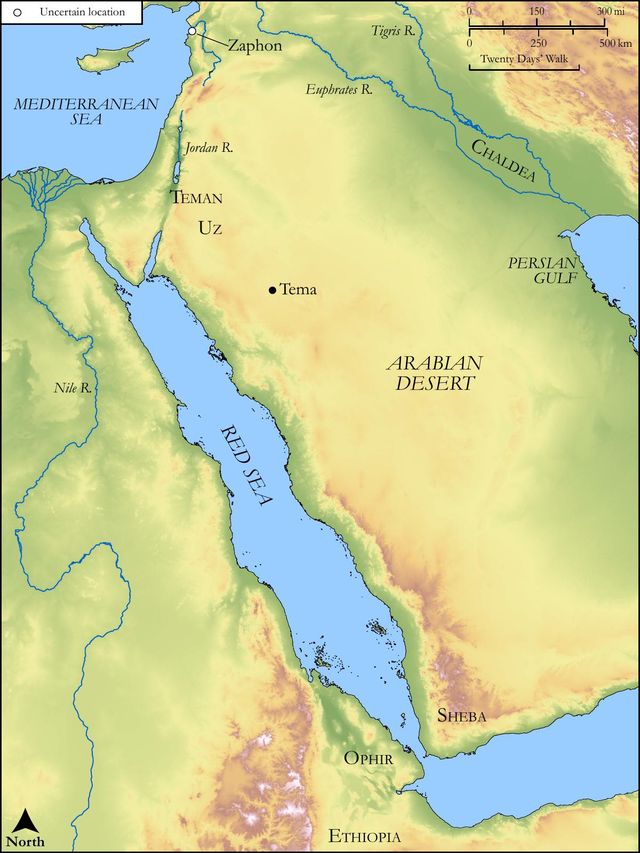
See on the biblical-era map
Study this verse
Public-domain commentary
Matthew Henry
From his Commentary on the Whole Bible. Henry comments on passages, not single verses — this entry covers Job 39:26–30.
The birds of the air are proofs of the wonderful power and providences of God, as well as the beasts of the earth; God here refers particularly to two stately ones: - 1. The hawk, a noble bird of great strength and sagacity, and yet a bird of prey, Job 39:26. This bird is here taken notice of for her flight, which is swift and strong, and especially for the course she steers towards the south, whither she follows the sun in winter, out of the colder countries in the north, especially when she is to cast her plumes and renew them. This is her wisdom, and it was God that gave her this wisdom, not man. Perhaps the extraordinary wisdom of the hawk's flight after her prey was not used then for men's diversion and recreation, as it has been since. It is a pity that the reclaimed hawk, which is taught to fly at man's command and to make him sport, should at any time be abused to the dishonour of God, since it is from God that she receives that wisdom which makes her flight entertaining and serviceable. 2. The eagle, a royal bird, and yet a bird of prey too, the permission of which, nay, the giving of power to which, may help to reconcile us to the prosperity of oppressors among men. The eagle is here taken notice of, (1.) For the height of her flight. No bird soars so high, has so strong a wind, nor can so well bear the light of the sun. Now, "Doth she mount at thy command? Job 39:27. Is it by any strength she has from thee? or dost thou direct her flight? No; it is by the natural power and instinct God has given her that she will soar out of thy sight, much more out of thy call." (2.) For the strength of her nest. Her house is her castle and strong-hold; she makes it on high and on the rock, the crag of the rock (Job 39:28), which sets her and her young out of the reach of danger. Secure sinners think themselves as safe in their sins as the eagle in her nest on high, in the clefts of the rock; but I will bring thee down thence, saith the Lord, Jer 49:16. The higher bad men sit above the resentments of the earth the nearer they ought to think themselves to the vengeance of Heaven. (3.) For her quicksightedness (Job 39:29): Her eyes behold afar off, not upwards, but downwards, in quest of her prey. In this she is an emblem of a hypocrite, who, while, in the profession of religion, he seems to rise towards heaven, keeps his eye and heart upon the prey on earth, some temporal advantage, some widow's house or other that he hopes to devour, under pretence of devotion. (4.) For the way she has of maintaining herself and her young. She preys upon living animals, which she seizes and tears to pieces, and thence carries to her young ones, which are taught to suck up blood; they do it by instinct, and know no better; but for men that have reason and conscience to thirst after blood is what could scarcely be believed if there had not been in every age wretched instances of it. She also preys upon the dead bodies of men: Where the slain are, there is she, These birds of prey (in another sense than the horse, Job 39:25) smell the battle afar off. Therefore, when a great slaughter is to be made among the enemies of the church, the fowls are invited to the supper of the great God, to eat the flesh of kings and captains, Rev 19:17, Rev 19:18. Our Saviour refers to this instinct of the eagle, Mat 24:28. Wheresoever the carcase is, there will the eagles be gathered together. Every creature will make towards that which is its proper food; for he that provides the creatures their food has implanted in them that inclination. These and many such instances of natural power and sagacity in the inferior creatures, which we cannot account for, oblige us to confess our own weakness and ignorance and to give glory to God as the fountain of all being, power, wisdom, and perfection.
Historical interpretation
Two Centuries of Reception
2 surviving comments on this verse. Each one is dated, so this reads as a timeline rather than a list.
Select a marker to jump to its quote. Markers stagger vertically where authors wrote within a few decades of each other.
The eagle is Christ. The high rock is the cross. The young ones licking the blood are the souls of the saints, who feed on Christ’s blood flowing from his side, that blood that also the nations of the believers enjoy like young ones of the heavenly eagle.
104. As if it were plainly said; She herself indeed feeds on the contemplation of His Godhead, but because her hearers cannot understand the mysteries of the Godhead, they are satiated with hearing of the blood of the Lord Crucified. For to suck up blood, is to reverence the weaknesses of the Lord’s Passion. Hence it is, that the same Paul, who, as we said a little before, had soared to the secrets of the third heaven, said to his disciples; For I have determined to know nothing among you, save Jesus Christ, and Him crucified. [l Cor. 2, 2] As if this eagle were plainly saying; I indeed behold as my food the power of His Godhead afar off, but to you, who are still young, I give the blood only of His Incarnation to be sucked up. For he, who in his preaching had been silent as to the loftiness of the Godhead, and informs his weak hearers of the Blood alone of the Cross, what else does he do, but give blood to his young ones? But, because the soul of every holy preacher is, when stripped of the corruption of the flesh, led directly to Him, Who of His own accord submitted to death for us, and rose from death, it is fitly added of this eagle,
And wheresoever the carcase shall be, she is immediately present.
105. For a carcase is so called from its fall [cadaver, a casu]. And the body of the Lord is, not undeservedly, called a carcase, on account of the fall of death. But that which is here said of this eagle; Wheresoever the carcase shall he, she is immediately present; this same thing the Truth has promised will take place, in souls as they depart from the body, saying, Wheresoever the body shall he, thither will the eagles also be gathered together. [Luke l7, 37] As if He plainly said, I, your Incarnate Redeemer, Who preside over the heavenly abode, will exalt the souls of the Elect also, to heavenly places, when I shall have released them from the flesh.
106. But this which is said of this eagle; Wheresoever the carcase shall be, she is immediately present, can be understood in another sense also. For every one, who has fallen into the death of sin, will be able, not inappropriately, to be called a carcase. For he, who has not the quickening spirit of righteousness, lies, as it were, without life. Because, then, every holy preacher anxiously flies to the spot, where he thinks there are sinners, to show the light of revival to those who are lying in the death of sin, it is well said of this eagle; Wheresoever the carcase shall be, she is immediately present. That is, he proceeds to the place, where he foresees the utility of preaching; in order that, because he already lives a spiritual life, he may benefit others who are lying in their death, whom he devours, as it were, by reproving, yet, by converting them from iniquity to innocence, he changes them, as it were, by eating them, into his own members. Lo, the very Paul, whom we have already frequently brought forward for a testimony, when he was going at one time to Judaea, at another to Corinth, at another to Ephesus, at another to Rome, at another to the Spains, that he might announce the grace of eternal life to those who were lying in the death of sin; what else did he prove himself to be but an eagle; which, swiftly flying over every thing, was seeking for the carcase wheresoever lying; in order that, while he was performing the will of God, in having gained sinners, he might find, as it were, his own food in the carcase? For the food of the righteous is the conversion of sinners, of which it is said, Labour not for the meat which perisheth, but for that which endureth unto eternal life. [John 6, 27] Having heard, therefore, such numerous virtues of holy men, blessed Job is understood to have been astonished, and to have been silent, from the awe of admiration.
Continue studying Job 39:30 across the web’s major study libraries — every link below opens this exact verse, chapter, or book on the destination site.
Read & Compare
 BibleGatewayThis verse in more than 200 translations and 70 languages.
 Bible.comThe YouVersion reader — hundreds of translations, reading plans, and highlights.
 ESV.orgCrossway's official English Standard Version reader.
 NET BibleThe NET translation with 60,000+ translators' notes on every rendering decision.
 STEP BibleTyndale House's free study tool — original text, vocabulary, and scholarly resources.
 BibliaLogos Bible Software's free web reader.
 USCCBThe New American Bible (Revised Edition) with the U.S. bishops' study notes.
Commentaries
 BibleHub CommentariesDozens of classic commentaries on this verse, gathered on one page.
 StudyLightMore than 100 commentary sets — the largest collection on the web.
 BibleRefPlain-English commentary on what this verse means, verse by verse.
 Enduring WordDavid Guzik's free commentary on this chapter, widely used by Bible teachers.
 Bible Study ToolsVerse commentary alongside Greek and Hebrew study aids.
Original Language & Research
- BibleHub InterlinearThe verse word by word — original language, transliteration, and English.
- BibleHub LexiconEvery word's original-language definition and Strong's entry.
 Blue Letter BibleDeep-study tools — Strong's numbers, concordance, and word studies.
 SefariaThe Hebrew text with Rashi and centuries of Jewish commentary.
Sermons, Hymns & Audio


TrulyRandomVerse is not affiliated with these sites and doesn’t control their content. They’re linked because they’re genuinely useful.
Summary
Job 39:30 concludes God's profound discourse on the majestic eagle, vividly illustrating divine provision for even the wildest creatures. The verse portrays the eagle's young being sustained by blood from carrion, and the adult bird's innate ability to locate the slain. This serves as a powerful testament to God's comprehensive sovereignty and meticulous wisdom, which extends to every intricate detail of the natural world, ensuring the balance and survival of all life through means often beyond human comprehension or control.
Context
ShowHideLiterary Context
Job 39:30 marks the powerful conclusion of God's detailed description of the eagle, a segment within a larger, awe-inspiring divine address from the whirlwind (Job 38-41). This extensive speech serves as God's direct and humbling response to Job's profound suffering and questioning, designed to showcase the Creator's unfathomable wisdom, omnipotence, and absolute sovereignty over all creation. Preceding the eagle's portrayal, God presents a panorama of natural phenomena and various creatures—from the wild goat and wild donkey to the swift ostrich and the mighty warhorse—each thriving by His design. The eagle (Job 39:26-30) is presented as a creature embodying immense power, unparalleled keenness of sight, and untamed freedom, flourishing in the most challenging environments solely by divine provision. This particular verse, emphasizing the eagle's predatory and scavenging nature, underscores how God sustains even those creatures that feed on death, thereby maintaining the delicate balance of the ecosystem. It profoundly reinforces God's comprehensive control over all aspects of creation, even those that might appear harsh or unappealing from a human perspective, thereby challenging Job's limited understanding of divine governance.
Historical & Cultural Context
In Israel, large birds of prey like eagles and vultures were prominent features of the landscape and held significant symbolic weight, often representing power, swiftness, and sometimes divine judgment or even a divine presence. The Hebrew term nesher (נֶשֶׁר), commonly translated as "eagle," was a broader category that could encompass various species of large raptors, including both true eagles and vultures. The specific imagery in Job 39:30—"Her young ones also suck up blood: and where the slain [are], there [is] she"—strongly aligns with the scavenging habits characteristic of vultures, which are renowned for their exceptional ability to locate and consume carrion. This ecological role was critically important in the arid and semi-arid regions of the wilderness, where such birds acted as essential natural clean-up crews, preventing the spread of disease and recycling nutrients. God's detailed and intimate knowledge of such creatures, even down to their seemingly gruesome feeding habits, would have deeply impressed an audience intimately familiar with the harsh realities of wilderness survival. This precision served to reinforce His intimate involvement and sovereign oversight of every single aspect of His creation, no matter how wild or seemingly insignificant.
Key Themes
ShowHideThis verse powerfully contributes to several overarching themes within the book of Job and the broader biblical narrative. Primarily, it highlights Divine Providence and Provision, demonstrating God's meticulous and unwavering care for all His creation, from the smallest insect to the mightiest bird of prey. The eagle's ability to sustain itself and its young in the wild, feeding on "the slain," is a direct testament to God's ongoing provision, even through means that might seem harsh to human sensibilities, as seen in the psalmist's declaration that God "gives food to the beasts, and to the young ravens that cry" (Psalm 147:9). Secondly, it underscores God's Unfathomable Wisdom, showcasing His intricate design in equipping creatures with instincts and abilities perfectly suited to their environments, far beyond human understanding or control. The eagle's keen sight and instinct to find carrion are divinely endowed, reflecting a wisdom that Job cannot fathom, a point God elaborates on throughout Job 38-41. Thirdly, the verse confronts the Nature's Unfiltered Reality, acknowledging the raw, sometimes brutal, aspects of the natural world. "Suck up blood" and feeding on "the slain" depict the cycle of life and death, a reality that God oversees and sustains, challenging Job to accept God's design even when it doesn't align with human ideals of peace or gentleness. Finally, it reinforces God's Sovereignty Over the Wild, emphasizing that God's dominion is not limited to human-controlled spheres but extends to the untamed and powerful forces of nature, reminding Job that God is truly Lord over all, as further explored in God's description of Behemoth and Leviathan in Job 40-41.
Exposition and Analysis
ShowHideKey Word Analysis
ShowHideThis term (H667) refers to the brood or offspring of a bird, emphasizing the vulnerability and dependence of the eagle's progeny. Its inclusion highlights the comprehensive nature of God's provision, which extends beyond the adult creature to ensure the continuation and nurturing of the next generation. The survival of these young ones, dependent on the adult's ability to find sustenance, underscores the intricate design of life's perpetuation in the wild, all under divine oversight.
This primitive root (H5966) means "to sip up" or "to suck up," describing the act of consuming in a way that suggests gulping or drawing in liquid. When combined with "blood" (H1818, dâm), it creates a vivid and somewhat visceral image of the eagle's young ingesting the life-fluid from carrion. This graphic depiction emphasizes the raw, unrefined, and often stark nature of the eagle/vulture's diet, highlighting how God provides sustenance even through the cycle of death, ensuring that nothing in His creation goes to waste and that life is sustained through seemingly harsh means.
This noun (H2491) specifically refers to "pierced ones," "carcasses," or "dead bodies," particularly those that have fallen violently or died. Its use here unequivocally points to carrion as the primary food source for the eagle and its young. This confirms the scavenging aspect of the bird described, reinforcing the idea that God provides for these creatures through the natural cycle of death, ensuring the ecosystem is naturally cleansed and balanced. It underscores the bird's crucial ecological role, perfectly adapted by God to its specific niche.
Verse Breakdown
ShowHide"Her young ones also suck up blood:"
This initial clause immediately focuses on the eagle's offspring and their sustenance. It paints a raw, instinctual scene of feeding, where the vulnerable young are nourished by the very essence of life (blood, representing the life force) derived from death. This highlights the harsh but vital reality of survival in the wild and God's provision that ensures the continuation of life even through such seemingly gruesome means. It emphasizes the parental role in securing food for the vulnerable young, a divinely implanted instinct.
"and where the slain [are], there [is] she."
This second clause explains the source of the sustenance, revealing the adult eagle's keen ability to locate and congregate around carcasses. It speaks to the bird's extraordinary senses—whether sight or smell—that draw it unerringly to its food source, often from vast distances. This portrays the eagle/vulture as an efficient and necessary part of the natural clean-up crew, perfectly adapted by God to its specific ecological niche. It also implies a certain inevitability and efficiency in nature's processes, all under God's sovereign oversight, demonstrating His intricate design even in the cycle of life and death.
Literary Devices
ShowHideJob 39:30 employs powerful Imagery to paint a vivid and visceral picture of the eagle's feeding habits. The phrase "suck up blood" is a striking and somewhat graphic depiction of consumption, emphasizing the raw, primal, and untamed nature of survival in the wild. This strong imagery serves to underscore that even the most seemingly brutal aspects of creation remain entirely under God's meticulous control. The verse also utilizes Metonymy, where "blood" stands for the vital essence or the entire carcass from which life-sustaining nutrients are derived. The reference to "the slain" (חֲלָלִים, chalalim) functions as a form of Euphemism for dead bodies, allowing the focus to remain on the bird's action and God's provision rather than dwelling on explicit gruesomeness. Furthermore, the eagle itself functions as a potent Symbol of untamed nature, God's comprehensive and often mysterious provision, and the harsh realities of the natural world, all of which are perfectly integrated into God's sovereign and wise design. In its broader context, the verse is part of a grand Rhetorical Question posed by God to Job, implicitly challenging Job's limited understanding of divine wisdom and governance over such a complex and self-sustaining ecosystem.
Theological and Thematic Connections
ShowHideJob 39:30 profoundly illustrates God's comprehensive and intricate providence, extending even to the seemingly harsh and untamed aspects of creation. It challenges human anthropocentric views by demonstrating that God's care is not limited to what we deem "beautiful" or "peaceful," but encompasses the entire web of life, including the cycle of death and decomposition. The eagle's reliance on "the slain" is a testament to God's wisdom in designing an ecosystem where nothing is wasted and where even death serves life. This verse humbles humanity, reminding us that God's ways and wisdom are infinitely higher than our own, and His sovereign control extends to every detail of the natural world, ensuring the sustenance of all His creatures, regardless of their perceived role or nature. It invites us to trust in a God whose provision is absolute, even when His methods are beyond our full comprehension.
Reflection and Application
ShowHideJob 39:30 invites us to a posture of profound humility and unwavering trust before the Creator. Just as God meticulously provides for the eagle and its young in the wild, ensuring their survival through the raw realities of nature, so too does He oversee and provide for us, even in the most challenging or "wilderness" seasons of our lives. This verse encourages us to trust in God's intricate and often incomprehensible plans, understanding that His sovereignty extends to every detail, ensuring not only our provision but also the balance and order of all things. It reminds us that His wisdom far surpasses our own, and we are called to find peace in His absolute control, even when His methods or the circumstances of life seem harsh or beyond our understanding. Our faith is deepened when we recognize that the God who sustains the fierce eagle with such precise care is the very same God who intimately knows and cares for every aspect of our existence, providing for our deepest needs, both physical and spiritual. This truth should inspire awe and cultivate a deeper reliance on His perfect design.
Questions for Reflection
ShowHideFAQ
ShowHideIs the "eagle" in Job 39:30 truly an eagle, or a vulture?
ShowHideThe Hebrew word translated "eagle" is nesher (נֶשֶׁר), which in ancient Hebrew literature often referred broadly to large birds of prey. While it can certainly denote true eagles, the specific description in Job 39:30—"Her young ones also suck up blood: and where the slain [are], there [is] she"—strongly points to the scavenging habits characteristic of vultures. Vultures are renowned for their exceptional ability to locate carrion (dead bodies) from great distances and for their crucial role in consuming them, acting as natural clean-up crews. Many scholars believe that in passages like this, nesher likely encompasses or primarily refers to vultures, which were often grouped with eagles due to their similar size, keen eyesight, and predatory appearance. This nuance highlights the bird's vital ecological role as a natural clean-up crew, perfectly adapted by God to its niche in the natural world. The Bible also lists the nesher among unclean birds, further suggesting its association with carrion in Leviticus 11:13 and Deuteronomy 14:12.
Christ-Centered Fulfillment
ShowHideJob 39:30, with its stark imagery of the eagle gathering where the "slain" are, finds a profound Christ-centered fulfillment in the ultimate "slain one"—Jesus Christ, the Lamb of God who takes away the sin of the world. While the Joban passage speaks of natural provision through death, the New Testament echoes this imagery in an eschatological context, particularly in Jesus's own words in Matthew 24:28 and Luke 17:37, stating, "Wheresoever the carcase is, there will the eagles be gathered together." This often refers to the certainty of judgment or the visible manifestation of Christ's return. However, it also subtly points to the central truth of the Gospel: humanity's ultimate provision and spiritual life come from the "slain" body of Christ. His sacrifice on the cross, a seemingly gruesome and harsh reality, is the divine provision that draws all people to Himself, as Jesus declared, "And I, if I be lifted up from the earth, will draw all people unto me" (John 12:32). Just as the eagle finds life where there is death, so believers find eternal life and sustenance by spiritually gathering around the crucified and resurrected Christ, the ultimate demonstration of God's wisdom and sovereign provision in the face of sin and death. The very means by which God provides for the wild creatures in Job foreshadows the ultimate, sacrificial provision for humanity's salvation through the death and resurrection of His Son, a testament to His comprehensive and redemptive care for all creation.