


Job 29:20
Bible text: King James Version (1769 Blayney text) · Public domain
Bible text: Berean Standard Bible · Public domain
Bible text: American Standard Version (1901) · Public domain
Bible text: World English Bible, Messianic edition · Public domain
Bible text: Geneva Bible (1599) · Public domain
Bible text: Young's Literal Translation · Public domain
- כְּבוֹדִיKe·vo·dimy honorH3519N-csc ¦ 1msNoun Singular common gender Constructכְּבוֹדִhonorיmy
- חָדָשׁcha·Dash[is] newH2319Adj-msAdjective Singular Masculine Absolute
- עִמָּדִי'i·ma·Diwith meH5978Prep ¦ 1csPrepositionעִמָּדִwithיme
- וְקַשְׁתִּיve·kash·Tiand my bowH7198Conj-w ¦ N-fsc ¦ 1csNoun Singular Feminine Constructוְandקַשְׁתִּbowיmy
- בְּיָדִיbe·ya·Diin my handH3027Prep-b ¦ N-csc ¦ 1csNoun Singular common gender Constructבְּinיָדִhandיmy
- תַחֲלִיףta·cha·Lifit will show newnessH2498V-Hiphil-Imperf-3fsVerb Hiphil Imperfect 3rd Singular Feminine
English is a literal word-by-word gloss of the Hebrew, not the KJV's wording. Why?
This is the original text the KJV's translators worked from — each Hebrew word with its own literal English meaning in this verse, prepared by scholars at Tyndale House, Cambridge. The KJV translates whole sentences, not word by word, so its wording differs: one Hebrew word can become several English words, and the KJV may choose “the LORD” where the gloss reads “Yahweh”. Both are faithful — they answer different questions. For the KJV's own rendering, switch to the KJV text.
Details
See on the biblical-era map
Study this verse
Public-domain commentary
Matthew Henry
From his Commentary on the Whole Bible. Henry comments on passages, not single verses — this entry covers Job 29:18–25. His four-level outline is real structure in the source text, so it is rendered as structure.
That which crowned Job's prosperity was the pleasing prospect he had of the continuance of it. Though he knew, in general, that he was liable to trouble, and therefore was not secure (Job 3:26, I was not in safety, neither had I rest), yet he had no particular occasion for fear, but as much reason as ever any man had to count upon the lengthening out of his tranquility.
I.See here what his thoughts were in his prosperity (Job 29:18):
Then I said, I shall die in my nest. Having made himself a warm and easy nest, he hoped nothing would disturb him in it, nor remove him out of it, till death removed him. He knew he had never stolen any coal from the altar which might fire his nest; he saw no storm arising to shake down his nest; and therefore concluded, To morrow shall be as this day; as David (Psa 30:6), My mountain stands strong, and shall not be moved. Observe,
1.In the midst of his prosperity he thought of dying, and the thought was not uneasy to him. He knew that, though his nest was high, it did not set him out of the reach of the darts of death.
2.Yet he flattered himself with vain hopes,
(1.)That he should live long, should multiply his days as the sand. He means as the sand on the sea-shore; whereas we should rather reckon our days by the sand in the hourglass, which will have run out in a little time. See how apt even good people are to think of death as a thing at a distance, and to put far from them that evil day, which will really be to them a good day.
(2.)That he should die in the same prosperous state in which he had lived. If such an expectation as this arise from a lively faith in the providence and promise of God, it is well, but if from a conceit of our own wisdom, and the stability of these earthly things, it is ill-grounded and turns into sin. We hope Job's confidence was like David's (Psa 27:1, Whom shall I fear?), not like the rich fool's (Luk 12:19), Soul, take thy ease.
II.See what was the ground of these thoughts.
1.If he looked at home, he found he had a good foundation. His stock was all his own, and none of all his neighbours had any demand upon him. He found no bodily distemper growing upon him; his estate did not lie under any incumbrance; nor was he sensible of any worm at the root of it. He was getting forward in his affairs, and not going behind-hand; he lost no reputation, but gained rather; he knew no rival that threatened either to eclipse his honour or abridge his power. See how he describes this, Job 29:19, Job 29:20. He was like a tree whose root is not only spread out, which fixes it and keeps it firm, so that it is in no danger of being overturned, but spread out by the waters, which feed it, and make it fruitful and flourishing, so that it is in no danger of withering. And, as he thought himself blessed with the fatness of the earth, so also with the kind influences of heaven too; for the dew lay all night upon his branch. Providence favoured him, and made all his enjoyments comfortable and all his enterprises successful. Let none think to support their prosperity with what they draw from this earth without that blessing which is derived from above. God's favour being continued to Job, in the virtue of that his glory was still fresh in him. Those about him had still something new to say in his praise, and needed not to repeat the old stories: and it is only by constant goodness that men's glory is thus preserved fresh and kept from withering and growing stale. His bow also was renewed in his hand, that is, his power to protect himself and annoy those that assailed him still increased, so that he thought he had as little reason as any man to fear the insults of the Sabeans and Chaldeans.
2.If he looked abroad, he found he had a good interest and well confirmed. As he had no reason to dread the power of his enemies, so neither had he any reason to distrust the fidelity of his friends. To the last moment of his prosperity they continued their respect to him and their dependence on him. What had he to fear who so gave counsel as in effect to give law to all his neighbours? Nothing surely could be done against him when really nothing was done without him.
(1.)He was the oracle of his country. He was consulted as an oracle, and his dictates were acquiesced in as oracles, Job 29:21. When others could not be heard all men gave ear to him, and kept silence at his counsel, knowing that, as nothing could be said against it, so nothing needed to be added to it. And therefore, after his words, they spoke not again, Job 29:22. Why should men meddle with a subject that has already been exhausted?
(2.)He was the darling of his country. All about him were well pleased with every thing he said and did, as David's people were with him, Sa2 3:36. He had the hearts and affections of all his neighbours, all his servants, tenants, subjects; never was man so much admired nor so well beloved.
[1.]Those were thought happy to whom he spoke, and they thought themselves so. Never were the dews of heaven so acceptable to the parched ground as his wise discourses were to those that attended on them, especially to those to whom they were particularly accommodated and directed. His speech dropped upon them, and they waited for its as for the rain (Job 29:22, Job 29:23), wondering at the gracious words which proceeded out of his mouth, catching at them, laying hold on them, and treasuring them up as apophthegms. His servants that stood continually before him to hear his wisdom would not have envied Solomon's. Those are wise, or are likely to be so, that know how to value wise discourse, that wish for it, and wait for it, and drink it in as the earth does the rain that comes often upon it, Heb 6:7. And those who have such an interest as Job had in the esteem of others whose ipse dixit - bare assertion goes so far, as they have a great opportunity of doing good, so they must take great care lest they do hurt, for a bad word out of their mouths is very infectious.
[2.]Much more happy were those thought on whom he smiled, and they thought themselves so, Job 29:24. "If I laughed on them, designing thereby to show myself pleased in them, or pleasant with them, it was such a favour that they believed it not for joy," or because it was so rare a thing to see this grave man smile. Many seek the ruler's favour. Job was a ruler whose favour was courted and valued at a high rate. He to whom a great prince gave a kiss was envied by another to whom he only gave a golden cup. Familiarity often breeds contempt; but if Job at any time saw fit, for his own diversion, to make himself free with those about him, yet it did not in the least diminish the veneration they had for him: The light of his countenance they cast not down. So wisely did he dispense his favours as not to make them cheap, and so wisely did they receive them as not to make themselves unworthy of them another time.
(3.)He was the sovereign of his country, Job 29:25. He chose out their way, sat at the helm, and steered for them, all referring themselves to his conduct and submitting themselves to his command. To this perhaps, in many countries, monarchy owed its rise: such a man as Job, that so far excelled all his neighbours in wisdom and integrity, could not but sit chief, and the fool will, of course, be servant to the wise in heart: and, if the wisdom did but for a while run in the blood, the honour and power would certainly attend it and so by degrees become hereditary. Two things recommended Job to the sovereignty: - [1.] That he had the authority of a commander or general. He dwelt as a king in the army, giving orders which were not to be disputed. Every one that has the spirit of wisdom has not the spirit of government, but Job had both, and, when there was occasion, could assume state, as the king in the army does, and say, "Go," "Come," and "Do this," Mat 8:9. [2.] That yet he had the tenderness of a comforter. He was as ready to succour those in distress as if it had been his office to comfort the mourners. Eliphaz himself owned he had been very good in that respect (Job 4:3): Thou hast strengthened the weak hands. And this he now reflected upon with pleasure, when he was himself a mourner. But we find it easier to comfort others with the comforts wherewith we ourselves have been formerly comforted than to comfort ourselves with those comforts wherewith we have formerly comforted others.
I know not but we may look upon Job as a type and figure of Christ in his power and prosperity. Our Lord Jesus is such a King as Job was, the poor man's King, who loves righteousness and hates iniquity, and upon whom the blessing of a world ready to perish comes; see Psa 72:2, etc. To him therefore let us give ear, and let him sit chief in our hearts.
Historical interpretation
Historical reception
1 surviving comment on this verse from the historical church.
53. Understand, I said; since all is joined on to the sentence above, that is introduced next in a continuous thread of discourse, when he says, Then I said, I shall die in my nest, and I shall multiply my days as the palm; and afterwards it is subjoined, My root is opened by the waters, and the dew shall stay on my harvest; my glory shall ever be fresh in me, and my bow shall be renewed in mine hand. To all that know what is true it is clear, that to the old life qualities of evil are proper, to the new qualities of virtue. Thus it is hence that Paul saith, Putting off the old man with his deeds, and putting on the new man. [Col. 3, 9] Hence he says again, Our old man was crucified with him. [Rom 6, 6] Hence the Psalmist speaking in a type of man, as being caught in the midst of evil spirits, saith, I have waxed old amongst all mine enemies. [Ps. 6, 7] For unto fervour of mind, whether amidst spiritual enemies, or in the midst of our several carnal neighbours, in some degree by the mere habituation of living ‘we wax old,’ and the form of newness taken upon us we soil. Against which same oldness, however, if our earnest pains after heedfulness be daily on the watch, by praying, by reading, and living well we are renewed afresh; because our life, while it is washed with tears, exercised in good works, drawn out by holy meditations, is without ceasing restored to its newness. Blessed Job then so tells his own case that he represents ours, because Holy Church, when she sees her faithful ones return to the transgressions of the old life, is forced to lament for those whom she sees lose the newness of the interior. Since the great Preacher says to his disciples, For what is our hope or joy or crown of rejoicing? Are not even ye in the presence of our Lord? [1 Thess. 2, 19] And so Holy Church bewails her glory departed, when she sees her faithful ones return to the old life. Thus she says, I said, My glory shall always be made fresh; because those whom she believed were enlisted within her to the new life, she sees to be lending themselves to old desires.
54. Now by the name of a ‘bow’ in Holy Scripture, sometimes the plots of evil men, sometimes the Day of Judgment, while sometimes the actual sacred Oracles themselves are denoted. Since by a bow plots are denoted, as where it is said by the Psalmist, And have bent their bow, a bitter thing. [Ps. 64, 3] Moreover by ‘a bow’ the Day of the Last Judgment is denoted, as where it is said again by the same Psalmist, Thou hast showed Thy people hard things, Thou hast made us to drink the wine of remorse, Thou hast given a token to them that fear Thee, that they may fly from before the bow. [Ps. 60, 3. 4.] For in a bow in proportion as the string is drawn out far, the arrow flies off the keener from it. Thus, yes, thus the Day of Judgment, in proportion as it is delayed for long that it should come, when it does come, the keener the sentence goes forth therefrom. But for this reason we are now stricken with sundry losses, in order that being amended thereby, we may then be found more prepared. Whence it is there premised, Thou hast showed Thy people hard things, i.e. the scourges of the present state, which are forerunners of the Day of Judgment, to follow far worse. Thou hast made us to drink the wine of remorse, so that earthly joys should be converted into tears. Thou hast given a token to them that fear Thee, that they may fly from before the bow. As though he said in plain terms; ‘This is the season of mercy, that shall be the time of Judgment.’ Thus by these scourges of this present time Thou dost betoken how Thou wilt then strike when Thou judgest not sparing, Who dost now strike so sharply when Thou sparest.
55. But sometimes by a ‘bow’ Holy Scripture is denoted as well. For that is the ‘bow’ of the Church, that is the ‘bow’ of the Lord, wherefrom like arrows striking, so do terrifying sentences come to the hearts of men. Whence also it is rightly said by the Psalmist, He hath bent His bow, and made it ready; He hath also prepared in it the vessels of death, He hath made His arrows for the burning ones. [Ps, 7, 12. 13.] For the Lord hath ‘bent His bow,’ because to all sinners He hath set forth threats in sacred Revelation. In which same bow He ‘prepares the vessels of death,’ because according to the sentence of His Revelation, those that neglect to be reformed now, He condemns as reprobate. In which bow also He ‘made His arrows for the burning ones,’ because against those persons, whom He amends by terror, He sends forth the kindled sentences of words. Concerning this bow of the preachers it is declared by Isaiah; With arrows and with bows they enter in thither; [Is. 7, 24] in this way, because the holy Apostles came for the smiting the hardness of the Gentiles’ life with the keen dartings of words. What then in this place is to be understood by the name of the bow but sacred Revelation? For by the string the New Testament, while by the bow the Old Testament, is understood. Now in a bow, when the string is drawn, the horn is bended: so in this same sacred Revelation, when the New Testament is read, the hardness of the Old is rendered pliant. For to the spiritual and mild precepts of this, the rigidness of the letter of the other bends itself; because whilst the New Testament as it were by a kind of arm of good practice is drawn, in the Old Testament the claims of severity are relaxed. Nor do we improperly say that the string accords with the New Testament, which it is certain came out by the Incarnation of the Lord. And so as it were the string is drawn and the horns bent; because when in the New Testament the Incarnation of our Mediator is seen, the rigidness of the Old Testament is made to bend to a spiritual signification. Therefore the holy man says, I said, My glory shall always be fresh, and my bow shall be renewed in mine hand.
56. ‘A bow in the hand’ is Holy Writ in the practising. For he holds ‘a bow in his hand,’ who performs by the practising the divine revelations which he learns by apprehension. Thus the ‘bow is renewed in the hand,’ in that whatever is learnt belonging to Holy Revelation by studying is fulfilled by living accordingly. Hence also Solomon when he was describing the strong warriors of the spiritual fight, says, All holding swords, being well instructed for wars. [Cant. 3, 8] For what is represented in Divine Writ by ‘a sword,’ Paul laid open by saying, And the sword of the Spirit, which is the word of God. [Eph. 6, 17] Now Solomon saith not ‘all having’ but ‘all holding swords;’ surely because not only to know the word of God is admirable, but likewise to do it. For he has but does not ‘hold’ a sword, who knows indeed Divine Revelation, but neglects to live according to it, and he cannot now any longer be ‘well instructed to wars,’ who never exercises the spiritual sword that he has. For he is altogether not equal to resist temptations, who by living badly puts it behind him to hold this sword of the word of God. So then let Holy Church, which is weighed down by subsequent persecution, taking thought of the multitude of bad and the scarcity of good ones, by the accents of blessed Job foreannounce her own woes, saying, Then I said, I shall die in my nest, and I shall multiply my days as a palm. My root is opened wide by the waters, and the dew shall stay on my harvest. My glory shall ever be fresh, and my bow shall be renewed in mine hand. Which same, whilst taking a view of all things, was never imposed on by a false hope. For they that be perfect now see many her supporters, but doubtless they reflect that on the crisis of temptation coming forth, the greater number of these become her enemies, who in the time of peace seem to be her citizens. But they do not despair of all in like manner, yet nevertheless it very frequently falls out that those persons, touching whom they had entertained more confident assurance as to the Faith, themselves become fiercer enemies of the Faith, so that they then see those acting against the sacred Oracles, by whose working they had thought to restore those same sacred Oracles to the benefit of preaching. Which same times, however, we lament have now already commenced, when we see numbers, set within the pale of the Church, who either refuse to practise what they understand, or this very sacred Revelation likewise disdain to see into and to know. For turning away the hearing from the truth, they are turned to fables, whilst all seek their own, not the things that are Jesus Christ’s. The written words of God every where found are presented to their eyes, but men disdain to acquaint themselves with these, scarce one seeks to know what he has believed. So then let the multitude of good men going before grieve to have their ‘bow destroyed,’ which same always thought to have sacred Revelation restored by the efforts of those coming after.
Continue studying Job 29:20 across the web’s major study libraries — every link below opens this exact verse, chapter, or book on the destination site.
Read & Compare
 BibleGatewayThis verse in more than 200 translations and 70 languages.
 Bible.comThe YouVersion reader — hundreds of translations, reading plans, and highlights.
 ESV.orgCrossway's official English Standard Version reader.
 NET BibleThe NET translation with 60,000+ translators' notes on every rendering decision.
 STEP BibleTyndale House's free study tool — original text, vocabulary, and scholarly resources.
 BibliaLogos Bible Software's free web reader.
 USCCBThe New American Bible (Revised Edition) with the U.S. bishops' study notes.
Commentaries
 BibleHub CommentariesDozens of classic commentaries on this verse, gathered on one page.
 StudyLightMore than 100 commentary sets — the largest collection on the web.
 BibleRefPlain-English commentary on what this verse means, verse by verse.
 Enduring WordDavid Guzik's free commentary on this chapter, widely used by Bible teachers.
 Bible Study ToolsVerse commentary alongside Greek and Hebrew study aids.
Original Language & Research
- BibleHub InterlinearThe verse word by word — original language, transliteration, and English.
- BibleHub LexiconEvery word's original-language definition and Strong's entry.
 Blue Letter BibleDeep-study tools — Strong's numbers, concordance, and word studies.
 SefariaThe Hebrew text with Rashi and centuries of Jewish commentary.
Sermons, Hymns & Audio


TrulyRandomVerse is not affiliated with these sites and doesn’t control their content. They’re linked because they’re genuinely useful.
Summary
Job 29:20 encapsulates Job's profound nostalgia for a past era when his public esteem and personal vitality were in constant bloom, sustained by divine favor. He vividly recalls a period of unparalleled honor and influence, where his reputation was perpetually flourishing, and his capacity for effective action and success was continuously invigorated, symbolizing an unbroken stream of divine blessing and personal efficacy, standing in stark contrast to his present state of profound suffering and desolation.
Context
ShowHideLiterary Context
Job 29 inaugurates Job's final, extensive monologue (chapters 29-31), serving as a poignant lament that directly precedes God's dramatic intervention in Job 38-41. This chapter specifically functions as a sorrowful retrospect, where Job meticulously contrasts his former life of unparalleled prosperity, profound respect, and perceived divine blessing with his current, agonizing state of suffering and isolation. Verse 20 is strategically placed within this lament, highlighting the continuous favor and strength he once enjoyed, thereby emphasizing the immense depth of his loss and the utter incomprehensibility of his present plight. It powerfully sets the emotional and thematic stage for his subsequent defense of his righteousness and his fervent plea for God to reveal the reason for his suffering.
Historical & Cultural Context
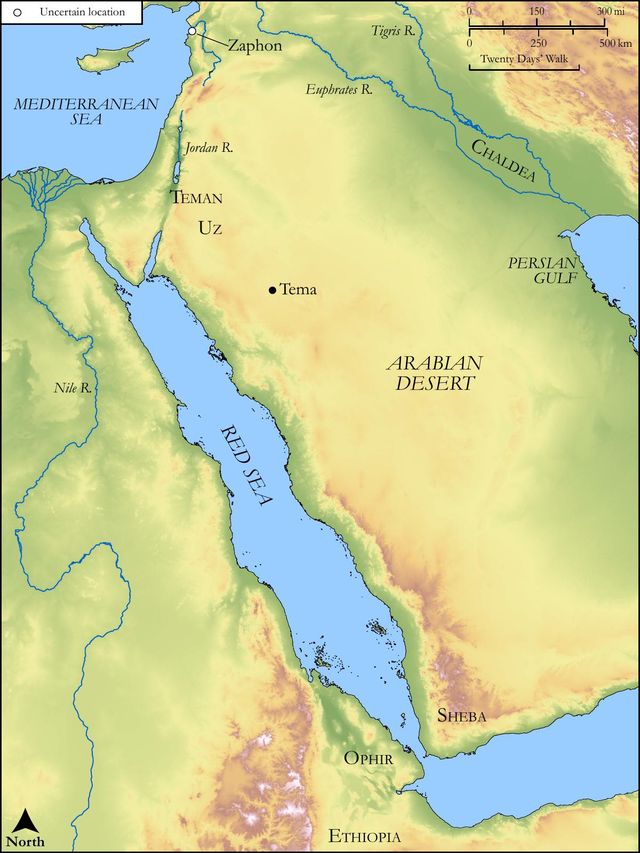
The Book of Job is situated in the land of Uz, a region likely located in Edom or northern Arabia, during a patriarchal period. Among the men of the east, a man's "glory" (כָּבוֹד, kābôd) was inextricably linked to his reputation, honor, wealth, and influence within the community. Public respect, the ability to dispense wise counsel, and the capacity to provide justice were highly esteemed virtues. The "bow" (קֶשֶׁת, qešet) served as a primary weapon for hunting and warfare, thus symbolizing strength, power, and effectiveness in action. To have one's "bow renewed" implied a continuous, unfailing supply of vigor and success in all endeavors, reflecting a societal understanding where a man's standing was often measured by his visible prosperity and his demonstrated capacity to protect, provide, and prevail.
Key Themes
ShowHideJob 29:20 powerfully articulates several core themes pervasive throughout the Book of Job. It underscores the theme of Past Prosperity and Honor, depicting Job's former life as one marked by exceptional societal standing and divine blessing, a stark and painful contrast to his present destitution (compare with Job's initial state of blessing). The phrase "my glory was fresh in me" speaks to Divine Favor and Sustained Vitality, suggesting a dynamic and ongoing blessing from God that animated his life and endeavors, rather than a mere static state of past achievement. The "bow was renewed in my hand" highlights Enduring Strength and Effectiveness, symbolizing a continuous supply of vigor, skill, and success in his actions, echoing the idea of God empowering His servants for enduring fruitfulness (Psalm 92:10). Ultimately, this verse, embedded within Job's comprehensive monologue, significantly contributes to the overarching theme of Loss and Lament, emphasizing the profound psychological and spiritual impact of his suffering as he grieves the absence of what he once possessed.
Exposition and Analysis
ShowHideKey Word Analysis
ShowHideThis term (כָּבוֹד, H3519) carries a rich semantic range, encompassing weight, honor, splendor, reputation, and even the manifest presence of God. In Job 29:20, it refers primarily to Job's esteemed public standing, his high reputation, and the tangible signs of divine blessing that conferred dignity and respect upon him. The "freshness" of this glory implies it was not a static, inherited status but a dynamic, continually vibrant, and active recognition of his worth and integrity within the community.
The adjective (חָדַשׁ, H2319) means "new," "fresh," or "vigorous." When applied to Job's "glory," it conveys the idea of a constant, vital renewal, suggesting that his honor and influence were not diminishing but perpetually invigorated, as if newly bestowed each day. This speaks to a sustained, dynamic state of flourishing rather than a mere memory of past accomplishments, emphasizing a continuous, active manifestation of his esteemed position.
This verb (חָלַף, H2498) means "to slide by, hasten away, pass on, spring up, pierce or change, renew." Applied to the "bow," it signifies a continuous process of invigoration and effectiveness. It implies that Job's strength and capabilities were not merely present but were perpetually refreshed, ensuring his ongoing success and preventing any decline in his power or influence. This suggests a dynamic and perhaps divinely sourced restoration of his vigor.
Verse Breakdown
ShowHide"My glory [was] fresh in me"
This clause speaks to Job's internal and external state of honor and vitality. "My glory" refers to his reputation, dignity, and the visible signs of divine favor upon him. The phrase "fresh in me" (literally "new upon me" or "new for me") indicates that this glory was not a fading memory but a continually vibrant, active, and renewed aspect of his being and public perception. It implies a dynamic, ongoing manifestation of divine blessing and personal integrity that kept his standing robust and respected, constantly invigorating his honor and influence.
"and my bow was renewed in my hand"
This clause uses the metaphor of a "bow" to represent Job's strength, power, and capacity for effective action or victory. The "bow in my hand" signifies his active engagement and control over his capabilities, indicating his readiness and ability to act. The verb "renewed" emphasizes that this strength was not static or diminishing but was perpetually invigorated and restored, ensuring his continuous effectiveness and success in all his undertakings. This suggests a constant, perhaps divinely supplied, vigor and skill, enabling him to overcome obstacles and achieve his purposes without faltering.
Literary Devices
ShowHideJob 29:20 is rich in Imagery and Metaphor, painting a vivid picture of Job's former prosperity and strength. The phrase "My glory was fresh in me" employs a subtle form of Personification, attributing a dynamic, living quality ("fresh") to an abstract concept ("glory"), suggesting that Job's honor was not merely present but vibrantly alive and continually renewed. The most prominent device is Metaphor, particularly in "my bow was renewed in my hand." The "bow" stands for Job's strength, power, and effectiveness, not literally a weapon. This metaphor powerfully conveys the idea of continuous vigor and success in his endeavors. The entire verse functions as part of Job's larger Lament, using the vivid memory of a glorious past to highlight the profound contrast with his present suffering, thereby amplifying his sense of loss and the injustice he feels.
Theological and Thematic Connections
ShowHideJob 29:20 speaks profoundly to the concept of divine favor and sustained blessing, portraying a life where honor and strength were not merely present but perpetually renewed by an unseen hand. It underscores the Old Testament understanding that prosperity and influence were often seen as tangible signs of God's blessing and covenant faithfulness, even if the book of Job ultimately challenges a simplistic retribution theology. Job's lament here highlights the human desire for enduring vitality and effectiveness, and the deep sorrow experienced when such blessings are withdrawn or seem to vanish without cause. The verse, therefore, implicitly points to God as the ultimate source of all true glory and strength, even as Job struggles to reconcile this truth with his current suffering and the apparent withdrawal of divine favor.
Reflection and Application
ShowHideJob 29:20 invites us to reflect on the transient nature of earthly blessings and the enduring source of true vitality. While Job laments the loss of his former "fresh glory" and "renewed bow," his words can prompt us to consider how we perceive and value success, honor, and strength in our own lives. Do we recognize God as the ultimate provider of our capabilities and influence? The verse also offers a poignant reminder that seasons of flourishing can give way to seasons of profound loss, challenging our assumptions about divine favor and human merit. Yet, it also subtly points to the possibility of renewal, even if Job himself is currently experiencing its absence. For believers, it encourages a posture of gratitude for past blessings and a hopeful anticipation of God's ability to restore and invigorate, not necessarily to a former state of earthly prosperity, but to a deeper, spiritual strength that endures beyond circumstances, rooted in His unchanging character.
Questions for Reflection
ShowHideFAQ
ShowHideWhat does "My glory [was] fresh in me" mean in practical terms for Job?
ShowHideIn practical terms, "My glory [was] fresh in me" meant that Job's reputation, honor, and public standing were not merely established but were continually vibrant, respected, and actively acknowledged by his community. He was consistently sought out for counsel, his wisdom was valued, and his presence commanded profound respect. This wasn't a static, past achievement but a dynamic, ongoing reality where his influence and dignity were perpetually renewed and recognized, reflecting a consistent flow of divine favor and personal integrity. It meant he was at the peak of his social and moral influence, with an unblemished and ever-growing reputation that commanded widespread admiration.
How does the "bow was renewed in my hand" relate to Job's character or actions?
ShowHideThe "bow was renewed in my hand" signifies Job's sustained strength, effectiveness, and capacity for action. The bow, a symbol of power and victory, being "renewed" implies that his abilities were not diminishing but were continuously invigorated. This relates to Job's character by showing he was not only a man of honor but also a man of decisive action, capable of defending the weak, dispensing justice, and succeeding in his endeavors. It speaks to his sustained vigor, skill, and resourcefulness, suggesting that whatever task he undertook, he had the continuous power and means to accomplish it successfully, likely attributed to divine empowerment (Psalm 18:32-34).
Is Job 29:20 a lament or a boast?
ShowHideJob 29:20 is primarily a lament, though it describes a glorious past that might sound like boasting out of context. Within the broader narrative of Job's monologue in Job 29, he is not boasting to elevate himself, but rather recalling a profound contrast between his former blessed state and his current suffering. He is expressing the depth of his loss and the incomprehensibility of his present anguish by vividly detailing the honor, prosperity, and divine favor he once enjoyed. This recollection serves to intensify his plea for understanding and justice from God, highlighting the stark difference between his past flourishing and his present desolation (Job 29:1-2).
Christ-Centered Fulfillment
ShowHideJob 29:20, with its imagery of "fresh glory" and a "renewed bow," finds its ultimate and most profound fulfillment in Christ. While Job's glory and strength were temporal and ultimately subject to loss, Jesus Christ embodies eternal glory that is perpetually fresh and undiminished. He is the true Lamb of God who takes away the sin of the world, whose perfect sacrifice brings about a spiritual renewal far surpassing any physical or social restoration. In Christ, believers receive not a temporary "renewed bow" for earthly battles, but the enduring power of the Holy Spirit, enabling them to live a new life (Romans 6:4) and wield spiritual weapons against sin and darkness (Ephesians 6:10-18). His resurrection guarantees a "living hope" (1 Peter 1:3) and a spiritual vitality that is truly "fresh" and eternally "renewed," ensuring that those who are in Him will never experience a final desolation like Job's, but rather a glorious and eternal future (Revelation 21:4). He is the source of all true and lasting glory, and through Him, we are continually made new (2 Corinthians 5:17).