


Job 21:8
Bible text: King James Version (1769 Blayney text) · Public domain
Bible text: Berean Standard Bible · Public domain
Bible text: American Standard Version (1901) · Public domain
Bible text: World English Bible, Messianic edition · Public domain
Bible text: Geneva Bible (1599) · Public domain
Bible text: Young's Literal Translation · Public domain
- זַרְעָםzar·'Amtheir offspringH2233N-msc ¦ 3mpNoun Singular Masculine Constructזַרְעָoffspringםtheir
- נָכוֹןna·Khon[is] establishedH3559V-Niphal-Prtcpl-msVerb Niphal Participle Singular Masculine Absolute
- לִפְנֵיהֶםlif·nei·Hem<to> before themH6440Prep-l ¦ N-mpc ¦ 3mpNoun Plural Masculine Constructלִ<to>פְנֵיbeforeהֶםthem
- עִמָּם'i·Mamwith themH5973Prep ¦ 3mpPreposition Definiteעִמָּwithםthem
- וְצֶאֱצָאֵיהֶםve·tze·'e·tza·'ei·Hemand their descendantsH6631Conj-w ¦ N-mpc ¦ 3mpNoun Plural Masculine Constructוְandצֶאֱצָאֵיdescendantsהֶםtheir
- לְעֵינֵיהֶםle·'ei·nei·Hemto their eyesH5869Prep-l ¦ N-fdc ¦ 3mpNoun Dual Feminine Constructלְtoעֵינֵיeyesהֶםtheir
English is a literal word-by-word gloss of the Hebrew, not the KJV's wording. Why?
This is the original text the KJV's translators worked from — each Hebrew word with its own literal English meaning in this verse, prepared by scholars at Tyndale House, Cambridge. The KJV translates whole sentences, not word by word, so its wording differs: one Hebrew word can become several English words, and the KJV may choose “the LORD” where the gloss reads “Yahweh”. Both are faithful — they answer different questions. For the KJV's own rendering, switch to the KJV text.
Details
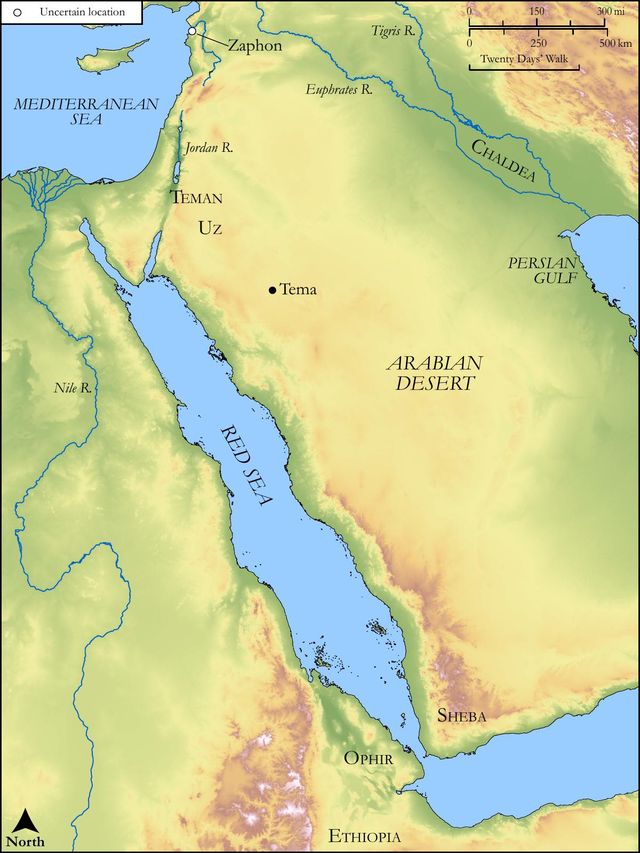
See on the biblical-era map
Study this verse
Public-domain commentary
Matthew Henry
From his Commentary on the Whole Bible. Henry comments on passages, not single verses — this entry covers Job 21:7–16. His four-level outline is real structure in the source text, so it is rendered as structure.
All Job's three friends, in their last discourses, had been very copious in describing the miserable condition of a wicked man in this world. "It is true," says Job, "remarkable judgments are sometimes brought upon notorious sinners, but not always; for we have many instances of the great and long prosperity of those that are openly and avowedly wicked; though they are hardened in their wickedness by their prosperity, yet they are still suffered to prosper."
I.He here describes their prosperity in the height, and breadth, and length of it.
"If this be true, as you say, pray tell me wherefore do the wicked live?" Job 21:7.
1.The matter of fact is taken for granted, for we see instances of it every day.
(1.)They live, and are not suddenly cut off by the strokes of divine vengeance. Those yet speak who have set their mouths against the heavens. Those yet act who have stretched out their hands against God. Not only they live (that is, they are reprieved), but they live in prosperity, Sa1 25:6. Nay,
(2.)They become old; they have the honour, satisfaction, and advantage of living long, long enough to raise their families and estates. We read of a sinner a hundred years old, Isa 65:20. But this is not all.
(3.)They are mighty in power, are preferred to places of authority and trust, and not only make a great figure, but bear a great sway. Vivit imo, et in senatum venit - He not only lives, but appears in the senate. Now wherefore is it so? Note, It is worth while to enquire into the reasons of the outward prosperity of wicked people. It is not because God has forsaken the earth, because he does not see, or does not hate, or cannot punish their wickedness; but it is because the measure of their iniquities is not full. This is the day of God's patience, and, in some way or other, he makes use of them and their prosperity to serve his own counsels, while it ripens them for ruin; but the chief reason is because he will make it to appear there is another world which is the world of retribution, and not this.
2.The prosperity of the wicked is here described to be,
(1.)Complete and consummate.
[1.]They are multiplied, and their family is built up, and they have the satisfaction of seeing it (Job 21:8): Their seed is established in their sight. This is put first, as that which gives both a pleasant enjoyment and a pleasing prospect.
[2.]They are easy and quiet, Job 21:9. Whereas Zophar had spoken of their continual frights and terrors, Job says, Their houses are safe both from danger and from the fear of it (Job 21:9), and so far are they from the killing wounds of God's sword or arrows that they do not feel the smart of so much as the rod of God upon them.
[3.]They are rich and thrive in their estates. Of this he gives only one instance, Job 21:10. Their cattle increase, and they meet with no disappointment in them; not so much as a cow casts her calf, and then their much must needs grow more. This is promised, Exo 23:26; Deu 7:14.
[4.]They are merry and live a jovial life (Job 21:11, Job 21:12): They send forth their little ones abroad among their neighbours, like a flock, in great numbers, to sport themselves. They have their balls and music-meetings, at which their children dance; and dancing is fittest for children, who know not better how to spend their time and whose innocency guards them against the mischiefs that commonly attend it. Though the parents are not so very youthful and frolicsome as to dance themselves, yet they take the timbrel and harp; they pipe, and their children dance after their pipe, and they know no grief to put their instruments out of tune or to withhold their hearts from any joy. Some observe that this is an instance of their vanity, as well as of their prosperity. Here is none of that care taken of their children which Abraham took of his, to teach them the way of the Lord, Gen 18:19. Their children do not pray, or say their catechism, but dance, and sing, and rejoice at the sound of the organ. Sensual pleasures are all the delights of carnal people, and as men are themselves so they breed their children.
(2.)Continuing and constant (Job 21:13): They spend their days, all their days, in wealth, and never know what it is to want - in mirth, and never know what sadness means; and at last, without any previous alarms to frighten them, without any anguish or agony, in a moment they go down to the grave, and there are no bands in their death. If there were not another life after this, it were most desirable to die by the quickest shortest strokes of death. Since we must go down to the grave, if that were the furthest of our journey, we should wish to go down in a moment, to swallow the bitter pill, and not chew it.
II.He shows how they abuse their prosperity and are confirmed and hardened by it in their impiety, Job 21:14, Job 21:15.
1.Their gold and silver serve to steel them, to make them more insolent, and more impudent, in their wickedness. Now he mentions this either,
(1.)To increase the difficulty. It is strange that any wicked people should prosper thus, but especially that those should prosper who have arrived at such a pitch of wickedness as openly to bid defiance to God himself, and tell him to his face that they care not for him; nay, and that their prosperity should be continued, though they bear up themselves upon that, in their opposition to God; with that weapon they fight against him, and yet are not disarmed. Or,
(2.)To lessen the difficulty. God suffers them to prosper; but let us not wonder at it, for the prosperity of fools destroys them, by hardening them in sin, Pro 1:32; Psa 73:7-9.
2.See how light these prospering sinners make of God and religion, as if because they have so much of this world they had no need to look after another.
(1.)See how ill affected they are to God and religion; they abandon them, and cast off the thoughts of them.
[1.]They dread the presence of God; they say unto him, "Depart from us; let us never be troubled with the apprehension of our being under God's eye nor be restrained by the fear of him." Or they bid him depart as one they do not need, nor have any occasion to make use of. The world is the portion they have chosen, and take up with, and think themselves happy in; while they have that they can live without God. Justly will God say Depart (Mat 25:41) to those who have bidden him depart; and justly does he now take them at their word.
[2.]They dread the knowledge of God, and of his will, and of their duty to him: We desire not the knowledge of thy ways. Those that are resolved not to walk in God's ways desire not to know them, because their knowledge will be a continual reproach to their disobedience, Joh 3:19.
(2.)See how they argue against God and religion (Job 21:15): What is the Almighty? Strange that ever creatures should speak so insolently, that ever reasonable creatures should speak so absurdly and unreasonably. The two great bonds by which we are drawn and held to religion are those of duty and interest; now they here endeavour to break both these bonds asunder.
[1.]They will not believe it is their duty to be religious: What is the Almighty, that we should serve him? Like Pharaoh (Exo 5:2), Who is the Lord, that I should obey his voice? Observe, First, How slightly they speak of God: What is the Almighty? As if he were a mere name, a mere cipher, or one they have nothing to do with and that has nothing to do with them. Secondly, How hardly they speak of religion. They call it a service, and mean a hard service. Is it not enough, they think, to keep up a fair correspondence with the Almighty, but they must serve him, which they look upon as a task and drudgery. Thirdly, How highly they speak of themselves: "That we should serve him; we who are rich and mighty in power, shall we be subject and accountable to him? No, we are lords," Jer 2:31.
[2.]They will not believe it is their interest to be religious: What profit shall we have if we pray unto him? All the world are for what they can get, and therefore wisdom's merchandise is neglected, because they think there is nothing to be got by it. It is vain to serve God, Mal 3:13, Mal 3:14. Praying will not pay debts nor portion children; nay, perhaps serious godliness may hinder a man's preferment and expose him to losses; and what then? Is nothing to be called gain but the wealth and honour of this world? If we obtain the favour of God, and spiritual and eternal blessings, we have no reason to complain of losing by our religion. But, if we have not profit by prayer, it is our own fault (Isa 58:3, Isa 58:4), it is because we ask amiss, Jam 4:3. Religion itself is not a vain thing; if it be so to us, we may thank ourselves for resting in the outside of it, Jam 1:26.
III.He shows their folly herein, and utterly disclaims all concurrence with them (Job 21:19):
Lo, their good is not in their hand, that is, they did not get it without God, and therefore they are very ungrateful to slight him thus. It was not their might, nor the power of their hand, that got them this wealth, and therefore they ought to remember God who gave it them. Nor can they keep it without God, and therefore they are very unwise to lose their interest in him and bid him to depart from them. Some give this sense of it: "Their good is in their barns and their bags, hoarded up there; it is not in their hand, to do good to others with it; and then what good does it do them?" "Therefore," says Job, "the counsel of the wicked is far from me. Far be it from me that I should be of their mind, say as they say, do as they do, and take my measures from them. Their posterity approve their sayings, though their way be their folly (Psa 49:13); but I know better things than to walk in their counsel."
Historical interpretation
Two Centuries of Reception
3 surviving comments on this verse. Each one is dated, so this reads as a timeline rather than a list.
Select a marker to jump to its quote. Markers stagger vertically where authors wrote within a few decades of each other.
Certainly God does not cease from benefiting the wicked, in order to show that he has no hate against them, so that they may not say, “Since God hates us, he will never open the door of repentance to us.” And while he severely and sternly acts with the righteous, he nevertheless offers his love to the unrighteous. The rewards to be granted in time for [righteous] virtues are the future signs of the good works they do.
Since you believe to be wise and to know the reason why I suffer these afflictions, now answer my question. Why does it happen that very often many impious persons reach an old age in their wealth?… Their fields produce large crops, and they are delighted by their children and enjoy a constant abundance. They fear no one and receive no blow sent them by God. Their plowing cow does not give birth to an immature fetus, that is, it does not generate an imperfect or dead fetus, and their wives have no miscarriages. And they remain in prosperity like a flock, that is, free from care.
46. For the increase of exceeding happiness, together with a large patrimony, they have heirs too given them; and that no unavoidable temporal circumstance either may remove from their eyes those in whom their soul delights, it is said of this seed of theirs, Their seed is established in their sight. But what if children are vouchsafed, yet the children themselves stricken with barrenness? The family is made extinct in them, in like sort as it was feared it would be made extinct by the barrenness of their parents. It goes on;
And a crowd of kinfolk and grandchildren before their eyes.
Observe, life is theirs, honours and riches are theirs, children are theirs, grandchildren are theirs. What if any secret fancy gall the mind, and domestic discord pierce the joys of their security? What is the prosperity of this world, if it be not joyful?
Continue studying Job 21:8 across the web’s major study libraries — every link below opens this exact verse, chapter, or book on the destination site.
Read & Compare
 BibleGatewayThis verse in more than 200 translations and 70 languages.
 Bible.comThe YouVersion reader — hundreds of translations, reading plans, and highlights.
 ESV.orgCrossway's official English Standard Version reader.
 NET BibleThe NET translation with 60,000+ translators' notes on every rendering decision.
 STEP BibleTyndale House's free study tool — original text, vocabulary, and scholarly resources.
 BibliaLogos Bible Software's free web reader.
 USCCBThe New American Bible (Revised Edition) with the U.S. bishops' study notes.
Commentaries
 BibleHub CommentariesDozens of classic commentaries on this verse, gathered on one page.
 StudyLightMore than 100 commentary sets — the largest collection on the web.
 BibleRefPlain-English commentary on what this verse means, verse by verse.
 Enduring WordDavid Guzik's free commentary on this chapter, widely used by Bible teachers.
 Bible Study ToolsVerse commentary alongside Greek and Hebrew study aids.
Original Language & Research
- BibleHub InterlinearThe verse word by word — original language, transliteration, and English.
- BibleHub LexiconEvery word's original-language definition and Strong's entry.
 Blue Letter BibleDeep-study tools — Strong's numbers, concordance, and word studies.
 SefariaThe Hebrew text with Rashi and centuries of Jewish commentary.
Sermons, Hymns & Audio


TrulyRandomVerse is not affiliated with these sites and doesn’t control their content. They’re linked because they’re genuinely useful.
Summary
Job 21:8 is a profound statement by Job in his third and most vehement response to his friends, directly confronting their simplistic retribution theology. It highlights the perplexing, observable reality that wicked individuals often experience prolonged prosperity, stability, and the flourishing of their descendants, directly contradicting the conventional belief that God invariably punishes sin with immediate earthly misfortune and the swift termination of one's lineage. This verse specifically underscores the generational aspect of this phenomenon, serving as compelling empirical evidence against the dogmatic assertions of Eliphaz, Bildad, and Zophar.
CONTEXT
ShowHideExposition and Analysis
ShowHideKey Word Analysis
ShowHideThis term, derived from the root meaning "to sow," primarily refers to descendants, offspring, or progeny. In ancient Israelite culture, the continuation of one's "seed" was crucial for establishing a lasting legacy and was often seen as a significant divine blessing. Its application here to the wicked emphasizes a form of prosperity and continuity that extends beyond the individual's lifetime, directly contradicting the friends' expectations of a swift end to the wicked's line.
This word conveys a sense of firmness, security, stability, or being fixed and enduring. It implies a lack of threat or instability, directly contradicting the friends' expectation that the wicked's lineage would be unstable, cut off, or quickly vanish. The use of this term highlights the surprising permanence and secure foundation of the wicked's family line, making Job's observation all the more challenging.
This term, derived from a root meaning "to go out" or "to issue forth," is a synonym for descendants, often used in parallel with "seed" to emphasize the full scope and breadth of one's progeny. Its inclusion here reinforces the idea of a thriving, visible, and numerous family line, underscoring the undeniable nature of the wicked's generational success and the apparent contradiction to the friends' theological claims.
Verse Breakdown
ShowHide"Their seed is established in their sight with them"
This clause asserts that the descendants of the wicked are not only secure and stable, but that the wicked parents themselves live long enough to personally witness this flourishing. This directly refutes the friends' claim that God would swiftly cut off the wicked's lineage, preventing them from seeing their children prosper. The phrase "in their sight with them" adds a poignant detail, emphasizing the personal experience of this blessing by the wicked, making the observation even more impactful and challenging to the friends' worldview.
"and their offspring before their eyes"
This second clause functions as a poetic parallelism, reiterating and intensifying the first. "Offspring" reinforces "seed," and "before their eyes" reinforces "in their sight." The repetition underscores the undeniable, visible, and enduring nature of the wicked's generational prosperity, making Job's empirical observation even more emphatic and challenging to the friends' rigid theological framework. It highlights the direct, undeniable evidence that Job presents.
Literary Devices
ShowHideJob 21:8 prominently employs Parallelism, a fundamental characteristic of Hebrew poetry, where the second clause ("and their offspring before their eyes") echoes and intensifies the first ("Their seed is established in their sight with them"). Specifically, this is Synonymous Parallelism, where similar ideas are expressed using different but related words, serving to emphasize the point about the visible and enduring prosperity of the wicked's descendants. The verse also utilizes Empirical Observation as a powerful rhetorical strategy, as Job bases his argument not on theological dogma or tradition but on what he and his friends can plainly see in the world around them, making his challenge to their rigid worldview all the more potent. The vivid imagery of "in their sight" and "before their eyes" also functions as a form of Sensory Language, drawing the listener into the direct, undeniable experience of this perplexing reality, underscoring the undeniable nature of Job's claim.
Theological and Thematic Connections
ShowHideJob 21:8 profoundly challenges the simplistic "retribution theology" prevalent in Job's time and often echoed even today, which assumes a direct, immediate, and observable correlation between one's moral actions and their earthly consequences. Job's empirical observation that the wicked often prosper and see their descendants thrive forces a deeper theological reflection on the nature of divine justice, the timing of judgment, and the ultimate scope of God's sovereignty. It highlights that God's ways are not always immediately discernible or explicable through human logic, preparing the ground for the later divine speeches that emphasize God's inscrutable wisdom and the limitations of human understanding. This verse serves as a crucial counter-example to a theology that fails to account for the complexities of divine providence in a fallen world.
Reflection and Application
ShowHideJob 21:8 serves as a vital reminder that our understanding of divine justice must extend beyond immediate earthly outcomes. In a world where injustice often seems to prevail and those who disregard God appear to flourish, this verse encourages believers not to be dismayed or to question God's ultimate righteousness based solely on what is visible in the present. It calls us to cultivate a deeper faith that trusts in God's perfect timing and ultimate judgment, recognizing that His ways are higher than our ways. This perspective frees us from the burden of trying to reconcile every earthly circumstance with a simplistic retribution model, allowing us to focus on faithfulness regardless of external rewards or punishments. It prompts us to consider what truly constitutes "prosperity" from an eternal perspective, shifting our focus from transient earthly gains to enduring spiritual realities and the ultimate vindication of God's perfect justice.
Questions for Reflection
ShowHideFAQ
ShowHideDoes Job 21:8 mean that God doesn't care about justice, or that He rewards the wicked?
ShowHideNo, Job 21:8 does not imply that God is indifferent to justice or that He rewards the wicked. Instead, it is Job's empirical observation that challenges the simplistic, immediate retribution theology held by his friends. Job is highlighting a perplexing reality: that God's justice is not always meted out immediately or visibly in this life, and that the wicked often experience earthly prosperity. The book of Job ultimately affirms God's sovereignty and justice, but it teaches that His ways are inscrutable and not always comprehensible to human beings, as powerfully conveyed in God's speeches from the whirlwind (Job 38). The verse serves to broaden our understanding of divine justice beyond a narrow, earthly scope, pointing towards a larger, ultimate accountability that extends beyond our immediate perception.
How does this verse relate to the broader message of the book of Job?
ShowHideJob 21:8 is crucial to the central argument of the book of Job. It represents Job's most direct and forceful rebuttal to his friends' insistence that his suffering must be a direct consequence of his sin. By pointing out the undeniable prosperity of the wicked, Job dismantles their rigid theological framework and forces a deeper inquiry into the nature of suffering, righteousness, and divine justice. The book of Job ultimately moves beyond the simplistic cause-and-effect model, inviting readers to trust in God's wisdom and sovereignty even when His actions are not fully understood, as seen in Job's humble confession and repentance at the end of the book (Job 42:1). It underscores that God's ways are beyond human comprehension and that true faith endures even in the face of apparent injustice.
Christ-Centered Fulfillment
ShowHideJob 21:8, in its stark portrayal of the wicked's earthly prosperity and generational stability, sets the stage for a profound understanding of Christ's kingdom and ultimate justice. While the Old Testament grappled with the apparent injustice of the wicked flourishing, the New Testament reveals that true prosperity is not found in temporal blessings or the continuation of an earthly lineage, but in spiritual life and an eternal inheritance in Christ. Jesus himself warned against seeking earthly treasures, which can be fleeting and perishable (Matthew 6:19), and taught that the "last will be first, and the first last" (Matthew 20:16), radically reorienting our understanding of status and reward. The ultimate "cutting off" is not merely the end of an earthly lineage, but spiritual separation from God, while the ultimate "establishment" is eternal life in Christ, where believers are "seated with him in the heavenly realms" (Ephesians 2:6). The temporary flourishing of the wicked, as observed by Job, pales in comparison to the eternal judgment awaiting those who reject Christ at the Great White Throne (Revelation 20:11), and the everlasting inheritance promised to those who are "heirs of God and fellow heirs with Christ" (Romans 8:17). Thus, Job's perplexing observation finds its resolution and ultimate meaning in the cross and resurrection, which redefine true blessing, reveal the full scope of God's righteous and redemptive plan for humanity, and assure us that all injustices will ultimately be rectified in Christ's eternal kingdom.