


Jeremiah 22:7
Bible text: King James Version (1769 Blayney text) · Public domain
Bible text: Berean Standard Bible · Public domain
Bible text: American Standard Version (1901) · Public domain
Bible text: World English Bible, Messianic edition · Public domain
Bible text: Geneva Bible (1599) · Public domain
Bible text: Young's Literal Translation · Public domain
- וְקִדַּשְׁתִּיve·ki·dash·Tiand I will consecrateH6942Conj-w ¦ V-Piel-ConsecPerf-1csVerb Piel Consecutive Perfect 1st Singular common genderוְandקִדַּשְׁתִּיI will consecrate
- עָלֶיךָ'a·Lei·khaon youH5921Prep ¦ 2msPreposition Definiteעָלֶיonךָyou
- מַשְׁחִתִיםmash·chi·TimdestroyersH7843N-mpNoun Plural Masculine Absolute
- אִישׁ'isheveryoneH376N-msNoun Singular Masculine Absolute
- וְכֵלָיוve·khe·Lavand his weaponsH3627Conj-w ¦ N-mpc ¦ 3msNoun Plural Masculine Constructוְandכֵלָיweaponsוhis
- וְכָרְתוּve·kha·re·Tuand they will cut downH3772Conj-w ¦ V-Qal-ConsecPerf-3cpVerb Qal Consecutive Perfect 3rd Plural common genderוְandכָרְתוּthey will cut down
- מִבְחַרmiv·Char[the] choicest ofH4005N-mscNoun Singular Masculine Construct
- אֲרָזֶיךָ'a·ra·Zei·khayour cedarsH730N-mpc ¦ 2msNoun Plural Masculine Constructאֲרָזֶיcedarsךָyour
- וְהִפִּילוּve·hi·Pi·luand they will cast [them]H5307Conj-w ¦ V-Hiphil-ConsecPerf-3cpVerb Hiphil Consecutive Perfect 3rd Plural common genderוְandהִפִּילוּthey will cast [them]
- עַל'alonH5921PrepPreposition
- הָאֵשׁha·'Eshthe fireH784Art ¦ N-csNoun Singular common gender Absoluteהָtheאֵשׁfire
English is a literal word-by-word gloss of the Hebrew, not the KJV's wording. Why?
This is the original text the KJV's translators worked from — each Hebrew word with its own literal English meaning in this verse, prepared by scholars at Tyndale House, Cambridge. The KJV translates whole sentences, not word by word, so its wording differs: one Hebrew word can become several English words, and the KJV may choose “the LORD” where the gloss reads “Yahweh”. Both are faithful — they answer different questions. For the KJV's own rendering, switch to the KJV text.
Details
See on the biblical-era map
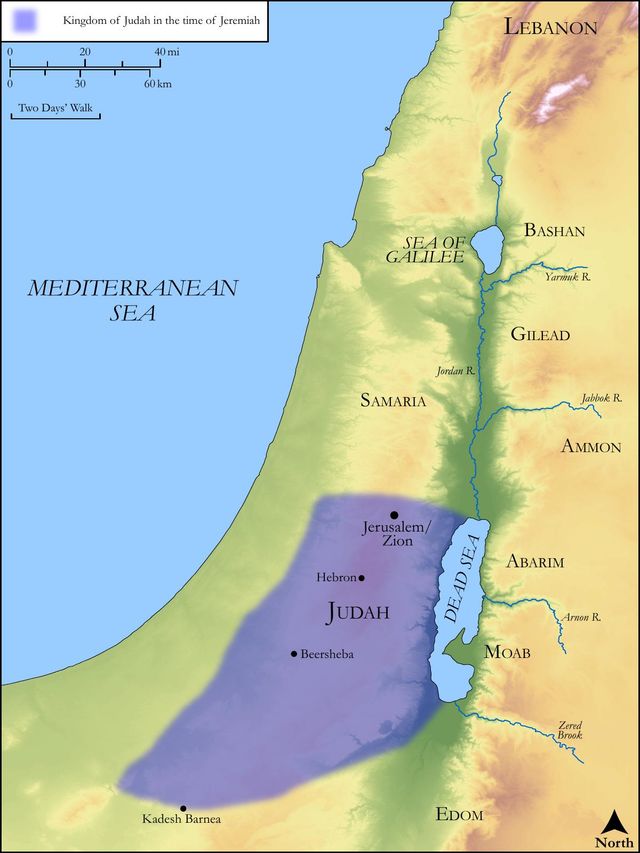
Study this verse
Public-domain commentary
Matthew Henry
From his Commentary on the Whole Bible. Henry comments on passages, not single verses — this entry covers Jeremiah 22:1–9. His four-level outline is real structure in the source text, so it is rendered as structure.
Here we have,
I.Orders given to Jeremiah to go and preach before the king.
In the foregoing chapter we are told that Zedekiah sent messengers to the prophet, but here the prophet is bidden to go, in his own proper person, to the house of the king, and demand his attention to the word of the King of kings (Jer 22:2): Hear the word of the Lord, O king of Judah! Subjects must own that where the word of the king is there is power over them, but kings must own that where the word of the Lord is there is power over them. The king of Judah is here spoken to as sitting upon the throne of David, who was a man after God's own heart, as holding his dignity and power by the covenant made with David; let him therefore conform to his example, that he may have the benefit of the promises made to him. With the king his servants are spoken to, because a good government depends upon a good ministry as well as a good king.
II.Instructions given him what to preach.
1.He must tell them what was their duty, what was the good which the Lord their God required of them, Jer 22:3. They must take care,
(1.)That they do all the good they can with the power they have. They must do justice in defence of those that were injured, and must deliver the spoiled out of the hand of their oppressors. This was the duty of their place, Psa 82:3. Herein they must be ministers of God for good.
(2.)That they do no hurt with it, no wrong, no violence. That is the greatest wrong and violence which is done under colour of law and justice, and by those whose business it is to punish and protect from wrong and violence. They must do no wrong to the stranger, fatherless, and widow; for these God does in a particular matter patronise and take under his tuition, Exo 22:21, Exo 22:22.
2.He must assure them that the faithful discharge of their duty would advance and secure their prosperity, Jer 22:4. There shall then be a succession of kings, an uninterrupted succession, upon the throne of David and of his line, these enjoying a perfect tranquillity, and living in great state and dignity, riding in chariots and on horses, as before, Jer 17:25. Note, the most effectual way to preserve the dignity of the government is to do the duty of it.
3.He must likewise assure them that the iniquity of their family, if they persisted in it, would be the ruin of their family, though it was a royal family (Jer 22:5): If you will not hear, will not obey, this house shall become a desolation, the palace of the kings of Judah shall fare no better than other habitations in Jerusalem. Sin has often been the ruin of royal palaces, though ever so stately, ever so strong. This sentence is ratified by an oath: I swear by myself (and God can swear by no greater, Heb 6:13) that this house shall be laid in ruins. Note, Sin will be the ruin of the houses of princes as well as of mean men.
4.He must show how fatal their wickedness would be to their kingdom as well as to themselves, to Jerusalem especially, the royal city, Jer 22:6-9.
(1.)It is confessed that Judah and Jerusalem had been valuable in God's eyes and considerable in their own: thou art Gilead unto me and the head of Lebanon. Their lot was cast in a place that was rich and pleasant as Gilead; Zion was a stronghold, as stately as Lebanon: this they trusted to as their security. But,
(2.)This shall not protect them; the country that is now fruitful as Gilead shall be made a wilderness. The cities that are now strong as Lebanon shall be cities not inhabited; and, when the country is laid waste, the cities must be dispeopled. See how easily God's judgments can ruin a nation, and how certainly sin will do it. When this desolating work is to be done,
[1.]There shall be those that shall do it effectually (Jer 22:7): "I will prepare destroyers against thee; I will sanctify them" (so the word is); "I will appoint them to this service and use them in it." Note, When destruction is designed destroyers are prepared, and perhaps are in the preparing, and things are working towards the designed destruction, and are getting ready for it, long before. And who can contend with destroyers of God's preparing? They shall destroy cities as easily as men fell trees in a forest: They shall cut down thy choice cedars; and yet, when they are down, shall value them no more than thorns and briers; they shall cast them into the fire, for their choicest cedars have become rotten ones and good for nothing else.
[2.]There shall be those who shall be ready to justify God in the doing of it (Jer 22:8, Jer 22:9); persons of many nations, when they pass by the ruins of this city in their travels, will ask, "Wherefore hath the Lord done thus unto this city? How came so strong a city to be overpowered? so rich a city to be impoverished? so populous a city to be depopulated? so holy a city to be profaned? and a city that had been so dear to God to be abandoned by him?" The reason is so obvious that it shall be ready in every man's mouth. Ask those that go by the way, Job 21:29. Ask the next man you meet, and he will tell you it was because they changed their gods, which other nations never used to do. They forsook the covenant of Jehovah their own God, revolted from their allegiance to him and from the duty which their covenant with him bound them to, and they worshipped other gods and served them, in contempt of him; and therefore he gave them up to this destruction. Note, God never casts any off until they first cast him off. "Go," says God to the prophet, "and preach this to the royal family."
Historical interpretation
Historical reception
1 surviving comment on this verse from the historical church.
(V. 6,-8.) Because this is what the Lord says about the house (or to the house) of the king of Judah, Gilead, you are to me the head (or the beginning) of Lebanon. If I do not make you a desolation, cities uninhabitable. And I will consecrate (or build) upon you the one who kills men, and his weapons: and they will cut down your chosen cedars, and throw (or send) them into fire, and many nations will pass through this city, and each one will say to his neighbor: Why did the Lord do such to this great city? And they will answer, because they have forsaken the covenant of the Lord their God, and worshiped foreign gods, and served them. Scripture mentions the land of Gilead, which was possessed by half the tribe of Manasseh, beyond the Jordan. On this mountain, Jacob pursued Laban as he fled, and the mountain received the name σωρὸς, which means heap of testimony, because there Jacob and Laban swore an oath, gathering a heap of stones (Genesis 31). But the head, or beginning, of Mount Lebanon, which is entirely composed of cedars, is mentioned next by David when he sings: And the Lord will shake the cedars of Lebanon (Psalm 29:5). And elsewhere: I have seen the wicked exalted, and raised up like the cedars of Lebanon (Psalm 36:35). And in Zechariah we read: Open your doors, O Lebanon, and let the fire consume your cedars (Zechariah 11:1). Therefore, in this present passage, because he was speaking to the royal house, he metaphorically speaks to the Temple, or to the house of the tribe of Judah, either because it itself is on high, or because all the remedies for sins were sought from the Temple and the Sanctuary. Therefore, the same prophet also mentions: Is there no balm in Gilead, or physician there? Why then has there been no healing for the daughter of my people? (Jeremiah 8:21). He threatens therefore the royal household, the city of Jerusalem, and the Temple, which he calls the head of Lebanon, that it shall be reduced to a deserted state along with all its cities, not by the power of the Babylonian king, but by the command of the Lord, who says: I will sanctify over you a destroyer. But Nabuchodonosor is called holy, and all his army, because he carries out the judgement of God. And he will cut down, he says, your chosen cedars: the powerful and the leaders of the city; and they will throw them into the fire, so that the devouring flame consumes everything. And when everything has been destroyed, many nations will pass through the city and the Temple, which they were previously not allowed to enter; and each person will speak to their neighbor, asking why the Lord has caused such a sudden and great destruction to the famous and great city. And those who are questioned will respond and explain the causes of the ruination, saying: because they have forsaken the covenant of their Lord God, and have worshiped idols instead of God. Let the royal house of our city and its princes listen to this, and let the high cedars, which reach up to the heavens, also listen. They speak with arrogance: who will not see? Let them be consumed quickly by the flame of the Lord if they refuse to comply with His commandments. But there is another sanctification (or rather sacrifice) of the murderer and his weapons; and another of the priests and those who serve the Lord.
Continue studying Jeremiah 22:7 across the web’s major study libraries — every link below opens this exact verse, chapter, or book on the destination site.
Read & Compare
 BibleGatewayThis verse in more than 200 translations and 70 languages.
 Bible.comThe YouVersion reader — hundreds of translations, reading plans, and highlights.
 ESV.orgCrossway's official English Standard Version reader.
 NET BibleThe NET translation with 60,000+ translators' notes on every rendering decision.
 STEP BibleTyndale House's free study tool — original text, vocabulary, and scholarly resources.
 BibliaLogos Bible Software's free web reader.
 USCCBThe New American Bible (Revised Edition) with the U.S. bishops' study notes.
Commentaries
 BibleHub CommentariesDozens of classic commentaries on this verse, gathered on one page.
 StudyLightMore than 100 commentary sets — the largest collection on the web.
 BibleRefPlain-English commentary on what this verse means, verse by verse.
 Enduring WordDavid Guzik's free commentary on this chapter, widely used by Bible teachers.
 Bible Study ToolsVerse commentary alongside Greek and Hebrew study aids.
Original Language & Research
- BibleHub InterlinearThe verse word by word — original language, transliteration, and English.
- BibleHub LexiconEvery word's original-language definition and Strong's entry.
 Blue Letter BibleDeep-study tools — Strong's numbers, concordance, and word studies.
 SefariaThe Hebrew text with Rashi and centuries of Jewish commentary.
Sermons, Hymns & Audio


TrulyRandomVerse is not affiliated with these sites and doesn’t control their content. They’re linked because they’re genuinely useful.
Summary
Jeremiah 22:7 delivers a stark and direct prophetic declaration of divine judgment against the unrighteous leadership and people of Judah. It unequivocally foretells God's active and intentional intervention, where He will "prepare destroyers" to execute His righteous wrath. These agents of destruction are commissioned to target the nation's "choice cedars"—a powerful metaphor for Judah's most esteemed, powerful, and glorious elements—cutting them down and consigning them to fire, thereby signifying a comprehensive, irreversible, and consuming ruin as a direct consequence of persistent disobedience, covenant unfaithfulness, and pervasive injustice.
Context
ShowHideLiterary Context
This potent verse is situated within a series of prophetic oracles in Jeremiah 22, specifically addressing the royal house of Judah and its reigning kings. The preceding verses (Jeremiah 22:1-5) present a conditional covenant, promising enduring prosperity for the Davidic throne if the king and his people "execute justice and righteousness" (Jeremiah 22:3). Conversely, it warns of utter desolation if they fail. Verse 7 serves as the grim fulfillment of this latter condition, articulating the inevitable outcome of Judah's persistent rejection of God's commands and the kings' egregious unrighteousness, particularly that of Jehoiakim, who is condemned for his oppression, greed, and injustice (Jeremiah 22:13-17). The prophecy thus functions as a direct consequence of covenant infidelity, foreshadowing the impending Babylonian exile and the catastrophic destruction of Jerusalem and its royal lineage.
Historical & Cultural Context
The prophecy of Jeremiah 22:7 is deeply rooted in the tumultuous political and spiritual landscape of the late 7th and early 6th centuries BCE. During this period, the kingdom of Judah was a fragile buffer state, caught between the declining power of the Neo-Assyrian Empire, the ascendant might of Babylon, and the lingering influence of Egypt. Kings such as Jehoiakim (609-598 BCE) ruled Judah, often as servants to foreign powers, yet they simultaneously engaged in rampant internal corruption, oppression, and widespread idolatry, directly violating the Mosaic covenant. Culturally, "cedars," particularly the majestic Cedar of Lebanon, were highly esteemed among the nations of that day for their immense size, strength, durability, and aromatic wood. They were the premier building material for grand structures like royal palaces and, most significantly, Solomon's Temple (1 Kings 6:9-10). Therefore, "choice cedars" profoundly symbolized the pinnacle of Judah's national glory, wealth, status, and power, representing its royal family, nobility, and prominent citizens. The "destroyers" unequivocally refer to the Babylonian armies, who would indeed besiege Jerusalem and ultimately burn its significant structures, including the royal palace and the Temple itself (2 Kings 25:8-9).
Key Themes
ShowHideJeremiah 22:7 powerfully articulates several core theological and narrative themes prevalent throughout the book of Jeremiah and the broader prophetic literature. Firstly, it underscores Divine Sovereignty in Judgment, revealing God's active, intentional, and sovereign role in orchestrating the consequences of sin. The emphatic declaration "I will prepare destroyers" emphasizes that this is not random calamity but a divinely ordained act of justice, with God even using foreign nations as His instruments of wrath (Isaiah 10:5-6). Secondly, it highlights the severe Consequences of Covenant Unfaithfulness and Corrupt Leadership. The impending destruction is a direct and just response to Judah's persistent disobedience, particularly the pervasive injustice, oppression, and idolatry perpetrated by its kings and elite, who had failed to uphold the covenantal demands of righteousness. Finally, the verse employs vivid Symbolism of Destruction, where the "choice cedars" represent the nation's most precious and powerful elements, and their being "cut down" and "cast into the fire" signifies the complete, devastating, and irreversible eradication of Judah's glory, leadership, and perceived invincibility, leaving nothing of value untouched. This imagery reinforces the theme of Total and Irreversible Ruin when God's patience is exhausted and His righteous judgment is unleashed.
Exposition and Analysis
ShowHideKey Word Analysis
ShowHideWhile this word most commonly means "to be holy," "to sanctify," or "to set apart," its usage here is profoundly significant. God "prepares" or "sets apart" these destroyers for a specific, divinely ordained purpose. This indicates that even the agents of destruction are consecrated for His righteous judgment, underscoring the intentionality, solemnity, and sacred nature of the impending divine retribution against Judah's unfaithfulness. It highlights that the Babylonians, though unaware, are instruments in God's holy plan.
Derived from a primitive root meaning "to decay, ruin, corrupt," this term vividly describes the nature and function of the agents God will unleash. These are not merely conquerors but forces designed to bring about utter devastation, moral decay, and complete undoing. The choice of this word emphasizes the comprehensive and ruinous impact of God's judgment, highlighting that the outcome will be a thorough spoiling and wasting of the land, its structures, and its people, leaving behind a state of desolation.
This word, meaning "select" or "best," modifies "cedars" and is crucial for understanding the precise target of the judgment. It signifies that God's wrath is not indiscriminate but specifically aimed at the most valuable, prominent, and esteemed elements within Judah. This includes the nation's elite, its powerful leaders, and perhaps even its most magnificent, cedar-constructed buildings like the royal palace. The destruction of the "choice" signifies the complete dismantling of Judah's pride, strength, and perceived invincibility, leaving no aspect of its former glory untouched by the consuming judgment.
Verse Breakdown
ShowHide"And I will prepare destroyers against thee,"
This opening clause unequivocally establishes God as the active agent and orchestrator of the impending judgment. The personal pronoun "I" emphasizes divine sovereignty, indicating that the destruction is not random misfortune but a deliberate and purposeful act of God's will. "Against thee" directly addresses Judah, specifically its unrighteous monarchy and elite, making it clear who the immediate target of this divine wrath is, highlighting their accountability for the nation's sin.
"every one with his weapons:"
This phrase highlights the readiness, effectiveness, and comprehensive nature of the "destroyers." They are fully equipped and prepared for their destructive task, implying that no defense will be sufficient against them. It speaks to the inevitability and thoroughness of the judgment, as each agent is armed and ready to fulfill their assigned role with precision and overwhelming force, ensuring the complete execution of God's decree.
"and they shall cut down thy choice cedars,"
This clause introduces the central metaphor of the verse. "Thy choice cedars" represent the most valuable, powerful, and glorious aspects of Judah—its kings, nobles, wealthy citizens, and perhaps the very structures (like the palace and parts of the Temple) built with such prestigious timber. The action "cut down" signifies a violent, decisive, and irreversible removal, symbolizing the overthrow of the nation's leadership and the dismantling of its strength, pride, and established order.
"and cast [them] into the fire."
This final clause describes the ultimate fate of the "choice cedars." Casting them "into the fire" symbolizes complete and utter destruction, purification through judgment, or a consuming ruin from which nothing of value can be salvaged. Fire is a common biblical motif for divine judgment, signifying finality, the complete obliteration of that which is consumed by it, and the indelible mark of God's wrath, leaving behind only ashes and desolation.
Literary Devices
ShowHideJeremiah 22:7 masterfully employs several literary devices to convey its powerful and terrifying message of divine judgment. Anthropomorphism is strikingly evident in God's declaration, "I will prepare destroyers," portraying Him as an active general or strategist who deliberately mobilizes and equips forces for His purposes, emphasizing His direct involvement in history. The most prominent device is Metaphor and Symbolism, where "choice cedars" stand in for the elite, powerful, and glorious elements of Judah, including its kings, nobles, and perhaps even its magnificent cedar-built structures like the royal palace and parts of the Temple. The cutting down of these cedars symbolizes the violent overthrow and dismantling of the nation's leadership, its pride, and its perceived invincibility. Furthermore, "fire" serves as a potent Symbol of complete destruction, consuming judgment, and irreversible ruin, signifying the ultimate end of Judah's glory. The vivid imagery of cutting down and burning the most valuable elements of the nation also carries an element of Hyperbole, emphasizing the totality and severity of the impending devastation, ensuring the audience grasps the absolute and inescapable nature of God's wrath.
Theological and Thematic Connections
ShowHideThis verse profoundly speaks to the themes of divine justice, covenant fidelity, and the severe consequences of national sin. It asserts God's absolute sovereignty over nations and history, demonstrating that He actively intervenes in human affairs to uphold His righteousness and moral order. The judgment against Judah, though devastating, is not arbitrary but a direct and just response to generations of persistent covenant unfaithfulness, widespread idolatry, and, crucially, the pervasive injustice and oppression perpetrated by its leaders. It underscores that God's patience has limits, and His warnings are not empty threats but expressions of His unwavering commitment to His covenant. The destruction of the "choice cedars" highlights that no position of power, wealth, or perceived invincibility can exempt individuals or nations from divine accountability when they persist in rebellion against God's revealed will. This passage serves as a timeless reminder that true security, flourishing, and lasting peace come only through obedience and righteousness, both individually and corporately, in alignment with God's character and commands.
Reflection and Application
ShowHideJeremiah 22:7 stands as a sobering testament to God's unwavering justice and His commitment to holding both leaders and nations accountable for their actions. It compels us, as individuals and communities, to consider the profound implications of disobedience and the inevitable consequences of neglecting righteousness. For believers today, this passage serves as a powerful reminder that God is not indifferent to injustice, corruption, or moral decay, whether in the halls of power, the structures of society, or within our own hearts and churches. It challenges us to examine our own lives and communities, asking if we are living in alignment with God's covenant principles of justice, mercy, and humility, or if we are building our "cedars" on foundations of self-reliance and worldly glory. It also encourages us to pray for and hold our leaders accountable, recognizing that their choices have far-reaching spiritual, societal, and even eternal ramifications. Ultimately, while the judgment described is severe, it flows from God's righteous character, prompting us to trust in His ultimate sovereignty and to pursue lives that honor Him, knowing that true flourishing is found only in His pathways.
Questions for Reflection
ShowHideFAQ
ShowHideWho are these "destroyers" God prepares?
ShowHideThe "destroyers" God prepares are primarily the armies of the Neo-Babylonian Empire, under the formidable leadership of King Nebuchadnezzar. Throughout the book of Jeremiah, God explicitly identifies Babylon as His chosen instrument of judgment against Judah for its persistent rebellion, idolatry, and covenant unfaithfulness. For example, in Jeremiah 25:9, God declares, "I will send for all the tribes of the north, declares the Lord, and for Nebuchadnezzar the king of Babylon, my servant, and I will bring them against this land and its inhabitants." This highlights God's absolute sovereignty, demonstrating His ability to use even pagan nations, seemingly acting on their own ambitions, to accomplish His divine purposes and execute His righteous judgment.
What do "choice cedars" symbolize in this context?
ShowHideIn Jeremiah 22:7, "choice cedars" symbolize the most valuable, prominent, and powerful elements of the kingdom of Judah. This rich metaphor encompasses the royal family, the nobility, the wealthy elite, and the nation's perceived strength, stability, and glory. Cedars of Lebanon were highly prized in Israel for their magnificent size, durability, and aromatic wood, used in grand construction projects like Solomon's Temple and the royal palace, signifying luxury, prestige, and enduring power. Therefore, the cutting down and burning of these "choice cedars" represent the complete dismantling and destruction of Judah's leadership, its social structure, its wealth, its physical infrastructure, and all that it held in high esteem, leading to the nation's utter ruin, as historically fulfilled in the destruction of Jerusalem and its royal structures by the Babylonians (2 Kings 25:9).
Christ-Centered Fulfillment
ShowHideJeremiah 22:7, with its vivid imagery of divine judgment and the consuming wrath against sin, finds its ultimate Christ-centered fulfillment in the person and redemptive work of Jesus Christ. The "destroyers" and the "fire" symbolize God's righteous wrath against sin—a wrath that, rather than being poured out on all humanity, was fully and perfectly poured out on Christ Himself. Jesus, the true and ultimate "choice cedar" of humanity, the perfectly righteous King and the very Son of God, willingly allowed Himself to be "cut down" on the cross, enduring the full weight of divine judgment (Isaiah 53:5). In His crucifixion, He bore the penalty for the sins of humanity, becoming the Lamb of God who "takes away the sin of the world" (John 1:29). Through His sacrificial death and glorious resurrection, Christ disarmed the true "destroyer"—Satan and the power of sin and death (Hebrews 2:14). While Jeremiah prophesied a judgment that consumed the physical and political glory of Judah, Christ's work offers spiritual salvation from the eternal "fire" of God's wrath for all who believe (John 3:16). Thus, the terrifying judgment described in Jeremiah 22:7 ultimately points to the infinitely greater mercy, grace, and redemption offered through the one who became a curse for us, so that we might receive blessing and escape eternal condemnation, finding true and lasting security in Him (Romans 8:1).