


Isaiah 66:4
- גַּםgamalsoH1571AdvAdverb
- אֲנִי'a·NiIH589Pro-1csPronoun Personal 1st Singular common gender
- אֶבְחַר'ev·CharI will chooseH977V-Qal-Imperf-1csVerb Qal Imperfect 1st Singular common gender
- בְּתַעֲלֻלֵיהֶםbe·ta·'a·lu·lei·Hem<in> their punishmentsH8586Prep-b ¦ N-mpc ¦ 3mpNoun Plural Masculine Constructבְּ<in>תַעֲלֻלֵיpunishmentsהֶםtheir
- וּמְגוּרֹתָםu·me·gu·ro·Tamand their fearsH4035Conj-w ¦ N-fpc ¦ 3mpNoun Plural Feminine Constructוּandמְגוּרֹתָfearsםtheir
- אָבִיא'a·Vi'I will bringH935V-Hiphil-Imperf-1csVerb Hiphil Imperfect 1st Singular common gender
- לָהֶםla·Hemto themPrep-l ¦ 3mpSuffix Personal 3rd Plural Masculineלָtoהֶםthem
- יַעַןYa·'anbecauseH3282ConjConjunction
- קָרָאתִיka·Ra·tiI calledH7121V-Qal-Perf-1csVerb Qal Perfect 1st Singular common gender
- וְאֵיןve·'Einand there notH369Conj-w ¦ N-mscNoun Singular Masculine Constructוְandאֵיןthere not
- עוֹנֶהo·Neh[was one who] answeredH6030V-Qal-Prtcpl-msVerb Qal Participle Singular Masculine Absolute
- דִּבַּרְתִּיdi·Bar·tiI spokeH1696V-Piel-Perf-1csVerb Piel Perfect 1st Singular common gender
- וְלֹאve·Lo'and notH3808Conj-w ¦ NegParticle Negativeוְandלֹאnot
- שָׁמֵעוּsha·Me·'uthey listenedH8085V-Qal-Perf-3cpVerb Qal Perfect 3rd Plural common gender
- וַיַּעֲשׂוּvai·ya·'a·Suand they didH6213Conj-w ¦ V-Qal-ConsecImperf-3mpVerb Qal Consecutive Imperfect 3rd Plural Masculineוַandיַּעֲשׂוּthey did
- הָרַעha·Ra'the evilH7451Art ¦ Adj-msAdjective Singular Masculine Absoluteהָtheרַעevil
- בְּעֵינַיbe·'ei·Naiin my viewH5869Prep-b ¦ N-fdc ¦ 1csNoun Dual Feminine Constructבְּinעֵינַviewיmy
- וּבַאֲשֶׁרu·va·'a·Sherand <in> [that] whichH834Conj-w ¦ Prep-b ¦ RelParticle Relativeוּandבַ<in>אֲשֶׁר[that] which
- לֹאlo'notH3808NegParticle Negative
- חָפַצְתִּיcha·Fatz·tiI desiredH2654V-Qal-Perf-1csVerb Qal Perfect 1st Singular common gender
- בָּחָרוּba·Cha·ruthey choseH977V-Qal-Perf-3cpVerb Qal Perfect 3rd Plural common gender
English is a literal word-by-word gloss of the Hebrew, not the KJV's wording. Why?
This is the original text the KJV's translators worked from — each Hebrew word with its own literal English meaning in this verse, prepared by scholars at Tyndale House, Cambridge. The KJV translates whole sentences, not word by word, so its wording differs: one Hebrew word can become several English words, and the KJV may choose “the LORD” where the gloss reads “Yahweh”. Both are faithful — they answer different questions. For the KJV's own rendering, switch to the KJV text.
Details
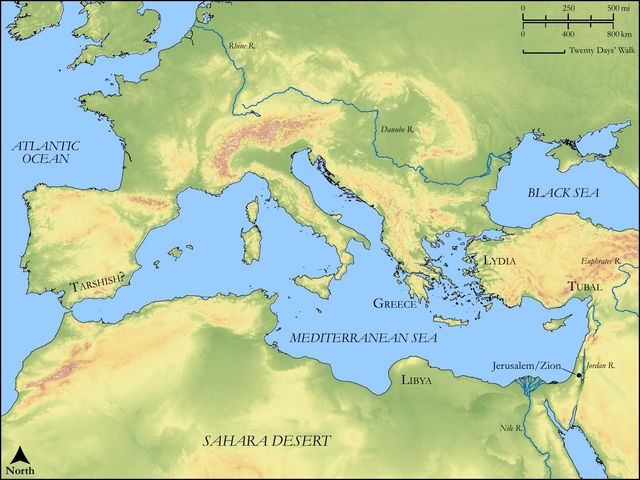
See on the biblical-era map
Study this verse
Public-domain commentary
Matthew Henry
From his Commentary on the Whole Bible. Henry comments on passages, not single verses — this entry covers Isaiah 66:1–4.
Here, I. The temple is slighted in comparison with a gracious soul, Isa 66:1, Isa 66:2. The Jews in the prophet's time, and afterwards in Christ's time, gloried much in the temple and promised themselves great things from it; to humble them therefore, and to shake their vain confidence, both the prophets and Christ foretold the ruin of the temple, that God would leave it and then it would soon be desolate. After it was destroyed by the Chaldeans it soon recovered itself and the ceremonial services were revived with it; but by the Romans it was made a perpetual desolation, and the ceremonial law was abolished with it. That the world might be prepared for this, they were often told, as here, of what little account the temple was with God. 1. That he did not need it. Heaven is the throne of his glory and government; there he sits, infinitely exalted in the highest dignity and dominion, above all blessing and praise. The earth is his footstool, on which he stands, over-ruling all the affairs of it according to his will. If God has so bright a throne, so large a footstool, where then is the house they can build unto God, that can be the residence of his glory, or where is the place of his rest? What satisfaction can the Eternal Mind take in a house made with men's hands? What occasion has he, as we have, for a house to repose himself in, who faints not neither is weary, who neither slumbers nor sleeps? Or, if he had occasion, he would not tell us (Psa 50:12), for all these things hath his hand made, heaven and all its courts, earth and all its borders, and all the hosts of both. All these things have been, have had their beginning, by the power of God, who was happy from eternity before they were, and therefore could not be benefited by them. All these things are (so some read it); they still continue, upheld by the same power that made them; so that our goodness extends not to him. If he required a house for himself to dwell in, he would have made one himself when he made the world; and, if he had made one, it would have continued to this day, as other creatures do, according to his ordinance; so that he had no need of a temple made with hands. 2. That he would not heed it as he would a humble, penitent, gracious heart. He has a heaven and earth of his own making, and a temple of man's making; but he overlooks them all, that he may look with favour to him that is poor in spirit, humble and serious, self-abasing and self-denying, whose heart is truly contrite for sin, penitent for it, and in pain to get it pardoned, and who trembles at God's word, not as Felix did, with a transient qualm that was over when the sermon was done, but with an habitual awe of God's majesty and purity and an habitual dread of his justice and wrath. Such a heart is a living temple for God; he dwells there, and it is the place of his rest; it is like heaven and earth, his throne and his footstool.
II.Sacrifices are slighted when they come from ungracious hands.
The sacrifice of the wicked is not only unacceptable, but it is an abomination to the Lord (Pro 15:8); this is largely shown here, v. 3, 4. Observe, 1. How detestable their sacrifices were to God. The carnal Jews, after their return out of captivity, though they relapsed not to idolatry, grew very careless and loose in the service of God; they brought the torn, and the lame, and the sick for sacrifice (Mal 1:8, Mal 1:13), and this made their services abominable to God; they had no regard to their sacrifices, and therefore how could they think God would have any regard to them? The unbelieving Jews, after the gospel was preached and in it notice given of the offering up of the great sacrifice, which put an end to all the ceremonial services, continued to offer sacrifices, as if the law of Moses had been still in force and could make the comers thereunto perfect: this was an abomination. He that kills an ox for his own table is welcome to do it; but he that now kills it, that thus kills it, for God's altar, is as if he slew a man; it is as great an offence to God as murder itself; he that does it does in effect set aside Christ's sacrifice, treads under foot the blood of the covenant, and makes himself accessory to the guilt of the body and blood of the Lord, setting up what Christ died to abolish. He that sacrifices a lamb, if it be a corrupt thing, and not the male in his flock, the best he has, if he think to put God off with any thing, he affronts him, instead of pleasing him; it is as if he cut off a dog's neck, a creature in the eye of the law so vile that, whereas an ass might be redeemed, the price of a dog was never to be brought into the treasury, Deu 23:18. He that offers an oblation, a meat offering or drink-offering, is as if he thought to make atonement with swine's blood, a creature that must not be eaten nor touched, the broth of it was abominable (Isa 65:4), much more the blood of it. He that burns incense to God, and so puts contempt upon the incense of Christ's intercession, is as if he blessed an idol; it was as great an affront to God as if they had paid their devotions to a false god. Hypocrisy and profaneness are as provoking as idolatry. 2. What their wickedness was which made their sacrifices thus detestable. It was because they had chosen their own ways, the ways of their own wicked hearts, and not only their hands did but their souls delighted in their abominations. They were vicious and immoral in their conversations, chose the way of sin rather than the way of God's commandments, and took pleasure in that which was provoking to God; this made their sacrifices so offensive to God, Isa 1:11-15. Those that pretend to honour God by a profession of religion, and yet live wicked lives, put an affront upon him, as if he were the patron of sin. And that which was an aggravation of their wickedness was that they persisted in it, notwithstanding the frequent calls given them to repent and reform; they turned a deaf ear to all the warnings of divine justice and all the offers of divine grace: When I called, none did answer, as before, Isa 65:12. And the same follows here that did there: They did evil before my eyes. Being deaf to what he said, they cared not what he saw, but chose that in which they knew he delighted not. How could those expect to please him in their devotions who took no care to please him in their conversations, but, on the contrary, designed to provoke him? 3. The doom passed upon them for this. Theychose their own ways, therefore, says God, I also will choose their delusions. They have made their choice (as Mr. Gataker paraphrases it), and now I will make mine; they have taken what course they pleased with me, and I will take what course I please with them. I will choose their illusions, or mockeries (so some); as they have mocked God and dishonoured him by their wickedness, so God will give them up to their enemies, to be trampled upon and insulted by them. Or they shall be deceived by those vain confidences with which they have deceived themselves. God will make their sin their punishment; they shall be beaten with their own rod and hurried into ruin by their own delusions. God will bring their fears upon them, that is, will bring upon them that which shall be a great terror to them, or that which they themselves have been afraid of and thought to escape by sinful shifts. Unbelieving hearts, and unpurified unpacified consciences, need no more to make them miserable than to have their own fears brought upon them.
Historical interpretation
Historical reception
1 surviving comment on this verse from the historical church.
(Verse 4.) They have chosen all these things in their ways, and their soul delighted in their abominations. Therefore I will also choose their delusions, and I will bring upon them what they feared. Because when I called, there was none that answered; when I spoke, they did not hear. They did evil in my sight and chose what I did not desire. (Septuagint: And they chose their own ways, and their soul desired their abominations; and I will choose their delusions, and I will repay them for their sins.) Because I called them, and they did not obey: I spoke, and they did not hear. And they did evil in my sight, and chose what I did not want. They sacrificed a bull, slaughtered a ram, offered a sacrifice, burned incense, which God considers as murder, and the offering of a dog. They chose the blood of pigs and blasphemy. And it was their choice to worship such things, as it is stated by Ezekiel: I gave them bad rules and bad commands. (Ezek. XX, 11). And they walked in their own ways, not in the way of the Lord. And their souls desired their abominations, that they would rather be lovers of themselves than lovers of God. For this reason, those who choose their own ways and not Him who says: I am the way (John 14:6), and the Lord chooses illusions, or their deceivers, who are called Thalule in Hebrew, that is, mockers, to establish the most wicked leaders and bring about all their evils, including those they feared. And you write that the reasons why they were handed over to the deceiving scribes and Pharisees, about whom the first psalm according to the Hebrews sings: And He did not sit in the seat of the deceivers, whom they call the pestilential Seventy: such were the sons of Eli, sons of pestilence, for which it is written in Hebrew Belial (or Blial) , that is, of the devil. For, he says, I called, and there was no one to answer; I spoke, and they did not hear; they did evil in My sight; and what I did not want, they chose. He places these verses second in the present location, and above, where it is said: I will number you with the sword, and you will all fall in the slaughter: because I called, and you did not answer (Isaiah 65:12), and so on. The meaning and interpretation of this testimony is explained there.
Continue studying Isaiah 66:4 across the web’s major study libraries — every link below opens this exact verse, chapter, or book on the destination site.
Read & Compare
 BibleGatewayThis verse in more than 200 translations and 70 languages.
 Bible.comThe YouVersion reader — hundreds of translations, reading plans, and highlights.
 ESV.orgCrossway's official English Standard Version reader.
 NET BibleThe NET translation with 60,000+ translators' notes on every rendering decision.
 STEP BibleTyndale House's free study tool — original text, vocabulary, and scholarly resources.
 BibliaLogos Bible Software's free web reader.
 USCCBThe New American Bible (Revised Edition) with the U.S. bishops' study notes.
Commentaries
 BibleHub CommentariesDozens of classic commentaries on this verse, gathered on one page.
 StudyLightMore than 100 commentary sets — the largest collection on the web.
 BibleRefPlain-English commentary on what this verse means, verse by verse.
 Enduring WordDavid Guzik's free commentary on this chapter, widely used by Bible teachers.
 Bible Study ToolsVerse commentary alongside Greek and Hebrew study aids.
Original Language & Research
- BibleHub InterlinearThe verse word by word — original language, transliteration, and English.
- BibleHub LexiconEvery word's original-language definition and Strong's entry.
 Blue Letter BibleDeep-study tools — Strong's numbers, concordance, and word studies.
 SefariaThe Hebrew text with Rashi and centuries of Jewish commentary.
Sermons, Hymns & Audio


TrulyRandomVerse is not affiliated with these sites and doesn’t control their content. They’re linked because they’re genuinely useful.
Summary
Isaiah 66:4 delivers a stark prophetic declaration of divine judgment against those who persistently reject God's gracious invitations and deliberately choose paths contrary to His revealed will. It reveals God's active sovereignty in bringing about the just consequences of human rebellion, where the "delusions" and "fears" are not random occurrences but divinely appointed retributions, precisely mirroring the unfaithful's active disobedience and their preference for what displeases the Lord. This verse powerfully underscores the profound accountability of humanity for its choices in light of God's persistent revelation and unwavering call.
Context
ShowHideLiterary Context
Isaiah 66 serves as the climactic conclusion to the entire prophetic book, providing a powerful synthesis of its major themes: judgment, restoration, and the nature of true worship. The chapter begins by establishing God's transcendent majesty and His preference for a humble, contrite spirit over outward religious pomp (verses 1-2). This sets the stage for a sharp contrast between the faithful remnant, who "tremble at [His] word," and the rebellious, who engage in abhorrent practices while claiming religious devotion (verse 3). Verse 4 directly follows this indictment, articulating the divine rationale for the impending judgment: the people's deliberate refusal to heed God's calls and their active choice of evil. The subsequent verses (66:5-17) further elaborate on the Lord's vindication of His loyal servants and the ultimate destruction of His adversaries, culminating in the glorious vision of a new heavens and new earth and the ingathering of all nations to worship the Lord (66:18-24).
Historical & Cultural Context
The historical backdrop of Isaiah 66 is generally understood to be the post-exilic or late exilic period, a time when the Jewish community was grappling with the challenges of rebuilding their nation and their spiritual identity. While many had returned from Babylonian exile, the spiritual state of the community was far from ideal. There was a pervasive tendency towards ritualism without genuine heart-change, syncretism with pagan practices, and a general spiritual apathy. The prophet addresses a people who, despite having experienced God's judgment and restoration, continued to engage in outward religious observance while their hearts were far from Him, even participating in practices explicitly forbidden by the Mosaic Law (e.g., sacrificing pigs, eating detestable things, v. 3). The "delusions" and "fears" mentioned in the verse reflect the inherent consequences of abandoning the true God for idols or self-devised worship, leading to spiritual confusion, societal instability, and vulnerability to both internal moral decay and external threats.
Key Themes
ShowHideIsaiah 66:4 encapsulates several profound theological and narrative themes woven throughout the book of Isaiah and the broader prophetic corpus. Foremost among these is the theme of Divine Retribution and Consequence, which asserts that God is not a passive observer but an active, sovereign agent who brings about the just outcomes of human choices. The "delusions" and "fears" are not arbitrary misfortunes but divinely orchestrated consequences, demonstrating that the punishment precisely fits the crime of a people who "chose [that] in which I delighted not." Another critical theme is the Rejection of God's Call and Word. The repeated clauses, "when I called, none did answer; when I spake, they did not hear," powerfully underscore the deliberate and culpable nature of their disobedience, echoing the warnings found in Proverbs 1:24-27. This highlights the people's profound spiritual deafness and their willful refusal to respond to God's persistent revelation. Finally, the verse strongly emphasizes Human Accountability and Intentional Sin, as the people "did evil before mine eyes" and "chose" what God abhorred. This is not a passive error but an active, conscious decision to rebel against God's revealed will and His very character, a theme also deeply explored in Romans 1:21-25.
Exposition and Analysis
ShowHideKey Word Analysis
ShowHideThis word literally denotes "caprice" or "vexation," and can even refer to a "tyrant." In this context, it signifies the foolish, self-chosen, and ultimately destructive ways that God will allow or even orchestrate for the rebellious. It implies a state of moral and spiritual blindness, where their own perverse choices become their judgment, leading them further astray into self-inflicted trouble and spiritual deception. It's the very path they desired, now turned into their undoing.
This primitive root means "to arrange" or, more commonly, "to speak." It signifies God's active, intentional, and authoritative communication. The use of this word emphasizes that God's word was not merely available or whispered, but was clearly and authoritatively declared, making the people's failure to hear and obey all the more culpable. It underscores the clarity and directness of God's divine address.
This root means "to incline to," "to be pleased with," or "to desire." It expresses God's divine pleasure, His will, and what brings Him joy. The phrase "chose [that] in which I delighted not" highlights the direct opposition between the people's choices and God's desires, underscoring their deliberate rejection of His character, His good will for them, and the very things that would bring them life and blessing.
Verse Breakdown
ShowHide"I also will choose their delusions"
God, in His sovereign judgment, declares His active intention to select or permit the very deceptions, foolish ways, or self-destructive paths that the rebellious have chosen for themselves. This is not arbitrary punishment but a divine orchestration where their own preferred spiritual blindness becomes their deserved consequence, leading them deeper into error and self-inflicted harm.
"and will bring their fears upon them"
As a direct and divinely ordained consequence of their choices, God will cause the very terrors, anxieties, or dreadful outcomes that they sought to avoid, or the natural repercussions of their ungodly actions, to befall them. Their rebellion will culminate in the experience of the very things they feared, or the just recompense for their defiance.
"because when I called, none did answer"
This clause provides the primary justification for God's severe judgment. It highlights God's gracious initiative in reaching out to His people through His prophets, His law, and His providential workings, yet they deliberately refused to respond, acknowledge, or obey His summons, demonstrating a willful stubbornness.
"when I spake, they did not hear"
Reinforcing the previous point, this emphasizes the active, clear, and persistent nature of God's communication. He did not merely call, but He "spake"—He declared, commanded, and reasoned—yet they willfully closed their ears, demonstrating a profound spiritual deafness and an intentional unwillingness to heed divine instruction.
"but they did evil before mine eyes"
This reveals the intentionality, brazenness, and audacious nature of their sin. Their actions were not merely accidental or ignorant but were deliberate acts of wickedness, performed openly and in direct defiance of God's omnipresent sight and His holy moral standards, a direct affront to His presence.
"and chose [that] in which I delighted not"
This final clause encapsulates their ultimate rebellion and culpability. It underscores their active, conscious, and willful decision to pursue that which was contrary to God's character, His holy will, and His divine pleasure. Their sin was not passive but an intentional preference for ungodliness over divine delight, sealing their profound culpability and meriting judgment.
Literary Devices
ShowHideIsaiah 66:4 employs several potent literary devices to convey its message of divine judgment with striking clarity and force. Parallelism is prominently featured in the symmetrical structure of the accusations: "when I called, none did answer; when I spake, they did not hear." This repetition, a hallmark of Hebrew poetry, emphasizes the persistent nature of God's outreach and the equally persistent and stubborn nature of the people's rejection. Anthropomorphism is evident in God's declaration, "I also will choose their delusions, and will bring their fears upon them," attributing human-like actions of choosing and bringing to God. This highlights His active involvement and sovereign control over the consequences of human sin, rather than merely a passive observation. The verse also powerfully demonstrates Retribution Theology, where the punishment directly and justly fits the crime: because they chose what displeased God, God chooses their delusions; because they did not hear God's word, they will experience the fears that result from their ungodly choices. This direct correlation underscores the justice and intentionality of divine judgment, where the very path of rebellion becomes the path of their undoing.
Theological and Thematic Connections
ShowHideIsaiah 66:4 powerfully articulates the principle of divine retribution, where God sovereignly orchestrates the consequences of human rebellion. It underscores that God's judgment is not arbitrary or capricious but a just and intentional response to persistent disobedience and active rejection of His revealed will. The "delusions" and "fears" are not external impositions but are intrinsically linked to the choices made by those who refused to answer God's call and deliberately chose evil. This concept resonates throughout Scripture, affirming that God ultimately gives people over to the natural and spiritual consequences of their stubborn hearts, allowing their chosen paths to become their undoing. This serves as a severe warning against spiritual apathy, intentional defiance, and the dangers of self-deception, highlighting that God's patience has limits and His justice is certain and unwavering.
Reflection and Application
ShowHideIsaiah 66:4 serves as a profound and sobering reminder of the gravity of our choices and the critical importance of cultivating a responsive heart to God's voice. It challenges us to move beyond mere outward religious observance to embrace genuine humility, a deep reverence for God's word, and a willingness to obey. In a world saturated with distractions and competing voices, this verse calls us to actively discern and heed God's calls, whether conveyed through His written word, the promptings of the Holy Spirit, or the wise counsel of godly community. Ignoring God's invitations or deliberately choosing paths that contradict His revealed will inevitably leads to spiritual blindness, self-deception, and the very anxieties and destructive outcomes we seek to avoid. We are urged to examine our lives with brutal honesty: Are we truly listening when God speaks? Are our daily choices aligned with what delights Him, or are we pursuing our own "delusions" and desires that run contrary to His will? The verse compels us to choose wisdom, obedience, and a life that genuinely pleases the Lord, recognizing that our ultimate well-being, peace, and security are found only in aligning our will with His.
Questions for Reflection
ShowHideFAQ
ShowHideDoes God actively cause people to be deluded or fearful, or does He merely allow it?
ShowHideThe language of Isaiah 66:4, "I also will choose their delusions, and will bring their fears upon them," indicates God's active, judicial involvement, not merely passive allowance. This is a divine act of retribution, where God orchestrates or confirms the consequences for those who have already chosen rebellion and rejected His truth. It's crucial to understand that God does not introduce evil into a pure heart; rather, when people consistently refuse to acknowledge God, reject His call, and deliberately choose what displeases Him, God, in His perfect justice, may give them over to their own chosen paths. This allows their self-deception to deepen and their chosen fears or the natural consequences of their ungodliness to materialize. This concept is powerfully echoed in New Testament passages like Romans 1:24-28, where God "gives them over" to their depraved minds and desires, and 2 Thessalonians 2:11-12, where God "sends them a strong delusion" so that they may believe what is false because they refused to love the truth. Thus, God's action is a righteous and just response to persistent, willful rebellion against His light and truth.
Christ-Centered Fulfillment
ShowHideIsaiah 66:4, with its stark portrayal of divine judgment against those who reject God's call and choose their own ways, finds its ultimate fulfillment and profound reinterpretation in the person and redemptive work of Jesus Christ. The "call" and "word" of God that were ignored by ancient Israel are perfectly embodied in Jesus, who is the eternal Word made flesh, the very radiance of God's glory. He came to His own, but tragically, His own received Him not, echoing the very rebellion described by Isaiah. Those who rejected Jesus, the ultimate expression of God's delight and will, faced spiritual blindness and the consequences of their unbelief, as Jesus Himself lamented over Jerusalem, "how often would I have gathered your children together...and you were not willing!" (Matthew 23:37). The "delusions" and "fears" brought upon the disobedient find their ultimate spiritual reality in the consequences of rejecting the Gospel: a hardening of heart, a continued embrace of spiritual darkness, and ultimately, eternal separation from God, which is the ultimate and most profound fear. However, for those who answer the call of Christ, who hear His voice and follow Him, there is no judgment but eternal life. Jesus, by bearing the full weight of God's righteous judgment on the cross, offers deliverance from these very "delusions" and "fears," inviting all to choose Him, in whom God is truly delighted, and find true peace, reconciliation, and the joy of eternal fellowship with God. He is the path to choosing what truly delights God.