


Exodus 16:8
- וַיֹּאמֶרvai·Yo·merand he saidH559Conj-w ¦ V-Qal-ConsecImperf-3msVerb Qal Consecutive Imperfect 3rd Singular Masculineוַandיֹּאמֶרhe said
- מֹשֶׁהmo·ShehMosesH4872N-proper-mNoun Proper Masculine
- בְּתֵתbe·Tetwhen givesH5414Prep-b ¦ V-Qal-InfVerb Qal Infinitive Constructבְּwhenתֵתgives
- יְהוָהYah·wehYahwehH3068N-properNoun Proper Title
- לָכֶםla·Khemto <the> youPrep-l ¦ 2mpSuffix Personal 2nd Plural Masculineלָto <the>כֶםyou
- בָּעֶרֶבba·'E·revin the eveningH6153Prep-b ¦ N-msNoun Singular Masculine Absoluteבָּin theעֶרֶבevening
- בָּשָׂרba·SarmeatH1320N-msNoun Singular Masculine Absolute
- לֶאֱכֹלle·'e·Kholto eatH398Prep-l ¦ V-Qal-InfVerb Qal Infinitive Constructלֶtoאֱכֹלeat
- וְלֶחֶםve·Le·chemand breadH3899Conj-w ¦ N-msNoun Singular Masculine Absoluteוְandלֶחֶםbread
- בַּבֹּקֶרba·Bo·kerin the morningH1242Prep-b ¦ N-msNoun Singular Masculine Absoluteבַּin theבֹּקֶרmorning
- לִשְׂבֹּעַlis·Bo·a'to be satisfiedH7646Prep-l ¦ V-Qal-InfVerb Qal Infinitive Constructלִtoשְׂבֹּעַbe satisfied
- בִּשְׁמֹעַbish·Mo·a'because has heardH8085Prep-b ¦ V-Qal-InfVerb Qal Infinitive Constructבִּbecauseשְׁמֹעַhas heard
- יְהוָהYah·wehYahwehH3068N-properNoun Proper Title
- אֶת'et<obj.>H853DirObjMParticle Object Indicator
- תְּלֻנֹּתֵיכֶםte·lu·No·tei·Khemyour grumblingsH8519N-fpc ¦ 2mpNoun Plural Feminine Constructתְּלֻנֹּתֵיgrumblingsכֶםyour
- אֲשֶׁר'a·SherwhichH834RelParticle Relative
- אַתֶּם'a·TemyouH859Pro-2mpPronoun Personal 2nd Plural Masculine
- מַלִּינִםma·li·Nim[are] grumblingH3885V-Hiphil-Prtcpl-mpVerb Hiphil Participle Plural Masculine Absolute
- עָלָיו'a·Lavon himH5921Prep ¦ 3msPreposition Definiteעָלָיonוhim
- וְנַחְנוּve·Nach·nuand [are] weH5168Conj-w ¦ Pro-1cpPronoun Personal 1st Plural common genderוְandנַחְנוּ[are] we
- מָהMahwhat?H4100InterrogPronoun Interrogative
- לֹאlo'notH3808NegParticle Negative
- עָלֵינוּ'a·Lei·nu[are] on usH5921Prep ¦ 1cpPreposition Definiteעָלֵי[are] onנוּus
- תְלֻנֹּתֵיכֶםte·lu·no·tei·Khemyour grumblingsH8519N-fpc ¦ 2mpNoun Plural Feminine Constructתְלֻנֹּתֵיgrumblingsכֶםyour
- כִּיkiforH3588PrtParticle Conditional
- עַל'alonH5921PrepPreposition
- יְהוָהYah·wehYahwehH3068N-properNoun Proper Title
English is a literal word-by-word gloss of the Hebrew, not the KJV's wording. Why?
This is the original text the KJV's translators worked from — each Hebrew word with its own literal English meaning in this verse, prepared by scholars at Tyndale House, Cambridge. The KJV translates whole sentences, not word by word, so its wording differs: one Hebrew word can become several English words, and the KJV may choose “the LORD” where the gloss reads “Yahweh”. Both are faithful — they answer different questions. For the KJV's own rendering, switch to the KJV text.
Details
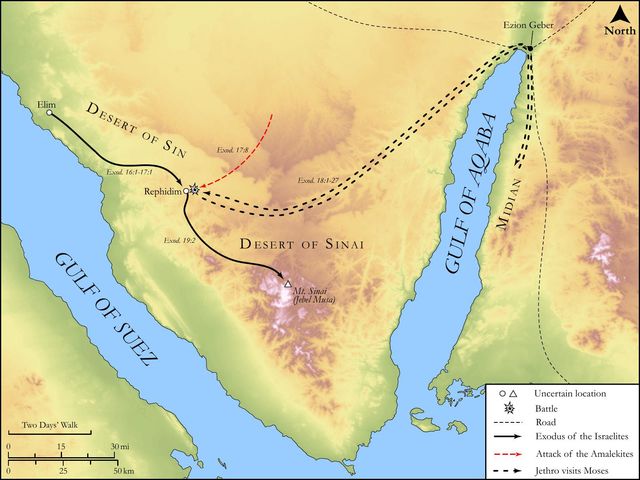
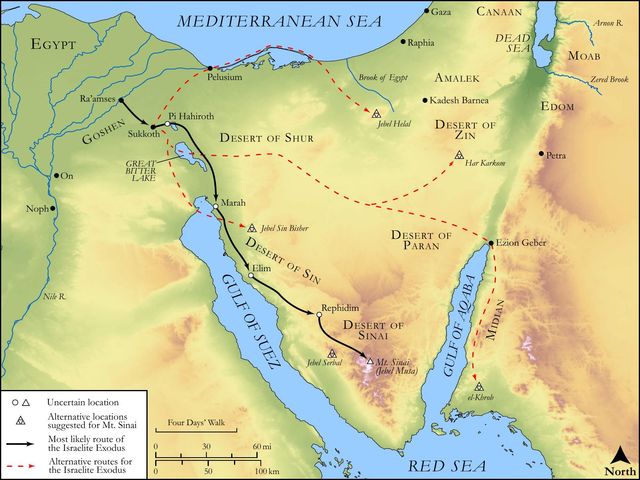
See on the biblical-era maps

Study this verse
Public-domain commentary
Matthew Henry
From his Commentary on the Whole Bible. Henry comments on passages, not single verses — this entry covers Exodus 16:1–12. His four-level outline is real structure in the source text, so it is rendered as structure.
The host of Israel, it seems, took along with them out of Egypt, when they came thence on the fifteenth day of the first month, a month's provisions, which, by the fifteenth day of the second month, was all spent; and here we have,
I.Their discontent and murmuring upon that occasion, Exo 16:2, Exo 16:3.
The whole congregation, the greatest part of them, joined in this mutiny; it was not immediately against God that they murmured, but (which was equivalent) against Moses and Aaron, God's viceregents among them.
1.They count upon being killed in the wilderness - nothing less, at the first appearance of disaster. If the Lord had been pleased to kill them, he could easily have done that in the Red Sea; but then he preserved them, and now could as easily provide for them. It argues great distrust of God, and of his power and goodness, in every distress and appearance of danger to despair of life, and to talk of nothing but being speedily killed.
2.They invidiously charge Moses with a design to starve them when he brought them out of Egypt; whereas what he had done was both by order from God and with a design to promote their welfare. Note, It is no new thing for the greatest kindnesses to be misinterpreted and basely represented as the greatest injuries. The worst colours are sometimes put upon the best actions. Nay,
3.They so far undervalue their deliverance that they wish they had died in Egypt, nay, and died by the hand of the Lord too, that is, by some of the plagues which cut off the Egyptians, as if it were not the hand of the Lord, but of Moses only, that brought them into this hungry wilderness. It is common for people to say of that pain, or sickness, or sore, of which they see not the second causes, "It is what pleases God," as if that were not so likewise which comes by the hand of man, or some visible accident. Prodigious madness! They would rather die by the fleshpots of Egypt, where they found themselves with provision, than live under the guidance of the heavenly pillar in a wilderness and be provided for by the hand of God! they pronounce it better to have fallen in the destruction of God's enemies than to bear the fatherly discipline of his children! We cannot suppose that they had any great plenty in Egypt, how largely soever they now talk of the flesh-pots; nor could they fear dying for want in the wilderness, while they had their flocks and herds with them. But discontent magnifies what is past, and vilifies what is present, without regard to truth or reason. None talk more absurdly than murmurers. Their impatience, ingratitude, and distrust of God, were so much the worse in that they had lately received such miraculous favours, and convincing proofs both that God could help them in the greatest exigencies and that really he had mercy in store for them. See how soon they forgot his works, and provoked him at the sea, even at the Red Sea, Psa 106:7-13. Note, Experiences of God's mercies greatly aggravate our distrusts and murmurings.
II.The care God graciously took for their supply.
Justly he might have said, "I will rain fire and brimstone upon these murmurers, and consume them;" but, quite contrary, he promises to rain bread upon them. Observe,
1.How God makes known to Moses his kind intentions, that he might not be uneasy at their murmurings, nor be tempted to wish he had let them alone in Egypt.
(1.)He takes notice of the people's complaints: I have heard the murmurings of the children of Israel, Exo 16:12. As a God of pity, he took cognizance of their necessity, which was the occasion of their murmuring; as a just and holy God, he took cognizance of their base and unworthy reflections upon his servant Moses, and was much displeased with them. Note, When we begin to fret and be uneasy, we ought to consider that God hears all our murmurings, though silent, and only the murmurings of the heart. Princes, parents, masters, do not hear all the murmurs of their inferiors against them, and it is well they do not, for perhaps they could not bear it; but God hears, and yet bears. We must not think, because God does not immediately take vengeance on men for their sins, that therefore he does not take notice of them; no, he hears the murmurings of Israel, and is grieved with this generation, and yet continues his care of them, as the tender parent of the froward child.
(2.)He promises them a speedy, sufficient, and constant supply, Exo 16:4. Man being made out of the earth, his Maker has wisely ordered him food out of the earth, Psa 104:14. But the people of Israel, typifying the church of the first-born that are written in heaven, and born from above, and being themselves immediately under the direction and government of heaven, receiving their charters, laws, and commissions, from heaven, from heaven also received their food: their law being given by the disposition of angels, they did also eat angels' food. See what God designed in making this provision for them: That I may prove them, whether they will walk in my law or no.
[1.]Thus he tried whether they would trust him, and walk in the law of faith or no, whether they could live from hand to mouth, and (though now uneasy because their provisions were spent) could rest satisfied with the bread of the day in its day, and depend upon God for fresh supplies tomorrow.
[2.]Thus he tried whether they would serve him, and be always faithful to so good a Master, that provided so well for his servants; and hereby he made it appear to all the world, in the issue, what an ungrateful people they were, whom nothing could affect with a sense of obligation. Let favour be shown to them, yet will they not learn righteousness, Isa 26:10.
2.How Moses made known these intentions to Israel, as God ordered him. Here Aaron was his prophet, as he had been to Pharaoh. Moses directed Aaron what to speak to the congregation of Israel (Exo 16:9); and some think that, while Aaron was giving a public summons to the congregation to come near before the Lord, Moses retired to pray, and that the appearance of the glory of the Lord (Exo 16:10) was in answer to his prayer. They are called to come near, as Isa 1:18, Come, and let us reason together. Note, God condescends to give even murmurers a fair hearing; and shall we then despise the cause of our inferiors when they contend with us? Job 31:13.
(1.)He convinces them of the evil of their murmurings. They thought they reflected only upon Moses and Aaron, but here they are told that God was struck at through their sides. This is much insisted on (Exo 16:7, Exo 16:8): "Your murmurings are not against us, then we would have been silent, but against the Lord; it was he that led you into these straits, and not we." Note, When we murmur against those who are instruments of any uneasiness to us, whether justly or unjustly, we should do well to consider how much we reflect upon God by it; men are but God's hand. Those that quarrel with the reproofs and convictions of the word, and are angry with their ministers when they are touched in a tender part, know not what they do, for therein they strive with their Maker. Let this for ever stop the mouth of murmuring, that it is daring impiety to murmur at God, because he is God; and gross absurdity to murmur at men, because they are but men.
(2.)He assures them of the supply of their wants, that since they had harped upon the flesh-pots so much they should for once have flesh in abundance that evening, and bread the next morning, and so on every day thenceforward, Exo 16:8, Exo 16:12. Many there are of whom we say that they are better fed than taught; but the Israelites were thus fed, that they might be taught. He led him about, he instructed him (Deu 32:10); and, as to this instance, see Deu 8:3, He fed thee with manna, that thou mightest know that man doth not live by bread only. And, besides this, here are two things mentioned, which he intended to teach them by sending them manna: - [1.] By this you shall know that the Lord hath brought you out from the land of Egypt, Exo 16:6. That they were brought out of Egypt was plain enough; but so strangely sottish and short-sighted were they that they said it was Moses that brought them out, Exo 16:3. Now God sent them manna, to prove that it was no less than infinite power and goodness that brought them out, and this could perfect what was begun. If Moses only had brought them out of Egypt, he could not thus have fed them; they must therefore own that that was the Lord's doing, because this was so, and both were marvellous in their eyes; yet, long afterwards, they needed to be told that Moses gave them not this bread from heaven, Joh 6:32. [2.] By this you shall know that I am the Lord your God, Exo 16:12. This gave proof of his power as the Lord, and his particular favour to them as their God. When God plagued the Egyptians, it was to make them know that he was the Lord; when he provided for the Israelites, it was to make them know that he was their God.
3.How God himself manifested his glory, to still the murmurings of the people, and to put a reputation upon Moses and Aaron, Exo 16:10. While Aaron was speaking, the glory of the Lord appeared in the cloud. The cloud itself, one would think, was enough both to strike an awe upon them and to give encouragement to them; yet, in a few days, it had grown so familiar to them that it made no impression upon them, unless it shone with an unusual brightness. Note, What God's ministers say to us is then likely to do us good when the glory of God shines in with it upon our souls.
Continue studying Exodus 16:8 across the web’s major study libraries — every link below opens this exact verse, chapter, or book on the destination site.
Read & Compare
 BibleGatewayThis verse in more than 200 translations and 70 languages.
 Bible.comThe YouVersion reader — hundreds of translations, reading plans, and highlights.
 ESV.orgCrossway's official English Standard Version reader.
 NET BibleThe NET translation with 60,000+ translators' notes on every rendering decision.
 STEP BibleTyndale House's free study tool — original text, vocabulary, and scholarly resources.
 BibliaLogos Bible Software's free web reader.
 USCCBThe New American Bible (Revised Edition) with the U.S. bishops' study notes.
Commentaries
 BibleHub CommentariesDozens of classic commentaries on this verse, gathered on one page.
 StudyLightMore than 100 commentary sets — the largest collection on the web.
 BibleRefPlain-English commentary on what this verse means, verse by verse.
 Enduring WordDavid Guzik's free commentary on this chapter, widely used by Bible teachers.
 Bible Study ToolsVerse commentary alongside Greek and Hebrew study aids.
Original Language & Research
- BibleHub InterlinearThe verse word by word — original language, transliteration, and English.
- BibleHub LexiconEvery word's original-language definition and Strong's entry.
 Blue Letter BibleDeep-study tools — Strong's numbers, concordance, and word studies.
 SefariaThe Hebrew text with Rashi and centuries of Jewish commentary.
Sermons, Hymns & Audio


TrulyRandomVerse is not affiliated with these sites and doesn’t control their content. They’re linked because they’re genuinely useful.
Summary
Exodus 16:8 captures a pivotal moment in the wilderness narrative where Moses confronts the Israelites' persistent complaints about hunger, revealing that their grumbling, though seemingly directed at human leaders, is a direct affront to God Himself. In response, Moses announces God's impending miraculous provision of meat in the evening and abundant bread in the morning, demonstrating divine faithfulness and sovereignty even in the face of human doubt and rebellion. This declaration underscores God's intimate awareness of His people's hearts and His unwavering commitment to His covenant, even as He exposes the true nature of their sin.
Context
ShowHideLiterary Context
This verse is deeply embedded within the narrative of Israel's wilderness journey following their dramatic deliverance from Egyptian bondage. Specifically, it appears after the crossing of the Red Sea in Exodus 14 and the initial challenge of the bitter waters at Marah in Exodus 15. The immediate context in Exodus 16:1-7 details the Israelites' arrival in the Wilderness of Sin, where they quickly voice their discontent over the lack of food, expressing a nostalgic longing for the "flesh pots" of Egypt. Moses and Aaron are presented as the immediate recipients of these complaints. Therefore, Exodus 16:8 serves as Moses' divinely inspired response, clarifying the profound spiritual dimension of their grumbling and setting the stage for God's miraculous provision of manna and quail, which begins to unfold from Exodus 16:11. It marks a crucial turning point, shifting the focus from the people's sin to God's compassionate yet firm response, emphasizing His sovereignty over their sustenance.
Historical & Cultural Context
The Israelites, a vast multitude estimated in the millions, had recently been liberated from centuries of brutal slavery in Egypt. Their journey into the desert, an arid and inhospitable environment, presented immediate and severe challenges to their survival, particularly regarding a consistent supply of food and water. Despite having witnessed the ten plagues and the miraculous Red Sea deliverance, their faith was shallow and easily tested by physical hardship. Their "murmurings" were not merely expressions of discomfort but reflected a deep-seated lack of trust in God's ability and willingness to sustain them in this new, unfamiliar context of freedom and dependence. Culturally, such a large group would have had immense logistical needs, and the desert offered no natural means to meet them. Their complaints reflect a common human tendency to revert to known, albeit oppressive, security rather than embracing the unknown freedom and radical dependence on God. This period in the wilderness was divinely purposed as a proving ground, intended to teach them absolute reliance on God and to solidify His covenant relationship with them, as hinted at in Exodus 16:4.
Key Themes
ShowHideExodus 16:8 contributes significantly to several overarching themes within the book of Exodus and the Pentateuch. First, it powerfully illustrates the theme of Divine Provision and Sovereignty. Despite Israel's unfaithfulness, God demonstrates His absolute power and willingness to sustain His people, providing food where there is none. Second, it highlights the recurring theme of Human Rebellion and Lack of Faith. The Israelites' murmurings are a consistent motif throughout the wilderness journey, exposing their spiritual immaturity and their struggle to trust God beyond immediate circumstances. This theme is further developed in passages like Numbers 14. Third, the verse underscores the Nature of Sin as Rebellion Against God. Moses clarifies that their complaints are not merely against human leaders but ultimately against the LORD Himself, elevating the issue from a logistical problem to a theological one. Finally, it reinforces the theme of God's Covenant Faithfulness, as He continues to act on behalf of His people despite their provocations, remaining true to His promises made to Abraham, Isaac, and Jacob.
Exposition and Analysis
ShowHideKey Word Analysis
ShowHideThis term (H1320) refers to the physical body or meat. In the context of Exodus 16:8, it specifically denotes the meat that God promises to provide in the evening, fulfilling the Israelites' longing for the "flesh pots" of Egypt. It signifies tangible, physical sustenance, highlighting God's direct and practical response to their hunger. The use of this word emphasizes the concrete nature of God's provision, addressing their immediate physical need.
This is the sacred, covenantal name of God (H3068), often transliterated as Yahweh. It signifies "the self-Existent or Eternal One." Its repeated use throughout this verse, particularly in phrases like "the LORD shall give you" and "the LORD heareth your murmurings," profoundly emphasizes that it is the personal, faithful, covenant-keeping God who is actively involved in their situation. Their complaints are not against an impersonal force or mere human leaders, but against the very God who delivered them and entered into a relationship with them, highlighting the intensely personal nature of their rebellion.
This term (H8519), derived from the root lûwn (H3885) meaning "to stop (usually over night); by implication, to stay permanently; hence (in a bad sense) to be obstinate (especially in words, to complain)," signifies more than a casual complaint. It denotes a deep-seated, persistent grumbling, often implying a rebellious attitude, a lack of trust, or even a challenge to authority. In the context of Exodus, it consistently points to the Israelites' discontent not just with their circumstances or leaders, but ultimately with God Himself and His divine plan. It suggests a profound spiritual dissatisfaction and a questioning of God's goodness and sovereignty.
Verse Breakdown
ShowHide"And Moses said, [This shall be], when the LORD shall give you in the evening flesh to eat, and in the morning bread to the full"
Moses announces God's specific and abundant provision. The phrase "[This shall be]" implies a direct divine decree and promise, emphasizing the certainty of God's action. God is not merely reacting but demonstrating His sovereign power and faithfulness by promising to provide both meat (quail) in the evening and bread (manna) in the morning, ensuring their complete satisfaction ("to the full"). This promise directly addresses their stated need for food and anticipates the miraculous daily provision that will sustain them for forty years in the wilderness.
"for that the LORD heareth your murmurings which ye murmur against him"
This clause reveals the divine rationale behind God's action and exposes the true nature of the Israelites' sin. God is omniscient; He hears every complaint, even those whispered in the wilderness. Crucially, Moses clarifies that their "murmurings" are not just heard, but are against Him (God). This reorients the people's perspective, exposing the true target of their discontent. Their grumbling is not merely a logistical complaint but a direct affront to God's authority, wisdom, and love, a challenge to His covenant faithfulness.
"and what [are] we? your murmurings [are] not against us, but against the LORD."
Moses and Aaron humble themselves, deflecting the complaints from their own persons. By asking "what are we?", they emphasize their subordinate role as God's appointed servants, not the ultimate source of their circumstances or provision. This rhetorical question serves to redirect the Israelites' focus entirely from human leadership to the divine authority. It underscores that their rebellion is a theological issue, a direct challenge to God's sovereignty and goodness, not merely a dispute with their human leaders.
Literary Devices
ShowHideThe passage employs several significant literary devices to convey its powerful message. The Repetition of the phrase "the LORD" (YHWH) and "your murmurings" powerfully emphasizes the divine recipient of the complaints and the persistent nature of the people's sin. This repetition draws a stark contrast between God's unwavering faithfulness and the Israelites' fickle trust. A Rhetorical Question is skillfully used by Moses with "and what [are] we?", which serves to humble himself and Aaron while simultaneously elevating God's supreme authority, effectively shifting the focus of the people's rebellion from human leaders to the divine. This also functions as a form of Apostrophe, as Moses directly addresses the complaining Israelites, though the true subject of the discourse is God's response to their sin. Finally, there is a clear Antithesis established between the Israelites' human-directed complaints and their true, divine target: "your murmurings [are] not against us, but against the LORD." This sharp contrast highlights the profound spiritual nature of their discontent and God's perception of their rebellion.
Theological and Thematic Connections
ShowHideExodus 16:8 profoundly illustrates the nature of human sin and divine faithfulness. It reveals that dissatisfaction with circumstances or human authorities often stems from a deeper distrust or rebellion against God's sovereignty and provision. God, though offended by their grumbling, still demonstrates His unwavering commitment to His covenant people by promising to meet their needs abundantly. This act of provision, even in the face of their sin, highlights His grace and patience, while simultaneously clarifying the serious spiritual implications of their complaints. It teaches that God is intimately aware of His people's hearts and words, and that true peace and satisfaction come from trusting in His ultimate plan and provision, rather than succumbing to discontent. This passage serves as a foundational text for understanding the dynamics of God's relationship with His often-rebellious people.
Reflection and Application
ShowHideExodus 16:8 serves as a timeless mirror reflecting the human tendency towards discontent and the divine response of unwavering faithfulness. In our own lives, it is remarkably easy to grumble about perceived lacks, difficult circumstances, or the actions of those in authority. This verse challenges us to look beyond the immediate object of our frustration and consider whether our complaints are, at their root, an expression of distrust in God's ultimate control and goodness. Just as God heard the Israelites' murmurings, He hears ours. The passage calls us to cultivate an attitude of gratitude and faith, recognizing that God is our ultimate provider and sustainer. Rather than allowing discontent to fester, we are invited to bring our needs and anxieties to God in prayer, trusting that He is able to provide "to the full," and to transform our hearts from grumbling to grateful worship. This passage reminds us that true spiritual maturity involves recognizing God's hand in all circumstances and responding with faith rather than complaint.
Questions for Reflection
ShowHideFAQ
ShowHideWhy did God provide food for the Israelites when they were complaining against Him?
ShowHideGod provided food for the Israelites despite their complaining primarily because of His covenant faithfulness and His compassionate nature. While their "murmurings" were indeed a sin against Him, God had promised to bring them into the Promised Land and sustain them. His provision of manna and quail, as described in Exodus 16, demonstrated His power and His commitment to His people, even when they were undeserving. This act of grace also served a pedagogical purpose: to teach them dependence on Him and to test their obedience, as mentioned in Exodus 16:4. It was a display of both His justice (in hearing their complaints as rebellion) and His mercy (in meeting their needs), aiming to draw them into deeper trust rather than simply punishing their sin.
What is the significance of Moses and Aaron saying, "what are we?"?
ShowHideWhen Moses and Aaron say, "what are we?", they are demonstrating profound humility and sound spiritual leadership. They are deflecting the people's complaints from themselves and redirecting the focus to God. This rhetorical question highlights their understanding that they are merely instruments in God's hands, not the ultimate source of the Israelites' problems or solutions. By saying "your murmurings are not against us, but against the LORD," they make it clear that the people's discontent is a theological issue, a rebellion against divine authority and provision, rather than a personal grievance against human leaders. This act of self-effacement serves to magnify God's sovereignty and to expose the true nature of the people's sin, calling them to account before the Almighty.
Did the Israelites ever stop complaining after this incident?
ShowHideUnfortunately, the incident in Exodus 16 was not the last time the Israelites complained. The pattern of murmuring recurred throughout their wilderness journey, demonstrating a persistent lack of faith and a rebellious spirit. Notable instances include their complaints about water at Rephidim (Exodus 17:1-7), their fear and rebellion after the spies' report (Numbers 14:1-10), and their complaints about the manna itself (Numbers 21:5). This recurring theme highlights the deep-seated spiritual problem of unbelief and dissatisfaction, which ultimately led to the generation that left Egypt perishing in the wilderness, unable to enter the Promised Land due to their persistent unbelief and rebellion against God.
Christ-Centered Fulfillment
ShowHideExodus 16:8, with its promise of bread from heaven and meat in the evening, finds its ultimate and most profound fulfillment in Jesus Christ. While the manna provided physical sustenance for a temporal journey, Jesus declares Himself to be the true "Bread of Life" in John 6:35. He contrasts the manna, which their fathers ate and still died, with Himself, stating that whoever comes to Him will never hunger and whoever believes in Him will never thirst (John 6:49-51). The grumbling of the Israelites against Moses and God in the wilderness foreshadows humanity's inherent spiritual discontent and rebellion against God's provision, a rebellion that only Christ can truly satisfy. Jesus, the Lamb of God, provides not just physical food but eternal life (John 6:27), overcoming the spiritual hunger and death that the manna could not. His sacrifice on the cross is the ultimate provision, satisfying God's righteous demands and offering true nourishment for the soul, transforming the heart from murmuring to worship and eternal gratitude. He is the ultimate answer to humanity's deepest needs, the divine provision that truly fills "to the full" (John 6:58), ensuring that those who partake of Him will live forever.