


Psalms 108:1
Bible text: King James Version (1769 Blayney text) · Public domain
Bible text: Berean Standard Bible · Public domain
Bible text: American Standard Version (1901) · Public domain
Bible text: World English Bible, Messianic edition · Public domain
Bible text: Geneva Bible (1599) · Public domain
Bible text: Young's Literal Translation · Public domain
- Superscription
- שִׁירshira songH7892N-msNoun Singular Masculine Absolute
- מִזְמוֹרmiz·Mora psalmH4210N-msNoun Singular Masculine Absolute
- לְדָוִדle·da·Vidof DavidH1732Prep-l ¦ N-proper-mNoun Proper MasculineלְofדָוִדDavid
- Verse
- נָכוֹןna·Khon[is] steadfastH3559V-Niphal-Prtcpl-msVerb Niphal Participle Singular Masculine Absolute
- לִבִּיli·Bimy heartH3820N-msc ¦ 1csNoun Singular Masculine Constructלִבִּheartיmy
- אֱלֹהִים'E·lo·HimO GodH430N-mpNoun Plural Masculine Absolute
- אָשִׁירָה'a·Shi·rahI will singH7891V-Qal-Imperf-1csVerb Qal Imperfect 1st Singular common gender
- וַאֲזַמְּרָהva·'a·za·me·Rahand I will sing praisesH2167Conj-w ¦ V-Piel-Imperf-1csVerb Piel Imperfect 1st Singular common genderוַandאֲזַמְּרָהI will sing praises
- אַף'afalsoH637PrtParticle Interjection
- כְּבוֹדִיke·vo·Dimy honorH3519N-csc ¦ 1msNoun Singular common gender Constructכְּבוֹדִhonorיmy
English is a literal word-by-word gloss of the Hebrew, not the KJV's wording. Why?
This is the original text the KJV's translators worked from — each Hebrew word with its own literal English meaning in this verse, prepared by scholars at Tyndale House, Cambridge. The KJV translates whole sentences, not word by word, so its wording differs: one Hebrew word can become several English words, and the KJV may choose “the LORD” where the gloss reads “Yahweh”. Both are faithful — they answer different questions. For the KJV's own rendering, switch to the KJV text.
Details
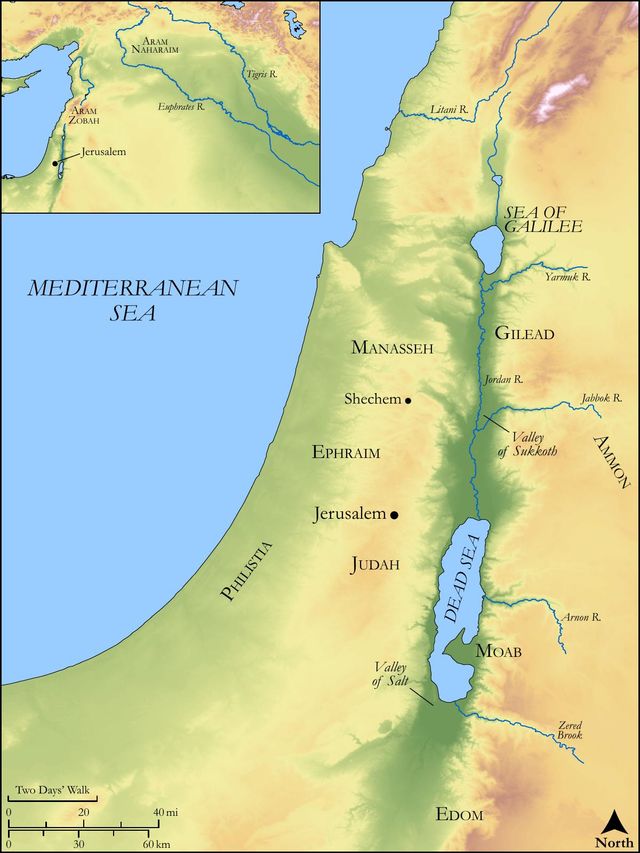
See on the biblical-era map
Study this verse
Public-domain commentary
Matthew Henry
From his Commentary on the Whole Bible. Henry comments on passages, not single verses — this entry covers Psalms 108:1–5.
We may here learn how to praise God from the example of one who was master of the art. 1. We must praise God with fixedness of heart. Our heart must be employed in the duty (else we make nothing of it) and engaged to the duty (Psa 108:1): O God! my heart is fixed, and then I will sing and give praise. Wandering straggling thoughts must be gathered in, and kept close to the business; for they must be told that here is work enough for them all. 2. We must praise God with freeness of expression: I will praise him with my glory, that is, with my tongue. Our tongue is our glory, and never more so than when it is employed in praising God. When the heart is inditing this good matter our tongue must be as the pen of a ready writer, Psa 45:1. David's skill in music was his glory, it made him famous, and this should be consecrated to the praise of God; and therefore it follows, Awake my psaltery and harp. Whatever gift we excel in we must praise God with. 3. We must praise God with fervency of affection, and must stir up ourselves to do it, that it may be done in a lively manner and not carelessly (Psa 108:2): Awake, psaltery and harp; let it not be done with a dull and sleepy tune, but let the airs be all lively. I myself will awake early to do it, with all that is within me, and all little enough. Warm devotions honour God. 4. We must praise God publicly, as those that are not ashamed to own our obligations to him and our thankful sense of his favours, but desire that others also may be in like manner affected with the divine goodness (Psa 108:3): I will praise thee among the people of the Jews; nay, I will sing to thee among the nations of the earth. Whatever company we are in we must take all occasions to speak well of God; and we must not be shy of singing psalms, though our neighbours hear us, for it looks like being ashamed of our Master. 5. We must, in our praises, magnify the mercy and truth of God in a special manner (Psa 108:4), mercy in promising, truth in performing. The heavens are vast, but the mercy of God is more capacious; the skies are high and bright, but the truth of God is more eminent, more illustrious. We cannot see further than the heavens and clouds; whatever we see of God's mercy and truth there is still more to be seen, more reserved to be seen, in the other world. 6. Since we find ourselves so, defective in glorifying God, we must beg of him to glorify himself, to do all, to dispose all, to his own glory, to get himself honour and make himself a name (Psa 108:5): Be thou exalted, O God! above the heavens, higher than the angels themselves can exalt thee with their praises, and let thy glory be spread over all the earth. Father, glorify thy own name. Thou hast glorified it; glorify it again. It is to be our first petition, Hallowed be thy name.
Continue studying Psalms 108:1 across the web’s major study libraries — every link below opens this exact verse, chapter, or book on the destination site.
Read & Compare
 BibleGatewayThis verse in more than 200 translations and 70 languages.
 Bible.comThe YouVersion reader — hundreds of translations, reading plans, and highlights.
 ESV.orgCrossway's official English Standard Version reader.
 NET BibleThe NET translation with 60,000+ translators' notes on every rendering decision.
 STEP BibleTyndale House's free study tool — original text, vocabulary, and scholarly resources.
 BibliaLogos Bible Software's free web reader.
 USCCBThe New American Bible (Revised Edition) with the U.S. bishops' study notes.
Commentaries
 BibleHub CommentariesDozens of classic commentaries on this verse, gathered on one page.
 StudyLightMore than 100 commentary sets — the largest collection on the web.
 BibleRefPlain-English commentary on what this verse means, verse by verse.
 Enduring WordDavid Guzik's free commentary on this chapter, widely used by Bible teachers.
 Bible Study ToolsVerse commentary alongside Greek and Hebrew study aids.
Original Language & Research
- BibleHub InterlinearThe verse word by word — original language, transliteration, and English.
- BibleHub LexiconEvery word's original-language definition and Strong's entry.
 Blue Letter BibleDeep-study tools — Strong's numbers, concordance, and word studies.
 SefariaThe Hebrew text with Rashi and centuries of Jewish commentary.
Sermons, Hymns & Audio


TrulyRandomVerse is not affiliated with these sites and doesn’t control their content. They’re linked because they’re genuinely useful.
Summary
Psalms 108:1 opens with a profound declaration from King David, expressing an unwavering and resolute commitment of his innermost being to God. His heart is firmly established and prepared to offer wholehearted praise and worship. This verse sets a foundational tone for the entire psalm, which masterfully combines fervent adoration with confident petition for divine intervention, highlighting that genuine worship is rooted in an unshakeable devotion to the Almighty, regardless of the circumstances or challenges faced.
Context
ShowHideLiterary Context
Psalm 108 is unique within the Psalter due to its composite nature, functioning as a deliberate anthology of earlier psalms. The first five verses (Psalms 108:1-5) are almost identical to Psalm 57:7-11, while the remainder of the psalm (Psalms 108:6-13) is drawn from Psalm 60:5-12. This intentional compilation suggests a specific theological and liturgical purpose: to unite expressions of steadfast praise with confident petition in a new context, likely for a significant national occasion or military campaign. The superscription, "A Song [or] Psalm of David," attributes its spirit and content to the revered king, emphasizing its authority and enduring relevance as a prayer for God's help in battle and a song of triumph, all firmly rooted in an unwavering heart of worship.
Historical & Cultural Context
While attributed to David, the compilation of Psalm 108 most likely occurred during a later period in Israel's history, perhaps when the nation faced a significant crisis or military engagement, echoing the sentiments of David's original prayers. Psalm 57 reflects David's personal distress and profound trust while fleeing Saul in the cave of Adullam, a time of extreme vulnerability. Psalm 60 is a lament following a military defeat (specifically against Aram and Edom), yet it concludes with a confident plea for God's intervention. By combining these, Psalm 108 recontextualizes David's personal steadfastness and a national lament into a powerful declaration of faith, often recited or sung before or during a significant conflict. In ancient Israel, psalms were integral to both personal devotion and communal worship, frequently employed during pilgrimages, temple services, or as a means to invoke divine presence and assure victory based on God's covenant promises.
Key Themes
ShowHideThis opening verse introduces several pivotal themes that resonate throughout the Psalter and the broader biblical narrative. The primary theme is Unwavering Devotion, powerfully encapsulated in the declaration "my heart is fixed." This signifies a profound, unshakeable commitment to God, a resolute spirit determined to trust and obey Him regardless of external circumstances. This steadfastness forms the bedrock upon which genuine worship is built. Closely related is Wholehearted Worship, as David proclaims, "I will sing and give praise, even with my glory." This is not a casual act but a full-bodied, all-encompassing adoration, indicating that every part of his being—his soul, his honor, his very voice—is dedicated to exalting God. It emphasizes the complete surrender and dedication required for authentic praise, a concept echoed in the call to love God with all one's heart, soul, and might found in Deuteronomy 6:5. Finally, the direct address, "O God," establishes Divine Focus, highlighting a personal and intimate relationship with the Almighty, where all attention, trust, and adoration are directed solely towards Him, reinforcing the theme of reliance on God's sovereignty for deliverance and victory, as seen throughout the book of Psalms.
Exposition and Analysis
ShowHideKey Word Analysis
ShowHideThis plural noun, often used with a singular verb, refers to the supreme God of Israel. While it can denote "gods" in a general sense, its use here, particularly with the personal address "O God," unequivocally points to the one true God, the sovereign Creator and Sustainer of all things. It signifies the ultimate object of David's devotion and the recipient of his unwavering praise.
This primitive root conveys the sense of being established, prepared, steadfast, firm, or resolute. It implies a state of stability and readiness. David's heart is not wavering, uncertain, or divided; rather, it is firmly set and oriented towards God. This "fixed" state denotes an active, intentional resolve, a deliberate choice to align one's inner being—will, emotions, and intellect—with God's will and character, serving as the foundational posture for authentic worship and trust.
This word, derived from a root meaning "heavy" or "weighty," figuratively refers to honor, splendor, dignity, or abundance. In the context of praise, particularly when referring to a person's "glory" singing or giving praise, it is often understood as the psalmist's soul, spirit, or innermost being—the very essence of his personhood and dignity. It can also, by metonymy, refer to the tongue, the instrument by which praise is vocalized, as seen in Psalm 30:12. The phrase "even with my glory" thus emphasizes a total, unreserved, and wholehearted dedication of one's entire being to the act of praise, withholding nothing.
Verse Breakdown
ShowHide"O God,"
This direct and intimate address immediately establishes the personal and covenantal nature of the psalmist's relationship with the divine. It signifies that God is the singular, supreme object of David's devotion, trust, and praise. This opening sets a tone of reverence and acknowledges God's supreme authority and ever-present reality, serving as the foundation for the subsequent declaration of unwavering commitment.
"my heart is fixed;"
This is the core declaration of the verse, revealing the inner state of the worshiper. "My heart" (Hebrew: lêb) refers to the seat of emotions, intellect, will, and conscience—the innermost being, the center of one's personality. To be "fixed" (Hebrew: kûwn) means it is firm, steadfast, resolute, and unwavering. It conveys a settled determination and an unshakeable commitment to God, implying a state of spiritual readiness and unwavering trust in His character and promises, regardless of external circumstances or challenges.
"I will sing and give praise,"
This clause expresses the active, volitional response that flows from a "fixed" heart. David declares his firm intention to express his devotion through vocal worship ("sing," Hebrew: shîyr) and adoration ("give praise," Hebrew: zâmar). This is not merely an emotional outburst but a deliberate and determined act of worship, demonstrating that internal steadfastness naturally leads to external, expressed adoration and celebration of God's character and deeds.
"even with my glory."
This phrase intensifies the preceding declaration, emphasizing the totality and depth of the intended praise. As previously analyzed, "my glory" (Hebrew: kâbôwd) refers to the psalmist's soul, spirit, or tongue. By including "even with my glory," David pledges to engage his entire being—his honor, dignity, intellect, emotions, and vocal faculties—in the act of worship. It signifies a complete, unreserved, and wholehearted dedication to exalting God, holding nothing back from the offering of praise.
Literary Devices
ShowHidePsalms 108:1 employs several powerful literary devices to convey its profound message. The most prominent is Direct Address ("O God"), which immediately establishes an intimate, personal, and reverent relationship between the psalmist and the divine, setting a tone of deep devotion and reliance. The verse also utilizes Declaration/Affirmation, as David makes a strong, unequivocal statement of his inner resolve ("my heart is fixed") and his subsequent intention to worship. This declarative mood conveys confidence, certainty, and an active will. Furthermore, the phrase "even with my glory" serves as a potent form of Metonymy, where "glory" (representing the soul, innermost being, or even the tongue) stands for the entire person or the instrument of praise. This also functions as an Intensification or a form of Hyperbole, emphasizing the absolute totality and profound depth of David's commitment to worship. It is not just a part of him, but his very essence, his honor, his all, that will be engaged in praise, demonstrating a complete surrender to God.
Theological and Thematic Connections
ShowHideThe declaration "my heart is fixed" is profoundly theological, underscoring the biblical emphasis on inner integrity and steadfast devotion as the foundational prerequisite for all true worship and obedience. It speaks to a heart that is not double-minded or wavering, but singularly committed to God. This unwavering resolve is not merely a human achievement but a faithful response to God's own unwavering character and covenant faithfulness, reflecting the dynamic relationship where God establishes His people, and they, in turn, establish their hearts on Him. This concept of a "fixed" or "steadfast" heart is crucial throughout Scripture, signifying a deep-seated trust and loyalty that enables believers to endure trials, resist temptation, and consistently walk in God's ways. It highlights that genuine praise flows from an internal posture of complete surrender and dedication, where the worshiper's entire being is aligned with God's will and character, echoing the call to love the Lord with all one's heart, soul, and might.
Reflection and Application
ShowHidePsalms 108:1 serves as a timeless and powerful call to cultivate a heart utterly devoted and "fixed" on God. In a world characterized by constant change, pervasive distractions, and profound uncertainty, our spiritual resolve can easily be swayed. David's declaration challenges us to intentionally anchor our faith and devotion in the unchanging character of God, allowing His revealed truth to establish our hearts firmly. This involves a conscious and daily decision to prioritize Him above all else, not merely in moments of corporate worship but in every aspect of life—our thoughts, emotions, decisions, and actions. Our praise, then, becomes a natural and authentic outflow of this inner steadfastness, manifesting as wholehearted adoration that engages our entire being. When our hearts are truly fixed on God, our worship becomes not just an activity, but a resilient and transformative posture of life, empowering us to face challenges with unwavering confidence and profound joy, knowing that our trust is in the One who never wavers.
Questions for Reflection
ShowHideFAQ
ShowHideWhat is the significance of Psalm 108 being a "composite" psalm?
ShowHideThe composite nature of Psalm 108 is highly significant, demonstrating a deliberate theological and liturgical act by its compilers. By combining sections from Psalm 57 and Psalm 60, the ancient editors created a new psalm with a distinct and powerful purpose. It highlights that foundational truths—steadfast praise and confident petition—remain relevant and potent across different circumstances. It takes David's personal declaration of trust (from a time of flight and vulnerability) and his national lament (from a time of military defeat) and recontextualizes them into a unified expression of faith that begins with unwavering praise and confidently moves into earnest prayer for victory. This compilation emphasizes that a fixed heart of worship is the proper starting point for all petitions, especially in times of national crisis or warfare, underscoring the enduring power of God's faithfulness.
What does "my glory" refer to in this verse?
ShowHideIn Psalms 108:1, "my glory" (Hebrew: kâbôwd') primarily refers to the psalmist's soul, spirit, or innermost being. It encompasses his honor, dignity, and the very essence of his personhood. By stating "I will sing and give praise, even with my glory," David is emphasizing that his worship will be total, unreserved, and from the deepest part of his being, holding nothing back. This signifies that his entire self, with all its faculties and worth, is dedicated to God's praise. In some contexts, and by metonymy, "glory" can also refer specifically to the tongue, as the instrument by which praise is vocalized (e.g., Psalm 30:12). This dual understanding reinforces the idea of wholehearted worship that involves both internal commitment and external, vocal expression.
How can I cultivate a "fixed" heart like David's?
ShowHideCultivating a "fixed" heart like David's involves intentional spiritual disciplines and a conscious, daily commitment to God. It begins with a deliberate choice to trust God's character and promises above all else, even amidst difficulties and uncertainties (Proverbs 3:5-6). This steadfastness is nurtured through consistent and fervent prayer, deeply meditating on God's Word to internalize its truths (Psalm 119:11), and actively relying on the Holy Spirit for strength and guidance. It also involves regularly reflecting on God's faithfulness in the past, which builds confidence for the present and future. By consciously directing our attention and adoration towards God, we ensure He remains the central priority and anchor of our lives, enabling us to face challenges with unwavering confidence and joy.
Christ-Centered Fulfillment
ShowHideDavid's declaration, "O God, my heart is fixed; I will sing and give praise, even with my glory," finds its ultimate and perfect fulfillment in the person and work of Jesus Christ. While David's heart, though sincere, was imperfect and prone to wavering, Jesus possessed a perfectly "fixed" heart—one entirely devoted and obedient to the Father in every thought, word, and deed. His entire earthly life was an unbroken song of praise and obedience, culminating in His ultimate sacrifice on the cross. He perfectly embodied the wholehearted worship David aspired to, offering Himself without blemish to God through the eternal Spirit (Hebrews 9:14). Through Christ, our own hearts, once prone to wander, can now be "fixed" on God, not by our own strength but by the transformative power of the Holy Spirit who indwells believers, enabling us to walk in newness of life and genuine obedience (Romans 8:1-4). Jesus is the Lamb of God who takes away the sin of the world (John 1:29), making it possible for us to approach God with a steadfast heart and offer a "sacrifice of praise" through Him, the fruit of lips that confess His name (Hebrews 13:15). He is not only the perfect worshiper but also the one who empowers us to worship, the "author and perfecter of our faith" (Hebrews 12:2), ensuring that our praise is acceptable and our hearts are truly fixed on the Father.