


Luke 10:23
Bible text: King James Version (1769 Blayney text) · Public domain
Bible text: Berean Standard Bible · Public domain
Bible text: American Standard Version (1901) · Public domain
Bible text: World English Bible, Messianic edition · Public domain
Bible text: Geneva Bible (1599) · Public domain
Bible text: Young's Literal Translation · Public domain
- ΚαὶKaiAndG2532CONJConjunction
- στραφεὶςstrapheishaving turnedG4762V-2APP-NSMVerb 2nd Aorist Passive Participle Nominative Singular Masculine
- πρὸςprostoG4314PREPPreposition
- τοὺςtoustheG3588T-APMDefinite article Accusative Plural Masculine
- μαθητὰςmathētasdisciplesG3101N-APMNoun Accusative Plural Masculine
- κατ᾽kat᾽inG2596PREPPreposition
- ἰδίανidianprivateG2398A-ASFAdjective Accusative Singular Feminine
- εἶπεν·eipenHe saidG2036V-2AAI-3SVerb 2nd Aorist Active Indicative 3rd Singular
- μακάριοιmakarioiBlessed [are]G3107A-NPMAdjective Nominative Plural Masculine
- οἱhoitheG3588T-NPMDefinite article Nominative Plural Masculine
- ὀφθαλμοὶophthalmoieyesG3788N-NPMNoun Nominative Plural Masculine
- οἱhoiwhichG3588T-NPMDefinite article Nominative Plural Masculine
- βλέποντεςblepontesare seeingG991V-PAP-NPMVerb Present Active Participle Nominative Plural Masculine
- ἃhawhatG3739R-APNRelative pronoun Accusative Plural Neuter
- βλέπετε·blepeteyou see!G991V-PAI-2PVerb Present Active Indicative 2nd Plural
English is a literal word-by-word gloss of the Greek, not the KJV's wording. Why?
This is the original text the KJV's translators worked from — each Greek word with its own literal English meaning in this verse, prepared by scholars at Tyndale House, Cambridge. The KJV translates whole sentences, not word by word, so its wording differs: one Greek word can become several English words, and the KJV may choose “charity” where the gloss reads “love”. Both are faithful — they answer different questions. For the KJV's own rendering, switch to the KJV text.
Details
See on the biblical-era maps
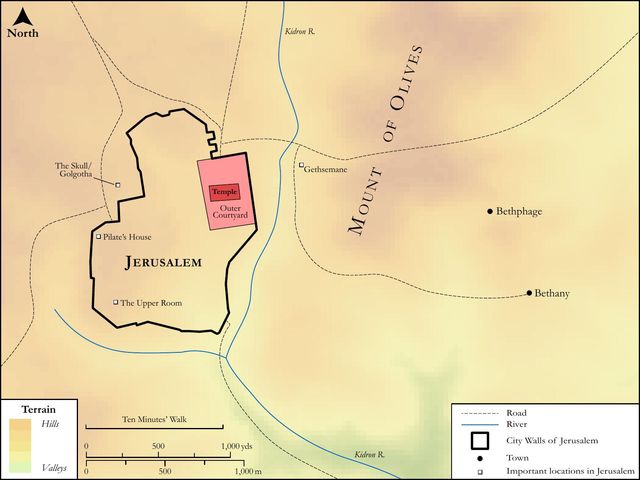

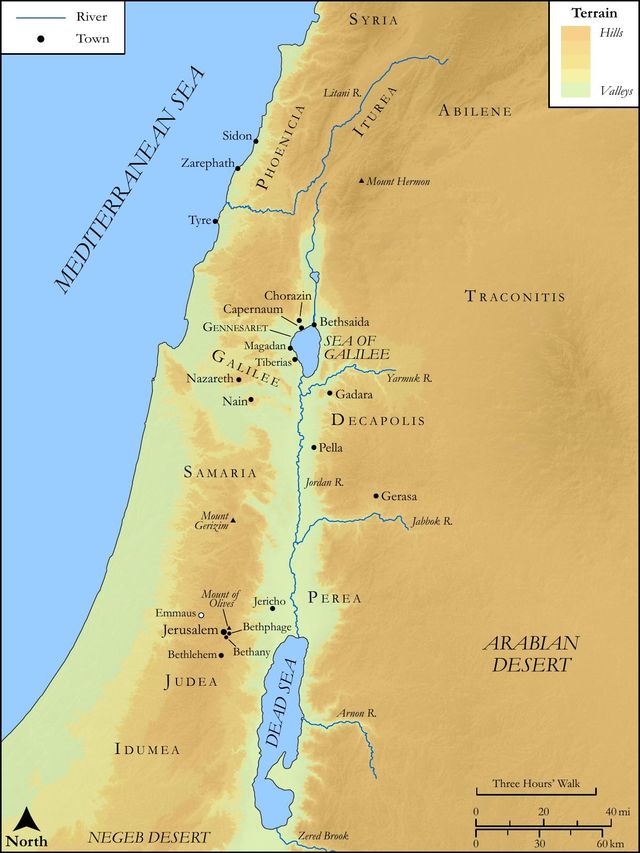
Study this verse
Public-domain commentary
Matthew Henry
From his Commentary on the Whole Bible. Henry comments on passages, not single verses — this entry covers Luke 10:17–24. His four-level outline is real structure in the source text, so it is rendered as structure.
Christ sent forth the seventy disciples as he was going up to Jerusalem to the feast of tabernacles, when he went up, not openly, but as it were in secret (Joh 7:10), having sent abroad so great a part of his ordinary retinue; and Dr. Lightfoot thinks it was before his return from that feast, and while he was yet at Jerusalem, or Bethany, which was hard by (for there he was, Luk 10:38), that they, or at least some of them, returned to him. Now here we are told,
1.What account they gave him of the success of their expedition: They returned again with joy (Luk 10:17); not complaining of the fatigue of their journeys, nor of the opposition and discouragement they met with, but rejoicing in their success, especially in casting out unclean spirits: Lord, even the devils are subject unto us through thy name. Though only the healing of the sick was mentioned in their commission (Luk 10:19), yet no doubt the casting out of devils was included, and in this they had wonderful success. 1. They give Christ the glory of this: It is through thy name. Note, all our victories over Satan are obtained by power derived from Jesus Christ. We must in his name enter the lists with our spiritual enemies, and, whatever advantages we gain, he must have all the praise; if the work be done in his name, the honour is due to his name. 2. They entertain themselves with the comfort of it; they speak of it with an air of exultation: Even the devils, those potent enemies, are subject to us. Note, the saints have no greater joy or satisfaction in any of their triumphs than in those over Satan. If devils are subject to us, what can stand before us?
II.What acceptance they found with him, and how he received this account.
1.He confirmed what they said, as agreeing with his own observation (Luk 10:18): "My heart and eye went along with you; I took notice of the success you had, and I saw Satan fall as lightning from heaven." Note, Satan and his kingdom fell before the preaching of the gospel. "I see how it is," saith Christ, "as you get ground the devil loseth ground." He falls as lightning falls from heaven, so suddenly, so irrecoverably, so visibly, that all may perceive it, and say, "See how Satan's kingdom totters, see how it tumbles." They triumphed in casting devils out of the bodies of people; but Christ sees and rejoices in the fall of the devil from the interest he has in the souls of men, which is called his power in high places, Eph 6:12. He foresees this to be but an earnest of what should now be shortly done and was already begun - the destroying of Satan's kingdom in the world by the extirpating of idolatry and the turning of the nations to the faith of Christ. Satan falls from heaven when he falls from the throne in men's hearts, Act 26:18. And Christ foresaw that the preaching of the gospel, which would fly like lightning through the world, would wherever it went pull down Satan's kingdom. Now is the prince of this world cast out. Some have given another sense of this, as looking back to the fall of the angels, and designed for a caution to these disciples, lest their success should puff them up with pride: "I saw angels turned into devils by pride: that was the sin for which Satan was cast down from heaven, where he had been an angel of light I saw it, and give you an intimation of it lest you, being lifted up with pride should fall into that condemnation of the devil, who fell by pride," Ti1 3:6.
2.He repeated, ratified, and enlarged their commission: Behold I give you power to tread on serpents, Luk 10:19. Note, To him that hath, and useth well what he hath, more shall be given. They had employed their power vigorously against Satan, and now Christ entrusts them with greater power.
(1.)An offensive power, power to tread on serpents and scorpions, devils and malignant spirits, the old serpent: "You shall bruise their heads in my name," according to the first promise, Gen 3:15. Come, set your feet on the necks of these enemies; you shall tread upon these lions and adders wherever you meet with them; you shall trample them under foot, Psa 91:13. You shall tread upon all the power of the enemy, and the kingdom of the Messiah shall be every where set up upon the ruins of the devil's kingdom. As the devils have now been subject to you, so they shall still be.
(2.)A defensive power: "Nothing shall by any means hurt you; not serpents nor scorpions, if you should be chastised with them or thrown into prisons and dungeons among them; you shall be unhurt by the most venomous creatures," as St. Paul was (Act 28:5), and as is promised in Mar 16:18. "If wicked men be as serpents to you, and you dwell among those scorpions (as Eze 2:6), you may despise their rage, and tread upon it; it need not disturb you, for they have no power against you but what is given them from above; they may hiss, but they cannot hurt." You may play upon the hole of the asp, for death itself shall not hurt nor destroy, Isa 11:8, Isa 11:9; Isa 25:8.
3.He directed them to turn their joy into the right channel (Luk 10:20): "Notwithstanding in this rejoice not, that the spirits are subject unto you, that they have been so, and shall be still so. Do not rejoice in this merely as it is your honour, and a confirmation of your mission, and as it sets you a degree above other good people; do not rejoice in this only, or in this chiefly, but rather rejoice because your names are written in heaven, because you are chosen of God to eternal life, and are the children of God through faith." Christ, who knew the counsels of God, could tell them that their names were written in heaven, for it is the Lamb's book of life that they are written in. All believers are through grace, entitled to the inheritance of sons, and have received the adoption of sons, and the Spirit of adoption, which is the earnest of that inheritance and so are enrolled among his family; now this is matter of joy, greater joy than casting out devils. Note, Power to become the children of God is to be valued more than a power to work miracles; for we read of those who did in Christ's name cast out devils, as Judas did, and yet will be disowned by Christ in the great day. But they whose names are written in heaven shall never perish; they are Christ's sheep, to whom he will give eternal life. Saving graces are more to be rejoiced in than spiritual gifts; holy love is a more excellent way than speaking with tongues.
4.He offered up a solemn thanksgiving to his Father, for employing such mean people as his disciples were in such high and honourable service, Luk 10:21, Luk 10:22. This we had before (Mat 11:25-27), only here it is prefixed that in that hour Jesus rejoiced. It was fit that particular notice should be taken of that hour, because there were so few such, for he was a man of sorrows. In that hour in which he saw Satan fall, and heard of the good success of his ministers, in that hour he rejoiced. Note, Nothing rejoices the heart of the Lord Jesus so much as the progress of the gospel, and its getting ground of Satan, by the conversion of souls to Christ. Christ's joy was a solid substantial joy, an inward joy: he rejoiced in spirit; but his joy, like deep waters, made no noise; it was a joy that a stranger did not intermeddle with. Before he applied himself to thank his Father, he stirred up himself to rejoice; for, as thankful praise is the genuine language of holy joy, so holy joy is the root and spring of thankful praise. Two things he gives thanks for: -
(1.)For what was revealed by the Father through the Son: I thank thee, O Father, Lord of heaven and earth, Luk 10:21. In all our adorations of God, we must have an eye to him, both as the Maker of heaven and earth and as the Father of our Lord Jesus Christ, and in him our Father. Now that which he gives thanks for is,
[1.]That the counsels of God concerning man's reconciliation to himself were revealed to some of the children of men, who might be fit also to teach others, and it is God that by his Son has spoken these things to us and by his Spirit has revealed them in us; he has revealed that which had been kept secret from the beginning of the world.
[2.]That they were revealed to babes, to those who were of mean parts and capacities, whose extraction and education had nothing in them promising, who were but children in understanding, till God by his Spirit elevated their faculties, and furnished them with this knowledge, and an ability to communicate it. We have reason to thank God, not so much for the honour he has hereby put upon babes, as for the honour he has hereby done himself in perfecting strength out of weakness.
[3.]That, at the same time when he revealed them unto babes, he hid them from the wise and prudent, the Gentile philosophers, the Jewish rabbin. He did not reveal the things of the gospel to them, nor employ them in preaching up his kingdom. Thanks be to God that the apostles were not fetched from their schools; for, First, they would have been apt to mingle their notions with the doctrine of Christ, which would have corrupted it, as afterwards it proved. For Christianity was much corrupted by the Platonic philosophy in the first ages of it, by the Peripatetic in its latter ages, and by the Judaizing teachers at the first planting of it. Secondly, If rabbin and philosophers had been made apostles, the success of the gospel would have been ascribed to their learning and wit and the force of their reasonings and eloquence; and therefore they must not be employed, lest they should have taken too much to themselves, and others should have attributed too much to them. They were passed by for the same reason that Gideon's army was reduced: The people are yet too many, Jdg 7:4. Paul indeed was bred a scholar among the wise and prudent; but he became a babe when he became an apostle, and laid aside the enticing words of man's wisdom, forgot them all, and made neither show nor use of any other knowledge than that of Christ and him crucified, Co1 2:2, Co1 2:4.
[4.]That God herein acted by way of sovereignty: Even so, Father, for so it seemed good in thy sight. If God gives his grace and the knowledge of his son to some that are less likely, and does not give it to others whom we should think better able to deliver it with advantage, this must satisfy: so it pleases God, whose thoughts are infinitely above ours. He chooses to entrust the dispensing of his gospel in the hands of those who with a divine energy will give it the setting on, rather than in theirs who with human art will give it the setting off.
(2.)For what was secret between the Father and the Son, Luk 10:22.
[1.]The vast confidence that the Father puts in the Son: All things are delivered to me of my Father, all wisdom and knowledge, all power and authority, all the grace and comfort which are intended for the chosen remnant; it is all delivered into the hands of the Lord Jesus; in him all fulness must dwell, and from him it must be derived: he is the great trustee that manages all the concerns of God's kingdom.
[2.]The good understanding that there is between the Father and the Son, and their mutual consciousness, such as no creature can be admitted to: No man knows who the Son is, nor what his mind is, but the Father, who possessed him in the beginning of his ways, before his works of old (Pro 8:22), nor who the Father is, and what his counsels are, but the Son, who lay in his bosom from eternity, was by him as one brought up with him, and was daily his delight (Pro 8:30), and he to whom the Son by the Spirit will reveal him. The gospel is the revelation of Jesus Christ, to him we owe all the discoveries made to us of the will of God for our salvation; and here he speaks of being entrusted with it as that which was a great pleasure to himself and for which he was very thankful to his Father.
5.He told his disciples how well it was for them that they had these things revealed to them, Luk 10:23, Luk 10:24. Having addressed himself to his Father, he turned to his disciples, designing to make them sensible how much it was for their happiness, as well as for the glory and honour of God, that they knew the mysteries of the kingdom and were employed to lead others into the knowledge of them, considering,
(1.)What a step it is towards something better. Though the bare knowledge of these things is not saving, yet it puts us in the way of salvation: Blessed are the eyes which see the things which we see. God therein blesseth them, and, if it be not their own fault it will be an eternal blessedness to them.
(2.)What a step it is above those that went before them, even the greatest saints, and those that were most the favourites of Heaven: "Many prophets and righteous men" (so it is in Mat 13:17), many prophets and kings (so it is here), "have desired to see and hear those things which you are daily and intimately conversant with, and have not seen and heard them." The honour and happiness of the New Testament saints far exceed those even of the prophets and kings of the Old Testament, though they also were highly favoured. The general ideas which the Old Testament saints had, according to the intimations given them, of the graces and glories of the Messiah's kingdom, made them wish a thousand times that their lot had been reserved for those blessed days, and that they might see the substance of those things of which they had faint shadows. Note, The consideration of the great advantages which we have in the New Testament light, above what they had who lived in Old Testament times, should awaken our diligence in the improvement of it; for, if it do not, it will aggravate our condemnation for the non-improvement of it.
Historical interpretation
Nine Centuries of Reception
8 surviving comments on this verse. Each one is dated, so this reads as a timeline rather than a list.
Select a marker to jump to its quote. Markers stagger vertically where authors wrote within a few decades of each other.
If you look also into the next words, "Blessed are the eyes which see the things which ye see, for I tell you that prophets have not seen the things which ye see," you will find that they follow from the sense above, that no man indeed had come to the knowledge of God as he ought to have done, since even the prophets had not seen the things which were being seen under Christ.
But that you may know that as the Son revealed the Father to whom He will, the Father also reveals the Son to whom He will, hear our Lord's words, Blessed art thou, Simon Barjona, for flesh and blood have not revealed it to thee, but my Father which is in heaven.
(in Joan. Hom. 8.) Now from this saying many imagine that the prophets were without the knowledge of Christ. But if they desired to see what the Apostles saw, they knew that He would come to men, and dispense those things which He did. For no one desires what he has no conception of; they therefore knew the Son of God. Hence He does not merely say, They desired to see me, but those things which ye see, nor to hear me, but those things which ye hear. For they saw Him, but not yet Incarnate, nor thus conversing with men, nor speaking with such authority to them.
He turns to them indeed, since He rejected the Jews, who were deaf, with their understandings blinded, and not wishing to see, and gives Himself wholly to those who love Him; and He pronounces those eyes blessed which see the things no others had seen before. We must however know this, that seeing does not signify the action of the eyes, but the pleasure which the mind receives from benefits conferred. For instance, if any one should say, He hath seen good times, that is, he has rejoiced in good times, according to the Psalm, Thou shall see the good of Jerusalem. (Ps. 128:5.) For many Jews have seen Christ performing divine works, that is to say, with their bodily sight, yet all were not fitted to receive the blessing, for they believed not; but these saw not His glory with their mental sight. Blessed then are our eyes, since we see by faith the Word who is made man for us, shedding upon us the glory of His Godhead, that He may make us like unto Him by sanctification and righteousness.
He also gave the holy apostles power and might even to raise the dead, cleanse lepers, heal the sick, and by the laying on of hands to call down from heaven the Holy Spirit on anyone they wanted. He gave them power to bind and to loose people’s sins. His words are “I say to you, whatever you will bind on earth, will be bound in heaven. Whatever you will loose on earth, will be loosed in heaven.” These are the things we see ourselves possessing. Blessed are our eyes and the eyes of those of all who love him. We have heard his wonderful teaching. He has given us the knowledge of God the Father, and he has shown him to us in his own nature. The things that were by Moses were only types and symbols. Christ has revealed the truth to us. He has taught us that not by blood and smoke, but rather by spiritual sacrifices, we must honor him who is spiritual, immaterial and above all understanding.
Matthew more clearly calls them prophets, and righteous men. For those are great kings, who have known how, not by yielding to escape from the assaults of temptations, but by mastering to gain the rule over them.
For those looking afar off saw Him in a glass and darkly, but the Apostles having our Lord present with them, whatever things they wished to learn had no need to he taught by angels or any other kind of vision.
And turning to his disciples, he said: Blessed are the eyes that see the things you see, etc. Not the eyes of the scribes and Pharisees, who see only the body of the Lord, but those blessed eyes that can recognize his mysteries, about which it is said: And you have revealed them to little children. Blessed are the eyes of the little ones, to whom the Son is worthy to reveal both himself and the Father.
Having said above, No one knoweth who the Father is but the Son, and to whomsoever the Son will reveal him; He pronounces a blessing upon His disciples, to whom the Father was revealed through Him. Hence it is said, And he turned him unto his disciples, and said, Blessed are the eyes, &c.
Now He blesses them, and all truly who look with faith, because the ancient prophets and kings desired to see and hear God in the flesh, as it follows; For I say unto you, that many prophets and kings have desired, &c. (Matt. 13:17.)
Continue studying Luke 10:23 across the web’s major study libraries — every link below opens this exact verse, chapter, or book on the destination site.
Read & Compare
 BibleGatewayThis verse in more than 200 translations and 70 languages.
 Bible.comThe YouVersion reader — hundreds of translations, reading plans, and highlights.
 ESV.orgCrossway's official English Standard Version reader.
 NET BibleThe NET translation with 60,000+ translators' notes on every rendering decision.
 STEP BibleTyndale House's free study tool — original text, vocabulary, and scholarly resources.
 BibliaLogos Bible Software's free web reader.
 USCCBThe New American Bible (Revised Edition) with the U.S. bishops' study notes.
Commentaries
 BibleHub CommentariesDozens of classic commentaries on this verse, gathered on one page.
 StudyLightMore than 100 commentary sets — the largest collection on the web.
 BibleRefPlain-English commentary on what this verse means, verse by verse.
 Enduring WordDavid Guzik's free commentary on this chapter, widely used by Bible teachers.
 Bible Study ToolsVerse commentary alongside Greek and Hebrew study aids.
Original Language & Research
- BibleHub InterlinearThe verse word by word — original language, transliteration, and English.
- BibleHub LexiconEvery word's original-language definition and Strong's entry.
 Blue Letter BibleDeep-study tools — Strong's numbers, concordance, and word studies.
 CNTR CollationThe earliest Greek manuscripts of this verse, collated letter by letter.
Sermons, Hymns & Audio


TrulyRandomVerse is not affiliated with these sites and doesn’t control their content. They’re linked because they’re genuinely useful.
Summary
Luke 10:23 captures a profound moment of intimate revelation, where Jesus privately commends His disciples for the unique privilege of witnessing the dawning of God's Kingdom. Following the triumphant return of the seventy, Jesus turns specifically to this inner circle, declaring them "blessed" because their eyes were opened to perceive the very realities—the miracles, teachings, and the person of the Messiah—that prophets and kings of old had longed to see but were denied. This declaration underscores the extraordinary spiritual insight granted to those who truly embrace and understand the divine work unfolding through Christ.
Context
ShowHideLiterary Context
Luke 10:23 immediately follows Jesus' prayer of thanksgiving and His declaration of His unique relationship with the Father (Luke 10:21-22). This prayer itself is a response to the triumphant return of the seventy (or seventy-two) disciples, who rejoiced that even demons were subject to them in Jesus' name (Luke 10:17). The preceding verses describe Jesus' commission of these disciples and their successful mission, demonstrating the power of the Kingdom breaking into the world. In this atmosphere of divine power and revelation, Jesus withdraws from the larger crowd to speak privately to His core disciples, emphasizing the unique spiritual privilege they possess. The verse also sets the stage for the subsequent declaration in Luke 10:24, which explicitly states that many prophets and kings desired to witness these very things but could not.
Historical & Cultural Context
First-century Jewish society was deeply steeped in messianic expectation. Prophets like Isaiah (Isaiah 9:6-7) and Jeremiah (Jeremiah 31:31-34) had foretold a glorious future when God would intervene decisively in human history. The "things that ye see" would have resonated deeply with these prophecies—the miracles, the teaching of the Kingdom, and the very presence of the Messiah. Discipleship in this era involved a close, personal relationship with a rabbi, often living with him and learning directly. Jesus' disciples were not merely observers; they were participants in the unfolding of God's eschatological plan. The concept of "seeing" extended beyond physical sight to spiritual comprehension and recognition of divine truth, a theme prevalent throughout the Gospels, especially in contrast to those who saw but did not believe (John 9:39-41).
Key Themes
ShowHideThis verse powerfully contributes to several key themes within Luke's Gospel and broader biblical theology. Foremost is the theme of Divine Revelation, highlighting that God chooses whom to reveal His truths to, often bypassing the "wise and prudent" and disclosing them to "babes" (Luke 10:21). Secondly, it underscores the Fulfillment of Prophecy, asserting that the Messianic age, long awaited and prophesied, was actively breaking into the present through Jesus' ministry. The disciples were living witnesses to the realization of ancient hopes. Finally, the verse emphasizes Spiritual Discernment, distinguishing between mere physical observation and true spiritual understanding. Many saw Jesus, but only those with "blessed eyes" truly grasped His identity and the significance of His work, a theme central to understanding the parables and their purpose (Mark 4:11-12).
Exposition and Analysis
ShowHideKey Word Analysis
ShowHideThis word signifies a state of profound spiritual well-being, happiness, and divine favor. It describes an enviable condition from God's perspective, not merely good fortune or temporary happiness, but an enduring state of joy and contentment that flows from being in right relationship with God and receiving His blessings. It is the same word used in the Beatitudes (Matthew 5:3-11), denoting those who are truly favored by God.
The combination of ídios (pertaining to self, one's own, private) and katá (down, in varied relations) here forms a phrase indicating separation or privacy. It means Jesus spoke "by himself" or "apart" to His disciples, emphasizing an exclusive, intimate moment of teaching or commendation. This sets the disciples apart from the larger crowd, signifying a special revelation or instruction reserved for them.
While blépō can mean physical sight, in this context, especially when contrasted with the longing of prophets and kings, it carries the deeper meaning of spiritual perception, comprehension, and understanding. The disciples not only physically observed Jesus' miracles and heard His teachings, but they also grasped their profound spiritual significance and recognized Him as the promised Messiah. This "seeing" implies a revelatory experience, an opening of the eyes of the heart to divine truth.
Verse Breakdown
ShowHide"And he turned him unto [his] disciples"
This phrase indicates a deliberate action by Jesus. After addressing the Father in prayer and making a public declaration about revelation, He shifts His focus specifically to His inner circle. The act of "turning" suggests a personal, intentional engagement, singling them out for a special word.
"and said privately"
This adverbial phrase underscores the intimate and exclusive nature of the ensuing declaration. Jesus is not speaking to the general populace or even the broader group of seventy, but specifically to those closest to Him. This privacy highlights the unique privilege and profound nature of the truth He is about to impart, reserved for those who have committed to following Him closely.
"Blessed [are] the eyes which see the things that ye see"
This is the core beatitude of the verse. Jesus declares a state of profound divine favor upon His disciples. The "eyes" refer not just to physical organs of sight, but metaphorically to their capacity for spiritual understanding and discernment. The "things that ye see" encompass the entirety of Jesus' ministry: His miracles, His authoritative teaching, the casting out of demons, and fundamentally, His very person as the embodiment of God's Kingdom breaking into the world. The repetition of "see" emphasizes the reality and immediacy of their experience, contrasting it with the longing of previous generations.
Literary Devices
ShowHideLuke 10:23 employs several potent literary devices. The primary device is Beatitude, a form of blessing or declaration of happiness, common in Jesus' teachings (e.g., the Sermon on the Mount). This beatitude highlights a state of spiritual blessedness, not merely worldly fortune, for those who possess true spiritual insight. There is also a strong element of Contrast implied, which becomes explicit in the following verse (Luke 10:24). The disciples' privileged "seeing" is set against the unfulfilled longing of prophets and kings, emphasizing the uniqueness of their historical moment. Furthermore, Metonymy is present, where "eyes" stand for the entire person's capacity for spiritual perception and understanding. It's not just the physical act of seeing, but the spiritual comprehension that is blessed.
Theological and Thematic Connections
ShowHideLuke 10:23 stands as a powerful theological statement about the nature of God's revelation and the unique privilege of those who live in the epoch of Christ's first advent. It underscores that the Kingdom of God, long foretold and yearned for, was not merely an abstract concept but a tangible reality breaking into human history through Jesus. The disciples were eyewitnesses to the very fulfillment of centuries of prophecy, experiencing firsthand the divine power and truth embodied in the Son of God. This privilege of "seeing" implies not just physical observation, but a spiritual receptivity to the profound truths of God's redemptive plan, a receptivity granted by divine grace. It highlights God's sovereign choice in revealing Himself to those He wills, often bypassing those deemed "wise" by worldly standards.
Reflection and Application
ShowHideWhile we do not physically walk with Jesus as the first disciples did, Luke 10:23 holds profound spiritual significance for believers today. We are blessed to live in the era of the Holy Spirit, with access to the complete revelation of God's Word in the Scriptures, which bears witness to the "things" the disciples saw and much more, including Christ's death, resurrection, and ascension. Our "seeing" today comes through faith, spiritual understanding, and the illumination of the Holy Spirit, allowing us to grasp the ongoing work of Christ in the world and in our lives. This verse calls us to profound gratitude for the clarity of revelation we possess, a clarity that even Old Testament prophets and kings longed for. It encourages us to cultivate spiritual discernment, earnestly seeking God to open the "eyes of our heart" (Ephesians 1:18) so that we may truly comprehend the depth of His truth and the riches of our inheritance in Christ. Our privilege is immense, and it demands a response of worship, obedience, and active participation in the Kingdom work we have been given to "see."
Questions for Reflection
ShowHideFAQ
ShowHideWhy did Jesus speak "privately" to His disciples in this moment?
ShowHideJesus spoke "privately" (Greek: ídios katá) to His disciples to emphasize the intimate and exclusive nature of the truth He was about to impart. This setting highlights that the profound spiritual understanding of His identity and the dawning of the Kingdom was not for everyone, but specifically for those who had committed to following Him closely. It sets them apart from the general crowd and even the broader group of seventy, underscoring their unique privilege as recipients of divine revelation concerning the "things" they were witnessing. This private moment reinforces the idea that true spiritual insight is a gift, not universally perceived, even by those who physically saw Jesus.
What are "the things that ye see" that made the disciples so blessed?
ShowHide"The things that ye see" refer to the tangible manifestations of God's Kingdom breaking into the world through Jesus' ministry. This includes His miraculous healings and exorcisms, His authoritative teachings (like the Sermon on the Mount, Matthew 5:1-12), the power demonstrated by the seventy disciples in casting out demons (Luke 10:17), and most importantly, the very person of Jesus Himself as the promised Messiah. The disciples were living in the fulfillment of centuries of Old Testament prophecies, witnessing the long-awaited divine intervention in human history. Their blessedness came from not just physically observing these events, but from spiritually comprehending their profound significance as signs of the inaugurated Kingdom of God.
How can believers today experience the same "blessedness" of seeing these things?
ShowHideWhile we do not physically walk with Jesus as the original disciples did, believers today experience a profound "blessedness" through faith and the illumination of the Holy Spirit. We "see" the "things" of God's Kingdom through the complete revelation of God's Word, the Bible, which testifies to Christ's life, death, resurrection, and ascension. The Holy Spirit indwells believers, opening the "eyes of our heart" (Ephesians 1:18) to understand these truths, apply them to our lives, and perceive God's ongoing work in the world. We are blessed to live in the era of the New Covenant, with a clearer understanding of God's redemptive plan than many Old Testament prophets and kings, who longed to see these very realities (1 Peter 1:10-12). Our "seeing" is a spiritual perception and reception of divine truth, leading to a deep, enduring spiritual well-being.
Christ-Centered Fulfillment
ShowHideLuke 10:23 finds its ultimate Christ-centered fulfillment in the person and work of Jesus Himself. The "things that ye see" are not merely events or teachings, but the very embodiment of God's redemptive purposes in Christ. Jesus is the long-awaited Messiah, the promised King whose arrival inaugurated the Kingdom of God. The disciples were blessed because they witnessed God's final and most complete revelation in His Son (Hebrews 1:1-2). Every miracle Jesus performed, every demon cast out, and every word He spoke was a tangible manifestation of God's power breaking into the world through Him, demonstrating His authority over sin, sickness, and death (Colossians 2:15). The spiritual sight granted to the disciples enabled them to recognize Jesus as the Lamb of God who takes away the sin of the world, the one through whom all God's promises find their "Yes" and "Amen" (2 Corinthians 1:20). Thus, the blessedness of seeing is ultimately the blessedness of seeing and believing in Jesus Christ, the one who brings salvation and eternal life (John 3:16).