


John 10:40
Bible text: King James Version (1769 Blayney text) · Public domain
Bible text: Berean Standard Bible · Public domain
Bible text: American Standard Version (1901) · Public domain
Bible text: World English Bible, Messianic edition · Public domain
Bible text: Geneva Bible (1599) · Public domain
Bible text: Young's Literal Translation · Public domain
- καὶkaiAndG2532CONJConjunction
- ἀπῆλθενapēlthenHe departedG565V-2AAI-3SVerb 2nd Aorist Active Indicative 3rd Singular
- πάλινpalinagainG3825ADVAdverb
- πέρανperanbeyondG4008PREPPreposition
- τοῦtoutheG3588T-GSMDefinite article Genitive Singular Masculine
- ἸορδάνουIordanouJordanG2446N-GSM-LNoun Genitive Singular Masculine Location
- εἰςeistoG1519PREPPreposition
- τὸνtontheG3588T-ASMDefinite article Accusative Singular Masculine
- τόπονtoponplaceG5117N-ASMNoun Accusative Singular Masculine
- ὅπουhopouwhereG3699PREPPreposition
- ἦνēnwasG1510V-IAI-3SVerb Imperfect Active Indicative 3rd Singular
- ἸωάννηςIōannēsJohnG2491N-NSM-PNoun Nominative Singular Masculine Individual
- τὸto<the>G3588T-ASNDefinite article Accusative Singular Neuter
- πρῶτονprōtonat firstG4413A-ASNAdjective Accusative Singular Neuter
- βαπτίζωνbaptizōnbaptizingG907V-PAP-NSMVerb Present Active Participle Nominative Singular Masculine
- καὶkaiAndG2532CONJConjunction
- ἔμεινενemeinenHe stayedG3306V-AAI-3SVerb Aorist Active Indicative 3rd Singular
- ἐκεῖekeithereG1563ADVAdverb
English is a literal word-by-word gloss of the Greek, not the KJV's wording. Why?
This is the original text the KJV's translators worked from — each Greek word with its own literal English meaning in this verse, prepared by scholars at Tyndale House, Cambridge. The KJV translates whole sentences, not word by word, so its wording differs: one Greek word can become several English words, and the KJV may choose “charity” where the gloss reads “love”. Both are faithful — they answer different questions. For the KJV's own rendering, switch to the KJV text.
Details
See on the biblical-era maps
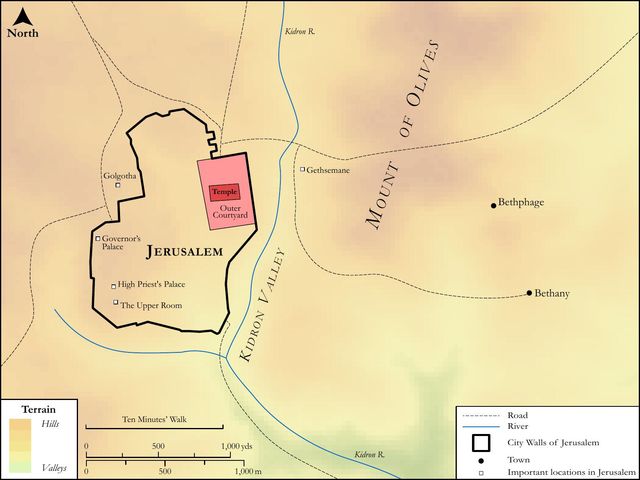
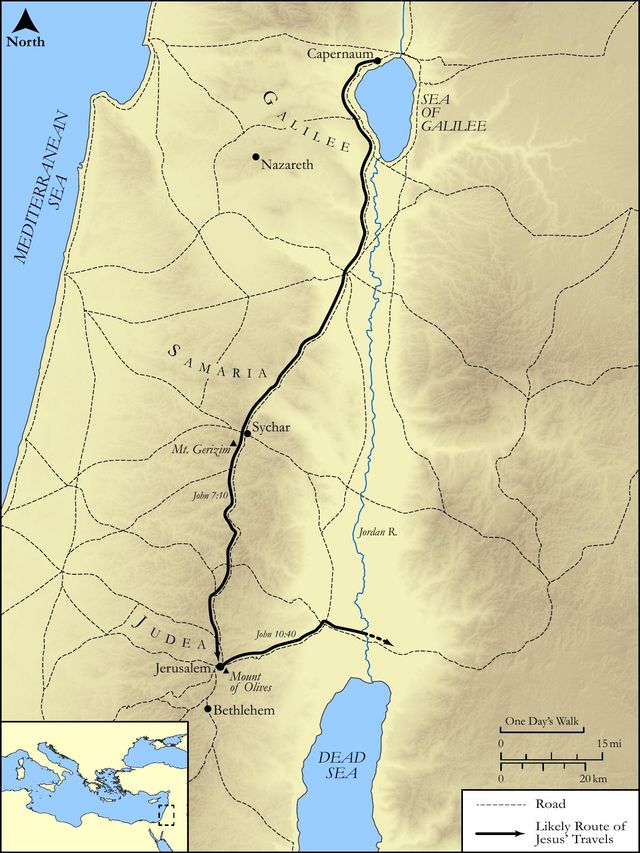
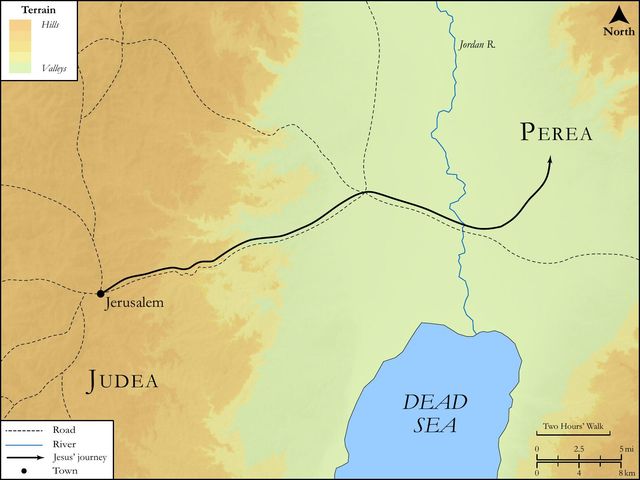
Study this verse
Public-domain commentary
Matthew Henry
From his Commentary on the Whole Bible. Henry comments on passages, not single verses — this entry covers John 10:39–42. His four-level outline is real structure in the source text, so it is rendered as structure.
We have here the issue of the conference with the Jews. One would have thought it would have convinced and melted them, but their hearts were hardened. Here we are told,
I.How they attacked him by force. Therefore they sought again to take him, Joh 10:39. Therefore,
1.Because he had fully answered their charge of blasphemy, and wiped off that imputation, so that they could not for shame go on with their attempts to stone him, therefore they contrived to seize him, and prosecute him as an offender against the state. When they were constrained to drop their attempt by a popular tumult, they would try what they could do under colour of a legal process. See Rev 12:13. Or,
2.Because he persevered in the same testimony concerning himself, they persisted in their malice against him. What he had said before he did in effect say again, for the faithful witness never departs from what he has once said; and therefore, having the same provocation, they express the same resentment, and justify their attempt to stone him by another attempt to take him. Such is the temper of a persecuting spirit, and such its policy, mal facta mal factis tegere ne perpluant - to cover one set of bad deeds with another, lest the former should fall through.
II.How he avoided them by flight; not an inglorious retreat, in which there was any thing of human infirmity, but a glorious retirement, in which there was much of a divine power. He escaped out of their hands, not by the interposal of any friend that helped him, but by his own wisdom he got clear of them; he drew a veil over himself, or cast a mist before their eyes, or tied the hands of those whose hearts he did not turn. Note, No weapon formed against our Lord Jesus shall prosper, Psa 2:4. He escaped, not because he was afraid to suffer, but because his hour was not come. And he who knew how to deliver himself no doubt knows how to deliver the godly out of temptation, and to make a way for them to escape.
III.How he disposed of himself in his retirement:
He went away again beyond Jordan, Joh 10:40. The bishop of our souls came not to be fixed in one see, but to go about from place to place, doing good. This great benefactor was never out of his way, for wherever he came there was work to be done. Though Jerusalem was the royal city, yet he made many a kind visit to the country, not only to his own country Galilee, but to other parts, even those that lay most remote beyond Jordan. Now observe,
1.What shelter he found there. He went into a private part of the country, and there he abode; there he found some rest and quietness, when in Jerusalem he could find none. Note, Though persecutors may drive Christ and his gospel out of their own city or country, they cannot drive him or it out of the world. Though Jerusalem was not gathered, nor would be, yet Christ was glorious, and would be. Christ's going now beyond Jordan was a figure of the taking of the kingdom of God from the Jews, and bringing it to the Gentiles. Christ and his gospel have often found better entertainment among the plain country-people than among the wise, the mighty, the noble, Co1 1:26, Co1 1:27.
2.What success he found there. He did not go thither merely for his own security, but to do good there; and he chose to go thither, where John at first baptized (Joh 1:28), because there could not but remain some impressions of John's ministry and baptism thereabouts, which would dispose them to receive Christ and his doctrine; for it was not three years since John was baptizing, and Christ was himself baptized here at Bethabara. Christ came hither now to see what fruit there was of all the pains John Baptist had taken among them, and what they retained of the things they then heard and received. The event in some measure answered expectation; for we are told,
(1.)That they flocked after him (Joh 10:41): Many resorted to him. The return of the means of grace to a place, after they have been for some time intermitted, commonly occasions a great stirring of affections. Some think Christ chose to abide at Bethabara, the house of passage, where the ferry-boats lay by which they crossed the river Jordan, that the confluence of people thither might give an opportunity of teaching many who would come to hear him when it lay in their way, but who would scarcely go a step out of the road for an opportunity of attending on his word.
(2.)That they reasoned in his favour, and sought arguments to induce them to close with him as much as those at Jerusalem sought objections against him. They said very judiciously, John did no miracle, but all things that John spoke of this man were true. Two things they considered, upon recollecting what they had seen and heard from John, and comparing it with Christ's ministry.
[1.]That Christ far exceeded John Baptist's power, for John did no miracle, but Jesus does many; whence it is easy to infer that Jesus is greater than John. And, if John was so great a prophet, how great then is this Jesus! Christ is best known and acknowledged by such a comparison with others as sets him superlatively above others. Though John came in the spirit and power of Elias, yet he did not work miracles, as Elias did, lest the minds of people should be made to hesitate between him and Jesus; therefore the honour of working miracles was reserved for Jesus as a flower of his crown, that there might be a sensible demonstration, and undeniable one, that though he came after John, yet he was preferred far before him.
[2.]That Christ exactly answered John Baptist's testimony. John not only did no miracle to divert people from Christ, but he said a great deal to direct them to Christ, and to turn them over as apprentices to him, and this came to their minds now: all things that John said of this man were true, that he should be the Lamb of God, should baptize with Holy Ghost and with fire. Great things John had said of him, which raised their expectations; so that though they had not zeal enough to carry them into his country to enquire after him, yet, when he came into theirs, and brought his gospel to their doors, they acknowledged him as great as John had said he would be. When we get acquainted with Christ, and come to know him experimentally, we find all things that the scripture saith of him to be true; nay, and that the reality exceeds the report, Kg1 10:6, Kg1 10:7. John Baptist was now dead and gone, and yet his hearers profited by what they had heard formerly, and, by comparing what they heard then with what they saw now, they gained a double advantage; for, First, They were confirmed in their belief that John was a prophet, who foretold such things, and spoke of the eminency to which this Jesus would arrive, though his beginning was so small. Secondly, They were prepared to believe that Jesus was the Christ, in whom they saw those things accomplished which John foretold. By this we see that the success and efficacy of the word preached are not confined to the life of the preacher, nor do they expire with his breath, but that which seemed as water spilt upon the ground may afterwards be gathered up again. See Zac 1:5, Zac 1:6.
(3.)That many believed on him there. Believing that he who wrought such miracles, and in whom John's predictions were fulfilled, was what he declared himself to be, the Son of God, they gave up themselves to him as his disciples, Joh 10:42. An emphasis is here to be laid,
[1.]Upon the persons that believed on him; they were many. While those that received and embraced his doctrine at Jerusalem were but as the grape-gleanings of the vintage, those that believed on him in the country, beyond the Jordan, were a full harvest gathered in to him.
[2.]Upon the place where this was; it was where John had been preaching and baptizing and had had great success; there many believed on the Lord Jesus. Where the preaching of the doctrine of repentance has had success, as desired, there the preaching of the doctrine of reconciliation and gospel grace is most likely to be prosperous. Where John has been acceptable, Jesus will not be unacceptable. The jubilee-trumpet sounds sweetest in the ears of those who in the day of atonement have afflicted their souls for sin.
Historical interpretation
Seven Centuries of Reception
5 surviving comments on this verse. Each one is dated, so this reads as a timeline rather than a list.
Select a marker to jump to its quote. Markers stagger vertically where authors wrote within a few decades of each other.
"Therefore they sought again to take Him, but He escaped out of their hands, and went away again beyond Jordan, into the place where John at first baptized. And many resorted unto Him, and said, John did no miracle, but all things that John spake of this man were true."
When He hath uttered anything great and sublime, He quickly retireth, giving way to their anger, so that the passion may abate and cease through His absence. And thus He acted at that time. But wherefore doth the Evangelist mention the place? That thou mayest learn that He went there to remind them of the things there done and said by John, and of his testimony; at least when they came there, they straightway remembered John. Wherefore also they said, "John indeed did no miracle," since how did it follow that they should add this, unless the place had brought the Baptist to their memory, and they had come to remember his testimony. And observe how they form incontrovertible syllogisms. "John indeed did no miracle," "but this man doth," saith some one; "hence therefore his superiority is shown. If therefore men believed him who did no miracles, much more must they believe this man." Then, since it was John who bore the witness, lest his having done no miracle might seem to prove him unworthy of being a witness, they added, "Yet if he did no miracle, still he spake all things truly concerning this man"; no longer proving Christ to be trustworthy by means of John, but John to be so by what Christ had done.
"Many therefore believed on Him." There were many things that attracted them. They remembered the words which John had spoken, calling Christ "mightier than himself," and "light," and "life," and "truth," and all the rest. They remembered the Voice which came down from heaven, and the Spirit which appeared in the shape of a dove, and pointed Him out to all; and with this they recollected the demonstration afforded by the miracles, looking to which they were for the future established. "For," saith some one, "if it was right that we should believe John, much more ought we to believe this man; if him without miracles, much more this man, who besides the testimony of John, hath also the proof from miracles." Seest thou how much the abiding in this place, and the being freed from the presence of evil men, profited them? wherefore Jesus continually leadeth and draweth them away from the company of those persons; as also He seemeth to have done under the old Covenant, forming and ordering the Jews in all points, in the desert, at a distance from the Egyptians.
(Hom. lxi. 3) Christ, after discoursing on some high truth, commonly retires immediately, to give time to the fury of people to abate, during His absence. Thus He did now: He went away again beyond Jordan, into the place where John at first baptized. He went there that He might recall to people's minds, what had gone on there; John's preaching and testimony to Himself.
(Hom. lxi. 3) Mark their reasoning, John did no miracle, but this Man did; wherefore He is the superior. But lest the absence of miracles should lessen the weight of John's testimony, they add, But all things that John spake of this Man were true. Though he did no miracle, yet every thing he said of Christ was true, whence they conclude, if John was to be believed, much more this Man, who has the evidence of miracles. Thus it follows, And many believed on Him.
"And He went away again beyond Jordan, into the place where John at first baptized; and there He abode. And many resorted unto Him, and said, John, indeed; did no miracle." You remember what was said of John, that he was a light, and bore witness to the day. Why, then, say these among themselves, "John did no miracle"? John, they say, signalized himself by no miracle; he did not put devils to flight, he drove away no fever, he enlightened not the blind, he raised not the dead, he fed not so many thousand men with five or seven loaves, he walked not upon the sea, he commanded not the winds and the waves. None of these things did John, and in all he said he bore witness to this man. By lamp-light we may advance to the day. "John did no miracle: but all things that John spake of this man were true." Here are those who apprehended in a different way from the Jews. The Jews wished to apprehend one who was departing from them, these apprehended one who remained with them. In a word, what is it that follows? "And many believed on Him."
Leaving Jerusalem, the Savior seeks a refuge in a place with springs of water so that he might signify obscurely, as in a type, how he would leave Judea and go over to the church of the Gentiles, which possesses the fountains of baptism and where many approach him crossing through the Jordan. This is signified by Christ taking up his abode “beyond” the Jordan. Having crossed the Jordan by holy baptism, they are brought to God, for truly Christ went across from the synagogue of the Jews to the Gentiles and then “many came to him and believed” the words that the saints spoke concerning Christ.
We may observe that our Lord often brings out the people into solitary places, thus ridding them of the society of the unbelieving, for their furtherance in the faith: just as He led the people into the wilderness, when He gave them the old Law. Mystically, Christ departs from Jerusalem, i. e. from the Jewish people; and goes to a place where are springs of water, i. e. to the Gentile Church, that hath the waters of baptism. And many resort unto Him, passing over the Jordan, i. e. through baptism.
Continue studying John 10:40 across the web’s major study libraries — every link below opens this exact verse, chapter, or book on the destination site.
Read & Compare
 BibleGatewayThis verse in more than 200 translations and 70 languages.
 Bible.comThe YouVersion reader — hundreds of translations, reading plans, and highlights.
 ESV.orgCrossway's official English Standard Version reader.
 NET BibleThe NET translation with 60,000+ translators' notes on every rendering decision.
 STEP BibleTyndale House's free study tool — original text, vocabulary, and scholarly resources.
 BibliaLogos Bible Software's free web reader.
 USCCBThe New American Bible (Revised Edition) with the U.S. bishops' study notes.
Commentaries
 BibleHub CommentariesDozens of classic commentaries on this verse, gathered on one page.
 StudyLightMore than 100 commentary sets — the largest collection on the web.
 BibleRefPlain-English commentary on what this verse means, verse by verse.
 Enduring WordDavid Guzik's free commentary on this chapter, widely used by Bible teachers.
 Bible Study ToolsVerse commentary alongside Greek and Hebrew study aids.
Original Language & Research
- BibleHub InterlinearThe verse word by word — original language, transliteration, and English.
- BibleHub LexiconEvery word's original-language definition and Strong's entry.
 Blue Letter BibleDeep-study tools — Strong's numbers, concordance, and word studies.
 CNTR CollationThe earliest Greek manuscripts of this verse, collated letter by letter.
Sermons, Hymns & Audio


TrulyRandomVerse is not affiliated with these sites and doesn’t control their content. They’re linked because they’re genuinely useful.
Summary
Following an intense confrontation with Jewish leaders in Jerusalem, where they sought to stone Him, Jesus strategically withdraws from Judea. He returns to the region beyond the Jordan River, specifically to the place where John the Baptist had initially commenced his ministry, and settles there for a period. This deliberate relocation demonstrates Jesus' divine prudence, reaffirms the foundational connection between His ministry and John's prophetic role, and signifies His unwavering commitment to continued outreach despite escalating opposition.
Context
ShowHideLiterary Context
The immediate preceding verses (John 10:30-39) describe a dramatic and dangerous encounter in Jerusalem. Jesus' profound declaration, "I and my Father are one" (John 10:30), is perceived as blasphemy by the Jewish leaders, who then attempt to stone Him. Jesus skillfully defends His claims by appealing to His works and the Scriptures, but the threat to His life is undeniable. His withdrawal in John 10:40 is a direct and prudent response to this escalating hostility, allowing Him to avoid premature confrontation and continue His ministry in a safer environment. This strategic retreat aligns with earlier instances in John's Gospel where Jesus avoids danger or times when His hour had not yet come, as seen in John 7:1.
Historical & Cultural Context
The phrase "beyond Jordan" (Greek: peran tou Iordanou) refers to the region of Perea, a territory situated east of the Jordan River. This area was part of the tetrarchy ruled by Herod Antipas, distinct from Judea, which was under direct Roman governorship and the authority of the Jerusalem religious establishment. Perea generally offered a less hostile environment for Jesus' ministry than Judea. The specific "place where John at first baptized" is widely identified with Bethany beyond the Jordan (John 1:28), a significant site where John the Baptist had gathered many followers and prepared the way for the Messiah. By returning to this location, Jesus engaged with a populace already familiar with John's prophetic message and the expectation of the coming Christ, which likely contributed to their receptivity.
Key Themes
ShowHideThis verse contributes significantly to several prominent themes within John's Gospel. Firstly, it underscores the theme of Divine Prudence and Timing. Jesus, though possessing all divine power, consistently demonstrates wisdom in His earthly ministry, strategically withdrawing from danger to fulfill the Father's will according to His perfect timetable (John 7:6). Secondly, the return to John's baptismal site highlights the Continuity and Validation of John the Baptist's Ministry. Jesus' presence there implicitly affirms John's prophetic role as the forerunner and the divine connection between their ministries, drawing people who had been influenced by John to believe in Jesus (John 10:41-42). Lastly, the phrase "and there he abode" emphasizes Jesus' Unwavering Commitment to Outreach and Disciple-Making. Despite the opposition in Jerusalem, Jesus does not cease His work but adapts His location to continue teaching, healing, and gathering followers, demonstrating the unstoppable nature of God's redemptive plan.
Exposition and Analysis
ShowHideKey Word Analysis
ShowHideThis adverb signifies a repetition or return. In the context of John 10:40, it indicates that Jesus was returning to a place He had visited before, specifically the region where John had baptized. This reinforces a sense of continuity and a deliberate revisiting of a significant location associated with the beginning of His public ministry.
This relative adverb of place precisely identifies the destination. It emphasizes that Jesus' withdrawal was not a random flight but a deliberate movement to a specific, known, and previously significant site. This precision highlights the intentionality of His actions and the strategic nature of His retreat.
A primary verb meaning "to stay, dwell, endure, remain." This word implies more than a brief stop or a hurried passage; it suggests a settled, sustained presence. Jesus established a temporary residence in this region, indicating a period of continued ministry, teaching, and engagement with the people there, rather than merely passing through.
Verse Breakdown
ShowHide"And went away again beyond Jordan"
This clause describes Jesus' strategic departure from Jerusalem, crossing the Jordan River to the east into the region of Perea. The inclusion of "again" suggests a previous visit or familiarity with the area, reinforcing the idea that this was a deliberate and calculated move, not an impulsive escape.
"into the place where John at first baptized"
This specifies the precise destination as the very location where John the Baptist had initiated his public ministry. This detail is crucial, as it connects Jesus' current actions to the foundational work of His forerunner, likely drawing on the spiritual receptivity cultivated by John's preaching and the presence of his former disciples.
"and there he abode"
This final clause signifies that Jesus settled in this region for a significant period. The verb "abode" (Greek: meno) implies a sustained stay, during which He continued His teaching, healing, and disciple-making activities, effectively establishing a temporary base away from the immediate threat of the Judean authorities.
Literary Devices
ShowHideThe verse employs Geographical Symbolism and Narrative Continuity. Jesus' movement "beyond Jordan" symbolizes a strategic withdrawal from a place of intense hostility (Judea) to a region of relative safety and greater receptivity (Perea). This geographical shift underscores His divine prudence and the necessity of preserving His life until the appointed time for His sacrifice. The return to "the place where John at first baptized" serves as a powerful instance of Narrative Continuity, linking Jesus' ministry directly back to its prophetic roots and validating John's crucial role as the forerunner. This deliberate revisiting of a significant site emphasizes the seamless progression of God's redemptive plan, from John's preparatory work to Jesus' fulfilling ministry. The fact that Jesus "abode" there also highlights the Purposeful Action of Christ, demonstrating that His ministry was not halted by opposition but merely redirected, leading to continued fruitfulness.
Theological and Thematic Connections
ShowHideJohn 10:40 profoundly illustrates Jesus' divine wisdom and strategic discernment in His earthly ministry. His withdrawal from Jerusalem after the attempt to stone Him is not a sign of weakness but a demonstration of His perfect alignment with the Father's timing and purpose. He did not rush to His death but skillfully navigated the escalating opposition, ensuring that His ministry continued to unfold according to the divine plan. This act also beautifully underscores the interconnectedness of salvation history, as Jesus returns to the very ground where John the Baptist had prepared the way, affirming the continuity of God's redemptive work from prophecy to fulfillment. It reveals that even in moments of apparent retreat, God's mission advances, often in unexpected and fruitful ways, preparing hearts for belief.
Reflection and Application
ShowHideJohn 10:40 offers profound insights for believers navigating life's challenges. Jesus' strategic withdrawal teaches us the importance of divine wisdom and discernment in the face of opposition. There are times when courage calls us to stand firm, but there are also moments when prudence dictates a strategic retreat or a change of approach to preserve our capacity for future ministry and effectiveness. This is not about fear, but about the wise stewardship of our lives and calling, ensuring we are not prematurely derailed from God's purposes. Furthermore, Jesus' return to the place of John's baptism reminds us of the value of revisiting our spiritual foundations. When we feel adrift or challenged, returning to the core truths of our faith, the initial call of God, or the places where our faith was first ignited can provide renewed strength, clarity, and purpose. Finally, the fact that Jesus "abode" and continued His ministry in Perea, leading many to believe, encourages us to persevere in our calling even when circumstances are difficult. God's work is not limited by our immediate environment; He can open new doors and bring forth fruit in unexpected places, reminding us that the mission of the Gospel is resilient and adaptable to all environments.
Questions for Reflection
ShowHideFAQ
ShowHideWhy did Jesus go "beyond Jordan" specifically?
ShowHideJesus went "beyond Jordan" to the region of Perea primarily for strategic reasons. After the Jewish leaders in Jerusalem attempted to stone Him for blasphemy (John 10:31), withdrawing to Perea offered a safer environment. Perea was outside the immediate jurisdiction of the hostile Jerusalem authorities, allowing Jesus to continue His ministry without constant threat. Furthermore, this region was familiar to many who had followed John the Baptist, making it fertile ground for further outreach, as evidenced by the positive response recorded in John 10:41-42.
What is the significance of returning to "the place where John at first baptized"?
ShowHideReturning to the initial site of John the Baptist's ministry, likely Bethany beyond the Jordan (John 1:28), carries significant symbolic and practical weight. Theologically, it affirms the divine connection and continuity between John's preparatory ministry and Jesus' own. John had testified to Jesus as the Lamb of God (John 1:29) and the Son of God (John 1:34). Practically, this location was known to many who had been impacted by John's message, creating a receptive audience who were already familiar with prophetic expectations and the call to repentance, making them more open to Jesus' teachings.
Did Jesus "flee" out of fear?
ShowHideNo, Jesus' withdrawal was not an act of fear but of divine prudence and strategic timing. As the Son of God, He was fully aware of His mission and the appointed time for His crucifixion (John 7:6). His actions consistently demonstrate His perfect control over His destiny, choosing when and where to engage or withdraw. This withdrawal allowed Him to continue His teaching and healing ministry for a longer period, gathering more disciples and preparing them for His eventual sacrifice, as seen in His continued work described in John 10:41-42. It was a strategic move to fulfill the Father's will, not a panicked escape.
Christ-Centered Fulfillment
ShowHideJohn 10:40, depicting Jesus' strategic withdrawal to Perea, beautifully foreshadows and embodies aspects of His ultimate Christ-centered fulfillment. His temporary retreat from the immediate threat of stoning in Jerusalem, not out of fear but out of divine prudence, points to His perfect obedience to the Father's timing for His redemptive work. Just as He withdrew to continue His ministry and gather more disciples before His appointed hour, so too does His entire earthly life serve as a preparatory period for the climactic event of the cross. His return to the place of John's baptism also underscores the continuity of God's plan of salvation, where the Old Testament prophecies and John's preparatory ministry find their ultimate culmination in Him. He is the fulfillment of all that John proclaimed, the true Lamb of God who takes away the sin of the world (John 1:29). This period in Perea, where many came to believe in Him (John 10:41-42), prefigures the broader mission of the church after His resurrection and ascension—to go into all the world and make disciples (Matthew 28:19-20), even when facing opposition. Ultimately, Jesus' control over His movements, culminating in His willing surrender to the cross at the Father's perfect time (John 19:30), reveals Him as the sovereign Lord who orchestrates every detail for the salvation of humanity, demonstrating that even in apparent retreat, the path to redemption is being precisely laid.