


Ezekiel 43:19
Bible text: King James Version (1769 Blayney text) · Public domain
Bible text: King James Version with Strong's numbers · Public domain
Bible text: Berean Standard Bible · Public domain
Bible text: American Standard Version (1901) · Public domain
Bible text: World English Bible, Messianic edition · Public domain
Bible text: Geneva Bible (1599) · Public domain
Bible text: Young's Literal Translation · Public domain
- וְנָתַתָּהve·na·ta·Tahand you will giveH5414Conj-w ¦ V-Qal-ConsecPerf-2msVerb Qal Consecutive Perfect 2nd Singular Masculineוְandנָתַתָּהyou will give
- אֶל'eltoH413PrepPreposition
- הַכֹּהֲנִיםha·ko·ha·Nimthe priestsH3548Art ¦ N-mpNoun Plural Masculine Absoluteהַtheכֹּהֲנִיםpriests
- הַלְוִיִּםhal·vi·Yimthe LevitesH3881Art ¦ N-mpNoun Gentilic Plural Masculine AbsoluteהַtheלְוִיִּםLevites
- אֲשֶׁר'a·SherwhoH834RelParticle Relative
- הֵםhemtheyH1992Pro-3mpPronoun Personal 3rd Plural Masculine
- מִזֶּרַעmi·Ze·ra'[are] of [the] offspring ofH2233Prep-m ¦ N-mscNoun Singular Masculine Constructמִ[are] ofזֶּרַע[the] offspring of
- צָדוֹקtza·DokZadokH6659N-proper-mNoun Proper Masculine
- הַקְּרֹבִיםha·ke·ro·Vim<the> nearH7138Art ¦ Adj-mpAdjective Plural Masculine Absoluteהַ<the>קְּרֹבִיםnear
- אֵלַי'e·Laito meH413Prep ¦ 1csPrepositionאֵלַtoיme
- נְאֻםne·'Um[the] utterance ofH5002N-mscNoun Singular Masculine Construct
- אֲדֹנָי'a·do·Nai[the] LordH136N-properNoun Proper Title
- יְהוִהYah·wehYahwehH3069N-properNoun Proper Title
- לְשָׁרְתֵנִיle·sha·re·Te·nito serve meH8334Prep-l ¦ V-Piel-Inf ¦ 1csVerb Piel Infinitive Constructלְtoשָׁרְתֵserveנִיme
- פַּרpara young bullH6499N-msNoun Singular Masculine Absolute
- בֶּןbena young one ofH1121N-mscNoun Singular Masculine Construct
- בָּקָרba·KarcattleH1241N-csNoun Singular common gender Absolute
- לְחַטָּאתle·cha·Tatto a sin offeringH2403Prep-l ¦ N-fsNoun Singular Feminine Absoluteלְtoחַטָּאתa sin offering
English is a literal word-by-word gloss of the Hebrew, not the KJV's wording. Why?
This is the original text the KJV's translators worked from — each Hebrew word with its own literal English meaning in this verse, prepared by scholars at Tyndale House, Cambridge. The KJV translates whole sentences, not word by word, so its wording differs: one Hebrew word can become several English words, and the KJV may choose “the LORD” where the gloss reads “Yahweh”. Both are faithful — they answer different questions. For the KJV's own rendering, switch to the KJV text.
Details
See on the biblical-era map
Study this verse
Public-domain commentary
Matthew Henry
From his Commentary on the Whole Bible. Henry comments on passages, not single verses — this entry covers Ezekiel 43:13–27. His three-level outline is real structure in the source text, so it is rendered as structure.
This relates to the altar in this mystical temple, and that is mystical too; for Christ is our altar. The Jews, after their return out of captivity, had an altar long before they had a temple, Ezr 3:3. But this was an altar in the temple. Now here we have,
I.The measures of the altar, Eze 43:13.
It was six yards square at the top and seven yards square at the bottom; it was four yards and a half high; it had a lower bench or shelf, here called a settle, a yard from the ground, on which some of the priests stood to minister, and another two yards above that, on which others of them stood, and these were each of them half a yard broad, and had ledges on either side, that they might stand firmly upon them. The sacrifices were killed at the table spoken of before, Eze 40:39. What was to be burnt on the altar was given up to those on the lower bench, and handed by them to those on the higher, and they laid it on the altar. Thus in the service of God we must be assistant to one another.
II.The ordinances of the altar. Directions are here given,
1.Concerning the dedication of the altar at first. Seven days were to be spent in the dedication of it, and every day sacrifices were to be offered upon it, and particularly a goat for a sin-offering (Eze 43:25), besides a young bullock for a sin-offering on the first day (Eze 43:19), which teaches us in all our religious services to have an eye to Christ the great sin-offering. Neither our persons nor our performances can be acceptable to God unless sin be taken away, and that cannot be taken away but by the blood of Christ, which both sanctifies the altar (for Christ entered by his own blood, Heb 9:12) and the gift upon the altar. There were also to be a bullock and a ram offered for a burnt-offering (Eze 43:24), which was intended purely for the glory of God, to teach us to have an eye to that in all our services; we present ourselves as living sacrifices, and our devotions as spiritual sacrifices, that we and they may be to him for a name, and for a praise, and for a glory. The dedication of the altar is here called the cleansing and purging of it, Eze 43:20, Eze 43:26. Christ, our altar, though he had no pollution to be cleansed from, yet sanctified himself (Joh 17:19); and when we consecrate the altars of our hearts to God, to have the fire of holy love always burning upon them, we must see that they be purified and cleansed from the love of the world and the lusts of the flesh. It is observable that there are several differences between the rites of dedication here and those which were appointed Ex. 29, to intimate that the ceremonial institutions were mutable things, and the changes in them were earnests of their period in Christ. Only here, according to the general law, that all the sacrifices must be seasoned with salt (Lev 2:13), particular orders are given (Eze 43:24) that the priests shall cast salt upon the sacrifices. Grace is the salt with which all our religious performances must be seasoned, Col 4:6. An everlasting covenant is called a covenant of salt, because it is incorruptible. The glory reserved for us is incorruptible and undefiled; and the grace wrought in us is the hidden man of the heart in that which is not corruptible.
2.Concerning the constant use that should be made of it, when it was dedicated: Henceforward the priests shall make their burnt-offerings and peace-offerings upon this altar (Eze 43:27), for therefore it was sanctified, that it might sanctify the gift that was offered upon it. Observe further,
(1.)Who were to serve at the altar: The priests of the seed of Zadok, Eze 43:19. That family was substituted in the room of Abiathar by Solomon, and God confirms it. His name signifies righteous, for they are the righteous seed that are priests to God, through Christ the Lord our righteousness.
(2.)How they should prepare for this service (Eze 43:26): They shall consecrate themselves, shall fill their hand with the offerings, in token of the giving up of themselves with their offerings to God and to his service. Note, Before we minister to the Lord in holy things we must consecrate ourselves by getting our hands and hearts filled with those things.
(3.)How they should speed in it (Eze 43:27): I will accept you. And if God now accept our works, if our services be pleasing to him, it is enough, we need no more. Those that give themselves to God shall be accepted of God, their persons first and then their performances, through the Mediator.
Historical interpretation
Historical reception
1 surviving comment on this verse from the historical church.
(Ver. 18 and following) And he said to me: Son of man, thus says the Lord God: These are the rituals of the altar when it is made, to offer a burnt offering and pour out blood. And you shall give to the priests, the Levites who are of the seed of Zadok, who approach me, says the Lord God: to offer to me a young bull from the herd as a sin offering. And you shall take some of its blood, and put it on the four horns and on the four corners of the ledge, and on the border all around; and you shall cleanse it and make atonement for it. And you shall take the calf that was offered for sin and burn it in a separate place outside the sanctuary. And on the second day you shall offer a male goat without blemish for sin, and they shall make atonement for the altar as they made atonement for the calf. LXX: And he said to me, Son of man, thus says the Lord God: These are the statutes of the altar on the day it is made, upon which burnt offerings are offered and blood is poured out on it. And you shall give to the Levite priests who are of the seed of Sadduc, and who approach me, says the Lord God, to minister to me a calf from the cattle for a sin offering. And they shall take its blood and put it on the four horns of the altar, and on its base all around, and they shall cleanse and make atonement for it. And they shall take the calf for a sin offering and burn it in a designated place outside the sanctuary of the house. And on the second day they shall take two male goats without blemish from the goats for a sin offering, and they shall make atonement for the altar as they made atonement with the calf. After the prophet showed the altar, and its cubit, which was two cubits, and again a cubit and four cubits, and a third cubit, as well as twelve cubits for the other twelve, and four horns of the altar: also twelve cubits for Ariel, by twelve cubits, and a ledge, that is, a mercy seat, of fourteen cubits, by fourteen cubits: also its crown, and a breast boundary of half a cubit and one cubit all around: and steps to the east, the number of which is uncertain, a man spoke, whose pen and cord were in his hand, and he instructed him how, with the work of the altar completed, the altar should be cleansed and consecrated. And first a victim is offered, and it is given to the priests of the tribe of Levi, who are from the descendants of Sadoc, whom the Seventy call Sadduc, which I cannot understand. But Sadoc means just. And according to the Seventy and Theodotion, a calf is offered; according to Symmachus, a bull, which is called Phar in Hebrew. But the calf that was sacrificed for us, and many passages of the Scriptures, and the notable Epistle of Barnabas, which is found among the apocryphal writings, mention it. And a male goat of the she-goats is offered on the second day. Hence, those who will celebrate Passover take a lamb and a kid from the flock, and those who could not celebrate the first Passover, celebrate it in the second month: one of which pertains to the righteous, the other to the penitents. But if we agree with the interpretation of the Seventy, who said: 'On the second day, they shall take two unblemished kids for the sin,' it is daring indeed what we are about to say, but the opinion of others must be simply presented, who say that two unblemished kids were offered after the Lord's passion on the altar of the Lord, Jacob and Stephen: one of whom was from the number of the apostles, the other was the chief among the seven chosen for the ministry of the Lord (Acts XXII). This is James, who saw the Transfigured Savior on the mountain (cf. Mark 9), who witnessed the raising of the daughter of the synagogue official with the Lord Peter and John (cf. Matthew 17), who is listed as the first among the apostles, with his name paired with his brother's (cf. Mark 9). He was killed by Herod (cf. Matthew 9), and like an unblemished lamb, he was sacrificed on the day after the Savior's passion (cf. Mark 3). The Jews also stoned Stephen, whose wisdom and teaching no one could resist (Acts 6:10), and he saw the Son of Man standing at the right hand of God, and said (Acts 7:59): Lord Jesus, receive my spirit. And the Jews also stoned him. And just as the Apostle names certain first fruits of the believers in Achaia and Asia (1 Corinthians 16), so these were the first fruits of the martyrs, whom the confession of Christ afterwards crowned. And it should be noted that the whole calf is offered as a burnt offering, and the thickness of its body is consumed by the divine fire. For we used to know Christ according to the flesh, but now we no longer know Him according to the flesh (2 Corinthians 5:16). However, Jacob and Stephen, who were offered on the second day, or the goat, which is mentioned in the Hebrew narrative, is indeed offered as a sacrifice, but the burnt offering is reserved for the presence of the Lord. And as for the blood that Peter speaks of when he says, 'You were redeemed from your vain conversation by the precious blood of Christ' (1 Peter 1); and the Apostle Paul teaches, 'You were bought with a price' (1 Corinthians 7:23); and in another place, 'Making peace through the blood of His cross, whether on earth or in heaven' (Colossians 1:20), that signifies that by the blood of the Savior, the four horns of the altar are purified, that is, the four corners of the world are cleansed; and the mercy seat is sprinkled, or the bases are sprinkled all around, so that everything may be cleansed and the propitiation may be firm. Therefore, on the second day, either two young goats, of which we have spoken above, or a he-goat is taken; because the animal always hastens to higher places and sustains no danger on precipices, and there it finds a path where destruction is to other animals. Therefore, in Greek speech, the flock of goats and he-goats is called conversation of the sublime, that is, αἰπόλιον, as if αἰποπόλιον, since αἴπος, high, and πόλιον (Mss. πολεῖν), signifies conversation. Furthermore, the altar of Christ is cleansed with blood, so that the prayers of the saints may reach God in purity. It should also be noted that, according to the Hebrew Ezekiel himself, he is commanded to take a calf as a priest and offer it as a burnt offering, and sprinkle its blood around the altar, as well as the corners and the crown or base. However, the Seventy Interpreters show other priests doing this, of whom it is said: You shall give to the Levite priests, who are of the seed of Zadok, who come near to me.
Continue studying Ezekiel 43:19 across the web’s major study libraries — every link below opens this exact verse, chapter, or book on the destination site.
Read & Compare
 BibleGatewayThis verse in more than 200 translations and 70 languages.
 Bible.comThe YouVersion reader — hundreds of translations, reading plans, and highlights.
 ESV.orgCrossway's official English Standard Version reader.
 NET BibleThe NET translation with 60,000+ translators' notes on every rendering decision.
 STEP BibleTyndale House's free study tool — original text, vocabulary, and scholarly resources.
 BibliaLogos Bible Software's free web reader.
 USCCBThe New American Bible (Revised Edition) with the U.S. bishops' study notes.
Commentaries
 BibleHub CommentariesDozens of classic commentaries on this verse, gathered on one page.
 StudyLightMore than 100 commentary sets — the largest collection on the web.
 BibleRefPlain-English commentary on what this verse means, verse by verse.
 Enduring WordDavid Guzik's free commentary on this chapter, widely used by Bible teachers.
 Bible Study ToolsVerse commentary alongside Greek and Hebrew study aids.
Original Language & Research
- BibleHub InterlinearThe verse word by word — original language, transliteration, and English.
- BibleHub LexiconEvery word's original-language definition and Strong's entry.
 Blue Letter BibleDeep-study tools — Strong's numbers, concordance, and word studies.
 SefariaThe Hebrew text with Rashi and centuries of Jewish commentary.
Sermons, Hymns & Audio


TrulyRandomVerse is not affiliated with these sites and doesn’t control their content. They’re linked because they’re genuinely useful.
Summary
Ezekiel 43:19 presents a crucial divine directive within the prophet's expansive vision of the new temple, outlining the specific requirement for the Zadokite priests to offer a young bullock as a sin offering. This mandate is foundational for the consecration of the altar, ensuring its purification and readiness for acceptable worship. The verse underscores God's meticulous demands for holiness and proper mediation in approaching His sacred presence, highlighting the exclusive and privileged role of a faithful priestly lineage in the restored covenant community, thereby enabling the resumption of unblemished communion with the Lord GOD.
Context
ShowHideLiterary Context
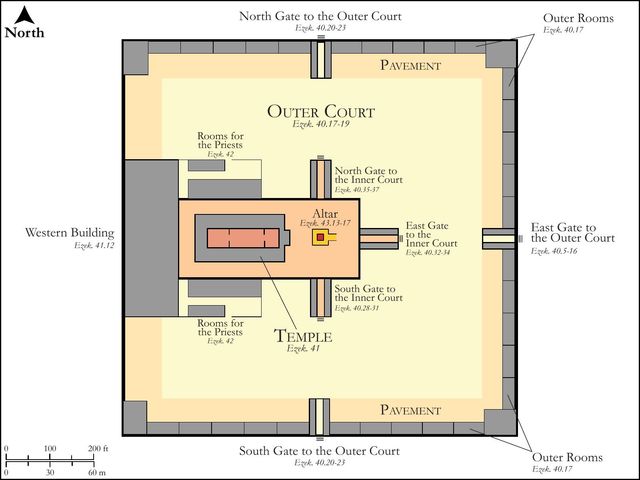
This verse is situated within the highly detailed and climactic vision of the new temple in Ezekiel 40-48, which serves as the theological culmination of Ezekiel's prophecies. Preceding this vision, the prophet had delivered devastating messages of Jerusalem's destruction and the departure of God's glory from the defiled first temple. The return of the Lord's glory to the temple from the east gate, dramatically depicted in Ezekiel 43:1-5, sets the stage for the subsequent meticulous instructions. Verses Ezekiel 43:18-27 specifically detail the elaborate seven-day consecration ceremony for the altar, beginning with the sin offering prescribed in verse 19. This purification rite is an indispensable prerequisite before any other sacrifices can be offered, emphasizing the absolute sanctity demanded for God's dwelling place. The intricate blueprint and ritual ordinances signify a future, ideal state of worship—whether understood literally or symbolically—designed to rectify past failures and ensure God's unhindered, holy presence among His people.
Historical & Cultural Context
Ezekiel's prophetic ministry occurred during the Babylonian exile (circa 593-571 BC), a period of profound national trauma and spiritual introspection for Judah. The catastrophic destruction of the First Temple in 586 BC had shattered the people's understanding of God's presence and covenant faithfulness. In this context of despair, Ezekiel's vision offered a powerful message of hope, promising restoration and a renewed relationship with God, contingent upon strict adherence to divine law and purity. The specific emphasis on "the priests the Levites that be of the seed of Zadok" carries significant historical weight. The Zadokite lineage, tracing its descent from Zadok, who demonstrated unwavering loyalty to King David during Absalom's rebellion and was subsequently appointed high priest by King Solomon (1 Kings 2:35), represented the legitimate and faithful priestly line. This distinction was crucial, as other priestly families had compromised their integrity or were associated with the illegitimate worship practices of the northern kingdom. This cultural emphasis on lineage, demonstrated faithfulness, and ritual purity ensured that only those deemed truly consecrated and loyal could minister acceptably in God's holy presence.
Key Themes
ShowHideEzekiel 43:19 powerfully contributes to several overarching themes central to Ezekiel's prophecy and broader biblical theology. Firstly, it profoundly illustrates the holiness of God and the absolute necessity of purity in approaching Him. The elaborate purification of the altar, even before its initial use, underscores that sin's defiling nature impacts even sacred objects and spaces, necessitating divine provision for cleansing. Secondly, the verse highlights divine sovereignty and ordination in worship. The emphatic declaration "saith the Lord GOD" reiterates that the terms and conditions of worship are not human constructs but direct, authoritative commands from God Himself, establishing the non-negotiable framework for acceptable communion. Thirdly, it reinforces the pervasive theme of atonement and purification through sacrifice, a cornerstone of the Old Testament cultus, extensively detailed in books like Leviticus. The sin offering functions to cleanse and purify, rendering both the altar and, by extension, the worshippers, acceptable before a holy God. Finally, the explicit mention of the Zadokite priests underscores the theme of faithful leadership and mediation, stressing that only those who maintain integrity and unwavering loyalty to God are fit to serve in His most sacred presence.
Exposition and Analysis
ShowHideKey Word Analysis
ShowHideFrom the root meaning "just" or "righteous," Zadok refers to a specific priestly lineage recognized for its unwavering faithfulness and integrity, particularly in contrast to other priestly lines that had become corrupt or disloyal. Their exclusive right to "approach unto me" signifies God's preference for a priesthood characterized by moral uprightness and unwavering devotion, making them the sole legitimate mediators in the envisioned temple.
This primitive root denotes attending as a menial or worshipper, serving, or contributing to. In the context of the Zadokite priests, it signifies their consecrated role of active service and worship in the temple, performing the sacred rites and offerings on behalf of the people. It implies a dedicated, intimate, and obedient service directly to God.
This term refers to an offering made for an offense, its penalty, or for expiation. While often associated with individual or corporate sin, in this context for the altar, it functions primarily as a purification offering. It cleanses the altar from any defilement, known or unknown, making it ceremonially pure and acceptable for God's holy presence and for the subsequent offerings to be made upon it.
Verse Breakdown
ShowHide"And thou shalt give to the priests the Levites"
This opening command is directed to Ezekiel, representing the divine instruction for the future temple operations. It specifies the recipients of the offering: "the priests," who are further identified as "the Levites," confirming that the priestly function is confined to the tribe of Levi, as established by Mosaic law. This highlights the divine order and structure of sacred service.
"that be of the seed of Zadok, which approach unto me"
This clause significantly narrows the priestly designation. Not all Levites or even all priests are eligible; only those descended from Zadok, renowned for their historical faithfulness and moral integrity, are permitted. The phrase "which approach unto me" emphasizes their unique, consecrated privilege and profound responsibility to draw near to God in sacred service, underscoring their exclusive access to the holiest functions of the temple.
"to minister unto me, saith the Lord GOD"
This defines the ultimate purpose of their privileged access and the offering itself – to serve God directly and acceptably. The emphatic declaration "saith the Lord GOD" (combining H136 'Ădônây, "the Lord," and H3069 Yᵉhôvih, "GOD," a variation of YHWH) powerfully underscores the divine authority and absolute sovereignty behind these instructions. It is God Himself who dictates the terms of worship and the qualifications of His ministers, leaving no room for human alteration.
"a young bullock for a sin offering"
This specifies the exact offering required for the altar's consecration. A "young bullock" (combining H1121 bên, H1241 bâqâr, and H6499 par, signifying a male bovine of a certain age) represents a significant and costly sacrifice, indicating the gravity and importance of the purification. Its purpose as a "sin offering" (H2403 chaṭṭâʼâh) is crucial for the initial purification and consecration of the altar, removing any potential defilement and rendering it holy and fit for divine use and for the subsequent offerings to be made upon it.
Literary Devices
ShowHideEzekiel 43:19 is rich with significant literary devices that amplify its theological import. Symbolism is paramount, with the "young bullock for a sin offering" serving as a potent symbol of the necessary purification and atonement required to approach a holy God. The Zadokite priests themselves are symbolic of faithfulness, integrity, and legitimate divine authority, representing the ideal priesthood that God desires. The altar, the direct recipient of this purification, symbolizes the sacred point of communion between God and humanity, emphasizing its absolute requirement for sanctity. The recurring phrase "saith the Lord GOD" functions as a powerful device of divine command and authoritative declaration, underscoring God's absolute sovereignty and the non-negotiable nature of His instructions. This phrase also serves as a prophetic oracle formula, authenticating the message as directly revealed from God. Furthermore, the meticulous detail in the entire temple vision, including this specific verse, functions as a form of foreshadowing, pointing to a future, perfect system of worship and, ultimately, to the ultimate and perfect sacrifice for sin that would fully cleanse and reconcile.
Theological and Thematic Connections
ShowHideEzekiel 43:19, with its exacting demands for priestly purity, divine command, and the sin offering for the altar, resonates deeply with core biblical theology. It powerfully illustrates the pervasive nature of sin, which necessitates purification even for inanimate sacred objects, and the absolute holiness of God, who cannot dwell amidst impurity. The meticulous instructions for the Zadokite priests highlight God's unwavering demand for faithful and consecrated mediation, a theme that profoundly anticipates the perfect High Priest. This Old Testament ritual, while specific to the visionary temple, points forward to the ultimate and complete atonement provided by Jesus Christ. His single, perfect sacrifice purifies not merely a physical altar, but the very hearts and consciences of believers, making true, unhindered communion with God possible without the need for repeated animal sacrifices.
Reflection and Application
ShowHideEzekiel 43:19, though set within a visionary context of a future temple, offers profound and enduring spiritual lessons for believers today. The meticulous demand for purity in the Old Testament, exemplified by the sin offering for the altar, serves as a stark and powerful reminder of God's unblemished holiness and the profound gravity of sin. It teaches us that approaching God requires a deep recognition of His majestic purity and our own inherent unworthiness, prompting a posture of profound humility, reverence, and awe. Just as the Zadokite priests were chosen for their demonstrated faithfulness and integrity, believers are called to live lives of integrity, devotion, and obedience, recognizing that our service to God is not merely an obligation but a sacred privilege. While we no longer offer animal sacrifices, the foundational principle of purification remains vitally important: through Christ, we are completely cleansed and made righteous, enabling us to draw near to God with confidence, yet without presumptuousness. This verse challenges us to critically examine the purity of our own "altars"—our hearts, our homes, our families, our churches, and our ministries—and to ensure that our worship and service are offered in a manner that truly honors and reflects God's absolute holiness.
Questions for Reflection
ShowHideFAQ
ShowHideWhy were the Zadokite priests specifically chosen for this sacred duty, and what does "seed of Zadok" imply?
ShowHideThe "seed of Zadok" refers to the direct descendants of Zadok, the high priest who remained steadfastly loyal to King David during Absalom's rebellion and was subsequently confirmed in his high priestly office by King Solomon (1 Kings 2:35). This lineage was distinguished for its unwavering faithfulness to God and the Davidic covenant, even when other priestly lines faltered or became corrupt. In Ezekiel's vision, their exclusive designation signifies God's profound preference for a priesthood characterized by integrity, purity, and steadfast devotion. It implies that only those who have demonstrated true loyalty and righteousness are fit to "approach" God and minister in His holy presence, underscoring the vital spiritual and moral qualifications essential for sacred service in the renewed covenant community.
What is the significance of offering a "young bullock for a sin offering" for the altar itself, rather than for people?
ShowHideThe "sin offering" (Hebrew: chaṭṭâʼâh) in this context serves primarily as a purification offering, specifically for the altar. Before the altar could be used for any other sacrifices or offerings, it needed to be meticulously consecrated and cleansed from any potential defilement, whether known or unknown, intentional or unintentional. This act profoundly underscores the absolute holiness of God and the pervasive nature of sin, which can even affect inanimate objects dedicated to His service. It demonstrates unequivocally that nothing impure can stand in God's presence or be used for His worship. The "young bullock," a costly and significant animal, highlights the seriousness and gravity of this purification, making the altar ceremonially clean, holy, and acceptable for the sacred purpose of mediating between God and His people. It establishes the foundational purity required for all subsequent acts of worship and communion.
Christ-Centered Fulfillment
ShowHideEzekiel 43:19, with its meticulous instructions for the purification of the altar and the specific, exclusive role of the faithful Zadokite priests, finds its ultimate and glorious fulfillment in the person and work of Jesus Christ. The absolute necessity of a "sin offering" for the altar profoundly foreshadows the perfect and final sacrifice of the Lamb of God. Just as the bullock's blood cleansed the physical altar, Christ's precious blood cleanses not merely a physical structure, but the very hearts and consciences of believers, providing a complete, eternal, and definitive purification from sin (Hebrews 9:12). Furthermore, the exclusive access of the faithful Zadokite priests to "approach unto me" powerfully points to Jesus as our great High Priest, who, unlike the Levitical priests, offered Himself once for all time (Hebrews 7:27) and now, through His finished work, grants all believers direct, confident access to God's throne of grace (Hebrews 4:16). Through Christ, the need for a specific human priestly lineage to mediate is transcended, as He has made all believers a "royal priesthood" (1 Peter 2:9), enabling us to draw near to God and offer spiritual sacrifices directly, in spirit and in truth. Thus, the rigorous purity and divinely ordained priestly mediation envisioned in Ezekiel are perfectly and eternally realized in the person and redemptive work of Jesus Christ.