


Ezekiel 1:21
Bible text: King James Version (1769 Blayney text) · Public domain
Bible text: King James Version with Strong's numbers · Public domain
Bible text: Berean Standard Bible · Public domain
Bible text: American Standard Version (1901) · Public domain
Bible text: World English Bible, Messianic edition · Public domain
Bible text: Geneva Bible (1599) · Public domain
Bible text: Young's Literal Translation · Public domain
- בְּלֶכְתָּםbe·lekh·Tamwhen they movedH1980Prep-b ¦ V-Qal-Inf ¦ 3mpVerb Qal Infinitive Constructבְּwhenלֶכְתָּmovedםthey
- יֵלֵכוּye·Le·khuthey movedH1980V-Qal-Imperf-3mpVerb Qal Imperfect 3rd Plural Masculine
- וּבְעָמְדָםu·ve·'a·me·Damand when they stood stillH5975Conj-w ¦ Prep-b ¦ V-Qal-Inf ¦ 3mpVerb Qal Infinitive Constructוּandבְwhenעָמְדָstood stillםthey
- יַעֲמֹדוּya·'a·Mo·duthey stood stillH5975V-Qal-Imperf-3mpVerb Qal Imperfect 3rd Plural Masculine
- וּבְהִנָּשְׂאָםu·ve·hi·na·se·'Amand when they were lifted upH5375Conj-w ¦ Prep-b ¦ V-Niphal-Inf ¦ 3mpVerb Niphal Infinitive Constructוּandבְwhenהִנָּשְׂאָwere lifted upםthey
- מֵעַלme·'Alfrom onH5921Prep-m ¦ PrepPrepositionמֵfromעַלon
- הָאָרֶץha·'A·retzthe groundH776Art ¦ N-fsNoun Singular Feminine Absoluteהָtheאָרֶץground
- יִנָּשְׂאוּyi·na·se·'Uthey were lifted upH5375V-Niphal-Imperf-3mpVerb Niphal Imperfect 3rd Plural Masculine
- הָאוֹפַנִּיםha·'o·fa·Nimthe wheelsH212Art ¦ N-mpNoun Plural Masculine Absoluteהָtheאוֹפַנִּיםwheels
- לְעֻמָּתָםle·'u·ma·Tam<to> close by themH5980Prep-l ¦ N-fsc ¦ 3mpNoun Singular Feminine Constructלְ<to>עֻמָּתָclose byםthem
- כִּיkiforH3588PrtParticle Conditional
- רוּחַRu·ach[the] spirit ofH7307N-fscNoun Singular Feminine Construct
- הַחַיָּהha·chai·Yahthe living creatureH2416Art ¦ N-fsNoun Singular Feminine Absoluteהַtheחַיָּהliving creature
- בָּאוֹפַנִּיםba·'o·fa·Nim[was] in the wheelsH212Prep-b ¦ N-mpNoun Plural Masculine Absoluteבָּ[was] in theאוֹפַנִּיםwheels
English is a literal word-by-word gloss of the Hebrew, not the KJV's wording. Why?
This is the original text the KJV's translators worked from — each Hebrew word with its own literal English meaning in this verse, prepared by scholars at Tyndale House, Cambridge. The KJV translates whole sentences, not word by word, so its wording differs: one Hebrew word can become several English words, and the KJV may choose “the LORD” where the gloss reads “Yahweh”. Both are faithful — they answer different questions. For the KJV's own rendering, switch to the KJV text.
Details
See on the biblical-era map
Study this verse
Public-domain commentary
Matthew Henry
From his Commentary on the Whole Bible. Henry comments on passages, not single verses — this entry covers Ezekiel 1:15–25. His three-level outline is real structure in the source text, so it is rendered as structure.
The prophet is very exact in making and recording his observations concerning this vision. And here we have,
I.The notice he took of the wheels, Eze 1:15-21.
The glory of God appears not only in the splendour of his retinue in the upper world, but in the steadiness of his government here in this lower world. Having seen how God does according to his will in the armies of heaven, let us now see how he does according to it among the inhabitants of the earth; for there, on the earth, the prophet saw the wheels, Eze 1:15. As he beheld the living creatures, and was contemplating the glory of that vision and receiving instruction from it, this other vision presented itself to his view. Note, Those who make a good use of the discoveries God has favoured them with may expect further discoveries; for to him that hath shall be given. We are sometimes tempted to think there is nothing glorious but what is in the upper world, whereas, could we with an eye of faith discern the beauty of Providence and the wisdom, power, and goodness, which shine in the administration of that kingdom, we should see, and say, Verily he is a God that judgeth in the earth and acts like himself. There are many things in this vision which give us some light concerning the divine Providence.
1.The dispensations of Providence are compared to wheels, either the wheels of a chariot, in which the conqueror rides in triumph, or rather the wheels of a clock or watch, which all contribute to the regular motion of the machine. We read of the course or wheel of nature (Jam 3:6), which is here set before us as under the direction of the God of nature. Wheels, though they move not of themselves, as the living creatures do, are yet made movable and are almost continually kept in action. Providence, represented by these wheels, produces changes; sometimes one spoke of the wheel is uppermost and sometimes another; but the motion of the wheel on its own axletree, like that of the orbs above, is very regular and steady. The motion of the wheels is circular; by the revolutions of Providence things are brought to the same posture and pass which they were in formerly; for the thing that is is that which has been, and there is no new thing under the sun, Ecc 1:9, Ecc 1:10.
2.The wheel is said to be by the living creatures, who attended it to direct its motion; for the angels are employed as the ministers of God's providence, and have a greater hand in directing the motions of second causes to serve the divine purpose than we think they have. Such a close connexion is there between the living creatures and the wheels that they moved and rested together. Were angels busily employed? Men were busily employed as instruments in their hand, whether of mercy or judgment, though they themselves were not aware of it. Or, Are men active to compass their designs? Angels at the same time are acting to control and overrule them. This is much insisted on here (Eze 1:19): When the living creatures went, to bring about any business, the wheels went by them; when God has work to do by the ministry of angels second causes are all found, or made, ready to concur in it; and (Eze 1:21) when those stood these stood; when the angels had done their work the second causes had done theirs. If the living creatures were lifted up from the earth, were elevated to any service above the common course of nature and out of the ordinary road (as suppose in the working of miracles, the dividing of the water, the standing still of the sun), the wheels, contrary to their own natural tendency, which is towards the earth, move in concert with them, and are lifted up over against them; this is thrice mentioned, Eze 1:19-21. Note, All inferior creatures are, and move, and act, as the Creator, by the ministration of angels, directs and influences them. Visible effects are managed and governed by invisible causes. The reason given of this is because the spirit of the living creatures was in the wheels; the same wisdom, power, and holiness of God, the same will and counsel of his, that guides and governs the angels and all their performances, does, by them, order and dispose of all the motions of the creatures in this lower world and the events and issues of them. God is the soul of the world, and animates the whole, both that above and that beneath, so that they move in perfect harmony, as the upper and lower parts of the natural body do, so that whithersoever the Spirit is to go (whatever God wills and purposes to be done and brought to pass) thither their spirit is to go; that is, the angels, knowingly and designedly, set themselves to bring it about. And their spirit is in the wheels, which are therefore lifted up over against them; that is, both the powers of nature and the wills of men are all made to serve the intention, which they infallibly and irresistibly effect, though perhaps they mean not so, neither doth their heart think so, Isa 10:7; Mic 4:11, Mic 4:12. Thus, though the will of God's precept be not done on earth as it is done in heaven, yet the will of his purpose and counsel is, and shall be.
3.The wheel is said to have four faces, looking four several ways (Eze 1:15), denoting that the providence of God exerts itself in all parts of the world, east, west, north, and south, and extends itself to the remotest corners of it. Look which way you will upon the wheel of Providence, and it has a face towards you, a beautiful one, which you may admire the features and complexion of; it looks upon you as ready to speak to you, if you be but ready to hear the voice of it; like a well-drawn picture, it has an eye upon all that have an eye upon it. The wheel had so four faces that it had in it four wheels, which went upon their four sides, Eze 1:17. At first Ezekiel saw it as one wheel (Eze 1:15), one sphere; but afterwards he saw it was four, but they four had one likeness (Eze 1:16); not only they were like one another, but they were as if they had been one. This intimates,
(1.)That one event of providence is like another; what happens to us is that which is common to men and what we are not to think strange.
(2.)That various events have a tendency to the same issue and concur to answer the same intention.
4.Their appearance and their work are said to be like the colour of a beryl (Eze 1:16), the colour of Tarshish (so the word is), that is, of the sea; the beryl is of that colour, sea-green; blue Neptune we call it. The nature of things in this world is like that of the sea, which is in a continual flux and yet there is a constant coherence and succession of its parts. There is a chain of events which is always drawing one way or other. The sea ebbs and flows, so does Providence in its disposals, but always in the stated appointed times and measures. The sea looks blue, as the air does, because of the shortness and feebleness of our sight, which can see but a little way of either; to that colour therefore are the appearance and work of Providence fitly compared, because we cannot find out that which God does from the beginning to the end, Ecc 3:11. We see but parts of his ways (Job 26:14), and all beyond looks blue, which gives us to understand no more concerning it but that in truth we know it not; it is far above out of our sight.
5.Their appearance and their work are likewise said to be as it were a wheel in the middle of a wheel. Observe here again, Their appearance to the prophet is designed to set forth what their work really is. Men's appearance and their work often differ, but the appearance of God's providence and its work agree; if they seem to differ, it is through our ignorance and mistake. Now both were as a wheel in a wheel, a less wheel moved by a greater. We pretend not to give a mathematical description of it. The meaning is that the disposals of Providence seem to us intricate, perplexed, and unaccountable, and yet that they will appear in the issue to have been all wisely ordered for the best; so that though what God does we know not now, yet we shall know hereafter, Joh 13:7.
6.The motion of these wheels, like that of the living creatures, was steady, regular, and constant: They returned not when they went (Eze 1:17), because they never went amiss, nor otherwise than they should do. God, in his providence, takes his work before him, and he will have it forward; and it is going on even when it seems to us to be going backward. They went as the Spirit directed them, and therefore returned not. We should not have occasion to return back as we have, and to undo that by repentance which we have done amiss, and to do it over again, if we were but led by the Spirit and followed his direction. The Spirit of life (so some read it) was in the wheels, which carried them on with ease and evenness, and then they returned not when they went.
7.The rings, or rims, of the wheels were so high that they were dreadful, Eze 1:18. They were of a vast circumference, so that when they were reared, and put in motion, the prophet was even afraid to look upon them. Note, The vast compass of God's thought, and the vast reach of his design, are really astonishing; when we go about to describe the circle of Providence we are struck with amazement and are even swallowed up. O the height and depth of God's councils! The consideration of them should strike an awe upon us.
8.They were full of eyes round about. This circumstance of the vision is most surprising of all, and yet most significant, plainly denoting that the motions of Providence are all directed by infinite wisdom. The issues of things are not determined by a blind fortune, but by those eyes of the Lord which run to and fro through the earth, and are in every place, beholding the evil and the good. Note, It is a great satisfaction to us, and ought to be so, that, though we cannot account for the springs and tendencies of events, yet they are all under the cognizance and direction of an all-wise all-seeing God.
II.The notice he took of the firmament above over the heads of the living creatures.
When he saw the living creatures moving, and the wheels by them, he looked up, as it is proper for us to do when we observe the various motions of providence in this lower world; looking up, he saw the firmament stretched forth over the heads of the living creatures, Eze 1:22. What is done on earth is done under the heaven (as the scripture often speaks), under its inspection and influence. Observe,
1.What he saw: The firmament was as the colour of the terrible crystal, truly glorious, but terribly so; the vastness and brightness of it put the prophet into an amazement and struck him with an awful reverence. The terrible ice, or frost (so it may be read), the colour of snow congealed, or as mountains of ice in the northern seas, which are very frightful. Daring sinners ask, Can God judge through the dark cloud? Job 22:13. But that which we take to be a dark cloud is to him transparent as crystal, through which, from the place of his habitation, he looks upon all the inhabitants of the earth, Psa 33:14. Under the firmament he saw the wings of the living creatures erect, Eze 1:23. When they pleased they used them either for flight or for covering. God is on high, above the firmament; the angels are under the firmament, which denotes their subjection to God's dominion and their readiness to fly on his errands in the open firmament of heaven, and to serve him unanimously.
2.What he heard.
(1.)He heard the noise of the angels' wings, Eze 1:24. Bees and other insects make a great noise with the vibration of their wings; here the angels do so, to awaken the attention of the prophet to that which God was about to say to him from the firmament, Eze 1:25. Angels, by the providences they are employed in, sound God's alarms to the children of men and stir them up to hear his voice; for that is it that cries in the city and is heard and understood by the men of wisdom. The noise of their wings was loud and terrible, as the noise of great waters (like the rout or roaring of the sea), and as the noise of a host, the noise of war; but it was articulate and intelligible, and did not give an uncertain sound; for it was the voice of speech; nay, it was as the voice of the Almighty, for God, by his providences, speaks once, yea, twice, if we could by perceive it, Job 33:14. The Lord's voice cries, Mic 6:9.
(2.)He heard a voice from the firmament, from him that sits upon the throne there, Eze 1:25. When the angels moved they made a noise with their wings; but, when with that they had roused a careless world, they stood still, and let down their wings, that there might be a profound silence, and so God's voice might be the better heard. The voice of Providence is designed to open men's ears to the voice of the word, to do the office of the crier, who with a loud voice charges silence while the judge passes sentence. He that has ears to hear, let him hear. Note, Noises on earth should awaken our attention to the voice from the firmament; for how shall we escape if we turn away from him that speaks from heaven!
Historical interpretation
Two Centuries of Reception
4 surviving comments on this verse. Each one is dated, so this reads as a timeline rather than a list.
Select a marker to jump to its quote. Markers stagger vertically where authors wrote within a few decades of each other.
This is the whole vision: a spirit rising and a great cloud and four animals and four wheels following the animals and the spirit that is worthy to be above the firmament of God.
(Vers. 19 seqq.) When the animals walked, the wheels walked alongside them. And when the animals were lifted up from the ground, the wheels were also lifted up. Wherever the spirit went, the wheels went there too, for the spirit of life was in the wheels. As the animals went, the wheels went, and as they stood, the wheels stood. And when the animals were lifted up from the ground, the wheels were lifted up as well, following them, for the spirit of life was in the wheels. Four animals followed the spirit, and the cloud that was in the spirit. And again, the wheels lifted themselves off the ground, not the animals, but the spirit followed, to show its own will: because the spirit of life was in the wheels. Three, however, are indicated both in the animals and in the wheels, when they stood, when they walked, when they were lifted up, which both the animals and the wheels did in common. For neither could animals that were standing walk on wheels, nor could animals walking on the ground lift themselves on wheels, but of those actions, one was rest, one was motion, and elevation. And secondly it is said, because the spirit of life was in the wheels: so that we should in no way consider the wheels as vessels, which we see in the carts of wagons and chariots, but as living beings, indeed above living beings. For the animal man does not perceive those things that are spirits. Therefore, these wheels, in which the spirit of life was, do all things in order and measure, and they have harmony with animals, following them, and through them, the Holy Spirit; indeed, having skipped the middle, they enjoy the fellowship of the Holy Spirit. All of which, according to the earlier understanding, a wise reader can fit into various interpretations.
[Daniel 7:9] "I beheld until thrones were set up, and the Ancient of days took His seat. His garment was as white as snow, and the hair of His head was like pure wool. His throne was composed of fiery flames and its wheels were set on fire. From before His presence there issued forth a rushing, fiery stream." We read something similar in John's Apocalypse: "After these things I was immediately in the Spirit, and lo, a throne was set up in heaven, and one was seated upon the throne; and He who sat upon it had the likeness of jasper and sardine stone, and there was a rainbow round about the throne like the appearance of emerald. Around the throne there were twenty-four other thrones, and upon the twenty-four thrones there sat twenty-four elders, clothed in shining garments; upon their heads was a golden crown, and lightning flashes issued from the throne, and voices and thunder. And in front of the throne there were seven torches of burning fire, which were the seven spirits of God. And in front of the throne lay a glassy sea like unto crystal." (Revelation 4:2-6) And so the many thrones which Daniel saw seem to me to be what John called the twenty-four thrones. And the Ancient of days is the One who, according to John sits alone upon His throne. Likewise the Son of man, who came unto the Ancient of days, is the same as He who, according to John, is called the Lion of the tribe of Judah, the Root of David, and the titles of that sort (Revelation 5:5). I imagine that these thrones are the ones of which the Apostle Paul says, "Whether thrones or dominions..." (Colossians 1:16). And in the Gospel we read, "Ye yourselves shall sit upon twelve thrones, judging the twelve tribes of Israel" (Matthew 19:28). And God is called the One who sits and who is the Ancient of days, in order that His character as eternal Judge might be indicated. His garment is shining white like the snow, and the hair of His head is like pure wool. The Savior also, when He was transfigured on the mount and assumed the glory of His divine majesty, appeared in shining white garments (Matthew 17:2). And as for the fact that His hair is compared to perfectly pure wool, the even-handedness and uprightness of His judgment is shown forth, a judgment which shows no partiality in its exercise. Moreover He is described as an elderly man, in order that the ripeness of His judgment may be established. His throne consists of fiery flames, in order that sinners may tremble before the severity of the torments, and also that the just may be saved, but so as by fire. The wheels of the throne are set aflame, or else it is the wheels of His chariot which are aflame. In Ezekiel also God is ushered on the scene seated in a four-horse chariot (Ezekiel 1:4-28), and everything pertaining to God is of a fiery consistency. In another place also a statement is made on this subject: "God is a consuming fire" (Deuteronomy 4:24), that we might know that wood, hay and stubble are going to burn up in the day of judgment. And in the Psalms we read: "Fire goeth before Him, and He shall set aflame all His enemies round about Him" (Psalm 97:3). A rushing, fiery stream proceeded from before Him in order that it might carry sinners to hell (Gehenna).
Concerning these wheels the same prophet repeats and adds: "When they went, they went, and when they stood, they stood; and when they were lifted up from the earth, the wheels were likewise lifted up following them, because the spirit of life was in the wheels."
As you know, dearest brothers, these things have already been said for the most part, but they are narrated through repeated description. Therefore let it not weary us to repeat briefly in exposition what the Spirit deigned to narrate repeatedly through the prophet. For this alone is added as new in these words, namely what was said: "When they stood still, they stood still." Now there are certain people who advance to the point that they know how to dispense well the earthly goods they have received, who devote themselves to works of mercy, who come to the aid of the oppressed. These indeed go forward, in that they extend themselves for the benefit of their neighbor. With these, therefore, the wheels move, because the sacred words arrange the steps of their sayings in their journey. And there are others who are so strong in holding to the faith they have received that they are able to resist any adversities, and not only are they not in the least drawn toward the perversity of faithlessness, but they even fight against those who speak perversely and draw them back to rectitude. With these who stand still, the wheels also stand still, because the words of sacred Scripture confirm their rectitude, when they hear in them: "Stand firm and hold to the traditions you have learned." And again: "Your adversary the devil, like a roaring lion, goes about seeking whom he may devour; resist him, strong in faith." And there are others who despise all earthly things, who deign to possess nothing that passes away, and suspend themselves in the contemplation of God, as was said before. With these who are lifted up, therefore, the wheels are likewise raised, because to the extent that anyone has advanced to higher things, to that extent the sacred words speak to him of loftier matters. The living creatures go, therefore, for the benefit of their neighbor; they stand still for the guarding of themselves; they are lifted up for the contemplation of God.
But the wheels likewise go, stand, and are lifted up, because sacred Scripture is found to be such as he himself becomes who seeks it. For you have advanced to the active life—it walks with you. You have advanced to immobility and constancy of spirit—it stands with you. You have arrived at the contemplative life through God's grace—it flies with you. And again it is added: "Because the spirit of life was in the wheels." The reason it is said a second time that the spirit of life was in the wheels is because there are two Testaments of sacred Scripture, both of which the Spirit of God willed to be written, so that He might free us from death of the soul. Or certainly because there are two precepts of charity, namely love of God and love of neighbor, through both of which the words of sacred Scripture give us life. Therefore it is said a second time that the spirit of life was in the wheels, because we receive love of God and neighbor in the divine utterances. For through the precepts of sacred Scripture we come back to life, we who lay dead in sin. Whence it is said to the almighty Lord through the Psalmist: "I will never forget your justifications, because in them you have given me life." For the Lord's precepts are called justifications, in which He justifies us by correcting us. Of which the Psalmist says more openly: "I will meditate on your justifications; I will not forget your words." In them, therefore, He gives us life, because through these He shows us spiritual life, and pours it into our minds through the breath of the Spirit. Because this is done daily through the gift of grace in the minds of the elect, it is rightly said: "The spirit of life was in the wheels."
This Scripture has become for us a light for the journey in the darkness of the present life. For hence Peter says: "To which you do well to attend, as to a lamp shining in a dark place." Hence the Psalmist says: "Your word is a lamp to my feet, O Lord, and a light to my paths." Yet we know that even this lamp of ours is dark to us, unless the truth illuminates it for our minds. Whence again the Psalmist says: "For you light my lamp, O Lord my God, illumine my darkness." For what is a burning lamp, if not a light? But created light does not shine for us unless it is illuminated by uncreated light. Therefore, because almighty God both created and opened the words of the holy Testaments for our salvation, the spirit of life was in the wheels.
Continue studying Ezekiel 1:21 across the web’s major study libraries — every link below opens this exact verse, chapter, or book on the destination site.
Read & Compare
 BibleGatewayThis verse in more than 200 translations and 70 languages.
 Bible.comThe YouVersion reader — hundreds of translations, reading plans, and highlights.
 ESV.orgCrossway's official English Standard Version reader.
 NET BibleThe NET translation with 60,000+ translators' notes on every rendering decision.
 STEP BibleTyndale House's free study tool — original text, vocabulary, and scholarly resources.
 BibliaLogos Bible Software's free web reader.
 USCCBThe New American Bible (Revised Edition) with the U.S. bishops' study notes.
Commentaries
 BibleHub CommentariesDozens of classic commentaries on this verse, gathered on one page.
 StudyLightMore than 100 commentary sets — the largest collection on the web.
 BibleRefPlain-English commentary on what this verse means, verse by verse.
 Enduring WordDavid Guzik's free commentary on this chapter, widely used by Bible teachers.
 Bible Study ToolsVerse commentary alongside Greek and Hebrew study aids.
Original Language & Research
- BibleHub InterlinearThe verse word by word — original language, transliteration, and English.
- BibleHub LexiconEvery word's original-language definition and Strong's entry.
 Blue Letter BibleDeep-study tools — Strong's numbers, concordance, and word studies.
 SefariaThe Hebrew text with Rashi and centuries of Jewish commentary.
Sermons, Hymns & Audio


TrulyRandomVerse is not affiliated with these sites and doesn’t control their content. They’re linked because they’re genuinely useful.
Summary
Ezekiel 1:21 offers a profound glimpse into the dynamic and perfectly synchronized nature of God's divine presence, as revealed in Ezekiel's inaugural vision. This verse specifically details how the four living creatures and the accompanying wheels move, stand, and ascend in absolute unity, emphasizing that this seamless coordination is not mechanical but is divinely animated and directed by the "spirit of the living creature" residing within the wheels. It powerfully conveys God's absolute sovereignty, omnipresent control, and the mobile, purposeful character of His glory, which is not confined but actively directs all things.
Context
ShowHideLiterary Context
Ezekiel 1:21 is a culminating explanation within Ezekiel's foundational vision of God's glory, which unfolds throughout Ezekiel chapter 1. The vision begins with Ezekiel's call and the extraordinary manifestation of God's presence by the Chebar Canal (verses 1-3). The narrative then meticulously describes the appearance and attributes of the four living creatures, often identified as cherubim, in verses 4-14. Following this, verses 15-21 focus on the astonishing, interconnected wheels (ofen) that accompany these creatures. Verse 21, in particular, serves as the theological linchpin for the preceding description of movement, providing the underlying reason for the observed perfect synchronicity: the animating "spirit of the living creature." This verse transitions the reader from observation to understanding, setting the stage for the description of the firmament and the glorious throne above the creatures in Ezekiel 1:22-28, thereby building a comprehensive picture of God's mobile and majestic presence.
Historical & Cultural Context
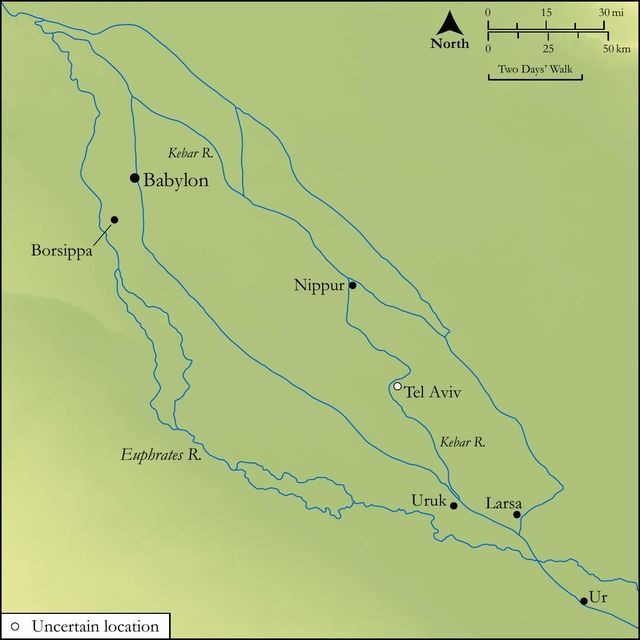
The vision recounted in Ezekiel 1, including verse 21, took place around 593 BC, during the fifth year of King Jehoiachin's exile. Ezekiel, a priest, was among the Jewish exiles deported to Babylon (modern-day Iraq), specifically by the Chebar River. This period was marked by immense national and spiritual crisis for the Israelites, who had been forcibly removed from their homeland and believed God's presence was exclusively tied to the Temple in Jerusalem. The impending destruction of Jerusalem and its Temple further fueled their despair and questions about God's power and faithfulness. In this desperate context, Ezekiel's vision served as a radical theological revelation: God's glory was not confined to a physical temple or a specific geographical location. Instead, His presence was mobile, sovereign, and actively engaged with His people even in the foreign land of Babylon, demonstrating His universal dominion and His unwavering commitment to His exiled covenant people. While the cherubim of the ark were known in Israel, Ezekiel's vision transcends them, emphasizing the unique, transcendent, and dynamic nature of the God of Israel.
Key Themes
ShowHideEzekiel 1:21 significantly contributes to several profound themes within the book of Ezekiel and the broader biblical narrative. Firstly, it powerfully illustrates Divine Sovereignty and Control. The unified and perfectly synchronized movement of the creatures and wheels underscores that every aspect of God's works is meticulously orchestrated and divinely directed, leaving no room for randomness or independent action. This highlights God's absolute command over all creation and His meticulous attention to detail. Secondly, the explicit mention of "the spirit of the living creature" introduces the critical theme of Spirit-Directed Action. This emphasizes that the animating force behind God's divine will and manifestations is His Spirit, prefiguring the Holy Spirit's pervasive role in empowering and guiding God's purposes throughout Scripture, as seen in the Spirit's role in creation in Genesis 1:2 and in giving life in Psalm 104:30. Thirdly, the inherent mobility of this divine chariot-throne reinforces the theme of God's Unrestricted Presence and Omnipresence. God is not bound by human constructs or geographical limitations, but is present and active with His people wherever they are, even in the desolation of exile. This concept is vital for understanding God's relationship with His people beyond physical boundaries, a truth also echoed in Isaiah 66:1.
Exposition and Analysis
ShowHideKey Word Analysis
ShowHideThis versatile Hebrew term encompasses meanings such as "wind," "breath," and "spirit." In Ezekiel 1:21, rûwach denotes the animating, directing, and unifying force that governs the intricate movements of the divine chariot. It is not merely a mechanical energy but a spiritual, intelligent, and purposeful power, directly linked to the "living creature." This signifies a divine, supernatural agency behind the coordinated actions, highlighting the vital role of God's Spirit in empowering and directing His works and manifestations of glory.
Derived from a root meaning "alive," chay here refers to the four cherubim described in detail earlier in Ezekiel 1:5-14. These powerful angelic beings are intimately associated with God's presence and throne, serving as guardians of His holiness and executors of His will. The term "living" emphasizes their vitality, sentience, and dynamic responsiveness to God's command. The phrase "spirit of the living creature" implies that the very essence or animating principle of these beings is the force that also governs the wheels, ensuring a unified and purposeful movement.
From an unused root meaning "to revolve," ʼôwphân refers to the extraordinary, interconnected wheels that accompany the living creatures. These are not ordinary wheels but are described as having eyes (Ezekiel 1:18) and moving with incredible speed and precision in any direction without turning. Their primary function is to facilitate the mobility of God's throne, signifying His dynamic presence and ability to move anywhere. In this verse, their movement is entirely subservient to and animated by the spirit of the living creatures, underscoring the profound unity and divine direction of the entire vision.
Verse Breakdown
ShowHide"When those went, [these] went; and when those stood, [these] stood;"
This clause vividly describes the perfect synchronicity between the living creatures (referred to as "those") and the wheels ("these"). Their movements are not independent but are perfectly coordinated. When the creatures moved forward, the wheels moved; when the creatures halted, the wheels also ceased their motion. This emphasizes the absolute unity of purpose and action within God's divine operations, illustrating a seamless, divinely orchestrated dance of power and precision.
"and when those were lifted up from the earth, the wheels were lifted up over against them:"
This extends the description of synchronized movement to vertical ascent. Just as the creatures ascended from the ground, the wheels accompanying them also rose. The phrase "over against them" (H5980, ʻummâh) highlights their direct correspondence and proximity, reinforcing the idea that the wheels were always in perfect alignment with the creatures, never lagging or moving independently. This portrays God's throne as capable of ascending and descending, signifying His dominion over all dimensions and His unhindered movement.
"for the spirit of the living creature [was] in the wheels."
This is the explanatory clause, providing the profound theological reason for the observed perfect synchronicity. The animating principle, the "spirit" (rûwach), which empowers the "living creature" (chay), is also present and active within the wheels. This reveals that the movement is not mechanical, coincidental, or self-generated, but is spiritually driven and divinely directed. It underscores the profound theological truth that God's Spirit is the ultimate source of power, coordination, and purpose in all His divine manifestations and actions, ensuring perfect unity and control.
Literary Devices
ShowHideEzekiel 1:21 employs several powerful literary devices to convey its profound theological message. Symbolism is paramount, as the "living creatures" and "wheels" are not literal entities but symbolic representations of God's divine attributes and the mechanics of His sovereign presence. The creatures symbolize divine power, intelligence, and the execution of God's will, while the wheels symbolize omnipresence, mobility, and the swiftness of divine action. The phrase "spirit of the living creature" also uses Metonymy, where "spirit" represents the animating, directing force that originates from or is embodied by the "living creature," thereby signifying the divine energy and will. The Repetition of verbs like "went," "stood," and "lifted up" across both subjects (creatures and wheels) creates a strong sense of Parallelism and emphasizes the absolute synchronicity and unified nature of their movement. This rhythmic repetition reinforces the idea of perfect divine order and control, leaving no doubt about the integrated and purposeful nature of God's operations.
Theological and Thematic Connections
ShowHideEzekiel 1:21 profoundly articulates the intricate and unified nature of God's sovereign operations, revealing that every aspect of His divine will is executed with perfect coordination and spiritual animation. The verse underscores the active and pervasive presence of God's Spirit, not merely as an abstract force but as the very essence that empowers and directs the most complex manifestations of divine glory. This concept of a Spirit-driven, perfectly synchronized divine activity assures us that God is always in control, orchestrating all things according to His wise and unchangeable purpose, even amidst chaos or exile. It highlights that God's power is not static or confined but dynamic, mobile, and intimately involved in the unfolding of His plans across all creation, demonstrating His absolute mastery over every dimension of existence.
Reflection and Application
ShowHideEzekiel 1:21 offers a profound source of comfort and a powerful call to trust in God's unfailing sovereignty. In a world often characterized by chaos, uncertainty, and feelings of helplessness, this verse reminds us that the God we serve is not distant or disengaged. Instead, He is intimately involved, meticulously orchestrating every detail of His plan for all things with perfect precision and unified purpose, all animated by His Spirit. Just as the living creatures and wheels moved in seamless synchronicity, so too does God work all things together for His glory and the good of those who love Him. This should inspire us to release our anxieties, surrender our limited understanding, and trust in His divine leading, knowing that His Spirit is actively at work, guiding His purposes and sustaining His creation. For believers, it's a powerful reminder to align our lives with the Holy Spirit's guidance, trusting that His direction is always purposeful, precise, and ultimately leads to the fulfillment of God's perfect will, no matter our circumstances or geographical location, even in the midst of personal or collective "exile."
Questions for Reflection
ShowHideFAQ
ShowHideWhat is the "spirit of the living creature" mentioned in this verse?
ShowHideThe "spirit of the living creature" (Hebrew: rûwach ha-chayyah) refers to the animating, directing, and unifying force that empowers the four living creatures (cherubim) and, through them, also governs the movement of the wheels. It is not a separate entity but rather the very essence or life-principle of these divine beings, which is intrinsically linked to God's own Spirit. This signifies that the entire divine chariot-throne operates under a single, intelligent, and purposeful divine will, ensuring perfect coordination and execution of God's plans. It emphasizes that God's operations are not mechanical or random, but spiritually animated and controlled. This concept foreshadows the later revelation of the Holy Spirit's pervasive role in guiding and empowering God's people, as seen in passages like John 14:26, where Jesus promises the Spirit will teach and remind His disciples of all He has said.
Christ-Centered Fulfillment
ShowHideEzekiel 1:21, with its depiction of a Spirit-animated, perfectly synchronized divine chariot-throne, finds its ultimate fulfillment in the person and work of Jesus Christ and the ongoing ministry of the Holy Spirit. The unified, purposeful movement of God's throne in Ezekiel foreshadows Christ's perfect and unwavering obedience to the Father's will, where His every action, word, and even His suffering and death were in complete alignment with divine purpose, as He Himself declared, "I can do nothing on my own. I judge as I hear, and my judgment is just, because I seek not my own will but the will of him who sent me" (John 5:19). Just as the "spirit of the living creature" animated the wheels, so too was Jesus conceived by the Holy Spirit (Matthew 1:18) and empowered by the Spirit throughout His earthly ministry, returning "in the power of the Spirit" to Galilee. The mobility of God's throne, signifying His omnipresence and accessibility, is fully realized in Christ, who, being God incarnate, made God's presence tangible and accessible to humanity, for "the Word became flesh and dwelt among us". Furthermore, the same Spirit that animated the cherubim and wheels is the Holy Spirit that Christ poured out upon His church at Pentecost (Acts 2:1-4), enabling believers to live Spirit-led lives (Romans 8:14), moving in unity and purpose according to God's will, just as the divine chariot moved. Thus, Ezekiel's vision points to Christ as the ultimate embodiment of God's sovereign, Spirit-directed presence, and His ongoing work through the Holy Spirit in His church, guiding and empowering His people until His glorious return.