


2 Chronicles 5:3
Bible text: King James Version (1769 Blayney text) · Public domain
Bible text: Berean Standard Bible · Public domain
Bible text: American Standard Version (1901) · Public domain
Bible text: World English Bible, Messianic edition · Public domain
Bible text: Geneva Bible (1599) · Public domain
Bible text: Young's Literal Translation · Public domain
- וַיִּקָּהֲלוּvai·yi·ka·ha·Luand they assembledH6950Conj-w ¦ V-Niphal-ConsecImperf-3mpVerb Niphal Consecutive Imperfect 3rd Plural Masculineוַandיִּקָּהֲלוּthey assembled
- אֶל'eltoH413PrepPreposition
- הַמֶּלֶךְha·Me·lekhthe kingH4428Art ¦ N-msNoun Singular Masculine Absoluteהַtheמֶּלֶךְking
- כָּלkoleveryH3605N-mscNoun Singular Masculine Construct
- אִישׁ'ish<the> person ofH376N-mscNoun Singular Masculine Construct
- יִשְׂרָאֵלYis·ra·'ElIsraelH3478N-properNoun Proper Location
- בֶּחָגbe·Chagat the festivalH2282Prep-b ¦ N-msNoun Singular Masculine Absoluteבֶּat theחָגfestival
- הוּאhu'itH1931Pro-3msPronoun Personal 3rd Singular Masculine
- הַחֹדֶשׁha·Cho·desh[was] the monthH2320Art ¦ N-msNoun Singular Masculine Absoluteהַ[was] theחֹדֶשׁmonth
- הַשְּׁבִעִיha·she·vi·'I<the> seventhH7637Art ¦ Adj-msAdjective Numerical Position Singular Masculine Absoluteהַ<the>שְּׁבִעִיseventh
English is a literal word-by-word gloss of the Hebrew, not the KJV's wording. Why?
This is the original text the KJV's translators worked from — each Hebrew word with its own literal English meaning in this verse, prepared by scholars at Tyndale House, Cambridge. The KJV translates whole sentences, not word by word, so its wording differs: one Hebrew word can become several English words, and the KJV may choose “the LORD” where the gloss reads “Yahweh”. Both are faithful — they answer different questions. For the KJV's own rendering, switch to the KJV text.
Details
See on the biblical-era maps
Study this verse
Public-domain commentary
Matthew Henry
From his Commentary on the Whole Bible. Henry comments on passages, not single verses — this entry covers 2 Chronicles 5:1–10.
This agrees with what we had Kg1 8:2, etc., where an account was given of the solemn introduction of the ark into the new-erected temple. 1. There needed no great solemnity for the bringing in of the dedicated things, Ch2 5:1. They added to the wealth, and perhaps were so disposed as to add to the beauty of it; but they could not add to the holiness, for it was the temple that sanctified the gold, Mat 23:17. See how just Solomon was both to God and to his father. Whatever David had dedicated to God, however much he might have liked it himself, he would by no means alienate it, but put it among the treasures of the temple. Those children that would inherit their godly parents' blessing must religiously pursue their pious intentions and not defeat them. When Solomon had made all the vessels of the temple in abundance (Ch2 4:18), many of the materials were left, which he would not convert to any other use, but laid up in the treasury for a time of need. Dedicated things must not be alienated. It is sacrilege to do it. 2. But it was fit that the ark should be brought in with great solemnity; and so it was. All the other vessels were made new, and larger, in proportion to the house, than they had been in the tabernacle. But the ark, with the mercy-seat and the cherubim, was the same; for the presence and the grace of God are the same in little assemblies that they are in large ones, in the poor condition of the church that they are in its prosperous estate. Wherever two or three are gathered together in Christ's name there is he as truly present with them as if there were 2000 or 3000. The ark was brought in attended by a very great assembly of the elders of Israel, who came to grace and solemnity; and a very sumptuous appearance no doubt they made, Ch2 5:2-4. It was carried by the priests (Ch2 5:7), brought into the most holy place, and put under the wings of the great cherubim which Solomon had set up there, Ch2 5:7, Ch2 5:8. There they are unto this day (Ch2 5:9), not the day when this book was written after the captivity, but when that was written out of which this story was transcribed. Or they were there (so it might be read) unto this day, the day of Jerusalem's desolations, that fatal day, Psa 137:7. The ark was a type of Christ, and, as such, a token of the presence of God. That gracious promise, Lo, I am with you always, even unto the end of the world, does in effect bring the ark into our religious assemblies if we by faith and prayer put that promise in suit; and this we should be most solicitous and earnest for. Lord, if thy presence go not up with us, wherefore should we go up? The temple itself, if Christ leave it, is a desolate place, Mat 23:38. 3. With the ark they brought up the tabernacle and all the holy vessels that were in the tabernacle, Ch2 5:5. Those were not alienated, because they had been dedicated to God, were not altered or melted down for the new work, though there was no need of them; but they were carefully laid up as monuments of antiquity, and probably as many of the vessels as were fit for use were still used. 4. This was done with great joy. They kept a holy feast upon the occasion (Ch2 5:3), and sacrificed sheep and oxen without number, Ch2 5:6. Note, (1.) The establishment of the public worship of God according to his institution, and with the tokens of his presence, is, and ought to be, matter of great joy to any people. (2.) When Christ is formed in a soul, the law written in the heart, the ark of the covenant settled there, so that it becomes the temple of the Holy Ghost, there is true satisfaction in that soul. (3.) Whatever we have the comfort of we must, by the sacrifice of praise, give God the glory of, and not be straitened therein; for with such sacrifices God is well pleased. If God favour us with his presence, we must honour him with our services, the best we have.
Continue studying 2 Chronicles 5:3 across the web’s major study libraries — every link below opens this exact verse, chapter, or book on the destination site.
Read & Compare
 BibleGatewayThis verse in more than 200 translations and 70 languages.
 Bible.comThe YouVersion reader — hundreds of translations, reading plans, and highlights.
 ESV.orgCrossway's official English Standard Version reader.
 NET BibleThe NET translation with 60,000+ translators' notes on every rendering decision.
 STEP BibleTyndale House's free study tool — original text, vocabulary, and scholarly resources.
 BibliaLogos Bible Software's free web reader.
 USCCBThe New American Bible (Revised Edition) with the U.S. bishops' study notes.
Commentaries
 BibleHub CommentariesDozens of classic commentaries on this verse, gathered on one page.
 StudyLightMore than 100 commentary sets — the largest collection on the web.
 BibleRefPlain-English commentary on what this verse means, verse by verse.
 Enduring WordDavid Guzik's free commentary on this chapter, widely used by Bible teachers.
 Bible Study ToolsVerse commentary alongside Greek and Hebrew study aids.
Original Language & Research
- BibleHub InterlinearThe verse word by word — original language, transliteration, and English.
- BibleHub LexiconEvery word's original-language definition and Strong's entry.
 Blue Letter BibleDeep-study tools — Strong's numbers, concordance, and word studies.
 SefariaThe Hebrew text with Rashi and centuries of Jewish commentary.
Sermons, Hymns & Audio


TrulyRandomVerse is not affiliated with these sites and doesn’t control their content. They’re linked because they’re genuinely useful.
Summary
2 Chronicles 5:3 vividly portrays a momentous national gathering in ancient Israel, where "all the men of Israel assembled themselves unto the king" Solomon. This grand convocation took place in Jerusalem during the "feast which was in the seventh month," specifically the Feast of Tabernacles. This verse serves as the pivotal prelude to the dedication of the newly completed Temple, setting the stage for the solemn procession of the Ark of the Covenant into its permanent resting place and the subsequent overwhelming manifestation of God's glory among His people, signifying a profound moment of national unity and divine presence.
Context
ShowHideLiterary Context
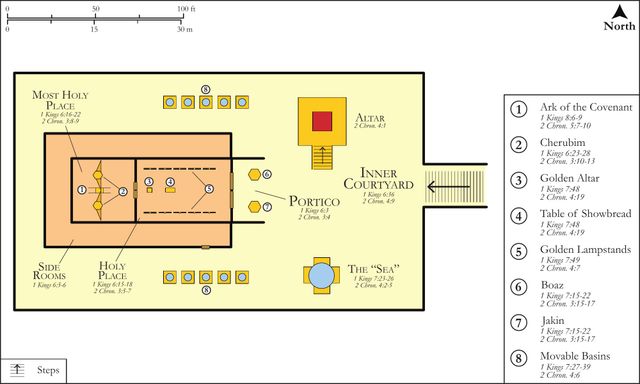
This verse immediately follows 2 Chronicles 5:2, which describes King Solomon's initial assembly of the elders, heads of tribes, and chief fathers of Israel. Their specific purpose was to bring the Ark of the Covenant from the City of David (Zion) to the newly constructed Temple. 2 Chronicles 5:3 broadens the scope of this gathering significantly, emphasizing that "all the men of Israel" also assembled, indicating a truly national and comprehensive participation in this monumental event. This sets up the dramatic entry of the Ark in 2 Chronicles 5:7 and the subsequent filling of the Temple with the tangible glory of the Lord in 2 Chronicles 5:13-14. The Chronicler, writing for a post-exilic audience, meticulously emphasizes the unity and obedience of the nation under a righteous king, providing a powerful model for restoration and faithfulness to God.
Historical & Cultural Context
The assembly described in 2 Chronicles 5:3 took place during the Feast of Tabernacles (Sukkot), one of the three annual pilgrimage festivals (alongside Passover and Pentecost) when all Israelite males were commanded to appear before the Lord in Jerusalem (Deuteronomy 16:16). This feast, occurring in the seventh month (Tishrei, roughly September/October), was a time of immense rejoicing, thanksgiving for the autumn harvest, and a profound remembrance of God's miraculous provision during the wilderness wanderings, when the Israelites lived in temporary shelters or "tabernacles" (Leviticus 23:34-43). The strategic timing of the Temple dedication during this particular feast underscored its significance as a joyous celebration of God's permanent dwelling among His people, reminiscent of His presence in the movable wilderness tabernacle, now established in a magnificent, enduring structure. The sheer scale of the gathering highlights not only Solomon's administrative power but also the deeply ingrained religious practices and communal identity of the Israelite nation.
Key Themes
ShowHideThe verse strongly contributes to several key themes within 2 Chronicles and the broader biblical narrative. Firstly, it underscores the theme of National Unity and Corporate Worship. The gathering of "all the men of Israel" signifies a unified act of worship and dedication, demonstrating the nation's collective commitment to God and their king. This communal faith is presented as vital for the spiritual health and prosperity of the nation, a principle the Chronicler emphasizes repeatedly through examples of corporate repentance and blessing throughout the book. Secondly, it highlights the Significance of the Temple as the central place of worship and the tangible dwelling place of God's presence among His people. The dedication of the Temple, a project initiated by David and completed by Solomon (2 Samuel 7:13), was not merely a building endeavor but the very heart of Israel's spiritual life and national identity. Finally, the timing during the Feast of Tabernacles emphasizes the Observance of God's Appointed Times, illustrating the profound importance of adhering to divine commands and the deep joy found in celebrating God's faithfulness and provision within the established liturgical calendar.
Exposition and Analysis
ShowHideKey Word Analysis
ShowHideThis verb (H6950, קָהַל) signifies a formal gathering or convocation, often with a religious, communal, or official purpose. It implies a deliberate and intentional act of coming together, rather than a coincidental meeting. In this context, it emphasizes the organized and purposeful nature of the national assembly under the king's authority, highlighting the unity and corporate participation of the entire nation in this sacred and monumental event. The related noun form, qahal, is frequently translated as "assembly" or "congregation," reinforcing the idea of Israel as God's specially gathered people.
The term (H2282, חַג) specifically refers to one of the three annual pilgrimage festivals in Israel (Passover, Pentecost, and Tabernacles), during which all Israelite males were commanded to travel to Jerusalem to appear before the Lord. Unlike a general celebration, a chag carried profound religious obligations and deep communal significance, typically involving sacrifices, joyful celebration, and a remembrance of God's historical acts of deliverance and provision for His people. Its mention here firmly anchors the Temple dedication within the established liturgical calendar of Israel, imbuing the event with layers of theological meaning and covenantal significance.
This noun (H2320, חֹדֶשׁ) literally means "new moon" and by implication refers to a "month." The new moon marked the beginning of each lunar month in the Israelite calendar, and it was often observed with special sacrifices and celebrations. The specific mention of the "seventh month" (Tishrei) is crucial because it immediately cues the audience to the Feast of Tabernacles, the most prominent festival of that month. This precise temporal marker underscores the divinely ordained timing of the Temple dedication, connecting it to a period of national thanksgiving and remembrance.
Verse Breakdown
ShowHide"Wherefore all the men of Israel assembled themselves unto the king"
This opening clause establishes the universal and comprehensive scope of the gathering, emphasizing that representatives from every tribe and region of Israel came together. The phrase "unto the king" underscores Solomon's central, divinely appointed role as the orchestrator of this national event, acting as God's chosen leader for the dedication of His sacred house. It signifies a unified act of obedience and loyalty, directed both to the monarch and, by extension, to the God he served. The assembly was not merely a spontaneous crowd but a deliberate and organized convocation of the entire nation.
"in the feast which [was] in the seventh month"
This specifies the precise and highly significant timing of the assembly. The "seventh month" (Tishrei) was well-known as the period for the Feast of Tabernacles (Sukkot), a major pilgrimage festival. This timing was profoundly significant, as it was a period of national thanksgiving for the harvest, remembrance of God's wilderness provision, and joyful celebration of His presence. Holding the Temple dedication during this feast imbued the event with deep theological resonance, linking the permanent dwelling of God with His historical faithfulness, His covenant promises, and the anticipated blessings of the land.
Literary Devices
ShowHideThe verse employs several literary devices to convey its profound meaning and significance. Hyperbole is evident in the phrase "all the men of Israel," which, while not literally every single male, signifies a comprehensive and representative gathering of the entire nation. This exaggeration effectively emphasizes the universal participation and corporate nature of the event, underscoring the monumental importance of the Temple dedication as a truly national undertaking. The mention of "the feast which was in the seventh month" serves as an instance of Synecdoche, where a part (the seventh month) stands for the whole (the Feast of Tabernacles), relying on the audience's familiarity with the Israelite liturgical calendar. This precise temporal marker also functions as Setting, firmly grounding the sacred event within a specific, divinely ordained time, thereby highlighting the intentionality and divine orchestration of the dedication. Furthermore, the entire verse functions as Foreshadowing, masterfully building anticipation for the dramatic events that immediately follow, particularly the bringing of the Ark into the Temple and the subsequent overwhelming manifestation of God's glory.
Theological and Thematic Connections
ShowHide2 Chronicles 5:3 profoundly illustrates the theological principle of corporate worship and the centrality of God's dwelling place among His people. The unified assembly of "all Israel" for the Temple dedication highlights the indispensable importance of the community of faith coming together in obedience, reverence, and celebration. This gathering was not merely a political or social event but a sacred act, recognizing God's absolute sovereignty and His unwavering covenant faithfulness. The Temple, as the physical locus of God's presence, served as a tangible reminder of His promise to dwell with His people, providing a focal point for their national identity, spiritual life, and collective worship. This event, strategically timed during a major pilgrimage festival, underscored the profound joy and thanksgiving inherent in drawing near to God in His appointed ways and places.
Reflection and Application
ShowHideThe grand assembly of "all the men of Israel" for the Temple's dedication in 2 Chronicles 5:3 offers profound and enduring lessons for contemporary believers. It reminds us of the inherent value, spiritual power, and divine blessing found in corporate worship and communal gathering. Just as ancient Israel found strength, identity, and spiritual vitality in coming together before God, so too do believers today. Our individual faith is not meant to be lived in isolation; rather, it is enriched and sustained by our active participation in the body of Christ, where we collectively celebrate God's presence, hear His Word proclaimed, and encourage one another in our walk of faith. This verse challenges us to prioritize gathering with fellow believers, recognizing that our communal worship is a powerful testimony to the world and a vital expression of our devotion to God. It encourages us to approach corporate worship with intentionality, reverence, and joyful anticipation, understanding that we are assembling not merely for a social event, but for a sacred encounter with the King of kings.
Questions for Reflection
ShowHideFAQ
ShowHideWhy was the Temple dedication timed specifically to "the feast which was in the seventh month"?
ShowHideThe timing of the Temple dedication during "the feast which was in the seventh month" was highly significant because it refers to the Feast of Tabernacles (Sukkot), one of the three major annual pilgrimage festivals commanded by God in the Mosaic Law (Leviticus 23:34-43). This feast was a time of immense national rejoicing, thanksgiving for the autumn harvest, and a profound remembrance of God's faithful provision during Israel's forty years in the wilderness, when they lived in temporary shelters or "tabernacles." By dedicating the permanent Temple during this particular feast, Solomon strategically linked the new, enduring dwelling place of God with His historical presence and faithfulness, emphasizing continuity and the fulfillment of His promises. It provided a context of national unity, profound celebration, and deep theological resonance for such a monumental event, ensuring that the entire nation could participate and reflect on God's goodness.
Christ-Centered Fulfillment
ShowHideThe assembly of "all the men of Israel" for the dedication of Solomon's Temple, particularly during the joyous Feast of Tabernacles, finds its ultimate Christ-centered fulfillment in the person and redemptive work of Jesus Christ. The physical Temple, which served as the focal point of God's presence among His people in the Old Testament, was a powerful foreshadowing of Christ Himself, who is the true and ultimate dwelling place of God among humanity (John 1:14 states that the Word "dwelt among us," literally "tabernacled among us"). Jesus boldly declared, "Destroy this temple, and in three days I will raise it up," referring prophetically to the temple of His own body (John 2:19-21). Furthermore, the grand gathering of "all Israel" for worship prefigures the universal assembly of all believers—both Jew and Gentile—who are now gathered into the spiritual Temple, the Church, with Christ as its foundational cornerstone (Ephesians 2:19-22). The joyous Feast of Tabernacles, celebrating God's provision and abiding presence, points forward to the ultimate joy and spiritual provision found in Christ, who offers living water to all who thirst (John 7:37-38) and promises His abiding presence with His people forever, even to the end of the age (Matthew 28:20). Thus, the dedication of the Temple in 2 Chronicles 5:3 serves as a profound Old Testament type, pointing forward to the greater reality of God's dwelling in Christ and among His redeemed people, the Church.