


Isaiah 16:14
- וְעַתָּהve·'a·Tahand nowH6258Conj-w ¦ AdvAdverbוְandעַתָּהnow
- דִּבֶּרdi·Berhe saysH1696V-Piel-Perf-3msVerb Piel Perfect 3rd Singular Masculine
- יְהוָהYah·wehYahwehH3068N-properNoun Proper Title
- לֵאמֹרle·Mor<to> sayingH559Prep-l ¦ V-Qal-InfVerb Qal Infinitive Constructלֵ<to>אמֹרsaying
- בְּשָׁלֹשׁbe·sha·Loshin threeH7969Prep-b ¦ Adj-csAdjective Numerical Singular common gender Absoluteבְּinשָׁלֹשׁthree
- שָׁנִיםsha·NimyearsH8141N-mpNoun Plural Masculine Absolute
- כִּשְׁנֵיkish·Neilike [the] years ofH8141Prep-k ¦ N-mpcNoun Plural Masculine Constructכִּlikeשְׁנֵי[the] years of
- שָׂכִירsa·Khira hired laborerH7916Adj-msAdjective Singular Masculine Absolute
- וְנִקְלָהve·nik·Lahand it will be lightly esteemedH7034Conj-w ¦ V-Niphal-ConsecPerf-3msVerb Niphal Consecutive Perfect 3rd Singular Masculineוְandנִקְלָהit will be lightly esteemed
- כְּבוֹדke·Vod[the] honor ofH3519N-mscNoun Singular Masculine Construct
- מוֹאָבmo·'AvMoabH4124N-properNoun Proper Location
- בְּכֹלbe·Kholfor allH3605Prep-b ¦ N-mscNoun Singular Masculine Constructבְּforכֹלall
- הֶהָמוֹןhe·ha·Monthe multitudeH1995Art ¦ N-msNoun Singular Masculine Absoluteהֶtheהָמוֹןmultitude
- הָרָבha·Rav<the> greatH7227Art ¦ Adj-msAdjective Singular Masculine Absoluteהָ<the>רָבgreat
- וּשְׁאָרu·she·'Arand a remnantH7605Conj-w ¦ N-msNoun Singular Masculine Absoluteוּandשְׁאָרa remnant
- מְעַטme·'AtlittleH4592N-msNoun Singular Masculine Absolute
- מִזְעָרmiz·'ArsmallnessH4213N-msNoun Singular Masculine Absolute
- לוֹאLo'notH3808NegParticle Negative
- כַבִּירkha·Bir[will be] mightyH3524Adj-msAdjective Singular Masculine Absolute
English is a literal word-by-word gloss of the Hebrew, not the KJV's wording. Why?
This is the original text the KJV's translators worked from — each Hebrew word with its own literal English meaning in this verse, prepared by scholars at Tyndale House, Cambridge. The KJV translates whole sentences, not word by word, so its wording differs: one Hebrew word can become several English words, and the KJV may choose “the LORD” where the gloss reads “Yahweh”. Both are faithful — they answer different questions. For the KJV's own rendering, switch to the KJV text.
Details
See on the biblical-era map
Study this verse
Public-domain commentary
Matthew Henry
From his Commentary on the Whole Bible. Henry comments on passages, not single verses — this entry covers Isaiah 16:6–14. His four-level outline is real structure in the source text, so it is rendered as structure.
Here we have, I. The sins with which Moab is charged, Isa 16:6. The prophet seems to check himself for going about to give good counsel to the Moabites, concluding they would not take the advice he gave them. He told them their duty (whether they would hear or whether they would forbear), but despairs of working any good upon them; he would have healed them, but they would not be healed. Those that will not be counselled cannot be helped. Their sins were, 1. Pride. This is most insisted upon; for perhaps there are more precious souls ruined by pride than by any one lust whatsoever. The Moabites were notorious for this: "We have heard in both ears of the pride of Moab; it is what all their neighbours cry out shame upon them for. He is very proud; the body of the nation is so, forgetting the baseness of their origin and the brand of infamy fastened upon them by that law of God which forbade a Moabite to enter into the congregation of the Lord for ever, Deu 23:3. We have heard of his haughtiness and his pride. It is not the rash and rigid censure of one of two concerning them, but it is the character which all that know them will give of them. They are a proud people, and therefore they will not take good counsel when it is given them. They think themselves too wise to be advised; therefore they will not take example by Hezekiah to do justly and love mercy. They scorn to make him their pattern, for they think themselves able to teach him. They are proud, and therefore will not be subject to God himself nor regard the warnings he gives them. The wicked, in the pride of his countenance, will not seek after God. They are proud, and therefore will not entertain and protect God's outcasts; they scorn to have any thing to do with them." But this is not all: - 2. "We have heard of his wrath too (for those that are very proud are commonly very passionate), particularly his wrath against the people of God, whom therefore he will rather persecute than protect. 3. It is with his lies that he gains the gratifications of his pride and his passion; but his lies shall not be so; he shall not compass his proud and angry projects as he hoped he should." Some read it, His haughtiness, his pride, and his wrath, are greater than his strength. "We know that, if we lay at his mercy, we should find no mercy with him, but he has not power equal to his malice. His pride draws down ruin upon him; for it is the preface to destruction, and he has not strength to ward it off."
II.The sorrows with which Moab is threatened (Isa 16:7):
Therefore shall Moab howl for Moab. All the inhabitants shall bitterly lament the ruin of their country. They shall complain one to another: Every one shall howl in despair, and not one shall either see any cause or have any heart to encourage his friend. Observe,
1.The causes of this sorrow.
(1.)The destruction of their cities: For the foundations of Kir-haraseth shall you mourn. That great and strong city, which had held out against a mighty force (Kg2 3:25), should now be levelled with the ground, either burnt or broken down, and its foundations stricken, bruised and broken (so the word signifies); they shall howl when they see their splendid cities turned into ruinous heaps.
(2.)The desolation of their country. Moab was famous for its fields and vineyards; but those shall all be laid waste by the invading army, Isa 16:8, Isa 16:10. See,
[1.]What a fruitful pleasant country they had, as the garden of the Lord, Gen 13:10. It was planted with choice and noble vines, with principal plants, which reached even to Jazer, a city in the tribe of Gad. The luxuriant branches of their vines wandered, and wound themselves along the ranges on which they were spread, even through the wilderness of Moab. There were vineyards there. Nay, they were stretched out, and went even to the sea, the Dead Sea: the best grapes grew in their hedge-rows.
[2.]How merry and pleasant they had been in it. Many a time they had shouted for their summer fruits, and for their harvest, as the country people sometimes do with us when they have cut down all their corn. They had had joy and gladness in their fields and vineyards, singing and shouting at the treading of their grapes. Nothing is said of their praising God for their abundance, and giving him the glory of it. If they had made it the matter of their thanksgiving, they might still have had it the food and fuel of their lusts; see therefore,
[3.]How they should be stripped of all. "The fields shall languish, all the fruits of them being carried away or trodden down; they cannot now enrich their owners as they have done, and therefore they languish. The soldiers, called here the lords of the heathen, shall break down all the plants, though they were principal plants, the choicest that could be got. Now the shouting for the enjoyment of the summer fruits has fallen, and is turned into howling for the loss of them. The joy of harvest has ceased; there is no more singing, no more shouting, for the treading out of wine. They have not what they have had to rejoice in, nor have they a disposition to rejoice; the ruin of their country has marred their mirth." Note, First, God can easily change the note of those that are most addicted to mirth and pleasure, can soon turn their laughter into mourning and their joy into heaviness. Secondly, Joy in God is, upon this account, far better than the joy of harvest, that it is what we cannot be robbed of, Psa 4:6, Psa 4:7. Destroy the vines and the fig-trees, and you make all the mirth of a carnal heart to cease, Hos 2:11, Hos 2:12. But a gracious soul can rejoice in the Lord as the God of its salvation even when the fig-tree does not blossom and there is no fruit in the vine, Hab 3:17, Hab 3:18. In God therefore let us always rejoice with a holy triumph, and in other things let us always rejoice with a holy trembling, rejoice as though we rejoiced not.
2.The concurrence of the prophet with them in this sorrow: "I will with weeping bewail Jazer, and the vine of Sibmah, and look with a compassionate concern upon the desolations of such a pleasant country. I will water thee with my tears, O Heshbon! and mingle them with thy tears;" nay (Isa 16:11), it appears to be an inward grief: My bowels shall sound like a harp for Moab; it should make such an impression upon him that he should feel an inward trembling, like that of the strings of a harp when it is played upon. It well becomes God's prophets to acquaint themselves with grief; the great prophet did so. The afflictions of the world, as well as those of the church, should be afflictions to us. See Isa 15:5.
III.In the close of the chapter we have,
1.The insufficiency of the gods of Moab, the false gods, to help them, Isa 16:12. "Moab shall be soon weary of the high place. He shall spend his spirits and strength in vain in praying to his idols; they cannot help him, and he shall be convinced that they cannot." It is seen that it is to no purpose to expect any relief from the high places on earth; it must come from above the hills. Men are generally so stupid that they will not believe, till they are made to see, the vanity of idols and of all creature-confidences, nor will come off from them till they are made weary of them. But, when he is weary of his high places, he will not go, as he should, to God's sanctuary, but to his sanctuary, to the temple of Chemosh, the principal idol of Moab (so it is generally understood); and he shall pray there to as little purpose, and as little to his own case and satisfaction, as he did in his high places; for, whatever honours idolaters give to their idols, they do not thereby make them at all the better able to help them. Whether they are the dii majorum gentium - gods of the higher order, or minorum - of the lower order, they are alike the creatures of men's fancy and the work of men's hands. Perhaps it may be meant of their coming to God's sanctuary. When they found they could have no succours from their own high places some of them would come to the temple of God at Jerusalem, to pray there, but in vain; he will justly send them back to the gods whom they have served, Jdg 10:14.
2.The sufficiency of the God of Israel, the only true God, to make good what he had spoken against them.
(1.)The thing itself was long since determined (Isa 16:13): This is the word, this is the thing, that the Lord has spoken concerning Moab, since the time that he began to be so proud, and insolent, and abusive to God's people. The country was long ago doomed to ruin; this was enough to give an assurance of it that it is the word which the Lord has spoken; and, as he will never unsay what he has spoken, so all the power of hell and earth cannot gainsay it, or obstruct the execution of it.
(2.)Now it was made known when it should be done. The time was before fixed in the counsel of God, but now it was revealed: The Lord has spoken that it shall be within three years, Isa 16:14. It is not for us to know, or covet to know, the times and the seasons, any further than God has thought fit to make them known, and so far we may and must take notice of them. See how God makes known his mind by degrees; the light of divine revelation shone more and more, and so does the light of divine grace in the heart. Observe,
[1.]The sentence passed upon Moab: The glory of Moab shall be contemned, that is, it shall be contemptible, when all those things they have gloried in shall come to nothing. Such is the glory of this world, so fading and uncertain, admired awhile, but soon slighted. Let that therefore which will soon be contemptible in the eyes of others be always contemptible in our eyes in comparison with the far more exceeding weight of glory. It was the glory of Moab that their country was very populous and their forces were courageous; but where is her glory when all that great multitude is in a manner swept away, some by one judgment and some by another, and the little remnant that is left shall be very small and feeble, not able to bear up under their own griefs, much less to make head against their enemies' insults? Let not therefore the strong glory in their strength nor the many in their numbers.
[2.]The time fixed for the execution of this sentence: Within three years, as the years of a hireling, that is, at the three years' end exactly, for a servant that is hired for a certain term keeps account to a day. Let Moab know that her ruin is very near, and prepare accordingly. Fair warning is given, and with it space to repent, which if they had improved, as Nineveh did, we have reason to think the judgments threatened would have been prevented.
Historical interpretation
Historical reception
2 surviving comments on this verse. Each one is dated, so this reads as a timeline rather than a list.
(Verse 14) And now the Lord has spoken, saying: In three years, like the years of a hired worker, the glory of Moab will be taken away from all its people, and only a few will be left, not many. The three years, in which the glory of Moab will be taken away from all its people, whether many in number or rich in wealth, as translated by the LXX, are to be understood mystically. For just as the mercy of the Lord is in weights and measures, so too do the torments and punishments have their measure. After these three years have passed, in which only a few will be left, not many, then the ingloriousness will cease. And this should be noted, that according to the prophecy of Ezekiel, when the days are counted for years for the Israelites (Ezek. IV), that is, the ten tribes which had sinned grievously, they are reckoned as three hundred and ninety years, as it is written in Hebrew, not one hundred and ninety years, as the Vulgate edition has it: and for the Jews, in which there was the Temple of God, forty years. For he who is small deserves mercy, but the powerful endure torment forcefully (Wis. VI). And the servant who knows his master's will and does not do it, will be beaten severely (Luke XII). Therefore Moab, because he was a foreigner, not of the people of God, but having turned away from error, will be left small and humble, and inglorious, not for many years, but only for three. These are the years that we read about elsewhere: Remember the days of old (Isaiah XLVI), and again: I have considered the days of old, and have kept the eternal years in mind (Psalm LXXVI, 6). For if he served the shadows and copies according to the flesh of Israel, and all their solemnity was a type of future things, why do not the present times of this year also foreshadow future times? Concerning which, we read in another place: What will you do in the days of the assembly, and in the days of the feast of the Lord? And what is joined, Like the days of a hireling (Hosea 9:5), shows that false teaching does everything for profit and gain. For every hireling, and he that is not a shepherd, whose own the sheep are not, sees the wolf coming, and leaves the sheep, and flees: and the wolf snatches them, and scatters the sheep: and the hireling flees, because he is a hireling: and has no care for the sheep (John 10). Therefore, I think that strangers and hirelings should not eat of the saints, nor be partakers of the servants of the saints. For they do all things not out of love for the Lord, but for reward, who devour the houses of widows, and bring their own flocks to be clothed in their wool, and milk them (Matthew 23). Let us apply what we have said about teaching for hire to other things. If I give alms in order to be praised by men, I have received my reward, and I am to be called a hireling. If I pretend to be chaste, but have something else in my conscience, I have not the glory of a hireling, but the punishments of a sinner. And in comparing two evils, it is a lesser evil to openly sin than to feign and pretend sanctity. Indeed, in this respect, Moab has made progress, so that one who previously had many companions in his error is reduced to few; or one who previously had much wealth in the sins, after repentance becomes small and poor in wickedness.
(Verse 14.) And now the Lord has spoken, saying: In three years, like the years of a hired worker, the glory of Moab will be taken away from all the multitude of people, and only a few will be left, small and insignificant. This prophecy, as we have said before, is directed against the Moabites after the death of Ahaz, during the reign of Hezekiah, when the ten tribes were taken into captivity by Sennacherib, the king of Assyria. Therefore, just as a hired worker eagerly awaits the end of the day and night to receive his predetermined wage, so after three years, when the Assyrians come, Moab will be destroyed and only a few will be left in the land to rebuild the ruined cities and cultivate the deserted fields. It is also possible to predict about the Babylonian captivity, that after the capture of Jerusalem and the passage of three years, Moab will be devastated by the Chaldeans, either because no rest will be given to them within a period of three years.
Continue studying Isaiah 16:14 across the web’s major study libraries — every link below opens this exact verse, chapter, or book on the destination site.
Read & Compare
 BibleGatewayThis verse in more than 200 translations and 70 languages.
 Bible.comThe YouVersion reader — hundreds of translations, reading plans, and highlights.
 ESV.orgCrossway's official English Standard Version reader.
 NET BibleThe NET translation with 60,000+ translators' notes on every rendering decision.
 STEP BibleTyndale House's free study tool — original text, vocabulary, and scholarly resources.
 BibliaLogos Bible Software's free web reader.
 USCCBThe New American Bible (Revised Edition) with the U.S. bishops' study notes.
Commentaries
 BibleHub CommentariesDozens of classic commentaries on this verse, gathered on one page.
 StudyLightMore than 100 commentary sets — the largest collection on the web.
 BibleRefPlain-English commentary on what this verse means, verse by verse.
 Enduring WordDavid Guzik's free commentary on this chapter, widely used by Bible teachers.
 Bible Study ToolsVerse commentary alongside Greek and Hebrew study aids.
Original Language & Research
- BibleHub InterlinearThe verse word by word — original language, transliteration, and English.
- BibleHub LexiconEvery word's original-language definition and Strong's entry.
 Blue Letter BibleDeep-study tools — Strong's numbers, concordance, and word studies.
 SefariaThe Hebrew text with Rashi and centuries of Jewish commentary.
Sermons, Hymns & Audio


TrulyRandomVerse is not affiliated with these sites and doesn’t control their content. They’re linked because they’re genuinely useful.
Summary
Isaiah 16:14 delivers a precise and unyielding prophetic declaration concerning the imminent and complete downfall of Moab. This verse, serving as the climactic conclusion to a detailed oracle against the proud nation, specifies a remarkably short three-year timeframe for the fulfillment of God's judgment. It foretells the utter contempt into which Moab's once-great glory and multitude will fall, culminating in a drastically diminished, weak, and insignificant remnant, thereby underscoring the absolute certainty and meticulous timing of divine decree.
Context
ShowHideLiterary Context
Isaiah 16:14 concludes a two-chapter oracle (Isaiah 15-16) specifically directed against Moab, a nation east of the Dead Sea and a frequent adversary of Israel. Chapter 15 vividly portrays the immediate and widespread desolation, lamentation, and flight of Moabite inhabitants, depicting cities falling and people fleeing to distant lands, weeping as they go. This sets a somber tone of impending doom. Chapter 16 then shifts, initially presenting a plea for Moabite refugees to seek asylum in Judah, hinting at a potential for mercy if pride were abandoned. However, this plea is quickly overshadowed by a renewed emphasis on Moab's notorious arrogance and haughtiness, particularly highlighted in Isaiah 16:6. The chapter then returns to the theme of judgment, lamenting the destruction of Moab's fruitful vineyards and prosperous lands. Verse 14 acts as the final, definitive word in this oracle, providing a specific timeline and ultimate outcome, thereby sealing the certainty of the prophecy and leaving no ambiguity about Moab's future.
Historical & Cultural Context
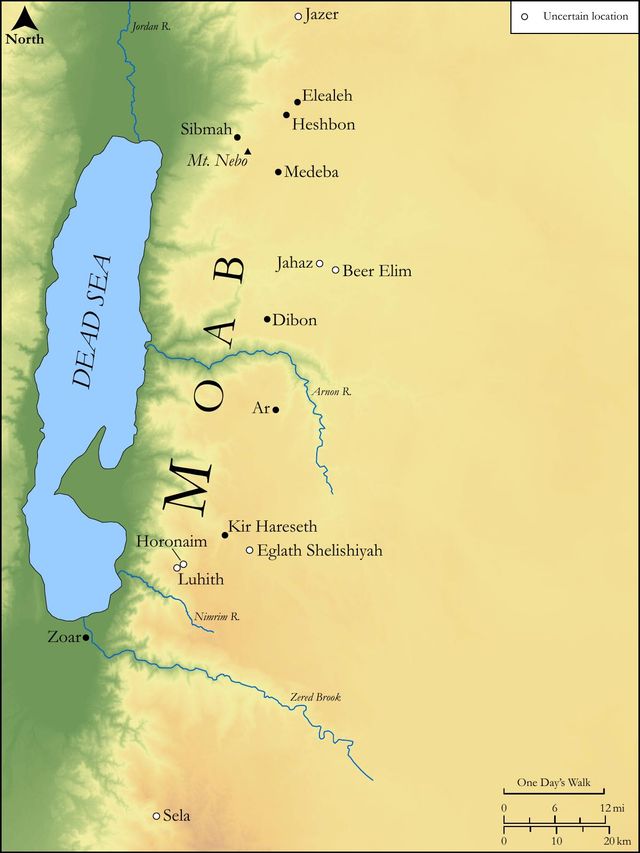
Moab, a descendant of Lot (as per Genesis 19:37), occupied fertile lands east of the Dead Sea, known for their agricultural prosperity, especially vineyards (Isaiah 16:8-10). Throughout Israel's history, Moab was often an antagonist, engaging in conflicts and at times oppressing Israel (e.g., Judges 3:12-30). They were also known for their pride and defiance against Yahweh, often relying on their wealth and perceived strength rather than acknowledging God's sovereignty. The "glory of Moab" mentioned in the verse would have encompassed their military strength, their economic prosperity, their fortified cities, and their national pride. The cultural reference to "the years of a hireling" speaks to a common ancient Near Eastern practice where a laborer's contract was for a fixed, precisely counted period, emphasizing the absolute and unalterable nature of the three-year deadline. This historical animosity and Moab's characteristic pride provide the backdrop for God's severe judgment.
Key Themes
ShowHideThe oracle against Moab, culminating in this verse, powerfully articulates several key themes. Firstly, it highlights Divine Sovereignty and Judgment, demonstrating God's absolute control over the destinies of nations, even those seemingly powerful and defiant. His word is not mere speculation but an unalterable decree, a concept foundational to prophetic literature (Daniel 4:17). Secondly, the passage emphasizes the Consequences of Pride, portraying Moab's downfall as a direct result of its arrogance and haughtiness against God and His people (as seen in Isaiah 16:6). This serves as a universal warning against human self-sufficiency. Thirdly, it underscores Prophetic Certainty and Precision, with the specific three-year timeframe illustrating God's meticulous timing and the reliability of His word. Lastly, the theme of Diminishment and Humiliation is prominent, as Moab's "great multitude" and "glory" are prophesied to be reduced to a "very small and feeble" remnant, symbolizing a complete reversal of fortune and a profound loss of power and prestige.
Exposition and Analysis
ShowHideKey Word Analysis
ShowHideH1696 (dâbar) is a primitive root meaning "to arrange," but figuratively "to speak." It carries a sense of authoritative declaration, command, or pronouncement. When the LORD "speaks," it implies a definitive, often irreversible, decree, indicating that the following prophecy is not a mere prediction but a divine, settled word that will assuredly come to pass.
H3519 (kâbôwd) properly means "weight," but figuratively refers to splendor, copiousness, honor, or prestige. In the context of Moab, "glory" would encompass its wealth, military might, population size, national reputation, and any perceived greatness. The prophecy states this "glory" will be "contemned," signifying a complete reversal from honor to utter disgrace and worthlessness.
H3524 (kabbîyr) means "vast," "mighty," or "many." The KJV translates the phrase "very small and feeble" from the Hebrew mizʻâr mᵉʻaṭ vᵉlôʼ kabbîyr (H4213 H4592 H3808 H3524). The literal translation of the last part lôʼ kabbîyr (H3808 H3524) is "not mighty" or "not vast." Thus, "feeble" here is an idiomatic rendering of "not mighty," emphasizing the extreme weakness and insignificance of the remaining Moabite population, a stark contrast to their former "great multitude."
Verse Breakdown
ShowHide"But now the LORD hath spoken, saying,"
This opening clause immediately establishes the divine authority and certainty of the prophecy. The phrase "the LORD hath spoken" (Hebrew: Yᵉhôvâh dâbar) emphasizes that this is not a human prediction but a direct, authoritative declaration from God, making its fulfillment inevitable.
"Within three years, as the years of a hireling,"
This provides a remarkably precise and definite timeframe for the prophecy's fulfillment. "As the years of a hireling" (Hebrew: shâneh sâkîyr) is a powerful simile, likening the three-year period to a fixed contract for a laborer, which is strictly counted and comes to an absolute, unalterable end. This underscores the exactness and limited nature of the time before judgment.
"and the glory of Moab shall be contemned, with all that great multitude;"
This declares the core outcome of the judgment. "The glory of Moab" (Hebrew: kâbôwd Môwʼâb), representing its power, wealth, and prestige, will be "contemned" (Hebrew: qâlâh), meaning treated with contempt, scorned, or made light of. This humiliation will encompass "all that great multitude" (Hebrew: rab hâmôwn), indicating that their large population and collective strength will be brought to nothing and despised.
"and the remnant [shall be] very small [and] feeble."
This concludes the prophecy with the ultimate state of Moab. Their once-great numbers will be reduced to a "very small" (Hebrew: mizʻâr mᵉʻaṭ) and "feeble" (Hebrew: lôʼ kabbîyr, literally "not mighty") remnant. This stark contrast highlights the devastating and comprehensive nature of the judgment, leaving Moab utterly diminished in both size and strength.
Literary Devices
ShowHideIsaiah 16:14 masterfully employs several literary devices to convey its powerful message. The most prominent is Prophecy, specifically a Time-Bound Prophecy, as indicated by the precise "Within three years" timeframe. This specificity lends credibility and urgency to the divine decree. The phrase "as the years of a hireling" functions as a potent Simile, drawing a parallel between the fixed, unalterable term of a laborer's contract and the absolute certainty and definite end of Moab's period of glory. There is a strong element of Contrast throughout the verse: the "great multitude" and "glory" of Moab are sharply juxtaposed with the "very small and feeble" remnant that will remain. This stark opposition emphasizes the completeness and severity of the impending judgment. Furthermore, the description of Moab's glory being "contemned" uses Irony or Understatement, as what was once a source of national pride will become an object of scorn, highlighting the reversal of their fortunes. The entire verse serves as a powerful Oracle of Judgment, a common prophetic genre, designed to declare God's sovereign authority over nations and the inevitable consequences of pride and defiance.
Theological and Thematic Connections
ShowHideIsaiah 16:14 stands as a profound testament to God's absolute sovereignty over all nations and His unwavering commitment to justice. It underscores that no earthly power, regardless of its perceived strength or glory, is beyond the reach of divine judgment. The specificity of the prophecy, down to the precise timing, reinforces the reliability of God's word and His meticulous oversight of human history. The downfall of Moab, rooted in its profound pride and defiance against God, serves as a timeless theological warning that arrogance precedes destruction, and humility is the path to true security. This passage reminds us that God is not merely concerned with His covenant people but is the Lord of all creation, holding every nation accountable for its moral and spiritual posture.
Reflection and Application
ShowHideIsaiah 16:14 offers powerful lessons for contemporary believers and societies. Firstly, it calls us to profound humility. Moab's downfall, directly linked to its "glory" and "great multitude" being "contemned," serves as a stark reminder that human pride, whether individual or national, is an affront to God and inevitably leads to a fall. We are challenged to examine our own hearts and the collective attitudes of our communities and nations, ensuring that our trust and boasting are in God alone, not in our achievements, wealth, or power. Secondly, the verse reinforces the absolute trustworthiness of God's prophetic word. The precise fulfillment of such a specific prophecy assures us that every promise and warning in Scripture will come to pass. This should inspire confidence in His promises for salvation and His warnings against sin, compelling us to live in alignment with His revealed will. Finally, it reminds us that God is actively involved in the affairs of the world, orchestrating events and holding all powers accountable. This perspective encourages us to pray for our nations, to seek justice, and to live as faithful witnesses, knowing that God's ultimate justice will prevail.
Questions for Reflection
ShowHideFAQ
ShowHideWhat does "as the years of a hireling" mean in this context?
ShowHideThe phrase "as the years of a hireling" (Hebrew: shâneh sâkîyr) refers to a laborer whose service is contracted for a fixed, precisely counted period, typically a year or a set number of years. In ancient Near Eastern culture, a hireling's term was definite and unalterable. By comparing the three-year timeframe for Moab's judgment to "the years of a hireling," the prophecy emphasizes the absolute certainty, exactness, and unavoidable nature of the impending doom. It signifies that just as a hireling's contract comes to a definite, non-negotiable end, so too would Moab's period of glory and strength reach its divinely appointed, swift conclusion. This highlights God's meticulous timing and the reliability of His prophetic word, leaving no room for delay or evasion of the judgment.
Christ-Centered Fulfillment
ShowHideWhile Isaiah 16:14 directly prophesies judgment upon the ancient nation of Moab, its theological principles find profound Christ-centered fulfillment. The precise and certain judgment declared by "the LORD" foreshadows the ultimate and decisive judgment executed by Jesus Christ, who is appointed by God to be the judge of the living and the dead. The downfall of Moab's "glory" and "great multitude" due to its pride serves as a powerful type for the fate of all human pride and worldly systems that oppose God, which will ultimately be dismantled at Christ's return. Jesus Himself spoke of a time when nations would be gathered before Him for judgment. Furthermore, the reduction of Moab to a "very small and feeble" remnant contrasts sharply with the eternal and ever-increasing "multitude" that will be gathered into Christ's kingdom, a remnant not based on human strength or national glory, but on humble faith in the Lamb of God. Christ's ultimate victory over sin and death ensures that all earthly "glory" that stands against Him will be "contemned," while His own glory and the glory of His redeemed people will endure forever, establishing a kingdom that is not of this world and whose dominion will have no end (Luke 1:33).